
2026 Fastest Accredited Online Military Science & Studies Degree Programs That Accept Transfer Credits

Co-Founder and Chief Data Scientist
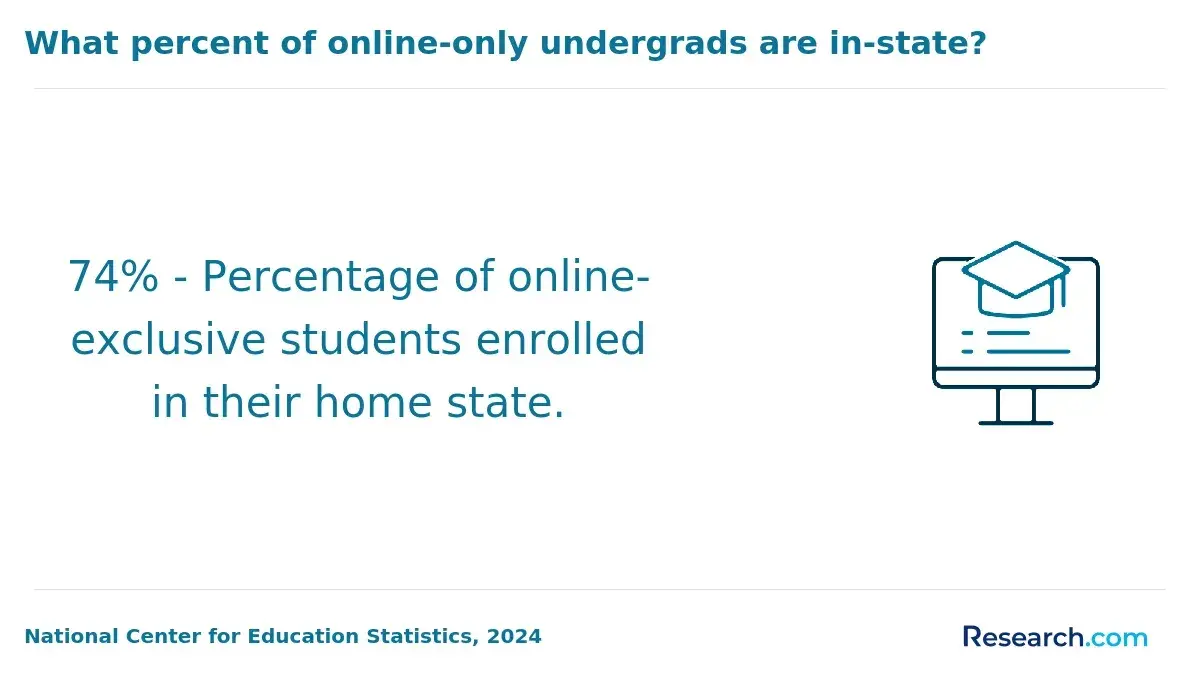
Choosing the fastest legitimate online Military Science & Studies degree often comes down to one issue: how many of your prior credits actually apply. NCES reported in 2024 that more than half of U. S. undergraduates took at least one distance education course, making online degree completion a mainstream path rather than a backup option.
This guide is for transfer students, active-duty service members, veterans, and adult learners who want an accredited route to graduation. You'll learn how to compare transfer limits, residency rules, accelerated formats, costs, and realistic completion timelines before enrolling.
Key Things You Should Know
- The fastest realistic path is usually a transfer-friendly bachelor's completion program: students with about 90 applicable credits may finish in roughly 6 to 18 months, while students with 60 credits often need about 18 to 30 months.
- The most transfer-friendly accredited options are typically Excelsior-style degree-completion programs that may accept very high transfer totals, followed by online military studies, military history, strategic studies, homeland security, or national security programs that commonly cap transfer credit near 90 credits.
- Maximum transfer credit is not the same as usable transfer credit: a 120-credit bachelor's program may still require 30 institutional credits, upper-division major courses, a capstone, and specific general education requirements.
What Are the Fastest Accredited Online Military Science & Studies Degree Programs That Accept Transfer Credits?
The fastest accredited online Military Science & Studies degree programs are usually bachelor's degree-completion programs, not traditional four-year sequences. They are designed for students who already have college credit, military training, CLEP exams, JST or CCAF credit, or professional learning that can be evaluated for academic credit.
Because "Military Science & Studies" is not offered online by every university as a standalone major, the closest legitimate options often use titles such as military studies, military history, strategic studies and defense analysis, national security, homeland security, intelligence studies, or security studies. The best fit depends on whether your goal is military advancement, federal service, defense contracting, graduate school, or a broader leadership career.
The table below compares common fast online options by transfer friendliness and degree fit. Policies can change, so use this as a screening tool and confirm the current catalog before applying.
| Program type or example | Best fit | Typical transfer-credit ceiling | Why it can be fast | Main caution |
| Online BS in Military Studies, such as Liberty University's military studies pathway | Students who want a direct military studies major with leadership, history, strategy, and security coursework | Often up to 75% of a bachelor's degree, or about 90 credits | Short sessions and a high transfer cap can shorten the remaining course sequence | Major courses and upper-division requirements may limit how many credits apply |
| Online BA in Military History or related military studies pathway, such as American Public University System options | Service members, veterans, and students interested in military history, defense institutions, or public service | Often up to about 90 credits | Monthly or frequent starts can reduce waiting time between courses | History-heavy curricula may not match students seeking technical defense or intelligence roles |
| Online strategic studies or defense analysis degree-completion pathway, such as Norwich University-style programs | Military learners with specialized training, operational experience, or a defense-focused career plan | Often up to about 90 credits, depending on evaluation | Designed around adult and military learners with prior learning | Some pathways may be limited to certain military populations or require specific experience |
| Online national security, homeland security, or intelligence studies bachelor's completion program | Students targeting federal agencies, emergency management, defense contractors, or graduate study | Commonly 75 to 90 credits; some degree-completion schools may allow more | Prior criminal justice, political science, cybersecurity, or military training may apply well | The degree may be adjacent to military studies rather than a pure military science major |
| Highly flexible adult-completion universities, such as Excelsior-style national security or liberal studies pathways | Students with many credits from multiple schools, exams, military training, or professional learning | May exceed 90 credits in some programs | Very high credit mobility can leave only a capstone, cornerstone, and required major credits | Students must verify that the final degree title supports their career or graduate-school goals |
Students who want the speed of 2 year bachelor degree programs should look for the same core features in military-related degrees: regional or national accreditation recognized by the U.S. Department of Education, short academic terms, generous transfer review, credit for military learning, and clear degree audits before enrollment.
The fastest program for you is the one that accepts the most credits into the actual degree plan, not merely into the university. A school that accepts 100 credits but applies only 55 to your major may be slower than a school with a lower headline transfer limit but a better curriculum match.
How Fast Can You Complete an Online Military Science & Studies Degree With Transfer Credits?
Most online Military Science & Studies bachelor's programs require about 120 credits. Transfer credits reduce the number of credits left, but time to completion also depends on term length, course load, prerequisite sequencing, capstone timing, and whether the school offers needed courses every term.
The table below shows realistic timelines for a motivated adult learner in a transfer-friendly, accredited online program. These are planning ranges, not guarantees, because final speed depends on the official transfer evaluation.
| Applicable transfer credits | Credits remaining in a 120-credit degree | Typical pace | Realistic completion range | Who this scenario fits |
| 90 credits | 30 credits | Full-time accelerated study | About 6 to 18 months | Students who completed most general education and lower-division electives |
| 75 credits | 45 credits | Full-time or heavy part-time study | About 12 to 24 months | Students with an associate degree plus extra military, exam, or prior college credit |
| 60 credits | 60 credits | Part-time to full-time study | About 18 to 30 months | Associate degree holders whose credits align with the new major |
| 30 credits | 90 credits | Traditional online or accelerated pace | About 30 to 42 months | Students with one year of college, limited military credit, or a major change |
| 0 to 15 credits | 105 to 120 credits | Standard online bachelor's path | About 36 to 48 months | First-time college students or students whose prior credits do not transfer |
A fast timeline is most realistic when the school runs 6-week or 8-week courses year-round and lets students take more than one course per term. However, accelerating too aggressively can backfire if you work full time, deploy, travel frequently, or have family responsibilities.
Before you commit to an accelerated schedule, ask the school for a written degree map. The most useful version shows remaining courses, term availability, prerequisites, transfer credits applied to each requirement, and the earliest possible graduation term.
How Many Transfer Credits Can You Apply Toward an Online Military Science & Studies Degree?
Transfer-friendly online military studies programs commonly allow up to 90 transfer credits toward a 120-credit bachelor's degree, although some adult-completion institutions may allow more. The practical limit is often lower because every degree has general education, upper-division, major, elective, and residency requirements.
The difference between "accepted" and "applied" credit is critical. Accepted credits appear on your record, but applied credits reduce the exact courses you still need for the degree.
| Transfer-credit rule | What it means | How it affects speed | What to verify |
| Maximum transfer allowance | The largest number of credits the institution may accept | Sets the upper limit for acceleration | Whether the cap is 90 credits, 75% of the degree, or higher |
| Major-credit requirement | Courses that must match military studies, strategy, history, security, or leadership outcomes | Can slow students whose credits are mostly unrelated electives | How many major credits must be completed at the new school |
| Upper-division requirement | Credits at the junior or senior level | May require additional coursework even if total credits are high | Whether community college and military credits count as lower division only |
| Residency requirement | Credits that must be earned from the degree-granting school | Creates a minimum number of remaining credits | Whether residency is 30 credits, 25% of the degree, or another rule |
| Age limits on credits | Restrictions on older coursework in fast-changing fields | May matter for security, technology, or policy courses | Whether older credits are accepted for the major or only as electives |
Students coming from community college, military education, or another online program should request an unofficial pre-evaluation before paying an enrollment deposit. If you are also comparing flexible programs in other career areas, an office administration degree online can show how associate-level transfer pathways are structured, but bachelor's-level military studies programs usually have stricter upper-division requirements.
A good rule of thumb is to compare programs by remaining credits, not transfer credits. If School A accepts 90 credits but leaves 42 credits after the audit, and School B accepts 78 credits but leaves 30 credits, School B is the faster option.
How Can You Verify Accreditation for Fast Online Military Science & Studies Degree Programs?
Accreditation is the quality-control checkpoint that keeps a fast degree from becoming a risky credential. For U.S. students, the safest starting point is institutional accreditation from an agency recognized by the U.S. Department of Education or the Council for Higher Education Accreditation.
Military Science & Studies programs usually do not have a single required programmatic accreditor in the way nursing, counseling, or speech-language pathology programs may. That makes institutional accreditation, transparent transfer policy, faculty qualifications, and curriculum relevance especially important.
Use this sequence before you apply, especially if a program promises unusually fast completion or unusually high credit acceptance:
- Search the school in the U.S. Department of Education's Database of Accredited Postsecondary Institutions and Programs or the CHEA directory.
- Confirm that the accreditor listed on the school website matches the accreditor listed in the official database.
- Check whether the accreditation covers the institution that will award your online degree, not just a parent system or separate campus.
- Review the academic catalog for transfer-credit limits, residency requirements, grade minimums, and credit-for-prior-learning rules.
- Ask whether the final transcript and diploma identify the same accredited institution and degree level as the published program.
- Be cautious if a school avoids naming its accreditor, promises automatic acceptance of all credits, or pressures you to enroll before a degree audit.
Accreditation expectations vary by field. For example, students comparing professional programs such as ASHA approved online speech pathology programs must meet specialized standards, while military studies students usually focus on institutional accreditation and career alignment.
The biggest red flag is a program that advertises speed without showing how credits apply. A legitimate school should be able to explain accreditation, credit evaluation, residency, course sequencing, and total cost in writing.
Which Types of Transfer Credits Can Count Toward an Online Military Science & Studies Degree?
Transfer credits can come from several sources, and each source is evaluated differently. The fastest students often combine traditional college credit with military learning, standardized exams, and carefully documented prior learning.
These credit types are commonly reviewed by accredited online military studies or military-adjacent degree programs:
- Regionally or nationally accredited college coursework, especially general education, history, political science, criminal justice, leadership, public administration, cybersecurity, and security studies courses.
- Joint Services Transcript credits for Army, Marine Corps, Navy, and Coast Guard training, evaluated through ACE recommendations and institutional policy.
- Community College of the Air Force credits, which can be especially useful for Air Force and Space Force students pursuing bachelor's completion.
- CLEP, DSST, and other standardized exam credits that may satisfy general education or elective requirements.
- Prior learning assessment portfolios that document college-level learning from military, professional, volunteer, or leadership experience.
- Professional certifications in emergency management, homeland security, project management, cybersecurity, logistics, or intelligence-related areas, if the school awards credit for them.
Not every credit source will apply to the major. For example, military occupational training may satisfy electives or leadership requirements, while a military history major may still require specific upper-division history seminars.
The best transfer strategy is to send every official transcript early: prior colleges, JST, CCAF, CLEP or DSST scores, and certification documentation. Missing one transcript can delay the audit and make a fast advertised timeline unrealistic.
How Do Residency and Major Requirements Affect Transfer Credits for an Online Military Science & Studies Degree?
Residency requirements are one of the most important limits on accelerated completion. In higher education, "residency" usually means the number of credits you must earn from the degree-granting institution, not whether you live on campus.
For a 120-credit bachelor's degree, many schools require at least 30 credits in residence or require that 25% of the degree be completed through the institution. Even if you bring in 95 or 100 potentially transferable credits, that rule can leave you with a minimum final year or final set of accelerated terms.
Major requirements add a second limit. A Military Science & Studies degree may require upper-division coursework in military leadership, defense policy, strategic studies, war and society, military history, ethics, research methods, or a capstone. These courses are often not replaceable with general elective credit.
When comparing degree audits, focus on these points because they determine the real remaining workload:
- How many total credits remain after transfer evaluation.
- How many remaining credits must be upper division.
- How many courses are required specifically in the major.
- Whether the capstone, research seminar, or senior project must be taken at the school.
- Whether courses are offered every term or only once or twice per year.
- Whether military training applies to major requirements or only to free electives.
A common mistake is choosing the school with the highest transfer cap before seeing the degree audit. The better approach is to ask each school for the shortest approved path to graduation based on your actual records.
Can Prior Learning, CLEP, Military Training, or Certifications Help You Finish an Online Military Science & Studies Degree Faster?
Prior learning, CLEP, DSST, military training, and certifications can make an online Military Science & Studies degree faster, but only if the school awards usable credit and places it in the right part of the degree plan. These credits are most helpful for general education, lower-division electives, leadership coursework, and some security-related requirements.
Credit for prior learning has become more important as adult learners seek faster, lower-cost pathways. The American Council on Education continues to maintain military credit recommendations, and many adult-serving universities use those recommendations as a starting point rather than an automatic award.
Use the following steps to turn prior learning into real time savings:
- Download your JST or CCAF transcript before contacting schools so advisors can review your actual training record.
- Ask whether the school follows ACE credit recommendations and whether those credits apply to the major, general education, or electives.
- Identify remaining general education gaps and ask whether CLEP or DSST exams can satisfy them.
- Submit professional certifications for evaluation before the first term, not after you are already enrolled.
- Request a revised degree plan after all exam scores, transcripts, and prior learning documents are posted.
- Compare the cost of taking an exam or portfolio assessment with the cost of taking the full course.
Students exploring behavior, leadership, or human-services pathways alongside military studies may also compare how credit policies differ in specialized programs such as a BCBA degree online, where certification alignment can limit flexibility more than in a general military studies degree.
The main trade-off is predictability. Traditional transfer credits are usually easier to evaluate than portfolios or certifications, but prior learning can still be valuable when it eliminates several courses and reduces both tuition and time.
How Much Does a Fast Online Military Science & Studies Degree Cost After Transfer Credits and Financial Aid?
The cost of a fast online Military Science & Studies degree depends on remaining credits, per-credit tuition, fees, books, military tuition assistance, veterans benefits, employer support, transfer credits, and financial aid. The cheapest advertised tuition is not always the lowest total cost if the school accepts fewer credits.
Federal aid can materially change the out-of-pocket cost for eligible students. The maximum Federal Pell Grant for the 2024-25 award year is $7,395, which can offset a meaningful share of tuition for students with high financial need, but eligibility depends on FAFSA results, enrollment intensity, and school participation.
The table below shows how remaining credits affect tuition exposure before grants, military benefits, employer aid, and fees. It uses simple per-credit scenarios so you can compare offers from different schools.
| Credits remaining | At $250 per credit | At $350 per credit | At $450 per credit | What it means |
| 30 credits | $7,500 | $10,500 | $13,500 | High-transfer students can keep tuition exposure relatively low |
| 45 credits | $11,250 | $15,750 | $20,250 | A moderate transfer gap can add several terms of cost |
| 60 credits | $15,000 | $21,000 | $27,000 | Associate degree holders should compare both tuition and credit fit |
| 90 credits | $22,500 | $31,500 | $40,500 | Students with limited usable transfer credit may face a near-traditional cost |
Cost comparisons should include more than tuition. Ask about technology fees, graduation fees, transcript fees, portfolio assessment fees, textbooks, proctoring, transfer evaluation fees, and whether military tuition rates apply to veterans, spouses, reservists, or only active-duty students.
Students considering graduate school later may also want to compare the bachelor's cost against future master's tuition. Researching most affordable masters degrees online can help you avoid spending so much on the bachelor's degree that you reduce flexibility for graduate study.
The best value is usually the accredited program with the lowest total cost to complete the remaining degree, not the lowest per-credit rate. A higher-tuition school that leaves you with 30 credits may cost less than a cheaper school that leaves you with 60 credits.
How Do Accelerated, Competency-Based, and Self-Paced Online Military Science & Studies Degree Programs Compare?
Accelerated, competency-based, and self-paced formats can all shorten degree completion, but they work differently. The right choice depends on how much prior knowledge you have, how predictable your schedule is, and how many credits you still need.
The table below compares common online formats for military studies and related degree-completion programs. Use it to match format to your learning style rather than assuming the fastest label is always best.
| Format | How it works | Best for | Speed advantage | Possible drawback |
| Accelerated 6-week or 8-week courses | Students complete standard courses in shorter terms | Learners who can handle frequent deadlines | Multiple start dates and year-round terms reduce downtime | Workload can feel intense, especially with writing-heavy military history or policy courses |
| Competency-based education | Students progress by demonstrating mastery, often within subscription terms | Experienced learners with strong self-direction | Prior knowledge can speed completion of familiar subjects | Not all military studies majors are available in this format |
| Self-paced online courses | Students move through coursework within a defined completion window | Students with irregular duty, travel, or work schedules | Flexible pacing can prevent stop-outs | Students who procrastinate may finish slower than in structured terms |
| Traditional online semesters | Courses follow 15-week or similar academic terms | Students who want more time for reading, writing, and discussion | Predictable schedule and deeper pacing | Fewer start dates can lengthen time to graduation |
Accelerated courses are often the most available option in military-related majors. Competency-based programs can be faster for experienced adults, but they are less common in specialized military studies fields and may work better for general studies, business, information technology, or leadership degrees.
AI and automation are also changing how students evaluate programs. Many schools now use digital transcript workflows, online degree audits, and learning management analytics, but students should still insist on human-reviewed transfer evaluations before enrollment because automated systems may misclassify military or older credits.
Are Fast Accredited Online Military Science & Studies Degrees Respected by Employers and Graduate Schools?
Fast accredited online Military Science & Studies degrees can be respected by employers and graduate schools when they come from a properly accredited institution, appear on an official transcript, and align with the student's career goals. The online format itself is usually less important than accreditation, curriculum relevance, performance, experience, and the reputation of the institution.
Military-related degrees may support careers in public service, defense contracting, emergency management, intelligence support, logistics, policy analysis, security management, veterans services, and graduate study in international relations, public administration, security studies, history, or law. They may also help service members translate military experience into an academic credential.
Salary outcomes vary widely because Military Science & Studies is not tied to one occupation. As a useful benchmark, BLS data for May 2024 reports a median annual wage of $86,130 for emergency management directors, a related civilian pathway for some security, preparedness, and public-sector leadership graduates. That figure should be used as labor-market context, not a promise of earnings.
Employers and graduate schools are most likely to value the degree when you can connect it to concrete skills:
- Strategic analysis and decision-making.
- Leadership in structured or high-pressure environments.
- Research and writing on military, security, or policy issues.
- Understanding of civil-military relations, defense institutions, and conflict history.
- Project coordination, briefing, planning, and operational communication.
- Ethical reasoning, cultural awareness, and risk assessment.
If you plan to pursue graduate school, confirm that your bachelor's degree is from an accredited institution and includes enough academic writing, research, and upper-division coursework. Some master's programs care more about GPA, prerequisites, writing ability, and recommendations than the exact undergraduate major.
Other Things You Should Know About Military Science & Studies
Often, yes. General education and humanities credits may remain usable for many years, but schools may review older security, technology, or policy-related credits more carefully. The official transfer evaluation is the only reliable answer.
Usually no. Many online military studies programs are academic degrees for adults, veterans, service members, and civilians. ROTC is a separate commissioning pathway and is not automatically part of an online bachelor's program.
Not automatically. They may count as electives, lower-division credit, leadership credit, or general education, but major requirements depend on the school's curriculum and faculty evaluation.
Ask for a written degree audit, total remaining credits, estimated graduation term, transfer-credit placement, residency requirement, total cost after fees, course availability, and whether any credits are still pending review.
References
- Undergraduate Military and Strategic Studies Programme https://extlin9.rmc-cmr.ca/en/registrars-office/undergraduate-military-and-strategic-studies-programme
- Military Veteran’s Guide to Degrees and Career Tracks https://www.militarysupportivecolleges.com/careers/
- Top Online Schools That Accept Transfer Credits https://www.edvisorly.com/student-guides/online-schools-that-accept-transfer-credits
- Best Online Universities With Generous Transfer Credit Policies https://www.collegetransitions.com/blog/best-online-universities-with-generous-transfer-credit-policies/
- Degrees & Requirements https://www.emoryhenry.edu/academics/military-science/degrees-requirements/
- Transfer Credits & Military Affiliations https://online.norwich.edu/online/military/transfer-credits-military-affiliations
- College Credit for Military Training & Experiences https://www.dantes.mil/credit4training/
- 2022 Best Degrees for Military Officers https://newmanu.edu/nth-degree/2022-best-degrees-for-military-officers
- Affordable College Options for Veterans: The Best Ways to Maximize Education Benefits and Save Money on Your Degree https://www.straighterline.com/blog/affordable-college-options-for-veterans-how-to-maximize-your-education-benefits-and-save-money-on-your-degree


