2027 Accredited Online Liberal Arts Degree Programs That Accept the Most Transfer Credits

Co-Founder and Chief Data Scientist
The fastest online liberal arts degree is often the one that accepts the most credits you have already earned. That matters because the Bureau of Labor Statistics reported that workers with a bachelor's degree had median weekly earnings of $1,543 in 2024, compared with $1,099 for associate degree holders. This guide is for adults with prior college, associate degrees, military training, or unfinished coursework. You will learn which accredited programs tend to be most transfer-friendly, how credits are evaluated, how much time and tuition you may save, and how to choose a program based on real transfer efficiency.
Key Things You Should Know
- Some accredited online liberal arts and liberal studies bachelor's programs may accept up to 90, 113, or even 114 transfer credits, but the number that matters is how many credits apply to your remaining degree requirements.
- For a typical 120-credit bachelor's degree, transferring 60 credits can cut the remaining coursework roughly in half, while transferring 90 credits may leave about 30 credits if residency and major requirements are satisfied.
- College Board's 2024 pricing data shows average published tuition and fees of $11,610 at public four-year in-state institutions and $43,350 at private nonprofit four-year institutions, so transfer credits can materially affect total cost.
Which Accredited Online Liberal Arts Degree Programs Accept the Most Transfer Credits?
The most transfer-friendly accredited online liberal arts degree programs are usually degree-completion bachelor's programs in liberal studies, general studies, interdisciplinary studies, or professional studies. These programs are designed for students who have already earned college credits and need a flexible path to finish a bachelor's degree.
| School | Online liberal arts-related degree type | Institutional accreditation | Maximum transfer-credit policy to check | Best fit |
| Thomas Edison State University | BA in Liberal Studies | Middle States Commission on Higher Education | Very high transfer ceiling, often cited up to 114 credits depending on source, level, and degree requirements | Adults with extensive prior college, exams, military, or ACE-reviewed learning |
| Excelsior University | BS in Liberal Arts | Middle States Commission on Higher Education | Up to 113 transfer credits may be applicable to some bachelor's programs | Students close to degree completion who need a small institutional-credit requirement |
| University of Maryland Global Campus | Online bachelor's options in humanities, history, communication, or related liberal arts fields | Middle States Commission on Higher Education | Up to 90 transfer credits toward a bachelor's degree | Military-affiliated students, community college transfers, and working adults |
| Southern New Hampshire University | BA in General Studies or related online liberal arts pathways | New England Commission of Higher Education | Up to 90 transfer credits toward a bachelor's degree | Students seeking broad elective flexibility and a large online course catalog |
| UMass Global | BA in Liberal Studies or related degree-completion pathways | WASC Senior College and University Commission | Up to 90 transfer credits may apply to many bachelor's programs | Associate degree holders and adults seeking a California-based accredited university |
| Arizona State University Online | BA in Liberal Studies | Higher Learning Commission | Often up to 90 credits overall, with separate limits for community college credits | Students who want a large public research university and clear online support systems |
| Bellevue University | BA or BS in Liberal Studies or interdisciplinary pathways | Higher Learning Commission | Up to 90 transfer credits may be accepted toward many bachelor's degrees | Working adults with associate degrees or applied credits |
| SUNY Empire State University | Online liberal arts and individualized degree options | Middle States Commission on Higher Education | High transfer-credit acceptance is possible, commonly paired with minimum institutional-credit rules | Students who want individualized degree planning within a public university system |
Use these program types as a starting point rather than a final ranking. If your long-term goal is a licensed or specialized graduate path, compare the liberal arts completion route with career-specific options, such as cheapest MSW online programs, before committing.
How Do Online Liberal Arts Degree Programs Evaluate Transfer Credits?
Online liberal arts programs usually evaluate transfer credits after you submit official transcripts from every college you attended. The evaluator checks accreditation, course level, grades, credit hours, subject fit, and whether each course satisfies general education, major, elective, upper-division, or residency requirements.
Most schools follow a sequence like the one below. Understanding the process helps you avoid choosing a program based only on marketing language.
- Submit an application and official transcripts from every institution previously attended.
- Ask whether the school provides an unofficial pre-evaluation before you pay enrollment deposits.
- Request a degree audit that shows where each accepted course applies, not just the total number of credits accepted.
- Confirm which credits meet general education, major, upper-division, writing, capstone, and elective requirements.
- Ask how credits from quarter systems, international institutions, pass/fail courses, older coursework, military training, and prior learning assessments are handled.
- Compare the remaining required credits, expected tuition, and estimated completion time across multiple schools.
Grade rules are a common source of surprise. Many bachelor's programs require transfer courses to have been completed with a C- or C grade or higher, although exact policies vary. Some programs may accept lower grades only as electives, exclude remedial courses, or require a higher grade for major prerequisites.
Liberal arts degrees are typically flexible, but they are not rule-free. If your future path involves counseling licensure, psychology graduate study, teacher certification, or another regulated field, some transferred courses may not satisfy future prerequisites; students considering counseling should also compare CACREP-accredited online counseling programs because licensure-aligned programs often have stricter curriculum requirements.
How Can Transfer Credits Shorten an Online Liberal Arts Degree?
A bachelor's degree usually requires about 120 semester credits. Transfer credits shorten the degree only when they replace credits you would otherwise need to take. Credits that transfer only as unused electives may appear on your record but may not reduce the number of courses left before graduation.
The table below shows how transfer credits can affect the remaining workload in a typical 120-credit online bachelor's program. Actual timing depends on course availability, term length, part-time enrollment, financial aid rules, and whether required upper-division courses are offered when you need them.
| Accepted credits that apply to the degree | Approximate credits remaining | Possible completion pattern | Important limitation |
| 30 credits | 90 credits | About three academic years at 30 credits per year | May still require most general education and major coursework |
| 60 credits | 60 credits | About two academic years at 30 credits per year | Best outcome when an associate degree satisfies general education requirements |
| 75 credits | 45 credits | About 15 to 24 months depending on course load | Upper-division and residency requirements may slow completion |
| 90 credits | 30 credits | About one academic year for full-time students | Many schools still require institutional credits, capstone work, and advanced courses |
| 105 to 114 credits | 6 to 15 credits | Potentially one or two terms at highly transfer-friendly schools | Only possible if the remaining credits align with the school's residency and degree plan |
The most efficient path is usually not the one with the highest advertised transfer cap. It is the one that accepts your specific credits into required slots. For example, 72 accepted credits may be better than 90 accepted credits if the 72 credits satisfy general education, lower-division major requirements, and electives more cleanly.
Before enrolling, ask for a written plan showing each remaining course. This is especially important if you need to maintain part-time status for work, full-time status for aid, or a fixed graduation date for a promotion or graduate school application.
How Much Can Transfer Credits Reduce the Cost of an Online Liberal Arts Degree?
Transfer credits can reduce cost by lowering the number of credits you must pay for at the new institution. The basic calculation is straightforward: accepted credits that apply to the degree multiplied by the school's tuition per credit equals the tuition you may avoid. Fees, textbooks, technology charges, and financial aid packaging can change the final amount.
College Board's 2024 Trends in College Pricing data reported average published tuition and fees of $11,610 for in-state students at public four-year institutions and $43,350 at private nonprofit four-year institutions. That difference means transfer efficiency can be just as important as the school's sticker price.
The table below uses simple tuition examples to show how transfer credits can affect direct tuition. These are illustrations, not school-specific quotes.
| Credits applied to the degree | Tuition avoided at $350 per credit | Tuition avoided at $500 per credit | What to verify |
| 30 credits | $10,500 | $15,000 | Whether these credits replace required courses or only electives |
| 60 credits | $21,000 | $30,000 | Whether an associate degree block transfer applies |
| 90 credits | $31,500 | $45,000 | Whether the school's residency requirement leaves exactly 30 credits |
| 105 credits | $36,750 | $52,500 | Whether a high-transfer program accepts credits from your exact sources |
A more expensive school may still be the better financial choice if it accepts significantly more usable credits. For example, a program charging $500 per credit for 30 remaining credits may cost less than a $350-per-credit program that leaves 60 credits because of stricter transfer rules.
Students with business leadership goals should also compare the degree's opportunity cost with more specialized credentials. If your main goal is management advancement rather than bachelor's completion, an operations management MBA may eventually offer a more targeted graduate pathway after the bachelor's degree is complete.
Can Military, Professional, or Prior Learning Credits Transfer to an Online Liberal Arts Degree?
Yes, many accredited online liberal arts programs consider military training, professional certifications, standardized exams, corporate training, and prior learning assessment. These credits are especially common in adult-focused liberal studies, general studies, and interdisciplinary programs because the curriculum often has room for electives and applied learning.
Schools may review nontraditional learning through several channels. The key is to ask whether the credit can apply to your degree plan rather than simply appear as excess elective credit.
- Military training: Colleges may use Joint Services Transcript recommendations, Community College of the Air Force credits, or ACE credit recommendations when evaluating military learning.
- Standardized exams: CLEP, DSST, AP, and IB credits may apply if the school accepts the exam and your score meets its threshold.
- Professional certifications: Some certifications in business, technology, public safety, healthcare administration, or project management may receive credit if they have ACE, NCCRS, or institutional approval.
- Portfolio assessment: Some programs allow students to document college-level learning gained through work, training, or community leadership.
- Workforce and corporate training: Employer training may be considered if it has been reviewed for college credit or if the school has an approved pathway.
There are limits. Prior learning credits often apply more easily to electives than to advanced major requirements. Some graduate programs and employers may also care about whether prerequisite knowledge came from graded college courses, especially in regulated or technical fields.
If your prior learning is heavily technical and your goal is to move into information security, compare a broad liberal arts route with a specialized pathway such as cybersecurity masters online options after confirming whether your bachelor's plan will meet graduate admission requirements.
Which Types of Previous College Credits Transfer Best to Online Liberal Arts Degrees?
The credits that transfer best are usually recent, credit-bearing, college-level courses from institutionally accredited schools with grades that meet the receiving school's standards. Liberal arts programs often have broad elective space, but degree requirements still determine whether transfer credits shorten the path to graduation.
The table below summarizes how common credit types usually perform in transfer evaluations. Use it to predict which parts of your transcript are most likely to reduce remaining coursework.
| Credit type | Transfer potential | Why it may transfer well | Main risk |
| Associate of Arts or Associate of Science from an accredited community college | High | Often aligns with general education and lower-division requirements | Not all credits may satisfy upper-division or major requirements |
| General education courses | High | English composition, humanities, social science, math, and natural science requirements are common across bachelor's programs | Courses may not match specific distribution categories |
| Lower-division liberal arts courses | Moderate to high | History, literature, communication, philosophy, psychology, and sociology often fit liberal arts curricula | Excess courses may count only as electives |
| Applied associate degree credits | Moderate | Some adult-completion programs accept applied technical credits as electives | Traditional programs may limit vocational or occupational credits |
| Older coursework | Moderate | Humanities and general education courses may remain usable longer than rapidly changing technical subjects | Some schools have age limits for specific courses |
| Developmental or remedial courses | Low | Usually considered below college level | Often excluded from bachelor's transfer credit |
| Graduate-level coursework | Variable | Some schools may review it individually | May not apply to an undergraduate degree or may require special approval |
One common mistake is assuming an associate degree automatically satisfies all lower-division requirements. Some schools offer block transfer for completed associate degrees, while others evaluate each course separately. The difference can change your remaining credits substantially.
Another mistake is ignoring course level. A liberal arts bachelor's degree usually requires upper-division credits, so a student with 90 lower-division credits may still need advanced courses even if the total transfer number looks strong.
How Do Transfer Agreements Affect Online Liberal Arts Degree Completion?
Transfer agreements can make an online liberal arts degree faster and more predictable. These agreements, often called articulation agreements, map courses from one institution to another so students know in advance how credits will apply.
Transfer agreements are especially helpful for community college students and associate degree holders. They can reduce uncertainty in several ways.
- Course equivalency: The agreement shows which courses match specific requirements at the receiving university.
- Block transfer: A completed associate degree may satisfy a full general education block instead of being evaluated course by course.
- Guaranteed pathway rules: Some agreements specify admission standards, GPA requirements, and remaining credits needed after transfer.
- Reduced credit loss: Students can choose community college courses that are already approved for the bachelor's degree.
- Clearer planning: Advisors at both schools can help students avoid taking unnecessary courses.
However, transfer agreements are not automatic graduation guarantees. They may apply only to specific degree programs, catalogs, campuses, or entry terms. A student who changes majors, waits too long, or transfers from a non-partner institution may not receive the same benefit.
The best transfer agreement is one that shows not only how many credits transfer but also which requirements remain. If an agreement leaves you with 30 credits of upper-division coursework that is offered online on a predictable schedule, it is usually more useful than a vague promise of "up to 90 credits."
What Transfer Policies Should Students Compare Before Choosing an Online Liberal Arts Degree?
Students should compare transfer policies that affect actual completion, not just maximum credits. A school that accepts 90 credits but requires 45 additional credits because of unmet upper-division requirements may be less efficient than a school that accepts 75 credits cleanly into the degree plan.
Before enrolling, review these policy areas and ask for written answers when possible.
- Maximum transfer credits: Check the total cap and whether there are separate limits for two-year colleges, four-year colleges, exams, military training, and prior learning.
- Residency requirement: Confirm the minimum credits you must complete at the school awarding the degree.
- Upper-division requirement: Ask how many advanced credits must be completed and whether transferred upper-division courses can count.
- Major or concentration requirements: Verify whether transferred courses satisfy the liberal studies core or only general electives.
- Minimum grade rules: Ask whether C-, C, or higher grades are required and whether major courses have stricter standards.
- Course age limits: Confirm whether older courses expire, especially math, science, technology, or professional courses.
- Accreditation rules: Make sure prior schools were institutionally accredited or otherwise eligible under the receiving school's policy.
- Financial aid impact: Ask whether accepted transfer credits affect your enrollment status, remaining aid eligibility, or satisfactory academic progress.
- Transcript fee and evaluation timing: Find out how long the evaluation takes and whether it occurs before or after admission.
Red flags include vague promises, refusal to provide a degree audit before enrollment, pressure to commit before credit review, unclear institutional accreditation, and policies that accept many credits but leave you with a long list of required courses.
Transfer-friendly liberal arts degrees are usually not designed for licensure by themselves. If your goal is professional counseling, compare the bachelor's completion plan with graduate admission requirements for cheapest online LPC programs so you do not miss prerequisite coursework.
Which Students Benefit Most From Transfer-Friendly Online Liberal Arts Degree Programs?
Transfer-friendly online liberal arts degree programs are best for students whose main barrier is finishing a bachelor's degree, not entering a tightly prescribed undergraduate major. They are often a strong fit for adults who need a recognized credential for advancement, graduate school eligibility, public-sector roles, nonprofit work, communications, human services administration, or broad professional mobility.
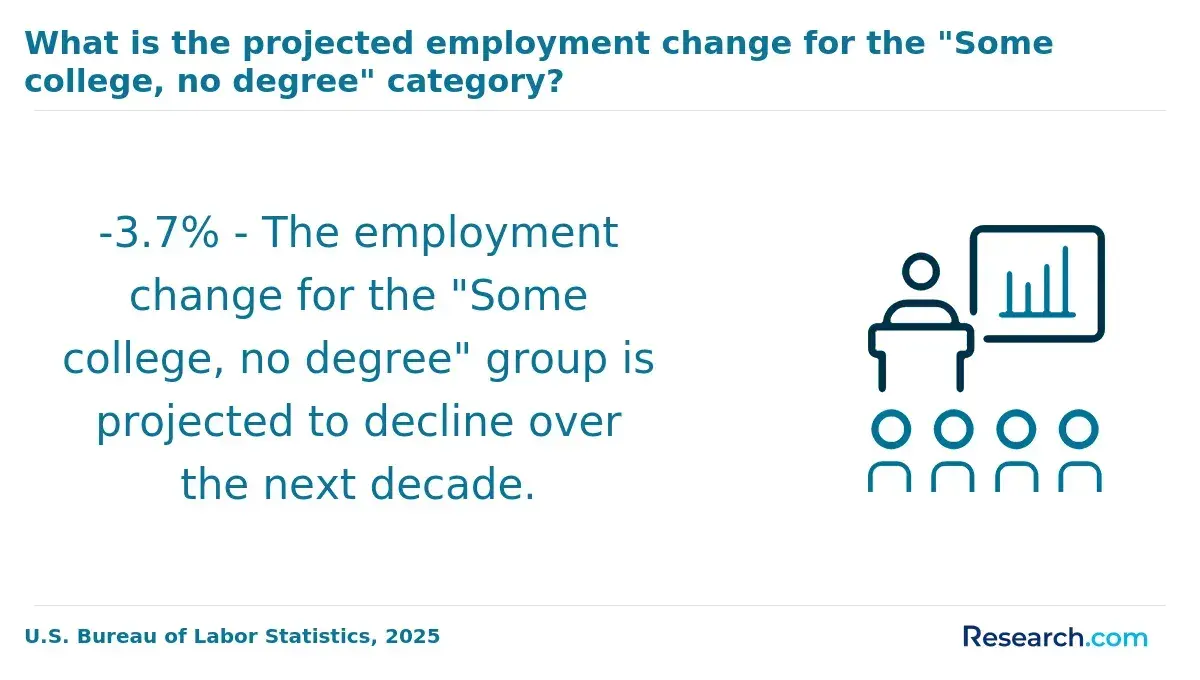
The Bureau of Labor Statistics reported a 2.5% unemployment rate for bachelor's degree holders in 2024, compared with 2.8% for associate degree holders and 3.5% for workers with some college but no degree. That does not mean a liberal arts degree guarantees a job, but it shows why finishing a bachelor's credential can matter in employer screening and long-term career flexibility.
Students who usually benefit most include the following groups.
- Associate degree holders: They may be able to enter with around half of a bachelor's degree already completed, especially when general education transfers as a block.
- Adults with many credits but no credential: Liberal studies programs can often assemble prior coursework into a coherent degree plan.
- Military-affiliated students: Military transcripts, exams, and prior learning may reduce elective requirements at adult-focused institutions.
- Working professionals: Online asynchronous courses and flexible electives can make degree completion more manageable alongside employment.
- Students planning graduate school: A completed bachelor's degree may meet the baseline requirement for many master's programs, though prerequisites still matter.
Students should avoid choosing a liberal arts program primarily for transfer quantity if they need a highly sequenced major such as nursing, engineering, accounting licensure, teacher certification, or pre-licensure counseling. In those cases, a stricter program may be more valuable because it aligns directly with licensing or professional standards.
If your goal is clinical social work, a broad bachelor's degree can be a stepping stone, but you should verify graduate prerequisites and compare social-work-specific pathways such as cheapest MSW online programs before deciding how much specialization you need now.
How Should Students Choose an Online Liberal Arts Degree Based on Transfer Efficiency?
Choose an online liberal arts degree based on transfer efficiency, not just transfer generosity. Transfer efficiency means the program accepts the greatest number of your credits into required degree slots, leaves the fewest remaining credits, fits your schedule, and supports your career or graduate school goal.
A practical comparison should follow a clear process. Use the steps below before committing to a school.
- Make a transcript inventory listing every college, exam, military record, certification, and training source that may carry credit.
- Shortlist only institutionally accredited schools with online liberal arts, liberal studies, interdisciplinary studies, or general studies bachelor's programs.
- Request transfer evaluations from at least two or three schools before enrolling.
- Compare the number of credits accepted, the number of credits applied to requirements, and the number of credits still needed.
- Calculate total tuition using remaining credits, not advertised program cost alone.
- Check whether the remaining courses are available online in the terms you need.
- Ask how the degree title, transcript, concentration, and capstone align with your career or graduate school plans.
- Review financial aid, employer tuition assistance, military benefits, and payment plans before selecting the final option.
The best choice is often the school that gives you the clearest written pathway to graduation. A transparent degree audit is more valuable than a broad statement that the school accepts many transfer credits.
Also weigh specialization. A liberal arts degree can be an efficient bachelor's completion option, but students pursuing regulated mental health careers may need a more direct graduate pathway, such as CACREP-accredited online counseling programs, after confirming admission and licensure rules in their state.
Other Things You Should Know About Liberal Arts
Usually, the diploma does not list the delivery format, but policies vary by institution. Ask the registrar how the diploma and transcript identify the degree, major, concentration, and campus.
Employer perception depends most on accreditation, the school's reputation, your experience, and how well you explain the degree's relevance. A regionally or institutionally accredited online degree is generally designed to meet the same academic standards as the school's comparable campus-based degree.
Yes, if the school participates in federal student aid programs and you meet eligibility rules. Submit the FAFSA, confirm the program is aid-eligible, and ask how transfer credits affect your remaining aid limits.
Common pathways include communications, public administration support, nonprofit work, human services administration, sales, customer success, training, writing, project coordination, and graduate school preparation. Outcomes depend on experience, location, skills, internships, and any specialized credentials you add.
References
- CAEL | A Brighter Future Through Credit for Prior Learning (CPL) https://www.cael.org/lp/pla
- Playbook for Transfer Pathways to the Liberal Arts - Ithaka S+R https://sr.ithaka.org/publications/playbook-for-transfer-pathways-to-the-liberal-arts-2/
- Guide to Articulation Agreements: All You Need to Know https://www.ivywise.com/blog/articulation-agreements/
- 4 Ways Transfer Students Can Maximize College Credits for Prior Experience https://www.umassglobal.edu/blog-news/4-ways-transfer-students-can-maximize-college-credits-prior-experience
- Top Online Schools That Accept Transfer Credits https://www.edvisorly.com/student-guides/online-schools-that-accept-transfer-credits
- Starting College on the Right Foot: Credit for Prior Learning https://mcacs.talentfirst.net/starting-college-on-the-right-foot-credit-for-prior-learning/
- Credit Articulation Agreements Act - American Legislative Exchange Council https://alec.org/model-policy/credit-articulation-agreements-act/
- Transfer Credit IN - https://www.muskegoncc.edu/academics/earn-credit-for-what-you-know/transfer-credit/
- Transferology https://www.transferology.com/
- Transfer Credits https://www.sarahlawrence.edu/student-life/student-handbook/2025-2026/undergraduate/academic-policies-procedures/transfer-credits.html