
2026 Accredited Online Global Security Degree Programs That Accept the Most Transfer Credits

Co-Founder and Chief Data Scientist
Choosing an online global security degree is often less about starting over and more about how much of your prior college work still counts. That matters because security-related careers increasingly blend international risk, intelligence, emergency management, and cyber policy; the BLS projects information security analyst employment to grow 33% from 2023 to 2033. This guide is for transfer students, military learners, working adults, and associate-degree holders who want to finish faster, avoid wasted credits, and compare accredited programs based on actual transfer efficiency rather than advertised maximums.
Key Things You Should Know
- Many transfer-friendly online security-related bachelor's programs allow up to 90 semester credits toward a 120-credit degree, but residency rules usually require at least 30 credits from the degree-granting school.
- The best program is not always the one with the highest transfer cap; the bigger question is how many credits apply to general education, major, concentration, and upper-division requirements.
- Cost savings can be substantial because each accepted transfer course removes credits from the tuition bill, but students should compare remaining credits against current 2024-25 tuition benchmarks such as the College Board's $11,610 average published in-state tuition at public four-year colleges.
Which Accredited Online Global Security Degree Programs Accept the Most Transfer Credits?
Accredited online global security degrees are usually offered under names such as global security, international relations and global security, intelligence studies, homeland security, national security, emergency management, or criminal justice with a homeland security concentration. The programs below are useful starting points because they are regionally accredited and publish transfer-friendly bachelor's policies, but students should request an official evaluation before assuming any specific number of credits will apply.
The table compares online global security or closely related security-focused bachelor's options by the maximum transfer-credit policy that is most relevant to degree-completion students. A high maximum is valuable only if the credits also satisfy the correct parts of the degree plan.
| School | Online security-related degree example | Institutional accreditation | Published transfer-credit potential | Best fit |
| American Public University System | BA in International Relations and Global Security; BA in Intelligence Studies | Higher Learning Commission | Up to 90 credits toward many bachelor's programs | Students with military, community college, or prior university coursework in security, politics, intelligence, or general education |
| University of Maryland Global Campus | BS in Homeland Security | Middle States Commission on Higher Education | Up to 90 credits toward a bachelor's degree | Adult learners and military-connected students seeking a public university degree-completion pathway |
| Southern New Hampshire University | BS in Criminal Justice with Homeland Security and Counterterrorism concentration | New England Commission of Higher Education | Up to 90 credits toward a bachelor's degree | Students with broad transfer credits who want flexible online terms and career-aligned criminal justice coursework |
| Liberty University | BS in Government with national security or related policy-focused coursework | Southern Association of Colleges and Schools Commission on Colleges | Up to 75% of the degree, commonly equivalent to 90 credits in a 120-credit bachelor's program | Students who want an online security, government, and public policy pathway with a large transfer allowance |
| Regent University | BS in Criminal Justice with Homeland Security concentration | Southern Association of Colleges and Schools Commission on Colleges | Up to 90 credits toward a bachelor's degree | Students seeking a homeland security-focused online program with Christian university context |
| Embry-Riddle Aeronautical University Worldwide | BS in Global Security and Intelligence Studies | Southern Association of Colleges and Schools Commission on Colleges | Transfer credit may be accepted toward degree requirements, subject to evaluation and institutional limits | Students interested in intelligence, geopolitics, aviation security, and global risk who want a specialized security brand |
| Arizona State University Online | BA in Global Security | Higher Learning Commission | Transfer credit accepted subject to ASU equivalency, degree applicability, and residency rules | Students who want a large public research university and a global security curriculum emphasizing international conflict, policy, and risk |
The strongest transfer-credit candidates are usually programs that combine three features: a high maximum transfer allowance, a clear residency requirement, and a degree map showing where prior credits apply. Programs that accept many electives can still leave students with a long path if they require a large number of upper-division security courses in residence.
How Do Online Global Security Degree Programs Evaluate Transfer Credits?
Most schools use several criteria during evaluation. These rules are important because a course can be accepted by the university but still count only as elective credit rather than replacing a required major course.
- Accreditation of the sending institution: Credits from regionally accredited colleges typically transfer more smoothly than credits from unaccredited or non-collegiate providers.
- Course level and content match: Introductory political science, criminal justice, history, economics, statistics, writing, and social science courses often map well to lower-division requirements, while specialized intelligence or security courses may need closer review.
- Minimum grade: Many institutions require a minimum grade such as C or higher for transfer, and some majors require higher grades for courses used in the major.
- Credit age: Security policy, technology, and cyber-adjacent courses may face age limits if the field has changed significantly, while general education credits often remain usable longer.
- Upper-division requirements: Even generous programs may require advanced major courses to be completed through the receiving institution.
- Residency requirement: A school may accept many credits but still require a minimum number of credits completed there before awarding the degree.
The practical takeaway is to ask for a course-by-course degree audit, not just a transfer estimate. A useful evaluation should show remaining general education courses, remaining major courses, electives still needed, upper-division requirements, and total credits left before graduation.
How Can Transfer Credits Shorten an Online Global Security Degree?
Transfer credits shorten an online global security degree by reducing the number of courses you must still complete. In a standard 120-credit bachelor's program, a student transferring 60 applicable credits may have about half the degree left, while a student transferring 90 applicable credits may be close to the final year of coursework.
The table below shows how remaining credits can translate into completion time. Actual timelines vary by term length, course load, prerequisites, course availability, and whether the school allows accelerated eight-week sessions.
| Applicable transfer credits | Credits remaining in a 120-credit degree | Likely completion pattern | Decision implication |
| 0 to 30 | 90 to 120 | Often three to four years part time, or longer for students taking one course per term | Compare full program cost, not just transfer policy |
| 45 to 60 | 60 to 75 | Often two to three years depending on course load | Associate-degree planning or community college completion may improve efficiency |
| 75 to 90 | 30 to 45 | Often one to two years if required courses are available in sequence | Residency and major-course requirements become the main bottlenecks |
| More than 90 | Usually still at least 30 due to residency rules | Rarely less than one academic year for a bachelor's degree | Additional credits may not create extra time savings if the school has a 30-credit residency minimum |
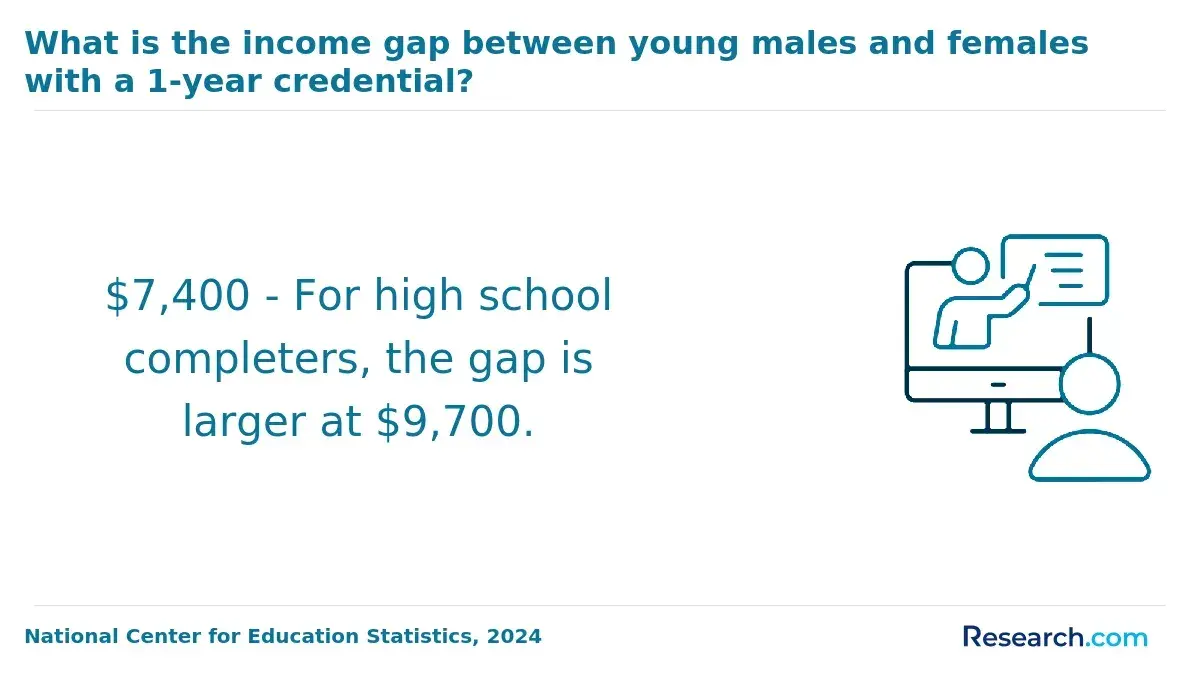
Students who do not yet have an associate degree should think strategically before transferring. In some cases, completing lower-division requirements through affordable community college or 1 year associate degree programs online can create a cleaner transfer path, especially when the receiving school honors block transfer or general education completion.
A common mistake is assuming that 90 accepted credits equals only 30 credits left. That is true only when the 90 credits satisfy the right categories. If 20 of those credits transfer as free electives after the elective area is already full, the student may still need additional major or upper-division coursework.
How Much Can Transfer Credits Reduce the Cost of an Online Global Security Degree?
Transfer credits can reduce the cost of an online global security degree because most undergraduate tuition is charged per credit. The simplest estimate is to multiply the number of accepted applicable credits by the program's per-credit tuition, then subtract any additional fees or scholarship differences that may apply.
Published tuition varies widely, so a transfer-friendly private nonprofit, public university, or private for-profit institution should not be judged by institution type alone. The College Board's 2024 Trends in College Pricing report lists average published tuition and fees for 2024-25 at $11,610 for in-state public four-year colleges, which gives students a benchmark for evaluating whether an online completion program is meaningfully affordable.
The table below illustrates why the number of remaining credits matters more than the maximum transfer-credit headline. These examples use hypothetical per-credit tuition levels so students can model their own schools without relying on a single national average.
| Remaining credits after transfer | At $350 per credit | At $500 per credit | At $700 per credit | What to compare |
| 90 credits | $31,500 | $45,000 | $63,000 | Full-program cost and availability of lower-cost transfer options |
| 60 credits | $21,000 | $30,000 | $42,000 | Whether prior credits satisfy general education and electives |
| 45 credits | $15,750 | $22,500 | $31,500 | Whether major sequencing allows fast completion |
| 30 credits | $10,500 | $15,000 | $21,000 | Residency requirement, final-year fees, and capstone courses |
Transfer credits may also affect opportunity cost. Finishing one or two terms earlier can help working adults pursue promotions, graduate study, or specialized credentials sooner, although the degree itself does not guarantee a specific job or salary.
Students planning long-term leadership careers should consider how bachelor's transfer efficiency fits a broader education plan. For example, someone aiming for security management, consulting, or operations leadership may later compare graduate business pathways such as MBA online programs, so keeping undergraduate debt lower can preserve flexibility.
Can Military, Professional, or Prior Learning Credits Transfer to an Online Global Security Degree?
Yes, many online global security programs evaluate military training, professional certifications, standardized exams, and prior learning portfolios. These credits can be especially relevant for students with experience in the armed forces, law enforcement, emergency services, intelligence support, cybersecurity, corrections, or public safety.
Nontraditional credit can be valuable, but it is evaluated differently from college transcripts. Students should separate "credit awarded" from "credit applied to the degree," because only the latter shortens the path to graduation.
- Military credit: Schools may use Joint Services Transcript recommendations, Community College of the Air Force coursework, or American Council on Education credit recommendations, but the receiving institution decides how credits apply.
- Professional training: Law enforcement academies, emergency management training, cyber certifications, and federal training may qualify for elective or major-related credit if the school recognizes them.
- Standardized exams: CLEP, DSST, AP, or IB credits may satisfy general education requirements when scores meet institutional thresholds.
- Prior learning assessment: Some schools allow portfolios documenting college-level learning from work experience, but portfolio credit may involve fees and strict documentation.
- Industry certifications: Certifications may help in cyber, risk, emergency management, or investigations, but credit value varies significantly by school and degree plan.
The main red flag is a school that advertises broad prior learning credit but cannot explain exactly how that credit will apply to your chosen security major. Ask whether credits will replace required courses or merely fill elective space.
Which Types of Previous College Credits Transfer Best to Online Global Security Degrees?
The best-transfering credits for online global security degrees are usually lower-division general education courses and foundational social science courses. These are easier to match because most bachelor's degrees require writing, communication, quantitative reasoning, history, government, and social science requirements.
The table below shows how common previous coursework tends to transfer into global security-related programs. It is a planning guide, not a guarantee, because each institution controls its own equivalency rules.
| Previous credit type | Transfer strength | Why it often works | Possible limitation |
| English composition and research writing | High | Most bachelor's degrees require college writing | Some schools require a specific research or advanced writing course |
| U.S. government, international relations, political science | High | Directly supports global security, policy, and governance coursework | Upper-division major courses may still need to be completed in residence |
| Criminal justice and homeland security | Moderate to high | Often aligns with security, public safety, emergency planning, and terrorism studies | May transfer as electives if course outcomes do not match the major |
| History, economics, sociology, psychology | Moderate to high | Supports regional analysis, conflict studies, and general education requirements | May not replace specialized security courses |
| Cybersecurity and information technology | Moderate | Useful for cyber policy, infrastructure protection, and risk topics | Older technical courses may face currency limits |
| Vocational, developmental, or remedial courses | Low | Often not considered college-level bachelor's credit | May not transfer at all |
Students should prioritize programs that accept prior coursework into the degree core, not only into electives. A security degree with 18 remaining major credits may be much faster than one that accepts the same total number of credits but leaves 36 required major credits unfinished.
How Do Transfer Agreements Affect Online Global Security Degree Completion?
Transfer agreements can make online global security degree completion more predictable by pre-approving how courses from one institution apply to another. These agreements are especially helpful for community college students because they can reduce uncertainty before the student spends time and money on lower-division coursework.
The most useful agreements are those that show course-by-course equivalencies or guarantee that a completed associate degree satisfies general education requirements. Students should still verify major prerequisites because a block transfer may not cover specialized courses in intelligence, emergency management, or global security policy.
- Articulation agreements: These list specific courses at one college that match requirements at the receiving university.
- 2+2 pathways: These are designed for students to complete about two years at a community college and two years at the university.
- General education waivers: These may treat a completed associate degree as satisfying most or all lower-division general education requirements.
- Military partnership pathways: These may include mapped credit for military training, prior learning, and flexible online scheduling.
- Reverse transfer agreements: These may allow students who transfer early to receive an associate degree after completing additional university credits.
The best agreement is one that shows the exact remaining bachelor's requirements after transfer. If a school can provide only a broad estimate, ask for a written degree plan before enrolling.
What Transfer Policies Should Students Compare Before Choosing an Online Global Security Degree?
Students should compare transfer policies before choosing an online global security degree because a generous headline policy can hide restrictions that affect time, cost, and degree value. The goal is to find the program that accepts the most useful credits, not simply the most credits.
Use the following checklist when speaking with admissions, registrar, academic advising, or transfer-credit staff. Ask for answers in writing whenever possible.
- Confirm the maximum number of credits that can transfer into the bachelor's degree.
- Ask how many credits must be completed through the university to satisfy residency requirements.
- Request a course-by-course transfer evaluation before committing to enrollment.
- Ask which credits apply to general education, major requirements, concentration requirements, upper-division requirements, and electives.
- Verify minimum grade requirements and whether pass/fail courses are accepted.
- Ask whether older security, technology, or criminal justice courses expire or require faculty review.
- Confirm whether military, CLEP, DSST, AP, certifications, or professional training are evaluated separately from college transcripts.
- Ask whether transfer credits affect eligibility for scholarships, honors, academic standing, or financial aid pacing.
- Review whether the degree has a capstone, internship, practicum, or final project that cannot be transferred.
- Compare total remaining tuition, fees, books, and expected time to graduation after the evaluation.
A major warning sign is pressure to enroll before receiving a clear transfer evaluation. Another is a program that accepts many credits but cannot show whether those credits reduce required coursework in the global security major.
Which Students Benefit Most From Transfer-Friendly Online Global Security Degree Programs?
Transfer-friendly online global security degrees tend to benefit students who already have college-level learning that fits the curriculum. They are especially useful for adults who need a bachelor's credential for advancement but cannot afford to restart a four-year path.
The strongest candidates usually fall into several groups. These learners are more likely to turn past credits into meaningful progress toward graduation.
- Associate-degree holders: Students with AA, AS, or AAS degrees may enter with substantial lower-division credit, although technical associate degrees sometimes transfer more as electives.
- Military-connected students: Training, deployments, leadership coursework, and Community College of the Air Force credits may support security, leadership, or elective requirements.
- Public safety professionals: Law enforcement, corrections, emergency management, and fire service experience may align with homeland security or emergency preparedness coursework.
- Students with unfinished bachelor's credits: Learners who stopped out after two or three years may be able to complete faster if credits are still current and applicable.
- Working adults seeking advancement: A bachelor's degree may support eligibility for roles that require a four-year credential, especially in government, contracting, risk, compliance, and security management contexts.
Students should avoid choosing a program primarily for its transfer cap if their goal points elsewhere. For example, someone who wants to become a licensed therapist should compare a psychology, counseling, social work, or LMFT online program pathway instead of selecting global security only because it accepts more old credits.
Career outcomes also depend on specialization. The BLS reported a 2023 median pay of $120,360 for information security analysts in its 2024 occupational update, but that figure applies most directly to technical cyber roles, not every global security job. Students should match the curriculum to the role they want rather than assuming all security degrees lead to the same labor market.
How Should Students Choose an Online Global Security Degree Based on Transfer Efficiency?
Students should choose an online global security degree based on transfer efficiency, accreditation, curriculum fit, and career relevance. The right program is the one that turns prior learning into the fewest unnecessary remaining credits while still teaching the skills needed for the student's target field.
A practical selection process should move from eligibility to value. This sequence helps prevent the common mistake of enrolling in the school with the largest advertised transfer limit before seeing how credits actually apply.
- Define the target role first, such as intelligence analyst, emergency management specialist, security manager, risk analyst, policy analyst, investigator, or cyber policy professional.
- Shortlist only institutionally accredited schools and verify that the degree name, curriculum, and electives match the target role.
- Send all transcripts, military records, exam scores, and certification documentation for evaluation.
- Request a degree audit showing remaining credits by category, not just total accepted credits.
- Calculate remaining tuition using the school's per-credit cost and required fees.
- Check whether required courses are offered often enough to finish on your preferred timeline.
- Compare faculty expertise, internship options, capstone projects, security-related electives, and career services.
- Choose the program with the best combination of usable transfer credits, manageable cost, realistic schedule, and relevant outcomes.
A stricter transfer program may be worth choosing if it has stronger alignment with your career goal, better employer recognition in your target region, stronger analytical or technical coursework, or a clearer pathway to graduate study. Conversely, a high-transfer program may be the better investment when your main goal is completing a respected bachelor's degree quickly for career mobility.
Fit matters more than speed when the desired profession requires a different credential. A student drawn to creative clinical practice, for instance, would be better served researching a master in art therapy than choosing a security degree simply because it offers faster completion.
Other Things You Should Know About Global Security
They can be, especially when the school is institutionally accredited and the curriculum matches the role. Employers typically look at accreditation, relevant skills, experience, writing and analysis ability, technical knowledge when needed, and whether the degree supports the job's requirements.
No, students usually do not need a security clearance to enroll. Some jobs in intelligence, defense contracting, federal agencies, or classified environments may require clearance later, and eligibility depends on employer sponsorship and government review.
Yes, an accredited bachelor's degree may support admission to graduate programs in security studies, international relations, public administration, emergency management, cybersecurity policy, law, or business. Admissions requirements vary, so students should choose undergraduate courses that build writing, research, statistics, and policy analysis skills.
Not exactly. Global security usually emphasizes international conflict, geopolitical risk, intelligence, terrorism, diplomacy, and transnational threats. Homeland security focuses more on domestic preparedness, emergency management, border security, infrastructure protection, and public safety within the United States.
References
- Transfer to CSU Global | Transfer Credits Accepted | Colorado State University Global https://csuglobal.edu/admissions/transfer-students
- Gen Ed Requirements: Complete College Guide | Edvisorly https://www.edvisorly.com/student-guides/gen-ed-requirements
- Advice for Transferring Credits as an International Student https://www.csinow.edu/blog/advice-for-transferring-credits-as-an-international-student/
- The Importance of Understanding Transfer Credit Policies https://www.sophia.org/blog/higher-education/understanding-transfer-credit-policies/
- General Education & MUS Transferable Core https://www.mus.edu/transfer/GenEd.html
- Transfer Credit Requirements https://www.umgc.edu/transfers-and-credits/credit-from-colleges/requirements
- General Transfer and Course Equivalency - CFWV.com https://www.cfwv.com/general-transfer-and-course-equivalency/
- 7 Online Schools with Strong Cybersecurity & Tech Degrees https://www.euroeducation.net/articles/7-online-schools-with-strong-cybersecurity-and-tech-degrees.htm
- Certificate Programs | GCTI — Cybersecurity, Threat Intelligence & Security Leadership https://globalctinstitute.org/programs/
- Transfer Credits – Beyond Abroad https://beyondabroad.com/practical-info/transfer-credits/


