2027 How to Prepare for a Graduate School Interview

Co-Founder and Chief Data Scientist
A graduate school interview can decide whether strong grades and essays turn into an admission offer. It matters because graduate study is a major investment. According to 2024 Bureau of Labor Statistics annual averages, workers with a master's degree had median weekly earnings of $1,840, compared with $1,543 for bachelor's degree holders.
This guide is for master's, doctoral, professional, and online applicants who want to interview with confidence. You will learn how to prepare answers, show fit, handle virtual or in-person formats, and decide whether the program is right for you.
Key Things You Should Know
- A strong graduate school interview usually comes down to three messages: why this field, why this program, and why your background supports the next step.
- Because graduate education can affect earnings, debt, and career access, use the interview to evaluate funding, mentoring, placement outcomes, and workload, not just to impress the school.
- Preparation should include program research, answer practice, mock interviews, questions for faculty, and a follow-up note within 24 to 48 hours.
What is a graduate school interview?
A graduate school interview is a structured conversation used by admissions committees, faculty, program directors, or current students to assess whether an applicant is academically prepared, professionally mature, and aligned with the program's goals. It is not only a test of personality; it is also a two-way evaluation of fit, resources, expectations, and outcomes.
Interview formats vary by degree level and field. Research-heavy doctoral interviews may focus on faculty fit and methodology, while professional master's programs may emphasize goals, experience, communication skills, and readiness for applied work. Applicants comparing campus-based and PhD programs online should pay special attention to advising structure, residency requirements, research support, and faculty access.
The table below summarizes common graduate interview formats so you can identify what the school is likely evaluating and prepare accordingly.
| Interview format | Common in | What interviewers are evaluating | What applicants should clarify |
| Faculty interview | Doctoral, thesis-based master's, research programs | Research fit, academic preparation, long-term scholarly potential | Advising style, lab or project expectations, funding, publication opportunities |
| Admissions committee interview | Professional master's and competitive graduate programs | Motivation, communication, maturity, program readiness | Curriculum structure, internship options, cohort size, student support |
| Group interview | Counseling, education, healthcare, business, social work | Collaboration, listening, ethical judgment, professionalism | How teamwork and clinical or field experiences are assessed |
| Virtual interview | Online, hybrid, and geographically broad applicant pools | Preparedness, clarity, technical readiness, remote communication | Online advising, asynchronous requirements, technology expectations |
The best mindset is to treat the interview as evidence gathering. You are demonstrating readiness, but you are also checking whether the program can support your academic, financial, and career goals.
How do you prepare your answers for common questions?
To prepare strong answers, start by identifying the interviewers' underlying question. Most graduate interview questions are really asking whether you understand the field, can complete advanced work, know why this program fits, and have realistic goals.
Use a simple structure for longer answers: direct answer, specific evidence, connection to the program, and a short closing point. This keeps you from rambling and helps interviewers remember your strongest qualifications.
These are the most common questions to prepare before the interview, along with what each one is really testing.
- "Tell us about yourself." Give a focused academic and professional summary, not your full life story. Connect your background to your graduate goal.
- "Why this program?" Name specific curriculum features, faculty interests, practicum options, research areas, or career preparation resources.
- "Why this field?" Explain the problem, population, question, or professional challenge that motivates you.
- "Describe a challenge or failure." Choose an example that shows self-awareness, accountability, and a concrete change in behavior.
- "What are your research or career goals?" Be specific enough to show direction, but flexible enough to show you can grow within the program.
- "Why should we admit you?" Summarize your strongest fit: preparation, perspective, skills, and contribution to the cohort.
After drafting answers, reduce each one to a few talking points rather than memorizing a script. Memorized responses can sound stiff, while talking points let you adapt naturally to follow-up questions.
- Write a one-sentence answer to each likely question.
- Add one concrete example from coursework, research, work, leadership, service, or personal experience.
- Connect the example to a specific feature of the program.
- Practice aloud until the answer takes about one to two minutes.
- Prepare a shorter version in case the interviewer asks rapid follow-up questions.
For behavioral questions, use the STAR method: situation, task, action, and result. The "result" does not need to be a perfect outcome; it should show what changed, what you learned, or how you would handle a similar situation now.
What should you research about the program before interviewing?
Program research is one of the clearest ways to stand out. Generic praise such as "your program is prestigious" is less persuasive than a precise explanation of how the curriculum, faculty, funding model, and outcomes match your goals.
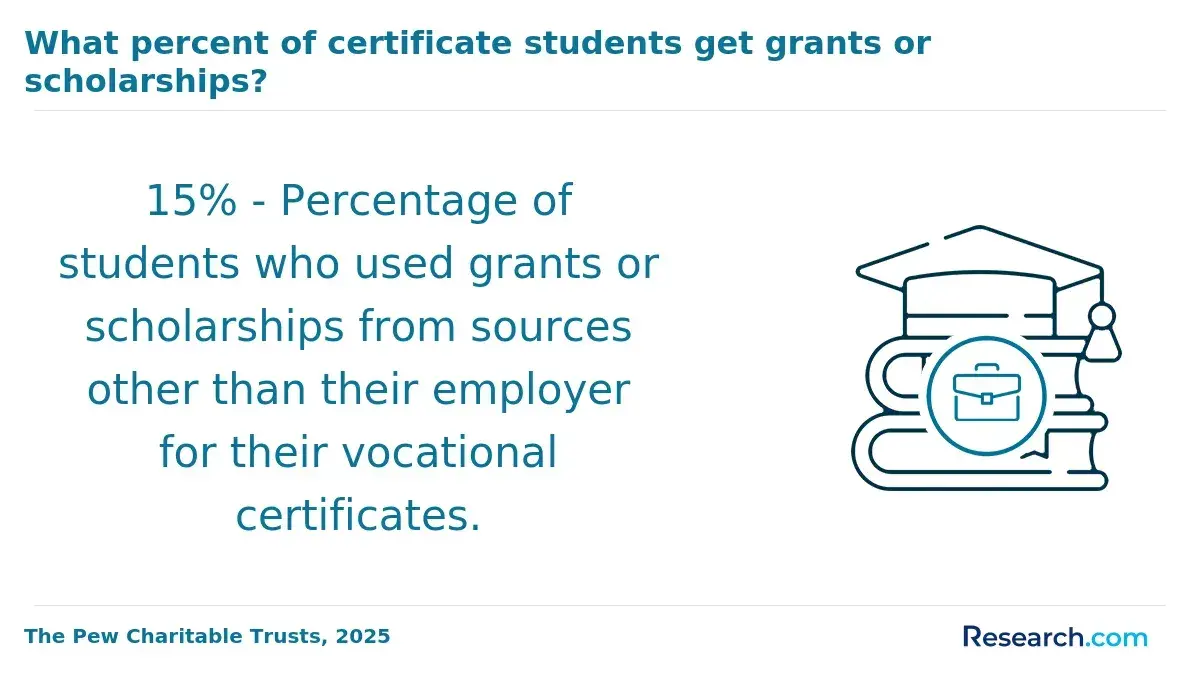
Research should also help you make a financial decision. Graduate students using federal Direct Unsubsidized Loans typically face an annual loan limit of $20,500, so tuition, assistantships, scholarships, fees, and living costs should be part of your interview preparation. If cost is a central factor, compare the school's offer with affordable masters degrees to understand whether the program's value justifies its total price.
The table below shows what to research before the interview and how each item helps you ask better questions.
| What to research | Why it matters | Where to look |
| Curriculum and course sequence | Shows whether the program builds the skills you need in the right order | Program catalog, degree plan, handbook |
| Faculty expertise | Helps you identify mentors, labs, research groups, or professional networks | Faculty profiles, publications, project pages |
| Funding and assistantships | Determines affordability and how much paid academic work may be available | Financial aid pages, graduate assistantship listings, department FAQs |
| Fieldwork, practicum, or internship options | Important for applied programs where supervised experience affects career readiness | Program outcomes pages, practicum manuals, student handbooks |
| Licensure or certification alignment | Critical for fields such as counseling, education, social work, nursing, and psychology | Accreditation pages, state board disclosures, program director statements |
| Career outcomes | Helps you judge whether graduates enter roles similar to your goals | Career services reports, alumni profiles, department placement data |
Before the interview, prepare two or three program-specific observations. For example, you might mention a course that fills a skill gap, a faculty member whose research connects to your interests, or a practicum structure that supports your career path.
How do you explain your academic background and fit?
Your academic background does not need to be flawless to be persuasive. Interviewers want to know whether you can handle graduate-level work, understand your preparation honestly, and explain how your experiences point toward the program.
Start with the parts of your background that best predict success in the program: advanced coursework, research methods, writing experience, quantitative skills, clinical or field exposure, internships, leadership, language skills, technical tools, or professional experience. If your path includes a career change, a lower grade in one area, or time away from school, explain it briefly and focus on evidence of current readiness.
The Bureau of Labor Statistics 2024 annual averages show that workers with doctoral degrees had median weekly earnings of $2,278, but that figure varies widely by field and occupation. Use salary data as context, not as your main reason for applying; graduate committees usually respond better to a clear academic or professional purpose than to a purely income-based explanation.
If you are applying after an accelerated, bridge, or fast track program, be ready to explain how that format prepared you for graduate pacing. Emphasize evidence such as capstone work, independent projects, faculty feedback, or relevant professional responsibilities.
A strong fit explanation usually includes these elements in a tight, chronological story.
- Origin: Identify the course, job, research question, community issue, or professional experience that led you toward the field.
- Preparation: Highlight the academic, technical, research, writing, or applied experiences that show readiness.
- Gap: Explain what you still need to learn and why graduate study is the right next step.
- Program match: Connect your needs to specific program features such as faculty, curriculum, labs, fieldwork, or cohort model.
- Contribution: Describe what you would bring to class discussions, research teams, clinical settings, or professional communities.
If you have a weak spot, avoid overexplaining. A concise answer such as "My early statistics grade did not reflect my current preparation, so I later completed a research methods course and used statistical software in my capstone project" is stronger than a long defense.
What questions should you ask the interviewers?
The questions you ask can shape how interviewers remember you. Good questions show that you understand graduate education as a serious academic, financial, and professional commitment.
Prepare questions in categories so you can adjust based on who is interviewing you. Faculty members can answer mentor and research questions; program directors can answer curriculum and policy questions; current students can give insight into workload and culture.
Use the questions below to learn whether the program is a good fit, not just to fill time at the end of the interview.
- Advising: How are students matched with advisors, and what does regular advising typically look like?
- Curriculum: Which courses or milestones tend to be most challenging for new students?
- Research: What opportunities do students have to join faculty projects, publish, present, or pursue independent work?
- Professional preparation: How does the program support internships, clinical placements, licensure preparation, portfolios, or job searches?
- Funding: How are assistantships, scholarships, tuition waivers, or stipends awarded and renewed?
- Student experience: What traits help students thrive in this program?
- Outcomes: What types of roles, doctoral programs, fellowships, or professional paths have recent graduates pursued?
Avoid questions that are easily answered on the website unless you use them to ask for clarification. For example, instead of asking "Do you offer internships?" ask "I saw the program includes an internship option; how are placements matched to student goals?"
How do in-person and virtual interviews differ?
In-person and virtual interviews evaluate the same core qualities, but the preparation details differ. In-person interviews require travel planning, professional presence, and sustained social energy. Virtual interviews require technical reliability, camera awareness, and concise communication.
Virtual interviews are now common because they reduce travel barriers and allow programs to reach applicants who work full time, live far from campus, or need flexible access. Applicants exploring flexible formats, including online degrees for seniors, should use the interview to ask how the program supports students who may be balancing study with work, caregiving, or a later-career transition.
The table below compares the two formats so you can prepare for the expectations that matter most.
| Factor | In-person interview | Virtual interview |
| First impression | Includes arrival time, body language, informal conversations, and campus interactions | Depends heavily on lighting, sound, framing, eye contact, and technical readiness |
| Logistics | Requires transportation, parking, lodging, weather planning, and printed materials | Requires stable internet, updated software, quiet space, backup device, and power source |
| Campus evaluation | Allows direct observation of facilities, commute, student culture, and neighborhood | Requires more intentional questions about community, support, and access to resources |
| Energy management | May involve long visit days, meals, tours, and multiple meetings | May involve screen fatigue, back-to-back video calls, and fewer informal cues |
| Risk areas | Being late, underestimating travel time, or treating informal events too casually | Audio problems, distractions, reading from notes, or looking away from the camera constantly |
For virtual interviews, test your setup with the same device, platform, and location you plan to use. For in-person interviews, review the schedule carefully and remember that conversations with students, staff, and coordinators may still influence impressions.
What should you wear and bring to the interview?
What you wear and bring should support your message rather than distract from it. Choose professional clothing that fits the program context: business formal for highly traditional or clinical settings, business casual for many academic departments, and neat field-appropriate attire for programs with studio, lab, or outdoor components.
If you are unsure, dress one level more formal than the program's everyday environment. Comfort matters because interviews can involve walking, waiting, meals, campus tours, or long video sessions.
Bring or prepare the following items so you can focus on the conversation rather than logistics.
- Updated resume or CV: Bring several printed copies for in-person interviews and keep a digital copy available for virtual interviews.
- Application materials: Review your statement of purpose, writing sample, portfolio, transcripts, and any submitted research proposal.
- Notes on the program: Keep a concise list of faculty names, courses, labs, funding questions, and interviewers' roles.
- Questions for interviewers: Prepare more questions than you expect to ask so you can adapt to the conversation.
- Professional materials: Bring a notebook, pen, folder, and any requested identification or campus access documents.
- Virtual backup tools: Have a charger, headphones, hotspot option, platform link, and phone number for the coordinator.
Do not bring items that create complications, such as large bags, distracting accessories, strong fragrances, or unrequested materials that are difficult to review during a short meeting. If you have a portfolio or publication, mention it naturally and offer to share it only if relevant.
How do mock interviews improve your performance?
Mock interviews improve performance because they reveal habits you may not notice while practicing alone. You may discover that your answers are too long, your examples are vague, your tone sounds uncertain, or your body language undermines your message.
A good mock interview should feel realistic. Ask a faculty mentor, career counselor, supervisor, advisor, or trusted peer to use actual graduate interview questions and provide candid feedback on substance and delivery.
Use this sequence to make mock interviews more effective instead of simply "practicing more."
- Send your mock interviewer the program name, degree level, resume or CV, and statement of purpose.
- Ask them to include a mix of motivation, fit, behavioral, research, and weakness-based questions.
- Record the session if possible, then review your pacing, clarity, filler words, and eye contact.
- Identify the three answers that need the most improvement.
- Revise examples so each one includes a specific action and outcome.
- Repeat the mock interview with shorter, more focused answers.
Mock interviews can also help you decide whether graduate school is the right next step now. If the interview reveals that your goals are still exploratory, a shorter credential such as certificate programs online may be worth comparing before committing to a full degree.
The strongest candidates do not sound rehearsed; they sound prepared. Aim for flexible fluency, not perfection.
How should you follow up after the interview?
Follow-up is part of professional communication. A thoughtful note reinforces your interest, reminds the interviewer of your fit, and gives you a chance to acknowledge something specific from the conversation.
Send a brief thank-you email within 24 to 48 hours unless the program gives different instructions. If you interviewed with several people, personalize each message rather than sending the exact same note to everyone.
A strong follow-up note should include these elements.
- Gratitude: Thank the interviewer for their time and mention the program or meeting date.
- Specific reference: Name a topic you discussed, such as a course, lab, practicum, advising model, or student opportunity.
- Reaffirmed fit: Connect that topic to your goals or preparation in one sentence.
- Professional close: Express appreciation and offer to provide any additional information if needed.
Keep the tone warm and concise. A follow-up email is not the place to rewrite your application, send a long explanation of a weak answer, or pressure the committee for a decision.
Sample: Thank you for speaking with me about the M.S. program today. I appreciated learning more about the applied research sequence and how students collaborate with faculty on community-based projects. Our conversation strengthened my interest in the program because it connects closely with my experience in evaluation work and my goal of building stronger research skills. Thank you again for your time and consideration.
What mistakes should you avoid in a graduate interview?
The most damaging interview mistakes usually come from poor preparation, unclear goals, or misreading the interview as a one-way performance. You can avoid most problems by preparing evidence, listening carefully, and treating everyone involved with professionalism.
The table below identifies common mistakes and better alternatives so you can correct weak spots before the interview.
| Mistake | Why it hurts | Better approach |
| Giving generic reasons for applying | Suggests you have not researched the program | Connect your goals to specific courses, faculty, fieldwork, research, or outcomes |
| Reciting memorized answers | Can sound unnatural and may fall apart during follow-up questions | Practice talking points and examples rather than scripts |
| Overemphasizing prestige | Does not explain academic or professional fit | Discuss resources, mentorship, curriculum, and the type of work you hope to do |
| Being vague about goals | Makes it harder for committees to judge fit | Describe a direction, even if you remain open to refinement during the program |
| Ignoring cost and funding | Can lead to a poor enrollment decision after admission | Ask about assistantships, scholarships, fees, renewal criteria, and typical workload |
| Speaking negatively about past schools or employers | Raises concerns about professionalism | Frame challenges around what you learned and how you adapted |
| Failing to ask questions | May signal low engagement or weak preparation | Prepare questions for faculty, students, and administrators |
| Treating informal interactions casually | Graduate admissions can include feedback from multiple people | Stay professional with coordinators, students, staff, and other applicants |
Red flags on the school's side also matter. Be cautious if interviewers cannot explain funding clearly, avoid questions about advising, provide inconsistent licensure information, discourage contact with current students, or pressure you to enroll before you understand the full cost.
Other Things You Should Know About Choosing a College
Many graduate school interviews last about 20 to 60 minutes, but formats vary. Doctoral or highly competitive programs may include multiple meetings, group sessions, campus visits, or full interview days.
Yes, it usually means the program is seriously considering your application, but it is not an admission guarantee. The interview helps the committee compare finalists and assess fit beyond written materials.
Pause, acknowledge the question, and answer honestly. It is better to say how you would think through the issue than to invent an answer or pretend expertise you do not have.
Only if asked. Keep the answer professional and brief, and return to why this specific program fits your goals. Avoid using other offers as pressure unless you are discussing decision timelines respectfully.
References
- 70 Smart Questions to Ask in an Interview in 2025 | The Muse https://www.themuse.com/advice/51-interview-questions-you-should-be-asking
- 70 questions to ask during your grad school interview — Emma Cartisano https://emmacartisano.com/writing/grad-school-interview-questions
- What is Your Educational Background? A Comprehensive Guide https://epee-education.com/what-is-your-educational-background/
- Common Graduate & Professional School Interview Questions https://careerengagement.tulane.edu/resources/common-graduate-professional-school-interview-questions/