2027 Social Work Job Offers with Signing Bonuses: Questions About Conditions and Repayment
Audited and Verified:
Our Editorial and Data Verification Process
Research.com uses government datasets, official education statistics and primary institutional information to support its career and degree guides. Our review process checks factual accuracy, occupational definitions, source dates and the requirements associated with the credentials discussed.
How This Article Was Fact-Checked
Our editorial team verifies salary estimates, employment projections, education requirements and program information against original data providers and official organizations. Salary figures are checked against the relevant occupational definitions and reporting periods. Information about licensure, accreditation and required in-person training is reviewed separately.
Fact-checked and verified on:

Co-Founder and Chief Data Scientist
A signing bonus can make a social work offer attractive, but the amount advertised may not be the amount you keep. Payment can depend on starting work, maintaining a license, or staying through a specified date - and leaving early may create a repayment bill. For students, new graduates, and experienced social workers comparing offers, the important document is the written bonus agreement, not the job posting. This guide explains which conditions to check, when repayment may apply, how taxes complicate the calculation, and how to weigh the bonus against salary, supervision, and working conditions.
Key Things You Should Know
- A signing bonus is usually conditional compensation: confirm its payment date, required service period, and whether early departure triggers full or prorated repayment.
- A $5,000 bonus can create a $5,000 repayment obligation even if payroll withholding leaves you with less than $5,000 in your bank account; tax recovery may require separate steps.
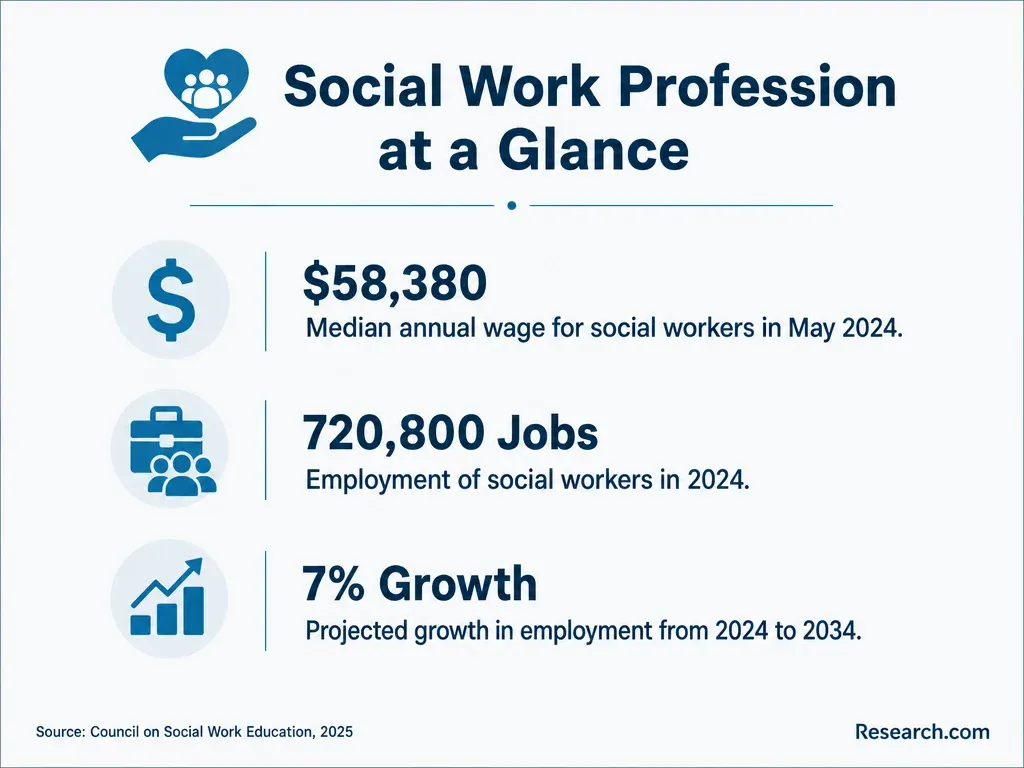
- Compare recurring pay and job fit first. The U.S. Bureau of Labor Statistics reports a May 2025 median annual wage of $61,780 for social workers across specialties - not a promised salary or a benchmark for bonus size.
How do social work signing bonuses work?
A signing bonus, also called a sign-on or hiring bonus, is a one-time payment offered for accepting a job. It is separate from base salary and may be paid with the first paycheck, after onboarding, or in installments tied to continued employment. Some employers advertise a maximum amount that depends on role, location, full-time status, or license level.
Ask whether the bonus is earned when you sign, when you start, or only after each service milestone. A $6,000 offer paid in two $3,000 installments is materially different from $6,000 paid at the start - especially if the agreement requires repayment of an installment already received. Recruiters hiring across MSW careers across different practice settings may use similar bonus language for jobs with very different schedules and retention terms.
Request the complete offer letter, bonus agreement, and any policy incorporated by reference before accepting. An advertisement alone may omit conditions that appear in those documents.
What conditions apply to social work signing bonuses?
Conditions commonly concern eligibility, payment, and continued employment. The table separates them so you can identify what must happen before money is paid and what you must do to keep it.
| Condition | What the agreement may require | Why it matters |
| Credentials | Hold a specified degree, active state license, or independent clinical license by a stated date | Graduation or passing an exam does not itself mean a license has been issued |
| Job status | Work full time, remain in a designated location or position, or complete onboarding | A transfer or reduction in hours could affect eligibility |
| Service period | Remain employed for a stated number of months after payment or start date | The clock may begin later than expected |
| Performance or standing | Meet stated employment standards or avoid specified disciplinary action | Vague wording makes it harder to predict whether the bonus is secure |
Clinical applicants should check whether a posting requires an independent license or accepts an MSW graduate working toward one. An employer's promise of supervision does not establish that every hour will satisfy a state board; checking social work clinical hour categories is a separate step from checking bonus eligibility. Ask the employer to identify any bonus condition that could change if your license application, supervisor assignment, or approved role changes.
When must social workers repay a signing bonus?
Repayment usually arises when an employee leaves before the agreed service period ends, but the precise trigger is contractual. Some agreements cover voluntary resignation only; others also address termination for cause, loss of a required license, failure to start, or a move out of the qualifying position. Do not assume a layoff, medical leave, family leave, or employer-initiated transfer is automatically exempt.
Read the repayment formula. Full repayment requires the entire covered bonus after a triggering event; prorated repayment reduces the amount as qualifying service accrues. Also check whether the obligation applies only to installments received, whether the employer can demand payment immediately, and whether approved leave pauses the service clock.
If further education might prompt a job change, compare its schedule with the commitment before accepting the bonus. A plan to pursue a practice doctorate, for example, makes program timing and the guide to lower-cost doctoral social work programs relevant to the decision - but it does not excuse repayment under an existing agreement. Obtain any proposed exception in writing before relying on it.
For an employee, a signing bonus is generally taxable wages subject to applicable withholding and payroll taxes. The amount deposited may therefore be smaller than the gross bonus named in the agreement. Withholding is an advance payment toward tax, not necessarily your final tax liability.
Repayment can be more complicated if it occurs in a later tax year. Depending on the facts, a same-year payroll correction, corrected wage records, or a tax deduction or credit under applicable rules may be relevant. State tax treatment can differ. Ask payroll what records it will issue and consult a qualified tax professional before assuming you can simply repay the net deposit or recover all withholding automatically.
Keep the gross bonus, pay statements, agreement, repayment receipt, and employer correspondence together. If you are budgeting for graduate study, treat a possible gross-bonus repayment as a separate risk from tuition; an online social work master's affordability guide cannot account for an employer-specific clawback.
How can you compare social work job offers with signing bonuses?
Compare the compensation you are likely to retain over the same period, then evaluate whether you can safely and professionally do the work. A larger one-time bonus may not offset a lower recurring salary, costly commute, weak supervision, or a caseload that makes retention unlikely.
Use the following sequence for two written offers:
- Set a common comparison period and add base pay, realistically attainable differentials, benefits, and only the bonus installments scheduled for that period.
- Subtract foreseeable commuting, licensing, and work-related costs; keep taxes and potential bonus repayment visible as separate uncertainties rather than hiding them in one "net pay" estimate.
- Mark each bonus payment and repayment deadline on a timeline, including the treatment of leave, transfer, termination, and changes in hours.
- Compare caseload, supervision quality, onboarding, safety practices, schedule, advancement, and the likelihood that you will want to remain through the service period.
- Ask for any negotiated change - such as prorated repayment, an exception for layoff, or a clearer payment date - in a revised written agreement.
If an accelerated degree is part of your near-term plan, compare its actual class and field schedule with the job commitment; condensed social work master's program schedules may leave less room for full-time work than the word "online" suggests.
The best offer is the one whose recurring compensation, conditions, and practice environment you can reasonably sustain - not necessarily the one with the largest advertised bonus.
Other Things You Should Know About Social Work
No. Public Service Loan Forgiveness concerns qualifying student-loan payments and other program requirements; receiving a bonus is not itself a loan payment. Verify your employer and loans against current federal program rules.
A student may receive compensation through an employer arrangement, but a bonus does not make a job an approved field placement. The social work program must approve the site, learning activities, and field instruction under its policies.
Yes. A collective bargaining agreement or public-sector pay policy may govern eligibility, payment, or repayment. Ask for the provisions that apply to the position before relying on a recruiter's summary.
No. An advertisement may describe a bonus available only to certain hires. Confirm your specific amount, eligibility, payment schedule, and conditions in the written offer and bonus agreement.
- Retention Incentive Payment and Termination Calculations | U.S. Office of Personnel Management https://www.opm.gov/policy-data-oversight/pay-leave/recruitment-relocation-retention-incentives/fact-sheets/retention-incentive-payment-and-termination-calculations/
- West Virginia Code | §21-5-4 - WV Legislature https://code.wvlegislature.gov/21-5-4/
- Health Care Worker Bonus Program | ny.gov https://www.health.ny.gov/health_care/medicaid/providers/hwb_program/
- Fact Sheet #56C: Bonuses under the Fair Labor Standards Act (FLSA) | U.S. Department of Labor https://www.dol.gov/agencies/whd/fact-sheets/56c-bonuses
- Publication 15 (2026), (Circular E), Employer's Tax Guide | Internal Revenue Service https://www.irs.gov/publications/p15
- Pay Agreements | texas.gov https://efte.twc.texas.gov/pay_agreements.html
- SHRA Sign-On and Retention Bonuses Policy | University of North Carolina at Chapel Hill https://policies.unc.edu/TDClient/2833/Portal/KB/ArticleDet
- Examples of signing bonus clauses in contracts | Afterpattern https://afterpattern.com/clauses/signing-bonus
- Social Work Salaries | socialworkers.org https://www.socialworkers.org/careers/career-center/kickstart-your-job-hunt/social-work-salaries
- Social Worker Salary Guide by State: LCSW and MSW Pay | Social Work License Map https://socialworklicensemap.com/social-work-careers/social-work-salary/