2027 Oncology Social Worker: Responsibilities, Education, and Career Fit
Audited and Verified:
Our Editorial and Data Verification Process
Research.com uses government datasets, official education statistics and primary institutional information to support its career and degree guides. Our review process checks factual accuracy, occupational definitions, source dates and the requirements associated with the credentials discussed.
How This Article Was Fact-Checked
Our editorial team verifies salary estimates, employment projections, education requirements and program information against original data providers and official organizations. Salary figures are checked against the relevant occupational definitions and reporting periods. Information about licensure, accreditation and required in-person training is reviewed separately.
Fact-checked and verified on:

Co-Founder and Chief Data Scientist
Oncology social workers help people navigate cancer's emotional, practical, and financial effects, but the job can range from care coordination to licensed therapy. That distinction matters if you are choosing a degree, considering a move from another healthcare role, or evaluating a job offer.
This guide explains what oncology social workers do, which qualifications employers may expect, how pay and demand compare with broader social work occupations, and what to check before investing in training. It also addresses the less visible parts of the work - documentation, difficult conversations, and the resources available to support patients.
Key Things You Should Know
- Oncology social workers support people affected by cancer through psychosocial assessment, counseling within their authorized scope, resource referrals, and coordination with the care team; duties vary by setting and license.
- An MSW is commonly sought for hospital oncology roles, while independent psychotherapy generally requires a separate state clinical license and qualifying post-degree supervision. Specialty certification does not replace licensure.
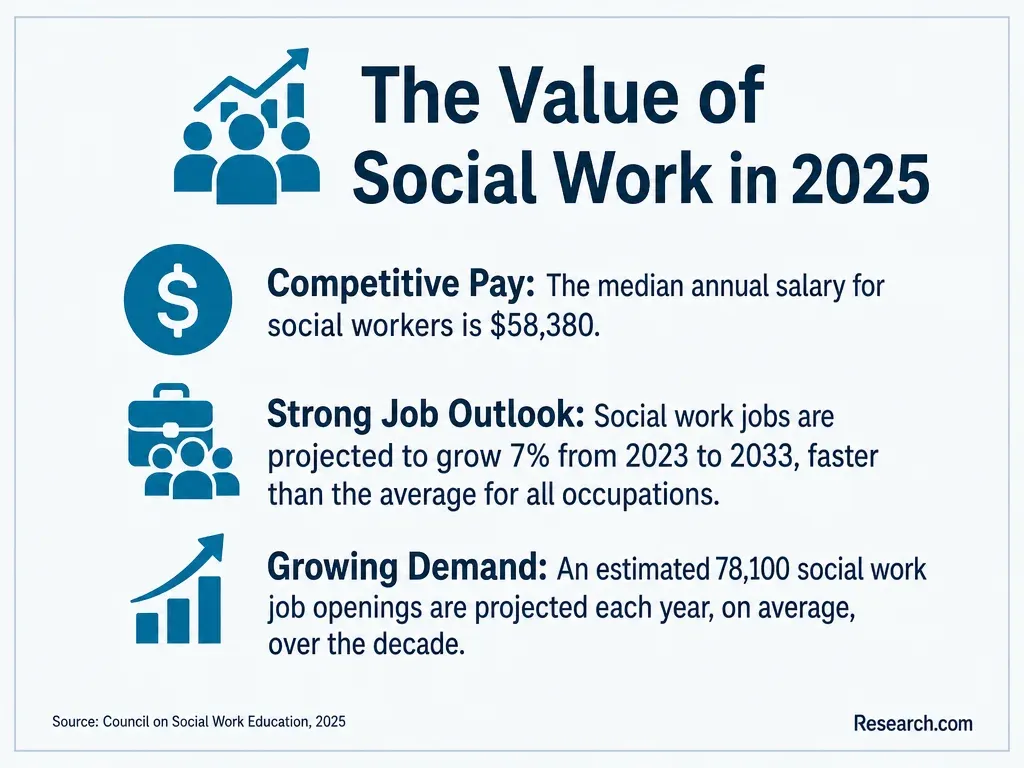
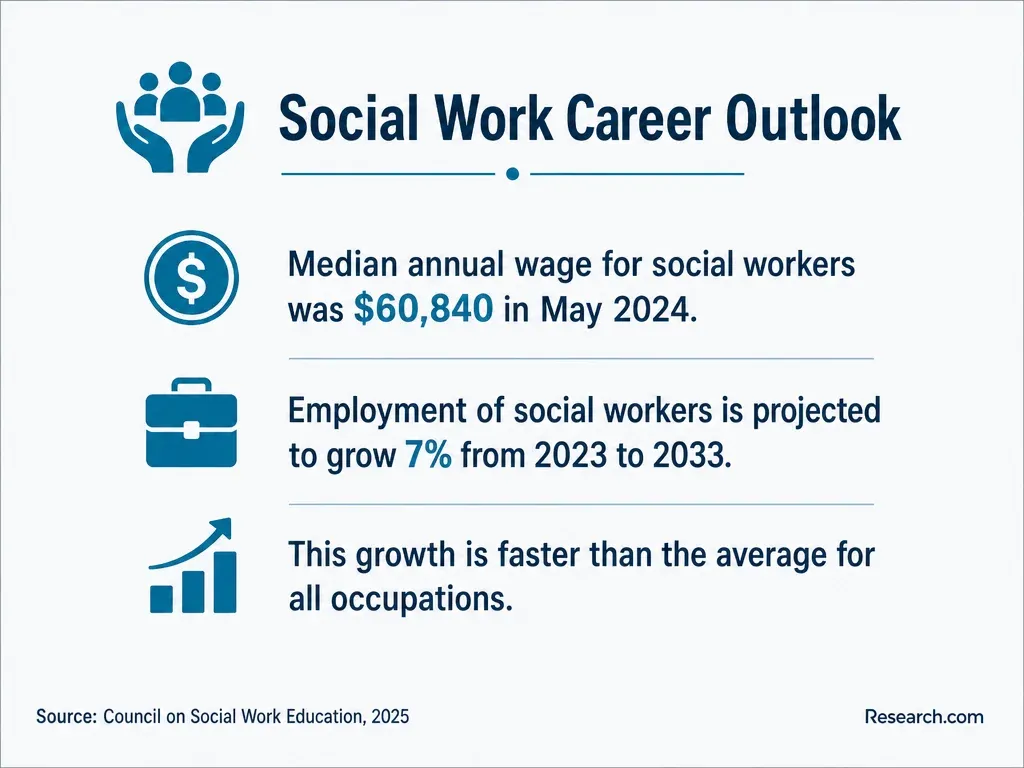
- The U.S. Bureau of Labor Statistics reports a May 2025 median wage of $67,880 for healthcare social workers and projects 8% employment growth from 2025 to 2035; neither figure isolates oncology jobs.
What does an oncology social worker do?
An oncology social worker addresses the social and emotional circumstances that affect cancer care. Depending on the position, that can mean assessing a patient's support system and immediate needs, helping a family discuss a diagnosis, arranging transportation or lodging referrals, or connecting someone with financial-assistance and community programs. The social worker may also help coordinate discharge, survivorship, palliative care, or end-of-life services.
The work is collaborative rather than a substitute for medical treatment. Social workers communicate with oncologists, nurses, patient navigators, financial counselors, and community providers while respecting consent and confidentiality. Some positions include counseling or clinical assessment; others concentrate on practical support and care coordination.
A patient navigator may perform some overlapping coordination tasks, but the title alone does not establish a social work qualification or clinical scope. For a broader comparison, see social work master's roles and employment settings.
When reviewing a job description, look past "supportive care." Ask which services the social worker personally provides, which are referred to another professional, and how urgent needs and high caseloads are handled.
How do you become an oncology social worker?
Start with the work you want to do and the qualifications listed by local cancer programs. Healthcare experience in nursing support, navigation, benefits assistance, or community services can provide valuable communication and coordination skills, but it does not replace a required social work degree or license.
A BSW provides generalist social work preparation and may qualify graduates for some support or coordination roles, subject to employer and state rules. Many hospital oncology social worker postings seek an MSW; clinical positions may also require a current license or eligibility for one.
Someone with a bachelor's degree in another field can typically investigate a traditional or foundation MSW rather than assume they need a second bachelor's degree. Advanced-standing MSW admission is generally reserved for applicants with a qualifying social work degree who meet the program's criteria - not simply for applicants with related work experience. Compare accessible entry routes to graduate social work study against your actual transcripts and target employers' requirements.
A practical route is to review several local postings, identify the degree and license each requires, then seek approved oncology, hospital, hospice, or closely related field learning. After graduation, build specialty competence through supervised work, employer training, and continuing education. A DSW or PhD is not a standard entry requirement for direct oncology practice.
What licenses do oncology social workers need?
There is no single U.S. "oncology social worker license." Required credentials depend on the state, job duties, and employer. A position centered on resource coordination may have different requirements from one involving psychotherapy, diagnosis, independent clinical decisions, or services billed under a licensed clinician's credentials. State license names and permitted activities are not uniform.
For an MSW graduate, degree completion, examination eligibility, license issuance, and independent clinical authority are separate milestones. States may require a qualifying degree, an application and examination, and - in the case of independent clinical licensure - documented post-degree supervised experience. MSW field placements do not automatically count toward that later requirement.
Review online MSW program eligibility by intended state, then confirm the applicable rules directly with the state licensing board before enrolling or accepting a clinical role.
If a posting says "license required," ask for the exact license category and whether it must be active on the start date. Also confirm the rules for any state where you would provide remote services; an existing license does not automatically authorize practice elsewhere.
Useful preparation combines social work foundations with healthcare practice: person-in-environment assessment, ethics, grief and loss, trauma-informed communication, health disparities, family systems, benefits and resource navigation, and interprofessional teamwork.
Oncology-specific learning adds familiarity with cancer treatment pathways, survivorship, palliative care, and the effects of illness on work, caregiving, and finances. A social worker needs enough medical literacy to coordinate effectively - not to give medical advice.
A relevant BSW or MSW field placement should offer supervised opportunities to engage clients, assess needs, document work, make referrals, and receive feedback. A cancer center is valuable, but a well-supervised hospital, hospice, or community health placement can also develop transferable skills. Ask the field office what learning tasks and qualified instruction a site can provide.
A paid job, volunteer role, or simulation counts as curricular field education only if the program approves it under its rules.
Field schedules can limit paid work even in an online program. If you are considering planning paid university work alongside MSW study, compare the assistantship's hours with placement, seminar, and live-skills requirements; an assistantship does not ordinarily replace the approved placement.
What skills and work settings make oncology social work a good career fit?
The role fits people who can listen without taking over decisions, explain complicated resource options clearly, document accurately, and collaborate when patients' needs exceed one professional's scope.
It also requires comfort with uncertainty, serious illness, grief, inequitable access to care, and systems that cannot always provide the assistance a family needs. Prior healthcare or community-service experience helps, but seek supervised practice before assuming those skills transfer unchanged to cancer care.
Settings differ substantially. An inpatient service may involve rapid discharge planning and urgent referrals; an outpatient clinic may emphasize continuing support during treatment; hospice or palliative care may bring sustained attention to family needs and goals of care.
Compare caseload, administrative time, after-hours coverage, interpreter access, safety procedures, clinical supervision, and referral resources before accepting a position. Ask how the team responds when no affordable transportation, lodging, or financial aid is available.
If you prefer systems improvement or program leadership to direct service, an experienced social worker might eventually consider management training or shorter online DSW program pathways. A doctorate is not needed for most oncology social worker jobs; targeted leadership experience may be the more direct step. If you primarily want medical treatment responsibilities, compare nursing or another clinical profession instead of assuming social work provides the same scope.
Other Things You Should Know About Social Work
Yes. Patients and caregivers can ask their cancer-care team whether a social worker is available and how referrals work. Access and eligibility depend on the organization.
No. Depending on the program, support may extend to diagnosis, survivorship, recurrence, palliative care, or bereavement. Ask what services a particular organization offers.
No. They can help identify programs, explain application steps, and coordinate referrals, but eligibility, available funding, and award decisions belong to the programs involved.
No single billing arrangement applies. Services may be included in a care program, supported by an organization, or billed under applicable rules. Patients should ask the provider and insurer about possible charges.
- Delineation of core roles of oncology social workers in... - PMC https://pmc.ncbi.nlm.nih.gov/articles/PMC11629305/
- Supportive Care of the Patient With Pancreatic Cancer | CancerNetwork https://www.cancernetwork.com/view/supportive-care-patient-pancreatic-cancer-role-oncology-social-worker
- How an Oncology Social Worker Can Help | mayoclinic.org https://connect.mayoclinic.org/blog/cancer-education-center/newsfeed-post/how-an-oncology-social-worker-can-help/
- Scope and Standards of Practice | AOSW https://aosw.org/resources/scope-and-standards-of-practice/
- What is Psychosocial Oncology? | APOS https://apos-society.org/professionals/what-is-psychosocial-oncology/
- Adult Psychosocial Care | Dana-Farber Cancer Institute https://www.dana-farber.org/cancer-care/treatment/supportive-oncology/adult-psychosocial-oncology
- The Value of Oncology Social Workers | cancercare.org https://www.cancercare.org/publications/262-the_value_of_oncology_social_workers
- Oncology Social Workers' Role in Patient-Centered Care | Association of Cancer Care Centers https://www.accc-cancer.org/view/oncology-social-workers-role-in-patient-centered-care
- Get OSW-C Certified - Board of Oncology Social Work Certification https://oswcert.org/getcertified/
- Oncology Social Worker Job Description (Updated 2026 With Examples) | NASW https://joblink.socialworkers.org/career/oncology-social-worker/job-descriptions