2027 Family Preservation Social Worker: Responsibilities, Education, and Career Fit
Audited and Verified:
Our Editorial and Data Verification Process
Research.com uses government datasets, official education statistics and primary institutional information to support its career and degree guides. Our review process checks factual accuracy, occupational definitions, source dates and the requirements associated with the credentials discussed.
How This Article Was Fact-Checked
Our editorial team verifies salary estimates, employment projections, education requirements and program information against original data providers and official organizations. Salary figures are checked against the relevant occupational definitions and reporting periods. Information about licensure, accreditation and required in-person training is reviewed separately.
Fact-checked and verified on:

Co-Founder and Chief Data Scientist
Family preservation work aims to help children remain safely with their families when that is possible. For someone considering this career, the decision is not simply whether to earn a social work degree: employers may hire for different roles, while safety decisions, home visits, documentation, and after-hours demands shape the work itself.
This guide explains the responsibilities, education and licensing distinctions, earnings, and working conditions so you can compare job postings and training options before committing to a path.
Key Things You Should Know
- Family preservation workers coordinate practical support and assess family needs, but they cannot promise that a child will remain at home when safety concerns require another response.
- A BSW or MSW can prepare you for social work roles; some family-support positions accept other degrees. A degree alone does not confer a state license or independent clinical authority.
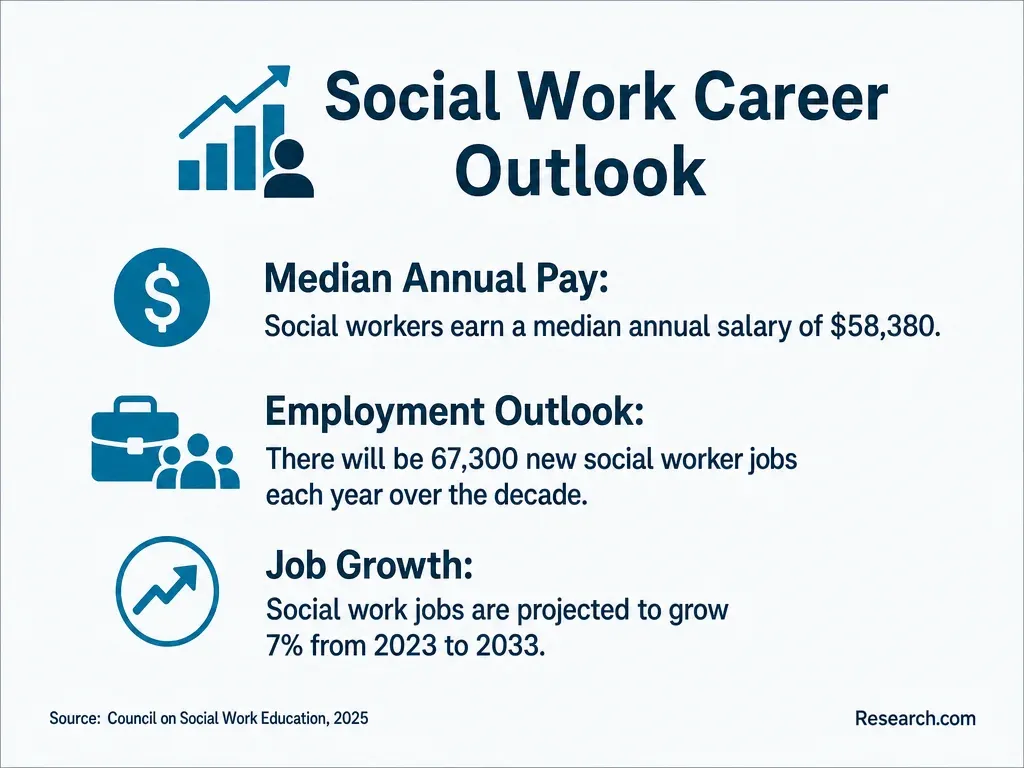
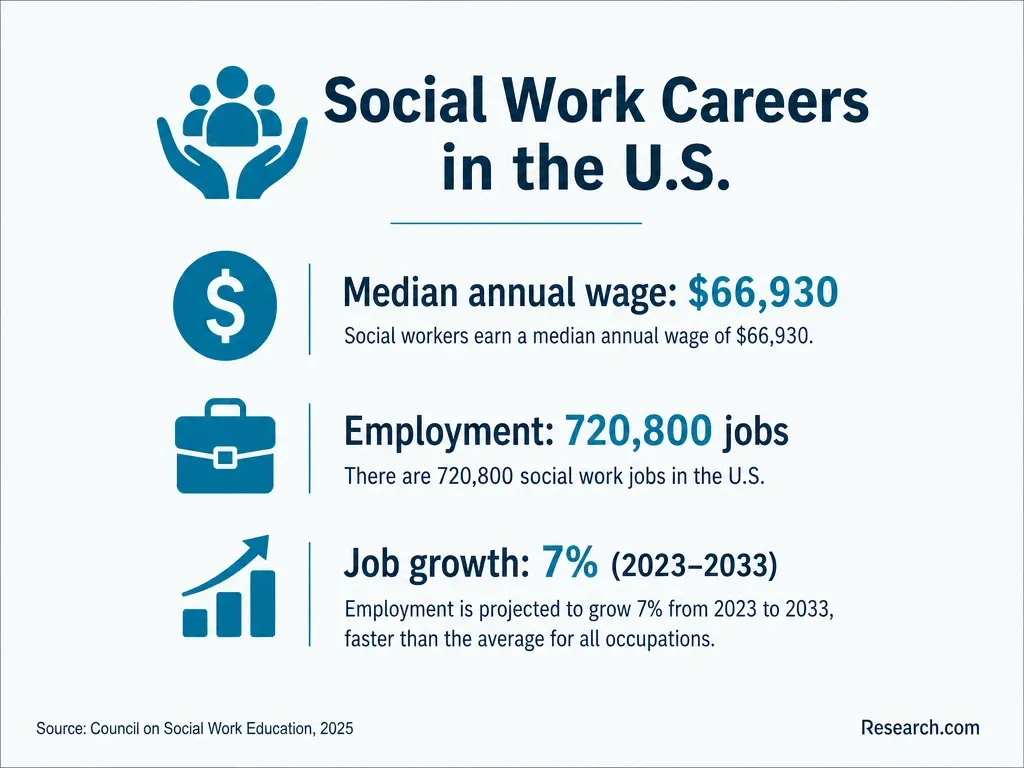
- The May 2025 median annual wage for the broader category of child, family, and school social workers was $59,550; projected employment growth for that category is 4% from 2025 to 2035, not a forecast for this job title alone.
What does a family preservation social worker do?
A family preservation social worker helps a family address problems that may put a child's safety or stability at risk. Depending on the agency, the worker may serve families referred by child protective services, a court, a community organization, or the families themselves. The goal is to strengthen safe caregiving and access to support - not to keep children at home regardless of risk.
Typical work includes home visits; engaging caregivers and children; assessing strengths, needs, and immediate concerns within the worker's role; developing service plans; connecting families with housing, benefits, childcare, or treatment providers; and documenting progress. Workers coordinate with schools, healthcare teams, and child welfare staff while following rules on consent, confidentiality, reporting, and information sharing.
They may also help plan for reunification after a child has entered out-of-home care, although agencies may assign that work to a separate team.
The boundaries matter. A worker can help a caregiver reach a treatment provider, but psychotherapy is a different function with its own qualifications and authorization. Readers drawn chiefly to treatment should compare that goal with a clinical MSW education and professional development guide before choosing a family preservation position.
What education do family preservation social workers need?
Requirements follow the employer's classification and the duties, not the job title alone. Some family-support or in-home service jobs accept a bachelor's degree in social work or a related field plus relevant experience. Positions classified as social worker may require a BSW, MSW, or state license. Clinical treatment positions generally have additional degree and licensing requirements. Read the required qualifications separately from the employer's preferences.
A BSW provides generalist social work preparation and supervised field education.
A traditional MSW can admit graduates of other disciplines and adds graduate-level foundation and specialized study. An advanced-standing MSW is a shorter route for applicants with qualifying prior social work education under the program's rules; a psychology or human services degree does not automatically qualify. The advanced standing eligibility and traditional MSW options comparison is useful if you already hold a bachelor's degree.
If you can enter a suitable family-support role with your present degree, consider gaining supervised agency experience before paying for another credential. An MSW becomes more compelling when target postings require it or you want the broader practice opportunities it can support. A DSW or PhD is not a standard entry requirement for family preservation service.
Do family preservation social workers need a license or certification?
Not always. Licensing depends on the state's rules for social work titles and activities and on the employer's requirements. Some staff provide case management or family support without a social work license; other positions require an active license. Specialized clinical work requires authority appropriate to that state and role. There is no single national family preservation license or universally required specialty certification.
Before accepting a position, ask whether its stated title is protected in the state, which license category it requires, and who supervises your duties. Graduation, passing an examination where required, applying to a board, and receiving a license are separate steps.
BSW or MSW field placement also does not automatically count as post-degree clinical supervision. If licensure is a goal, use the state board's current rules alongside guidance on checking MSW program authorization and professional eligibility.
Both formats can prepare students for this work when the program meets relevant standards and provides effective instruction and supervised field learning. Online coursework may reduce travel to class, but it does not remove local placement, agency onboarding, live skills practice, or scheduled meetings. Campus programs may make in-person collaboration easier while requiring more travel and less geographic flexibility.
For working students and caregivers, compare the weekly schedule rather than the online label: required live sessions, group work, field days, site travel, and any campus visits. Ask whether the school helps secure placements near you and how it handles a work schedule that conflicts with agency hours. A guide to social work master's programs with flexible learning schedules can help frame those questions, but confirm each program's actual field and attendance requirements.
Useful preparation includes child development, family systems, social welfare policy, trauma-informed practice, research literacy, ethics, and work with families facing housing, income, or behavioral health barriers. Coursework helps students understand why a family may struggle; supervised practice tests whether they can engage respectfully, document accurately, recognize the limits of their role, and seek consultation when concerns change.
A relevant placement might be in child welfare, family resource services, or a community agency serving caregivers. Ask what tasks students actually perform, how safety and home visits are handled, and whether a qualified field instructor can observe and evaluate their work. Schools approve academic field education; employers separately provide orientation and job supervision.
Even condensed social work master's program schedules must be evaluated against the time needed for approved field learning and competent entry-level practice.
What skills and working conditions make family preservation a good career fit?
This work suits people who can build trust without overlooking risk, collaborate with families on practical goals, and stay organized when several agencies are involved. Cultural responsiveness, clear documentation, boundaries, and willingness to use supervision are as important as empathy. Workers must respect family strengths and self-determination while following applicable safeguarding law and agency procedure.
Ask prospective employers about caseload size and complexity, home-visit travel, after-hours coverage, safety protocols, access to interpreters, supervisory availability, and what resources families can actually receive. High responsibility paired with little supervision or few referral options is a materially different job from a well-supported in-home team.
If you prefer treatment, policy, or program leadership to ongoing home-based service, pursue roles aligned with that goal rather than assuming a more advanced degree will change this position's daily duties. A doctorate is ordinarily unnecessary for frontline entry; even cost-focused online social work doctorate choices are relevant chiefly when an established practitioner has a specific leadership or scholarly objective.
Other Things You Should Know About Social Work
It depends on the referral and legal circumstances. Some services are voluntary; others are connected to a court order or child welfare case. Workers should explain participation and its limits using current agency policy, not promise that declining has no consequences.
Authority depends on state law and the circumstances. A family preservation worker may document concerns and consult or make required reports, but should not claim sole authority over a removal decision unless their specific role and law provide it.
Ask agencies about qualified interpretation and translated materials. Relying on a child to interpret sensitive safety or service discussions can compromise understanding and privacy.
Possible moves include supervision, child welfare program coordination, family resource services, and related community roles. Review each posting's experience, degree, and license requirements before investing in further education.
- Crisis Care Workers Core Competencies | wisconsin.gov https://www.dhs.wisconsin.gov/crisis/care-worker-competencies.htm
- Reasonable efforts to preserve families? An examination of service utilization and child removal - PMC https://pmc.ncbi.nlm.nih.gov/articles/PMC9728499/
- Family Assessment Response | Minnesota Department of Children, Youth, and Families https://dcyf.mn.gov/individuals-and-families/family-services/child-safety-and-family-preservation/family-assessment-response
- Levels and Eligibility Requirements | North Carolina Social Work Certification and Licensure Board https://www.ncswboard.gov/levels-and-eligibility-requirements/
- Casework Practice | Child Welfare Information Gateway https://www.childwelfare.gov/topics/casework-practice
- Pursue the Significant Role of a Child Welfare Social Worker | UMass Global https://www.umassglobal.edu/blog-news/child-welfare-social-worker
- Family Preservation Caseworker Job Description | socialworkers.org https://joblink.socialworkers.org/career/family-preservation-caseworker/job-descriptions
- NASW Standards for Social Work Practice in Child Welfare | socialworkers.org https://www.socialworkers.org/Practice/NASW-Practice-Standards-Guidelines/NASW-Standards-for-Social-Work-Practice-in-Child-Welfare