# 1 position

Audited and Verified:
Our Editorial and Data Verification Process
Research.com uses government datasets, official education statistics and primary institutional information to support its career and degree guides. Our review process checks factual accuracy, occupational definitions, source dates and the requirements associated with the credentials discussed.
How This Article Was Fact-Checked
Our editorial team verifies salary estimates, employment projections, education requirements and program information against original data providers and official organizations. Salary figures are checked against the relevant occupational definitions and reporting periods. Information about licensure, accreditation and required in-person training is reviewed separately.
Fact-checked and verified on:

Co-Founder and Chief Data Scientist

Reviewed by Karolina Broda
Fact-Checker and Data Verification
Choosing physical therapist assistant training in Kansas City means checking more than tuition: the program must provide clinical experience and support eligibility for the license you need. The U.S. Bureau of Labor Statistics projects 23% national employment growth for physical therapist assistants from 2025 to 2035, making that choice especially timely. This guide explains credentials, costs, training formats, and the Missouri-Kansas licensing divide. It also accompanies a Best Physical Therapist Assistant Trade Schools in Kansas City for 2027 ranking created by the Research.com team of data scientists to help students identify programs worth considering.
A physical therapist assistant, or PTA, delivers parts of a physical therapist's treatment plan under the therapist's direction and supervision. In Kansas City, the relevant trade-school pathway is typically an associate degree program combining classroom study, practical labs, and supervised clinical education. Metropolitan Community College-Kansas City and Concorde Career College-Kansas City are two providers to investigate; compare their current PTA-specific accreditation, clinical arrangements, schedules, and complete costs rather than assuming their programs are equivalent (U.S. Bureau of Labor Statistics; CAPTE).
Expect to practice patient transfers, therapeutic exercise, equipment use, documentation, and communication before applying those skills with patients at clinical sites. A placement's location matters in this metro: travel across the Missouri-Kansas state line can add time and expense even if classes are nearby. Ask each program how placements are assigned, whether a car is effectively necessary, and whether students can work while completing clinical rotations.
PTAs work in outpatient physical therapy practices, hospitals, skilled nursing facilities, home health, and other rehabilitation settings (U.S. Bureau of Labor Statistics). Those settings can differ in patient population, scheduling, travel, and physical demands. A student interested in outpatient sports rehabilitation, for example, should ask about relevant clinical placement opportunities; a student considering home health should account for travel between patients.
Training location and employment location are separate decisions in a two-state metro. Before accepting a placement or job on either side of the state line, confirm the applicable state's licensing rules and the employer's onboarding requirements. A therapy-aide job can offer exposure to a clinic, but aide experience alone does not replace PTA education or licensure (Missouri Board of Registration for the Healing Arts; Kansas State Board of Healing Arts; U.S. Bureau of Labor Statistics).
The national median annual wage for physical therapist assistants was $68,380 in May 2025 (U.S. Bureau of Labor Statistics, Occupational Outlook Handbook). That is the midpoint for employed PTAs nationwide, not a forecast of a new graduate's pay or a Kansas City wage. Experience, setting, hours, and employer can change an offer.
For a local pay decision, compare the latest available Kansas City, MO-KS metropolitan wage estimate for physical therapist assistants - not the combined category of PTAs and aides - in the U.S. Bureau of Labor Statistics' Occupational Employment and Wage Statistics. Check its reference year before comparing it with a current offer or with the national May 2025 median. If a school quotes graduate earnings, ask which graduates and employment period the figure covers.
Plan on roughly two academic years of full-time study for a typical PTA associate degree, though the calendar depends on prerequisites, course sequencing, and clinical schedules (U.S. Bureau of Labor Statistics; CAPTE). Ask each Kansas City provider for its current term-by-term plan and clinical contact-hour requirements. A shorter advertised calendar may still require prerequisite study or full-time clinical blocks that limit paid work.
A claimed top 6 month associate online degree should not be treated as an interchangeable route to PTA practice: verify CAPTE accreditation, supervised clinical education, and state licensing eligibility before using any accelerated-program comparison. For someone who must keep working, a longer feasible schedule may be less costly than an accelerated schedule that creates unmanageable lost earnings.
Online coursework can reduce trips to campus for subjects a program offers remotely, but PTA skills labs and supervised patient care require in-person participation. A hybrid program is therefore a scheduling option, not a fully remote route to practice (CAPTE). Ask where labs occur, how often attendance is required, where clinical sites are located, and whether the program can arrange placements accessible from your home and workplace.
Lists of best ranked online colleges may help readers think about remote-course support, but an institution's online reputation does not establish that its PTA program meets clinical or licensing requirements. For this occupation, verify the specific program first. Campus-heavy study may be preferable if regular lab access and hands-on coaching outweigh commuting costs.
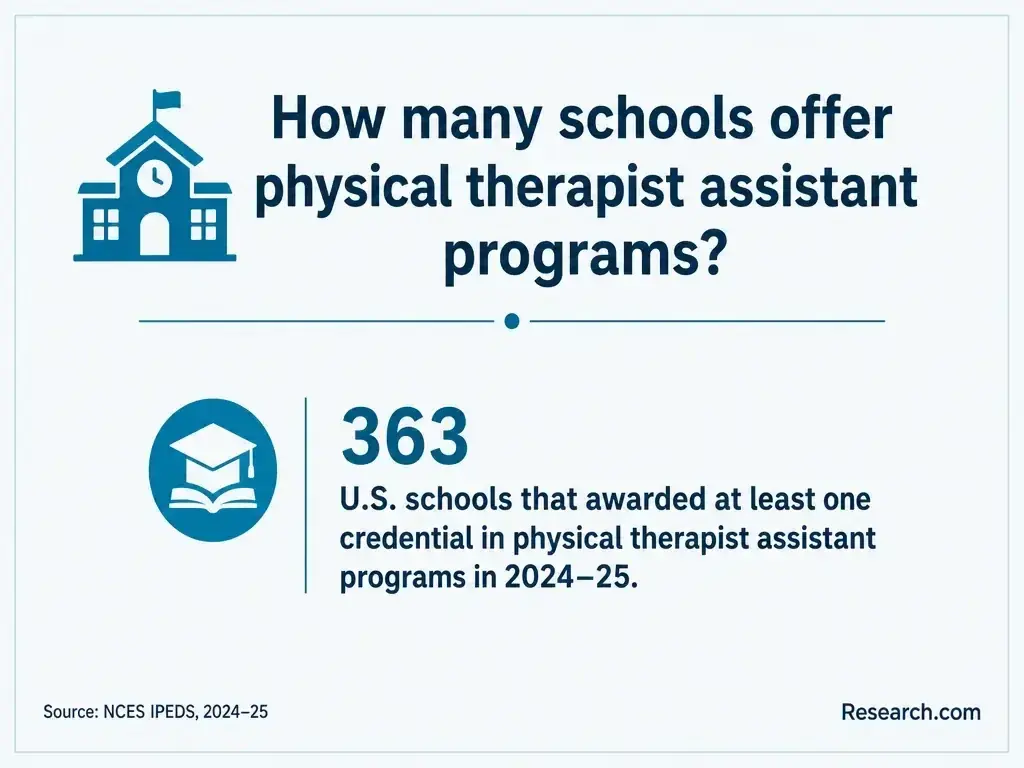
There is no dependable single "average cost" for Kansas City PTA training without specifying the program, residency classification, aid eligibility, and clinical-site travel. Request a written, program-specific cost of attendance from Metropolitan Community College-Kansas City and Concorde Career College-Kansas City. A tuition quote alone will not show what it takes to become job-ready.
Compare the following expenses over the entire program, then subtract aid you are eligible to receive rather than aid merely advertised:
Federal aid eligibility depends on the institution, program, and student; confirm it through the school's financial-aid office and Federal Student Aid. Short high paying certification programs may cost less upfront, but compare the occupation they prepare you for - not just their price - with the PTA role. To judge return on investment, consider completion likelihood, borrowing, foregone wages, realistic post-training pay, and how long you expect to work in the field.
The standard PTA entry credential is an associate degree from a CAPTE-accredited PTA program, followed by the steps required for a state license. The academic award, programmatic accreditation, examination result, and license are distinct; receiving one does not automatically confer the others (CAPTE; Federation of State Boards of Physical Therapy; Missouri Board of Registration for the Healing Arts; Kansas State Board of Healing Arts).
This comparison separates the pathways most likely to be confused during a school search:
| Pathway | Result | Fit for a prospective PTA |
| CAPTE-accredited PTA associate program | Academic credential and supervised clinical education | Relevant education route; still verify examination and state licensing requirements |
| Therapy-aide or rehabilitation-support certificate | Entry-level support training, depending on the program | May offer workplace exposure; does not replace PTA education |
| Employer training in a rehabilitation workplace | Job-specific skills | Useful experience, but not a substitute for the required PTA pathway |
If you have prior coursework, request a written transfer-credit evaluation early. Credit for general courses does not necessarily waive sequenced PTA labs or clinical education; the receiving program determines what applies.
Entry requirements vary by provider. Expect to verify the current application process, prerequisite coursework, academic standards, and any competitive-admission rules directly with the PTA program. Clinical participation may also depend on health documentation and site-specific screening. Meeting admission requirements does not mean every clinical site will accept a student (Metropolitan Community College-Kansas City; Concorde Career College-Kansas City).
Before paying a deposit, ask for the deadline, prerequisite equivalencies, clinical-clearance policy, and a written explanation of what happens if a placement cannot be completed. If you are transferring credit, confirm whether the evaluation changes your actual graduation date - not merely your number of accepted credits.
PTA training connects anatomy, movement, and therapeutic procedures with safe patient care. Students learn to follow a physical therapist's plan, observe and report patient responses, document treatment, assist with mobility and exercise, and communicate with patients and the care team (U.S. Bureau of Labor Statistics; CAPTE). Labs and clinical education test whether students can perform those tasks safely, not simply recall them on an exam.
Ask to see the current curriculum and clinical-education plan. Stronger evidence of fit than a broad course description is a clear account of supervised practice, feedback, and exposure to the settings where you hope to work. PTA preparation is occupation-specific; a search about what phd does not require a dissertation addresses a different educational goal and cannot establish readiness for patient-facing PTA work.
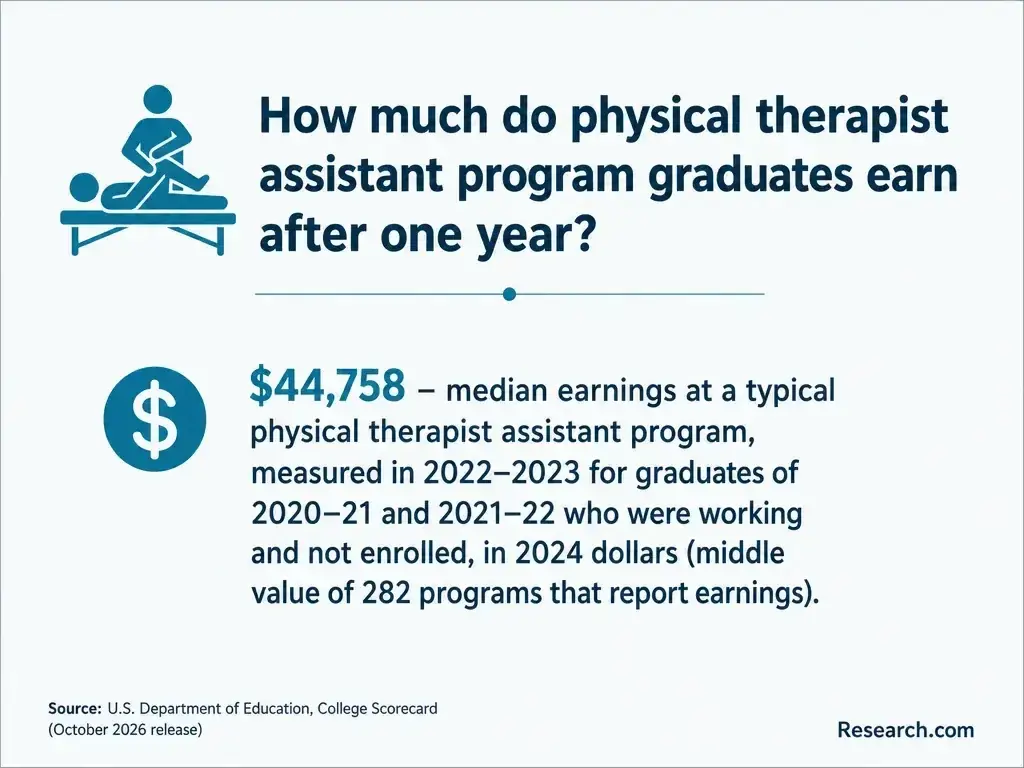
Yes. PTAs need state authorization to practice. Kansas City applicants must distinguish Missouri from Kansas because each state licenses practice within its jurisdiction. Both states' boards should be consulted directly for current application, education, examination, and any additional requirements; do not assume a Missouri license alone permits practice in Kansas, or the reverse (Missouri Board of Registration for the Healing Arts; Kansas State Board of Healing Arts).
The National Physical Therapy Examination for PTAs is an examination administered through the Federation of State Boards of Physical Therapy, not a license by itself. CAPTE accredits PTA education programs; institutional accreditation and state school authorization serve different purposes. Before enrolling, confirm the specific program's current CAPTE status and ask each relevant board how the program supports eligibility. If you expect to work across the state line, investigate both licensing processes before budgeting examination and application costs.
The best option is the program you can complete, afford, and use to pursue licensure where you intend to work - not necessarily the highest-ranked or fastest one. Compare the two named Kansas City providers on the same questions, using current written information rather than institution type as a shortcut for quality or value.
Use this sequence before enrolling:
Red flags include treating a therapy-aide certificate as a PTA license route, describing a program as "online" without explaining clinical attendance, or citing institutional accreditation in place of PTA-specific CAPTE status. If neither program's schedule or total cost is workable, gaining rehabilitation-setting experience while preparing prerequisites may be more sensible than enrolling in a program you are unlikely to finish.
The direct path is licensed PTA work under a physical therapist's direction. With experience, a PTA may seek roles involving particular patient populations or settings, help mentor students where permitted, or pursue employer-specific responsibilities. Such opportunities depend on the workplace and do not change the PTA's licensed scope of practice (U.S. Bureau of Labor Statistics; applicable state licensing board).
A therapy-aide position can be a way to test your interest before investing in PTA training, but it is a different job with a different entry route. Likewise, information about easy online master's programs does not answer whether a PTA program provides the supervised skills and regulatory eligibility needed for this occupation. Choose the PTA route if hands-on treatment within the PTA scope is your goal; choose an aide role for earlier workplace exposure without assuming it leads automatically to licensure.
U.S. Bureau of Labor Statistics employment projections show 23% national growth for physical therapist assistants from 2025 to 2035. That indicates strong projected demand nationally, but it is not a Kansas City hiring forecast or a promise of a job after graduation. Local openings will also depend on setting, employer needs, your license, and whether you can travel across the metro.
Use the national projection as a reason to investigate the occupation, then check current Missouri and Kansas workforce information and actual local postings for the settings and schedules you want. Compare those requirements with each program's clinical opportunities. A placement that develops relevant skills may matter more to your first job search than a small difference in advertised program length.
Investing in training is a consequential decision, so the Research.com team evaluates programs against others in the same occupation and location rather than treating unlike options as interchangeable. The ranking considers student outcomes; earnings and return on investment; costs and debt; and quality and recognition. Only programs with completions reported to the Integrated Postsecondary Education Data System (IPEDS) are eligible. That coverage rule does not mean an unlisted training provider lacks approval or quality.
For best-program rankings, occupation-relevant programmatic accreditation or industry recognition accounts for 20% of the score, institutional accreditation for 10%, and student support services for 10%. Outcomes, earnings, and costs make up the remaining 60%; an entropy-based method gives more weight to indicators that vary more across programs. Measures include completion and full-time and part-time retention, earnings one year after completion and relative to annual attendance cost, tuition, attendance cost, median debt - including debt among students who withdrew - and federal loan default rates. Most-affordable rankings score only costs and debt, with entropy-based weights; accreditation is not part of that score.
The team draws on the following sources when constructing its trade-program rankings. Several cover other occupations and must not be mistaken for physical therapist assistant accreditation or licensing authorities:
These measures can help readers compare cost and outcomes, but a ranking cannot verify an individual applicant's licensing eligibility or predict their earnings. For physical therapist assistant programs, independently check current accreditation with the Commission on Accreditation in Physical Therapy Education (CAPTE). More detail on the ranking approach appears in Research.com's methodology.
# 1 position
# 2 position

A therapy-aide certificate is not the standard PTA education route. Look for a CAPTE-accredited PTA associate program and verify the licensing steps in the state where you plan to work (CAPTE; applicable state licensing board).
No. A program may offer some coursework remotely, but skills labs and supervised clinical care require in-person participation (CAPTE).
Not automatically. Check each state's current licensing requirements and apply for the authorization needed wherever you intend to practice (Missouri Board of Registration for the Healing Arts; Kansas State Board of Healing Arts).
Not necessarily. The May 2025 national median of $68,380 covers employed PTAs across experience levels and locations; compare local offers and current metro wage data instead (U.S. Bureau of Labor Statistics).
Ask how sites are assigned, where they are, when rotations occur, what travel they require, and what happens if a placement is delayed. Those answers can change both your completion timeline and total cost.