Best Information Technology Associate Degree Programs & Schools - Top IT Schools in Texas for 2026

Co-Founder and Chief Data Scientist
Exploring the best Information Technology associate degree programs in Texas for 2026 can be exciting and overwhelming. This article is designed to simplify that process for you.
An insightful ranking created by the Research.com team of data scientists highlights the top programs worth considering. Their expertise ensures reliable and data-driven information tailored to your educational goals.
By reading, you’ll discover valuable details to help choose a program that fits your needs and aspirations. Earning an associate degree in IT opens doors to rewarding career opportunities and growth in a rapidly evolving field.
Key benefits of information technology associate degrees in Texas
- Expected salary: Graduates with an information technology associate degree in Texas can expect to earn around $47,840 per year, with entry-level roles paying near $50,000 annually, offering a promising start in the IT field.
- Career paths: For example, graduates from Austin Community College often find opportunities as help desk technicians, computer support specialists, or network administrators, paving the way for steady career growth in IT.
- Online degree benefits: Completing an IT associate degree online, like students from a popular Texas school such as Lone Star College, offers flexibility and convenience, making it easier to balance work, life, and education while still advancing professionally.
- Best Information Technology Associate Degree Programs & Schools - Top IT Schools in Texas for 2026
- What can I expect from information technology associate degrees in Texas?
- Where can I work after finishing information technology associate degree in Texas?
What can I expect from information technology associate degrees in Texas?
Students enrolling in an information technology associate degree program in Texas can expect a practical blend of hands-on training and foundational theory tailored for entry-level IT careers. For example, graduates from South Texas College often describe learning real-world skills in network systems, server management, and cybersecurity that prepared them directly for roles like network technician or support specialist.
At schools like Blinn College, students engage deeply with industry-standard technologies such as Linux and Windows servers, Cisco routers, and web development tools, which builds confidence in managing modern IT infrastructure. Class sizes tend to be smaller than at universities, fostering personal attention from instructors and supportive learning environments that many students find encouraging.
Flexibility is another key expectation. Texas programs commonly offer stackable credentials, allowing students to earn certificates that count toward their degree or transfer credits to a bachelor's program. Internships and capstone projects with local companies help students translate classroom knowledge into workplace skills, making them feel ready and motivated for fast-moving IT careers.
Where can I work after finishing information technology associate degree in Texas?
Graduates of information technology associate degree programs in Texas often step directly into roles like IT support specialist, help desk analyst, or junior systems analyst. Many find fulfilling jobs in bustling metro areas such as Austin, Dallas, and Houston, where thriving tech hubs and large employers actively seek candidates with associate-level IT skills. For example, graduates from colleges like Austin Community College or Dallas College report landing positions supporting technology infrastructures in healthcare, finance, and government sectors. These roles typically involve hands-on troubleshooting, network maintenance, and user support, offering a clear path to build professional confidence and valuable experience.
Many Texas IT associates quickly discover they're in demand by employers such as JPMorgan Chase or SpaceX, experiencing a rewarding sense of accomplishment as they help solve real-world technical problems daily. Others appreciate the flexibility to grow by pursuing certifications or transferring credits to bachelor's programs at universities like the University of Texas, further expanding career options. With hourly wages often starting around $18 and strong growth potential, graduates feel both motivated and secure in their new careers statewide.
Graduates from information technology associate degree programs in Texas-such as those from well-known schools like Austin Community College or Dallas College-can expect starting salaries typically ranging from $31,000 to $46,000 per year. Entry-level roles like IT support or help desk technician often begin around $45,000 annually in San Antonio, translating to about $22 per hour. This aligns with many new graduates' early career earnings, providing a solid foundation to build upon.
Some graduates share how landing a computer user support specialist position, with a median salary near $55,000 in Texas, significantly boosted their confidence and financial independence shortly after completing their associate degree. Others from Houston-area colleges find that gaining experience or certifications helps them increase their pay beyond the initial range.
Major Texas cities-Austin, Dallas, Houston-typically offer higher wages due to demand, giving graduates more opportunities to grow quickly. Many feel encouraged knowing that with persistence in schooling and skills, salary growth is realistic in this vibrant tech environment.
- "My experience at Austin Community College was outstanding. The hands-on labs and expert professors made learning IT practical and enjoyable. I felt supported throughout, which boosted my confidence to enter the tech workforce. Graduating with my associate degree truly prepared me for a bright future." - Jennifer
- "Studying at Houston Community College surpassed my expectations. The flexible schedule allowed me to work while learning, and the real-world projects enriched my understanding of networking and security. I'm grateful for the community and resources that helped me succeed in my IT journey." - Marcus
- "Del Mar College in Corpus Christi offered a vibrant learning environment with up-to-date technology and personalized attention. The program's strong focus on software development opened new career possibilities for me, leaving me excited and ready to tackle challenges in IT." - Elena
- IT associate degree programs in Texas typically require 60 to 64 semester credit hours, blending general education with specialized IT courses like programming and cybersecurity.
- Admission usually requires a high school diploma or GED, with some schools needing placement tests or basic math and computer skills prerequisites.
- Costs for completing the degree range from $2,000 to $6,000 for in-district students at public community colleges, while private colleges may charge around $300 per credit hour.
- Entry-level IT jobs for graduates include roles such as computer support specialist and network technician, with starting salaries between $38,000 and $50,000 per year.
- Many programs offer hands-on labs and opportunities for industry certifications, and credits often transfer to four-year bachelor's degree programs for flexible career paths.
The typical time to complete an information technology associate degree in Texas is about two years of full-time study, requiring roughly 60-64 credit hours. Graduates from schools like Central Texas College and Tarrant County College often describe this timeline as well-structured, allowing them to balance coursework and hands-on projects effectively. For example, those attending Tarrant County College's Health Information Technology AAS program find that two years is sufficient to gain practical skills while keeping motivated through clear semester goals.
For students needing more flexibility, part-time study extends completion to around three to four years. Many working professionals appreciate this option, finding it manageable to advance their careers while studying at their own pace.
Some students pursue accelerated paths, such as Hallmark University's 15-month fast-track program. Graduates of these programs share a sense of accomplishment and energy, having completed the degree quickly despite the intensive coursework.
Starting with certificate courses and stacking credits toward the associate degree can also personalize the timeline based on individual schedules and priorities.
The main difference between online and on-campus information technology associate degree programs in Texas lies in how and where you study. Online programs, like those at UTSA Online, allow you to complete coursework entirely remotely on your own schedule. Graduates appreciate the flexibility to balance work, family, and study without commuting to campus. Weekly deadlines keep you on track, but you choose when to watch lectures or finish assignments, making it ideal for busy professionals or parents.
On-campus programs at Texas community colleges or technical schools require attending classes and labs in person, following a fixed schedule. Graduates often mention the energy of face-to-face interactions, hands-on access to labs, and immediate support from instructors and peers as key benefits. The in-person environment helps build strong professional networks naturally through group projects and informal campus connections.
Both pathways cover core IT skills like networking and cybersecurity, but online students often find it easier to integrate industry certifications within their flexible study plans, giving them a valuable edge in the Texas job market.
The average cost of IT associate degree in Texas varies significantly based on the type of institution and delivery format. For students attending public community colleges, tuition tends to be very affordable. At Tarrant County College, graduates often highlight how their Cybersecurity AAS program cost just $4,440 for 60 credits, or around $74 per credit, making it accessible for many Texas residents. In comparison, Central Texas College's IT AAS can run closer to $15,000 total, reflecting a higher but still manageable tuition fee within the state. These figures show why many Texas students choose public colleges to minimize debt while gaining valuable skills.
Texas information technology associate degree tuition and fees at nonprofit institutions near major cities like San Antonio are generally higher, with an average tuition of $22,619. Many students who pursued their degrees here emphasize the balance between higher cost and quality instruction, which can lead to better job prospects. Yet, community colleges remain a preferred choice for affordability and quality. For instance, Houston Community College offers a Health Information Technology AAS program for just $1,980 total tuition, providing one of the lowest costs across the state and supporting students with financial concerns.
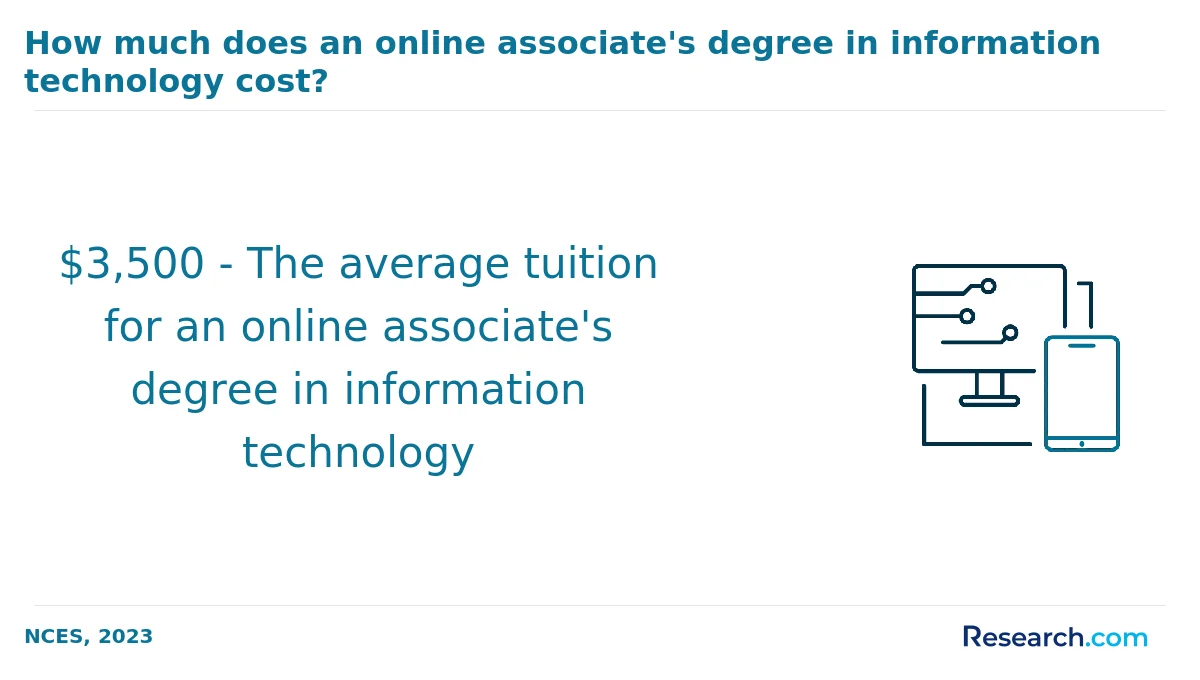
Nationwide, the average tuition for online information technology associate degrees is about $24,721, which is considerably higher than Texas community colleges. This context makes Texas a practical choice for those seeking value without sacrificing quality.ranking of easiest tech degree programs also shows some Texas schools offering streamlined paths to graduation, which can lower overall costs and time invested.

Students pursuing an information technology associate degree in Texas often rely on the Free Application for Federal Student Aid (FAFSA) to unlock federal aid such as Pell Grants, federal loans, and Work-Study opportunities. Graduates from colleges like Blinn College share that submitting FAFSA early-typically after October 1st and before the state priority deadline-can make a crucial difference in receiving these funds.
For those who can't complete FAFSA, like some non-citizens, the Texas Application for State Financial Aid (TASFA) serves as an alternative, enabling access to state grants and scholarships including the Texas Educational Opportunity Grant (TEOG). Many IT students report that TASFA opened doors to meaningful financial support when FAFSA wasn't an option.
Institutional scholarships and need-based grants from Texas colleges also play a big role. Students enrolled in eligible associate degree programs find that staying on track with course requirements ensures continued aid. Many graduates recall how these combined resources helped reduce their education costs and made earning their IT degree feel genuinely achievable.
To enroll in an information technology associate degree program in Texas, applicants must first have a high school diploma or GED. This baseline ensures you're ready for college-level work and is a common starting point for most graduates at schools like South Texas College.
Additionally, submitting official high school transcripts is usually required. These transcripts help colleges place you appropriately in courses, especially in foundational subjects like math and English. For example, many Texas schools use your transcripts to decide if you need extra support before jumping into IT classes.
Meeting the Texas Success Initiative (TSI) standards is another key prerequisite. At South Texas College, students often share how passing the TSI gave them confidence to tackle college reading, writing, and math, or access to helpful remedial classes if needed.
Some programs also recommend or require attending an orientation or advising session. This step helps you understand the pathway ahead and feels reassuring for many new students navigating their first IT courses.
- High school diploma or GED
- Official transcripts
- Meeting Texas Success Initiative (TSI) standards
- Optional orientation or advising session
Information technology associate degree programs in Texas focus on a practical mix of courses that prepare students for immediate work or further study. Graduates from colleges like South Texas College often highlight their hands-on experience with core IT courses such as Integrated Software Applications I, Introduction to PC Operating Systems, and Personal Computer Hardware. These classes help build confidence in managing and troubleshooting everyday tech issues, just like real-world IT support tasks.
Networking is essential, with common courses like CCNA 1: Introduction to Networks and CCNA 2: Switching, Routing, and Wireless Essentials. These align with certifications valued by employers, making students feel ready to step into network administration roles smoothly.
Programming courses usually introduce languages such as Python, Java, or C++, giving students a foundational skill set useful in many IT careers. Database programming and advanced spreadsheets also sharpen data management abilities, which grads recall using daily in their jobs.
- Core IT courses for practical system skills
- Networking classes aligned with industry certifications
- Introductory programming and database management
- General education enhancing communication and problem-solving
- Electives in cybersecurity and digital media to tailor career paths
Passing through these courses, students feel equipped and motivated, appreciating how their Texas programs combine theory and practice to prepare them for fulfilling IT roles.
Information technology associate degree specializations Texas students often choose cover a wide range of practical fields tailored to today's tech job market. Popular choices at schools like South Texas College include Information Systems, focusing on database management, business applications, and web programming. Graduates from this track find themselves confidently handling data-driven projects and systems analysis tasks in real-world offices.
Texas IT associate degree concentrations also typically include Network Security and Infrastructure. This track prepares students to safeguard networks through hands-on experience with wireless LANs, server admin, and security protocols-ideal for those eager to enter the cybersecurity field. At Austin Community College, for instance, graduates appreciate gaining skills in enterprise networking and network troubleshooting, which employers highly value.
Other well-regarded specializations across Texas schools include Computer Programming, Web Development, Cybersecurity, Multimedia, and Computer Support. Many students combine certificates in specialized areas like digital publishing or multimedia to boost their employability. For practical guidance on finding the right program, students can explore options, including what is the best online technology management degree program, to match their career goals.
Choosing the best information technology associate degree program in Texas means focusing on schools known for quality and strong industry connections. Graduates from institutions like Collin County Community College District often praise the program's reputation and its role in landing tech jobs swiftly. Look for accredited information technology associate programs in Texas that offer flexibility through online or hybrid classes, especially if balancing work and study is important to you.
Financial considerations also play a big role. Programs such as Lone Star College stand out by providing a best value information technology associate degree Texas, combining affordability with solid education, which many graduates find essential for minimizing debt. Students often mention how programs with clear transfer pathways to four-year universities eased their transition to bachelor's degrees, keeping career growth options wide open.
To explore cost-effective options, review the list of affordable online information technology degrees tailored for Texas students and compare what fits your goals.

Graduates holding an associate degree in information technology in Texas often find diverse information technology associate degree jobs in Texas available across industries. Popular roles include computer support specialist, network technician, and web developer, all of which provide a solid foundation for building a rewarding career. For instance, many graduates from well-known Texas institutions report starting their professional journey troubleshooting and maintaining systems for local businesses or regional tech companies.
These entry-level roles offer practical experience with daily IT challenges, encouraging skills growth in real-world environments. Opportunities also exist as help desk analysts, technical support associates, or cybersecurity specialists, reflecting Texas's expanding demand for IT support and security expertise.
- IT support and network careers in Texas often include system maintenance, user support, and network monitoring.
- Positions such as endpoint specialists and junior cloud engineers are regularly sought by Texas employers.
- Flexible work options, including hybrid and remote roles, increase career adaptability.
Many graduates enhance their prospects by pursuing certifications or further education, aiming for roles like information security analysts or software developers. Those interested in accelerating their career may explore the list of fastest technology degree programs online to continue their education efficiently while managing work commitments.
The information technology job growth in Texas is robust, especially for graduates of associate degree programs from popular schools like Austin Community College and Houston Community College. These graduates find entry-level roles such as IT Support Associate, Endpoint Specialist, and Junior Cloud Engineer readily available across major Texas cities. Employers value practical experience combined with associate degrees, often offering remote work options that increase flexibility.
Graduates report competitive salaries, with starting pay often near $70,000 for developers and $120,000 for cybersecurity specialists, reflecting the favorable average salary for IT associate degree graduates Texas. Tech hubs like Tyler are hotspots, seeing fast growth in cloud computing, cybersecurity, and AI roles, where hands-on skills in AWS, Azure, and DevOps add significant value.
Many successful graduates emphasize gaining certifications alongside their degrees. For those aiming to advance further, exploring the best online masters in information technology degree programs is a practical next step to boost career prospects and salary potential.
Choosing to invest in an Information Technology associate degree is a significant decision that impacts your future career and financial wellbeing. At Research.com, we understand the importance of this choice and have taken great care to produce a ranking that is both credible and accurate. Our team rigorously analyzed multiple trusted data sources to ensure the quality of our results, providing you with a reliable guide for making informed decisions. By reading this ranking, you will gain clear insights into the top programs available in Texas, helping you find options that suit your goals and needs. For a detailed explanation of our methodology, please visit Research.com methodology.
Best Information Technology Associate Degree Programs & Schools - Top IT Schools in Texas for 2026
# 1 position
Austin Community College District - Computer and Information Sciences, General.
associateAustin Community College District offers a hybrid program in Computer and Information Sciences, General. This program covers computing, computer science, and information science systems without focusing on specific specializations. The annual in-state tuition is $2,550. Graduates earn a median salary of $49,032 one year after completion. The program is accredited by the Southern Association of Colleges and Schools Commission on Colleges.
# 2 position
Austin Community College District - Computer Systems Networking and Telecommunications.
associateAustin Community College District offers a Computer Systems Networking and Telecommunications program with a hybrid format including some distance education. The program trains students in designing, implementing, and managing linked computer systems and associated software. Topics include operating systems, networking theory, security, and troubleshooting. Annual in-state tuition costs $2,550. Graduates earn a median salary of $46,969 one year after completion. The program is accredited by the Southern Association of Colleges and Schools Commission on Colleges.
# 3 position
Dallas College - Computer Systems Networking and Telecommunications.
associateDallas College offers a hybrid program in Computer Systems Networking and Telecommunications, focusing on the design, implementation, and management of linked computer systems and software. The curriculum covers operating systems, networking theory, network management, security, and troubleshooting. Annual in-state tuition is $2,370. Graduates earn a median salary of $40,807 one year after completion. The program is accredited by the Southern Association of Colleges and Schools Commission on Colleges.
# 4 position
Western Texas College - Computer and Information Sciences, General.
associateWestern Texas College offers a fully online program in Computer and Information Sciences, General, focusing on computing, computer science, and information science systems. The program is accredited by the Southern Association of Colleges and Schools Commission on Colleges. Annual in-state tuition for this distance-only program is $3,240. This general curriculum covers undifferentiated topics in the field and is distinct from specialized computer science or information science programs.
# 5 position
Houston Community College - Computer and Information Sciences, General.
associateHouston Community College offers a fully online Computer and Information Sciences, General program focusing on computing, computer science, and information science systems. The program is accredited by the Southern Association of Colleges and Schools Commission on Colleges. Annual in-state tuition is $2,040. Graduates report median earnings of $42,875 one year after completion.
# 6 position
Houston Community College - Computer Systems Networking and Telecommunications.
associateHouston Community College offers a hybrid program in Computer Systems Networking and Telecommunications, focusing on the design, implementation, and management of linked computer systems and software. The curriculum includes operating systems, systems design, networking theory, network management, security, and troubleshooting. The annual in-state tuition is $2,040. Graduates have median earnings of $42,875 one year after completion. The program is accredited by the Southern Association of Colleges and Schools Commission on Colleges.
# 7 position
Paris Junior College - Computer and Information Sciences, General.
associateParis Junior College offers a hybrid Computer and Information Sciences, General program that includes some distance-education options. The program covers computing, computer science, and information science and systems without focusing on specific subfields. Annual in-state tuition is $2,580. The program is accredited by the Southern Association of Colleges and Schools Commission on Colleges.
# 8 position
Texarkana College - Computer and Information Sciences, General.
associateTexarkana College offers a hybrid Computer and Information Sciences, General program, providing some distance-education options. The program focuses on computing, computer science, and information science and systems without specialization. Annual in-state tuition is $2,476. The school is accredited by the Southern Association of Colleges and Schools Commission on Colleges.
# 9 position
Howard College - Computer and Information Sciences, General.
associateHoward College offers a hybrid program in Computer and Information Sciences, General, focusing on computing, computer science, and information systems. The program features an annual in-state tuition of $2,766. It is accredited by the Southern Association of Colleges and Schools Commission on Colleges. This general program is undifferentiated by specific titles or content and provides some distance-education options for flexible learning.
# 10 position
Southwest College for the Deaf - Computer and Information Sciences, General.
associateSouthwest College for the Deaf offers a hybrid program in Computer and Information Sciences, General, combining computing, computer science, and information systems. The program features some distance-education options and is accredited by the Southern Association of Colleges and Schools Commission on Colleges. In-state tuition is $2,766 annually. This general curriculum is designed to provide foundational knowledge without focusing on specialized computer science or information science tracks.
Frequently Asked Questions about information technology associate degree programs
After earning an information technology associate degree in Texas, preparing for the job market involves strategic steps. First, gaining practical experience through internships or part-time IT positions is crucial, as employers often seek candidates with hands-on skills. According to the Texas Workforce Commission, IT roles in Texas are expected to grow by 15% from 2020 to 2030, signaling strong job prospects.
Next, consider obtaining industry certifications such as CompTIA A+, Network+, or Microsoft Certified Solutions Associate (MCSA) to enhance your resume and demonstrate technical expertise. Networking with professionals through local tech groups or job fairs can also open opportunities.
Finally, refining soft skills like communication and problem-solving alongside technical abilities will increase employability in Texas's competitive IT job market.
Employers in Texas increasingly seek information technology associate degree graduates with strong technical and interpersonal skills. According to the Texas Workforce Commission, proficiency in network administration, cybersecurity, and cloud computing ranks highly among in-demand abilities in the IT sector. Practical experience with operating systems like Windows and Linux, along with database management, is also valued.
Additionally, soft skills such as problem-solving, communication, and teamwork play a crucial role in job readiness. The National Skills Coalition emphasizes that nearly 60% of IT roles in Texas require both technical knowledge and effective collaboration abilities. Certifications like CompTIA A+ or Cisco CCNA further enhance a graduate's attractiveness to employers.
Finding internships in Texas that align with an information technology associate degree program involves several strategic steps. First, students should leverage resources at their community colleges or technical schools, which often maintain partnerships with local tech companies. According to the Texas Workforce Commission, the tech sector in Texas continues to grow, offering numerous internship opportunities in cities like Austin, Dallas, and Houston.
Online job platforms such as Handshake and Internships.com focus on student roles and often list positions based on location and field. Networking through local chapters of professional organizations like CompTIA or the Association of Information Technology Professionals can also uncover hidden internship openings.
Lastly, attending career fairs hosted by Texas colleges or statewide IT conferences provides direct contact with employers. These approaches, when combined, increase the chances of securing valuable IT internships relevant to degree programs in Texas.
An information technology associate degree in Texas can significantly enhance career mobility and advancement opportunities. According to the Texas Workforce Commission, demand for IT-related jobs is projected to grow by 15% between 2022 and 2032, outpacing many other fields. An associate degree provides foundational skills in networking, cybersecurity, and database management, which are critical for entry-level IT roles.
Many Texas employers prefer candidates with at least an associate degree for technician and support positions, opening doors to higher starting salaries and quicker promotions. Additionally, this degree often serves as a stepping stone toward a bachelor's degree, which is linked to even greater job prospects in Texas's expanding tech sector. Practical training and certifications gained during the associate program also strengthen resumes for varied IT roles.
Part-time job opportunities in Texas can effectively complement an information technology associate degree by providing relevant work experience. Common roles include IT support technician, help desk analyst, and computer lab assistant. These positions help students apply networking, troubleshooting, and customer service skills in real-world settings.
According to the Texas Workforce Commission, IT support roles in the state are expected to grow by 8% from 2022 to 2032, reflecting strong demand. Additionally, part-time internships in local businesses and tech startups offer valuable exposure to database management and cybersecurity basics.
Such part-time jobs not only boost practical knowledge but also enhance resumes, improving employment prospects after graduation.
To find the best Information Technology degree program near me in Texas, you can start by researching local universities and colleges to see which are renowned for their IT programs, paying particular attention to those with high graduation rates and strong industry connections. Research.com can be a helpful resource to compare program rankings and reviews, which can give insight into quality and reputation. Additionally, since Texas houses numerous reputable institutions, attending college fairs and open houses near Texas will offer firsthand information and allow direct engagement with faculty and admissions advisors.
- Best Information Technology Associate Degree Programs & Schools - Top IT Schools in Louisiana for 2026
- Best Information Technology Associate Degree Programs & Schools - Top IT Schools in Oklahoma for 2026
- Best Information Technology Associate Degree Programs & Schools - Top IT Schools in Arkansas for 2026
- Best Information Technology Associate Degree Programs & Schools - Top IT Schools in New Mexico for 2026
- Best Information Technology Associate Degree Programs & Schools - Top IT Schools in Missouri for 2026
- Best Information Technology Associate Degree Programs & Schools - Top IT Schools in Colorado for 2026
- Best Information Technology Associate Degree Programs & Schools - Top IT Schools in Tennessee for 2026
- Best Information Technology Associate Degree Programs & Schools - Top IT Schools in Nebraska for 2026
- Best Information Technology Associate Degree Programs & Schools - Top IT Schools in Kentucky for 2026
- Best Information Technology Associate Degree Programs & Schools - Top IT Schools in Iowa for 2026
- Central Texas College - For Students Of The Real World https://www.ctcd.edu/academics/instructional-departments/computer-information-technology-and-systems/
- What Can You Do With an Associate’s Degree in IT? - University of the Potomac https://potomac.edu/associates-degree-it/
- Exploring Information Technology: IT Careers, Trends & Education https://www.monash.edu.my/news-and-events/trending/exploring-information-technology-it-careers-trends-education
- 34 of the Best IT Certifications for Boosting Your Tech Career https://www.roberthalf.com/us/en/insights/career-development/which-it-certifications-are-most-valuable
- Research - Best Online Masters In Information Technology Degree Programs https://research.com/degrees/best-online-masters-in-information-technology-degree-programs
- Information Technology, BAAS https://www.tamuct.edu/degrees/undergraduate/it-baas.html
- Associate degree in information technology https://www.trevecca.edu/academics/program/information-technology-a.s
- Information Technology - Jobs & Careers at TPWD - TPWD https://tpwd.texas.gov/jobs/information_technology/
- 9 Information Technology Skills Employers Love to See | Rasmussen University https://www.rasmussen.edu/degrees/technology/blog/9-information-technology-skills-employers-love-to-see/
- Cybersecurity Salary in Texas | Salaries for Information and Network Security Analysts in TX https://www.cybersecurityeducationguides.org/texas/texas-salary/