
Most Affordable HVAC Technician Schools & Training in Williamston for 2027
Audited and Verified:
Our Editorial and Data Verification Process
Research.com uses government datasets, official education statistics and primary institutional information to support its career and degree guides. Our review process checks factual accuracy, occupational definitions, source dates and the requirements associated with the credentials discussed.
How This Article Was Fact-Checked
Our editorial team verifies salary estimates, employment projections, education requirements and program information against original data providers and official organizations. Salary figures are checked against the relevant occupational definitions and reporting periods. Information about licensure, accreditation and required in-person training is reviewed separately.
Fact-checked and verified on:

Co-Founder and Chief Data Scientist

Reviewed by Karolina Broda
Fact-Checker and Data Verification
Choosing an affordable HVAC training program near Williamston, North Carolina, means looking beyond the tuition price: you need enough hands-on practice to enter the trade. The U.S. Bureau of Labor Statistics projects 10.9% national employment growth for heating, air conditioning, and refrigeration mechanics and installers from 2025 to 2035. This guide compares training routes, costs, credentials, and work requirements. It also features a Most Affordable HVAC Technician Trade Schools in Williamston for 2027 ranking created by the Research.com team of data scientists to help you identify programs worth considering.
Key findings about HVAC technician degrees in Williamston
- The national median annual wage for HVAC mechanics and installers was $61,010 in May 2025, with employment projected to grow 10.9% from 2025 to 2035; neither figure predicts a new technician's pay in Williamston (U.S. Bureau of Labor Statistics).
- Compare total job-ready cost and supervised equipment practice, not tuition alone. An IPEDS-based affordability ranking does not capture every employer, union, or apprenticeship route.
- An HVAC school credential is not an occupational license. Work involving regulated refrigerants requires the appropriate EPA Section 608 certification, while North Carolina's contractor licensing rules concern contracting work (U.S. Environmental Protection Agency; North Carolina State Board of Examiners of Plumbing, Heating and Fire Sprinkler Contractors).
Table of Contents
- Most Affordable HVAC Technician Schools & Training in Williamston for 2027
- What can I expect from an HVAC technician trade school program in Williamston?
- Where can I work with an HVAC technician trade school training in Williamston?
What can I expect from an HVAC technician trade school program in Williamston?
Expect a mix of electrical fundamentals, heating and cooling systems, troubleshooting, safety, and equipment practice. A useful program lets students diagnose faults with instruments, make safe electrical connections, and work on actual HVAC components - not just watch demonstrations. Ask for the scheduled lab hours, equipment list, and student-to-equipment ratio; similarly named certificates can offer very different practical experience.
For a Williamston resident, the decision may include a commute to a training site or employer outside town. Martin Community College is one provider to ask about current HVAC-related offerings, locations, schedules, and credentials; do not assume a particular course or award is available for the 2027 intake without confirmation. Employer-sponsored training and registered apprenticeships are alternatives for applicants who can secure a position and prefer to learn primarily at work.
Where can I work with an HVAC technician trade school training in Williamston?
HVAC technicians work for residential service companies, commercial building contractors, facilities-maintenance teams, and refrigeration-service businesses. Around Williamston, compare openings across the broader commuting area rather than treating town limits as the entire job market. The distinction matters: residential service may involve travel and customer calls, while facilities work may keep a technician at one site; refrigeration roles can require different equipment experience and refrigerant-handling competence (U.S. Bureau of Labor Statistics).
When speaking with employers, ask whether entry-level hires ride with an experienced technician, what tools they must supply, and whether the company pays for EPA Section 608 testing. Those answers can change the value of a shorter, lower-cost school program.
The U.S. Bureau of Labor Statistics reports a $61,010 national median annual wage for heating, air conditioning, and refrigeration mechanics and installers in May 2025. That occupational median includes experienced workers and is not a Williamston starting-wage estimate. A Williamston-specific BLS wage is not available here, so compare current local offers by experience level, travel expectations, overtime terms, benefits, and tool allowances before estimating your return on training.
To assess whether school is worth its cost, compare your likely earnings with and without training over several years. Include aid, borrowing, time away from paid work, and the chance of completing the program; a national median alone cannot establish an individual return on investment.
Length depends on the credential and schedule: a focused certificate can take less time than a broader diploma or associate degree, while part-time study extends the calendar. The U.S. Bureau of Labor Statistics describes postsecondary HVAC training as generally lasting from six months to two years; apprenticeships combine paid work and instruction over a longer period. Ask providers for their actual clock or contact hours, the portion spent in labs, and the expected completion date for your schedule rather than relying on a credential name.
Be wary of treating listings for top associate degrees in 6 months online as evidence that an HVAC associate program can deliver equivalent hands-on preparation on that timetable. If speed is essential, compare a shorter certificate plus supervised employment with a longer program's additional lab and troubleshooting time.
Online coursework can cover terminology, system diagrams, calculations, and some safety theory. Wiring, measurement, brazing, fault diagnosis, and equipment service require access to tools and physical systems. A hybrid program can work if its in-person labs are reachable from Williamston and scheduled often enough to build competence; an online-only course should not be assumed to replace supervised practice or qualify someone for a job or certification.
Ask precisely where and when practical assessments take place, who supplies equipment, and whether a local employer can host supervised work. Search results for an easy bachelor degree address a different educational goal; for HVAC entry, judge the format by whether it teaches and assesses the work you will actually perform.
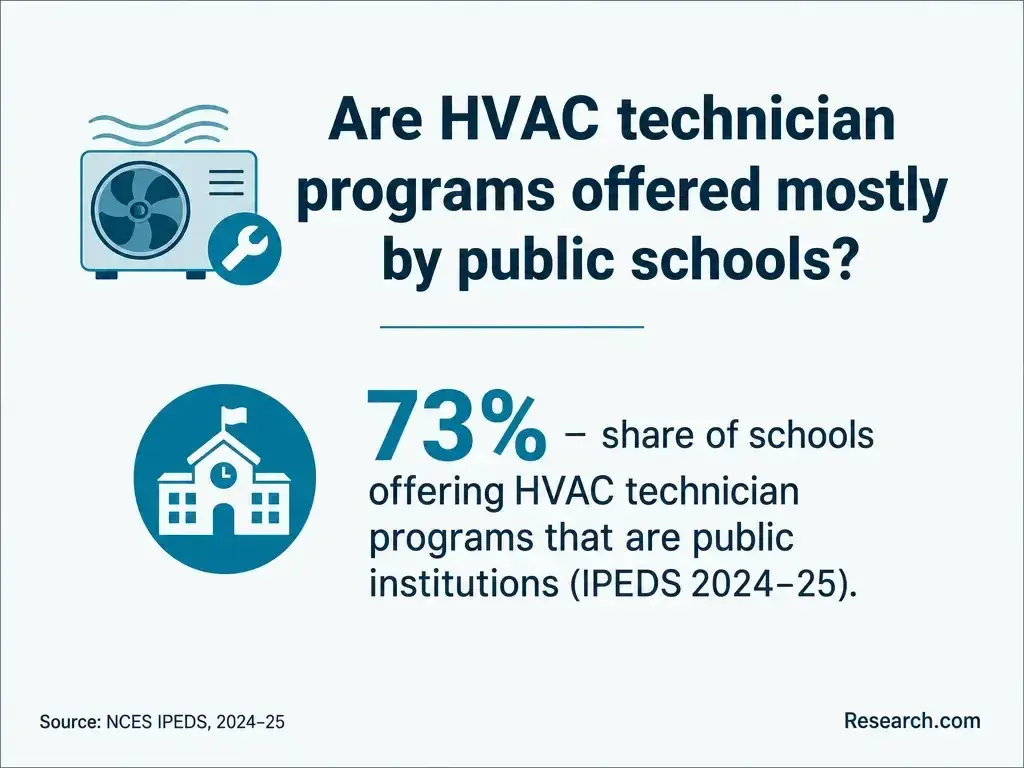
There is no reliable Williamston-wide average program price to quote here. Published tuition can omit mandatory fees, books, tools, meters, protective equipment, consumables, certification exams, and travel to labs or worksites. A longer commute or a schedule that cuts paid hours can make a lower-tuition option more expensive overall.
Request a written, itemized estimate for the entire credential, not just one term. Ask separately about federal-aid eligibility, grants, workforce funding, and employer reimbursement; availability depends on the provider, program, and student. A paid apprenticeship or employer-training job may reduce upfront school spending, but compare its wages, required purchases, instruction, and time commitment before deciding it costs less.
Depending on the provider, a student might earn a course-completion document, certificate, diploma, or associate degree. A registered apprenticeship has a different structure and yields an apprenticeship completion credential. None is interchangeable with EPA Section 608 certification, which is required for technicians who perform covered work on equipment containing regulated refrigerants and must be obtained through an EPA-approved certifying organization (U.S. Environmental Protection Agency).
Before enrolling, ask for the exact award name, whether instruction prepares students for the appropriate Section 608 exam, and whether completed coursework can count toward another HVAC credential or an apprenticeship. A search for shortest doctorate degree does not address these occupational requirements; choose the credential that matches the HVAC work you intend to enter.
Requirements vary by provider and pathway. Ask whether entry requires a high school credential, placement assessment, minimum age, application deadline, or particular math preparation. Employers and apprenticeship sponsors may have separate hiring, interview, driver's-license, or work-eligibility requirements; school admission does not secure an apprenticeship or job.
If you already have mechanical or electrical experience, ask about prior-learning assessment or credit before paying for introductory instruction. Request the policy in writing, including whether awarded credit shortens the schedule and lowers the total bill.
Core training generally addresses refrigeration cycles, heating equipment, airflow, electrical circuits and controls, installation, preventive maintenance, and troubleshooting (U.S. Bureau of Labor Statistics). Safety should be practiced throughout: technicians work around electricity, moving parts, pressurized systems, and refrigerants.
Curriculum details matter more than a long course list. Ask to see how students demonstrate electrical testing, diagnose an actual system fault, document a repair, and communicate findings to a customer or supervisor. Training on newer controls and efficient equipment can be useful, but check whether the school has working systems on which students - not only instructors - perform those tasks.
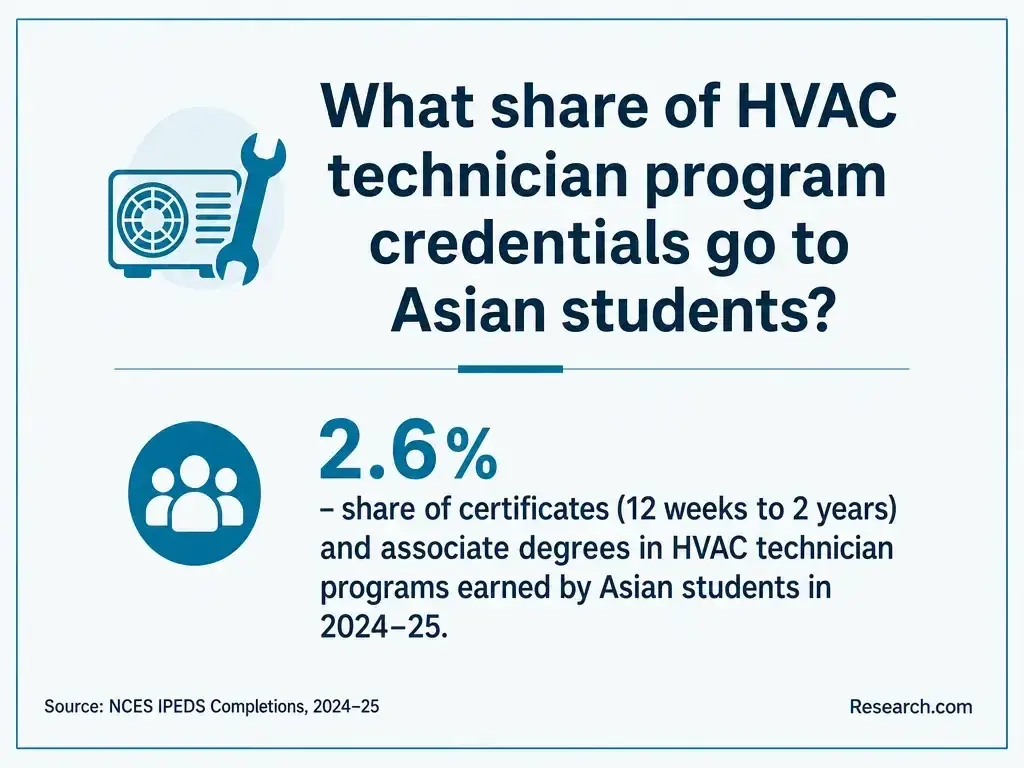
Not every employed HVAC technician needs a North Carolina contractor license. North Carolina regulates covered heating contracting through its State Board of Examiners of Plumbing, Heating and Fire Sprinkler Contractors, while refrigeration contracting is regulated separately by the North Carolina Board of Refrigeration Contractors. These contractor requirements should not be confused with the qualifications for working as an employee under a properly licensed business. Anyone planning to bid or operate independently should confirm the applicable classification, experience, examination, and business requirements directly with the relevant board.
Separately, technicians who handle regulated refrigerants in covered equipment need the appropriate EPA Section 608 certification; finishing school does not confer it automatically (U.S. Environmental Protection Agency). Ask a training provider which exam its instruction supports and whether testing is included in the quoted price. Institutional accreditation, state school authorization, an apprenticeship registration, EPA certification, and a contractor license each serve a different purpose.
Start with your intended first job: residential service, commercial systems, facilities maintenance, or refrigeration. Then compare programs on verified practical training, schedule and commuting fit, total cost, and employer connections. An affordability ranking is useful for narrowing options, but its cost-and-debt score does not measure lab quality or guarantee employment.
Before committing, get answers to these questions in writing so that a low advertised price does not hide a weak fit:
- What is the exact credential, full cost, lab schedule, and equipment access for the intake I would enter?
- Who provides supervised field experience, and does the program prepare me for the refrigerant work and exam my target job requires?
- Which organization accredits or authorizes the school, what does that status cover, and what do recent completion and placement figures actually measure?
- Can prior experience earn credit, and what happens to my costs and schedule if I attend part-time or withdraw?
For a broader view of occupations reached through hands-on training, compare trade school career paths. Within HVAC, choose the option that brings you to your specific entry-level role at a manageable total cost - not simply the lowest listed tuition.
An initial certificate or apprenticeship can lead to supervised installation or maintenance work, followed by service troubleshooting as experience grows. Technicians may later specialize in refrigeration, controls, or commercial systems, or move into lead and supervisory work. Independent contracting is a separate step that may require the applicable North Carolina contractor license; school completion alone is not permission to contract (North Carolina State Board of Examiners of Plumbing, Heating and Fire Sprinkler Contractors; North Carolina Board of Refrigeration Contractors).
For someone seeking field employment soon, a program with substantial lab work or a paid training position may be more relevant than general academic searches such as 4 year degrees that pay well. Ask local employers which entry roles they hire for and what supervised experience they expect before paying for a broader credential.
The U.S. Bureau of Labor Statistics projects 10.9% national employment growth for heating, air conditioning, and refrigeration mechanics and installers from 2025 to 2035. That supports investigating the trade, but a national projection does not establish the number of openings in Williamston or guarantee placement after training.
Check current postings across a realistic commuting area for required experience, driving, on-call work, and EPA certification. This is especially important when comparing a short program with an apprenticeship: the better route is the one that helps you meet the requirements employers are actually advertising while keeping your training costs manageable.
Most Affordable HVAC Technician Schools & Training in Williamston for 2027
Education is a significant investment, particularly when tuition is only part of the cost of becoming job-ready. Research.com created this ranking to help readers compare programs against other HVAC options in the same location, using consistent data and reviewing the underlying sources for credibility and accuracy. Only programs with completions reported to the Integrated Postsecondary Education Data System (IPEDS) are eligible; an unlisted apprenticeship or training provider is not necessarily unapproved or lower quality.
The most affordable ranking scores costs and debt - not instructional quality - using tuition, cost of attendance, median student debt, and federal loan default rate. Indicator weights are assigned through an entropy-based method, which gives more weight to measures that differ more across eligible programs. Accreditation and other quality indicators are not part of this affordability score, so readers should check them separately.
Research.com used the following data sources in creating its trade-school rankings. Some sources cover occupations other than HVAC and should not be interpreted as HVAC-specific endorsements.
- IPEDS database - program completions and institution-reported education data.
- National Center for Education Statistics - federal education data and institutional context.
- College Scorecard database - available cost, debt, and outcomes measures.
- Peterson's database - supplementary institutional information.
- Commission on Accreditation of Allied Health Education Programs - occupation-specific recognition information where relevant to other trade rankings.
- Accrediting Bureau of Health Education Schools - accreditation information where relevant to other trade rankings.
- Commission on Dental Accreditation - program recognition where relevant to other trade rankings.
- Dental Assisting National Board - credential information where relevant to other trade rankings.
- National Center for Construction Education and Research - construction-trade credential and training information.
- Apprenticeship.gov Partner Finder - information about apprenticeship pathways and potential partners.
Use the ranking to narrow your cost comparison, then request each program's current itemized price and verify its practical training. More detail about the ranking approach is available in Research.com's methodology.
# 2 position

Frequently asked questions about HVAC technician programs in Williamston
Is the cheapest HVAC program the best choice?
Not necessarily. Compare total cost, lab access, supervised experience, schedule, and preparation for your intended work. A low tuition price can be offset by tool purchases, travel, or insufficient practice.
Can I enter HVAC without attending trade school?
Potentially. An employer may train entry-level workers, and a registered apprenticeship combines paid work with instruction. Ask sponsors about openings, entry requirements, wages, and the credential awarded.
Can I complete HVAC training entirely online?
You can study some theory online, but equipment testing, installation, and troubleshooting require in-person practice. Verify where a hybrid program conducts labs before enrolling.
Does an HVAC certificate include EPA certification?
Not automatically. Ask whether the program prepares you for and includes testing for the appropriate EPA Section 608 certification (U.S. Environmental Protection Agency).
Does graduating qualify me to run an HVAC business in North Carolina?
No. Contracting may require a license from the relevant North Carolina board. Check the classification and eligibility rules before treating a school credential as a route to independent work.
- U.S. Bureau of Labor Statistics - Heating, Air Conditioning, and Refrigeration Mechanics and Installers
Used to verify salary, employment outlook, and typical education requirements.
https://www.bls.gov/ooh/installation-maintenance-and-repair/heating-air-conditioning-and-refrigeration-mechanics-and-installers.htm - NCCER - Accredited Training
Used to verify programmatic accreditation or industry recognition of programs.
https://www.nccer.org/ - NATE - Certification
Professional certification reference for graduates of this occupation.
https://natex.org/ - Martin Community College - official website
Official school website (programs, tuition, admissions).
https://www.martincc.edu/