Most Affordable Automotive Technician Schools, Colleges & Trade Certification Training Programs in Maine for 2026

Co-Founder and Chief Data Scientist
Choosing the right automotive technician trade school in Maine can shape your future career. This article introduces a carefully crafted ranking of the most affordable programs for 2026, developed by the Research.com team of data scientists. Their goal is to help you make an informed decision about which schools truly stand out.
By exploring this guide, you’ll discover valuable options that fit your budget and career goals. Earning a diploma or certification in automotive technology opens doors to rewarding opportunities and personal growth.
Take the first step toward a skilled trade that offers both stability and satisfaction.
Key benefits of finishing automotive technician trade school in Maine
- Graduates of automotive technician trade schools in Maine can expect competitive salaries, with average hourly wages around $34.29 and annual earnings near $71,323, plus overtime opportunities that boost income.
- Career paths include working as automotive technicians in repair shops, dealerships, or advancing into specialized roles like diagnostics or fleet maintenance, offering diverse opportunities after graduation.
- Completing an online trade school program provides flexibility and convenience, allowing students to balance work and study while gaining practical skills, often leading to faster entry into the workforce compared to traditional degrees.
- Most Affordable Automotive Technician Schools, Colleges & Trade Certification Training Programs in Maine for 2026
- What can I expect from automotive technician trade schools in Maine?
- Where can I work after finishing automotive technician trade schools in Maine?
What can I expect from automotive technician trade schools in Maine?
Students enrolling in automotive technician trade schools in Maine can expect a hands-on, industry-aligned education that balances classroom theory with real-world practice. Graduates often describe working directly on vehicles from various manufacturers, gaining experience in essential systems like brakes, suspension, and engine performance within modern automotive labs.
Programs emphasize preparation for ASE certification exams and the Maine State Inspection License, with targeted coursework and review sessions boosting student confidence. For example, graduates recall participating in live work scenarios and paid internships, sometimes through partnerships with local dealerships or the Ford ASSET program, which helped them transition smoothly into entry-level jobs.
Many students appreciate articulation agreements with Maine community colleges, allowing them to earn transferable college credits while learning practical skills. Instruction by ASE Master Certified teachers ensures students receive expert guidance, making the learning experience engaging and relevant to today's automotive industry demands.
Overall, students feel well-prepared and motivated by the blend of technical knowledge, hands-on training, and career-focused opportunities offered at popular Maine trade schools.
Where can I work after finishing automotive technician trade schools in Maine?
Graduates of automotive technician trade school programs in Maine find diverse employment opportunities across the state. Many secure positions at full-service auto repair shops and dealership service centers, where hands-on skills learned at popular Maine trade schools translate directly to daily tasks. These roles often require a Maine State Inspection License and diagnostic expertise, which graduates typically acquire through their training.
Some graduates work for government agencies like the Maine Turnpike Authority, maintaining fleets of trucks and snow plows. These jobs offer stability, competitive wages, and benefits such as tuition reimbursement, which former students appreciate as it supports ongoing skill development.
Others pursue careers in performance automotive shops or commercial fleet maintenance, applying specialized knowledge gained in school. Graduates recall the excitement of working on high-performance vehicles or managing repairs for public transportation fleets, reflecting the variety of paths available.
Overall, Maine trade school graduates report positive experiences transitioning into roles that match their training, with steady job availability and opportunities for advancement statewide.
Graduates of automotive technician trade school programs in Maine typically start with hourly wages ranging from $20 to $24 in cities like Auburn and Portland, reflecting entry-level roles. Many find this a motivating launchpad, as these wages rise quickly with experience and certifications. For example, graduates from well-known Maine trade schools report earning an average hourly wage of $34.29, which translates to an annual salary near $71,323, not including overtime.
In real-world terms, this means a recent graduate working full-time can comfortably support themselves while gaining valuable experience. Overtime opportunities, common in automotive shops, often add around $5,000 per year. Some technicians in South Portland have even seen wages as high as $50.40 per hour, demonstrating the tangible rewards of continued skill development.
These earnings are echoed by automotive mechanics, who earn slightly less but similarly benefit from steady wage growth. Graduates from Maine's trade schools often describe feeling confident and optimistic about their financial futures as they advance in the field.
- Most programs require a high school diploma or equivalent, with some recommending coursework in algebra, geometry, and science with labs.
- Schools are accredited by the ASE Education Foundation, preparing students for ASE certification exams valued by employers.
- Tuition at public community colleges ranges from $3,500 to $4,500 per year, excluding books, tools, and fees.
- The average starting salary for graduates is $38,000 to $42,000 annually, with experienced technicians earning up to $58,000 or more.
- A valid driver's license and clean criminal background are typically required for admission and employment.
Completing an automotive technician trade school program in Maine typically takes between 12 to 24 months, depending on the school and the depth of training offered. Many graduates from well-regarded schools in Portland and Bangor report finishing comprehensive hands-on programs in about a year, which allows them to quickly enter the workforce.
Some programs offer extended courses up to two years, including advanced diagnostic training and certifications. Graduates often describe this time as both challenging and rewarding, highlighting how the focused curriculum and real-world practice in Maine's climate prepare them for local industry demands.
For example, a graduate from a popular Portland trade school shared how the one-year program balanced classroom learning with practical shop experience, making the transition to an entry-level automotive technician role smooth and confidence-building. Another from Bangor mentioned that the slightly longer program gave them more time to master complex systems, boosting job prospects.
These timeframes are ideal for students eager to start earning while gaining valuable skills tailored to Maine's automotive market.
The primary difference between online and on-campus automotive technician trade school programs in Maine lies in the delivery and hands-on experience. Graduates from Eastern Maine Community College highlight how their hybrid program balances 20 hours of online theory with 25 hours of hands-on labs, allowing flexible study while still gaining direct vehicle interaction. This approach suits those needing schedule adaptability but still wanting practical skills.
Conversely, on-campus programs at Southern Maine Community College immerse students in fully equipped labs with a low 13:1 student-to-instructor ratio, fostering personalized guidance. Graduates often describe the confidence built from working side-by-side with instructors on real vehicles and benefiting from cooperative education placements at local shops. This environment supports mastering complex tasks like engine diagnostics and transmission repair, which are difficult to replicate online.
Most Maine automotive programs prioritize in-person training for ASE certification readiness, making on-campus attendance essential for those seeking comprehensive skill development and employer alignment. Online components mainly supplement theory, appealing to students pursuing flexible learning or professional upskilling.
The average tuition fees for automotive technician programs in Maine vary widely depending on the institution and residency status, but several examples illustrate typical costs. At Washington County Community College in Calais, graduates of the Automotive Technology certificate program report paying $94 per credit hour for in-state students, which totals roughly $3,034 for the entire program. Out-of-state students face a higher rate at $188 per credit hour, accumulating to about $3,128. Additional costs such as $1,400 for books and a $75 graduation fee are also common, reflecting typical expenses a student might plan for during enrollment.
Southern Maine Community College in South Portland offers an Associate Degree in Automotive Technology, where the cost landscape looks different. In-state tuition runs about $2,880 annually with mixed fees at $1,061. Including $1,400 for books and supplies, plus campus housing priced at $7,288 and meal expenses around $3,650, students see a total first-year cost nearing $16,279. Many graduates recall balancing these costs with part-time work or financial aid to ease the burden.
Another perspective comes from Central Maine Community College in Auburn, where the average net price is approximately $8,429 for families earning between $0 and $30,000 annually. This price includes tuition, fees, and other typical expenses, showing how financial aid and scholarships can contribute to affordability. For prospective students seeking detailed comparisons or additional program insights, visiting automotive trade schools resources can be valuable when deciding on the cost of automotive technician trade school in Maine.
Automotive technician students in Maine commonly access federal financial aid through FAFSA, unlocking Pell Grants, low-interest loans, and work-study programs. Graduates from Southern Maine Community College often recall how completing FAFSA early eased their financial stress, enabling them to focus on hands-on training without overwhelming debt.
State and institutional scholarships further lighten costs. For instance, Central Maine Technical College's automotive program, with an estimated annual cost of $5,385, offers merit-based scholarships that many students use to significantly reduce expenses. These awards often come as a welcome relief, allowing students to invest more energy into mastering automotive skills.
Tuition-free options like the Loring Job Corps program stand out by covering tuition, housing, and meals, creating a no-cost pathway for young adults. Apprenticeships also provide a dual benefit of income and education, a lifeline for many veterans and non-traditional students balancing training with family needs.
Overall, these diverse financial aid avenues help Maine's aspiring automotive technicians pursue their careers with confidence and reduced financial burden.
To enroll in an automotive technician trade school program in Maine, candidates typically need a high school diploma or GED. This basic educational requirement ensures students have foundational skills in math and reading, essential for diagnosing vehicle issues and understanding technical manuals.
Many trade schools in Maine, such as those in Portland and Bangor, also expect applicants to demonstrate a genuine interest in automotive technology. Graduates often recall how their passion for cars motivated them to meet these prerequisites enthusiastically, making their learning experience more engaging and rewarding.
Additional prerequisites frequently include:
- Basic algebra proficiency to handle measurements and calculations related to engine performance
- Good manual dexterity and hand-eye coordination, vital for hands-on repairs and maintenance
- Physical stamina, as working under vehicles or in tight spaces can be demanding
Some schools may require a brief interview or a written assessment to gauge motivation and problem-solving skills. Graduates often describe how this step allowed them to showcase their eagerness to learn and commitment to a future in automotive service.

Automotive technician trade school programs in Maine commonly include a range of specialized courses designed to build practical expertise and confidence in students. Graduates from popular trade schools often recall hands-on training with live vehicles that brought classroom concepts to life, enhancing their readiness for real-world work.
Typical courses include:
- Automotive Electrical/Electronic Systems: Diagnosing and repairing vehicle electrical circuits and computer controls, crucial for modern car technology.
- Brakes: Learning hydraulic systems, disc and drum brakes, and anti-lock braking system maintenance-key skills expected for ASE certification.
- Suspension and Steering: Focusing on wheel alignment and suspension repairs that ensure safe vehicle handling.
- Engine Performance and Diagnostics: Training on fuel injection, emission controls, and using diagnostic tools to identify engine issues.
- Manual and Automatic Transmissions: Repairing drivetrains and addressing shifting problems, essential for versatile mechanic roles.
- HVAC Systems: Servicing climate control units, a growing field as vehicle comfort systems evolve.
- Maine State Inspection License Prep: Preparing students for state vehicle inspection licensing, required for official inspection roles in Maine.
- General Automotive Service: Covering foundational maintenance and safety procedures to build core mechanic skills.
Graduates from Central Maine Community College and Southern Maine Community College highlight cooperative internships as key to applying these courses in dealership and repair shop environments. This approach not only reinforces learning but also fosters enthusiasm and a strong sense of accomplishment by solving actual vehicle problems early in their careers.
Automotive technician specializations in Maine trade schools equip students with targeted skills for varied automotive careers. Graduates from Northern Maine Community College describe the comprehensive Automotive Technology program as empowering, covering essential repairs through advanced topics like hybrid systems and engine diagnostics-ideal for those seeking hands-on expertise across vehicle systems. Southern Maine Community College offers focused specializations such as Automotive Chassis Systems and Automotive Powertrain Systems Certificates. These programs train technicians in suspension, brakes, and intricate engine and transmission repairs, preparing them for practical roles in dealerships or independent shops. Eastern Maine Community College's MOPAR Career Automotive Program (MCAP) stands out by delivering manufacturer-specific training for Chrysler, Dodge, Jeep, and more, boosting graduates' credentials with targeted certifications.
The array of automotive trade school programs in Maine allows students to align study with career goals, with graduates often reflecting on increased confidence and job readiness. For those exploring career pathways, understanding automotive technology degree requirements complements this specialized training.
Choosing the best automotive technician trade school program in Maine requires evaluating accreditation, curriculum, and hands-on training. Graduates from popular Maine colleges often highlight how programs with ASE Education Foundation accreditation boosted their confidence and job readiness. Facilities equipped with modern diagnostic tools are critical, as they simulate real-world garage environments, making learning both effective and engaging. Many find that flexible scheduling options help balance education with work or family, a common need for Maine students.
Cost is another key factor; affordable automotive technician programs in Maine help reduce financial strain, especially when paired with accessible scholarships and financial aid. Successful alumni often share that schools with strong industry connections ease internship and job placement, enhancing career support beyond the classroom. Tracking graduation and employment rates provides insight into the program's success and value.
For those aiming to understand what outcomes to expect, it's helpful to explore what are the highest paying trades to align training with market demand. This data-driven approach ensures investment decisions are well-informed and future-proofed.

Automotive technician trade school graduates in Maine enjoy diverse career paths tailored to local industry demands. Many find rewarding roles as automotive service technicians, collision repair specialists, diesel mechanics, or auto glass installers. Graduates from popular Maine trade schools report swift placement in positions such as brake system technician, suspension and steering expert, or parts specialist, reflecting strong automotive technician career opportunities in Maine.
Dealerships associated with MOPAR brands and Subaru frequently recruit directly from Maine programs, where students gain certifications that enhance employability. Graduates often share positive experiences about transitioning from hands-on training to jobs that match their skill sets, boosting confidence and job satisfaction.
Several graduates advance into supervisory roles like service manager or service writer, coordinating teams and customer interactions, while others launch independent repair shops fueled by skills learned in school. For those considering further education, many use their credits to pursue degrees later.
Below are common career avenues available after completing automotive technician trade school:
- General automotive service technician
- Brake, suspension, or steering system specialist
- Diesel mechanic roles
- Auto parts sales and vehicle inspection
- Hybrid and electric vehicle specialty repair
Access to vocational trade training online schools also provides flexible, accelerated options for gaining credentials, expanding auto mechanic jobs for trade school graduates in Maine rapidly.
The demand for automotive technician job openings in Maine remains strong, with over 325 positions advertised statewide, more than 200 of which are concentrated in the Portland area. Graduates of automotive trade schools in Maine benefit from a thriving job market that welcomes both entry-level and experienced technicians. Many reports from recent graduates highlight opportunities in full-time and part-time roles, with employers often encouraging career growth through mentorship and specialized certifications. Popular trade schools in Maine provide hands-on training that aligns well with employer needs, ensuring graduates quickly transition into roles with competitive wages.
Regarding Maine automotive technician salary trends, wages typically range between $20 and $38 per hour, with journeyman mechanics in certain organizations earning $31.36 to $43.47 hourly. Comprehensive benefits packages often accompany these salaries, including health insurance, paid holidays, and retirement plans. Additional incentives such as sign-on bonuses and relocation assistance further enhance the appeal.
Students evaluating whether to pursue a college or trade school in this field report positive outcomes, emphasizing job security and growth thanks to employers investing in tuition reimbursement and ongoing training.
- Robust job openings throughout Maine, especially in Portland
- Competitive salaries with additional benefits and bonuses
- Mentorship and career advancement programs in place
Most Affordable Automotive Technician Schools, Colleges & Trade Certification Training Programs in Maine for 2026
# 1 position
Washington County Community College - Automobile/Automotive Mechanics Technology/Technician.
associateWashington County Community College offers a hybrid Automobile/Automotive Mechanics Technology/Technician program that prepares students to repair, service, and maintain various automobiles. The curriculum covers brake systems, electrical systems, engine performance and repair, suspension and steering, transmissions, and heating and air conditioning. Annual in-state tuition is $3,687. The program is accredited by the New England Commission on Higher Education.
# 2 position
Washington County Community College - Automobile/Automotive Mechanics Technology/Technician.
certificate or diplomaWashington County Community College offers a hybrid Automobile/Automotive Mechanics Technology/Technician program that prepares students to repair, service, and maintain various automobiles. The curriculum covers brake systems, electrical systems, engine performance and repair, suspension and steering, transmissions, drive trains, and heating and air conditioning systems. Annual in-state tuition is $3,687. The program is accredited by the New England Commission on Higher Education.
# 3 position
Central Maine Community College - Automobile/Automotive Mechanics Technology/Technician.
associateCentral Maine Community College offers a hybrid program in Automobile/Automotive Mechanics Technology/Technician that prepares students to repair, service, and maintain various automobile systems. The curriculum covers brake systems, electrical and engine performance, transmission, suspension, steering, and heating and air conditioning. Annual in-state tuition is $3,864. Graduates have median earnings of $43,372 one year after completion. The program is accredited by the New England Commission on Higher Education.
# 4 position
Southern Maine Community College - Automobile/Automotive Mechanics Technology/Technician.
associateSouthern Maine Community College offers a hybrid program in Automobile/Automotive Mechanics Technology/Technician. The curriculum covers brake systems, electrical systems, engine performance and repair, suspension and steering, transmissions, drive trains, and heating and air conditioning systems. Annual in-state tuition is $3,797. The program is accredited by the New England Commission on Higher Education and provides technical knowledge and skills for automobile repair and maintenance.
# 5 position
Southern Maine Community College - Automobile/Automotive Mechanics Technology/Technician.
certificate or diplomaSouthern Maine Community College offers a hybrid Automobile/Automotive Mechanics Technology/Technician program designed to prepare students to repair, service, and maintain various automobiles. The curriculum covers brake systems, electrical systems, engine performance, engine repair, suspension and steering, transmissions, drive trains, and heating and air conditioning systems. The program’s annual in-state tuition is $3,797 and it is accredited by the New England Commission on Higher Education.
# 6 position
Northern Maine Community College - Automobile/Automotive Mechanics Technology/Technician.
associateNorthern Maine Community College offers a hybrid Automobile/Automotive Mechanics Technology/Technician program that prepares students to repair, service, and maintain various automobile systems. Coursework covers brake systems, electrical systems, engine performance and repair, suspension, steering, transmissions, and heating and air conditioning. The program’s annual in-state tuition is $3,880. Graduates have median earnings of $40,977 one year after completion. The program is accredited by the New England Commission on Higher Education.
# 7 position
Northern Maine Community College - Automobile/Automotive Mechanics Technology/Technician.
certificate or diplomaNorthern Maine Community College offers a hybrid Automobile/Automotive Mechanics Technology/Technician program that prepares students to repair, service, and maintain various automobile systems including brakes, electrical, engines, transmissions, and heating/air conditioning. The program has an annual in-state tuition of $3,880. Graduates earn a median salary of $40,977 one year after completion. The program is accredited by the New England Commission on Higher Education.
# 8 position
Eastern Maine Community College - Automobile/Automotive Mechanics Technology/Technician.
associateEastern Maine Community College offers a hybrid program in Automobile/Automotive Mechanics Technology/Technician that trains students to repair, service, and maintain various automobile systems. The curriculum covers brake systems, electrical systems, engine performance and repair, suspension, steering, transmissions, drive trains, and heating and air conditioning. The annual in-state tuition is $3,877. The program is accredited by the New England Commission on Higher Education.
# 9 position
Eastern Maine Community College - Automobile/Automotive Mechanics Technology/Technician.
certificate or diplomaEastern Maine Community College offers a hybrid program in Automobile/Automotive Mechanics Technology/Technician that prepares students to repair, service, and maintain various automobile systems. The curriculum covers brake systems, electrical systems, engine performance and repair, suspension, steering, transmissions, drive trains, and heating and air conditioning. Annual in-state tuition is $3,877. The program is accredited by the New England Commission on Higher Education.
Frequently Asked Questions about automotive technician
After completing an automotive technician trade school in Maine, preparing for the job market involves several key steps. First, obtaining ASE (National Institute for Automotive Service Excellence) certification can significantly improve job prospects. ASE credentials are widely recognized by employers across the U.S. and demonstrate a technician's competence.
Networking is also important. Connecting with local repair shops, dealerships, and attending industry job fairs in Maine can open doors to employment opportunities. According to Maine's Department of Labor, automotive service technician jobs are expected to grow moderately, making early engagement beneficial.
Additionally, developing skills in modern vehicle technology, such as hybrid and electric systems, aligns with current industry trends and employer demand.
Employers in Maine seek automotive technician graduates with strong diagnostic and mechanical skills. Proficiency in using computerized diagnostic tools is essential, as modern vehicles rely heavily on electronic systems. According to the Maine Department of Labor, about 60% of automotive service jobs require familiarity with engine control units and electronic sensors.
In addition to technical expertise, employers value problem-solving abilities and attention to detail. Accurate troubleshooting can reduce repair time and increase customer satisfaction. Communication skills are also important, as technicians often explain issues and repairs to customers.
Hands-on experience gained through internships or apprenticeships is highly regarded. The National Institute for Automotive Service Excellence (ASE) certification is frequently preferred or required by Maine employers, ensuring graduates meet industry standards.
Finding internships in Maine relevant to automotive technician trade school programs involves several practical steps. Start by contacting the career services office at your trade school, as many have established partnerships with local automotive shops and dealerships. These connections can provide valuable hands-on opportunities.
Additionally, explore Maine's workforce development programs such as those offered by the Maine Department of Labor, which often list internship and apprenticeship openings specifically for automotive technicians. According to the U.S. Bureau of Labor Statistics, Maine's automotive service technician employment is projected to grow, increasing internship availability.
Networking is also key: attending industry events and joining local automotive associations can help students connect directly with employers. Online job boards focused on Maine, like MaineJobLink.gov, frequently post internship listings tailored to trade skills.
In Maine, earning a diploma from an automotive technician trade school significantly enhances career mobility and advancement opportunities. According to the U.S. Bureau of Labor Statistics, automotive service technicians with formal training typically earn higher starting wages compared to those without credentials. Trade school graduates gain hands-on skills and certifications recognized by employers statewide, improving job prospects in local dealerships and independent shops.
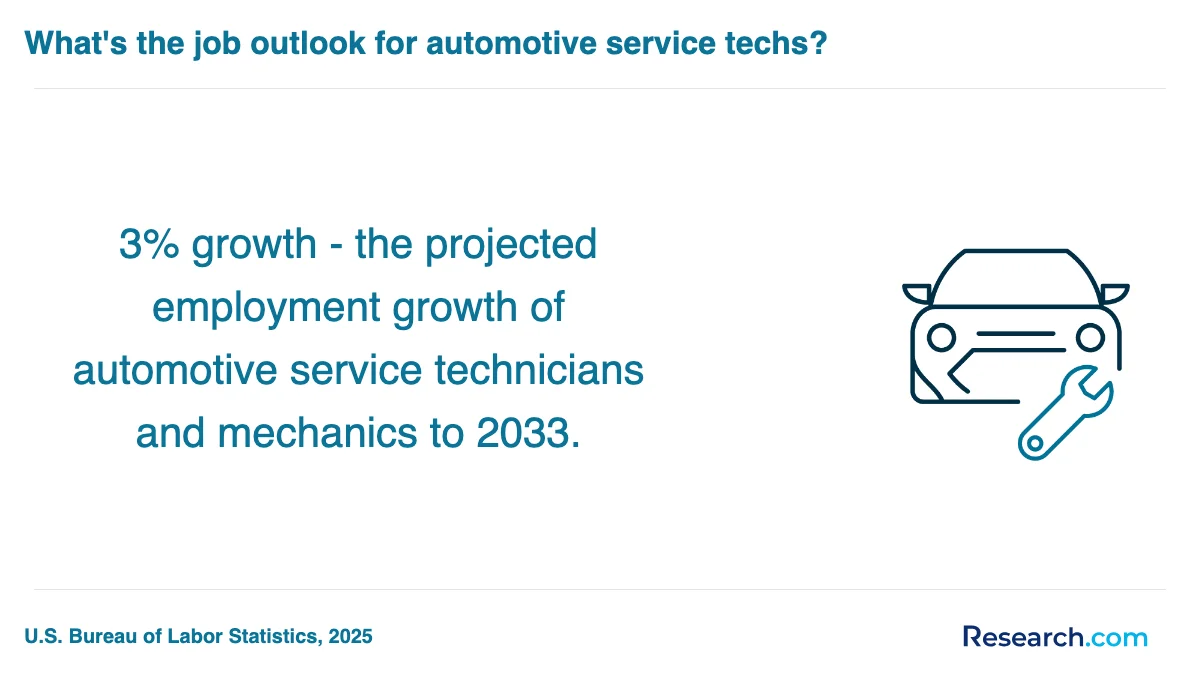
The Maine Department of Labor reports that demand for skilled automotive technicians is expected to grow by 5% from 2022 to 2032, underscoring the value of formal education. Additionally, diploma holders often qualify for ASE certifications, which are highly regarded in the industry and can lead to supervisory roles or specialized positions.
Students enrolled in automotive technician trade schools in Maine can benefit from part-time jobs that provide practical experience. Local auto repair shops and dealerships frequently hire students for roles such as service assistants or junior mechanics. These positions help develop hands-on skills while earning income.
The Maine Department of Labor notes that automotive service technicians earn a median wage of about $19 per hour, which reflects the value of gaining early work experience. Jobs in parts departments or tire centers also complement technical training by improving knowledge of vehicle components and inventory management.
Additionally, seasonal opportunities, like working with fleet maintenance companies, offer exposure to diverse vehicle types. These part-time roles strengthen resumes and build professional networks within Maine's automotive industry.
Yes, there are affordable Automotive Technician degree programs available both "near me" and "near Maine," with various community colleges and technical schools offering comprehensive training. Prospective students can explore programs that focus on practical skills and certifications, which are often available at lower tuition costs compared to four-year colleges. Consulting resources like Research.com can be useful to compare the available educational options and find a program that suits one's financial and educational needs.
- Most Affordable Automotive Technician Schools, Colleges & Trade Certification Training Programs in New Hampshire for 2026
- Most Affordable Automotive Technician Schools, Colleges & Trade Certification Training Programs in Delaware for 2026
- Most Affordable Automotive Technician Schools, Colleges & Trade Certification Training Programs in Virginia for 2026
- Most Affordable Automotive Technician Schools, Colleges & Trade Certification Training Programs in Kentucky for 2026
- Most Affordable Automotive Technician Schools, Colleges & Trade Certification Training Programs in North Carolina for 2026
- Most Affordable Automotive Technician Schools, Colleges & Trade Certification Training Programs in South Carolina for 2026
- Most Affordable Automotive Technician Schools, Colleges & Trade Certification Training Programs in Michigan for 2026
- Most Affordable Automotive Technician Schools, Colleges & Trade Certification Training Programs in Florida for 2026
- Most Affordable Automotive Technician Schools, Colleges & Trade Certification Training Programs in Alabama for 2026
- Most Affordable Automotive Technician Schools, Colleges & Trade Certification Training Programs in Missouri for 2026
- How to Craft the Perfect Cover Letter After Auto Mechanic School https://www.autotrainingcentre.com/blog/craft-perfect-cover-letter-auto-mechanic-school/
- Sample Student Cover Letter – Automotive – Technical Writing for Technicians https://openoregon.pressbooks.pub/ctetechwriting/chapter/sample-student-cover-letter-for-automotive-weeks-9-10/
- Automotive Technician | Clover Park Technical College https://www.cptc.edu/programs/auto-tech
- Automotive Service Technician - Skilled Trades Ontario https://www.skilledtradesontario.ca/trade-information/automotive-service-technician/
- Automotive Service Technician | SkilledTradesBC https://skilledtradesbc.ca/automotive-service-technician
- Automotive Tech Programs | Auto Technician Training | South Texas https://www.stvt.edu/career-training-programs/skilled-trades/automotive-service-technician/
- Automotive Technology, A.A.S. - Montana Tech - Montana's Premier STEM University https://www.mtech.edu/automotive/
- Automotive Service Technology Program - DCTC https://www.dctc.edu/academics/programs-majors/transportation/automotive-service-technology/
- Auto Mechanic School: What to Expect in Training Programs https://www.uti.edu/blog/automotive/auto-mechanic-school-expectations
- Choosing Between Mechanic Trade Schools | Pennco Tech https://www.penncotech.edu/choosing-between-mechanic-trade-schools-what-to-consider/