
2026 Nutrition Degree Payback Report: Which Programs Deliver the Best Cost-to-Salary Return

Co-Founder and Chief Data Scientist
A nutrition degree can lead to meaningful work in healthcare, wellness, food service, public health, and sports performance, but the financial payoff depends heavily on cost and credential fit. The Bureau of Labor Statistics reports a 2024 median pay of $73,850 for dietitians and nutritionists, making program price, accreditation, and graduate requirements central to ROI. This guide is for students, career changers, and working adults comparing nutrition programs. You will learn which degree paths tend to pay back fastest, what costs to watch, and how to choose a program that supports your career goals.
Key Things You Should Know
- The strongest payback usually comes from low-net-cost, ACEND-aligned public programs, community college transfer pathways, and coordinated dietetics programs that reduce duplicate tuition and supervised-practice costs.
- Salary upside is real but not unlimited: the 2024 BLS median pay for dietitians and nutritionists was $73,850, while program costs can vary from community-college pricing to private nonprofit tuition above $43,000 per year before aid.
- For students who want to become registered dietitians, the 2024 graduate-degree eligibility rule makes master's cost, supervised practice placement, and exam preparation essential parts of the ROI calculation.
What Is the Return on Investment of a Nutrition Degree?
The return on investment of a nutrition degree is the relationship between what you spend to earn the credential and the income, mobility, and career access it helps create. For this field, ROI is not just a salary question. It also depends on whether the program leads to the role you actually want, especially if your goal is to become a registered dietitian nutritionist, work in clinical nutrition, or qualify for state licensure.
A practical ROI calculation compares total out-of-pocket cost against realistic earnings for the target role. The cleanest formula is: total direct cost minus grants, scholarships, employer aid, and transfer savings, then divided by the annual earnings gain you expect compared with your next-best option. If you already earn close to an entry-level nutrition salary, the payback period may be longer; if you are moving from a low-wage job into a credentialed healthcare role, the payback can be shorter.
Nutrition degree ROI also has a credential-access component. A general bachelor's in nutrition may support roles in wellness, food service, community education, or sales, but it may not be enough for clinical dietitian positions. Since eligibility rules for the registered dietitian exam changed in 2024 to require a graduate degree, students pursuing the RD/RDN path should treat the bachelor's and master's sequence as one investment rather than evaluating the undergraduate degree alone.
The table below summarizes common nutrition education paths and the type of financial return each one is most likely to support. Use it to match the program level with the job market you want to enter, not just the lowest posted tuition.
| Program path | Best fit | ROI strength | Main payback risk |
| Associate degree or certificate in nutrition-related support | Students seeking entry-level wellness, food service, or transfer preparation | Strong when credits transfer cleanly into a bachelor's program | Limited access to licensed clinical roles |
| Bachelor's in nutrition, dietetics, or food science | Students seeking public health, wellness, food industry, or pre-RD preparation | Moderate to strong when tuition is low and the curriculum aligns with career goals | May require graduate study for RD eligibility |
| ACEND-accredited dietetics pathway plus graduate degree | Students pursuing registered dietitian nutritionist careers | Strongest for clinical, healthcare, and regulated roles when costs are controlled | Higher total cost because graduate education and supervised practice are required |
| Master's in nutrition, dietetics, public health nutrition, or related field | Career changers, RD candidates, and professionals seeking advancement | Strong when it unlocks licensure, clinical work, management, or specialized practice | Weak if chosen without a clear credential or salary objective |
The best ROI answer is therefore conditional: nutrition is most financially compelling when the degree is affordable, accredited for the intended pathway, and connected to supervised practice, licensing, or a clearly defined employer need.
Which Nutrition Programs Deliver the Best Cost-to-Salary Return?
The nutrition programs that deliver the best cost-to-salary return are usually not the most expensive or the most heavily advertised. They are the programs that combine low net price, recognized accreditation, strong placement support, and a direct path to the job title the student wants.
For future registered dietitians, the highest-value programs are typically ACEND-accredited pathways that integrate didactic coursework, supervised experiential learning, and graduate study as efficiently as possible. A coordinated program or future education model graduate program may cost more per year than a stand-alone bachelor's program, but it can reduce delays, application friction, and duplicated coursework. That matters because extra semesters are one of the easiest ways to weaken payback.
For students who do not need the RD credential, the best return may come from a public bachelor's program in nutrition, food science, health education, or public health with internship access. These programs can lead to roles in community nutrition, wellness programming, food systems, health coaching support, corporate wellness, or nutrition communications, although job titles and credential expectations vary by employer and state.
The table below ranks program types by likely cost-to-salary efficiency rather than prestige. It is designed to help students identify which structure tends to produce the best financial fit for different goals.
| Cost-to-salary rank | Program type | Why it can deliver strong payback | Best for |
| 1 | Community college transfer pathway into an accredited public nutrition or dietetics bachelor's program | Lower first- and second-year costs can reduce borrowing while preserving access to a four-year credential | Cost-sensitive students who can confirm transfer agreements in writing |
| 2 | In-state public ACEND-aligned dietetics program with affordable graduate continuation | Combines lower public tuition with the academic pathway needed for RD eligibility | Students pursuing clinical, hospital, long-term care, or outpatient nutrition careers |
| 3 | Coordinated or integrated graduate dietetics program | Can shorten the route to supervised practice and professional eligibility | Students who want fewer transition points between coursework and supervised experience |
| 4 | Online public nutrition bachelor's or master's with local practicum options | May reduce relocation and commuting costs while allowing continued employment | Working adults and students outside major campus markets |
| 5 | High-cost private nutrition program without clear credential advantage | Can be worthwhile with strong aid, but weakens ROI if outcomes are similar to lower-cost options | Students receiving substantial scholarships or needing a specialized format |
A program's advertised reputation should not outweigh its net price and credential alignment. If two programs lead to the same eligibility and similar placement support, the lower-cost option usually creates the stronger payback.
How Do Tuition Costs Affect the Payback of a Nutrition Degree?
Tuition affects nutrition degree payback because many salaries in the field are solid but not high enough to absorb unlimited borrowing. A student who completes a lower-cost accredited pathway may reach positive ROI years earlier than a student who pays private tuition for the same entry-level job market.
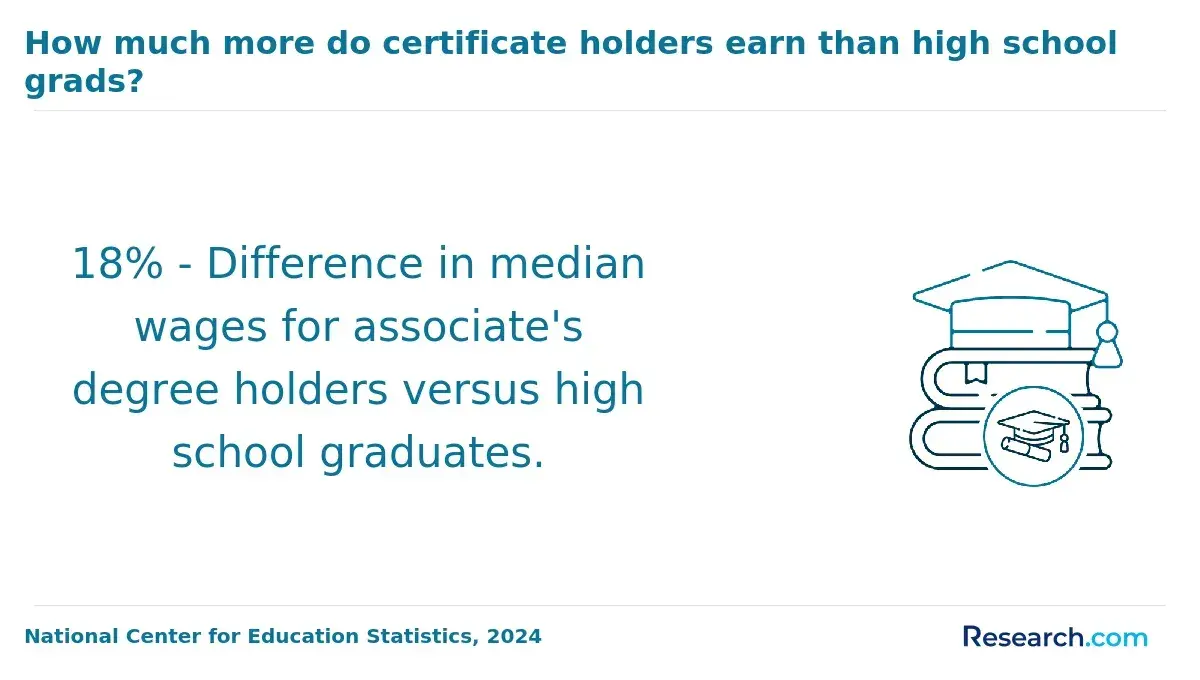
College Board's 2024 pricing data shows how wide the starting cost gap can be: average published tuition and fees for full-time undergraduates were $11,610 at public four-year in-state institutions, $30,780 for public out-of-state students, and $43,350 at private nonprofit four-year institutions. These are published prices, not final net prices, but they show why residency status, aid, and transfer credits can dramatically affect nutrition degree payback.
The table below shows major cost variables that can change the financial return of a nutrition degree. These are the items students should compare before deciding that one program is truly cheaper than another.
| Cost factor | Why it matters for ROI | What to verify |
| Net price after grants and scholarships | Sticker price can be misleading if one school offers much stronger aid | Program-specific net cost, not only university-wide estimates |
| Transfer credit acceptance | Lost credits can add semesters and weaken payback | Written transfer evaluation before enrollment |
| Supervised practice or internship costs | RD-focused pathways may include additional fees, travel, or unpaid time | Placement model, required hours, and whether sites are guaranteed |
| Online versus campus expenses | Online study can reduce commuting or relocation costs but may include technology or residency fees | Total program cost, local practicum rules, and state authorization |
| Loan interest | Borrowing increases total repayment cost beyond tuition | Federal loan type, interest rate, and repayment timeline |
Federal loan costs are also higher than many students expect. For the 2024-2025 award year, federal Direct Subsidized and Unsubsidized Loans for undergraduates carried a 6.53% fixed interest rate, while Direct Unsubsidized Loans for graduate students carried an 8.08% rate. That makes graduate borrowing an especially important issue for RD-bound students because the master's requirement can add cost after the bachelor's degree.
Students who are returning to college later in life should be especially careful about time-to-completion and debt. Resources on one year degree programs for seniors can be useful when comparing flexible formats, but nutrition students still need to confirm whether a short program meets their professional and licensing goals.
- Key Things You Should Know
- What Is the Return on Investment of a Nutrition Degree?
- Which Nutrition Programs Deliver the Best Cost-to-Salary Return?
- How Do Tuition Costs Affect the Payback of a Nutrition Degree?
- How Much Can Nutrition Graduates Expect to Earn?
- How Long Does It Take to Break Even on a Nutrition Degree?
- Which Factors Have the Biggest Impact on Nutrition Degree ROI?
- How Do Employer Demand and Job Growth Affect Nutrition Degree Value?
- How Can Students Maximize the Financial Value of a Nutrition Degree?
- How Does a Nutrition Degree Compare With Similar Fields for ROI?
- Is a Nutrition Degree Worth It for Your Career Goals?
- Other Things You Should Know About Nutrition
- Top Trending Nutrition Rankings
How Much Can Nutrition Graduates Expect to Earn?
Nutrition graduates can enter several salary bands depending on credential, setting, geography, and experience. The most commonly cited benchmark is the dietitian and nutritionist occupation, but not every nutrition graduate becomes a licensed or registered dietitian. That distinction matters because wellness, sales, education, and food-service roles may pay differently from clinical or specialized nutrition roles.
The BLS reported a 2024 median annual wage of $73,850 for dietitians and nutritionists. For students, the key takeaway is that this median can support a reasonable payoff when debt is controlled, but it may not justify high private tuition unless scholarships, family support, employer reimbursement, or a high-value specialization changes the math.
The table below connects common nutrition career directions with the financial logic behind them. It does not guarantee salary outcomes; instead, it shows how different paths typically affect earning potential and credential requirements.
| Career direction | Common work settings | Credential considerations | Salary impact |
| Clinical dietetics | Hospitals, clinics, long-term care, dialysis centers | Usually requires RD/RDN eligibility and may require state licensure | Often stronger and more stable than noncredentialed wellness roles |
| Community and public health nutrition | Public agencies, nonprofits, WIC programs, schools | Requirements vary; RD/RDN or public health training may help | Mission-driven roles may trade some salary upside for stability and benefits |
| Sports and performance nutrition | Athletic departments, teams, gyms, private practice | Advanced credentials and experience can matter heavily | Potential upside varies widely by market and client base |
| Food industry and product development | Food companies, regulatory teams, quality assurance | Nutrition plus food science, labeling, or regulatory knowledge can help | Can be competitive when paired with technical or business skills |
| Wellness, coaching, and nutrition education | Corporate wellness, digital health, private programs | Licensure limits and scope-of-practice rules vary by state | Income can be less predictable, especially in self-employment |
Salary also depends on whether the graduate builds skills beyond coursework. Data analysis, motivational interviewing, electronic health record familiarity, Spanish or other language proficiency, food-service management, and counseling skills can improve employability. AI meal-planning tools are also changing the field: they may automate basic recipe suggestions, but employers still need trained professionals who can interpret medical context, apply evidence, and work within legal scope-of-practice boundaries.
How Long Does It Take to Break Even on a Nutrition Degree?
Break-even time is the point when the additional earnings connected to your nutrition education have covered the total cost of the degree. For nutrition students, this timeline can range from relatively short to uncomfortably long depending on tuition, debt, credential path, and whether graduate education is required.
A useful break-even estimate starts with conservative assumptions. Do not use the highest salary you hope to earn. Use a realistic starting or early-career range for your target role, subtract what you would likely earn without the degree, and compare the difference with your net education cost.
Use the following sequence before enrolling or borrowing. This process helps you avoid the common mistake of judging ROI by tuition alone.
- Identify your target role first, such as registered dietitian, public health nutrition educator, food industry specialist, wellness coordinator, or graduate school applicant.
- Confirm the minimum credential for that role, including accreditation, graduate-degree rules, supervised practice, exam eligibility, and state licensure if applicable.
- Calculate total net cost, including tuition, fees, books, commuting, relocation, practicum travel, lost wages, and loan interest.
- Estimate your earnings gain by comparing the target role with your current or next-best job option, not with zero income.
- Divide total net cost by the expected annual earnings gain to estimate a rough break-even period.
For example, a student who uses transfer credits, in-state tuition, and grants may have a much shorter payback period than a student who pays out-of-state or private tuition for the same first job. The salary may be similar, but the debt burden changes the return.
Students should also consider opportunity cost. A full-time program can speed completion, but it may reduce current earnings. A part-time or online program may take longer, but it can preserve income and benefits. The best format is the one that minimizes total financial strain while still meeting credential and practicum requirements.
Which Factors Have the Biggest Impact on Nutrition Degree ROI?
The biggest drivers of nutrition degree ROI are not always obvious from a school's marketing page. Accreditation, supervised practice access, total net cost, and local employer demand often matter more than campus amenities or broad university rankings.
The most important factors to compare are the ones that directly change cost, eligibility, or earnings. Students should review them before submitting deposits or accepting loans.
- Accreditation fit: RD-bound students should verify ACEND accreditation or an approved pathway; a general nutrition degree may not meet dietetics credential requirements.
- Total net price: Compare the full cost after aid, not just tuition, because fees, practicum travel, housing, and interest can change the payback timeline.
- Graduate-degree planning: Since RD exam eligibility now requires graduate education, students should know whether the school offers an efficient bachelor's-to-master's route.
- Supervised practice access: Programs with strong placement support can reduce delays and uncertainty, especially in competitive regions.
- State licensure rules: Some states regulate medical nutrition therapy or the use of specific titles, so online students must check rules in the state where they plan to work.
- Career services quality: Employer partnerships, internship coaching, and alumni networks can affect the first job search.
- Flexibility for working adults: Evening, hybrid, online, and part-time options can improve ROI if they allow students to keep earning while studying.
One common red flag is a program that uses broad wellness language but does not clearly explain what roles graduates qualify for. Another is a school that advertises online convenience without confirming whether local supervised practice, state authorization, or licensure preparation will work for the student's location.
The same cost-versus-outcome thinking applies across graduate education. Students comparing options such as best 1 year PhD programs online should still remember that speed alone does not create ROI; the credential must be recognized in the field and useful for the intended career outcome.
How Do Employer Demand and Job Growth Affect Nutrition Degree Value?
Employer demand supports nutrition degree value when the degree aligns with healthcare, chronic disease management, aging populations, food systems, and preventive care. The BLS projects employment for dietitians and nutritionists to grow 7% from 2024 to 2034, which is faster than the average for all occupations. For students, this suggests a favorable labor-market direction, but not a guarantee of easy hiring in every city or specialty.
Demand is strongest where nutrition services connect to medical care, population health, insurance-supported services, food service compliance, or performance outcomes. Hospitals, outpatient clinics, diabetes programs, renal care providers, long-term care facilities, public agencies, universities, school systems, and food companies may all hire nutrition graduates, but their credential expectations differ.
Technology is also changing employer expectations. AI tools can generate meal plans, summarize intake logs, and support patient education, but they cannot replace clinical judgment, ethical counseling, medical chart interpretation, or scope-of-practice compliance. Graduates who combine nutrition science with digital health literacy, data interpretation, and patient communication may be better positioned than those who rely only on content knowledge.
Students should also watch the difference between "nutrition interest" and "paid demand." Many consumers are interested in wellness, but paid jobs usually require a defined employer problem: improving patient outcomes, meeting regulatory standards, managing food-service quality, supporting public health programs, or increasing client retention. A program with internships in those environments is more valuable than one that only offers broad classroom exposure.
How Can Students Maximize the Financial Value of a Nutrition Degree?
Students can improve the financial value of a nutrition degree by treating enrollment like an investment decision. The goal is not simply to find the cheapest program; it is to find the lowest-cost program that still leads to the credential, experience, and employer access needed for the target role.
Before choosing a school, take these practical steps. They are designed to reduce debt, prevent credential mistakes, and improve first-job readiness.
- Choose the career outcome first, then work backward to the required degree, accreditation, supervised practice, exam, and licensure steps.
- Ask each program for total estimated cost through completion, including tuition, fees, practicum expenses, graduate coursework, and expected time to degree.
- Request written confirmation of transfer credits before enrolling if you have previous college coursework.
- Compare net price after grants and scholarships, not advertised tuition alone.
- Ask where recent students completed internships, supervised practice, or practicums, and whether placements are arranged or self-secured.
- Check whether online coursework is accepted for your intended credential and whether the program is authorized for your state.
- Build employable skills early, including counseling, data tools, food safety, medical terminology, and evidence-based communication.
- Limit borrowing for nonessential living costs when possible, especially during graduate study.
Common mistakes include choosing a nutrition program because it sounds health-related, assuming any nutrition degree leads to RD eligibility, ignoring graduate-school costs, and relying on national rankings instead of local placement outcomes. A better approach is to ask admissions teams specific outcome questions and compare the answers side by side.
For working adults, online study can improve ROI if it preserves income. However, online nutrition students should be cautious: clinical or dietetics pathways may still require in-person supervised practice. Flexibility is valuable only if it does not create licensing or placement problems later.
How Does a Nutrition Degree Compare With Similar Fields for ROI?
Compared with similar fields, nutrition can offer a balanced ROI for students who want healthcare-adjacent work, science-based counseling, or food systems careers without pursuing medical school. However, it may not deliver the fastest financial return for students whose primary goal is maximum income in the shortest possible time.
The table below compares nutrition with related education paths using decision factors that matter for ROI. It is meant to help students decide whether nutrition is the best fit or whether another field better matches their financial and career priorities.
| Field | Typical appeal | ROI advantage | ROI limitation |
| Nutrition and dietetics | Healthcare, prevention, counseling, food systems | Strong when tied to RD/RDN eligibility, public tuition, or specialized employer demand | Graduate education may be required for clinical credentialing |
| Nursing | Direct patient care and broad clinical hiring | Often has strong labor demand and clear licensure pathway | Work can be physically and emotionally demanding; admission may be competitive |
| Public health | Population health, policy, programs, prevention | Flexible across agencies, nonprofits, and healthcare systems | Some roles require graduate education and may have moderate salaries |
| Exercise science | Fitness, performance, rehabilitation preparation | Good fit for sports, wellness, or graduate health programs | Bachelor's-level salaries can vary widely without licensure or advanced training |
| Food science | Product development, quality, safety, regulation | Can connect to private-sector technical roles | Less focused on counseling or patient-facing nutrition care |
Career changers comparing practical credentials may also look at non-health pathways such as ABA approved paralegal programs. That comparison can be useful because it highlights a key ROI principle: the best program is the one that connects directly to a recognized job market, not simply the one with the most appealing subject matter.
Nutrition is usually a better fit than adjacent fields when a student wants to work with food behavior, disease prevention, diet-related health conditions, or community nutrition. It may be a weaker fit if the student dislikes biology and chemistry, does not want supervised practice, or expects a high salary immediately after a general bachelor's degree.
Is a Nutrition Degree Worth It for Your Career Goals?
A nutrition degree is worth it when it connects to a specific career outcome, is priced responsibly, and meets the credential standards for the work you want to do. It is most compelling for students who want evidence-based, people-centered work and are willing to plan carefully around accreditation, supervised practice, and graduate requirements.
The degree may be a strong choice if you want to become a registered dietitian, work in clinical or community nutrition, support public health programs, enter food and wellness industries, or build a specialized private practice over time. It can also make sense for students who plan to combine nutrition with another strength, such as data analysis, culinary skills, sports performance, behavioral coaching, communications, or healthcare administration.
It may not be the best investment if you are choosing the major mainly because you enjoy personal wellness content, if you cannot afford the graduate path required for your target role, or if the program does not clearly explain its credential outcomes. Students who want leadership, finance, or operations roles in healthcare or wellness companies may eventually compare nutrition training with business-focused options such as an executive MBA online, depending on their career stage.
Use these final decision questions before committing. They can help you separate a personally interesting degree from a financially sound plan.
- Does the program lead to the exact credential or job category I want, including RD/RDN eligibility if needed?
- What is my total net cost through the degree level required for my target role?
- Can I complete supervised practice, internships, or practicums without delaying graduation?
- Will I need to borrow for graduate school, and can the likely salary support that repayment?
- Does the program have employer relationships in the setting where I want to work?
- Would a lower-cost public, transfer, online, or hybrid pathway produce the same credential outcome?
The best nutrition degree payback usually comes from matching ambition with discipline: choose the credential carefully, control cost aggressively, and build practical experience before graduation. If those pieces are in place, nutrition can be a worthwhile degree with meaningful career value and a manageable financial return.
Other Things You Should Know About Nutrition
It can be, but the ROI depends on your target role. A non-RD nutrition degree may support wellness, food industry, public health, education, or communications roles, but clinical nutrition jobs often require RD/RDN eligibility and state-specific credentials.
Low-net-cost public programs, community college transfer pathways, and accredited dietetics programs with strong supervised-practice support usually offer the best return. The key is paying the least amount necessary for a credential employers recognize.
Online nutrition degrees can have strong payback if they reduce commuting or relocation costs and allow students to keep working. However, RD-focused students must confirm accreditation, supervised practice rules, state authorization, and licensure preparation before enrolling.
Add your total net cost, including tuition, fees, practicum expenses, and loan interest. Then divide that amount by the annual earnings increase you realistically expect compared with your current or next-best job option.
Top Trending Nutrition Rankings
References
- Nutrition Careers Guide 2025 | Jobs & Salary https://www.nutritioned.org/careers/
- The Best Colleges For Nutrition | Top 15 + Acceptance Rates https://www.inspiraadvantage.com/blog/the-9-best-colleges-for-nutrition
- Does College Pay Off? A Comprehensive Return On Investment Analysis - FREOPP https://freopp.org/whitepapers/does-college-pay-off-a-comprehensive-return-on-investment-analysis/
- Nutritionist & Dietitian Careers - Salaries & Certifications https://www.medicaltechnologyschools.com/nutritionist/guide-to-nutritionist-careers
- How Do Colleges Determine Your Financial Aid? https://www.mefa.org/article/how-do-colleges-determine-your-financial-aid/
- Nutrition Degree Programs Guide 2026 https://www.publichealthonline.org/nutrition/degree-programs/
- Types of Financial Aid https://www.gafutures.org/federal-aid-scholarships/financial-aid-basics/types-of-financial-aid/
- 2025 Most Affordable Online Nutrition Degrees https://www.onlineu.com/most-affordable-colleges/nutrition-degrees
- Dietitians of Canada https://www.dietitians.ca/Become-a-Dietitian/Education-and-Training
- Reflecting on the RD Graduate Degree Requirement - Today's Dietitian Magazine https://www.todaysdietitian.com/reflecting-on-the-rd-graduate-degree-requirement/