2027 Healthcare Management Degree Payback Report: Which Programs Deliver the Best Cost-to-Salary Return

Co-Founder and Chief Data Scientist
Choosing a healthcare management degree is a financial decision as much as an academic one. Medical and health services managers had a median annual wage of $117,960 in May 2024, according to the U.S. Bureau of Labor Statistics, but payback depends heavily on tuition, debt, experience, and career target.
This guide is for students comparing associate, bachelor's, master's, online, and campus programs. You'll learn which paths usually produce the strongest cost-to-salary return and how to choose a program that fits your budget and career goals.
Key Things You Should Know
- The strongest ROI usually comes from accredited, low-cost public or transfer-friendly online bachelor's programs that lead to management-track roles without requiring high debt.
- The labor market is favorable: the BLS projects medical and health services manager employment to grow 29% through 2033, much faster than the average for all occupations.
- Payback is not automatic; tuition, prior credits, employer tuition assistance, internships, healthcare experience, and the salary lift after graduation matter more than school prestige alone.
- What Is the Return on Investment of a Healthcare Management Degree?
- Which Healthcare Management Programs Deliver the Best Cost-to-Salary Return?
What Is the Return on Investment of a Healthcare Management Degree?
The return on investment of a healthcare management degree is the financial value you receive from the credential compared with what you spend to earn it. In practical terms, ROI asks whether the degree helps you qualify for better-paying roles, faster promotion, or a more stable career path at a cost you can reasonably recover.
Healthcare management programs prepare students to coordinate people, budgets, operations, compliance, patient services, data, and quality improvement in healthcare settings. Graduates may work in hospitals, physician practices, long-term care facilities, insurance organizations, public health agencies, health technology companies, or outpatient care centers. The degree is generally best for people who want to lead healthcare operations rather than provide direct clinical care.
A useful ROI calculation considers both costs and benefits. The table below summarizes the core pieces of the payback equation and why each one matters when comparing programs.
| ROI factor | What it includes | Why it matters |
| Total education cost | Tuition, fees, books, technology costs, transportation, lost work time, and loan interest | A lower net cost shortens the time needed to recover the investment. |
| Net price | Cost after grants, scholarships, employer tuition assistance, and transfer credits | Net price is more useful than advertised tuition because it reflects what you actually pay. |
| Salary lift | The difference between your likely earnings before and after the degree | Payback depends on incremental income, not just the headline salary for senior managers. |
| Career access | Eligibility for coordinator, supervisor, administrator, analyst, or manager roles | A degree with strong employer recognition may improve access to interviews and promotion tracks. |
| Risk factors | Debt, weak career services, lack of accreditation, poor fit with your target role | High costs and unclear outcomes can reduce ROI even when the field has strong demand. |
A healthcare management degree tends to have better ROI when it is paired with relevant experience. A student already working as a medical office coordinator, billing specialist, health information technician, nurse, or department assistant may be able to convert the degree into a promotion faster than a student entering healthcare with no work history.
Which Healthcare Management Programs Deliver the Best Cost-to-Salary Return?
The best cost-to-salary return usually comes from programs that keep upfront costs low while matching the credential level employers expect for the role. For many students, that means starting with transfer credits, choosing an accredited public or nonprofit online program, and avoiding unnecessary graduate debt until a management role is realistically within reach.
The table below compares common healthcare management education paths by likely ROI pattern. It does not rank individual schools because ROI depends on your transfer credits, state residency, aid package, work schedule, and career target.
| Program type | Typical fit | Cost-to-salary return | Best use case | Main caution |
| Associate degree in healthcare administration or management | Students seeking entry-level administrative roles or a low-cost transfer path | Often strong if used to reduce the cost of a later bachelor's degree | Medical office, scheduling, patient services, billing support, or transfer preparation | May not be enough for many manager-level jobs. |
| Bachelor's degree in healthcare management | Students pursuing coordinator, supervisor, operations, or administrative management tracks | Often the best balance of cost, access, and advancement potential | Students who want a management-oriented credential without graduate school debt | ROI weakens if tuition is high and the program lacks internships or employer connections. |
| Master of healthcare administration or MBA with healthcare focus | Working professionals seeking senior leadership, director, consulting, or executive-track roles | Can be strong for experienced professionals but risky for students without healthcare experience | Mid-career advancement, leadership transition, or specialized management roles | Graduate tuition can take longer to recover if it does not lead to a salary increase. |
| Certificate or post-baccalaureate healthcare management program | Degree holders who need healthcare-specific knowledge | Potentially strong because it is shorter and cheaper than a second degree | Career changers with business, public health, nursing, or information systems backgrounds | May not substitute for a required bachelor's or master's degree. |
For students interested in data-heavy administrative careers, comparing healthcare management with health information management is especially important. A healthcare management program emphasizes operations and leadership, while a health information management program focuses more on records, privacy, coding systems, data governance, and compliance; reviewing health information management bachelor degree salary information can help clarify which path better matches your earning goals.
In general, the highest-value programs share several traits. They are institutionally accredited, transparent about total cost, flexible enough for working adults, connected to healthcare employers, and clear about what kinds of jobs recent graduates pursue. A program with modest tuition and strong experiential learning may outperform a more expensive program with a recognizable name but limited career support.
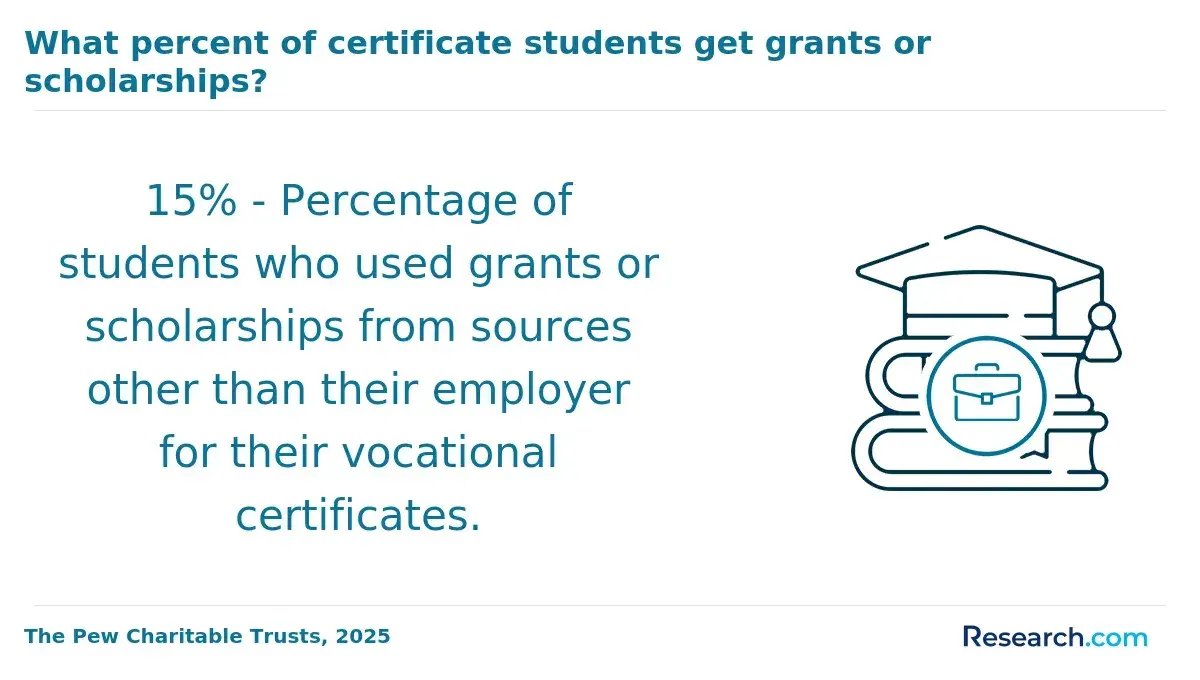
Tuition affects payback more directly than almost any other factor because every extra borrowed amount must be recovered through future earnings. College Board's 2024 data lists average published tuition and fees for 2024-25 at $11,610 for in-state students at public four-year institutions and $43,350 at private nonprofit four-year institutions. Those figures are not healthcare-management-specific, but they show why the same degree can have very different ROI depending on school type and net price.
When comparing programs, focus on the full cost of completion rather than the price per credit. The table below highlights cost items that commonly change the payback period.
| Cost item | How it affects ROI | What to ask before enrolling |
| Transfer credit policy | Accepted credits reduce both tuition and time to completion. | How many credits will apply to the major, not just to electives? |
| Residency status | In-state public tuition is often lower than out-of-state tuition. | Is there a reduced online or regional tuition rate? |
| Program fees | Technology, assessment, graduation, and course fees can raise total cost. | What is the all-in cost for the entire degree? |
| Internship or practicum requirements | Field experience can improve employability but may affect work hours. | Can placements be completed near home or through a current employer? |
| Loan interest | Interest increases the true cost if the student borrows. | What monthly payment would this debt require after graduation? |
Online programs can improve ROI when they let students keep working, avoid relocation, and complete courses around caregiving or shift schedules. However, online is not automatically cheaper. Some online programs charge premium tuition, limit transfer credits, or require in-person intensives. The best value is usually a program that combines flexible delivery with low net price and strong employer relevance.
A common mistake is comparing schools by tuition only. A slightly higher-tuition program may be a better investment if it accepts more transfer credits, offers employer partnerships, includes an internship, or helps students move into management faster. Conversely, a prestigious program can deliver weak ROI if it requires heavy borrowing for a career goal that does not require that level of spending.
Break-even time is the point at which the additional income connected to the degree has covered the net cost of earning it. The simplest formula is: net degree cost divided by annual salary increase. If a student spends $20,000 after grants and transfer credits and the degree helps increase annual earnings by $8,000, the rough payback period is 2.5 years before taxes and loan interest.
The table below uses simplified examples to show how net cost and salary lift change the break-even timeline. These are not guaranteed outcomes; they are planning scenarios that help students test whether a program's price is reasonable for their goals.
| Planning scenario | Net education cost | Estimated annual salary lift | Approximate break-even period | What it suggests |
| Low-cost transfer bachelor's | $12,000 | $6,000 | 2 years | Strong potential ROI if the degree supports promotion or entry into a better role. |
| Moderate-cost online bachelor's | $28,000 | $7,000 | 4 years | Reasonable if the student can keep working and avoid high-interest debt. |
| High-cost bachelor's with limited aid | $65,000 | $8,000 | More than 8 years | Riskier unless the program has exceptional employer access or the student has a clear advancement path. |
| Graduate degree for experienced professional | $35,000 | $12,000 | About 3 years | Potentially strong if the student is already positioned for leadership roles. |
Break-even calculations should include opportunity cost. A full-time student who leaves the workforce may complete faster but lose income during school. A part-time student may take longer but preserve earnings and employer benefits. For many working adults, a slower program with lower debt can produce a better financial outcome than a faster program that requires leaving a job.
Students should also consider timing. A bachelor's degree may pay back gradually through promotions, while a master's degree often pays back only when the student is ready for a leadership step. If the degree is several career steps ahead of the student's current experience, the payback period may be longer than the tuition calculation suggests.
The biggest ROI drivers are the factors that change either the cost of the degree or the speed at which it improves employment outcomes. Students should evaluate these before applying, not after receiving an admissions offer.
- Accreditation: Choose an institutionally accredited school, and check whether the program has field-relevant recognition or aligns with employer expectations in your region.
- Transfer credits: Prior college credits, military training, professional certifications, and community college coursework can sharply reduce total cost.
- Work experience: Healthcare experience often determines how quickly a graduate can move from administrative support into supervision or management.
- Program format: Online and evening formats may improve ROI for working adults if they prevent income loss during school.
- Career services: Programs with internships, employer projects, resume support, and local healthcare partnerships may help students convert coursework into job opportunities.
- Specialization: Concentrations in quality improvement, healthcare analytics, long-term care, compliance, revenue cycle, or informatics can be useful when they match actual job postings.
Several red flags can weaken the financial value of a healthcare management degree. Watch for vague career outcome claims, unclear total cost, low transfer-credit acceptance, limited access to faculty, no practicum or applied project, and pressure to enroll quickly before comparing aid packages.
To avoid common mistakes, students should take a structured approach before committing. The steps below help turn ROI from a vague idea into a practical comparison.
- Identify three target job titles and review employer requirements for each one.
- Ask each school for a full program cost estimate through graduation.
- Confirm how many credits will transfer into the major.
- Compare monthly loan payments with a conservative salary estimate, not the highest salary you find online.
- Ask whether the program includes internships, capstones, simulations, or employer-sponsored projects.
- Choose the lowest-cost program that credibly supports your target role and schedule.
Employer demand is one reason healthcare management degrees remain attractive. The BLS projects employment for medical and health services managers to grow 29% through 2033, driven by the aging population, expanded outpatient care, larger healthcare organizations, and the need to manage complex records, staffing, reimbursement, and compliance systems. For students, this suggests strong market demand, but it does not remove the need to choose a cost-effective program.
Healthcare organizations are also becoming more data-driven. Managers increasingly work with dashboards, electronic health records, patient experience measures, quality metrics, staffing models, and compliance documentation. Artificial intelligence and automation may reduce some routine administrative tasks, but they also increase the need for managers who can interpret data, redesign workflows, protect privacy, and communicate changes across clinical and nonclinical teams.
The best-prepared graduates can combine healthcare knowledge with operational judgment. Employers may value candidates who understand revenue cycle basics, patient access, project management, regulatory standards, budgeting, and process improvement. A program that teaches only broad business theory without healthcare-specific applications may be less useful than one built around real healthcare scenarios.
Demand varies by region and setting. Urban hospital systems may have more specialized management roles, while rural healthcare organizations may need versatile administrators who can handle multiple functions. Outpatient clinics, telehealth providers, senior care organizations, and behavioral health organizations can also offer management opportunities, especially for graduates willing to start in coordinator or analyst roles before moving into leadership.
Students can improve the financial value of a healthcare management degree by lowering cost, building experience while enrolled, and targeting roles that match the credential. The goal is not simply to graduate; it is to graduate with a realistic path to a better job.
Use the following steps to strengthen ROI before and during the program.
- Start with the role, not the school: identify whether you want clinic operations, hospital administration, revenue cycle, compliance, long-term care, health analytics, or public health management.
- Choose accredited programs and verify that employers in your area recognize the credential.
- Complete general education credits at a lower-cost community college when transfer rules are favorable.
- Keep working in healthcare if possible, even in an entry-level administrative role, because experience can shorten the promotion timeline.
- Use employer tuition assistance before borrowing, and ask whether grades, service commitments, or course approvals are required.
- Build a portfolio of applied work, such as workflow maps, budget analyses, quality improvement projects, or compliance audits.
- Ask admissions advisors for specific examples of employers, internships, practicum placements, and job titles connected to the program.
Students should also compare healthcare management with clinical or allied health paths if their real goal is patient care. For example, someone who wants direct bedside or practical nursing work may be better served by researching online LPN programs rather than enrolling in a management degree that leads away from clinical practice.
Another smart strategy is to avoid overpaying for a credential too early. A master's degree can be valuable, but it usually pays off best when the student already has healthcare experience and is competing for higher-level roles. New entrants may get a better return by earning a bachelor's degree, gaining experience, and using employer support for graduate school later.
Healthcare management can offer a strong ROI for students who want leadership and operations roles, but it is not the best fit for every healthcare career goal. Similar fields may lead to different work settings, salary patterns, licensure requirements, and education costs.
The table below compares healthcare management with nearby fields so readers can see where the degree fits and where an alternative may be more practical.
| Field | Primary focus | Typical education path | ROI considerations | Best fit |
| Healthcare management | Operations, staffing, budgets, policy implementation, service delivery | Bachelor's for many management-track roles; master's for some senior roles | Strong when tuition is controlled and the student has healthcare experience | Students who want to lead healthcare teams or systems |
| Health information management | Health records, coding systems, privacy, compliance, data quality | Bachelor's or related credential, depending on role | Can be strong for detail-oriented students who prefer data and compliance over general operations | Students interested in information governance and healthcare data |
| Nursing or practical nursing | Direct patient care | Licensed clinical education path | ROI depends on licensure, clinical demand, schedule, and state requirements | Students who want hands-on care rather than administrative leadership |
| Pharmacy | Medication therapy, dispensing, patient counseling, clinical pharmacy services | Doctor of Pharmacy for pharmacist licensure | Can involve higher education cost and a longer path, so debt planning is critical | Students committed to pharmacist licensure and medication-focused care |
| Public health | Population health, prevention, community programs, policy | Bachelor's or master's, depending on role | May be mission-driven with varied salaries by government, nonprofit, or healthcare employer | Students interested in community-level health outcomes |
Compared with many clinical fields, healthcare management usually has fewer licensure barriers but also more dependence on experience and employer trust. That can be positive for working adults who already understand healthcare operations, but it can be challenging for students expecting to move directly into high-level administration after graduation.
A healthcare management degree is worth it when the program's net cost is reasonable, the credential matches your target role, and you can build or already have healthcare experience. It is most valuable for students who want to manage teams, improve systems, coordinate services, analyze performance, or move from frontline healthcare work into leadership.
This degree is usually a strong fit for the following students. These indicators suggest the degree is aligned with both career direction and ROI potential.
- You want administrative, operations, compliance, revenue cycle, quality improvement, or clinic management roles.
- You already work in healthcare and need a degree to qualify for promotion.
- You can choose a low-debt program through transfer credits, public tuition, scholarships, or employer tuition assistance.
- You prefer leadership, planning, communication, and systems improvement over direct clinical care.
It may not be the right investment if your main goal is hands-on patient care, exercise science, therapy preparation, or a licensed clinical role. Students more interested in movement, human performance, wellness, or rehabilitation-related foundations may want to compare options such as kinesiology courses online before choosing a healthcare administration pathway.
Before enrolling, ask schools direct questions about outcomes and fit. A good program should be able to explain total cost, transfer rules, internship options, career support, employer relationships, and the kinds of roles graduates commonly pursue. If a school focuses mainly on broad promises instead of specific evidence, treat that as a warning sign.
The bottom line: healthcare management can deliver a strong cost-to-salary return, especially through affordable bachelor's programs and experience-based advancement. The best choice is not always the most famous school or the fastest program. It is the program that gets you to your target role with the least unnecessary debt and the strongest practical preparation.
Healthcare management graduates can pursue a wide range of salaries because the field includes entry-level administrative jobs, mid-level operations roles, specialized compliance or quality positions, and senior leadership jobs. The clearest national benchmark is the BLS category for medical and health services managers, which reported a median annual wage of $117,960 in May 2024. Readers should treat that as a role-based median, not a starting salary for every new graduate.
The table below shows how healthcare management roles typically differ by responsibility level. This helps set realistic salary expectations before choosing a degree level.
| Career level | Example roles | Common responsibilities | Degree value |
| Entry-level administrative | Patient services representative, medical office assistant, scheduling coordinator | Front-office workflows, patient communication, records coordination, billing support | An associate degree or certificate may help, but experience is often important. |
| Early management track | Practice coordinator, department assistant manager, healthcare operations specialist | Workflow coordination, staff scheduling, reporting, vendor communication, process improvement | A bachelor's degree can strengthen promotion potential. |
| Mid-level management | Clinic manager, revenue cycle supervisor, quality improvement manager, compliance coordinator | Team leadership, budgets, policy implementation, regulatory documentation, performance metrics | A bachelor's degree plus experience is common; some employers prefer a master's. |
| Senior leadership | Director of operations, service line administrator, hospital administrator | Strategic planning, departmental budgets, staffing models, executive reporting, organizational performance | A graduate degree may be valuable when paired with substantial healthcare experience. |
Location, employer size, and setting matter. Large hospital systems and specialty care organizations may offer more advancement layers, while smaller clinics may provide broader hands-on management experience. Insurance companies, consulting firms, and healthcare technology vendors may also value healthcare management graduates who understand operations, analytics, and compliance.
Students should be careful not to assume that a degree alone creates management-level pay. Employers often look for evidence that candidates can lead teams, handle sensitive data, communicate with clinicians, interpret regulations, and improve processes. Internships, capstone projects, healthcare work experience, and measurable accomplishments can make the salary return stronger.
Students considering pharmacy should pay close attention to debt because the credential path is longer and more specialized. Comparing healthcare management with online PharmD programs can clarify whether the higher clinical credential aligns with the student's career goals and tolerance for education cost.
Other Things You Should Know About Healthcare Management
For many students, a bachelor's degree has the best balance of cost and career access. An associate degree can be valuable as a low-cost transfer step, while a master's degree usually pays off best for professionals who already have healthcare experience.
It can be worth it if the school is accredited, the tuition is competitive, and the format lets you keep working while studying. Online delivery alone does not guarantee value, so compare total cost, transfer credits, internships, and career support.
Some graduates enter coordinator or assistant manager roles, but many management positions require healthcare experience. Students with internships, prior healthcare jobs, or supervisory experience usually have a stronger path to management-level roles.
The biggest mistake is focusing only on school name or advertised tuition. A better approach is to compare net cost through graduation, accreditation, transfer credit acceptance, employer connections, and the program's fit with specific job goals.
- New Graduate Employment Data https://www.aacnnursing.org/news-data/research-data-center/new-graduate-employment-data
- Does College Pay Off? A Comprehensive Return On Investment Analysis - FREOPP https://freopp.org/whitepapers/does-college-pay-off-a-comprehensive-return-on-investment-analysis/
- Is A Master’s Degree in Healthcare Management A Good Investment? - Healthcare Management Degree Guide https://www.healthcare-management-degree.net/faq/is-a-masters-degree-in-healthcare-management-a-good-investment/
- Potential Healthcare Management Career Paths https://www.coloradotech.edu/degrees/studies/healthcare/articles/healthcare-management-career-paths
- What Are the Job Prospects for an HIM Graduate? - Healthcare Administration Degree Programs https://www.healthcare-administration-degree.net/faq/what-are-the-job-prospects-for-an-him-graduate/
- Exploring Career Paths in Healthcare Management | CHCM https://chcm.com/news-events/exploring-career-paths-in-healthcare-management-opportunities-and-growth/
- Healthcare Administrator ROI Guide https://www.healthadministrationdegrees.com/articles/healthcare-administrator-roi-guide/
- Healthcare Administrator Salary https://www.publichealthdegrees.org/careers/healthcare-administrator/salary/
- Bachelor’s in Healthcare Management | Albany, NY | Maria College https://mariacollege.edu/academics/liberal-arts/healthcare-management-bs
- Top 7 Career Paths with an International Health Management Degree | BSBI https://www.berlinsbi.com/blog/top-7-career-opportunities-after-an-international-health-management-degree