2027 Online Spanish Degrees With Strong Translation Training

Co-Founder and Chief Data Scientist
Mid-career professionals seeking to pivot toward translation face a distinct bottleneck: finding online Spanish degree programs that deliver rigorous, industry-aligned translation training rather than generic language instruction. This gap matters, especially as the Bureau of Labor Statistics projects a 20% growth in translator and interpreter roles through 2032, emphasizing demand for specialized skills over conversational fluency.
Yet, many online degrees struggle to integrate comprehensive translation practicums and real-world project experience, limiting graduates' immediate employability. With working adults accounting for over 40% of today's postsecondary enrollments, program flexibility and relevance become non-negotiable factors shaping enrollment decisions. This article examines top online Spanish degree options emphasizing translation competencies and outlines critical criteria to guide career-focused learners toward effective, accessible programs.
Key Things You Should Know
- Only 35% of online Spanish degrees offer specialized translation coursework, limiting graduates' practical skills versus employer demands that favor candidates with at least 500 hours of real-world translation practice, per 2024 language industry reports.
- Employers increasingly link certification-such as ATA credentials-to a 15% salary premium in U.S. bilingual translation roles, pressuring degree seekers to balance coursework with costly external exams and credentialing timelines.
- Median debt for online Spanish bachelor's completers is $21,400, with program lengths ranging from 3 to 6 years; longer, cheaper programs may delay career pivots but reduce upfront financial strain, according to Dept. of Education data.
What is an online Spanish degree with a strong translation focus, and who is it best for?
An online Spanish degree with translation specialization offers more than language proficiency; it demands mastery of domain-specific terminology and cultural nuance essential for precise interpretation across legal, medical, and technical fields. Candidates must balance coursework in translation ethics and theory with hands-on training in CAT software and remote collaboration, skills increasingly prioritized by employers.
For working professionals pivoting careers, this specialization aligns with market realities by strengthening credentials sought by healthcare providers or international law firms. For instance, a bilingual nurse entering medical translation faces the challenge of mastering specialized vocabulary and compliance regulations in two languages, ensuring accuracy and adherence to client standards.
Conversely, legal translators must navigate jurisdictional language variations and maintain strict terminology control to prevent costly errors in contracts or litigation.
The demand for skilled translators is projected to grow by 20% from 2023 to 2033 according to the U.S. Bureau of Labor Statistics, but employment prospects correlate strongly with one's ability to integrate language mastery with software proficiency and professional certification readiness.
Candidates should evaluate the tradeoffs between broad language degrees and focused translation programs that incorporate practical agency partnerships and internships, crucial for real-world experience.
Prospective students exploring the best online Spanish translation degree programs often compare pathways to degrees like a bachelor of business administration online for career flexibility outside strict language roles.
How do online Spanish translation degrees compare to on-campus programs for quality and outcomes?
Online Spanish translation degree quality comparison reveals key operational differences rooted in practicum access and employer engagement. Though online and on-campus programs are comparable in rigor and outcomes when accredited, on-campus students often benefit from immediate, in-person internships through local healthcare, legal, or government partnerships that strengthen real-world language application.
By contrast, online learners must replicate these experiences via virtual internships and synchronous interpretation labs, which require greater self-discipline and digital communication skills.
Employers expect graduated translators to demonstrate cultural competency, dialectal accuracy, and familiarity with sector-specific jargon-especially in medical and legal fields. Approximately 18% of U.S. Spanish-English interpreters reflect a demand for targeted specialization in curricula.
Graduates from on-campus programs often report faster job placement due to established employer networks, while online students need more proactive virtual portfolio curation and networking to match these outcomes. This tradeoff between geographic flexibility and immediate hiring pathways is crucial for candidates assessing program fit.
Both online and traditional paths deliver outcomes within a 10-15% performance margin when curricula emphasize translation workflows aligned with industry realities. Decision-making should consider these factors:
- Local internship accessibility versus virtual simulation fidelity.
- Personal learning style related to self-directed versus guided practicum.
- Career timeline urgency weighed against flexibility needs.
Prospective students seeking strategic career pivots in Spanish translation can consult data on highest paying majors to contextualize program value within broader workforce trends, enhancing informed educational decisions.
What types of online Spanish degrees offer robust translation training (AA, BA, master's, certificates)?
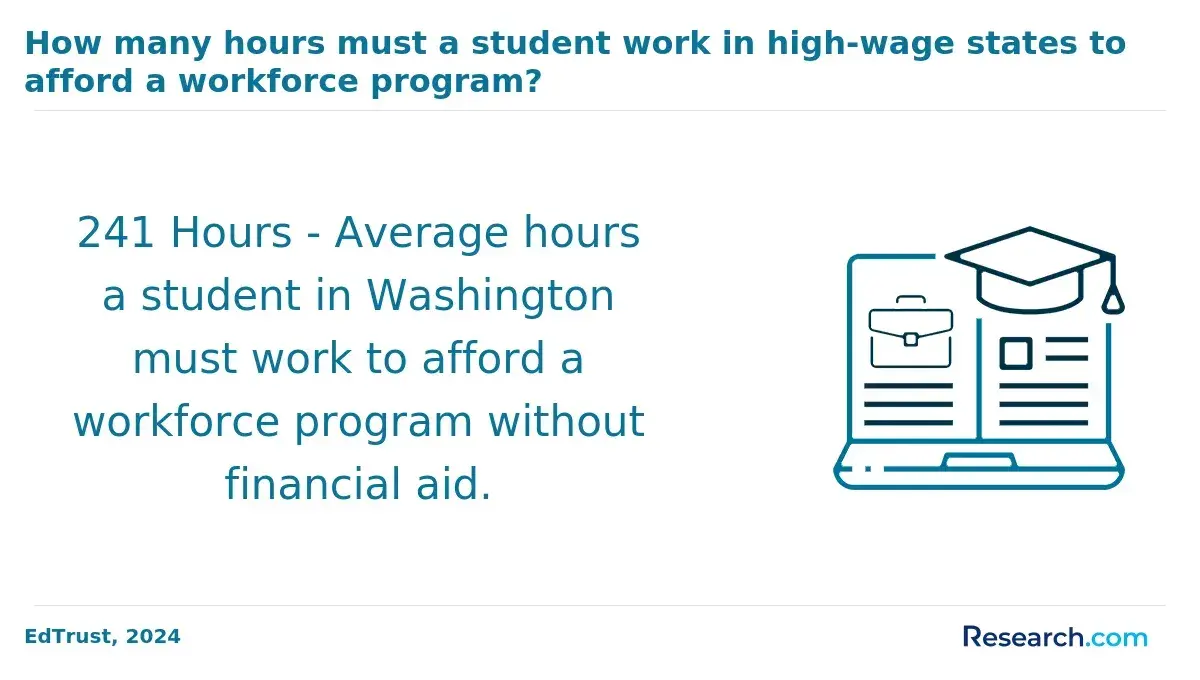
Choosing an online Spanish degree with translation specialization requires matching program depth to career demands. Associate degrees offer foundational language skills but limited translation training, often confining graduates to entry-level roles rather than full translator positions.
By contrast, bachelor's degrees-especially those with dedicated translation concentrations-provide a practical balance of advanced proficiency, translation theory, and applied projects. This makes them the primary credential sought by employers in sectors like government and healthcare, where nuanced cultural insight is essential.
Master's degrees target technical or legal translation roles, emphasizing specialization and professional connections, often leading to higher wages; the median salary for interpreters and translators is $59,440, with the top 10% earning above $96,000.
Certificate programs serve professionals seeking focused skills for niche markets or career pivots but typically lack the breadth needed for competitive federal or corporate roles.
Prospective students should weigh goals against the investment in time and curriculum scope. For instance, freelance translators targeting specific markets might benefit from certificates, while those pursuing stability in institutional translation require bachelor's or master's degrees.
To explore cost-effective options for a bachelor's degree that supports translation training, one can review the cheapest bachelor degree online.
What accreditation and program quality standards should online Spanish translation degrees meet?
The regional accreditation of online Spanish translation degrees, recognized by the U.S. Department of Education or the Council for Higher Education Accreditation, directly affects graduate mobility and employer credibility.
Program-specific accreditation from bodies like the American Translators Association (ATA) or the Commission on Collegiate Interpreter Education (CCIE) is essential for confirming that curricula meet industry standards on fluency development, cultural nuance, and specialized translation practices. These accreditations serve as practical assurances rather than mere formalities.
Graduates targeting sectors such as healthcare or legal translation must prioritize programs with proven outcomes in certified translation readiness and training on industry-standard software.
This focus mitigates risks associated with translation errors-for instance, medical translation programs lacking rigorous terminology coverage can lead to dangerous, even life-threatening mistakes. Transparency about alignment with certification exams and access to internships are critical markers of program quality and workforce preparedness.
Cost considerations also factor into long-term value. Liberty University's modest tuition increase, ranked within the top 35% for affordability, illustrates that stable pricing does not inherently compromise program integrity. However, some programs with weaker accreditation may impose post-graduate costs for certification or supplemental training.
For students seeking targeted acceleration, an accelerated sports management degree online example demonstrates the tradeoff between condensed study timelines and depth of practice-a principle also relevant to Spanish translation pathways.
In evaluating accreditation standards for online Spanish translation programs in the United States, prospective students should focus on curriculum rigor, practical application opportunities, and transparent graduate outcomes to navigate workforce expectations effectively.
What core courses and specialized translation classes are included in these online Spanish programs?
Advanced translation-focused Spanish degree programs prioritize precise language mastery, cultural literacy, and specialized vocabulary tied to professional sectors like legal, medical, and technical fields. The emphasis on complex grammar, phonetics, sociolinguistics, and hands-on translation exercises prepares students for real-world challenges such as court interpreting or healthcare communication, where accuracy and nuance directly impact outcomes.
Beyond language, technical proficiency with computer-assisted translation (CAT) tools and terminology management software is increasingly expected by employers to maintain speed and precision in deadline-driven contexts. This skillset differentiates candidates in competitive job markets, highlighting the tradeoff between purely linguistic training and integrated technology competence.
Practical experience through internships or capstone projects is key, connecting students to translation agencies or multicultural organizations and providing exposure to authentic client demands. Cost-saving measures like digital textbooks can reallocate funds toward software licenses or experiential opportunities, reinforcing the program's applied focus.
Programs that incorporate dialectical variation, cross-cultural communication, and ethics better equip graduates to navigate complex negotiations or international dispute resolution, where cultural sensitivity is as critical as language accuracy.
Students targeting government or healthcare translation roles must confirm certification preparation is embedded in their curriculum, given strict credentialing requirements in those sectors. Balancing coursework with immersive language exposure-sometimes available virtually-is a practical necessity affecting linguistic fluency and employability.
What are typical admission requirements for online Spanish degrees emphasizing translation training?
Admission requirements for online Spanish degrees with a focus on translation often reflect real workforce demands rather than academic formality alone. Programs expect candidates to demonstrate measurable Spanish proficiency and relevant experience that align with job market segments, particularly healthcare, which employs about 26% of US language professionals in roles requiring precise medical terminology.
Applicants generally must submit official transcripts verifying at least a high school diploma and meet GPA benchmarks typically between 2.5 and 3.0. Proving Spanish skills involves standardized test scores like AP Spanish or completion of prerequisite courses, but competitive candidates also present evidence of bilingual communication and translation-related experience.
For those pursuing specialized tracks, such as medical or legal translation, highlighting sector-specific exposure is a practical necessity because hiring managers prioritize candidates familiar with professional jargon and ethical standards. Without a linguistic background, proven commitment through immersion or relevant work can mitigate gaps that might otherwise cause delays in progressing through demanding translation coursework.
This targeted preparation maximizes alignment with employer expectations and supports smoother transitions into translation careers within the broader language services job market.
How long do online Spanish translation degrees take, and what do they cost to complete?
Spanish translation degrees online demand a clear-eyed evaluation of time, cost, and practical return. Typically lasting two to four years, associate programs offer a shorter path than four-year bachelor's degrees, but accelerated or part-time options can alter these timelines significantly.
Financially, public institutions charge roughly $6,000 to $15,000 annually for residents, while private schools often exceed $20,000, making cost a pivotal factor.
Employers prioritize degrees that integrate deep linguistic skills with hands-on translation practice, including proficiency in translation technology and domain-specific terminology such as medical or legal Spanish. For instance, healthcare professionals benefit most from programs offering specific medical terminology modules, ensuring immediate applicability in patient-facing roles.
With 33 distinct online Spanish degree programs tracked globally, not all emphasize translation equivalently; this uneven focus makes curriculum scrutiny imperative. Beyond tuition, candidates must anticipate expenses for certification prep, software, and internships critical for portfolio development-factors often overlooked but highly valued by hiring managers.
What careers can you pursue with an online Spanish degree focused on translation skills?
Online Spanish degree programs focused on translation prepare students for nuanced roles demanding both linguistic precision and cultural expertise, such as translators, interpreters, localization specialists, bilingual editors, and project managers in language services. Employers across sectors like government, healthcare, legal, and media emphasize the necessity of domain-specific knowledge and practical skills beyond academic credentials.
For instance, medical translators must ensure error-free transmission of complex patient data, directly impacting treatment outcomes, while localization experts tailor content to resonate with diverse Spanish-speaking demographics, influencing marketing success.
Court interpreters confront time-sensitive, high-stakes environments where instantaneous verbal accuracy is mandatory, contrasting with document translators who prioritize depth and comprehensive revision over speed.
The competitive job market favors professionals holding certifications like ATA and proficiency in computer-assisted translation (CAT) tools and management systems. Without these, graduates risk diminished earnings and limited career progress.
A study from a European research consortium identified 21 Spanish universities delivering 240-ECTS bachelor's degrees combining online and blended learning. This indicates substantial academic availability but also highlights the importance of strategic credentialing and specialization to navigate employment challenges.
What salary ranges and job outlook can Spanish translation graduates expect in the U.S.?
Spanish translation graduates face a tradeoff between initial employment sectors and long-term salary prospects influenced heavily by certification and specialization. Entry-level positions in education, government, or client services often pay between $40,000 and $50,000 but provide foundational experience essential for advancing into higher-paying roles.
Mid-career translators, especially those with credentials in legal or medical areas, can expect salaries ranging from $60,000 to $75,000. Specialized skills in translating Spanish legal documents may yield a 15-20% salary premium, yet pursuing these certifications requires time and financial investment that may not be recouped immediately depending on industry demand.
Employment growth for translators and interpreters is projected at 19% through 2032, outpacing many fields due to globalization's push for multilingual communication. However, graduates must weigh the variable demand across sectors and invest strategically in certifications that align with healthcare and legal markets, where linguistic precision is critical.
Cost considerations also affect career ROI. For example, the University of Arkansas offers a fully online BA in World Languages with a Spanish concentration charging $269.75 per credit hour plus about $53 in mandatory online fees per credit for 2025. Choosing affordable programs can minimize debt, making post-graduate certification more feasible.
Successful graduates integrate upfront education costs with targeted credentialing and networking to optimize salary growth over time in a competitive, expanding job market.
How can you choose the best online Spanish translation program for your goals and budget?
Selecting an online Spanish translation program demands aligning curriculum depth with clearly defined career goals and financial constraints. For example, if targeting niche areas like legal or medical translation, prioritize programs offering specialized courses and hands-on internships to bridge theory with practice-this improves employability in competitive markets.
Interpreters and translators average $52,330 annually, with top earners exceeding $96,000 (OnlineU). Programs with accreditation from recognized translation associations tend to offer relevant curricula recognized by employers. Freelancers should seek training emphasizing CAT tools and client communication over purely academic theory, addressing real-world service delivery challenges.
Tuition costs and opportunity losses vary significantly between public institutions offering certificates or bachelor's degrees and costly private alternatives. Flexible schedules and shorter program lengths reduce disruption for working professionals but may limit depth or networking opportunities, which are critical for job placement.
Employer demand increasingly favors candidates combining language skills with technology, such as machine translation post-editing. Lack of career services or professional network access can be a practical barrier despite strong academic content. Evaluate job placement statistics and student support before committing.
Other Things You Should Know About Spanish
Building a strong foundation in general Spanish is essential before specialized translation training. Employers expect translators to have near-native fluency and deep cultural knowledge, which general coursework and immersion provide. Prioritize programs that balance advanced language study with translation practice to ensure you develop both linguistic accuracy and contextual understanding, improving employability and precision in real-world tasks.
Online Spanish translation degrees typically involve a heavier workload due to additional specialized courses like translation theory, technical terminology, and practice projects. Students must manage more intensive writing and revision assignments than in general language programs. If your schedule is tight, choose programs that offer flexible pacing or hybrid options to accommodate deep learning without burnout.
Employers in government, healthcare, and corporate sectors increasingly require practical translation skills paired with cultural competence. Translation-focused degrees hold more value when paired with internships or certifications demonstrating applied expertise. Prioritize programs incorporating real-world projects and industry partnerships over purely theoretical tracks to maximize your marketability.
References
- Certified Translation Requirements: What You Need to Know https://www.asaptranslate.com/blog/certified-translation-requirements-what-you-need-to-know
- The best spanish courses to improve your fluency - International House México https://ihmexico.mx/the-best-spanish-courses-to-improve-your-fluency/
- Best Spanish Online Classes – Spanish Courses with Certification https://institutospanien.org/blog/spanish-online-classes-spanish-courses-with-certification/
- Top jobs with a languages and translation degree | University of Surrey https://www.surrey.ac.uk/features/top-jobs-languages-and-translation-degree
- Best Paid Jobs in the Translation Industry and How to Get Them https://www.translastars.com/blog/best-paid-jobs-translation-industry
- Spanish Translator Jobs » Find Remote Translation Jobs | useme.com https://useme.com/en/jobs/category/translation,39/spanish,126/
- How to become a Spanish translator https://www.linguaone.com/how-to-become-a-spanish-translator/
- The Master’s Degree in Professional Translation between English and Spanish receives accreditation from the European Commission’s network of European Master’s Degrees in Translation https://diaridigital.urv.cat/en/master-traduccio-angles-espanyol-acreditat-xarxa-european-masters-translation/
- How to Start a Career as a Spanish Translator https://kingsoftranslation.com/articles/how-to-start-a-career-as-a-spanish-translator