2027 Online Spanish Degrees for Global Company Roles

Co-Founder and Chief Data Scientist
For professionals aiming to qualify for roles demanding bilingual proficiency in Spanish, acquiring an accredited degree without interrupting a full-time career remains a formidable challenge.
Recent data from the National Center for Education Statistics indicates that over 40% of online learners juggle employment alongside study, a trend that reveals the crucial need for flexible admission policies and adaptable program structures. This shift means candidates must discern which online Spanish degrees truly accommodate irregular schedules and provide market-relevant skills rather than simply remote delivery.
This article examines top online Spanish degree options optimized for global company roles, addressing accessibility, curriculum alignment, and career advancement potential to guide strategic enrollment decisions.
Key Things You Should Know
- U.S. Bureau of Labor Statistics projects 12% growth in bilingual Spanish roles by 2030, yet online Spanish degrees show a 15% longer average time-to-completion than campus programs, delaying workforce entry impacts.
- Employer surveys from 2024 reveal 64% of global companies prioritize verified cultural competence over language fluency alone, pressuring programs to integrate immersive cross-cultural components often absent online.
- Higher Education Research Institute data highlights 42% higher lifetime earnings for online Spanish degree holders who combine language study with global business coursework, emphasizing costly curriculum breadth tradeoffs.
What is an online Spanish degree and how does it prepare you for global company roles?
An online Spanish degree benefits for international business careers by delivering a skill set that extends beyond language fluency to include cultural intelligence and sector-specific communication strategies. Employers in global companies seek candidates capable of navigating regional dialects, legal contexts, and cultural nuances that materially affect negotiations and operations.
For example, a logistics manager in a multinational firm working across Latin America can use such skills to streamline contracts and shipment coordination, reducing costly errors and delays. Similarly, bilingual marketing professionals leverage nuanced language abilities to craft campaigns that resonate deeply within Hispanic communities, improving customer retention and market share.
Data from Instituto Cervantes underscores the value: with Spanish boasting 486 million native speakers and 599 million total users globally, it ranks as the second-most spoken native language and third-most common online language, granting strategic operational advantages to businesses with diverse customer bases.
Online Spanish degree programs often combine advanced language mastery with applied learning elements and global business curricula designed to meet real-world employer demands for versatility in communication roles, not just conversational command. Prospective students should verify that programs incorporate case studies or virtual internships to build practical skills.
Choosing a fully online path requires motivation and disciplined time management, critical factors influencing success in global corporate roles. Working professionals evaluating educational options may also consider specific resources like the online Spanish degree for military veterans to find tailored support structures.
Are online Spanish degrees respected by global employers compared to traditional campus programs?
Online Spanish degrees recognized by global employers increasingly match the value of traditional programs when they demonstrate measurable language proficiency and industry-relevant skills. Employers in sectors like international trade prioritize proven fluency, cultural competency, and applied communication over whether a degree was earned online or on-campus.
This practical focus means success hinges on outcomes such as standardized test scores (DELE, SIELE) and real-world translation experience rather than delivery format alone.
For working professionals, online Spanish programs offer flexibility vital for balancing employment and language upskilling. However, sectors demanding immersive interpersonal interaction—such as healthcare or legal interpretation—still regard in-person cultural immersion as a key differentiator. Therefore, supplementing an online degree with internships or immersion programs is often necessary to meet these rigorous workforce standards.
Students evaluating the value of online Spanish degrees versus traditional programs should carefully assess accreditation, live conversational opportunities, and vocabulary training tailored to their target industries. The global digital Spanish learning market's projected growth to $22.4 billion by 2034 underscores the rising demand but also the heightened competition among graduates.
When considering this pathway, prospective candidates might also review data on bachelor degrees that pay well to align their language skills with broader marketable qualifications.
What types of online Spanish degrees are offered in the U.S. and which is best for global careers?
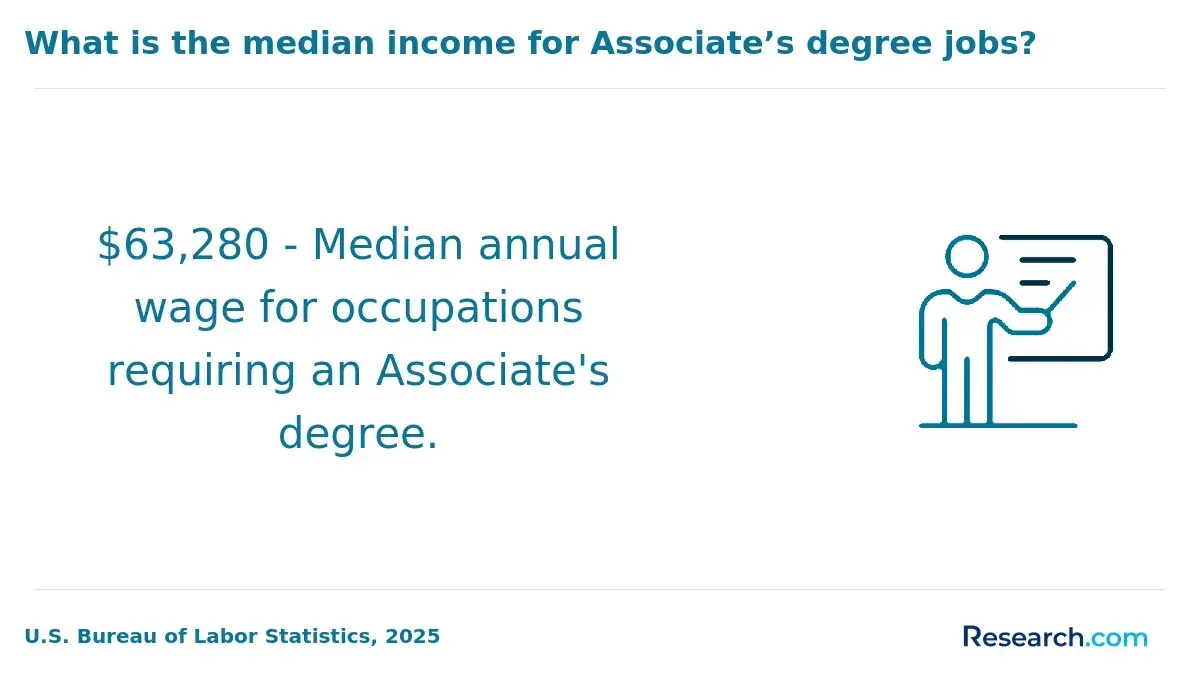
Not all online Spanish degree programs in the U.S. serve the same professional ambitions, and aligning one's choice with specific industry demands is indispensable. Associate degrees concentrate on essential language skills and cultural awareness, targeting entry roles such as customer service or retail, where basic bilingual communication offers a tangible edge.
Bachelor's degrees, better suited for international business roles, blend advanced Spanish proficiency with translation and cultural studies, positioning graduates for employment in multinational corporations or global supply chains.
Graduate certificates and master's degrees narrow further into specialized linguistic abilities or Hispanic studies, fitting fields like diplomacy or global compliance. Consider, for example, a logistics manager who would gain more career impact from a bachelor's degree integrating business Spanish than from an associate credential.
Bilingual workers gain approximately 19% more income than their monolingual peers, with nearly 43% of U.S. multilingual professionals reporting at least $5,000 higher annual earnings directly related to their Spanish skills. This wage premium reflects employer priorities for measurable language competence beyond casual fluency, especially for roles involving negotiation or cross-cultural interaction.
A critical evaluation of program accreditation and curricular rigor is equally important, as degrees incorporating applied skills and regional market knowledge outperform generic offerings. Many prospective students also weigh cost-effectiveness; for practical investment decisions, exploring the cheapest CACREP-accredited programs online can provide valuable comparative insights.
Programs featuring certifications in professional Spanish communication or translation correlate strongly with enhanced job placement in global careers.
How do online and on-campus Spanish programs differ for students targeting multinational companies?
Online Spanish degree programs present distinct tradeoffs compared to on-campus options, especially for professionals targeting multinational company careers. The critical difference lies in immersive experience and network accessibility. Although online formats offer flexibility for working students, they often lack the nuanced cultural interactions and real-time conversational practice essential for deep linguistic fluency demanded by global business roles.
Multinational employers emphasize candidates' authentic contextual understanding, often fostered through on-campus resources such as study abroad and language labs. While online Spanish degree programs for multinational company careers provide foundational language skills and practical business communication, they may underprepare students for high-pressure roles involving simultaneous interpretation or international negotiations.
Consider a professional aiming for Latin American market development: live internships and in-person networking available on campus enhance employability more than purely online study can. Conversely, roles like remote customer support might be adequately served by online programs. Challenges for remote learners include securing live immersion and verified language evaluation, which require proactive pursuit of workshops or supplementary experiences.
Students weighing differences between online and on-campus Spanish courses for global business roles should factor employer expectations for experiential learning and practical fluency. The median annual wage of $59,440 for interpreters and translators reflects the premium employers place on advanced skills shaped through direct experience.
For those interested, exploring options like online masters in history illustrates how affordability intersects with educational format decisions.
What courses and specializations do online Spanish degrees include for business and global careers?
Bilingual proficiency in Spanish coupled with specialized business skills is no longer optional for roles interfacing with Hispanic markets; it directly shapes operational effectiveness and negotiation accuracy. For instance, a supply chain manager fluent in business Spanish can precisely interpret legal terms and cross-border contractual nuances, mitigating costly misunderstandings with Latin American partners.
Programs that integrate Spanish language mastery with intercultural communication, international business, and sector-specific knowledge (e.g., finance or healthcare) offer a strategic edge. However, candidates must scrutinize whether curricula balance linguistic fluency with applied business competencies, such as technical writing and digital communication tools, that employers currently prioritize.
Among challenges, students should anticipate navigating regional dialects and idiomatic expressions that vary across Hispanic markets. Practical exposure via internships or virtual cultural immersion programs is often decisive in developing adaptable communication skills vital for client-facing positions. This practical component exceeds the value of purely academic language study.
Growth projections from Instituto Cervantes note a 34.4% rise in U.S. Spanish speakers by 2030, increasing demand for professionals who combine language ability with market-specific business savvy to manage customer relations, supply chains, and operations effectively.
What admission requirements and language proficiency levels do online Spanish programs typically expect?
Admission criteria for online Spanish degree programs in 2026 reflect employer demands for advanced language skills beyond basic fluency. Undergraduate entry generally requires a high school diploma, whereas graduate applicants need a relevant bachelor's degree with a minimum GPA around 3.0. Language proficiency expectations increase substantially at the graduate level, where standardized test scores such as DELE or SIELE at B2 or higher (CEFR scale) often serve as essential proof of capability.
These standards align with workplace realities where bilingual professionals handle complex communication tasks like contract negotiation, intercultural management, or sector-specific translation. Employers frequently seek candidates demonstrating practical language application in professional contexts rather than conversational ease alone.
For example, a multinational trade company may reject an applicant lacking mastery of industry terminology despite general Spanish knowledge.
Typical admissions processes may involve essays focused on bilingual career goals and letters confirming intercultural or professional language use. Candidates admitted with marginal language proficiency should anticipate extra coursework or language labs, which can lengthen time-to-degree and impact workforce entry timing.
Working professionals aiming for strategic shifts benefit from selecting programs that provide clear pathways to recognized language certification, thus improving access to internships and client-facing roles in multinational environments.
How long do online Spanish degrees take and what do they cost for U.S. students?
Choosing an online Spanish degree requires weighing time investment against career goals and employer expectations. Bachelor's programs generally span four years, though accelerated options can shorten this to three, and associate degrees are typically two years. Public universities offer programs ranging from $10,000 to $25,000, while private institutions may exceed $30,000, excluding additional expenses like technology fees and proctored exams.
These costs usually remain below what study abroad programs demand—often over $30,000 per semester when including tuition, housing, and travel.
U.S. workers aiming for roles involving U.S.-Spain trade might find a two-year associate degree or certificate sufficient to gain practical language skills quickly, enabling faster workforce entry. Conversely, positions requiring deeper cultural and legal fluency—such as corporate legal analysts—typically favor candidates who have completed a full four-year bachelor's degree due to its comprehensiveness and signaling of discipline.
Additional factors affecting decision-making include accreditation and program partnerships with Spanish institutions, which can enhance international credibility but increase costs. Balancing studies with full-time work also remains a critical constraint; programs lacking clear pacing risk extended enrollment periods that inflate total opportunity costs.
Which global-facing careers can you pursue with an online Spanish degree and what do they involve?
Career pathways stemming from an online Spanish degree emphasize not only language proficiency but also sector-specific cultural fluency essential in global business, diplomacy, healthcare, and education. For instance, international business roles require negotiating contracts with Spanish-speaking partners while navigating complex regional regulations, demanding beyond-fluent language skills and legal awareness.
Healthcare administrators rely on Spanish fluency combined with ethical sensitivity to manage outreach and patient communication in underserved populations, highlighting the tangible, high-stakes context in which linguistic competence operates.
Translation and localization careers prioritize mastery of specialized terminology and adaptation technologies, challenging graduates to meet rigorous standards in content accuracy alongside cultural relevance. The explosive expansion of digital Spanish learning platforms—from $8.6 billion in 2025 to a projected $22.4 billion by 2034—illustrates employer demand for graduates adept at integrating AI-enhanced tools, virtual collaboration, and adaptive learning systems.
Decision-making for prospective students hinges on program curricula that balance foundational Spanish skills with applied sector knowledge. Candidates targeting public health must prioritize medical terminology and confidentiality principles, while those aiming for business roles should focus on commerce-specific vocabulary and negotiation tactics.
Translation specialists should seek comprehensive training in computer-assisted translation (CAT) tools. Incorporating these elements can mitigate skill gaps that often limit employability in real-world scenarios.
Ultimately, successful integration of evolving technology and cultural expertise distinguishes graduates who remain competitive in increasingly tech-mediated, multilingual global markets.
What salary ranges and job outlook can online Spanish degree graduates expect in global roles?
Graduates holding online Spanish degrees face a nuanced employment landscape where language skills alone seldom secure competitive wages. Entry-level salaries typically range from $40,000 to $60,000, but reaching higher earnings requires integration of industry knowledge and certifications. For example, medical interpreters with Spanish proficiency and clinical understanding command $50,000 to $75,000, reflecting the immediate regulatory and patient care demands in healthcare.
The U.S. Bureau of Labor Statistics predicts a 20% growth rate for interpreters and translators over the next decade, notably outpacing average occupational growth. This surge is driven by sectors such as healthcare, legal, finance, and business seeking bilingual professionals who can navigate complex regulatory or technical environments in addition to language translation.
In technology firms, bilingual roles tied to product localization or customer success blend linguistic and technical skills, offering salaries between $55,000 and $85,000. Finance positions requiring regulatory compliance and analytical precision alongside Spanish fluency command $60,000 to $90,000 but demand domain-specific credentials beyond language proficiency.
Advancing beyond $40,000 typically involves targeted credentialing and experience that demonstrate applied skills rather than mere language knowledge. Graduates are advised to build portfolios showcasing real-world Spanish application, pursue relevant certifications like the Certified Healthcare Interpreter, and leverage the flexibility of online degrees to combine work experience concurrently. These steps reduce hiring barriers related to perceived skill gaps and increase access to specialized, higher-paying roles.
How can you evaluate accreditation and choose a reputable online Spanish program for global work?
Accreditation remains the strongest initial filter when selecting online Spanish programs targeting professional mobility. Degrees lacking U.S. Department of Education or Council for Higher Education Accreditation recognition often receive limited employer consideration, especially in multinational settings where credential credibility directly impacts hiring decisions.
Specialized endorsements—such as those from language education authorities or international business organizations—can differentiate programs by validating industry-specific terminology and cultural fluency, essential for roles like supply chain managers engaging Latin American markets.
Assessing program outcomes should extend beyond surface metrics to measurable employment alignment. Programs reporting graduate placement rates above 70% within international corporations typically reflect curricula and network strength matched to global business needs.
The projected growth to 726 million Spanish speakers worldwide by 2050 further intensifies demand for candidates whose language proficiency is substantiated by reputable accreditation and ties to corporate priorities.
Prospective students must weigh logistical tradeoffs like synchronous class requirements that could conflict with work schedules against asynchronous formats that might limit interactive learning critical for conversational mastery.
Additionally, flexible credit transfer policies matter for future pivots toward translation or global business specialties without redundancy. Passive, lecture-based online instruction often falls short in cultivating the advanced fluency that underpins eligibility for competitive international roles.
Ultimately, selecting a program demands scrutiny of accreditation, employer integration, transparent outcome data, and delivery modes calibrated for adult learners balancing career demands with the rigors of advanced language acquisition in global contexts.
Other Things You Should Know About Spanish
Prospective students should verify the accreditation of the online Spanish degree program, assess the curriculum's alignment with global business needs, and look for partnerships with multinational corporations to ensure credibility and relevance for global company roles in 2027.
Employers in multinational companies expect graduates to demonstrate both verbal fluency and cultural competence in Spanish, not just academic knowledge. Online degrees that incorporate immersive conversation practice, regional dialect exposure, and business communication skills better align with these demands. Candidates from purely theoretical programs may struggle to meet employer standards for real-world interaction, so prioritize programs emphasizing applied language skills and client-facing communication.
Online Spanish degrees often lack in-person cultural immersion and spontaneous networking, which are vital for understanding regional business etiquette and building professional contacts. Some programs mitigate this by offering virtual exchanges or local in-person practicum options, but these vary in accessibility. Prospective students should weigh the importance of direct cultural exposure and networking against the flexibility of online study when selecting a program aimed at global company roles.
Students should select courses targeting industry-specific vocabularies and cross-cultural negotiation skills rather than focusing exclusively on literature or grammar. Business Spanish, translation, and intercultural communication classes provide targeted competencies preferred by global employers. Prioritize programs that include internships or capstones with real-world clients to convert language proficiency into measurable professional experience, enhancing employability beyond language certification alone.
References
- How to Choose the Right Spanish Course for Your Level and Goals https://conversaspanishinstitute.com/learning/how-to-choose-the-right-spanish-course/
- Spain: Tuition fees & cost of living | Study.eu https://www.study.eu/article/spain-tuition-fees-cost-of-living
- Online Undergraduate Certificate Spanish For Business & the Professions https://www.umgc.edu/online-degrees/undergraduate-certificates/spanish-business-professions
- Accreditations - Tico Lingo Spanish School in Costa Rica https://www.ticolingo.com/accreditations/
- Best Spanish Online Classes – Spanish Courses with Certification https://institutospanien.org/blog/spanish-online-classes-spanish-courses-with-certification/
- How Long Does it Take to Speak Spanish Fluently? https://expanish.com/blog/how-long-take-speak-spanish-fluently/
- Your Complete Guide to Intensive Online Spanish Courses: What to Expect, How to Prepare & How Fast You’ll Progress https://www.learnenelpatio.com/post/your-complete-guide-to-intensive-online-spanish-courses-what-to-expect-how-to-prepare-how-fast-y
- What can I do with an international business and languages degree? https://gradireland.com/careers-advice/career-ideas/what-can-i-do-international-business-and-languages-degree
- Prepare for College-Level Spanish with Online Spanish III https://advantagesschool.com/prepare-for-college-level-spanish-with-online-spanish-iii/
- Why Spanish Language Certification Gives Your Career a Competitive Edge - IH Madrid https://www.ihmadrid.com/en/blog/why-spanish-language-certification-gives-your-career-a-competitive-edge.html