2027 Best Online Spanish Programs for Strong Communicators Seeking Stable Careers

Co-Founder and Chief Data Scientist
Highly skilled professionals and adult learners aiming to enhance their Spanish fluency face a critical bottleneck: finding programs that combine rigorous language training with direct career applicability, all within flexible formats suited to busy schedules.
A recent National Center for Education Statistics report showed that over 40% of online learners in 2024 enrolled primarily for career advancement, underscoring a shift toward education as a strategic, time-sensitive investment. This highlights constraints on learners balancing full-time work, family, and upskilling demands, where program structure and credential relevance directly affect employment outcomes.
This article evaluates leading online Spanish programs emphasizing communicative competence and stable career trajectories to guide informed enrollment decisions.
Key Things You Should Know
- Programs emphasizing oral proficiency over grammatical theory align with employer preferences, as 67% of U.S. healthcare and education roles require immediate conversational Spanish competence, limiting graduates with textbook-only training.
- The 22% wage premium for bilingual professionals in major metro areas documented by the U.S. Bureau of Labor Statistics incentivizes investment in accredited online degrees, yet regional labor market saturation imposes diminishing returns past entry thresholds.
- Median program durations exceeding two years increase opportunity costs, especially for mid-career pivots; shorter intensive certificate alternatives often sacrifice accreditation, narrowing long-term career mobility.
What are the best online Spanish degree and certificate programs for strong communicators?
Online Spanish degree programs catered to strong communicators must go beyond basic language skills to address employer needs for fluency, cultural literacy, and real-time comprehension. For instance, a bilingual healthcare coordinator benefits more from specialized curricula emphasizing medical terminology and patient interaction than from generic language studies.
The demographic projection that 27.5% of the U.S. population will be Hispanic by 2060, making it the world's second-largest Spanish-speaking country, heightens demand for professionals capable of nuanced cross-cultural communication in sectors like social services, public administration, and customer relations.
Top online certificate programs for Spanish language proficiency and career stability excel when they offer focused qualifications, such as Healthcare Spanish or Legal Spanish certificates, which align tightly with workforce requirements.
Prospective students should weigh program rigor, faculty credentials, and experiential elements such as internships or virtual engagements with native speakers while recognizing the challenge of validating fluency through online assessment alone.
Tradeoffs must be considered between faster, specialized certificates and longer, more comprehensive bachelor's degrees that provide broader skills suited for managerial roles or policy-related careers. Working professionals aiming for an effective pivot or advancement should also examine program accreditation and career support, as these factors significantly influence employer recognition and salary growth.
For those seeking accelerated pathways, options like 2 year accelerated bachelor degrees online offer a practical balance between speed and depth while maintaining competitive market relevance.
How do online Spanish programs compare with on-campus options for quality and outcomes?
Online Spanish programs can yield comparable proficiency outcomes to traditional campus learning but reveal critical gaps in live interaction and cultural immersion necessary for workplace fluency. This difference becomes especially relevant in sectors like healthcare, legal services, and education, where employers require demonstrable oral command and cultural nuance.
Such competencies are difficult to ensure without hybrid or supplemental in-person elements, a key consideration given how online Spanish program outcomes versus traditional campus learning affect long-term employability.
Candidates who augment online courses with local language exchanges or practicum placements maintain competitive career trajectories. Data from Burning Glass Institute highlights a 5-20% median salary premium for U.S. roles explicitly demanding Spanish skills versus monolingual positions. This suggests validated proficiency—regardless of delivery mode—translates into tangible economic advantage.
Key indicators of quality in online programs include:
- Accreditation and instructor qualifications emphasizing bilingual expertise.
- Integrated spoken practice modules using sector-specific vocabulary essential for settings like healthcare or business.
- Structured opportunities for real-world application, such as digital simulations or partnerships with Spanish-speaking communities.
Flexibility remains an advantage of online formats, fitting career pivots but requiring self-discipline and reliable technology to maintain engagement. On-campus programs more consistently provide peer interaction and cultural immersion trips, which deepen contextual language mastery critical in advanced professional roles. Those comparing how online Spanish programs compare with on-campus quality should weigh these practical tradeoffs carefully.
Students actively targeting workforce readiness must blend online learning with authentic Spanish use in their industries to maximize outcomes, rather than relying solely on program format.
For related considerations on credentialing and program selection within health-related fields, read up on the typical coursework of a nutrition degree online.
What types of online Spanish credentials exist, from certificates to bachelor's and master's degrees?
Choosing between online Spanish certificate programs in the US and bachelor's and master's degrees in the Spanish language involves critical tradeoffs tied to career outcomes and time investment. Certificates often deliver targeted language and cultural skills in under a year, ideal for roles such as healthcare workers seeking practical patient communication improvements without committing to lengthy study. This makes them a pragmatic option for industries valuing immediate, job-ready skills.
Bachelor's degrees require approximately four years and integrate language fluency with literary and cultural analysis, preparing students for translation, education, government, and international business roles. However, the substantial time and financial commitment means many learners consider certificates or associate degrees first. Survey data reveals 64% of online language learners prioritize more affordable programs, emphasizing cost sensitivity in credential selection.
Master's degrees build on foundational credentials, emphasizing advanced linguistic specialization or applied linguistics suited for academia and senior government or corporate positions. These programs demand prior bachelor's credentials and a deeper commitment, aligning with career paths that necessitate specialized knowledge rather than general proficiency.
Employers evaluate these credentials variably: government translation roles often require at least a bachelor's or master's, while business sectors may accept certificates bolstered by experience. Notably, 57% of online Spanish program graduates reported improved earnings or employment within a year.
Prospective students should weigh program cost, time, and industry demands carefully, including exploring options like the cheapest online master's in counseling to benchmark affordability approaches in graduate education.
How can you verify that an online Spanish program is properly accredited and reputable?
Employer recognition heavily depends on institutional accreditation from agencies recognized by the U.S. Department of Education or the Council for Higher Education Accreditation when evaluating online Spanish programs. Regional accreditation validates that the program meets critical academic standards necessary for credit transfers and practical workforce acceptance.
Additionally, look for programmatic endorsements from organizations like the American Council on the Teaching of Foreign Languages, which underscore curriculum rigor and language proficiency standards aligned with real job requirements.
For example, growth areas such as business communication have seen a 44% surge in U.S. employer demand between 2020 and 2024, reflecting the practical value of bilingual skills verified by labor market data cited by ACTFL.
Practical evaluation should involve:
- Curriculum alignment with sectors where bilingual fluency directly impacts hiring, including healthcare and international trade.
- Transparency in graduation rates and job placement that correlate with workforce relevance.
- Verification of transfer credit acceptance and credential recognition to avoid barriers in advanced career pathways.
- Student feedback on faculty quality, technology integration, and remote learning support influencing skill acquisition.
Assessing these factors alongside accredited standards for online Spanish programs in the United States helps mitigate risks of uncertain credential value. Candidates should consider the operational tradeoffs between coursework duration and relevance, especially since program length affects when one can pivot professionally—akin to decisions explored in how long does it take to study architecture.
Ultimately, these criteria separate programs with genuine workforce impact from those offering nominal credentials.
What courses and specializations do online Spanish programs typically include in their curriculum?
Programs that pair core language instruction with targeted specializations respond directly to market demands yet entail clear tradeoffs in career flexibility and immediate employability. For example, medical Spanish training equips graduates to fill urgent clinical roles—where over 40% of U.S. patients with limited English proficiency speak Spanish—reducing communication errors and improving patient outcomes.
However, specialization confines job prospects largely to that sector, while generalist programs offer broader linguistic skills but often require supplemental certification or on-the-job training to secure comparable positions.
Typical specializations include medical, legal, and business Spanish, each addressing distinct terminologies and workplace contexts. For instance, legal Spanish prepares candidates to navigate courtroom language and client confidentiality in law enforcement or legal aid settings, whereas business Spanish prioritizes negotiation and cultural fluency for corporate interactions.
Cultural competency modules, often embedded in comprehensive programs, enhance communicative effectiveness beyond grammar and vocabulary, crucial for roles in education and social services serving diverse Hispanic populations.
Employers in healthcare and legal sectors expect interpreters and translators to be credentialed through nationally recognized certifications. Prospective students should verify if their program prepares them for exams such as the Certified Healthcare Interpreter test to ensure credentialing readiness.
In weighing program options, students must balance the narrower but stable career pathways of technical specializations against the adaptable but less immediately marketable skill sets of generalist training.
What admission requirements and language prerequisites do online Spanish programs usually have?
Applying to online Spanish programs demands clear proof of intermediate to advanced language skills, often verified through placement tests or recognized exam scores like CLEP or AP Spanish. This gatekeeping avoids remedial coursework, enabling learners to focus on advanced grammar, conversation, and cultural fluency.
For professionals targeting specialized fields such as translation or interpretation, standardized assessments like the ACTFL Oral Proficiency Interview (OPI) serve as critical benchmarks. Translation professionals working with English-Spanish pairs command notably higher freelance rates—about 18% above non-European language pairs, according to ProZ.com's recent survey—demonstrating tangible market advantages tied to demonstrated fluency.
Aside from language proficiency, online programs require high school diplomas or GEDs, combined with digital literacy sufficient for remote learning platforms. This combination can create barriers for working adults balancing career changes, especially when prerequisite coursework in linguistics or cultural studies is mandatory, delaying program entry and potentially increasing total time and cost.
Such requirements, however, strengthen comprehensive skills tailored for careers in education, legal, and healthcare sectors where bilingual competency is essential. Students pursuing stable roles in bilingual education or translation must weigh these tradeoffs carefully to avoid unwelcome extension credits or program delays that reduce return on investment.
How long do online Spanish programs take to complete, and what do they cost?
Completion time for online Spanish programs directly influences their labor market relevance and practical utility. Shorter certificates spanning 3 to 9 months typically align better with employer expectations for upskilling while accommodating full-time work, whereas degree programs often require one to two years, delaying workforce reentry or financial returns.
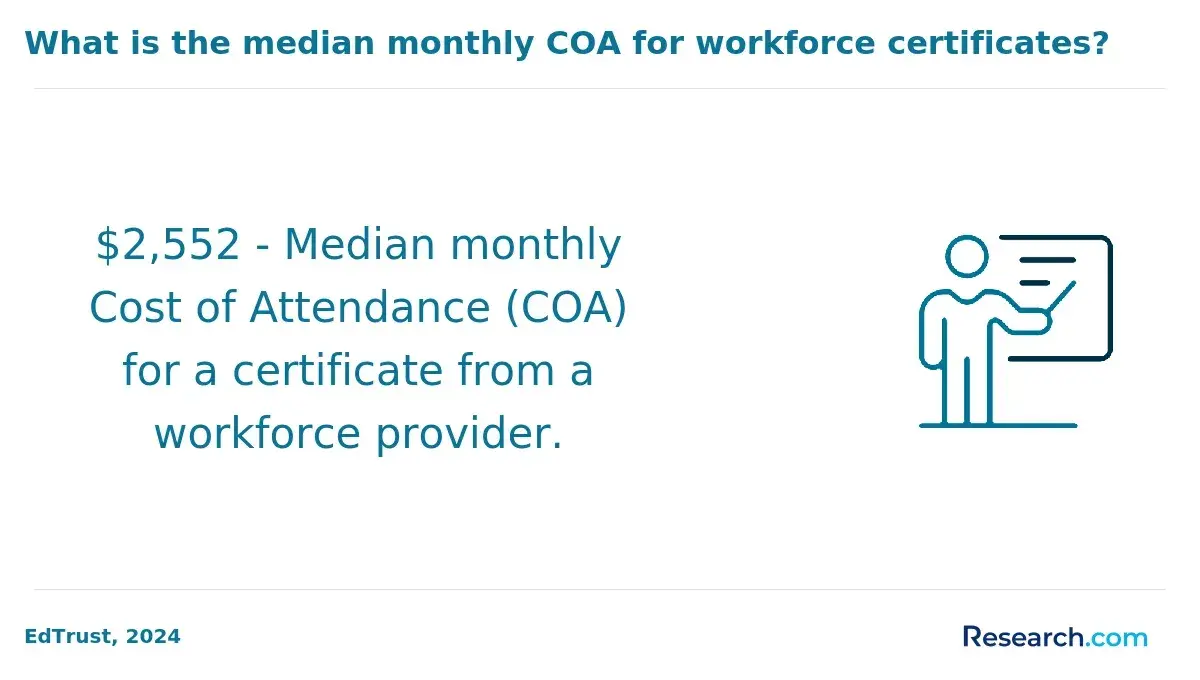
Cost also varies sharply, with professional certificates generally ranging from $1,000 to $4,000 compared to $15,000 to $30,000 for degree-level options, affecting accessibility without tuition reimbursement.
Employer tuition support significantly affects net cost and should factor heavily in enrollment decisions. The 2024 Coursera survey found that 51% of professional language certificate learners received employer reimbursement, highlighting the importance of understanding specific workplace policies before committing financially.
Consider a healthcare interpreter needing credential renewal amid a demanding schedule: a six-month certificate around $1,500 combined with employer support can offer a fast, affordable upgrade. Conversely, an aspiring translator seeking advanced roles might opt for a bachelor's degree, accepting greater time and financial investment for potential long-term gains.
Key tradeoffs include:
- Short program duration and affordability versus depth and credential weight of degrees
- Employer recognition tied to completion time and credential type
- Opportunity costs related to study duration and career interruption
Balancing these factors with one's career timeline and employer policies enables more strategic decisions aligned with real-world workforce demand.
What stable career paths can strong Spanish communicators pursue after these programs?
Proficiency in Spanish significantly influences employability in sectors where bilingual communication directly impacts service quality and operational effectiveness. In healthcare, for example, bilingual nurses and certified medical interpreters serve as critical links between providers and large Spanish-speaking populations, requiring not only language fluency but also cultural sensitivity to improve patient outcomes and regulatory compliance.
Education roles that demand Spanish fluency—such as bilingual teaching and ESL instruction—pose practical considerations beyond language skills, including certification and classroom management challenges that affect both student achievement and retention.
Similarly, government positions in immigration, community engagement, or public safety rely on clear bilingual communication to facilitate legal and crisis management processes, often involving stringent employment eligibility checks.
International business roles providing access to Latin American markets illustrate the added value of Spanish language mastery coupled with cultural competence. These positions demand negotiation skills and contract precision, frequently validated through recognized language certifications. Such tradeoffs require learners to balance language acquisition with sector-specific qualifications and security requirements.
According to a 2024 Duolingo and CSA Research study, 62% of adults reaching at least B1 Spanish proficiency use the language at work, with 28% experiencing promotion, raises, or new employment within a year. This data highlights the role of bilingual fluency as a measurable factor in career mobility, not merely an ancillary skill.
What salary ranges and job outlook can Spanish-proficient professionals expect in the U.S.?
Combining Spanish fluency with another market-relevant skill notably shifts earning potential and job stability, especially in fields like healthcare, sales, and customer success. While Spanish-proficient professionals in the U.S. generally earn between $45,000 and $85,000 annually, bilingual healthcare workers and sales specialists can surpass $90,000, reflecting the premium employers place on verified language proficiency plus technical or clinical skills.
Federal data from the U.S. Bureau of Labor Statistics reports that interpreters and translators earn a median wage near $52,000, but bilingual registered nurses in competitive urban markets may command salaries reaching $100,000. This divergence illustrates a key hiring dynamic: Spanish alone rarely guarantees top-tier compensation; rather, its value amplifies when paired with credentials recognized within high-demand industries.
Projected 20% employment growth through 2032 for language-related roles augments opportunities but also intensifies competition among candidates showing evidence of contextual expertise. Profiles combining Spanish with in-demand skills receive 1.4 times more recruiter inquiries, emphasizing the hiring advantage of dual-competency candidates.
Practical challenges arise from credential verification and maintaining relevant secondary certifications, which can create barriers for those relying solely on conversational Spanish. Successfully navigating these hurdles entails strategic investment in complementary competencies aligned with market needs, ensuring upward wage mobility and sustainable career positioning.
How can working adults choose an online Spanish program that fits their schedule and goals?
Working adults pursuing online Spanish programs must weigh scheduling flexibility against career-specific requirements. Asynchronous options support self-paced study crucial for variable shifts, while synchronous classes better develop real-time communication skills essential in client-facing or educational roles.
Credential type influences employability: healthcare and government sectors generally prefer accredited certificates tied to defined skills, whereas tech employers prioritize demonstrated language fluency and adaptability to AI-augmented learning platforms.
AI-enhanced language tools, projected to grow annually by 17% through 2030 according to HolonIQ's 2024 Global EdTech report, offer personalized, real-time feedback that can accelerate language acquisition. However, these benefits depend heavily on the learner's tech proficiency and discipline, creating potential pitfalls for those unprepared to manage digital demands.
Consider a marketing analyst aiming to lead Spanish-language initiatives—a general language course lacks the necessary business communication and cultural context. Conversely, healthcare professionals need medical Spanish training paired with compliance credentials recognized by their employers.
This matters because 45% of U.S. hiring managers value documented competencies such as digital badges or certificates over informal course completion.
Before committing, testing platform usability and understanding time zone impacts are prudent. Prospective students should also examine alumni outcomes and employer partnerships to confirm practical career traction within their specific industry segment.
Other Things You Should Know About Spanish
Employer demand in fields like healthcare, customer service, and social work prioritizes conversational fluency and cultural competence over formal writing skills. Online programs focused solely on grammar and literary analysis often leave out practical dialogue training necessary for real-world interactions. Students should prioritize programs offering immersive speaking practice and situational communication modules to enhance job readiness and workplace effectiveness.
Many programs emphasize linguistic proficiency but underdeliver on nuanced cultural training relevant to diverse U.S. populations. Comprehensive cultural competence correlates strongly with employer expectations for effective communication and client rapport. Pick programs that integrate case studies, regional dialect awareness, and cross-cultural scenario simulations to match market needs and improve employability.
Program intensity varies widely, with some requiring extensive daily practice and peer interaction, while others offer self-paced formats. For working professionals, programs demanding synchronous sessions or heavy writing assignments can create conflicts and reduce completion rates. Choosing flexible, asynchronous courses with modular content supports steady progress without jeopardizing job responsibilities or risking burnout.
References
- Spanish Language Program 12 Months in Spain https://ecoturinternational.com/study-abroad-in-spain/spanish-language-program-12-months/
- Best Spanish Online Classes – Spanish Courses with Certification https://institutospanien.org/blog/spanish-online-classes-spanish-courses-with-certification/
- The Best Programs to Learn Spanish are Accredited https://www.learnspanish.com.mx/blog/the-best-programs-to-learn-spanish-are-accredited/
- 12 Best Online Spanish Classes (2026 Review) - Learn languages with italki https://www.italki.com/en/blog/best-online-spanish-classes
- Launch a Global Career with a Spanish Degree | Houston Christian University https://hc.edu/articles/launch-a-global-career-with-a-spanish-degree/
- Why Taking a Spanish Course Online Is a Smart Choice for Students and Professionals https://www.sophia.org/blog/courses-development/spanish-course-online-for-students-professionals/
- Which one to choose? Online or onsite Spanish courses - International House México https://ihmexico.mx/en/which-one-to-choose-online-or-onsite-spanish-courses/
- Top Career Paths You Can Explore With a Spanish Degree | UT Permian Basin Online https://online.utpb.edu/about-us/articles/spanish/top-career-paths-you-can-explore-with-a-spanish-degree
- Professional opportunities https://www.uv.es/uvweb/undergraduate-degree-hispanic-studies-spanish-language-literature/en/after-degree/career-options/professional-opportunities-1286256538076.html
- How Long Does it Take to Speak Spanish Fluently? https://expanish.com/blog/how-long-take-speak-spanish-fluently/