2027 Best Online Spanish Programs for Professionals Seeking Promotion Into Bilingual Leadership

Co-Founder and Chief Data Scientist
Imagine a mid-level manager in healthcare aiming for a bilingual leadership role but facing limited time and inconsistent program schedules. The Bureau of Labor Statistics projects a 23% growth in demand for bilingual professionals through 2032, emphasizing language skills as a career multiplier rather than a peripheral asset.
Yet, nearly 40% of adult learners report that rigid program formats prevent timely completion, highlighting a misalignment between workforce needs and educational delivery. Navigating flexible, credential-validating options is essential to avoid career stagnation. This article examines the most effective online spanish programs designed to accelerate promotion readiness while balancing professional constraints and educational rigor.
Key Things You Should Know
- U.S. Census Bureau data shows bilingual leadership roles in Spanish grew 18% from 2022 to 2024, pressuring professionals to source credentialed programs that balance immersive language with sector-specific skills, despite extended 12-18 month completions increasing opportunity costs.
- Employers now prioritize Spanish bilingualism paired with cross-cultural negotiation competence, indicated by a 2024 National Association of Colleges and Employers survey where 67% of hiring managers flagged integrated business-language curricula as pivotal for advancement.
- The uneven availability of accredited online Spanish leadership programs across regions delays access by 3-6 months for some professionals, forcing costly relocation or reliance on asynchronous models, which risks weaker real-time intercultural proficiency crucial in leadership contexts.
What are the best online Spanish programs for professionals aiming for bilingual leadership roles?
Bilingual leadership roles demand more than conversational Spanish-they require targeted language skills integrated with industry-specific knowledge. The best online Spanish programs for bilingual leadership development fuse advanced proficiency with practical modules in cross-cultural negotiation, medical or legal Spanish, and leadership communication.
These competencies translate directly into measurable financial benefits; Indeed reports salary premiums reaching 30% for managers with bilingual leadership proficiency.
Top online Spanish courses for professionals seeking bilingual management roles often provide specialized content for sectors such as healthcare, finance, and international business. For example, a healthcare manager who completes an online program featuring medical Spanish improves patient communication and regulatory compliance, thereby enhancing operational influence.
Key factors for program selection include synchronous interaction with native-speaking instructors and structured peer collaboration. Self-paced courses without immersive speaking opportunities typically fail to prepare professionals for real-time leadership challenges. Additionally, measurable progress benchmarks and recognized certifications improve employer recognition and promotion potential.
Time commitment and program flexibility are crucial; modular curriculums completed within 6 to 12 months best accommodate full-time professionals needing rapid bilingual skill application without disrupting their careers. Candidates should also evaluate the practical tradeoffs of generalized courses versus specialized pathways tailored to managerial bilingual demands.
Those seeking a foundational credential often explore an online bachelor's degree that can integrate these bilingual and leadership competencies within broader academic frameworks.
How can online Spanish study prepare me specifically for leadership and management positions?
Advancing in bilingual management roles demands online Spanish courses for leadership roles in North America that integrate practical language use with industry-specific scenarios. Purely academic or vocabulary-focused courses often fall short in preparing mid-to-senior professionals for the nuanced communication and negotiation challenges in diverse work settings.
For instance, a healthcare manager engaging in patient communication simulations acquires skills directly applicable to interactions with Spanish-speaking patients and staff, far surpassing reliance on rote memorization.
Effective programs emphasize role-based simulations reflecting real managerial tasks such as performance reviews or contract negotiations, aligning with 92% of corporate L&D leaders prioritizing scenario-based language training in their 2025 strategies. This approach narrows the gap between textbook knowledge and the operational fluency required to lead bilingual teams and navigate cross-cultural subtleties critical for trust-building and team motivation.
These advanced Spanish language skills for bilingual management positions extend beyond communication, fostering cultural competency to address differing organizational norms. However, the training must include measurable evaluations to guarantee functional proficiency; otherwise, professionals risk limited employability or promotion due to inadequate real-world readiness.
Cross-disciplinary education like a mathematics online degree can complement language proficiency by enhancing analytical skills that support data-driven decision-making in international contexts.
What credentials and degree levels in Spanish do employers prefer for bilingual promotion?
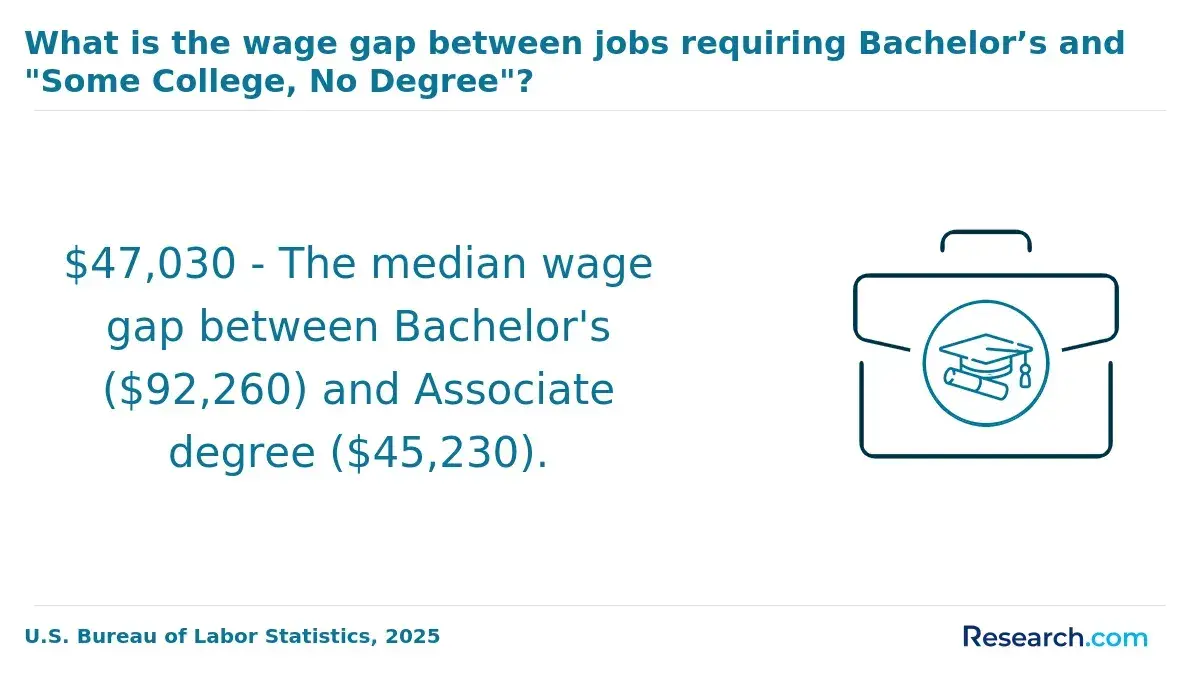
Employers seeking bilingual promotion emphasize credentials that integrate advanced Spanish proficiency with leadership or management credentials. A Bachelor's degree in Spanish alone rarely suffices for leadership roles; candidates must also demonstrate organizational skills backed by formal business or leadership training.
The demand for bilingual professionals who combine Spanish language capabilities with management expertise surged 74% between 2020 and 2024, according to the 2024 Burning Glass Institute, making degree requirements for bilingual leadership roles in Spanish more rigorous and specialized.
Preferred Spanish credentials for bilingual promotion in the US typically encompass:
- Bachelor's or Master's degrees in Spanish or Hispanic Studies paired with leadership certificates or minors in business administration, project management, or organizational leadership.
- MBA or master's business degrees coupled with verified Spanish proficiency certifications such as DELE or ACTFL Advanced High.
- Graduate degrees specializing in bilingual education, intercultural management, or international relations with immersive Spanish components.
For instance, in healthcare administration or supply chain management, candidates fluent in Spanish but lacking leadership training often lose out to MBA holders with bilingual communication and management skills. Employers also prioritize demonstrated experience in cross-cultural negotiation and personnel management, often validated through professional certificates or advanced degrees.
Professionals must carefully assess programs that blend language mastery with leadership development, since segmented education can delay advancement in senior bilingual roles. Those exploring career pivots should consider pathways comparable in rigor and real-world outcomes to online engineering degree programs in balancing technical and leadership skill acquisition.
How do accredited online Spanish programs compare to campus-based options for working professionals?
Accredited online Spanish programs for working professionals offer a pragmatic balance between linguistic proficiency and the scheduling demands of full-time employment. Unlike campus-based Spanish courses, online formats accommodate irregular shifts and multi-time zone work, which is crucial for fields like healthcare where rotating shifts are common.
This flexibility directly correlates with career impact; data from the 2024 Pearson Workforce Skills report indicates that employees reaching B2 proficiency through employer-sponsored online training are 1.5 times more likely to be promoted within two years, with an average salary increase of 11%.
Key operational advantages of online programs include scenario-based learning tailored to industry-specific jargon-finance, legal, marketing-enhancing immediate workplace application compared to traditional academic-heavy campus offerings.
Yet, success requires heightened self-motivation and discerning accreditation, as instructional rigor can vary significantly. Networking limitations inherent in virtual settings pose additional challenges for those targeting leadership roles, where organic relationships often matter.
For professionals strategizing a bilingual leadership path, weighing campus-based Spanish courses versus online programs involves assessing practical constraints and workforce expectations. Employers prioritize demonstrable conversational skills and certification over program modality. Prospective students should investigate instructional quality carefully.
Those interested in accelerated degree options outside language studies might explore resources such as accelerated architecture degree programs to inform broader career decisions across fields.
What admission requirements and prior language skills are needed for online Spanish programs?
Online Spanish programs for bilingual leadership roles require candidates to demonstrate at least intermediate proficiency, verified through standardized tests such as the DELE or internally administered placement exams. Advanced leadership tracks, especially in sectors like healthcare, law, and finance, often demand upper-intermediate to advanced skills due to complex terminology and the need for precise, culturally relevant communication.
Admission typically requires a bachelor's degree or substantial professional experience. These prerequisites exist because foundational Spanish knowledge is essential for mastering sector-specific language nuances and leadership competencies. For example, healthcare professionals with proven Spanish skills experience approximately 7-10% higher salaries and 61% faster employment, according to the AMN Healthcare 2024 report.
Programs and employers prioritize applied language use over theoretical knowledge, frequently assessing candidates through interviews or personal statements focused on workplace communication. For those underqualified, layering additional language instruction before engaging fully with leadership content is common, mitigating potential gaps in fluency that could hinder professional performance.
Professionals should examine program criteria closely to ensure alignment with occupational demands. Law specialists, for instance, need rigorous legal Spanish preparation, often offered as prerequisite modules to avoid ineffective study time and preserve the competitive advantage bilingual leaders provide in the U.S. marketplace.
What core courses and specializations should online Spanish programs for professionals include?
Professionals targeting bilingual leadership roles in Spanish must navigate the complexity of programs that go beyond conversational skills to include advanced grammar, business communication, and cross-cultural competence.
Sector-specific vocabulary aligned with industry needs-such as legal, healthcare, or financial Spanish-is non-negotiable, as these areas demand language precision tied to regulatory and operational standards.
Real-world effectiveness hinges on practical application through exercises like role-playing client negotiations or compliance communication, preparing learners to handle workplace challenges directly in Spanish. Nearly half of multinational companies prioritize Spanish in corporate training budgets, signaling employer expectations for candidates to master not only language but also culturally specific communication protocols.
This specificity matters: a healthcare administrator eyeing bilingual promotion requires medical terminology, patient rights communication, and documentation compliant with regulations akin to HIPAA in Spanish-speaking markets. In contrast, finance professionals must focus on financial reporting jargon, audit discussions, and sector-specific regulatory language.
Program design should also emphasize digital literacy in Spanish-proficiency on virtual meeting platforms and business software localized for Spanish users reduces operational skill gaps. Modular courses that let working professionals target emergent skills efficiently limit time-to-competency and maximize return on investment.
How long do online Spanish programs take, and what tuition and fees should I expect?
Achieving B2-level fluency in Spanish to lead bilingual teams typically demands a 10-12 month commitment at roughly 5 hours of weekly study, a pace reflecting employer expectations for confident, industry-specific communication-not just conversational ability. This level enables professionals to negotiate, present, and manage multilingual stakeholders effectively.
Cost considerations must be balanced against program intensity and credential type. Entry-level certificates range from $2,000 to $5,000, targeting supervisory roles with operational language needs. Higher-tier programs, such as graduate certificates or continuing education credentials, can cost $7,000 to $15,000, positioned for sustained career impact where mastery drives leadership responsibilities.
Consider a healthcare manager investing $10,000 in such training. This expense moves beyond foundational language use to managing bilingual compliance and team dynamics. In contrast, a sales director might prioritize shorter courses focused on sector-specific vocabulary and cultural nuance, potentially incurring added costs for electives or coaching.
Key tradeoffs include:
- Programs promising fluency in under six months often demand 10-15 hours weekly, challenging full-time professionals' schedules.
- Lower-cost, slower-paced options risk insufficient immediate leadership readiness due to limited skill depth.
Aligning commitments with employer standards and specific sector requirements ensures that time and tuition investments translate into measurable professional progression rather than nominal credentials.
What bilingual leadership careers can advanced Spanish skills unlock in U.S. workplaces?
Advanced Spanish skills offer more than linguistic ability; they create leadership potential across diverse sectors where bilingual communication is integral to strategic advantage.
For instance, healthcare administrators with bilingual fluency do not only bridge language gaps but also lead culturally competent teams and manage language-access programs that improve compliance and patient outcomes. Similarly, corporate diversity officers rely on Spanish to engage Latinx employees effectively, directly influencing retention and workplace culture.
These roles go beyond conversational Spanish, emphasizing negotiation, cultural literacy, and strategic communication that typical language classes often overlook. A bilingual marketing director, for example, can increase market share in Hispanic segments by controlling targeted campaigns and partnering with Spanish-speaking agencies-missing these competencies risks growth opportunities.
From a cost and accessibility standpoint, subscription-based online Spanish programs offer a pragmatic alternative to traditional university courses, costing about 2.4 times less per learner annually, according to a 2024 Deloitte corporate language-training ROI analysis. This cost efficiency matters for professionals who require flexible, immersive training alongside full-time commitments.
What salary benefits and promotion potential come with becoming bilingual in Spanish at work?
Bilingual proficiency in Spanish delivers a clear economic advantage by enabling salary premiums between 5% and 20% in multinational and U.S.-based companies. However, this financial edge hinges significantly on recognized certification such as DELE or SIELE.
Nearly 70% of HR leaders prefer candidates with these credentials, and over 40% explicitly treat them as a substitute for 1-2 years of hands-on experience in a Spanish-speaking work environment. This credential-to-experience equivalence reshapes the career trajectory for professionals, especially in leadership roles focused on Latin American markets.
For example, a marketing manager fluent in Spanish and DELE-certified can compete for project leadership without relocating or accruing traditional localized experience, often earning promotions faster than peers without certification.
In contrast, employees lacking formal certification must typically invest more time in skill-building on the job, delaying advancement into bilingual positions that integrate cross-cultural negotiation and client management.
Employers often connect bilingual competencies with roles that involve regional strategy and performance-based incentives, but informal proficiency rarely influences pay scales by itself. Formal certificates function as validated benchmarks that help professionals overcome experience barriers and qualify for higher pay or strategic assignments.
Professionals must weigh the effort and cost of acquiring DELE or SIELE against the potential to accelerate upward mobility, recognizing that failure to formalize bilingual skills can result in underutilization and slower career growth despite practical conversational abilities.
How do I evaluate and choose a reputable, accredited online Spanish program for advancement?
Selecting an online Spanish program demands scrutiny beyond language fluency - especially for professionals targeting bilingual leadership roles. Prioritize programs accredited by recognized bodies such as the Higher Learning Commission to ensure academic rigor and credential legitimacy. Measurable completion rates combined with documented employment outcomes in relevant sectors substantially increase the real-world value of a program.
Programs that integrate advanced communication, cultural competence, and sector-specific terminology-for example, medical Spanish in healthcare or legal Spanish for compliance professionals-offer distinct advantages.
A healthcare manager advancing into bilingual leadership, for instance, benefits more from curricula that emphasize regulatory language and situational training than from basic conversational courses.
The rapid increase in AI-driven language learning tools, which saw a 132% adoption growth in corporate training settings between 2022 and 2024, means programs incorporating AI tutors or immersive virtual environments better prepare graduates for modern workforce demands and knowledge retention.
Flexibility is another strategic factor. Employers often prefer candidates completing accelerated or intensive courses that demonstrate both language ability and project management under deadlines. Peer networking opportunities with experienced bilingual professionals also fast-track leadership readiness.
Finally, verify that credentials are employer-recognized for bilingual leadership advancement rather than limited to conversational Spanish skills. Employer feedback and alumni success metrics are critical in distinguishing programs that yield tangible career impact from purely academic options.
Other Things You Should Know About Spanish
Cultural competence is essential for effective bilingual leadership but not all programs emphasize it equally. Programs that integrate real-world cultural scenarios alongside language training enhance your ability to navigate diverse workplace dynamics. Prioritize programs that include targeted modules on cross-cultural communication and Hispanic business practices, as these directly affect your strategic influence and team management success.
Speaking proficiency is a common gap in many online Spanish programs, especially those heavily reliant on self-paced grammar and vocabulary modules. Effective programs incorporate live conversation labs or peer interaction, which better develop oral fluency critical for leadership interactions. When evaluating programs, prioritize those offering synchronous speaking sessions to meet employer demands for active bilingual communication.
Yes, employers typically weigh degrees more heavily than certificates for bilingual leadership roles. Degrees often signal comprehensive language mastery and cultural knowledge, which are necessary for strategic decision-making. Certificates can support skill development but are less likely to replace the credentials required for upper management. If promotion into leadership is your goal, aim for accredited degree programs rather than standalone certificates.
References
- Online Degree vs. Traditional: Choosing the Right Path https://beal.edu/online-degree-vs-traditional/
- Top Career Paths You Can Explore With a Spanish Degree | UT Permian Basin Online https://online.utpb.edu/about-us/articles/spanish/top-career-paths-you-can-explore-with-a-spanish-degree
- Learn Spanish Online – Interactive Lessons with Native Speakers https://www.caminobarcelona.com/spanish-courses/online-spanish-course/
- Accredited Online Spanish Courses for College Credit | Maximo Nivel https://maximonivel.com/online-spanish-college-credit/
- Bilingual Salary Calculator: How Language Skills Boost Pay https://preply.com/en/blog/bilingual-salary-boost/
- Top Reasons to Choose the Best Spanish Programs Online - Spanish Institute of Puebla Blog https://sipuebla.com/eblog/top-reasons-to-choose-the-best-spanish-programs-online/
- The best spanish courses to improve your fluency - International House México https://ihmexico.mx/the-best-spanish-courses-to-improve-your-fluency/
- Online Spanish classes from top universities | edX https://www.edx.org/learn/spanish
- 6 Powerful Benefits of Learning Spanish for Global Business Success | Unlock Career Growth https://lingua-learn.ae/blogs/benefits-of-learning-spanish/
- (Top 7) Best Online Spanish Language Courses - 2024 https://www.thespanishexperiment.com/review