2026 Best Online Project Management Programs for Professionals Moving From Technology Roles Into PM

Co-Founder and Chief Data Scientist
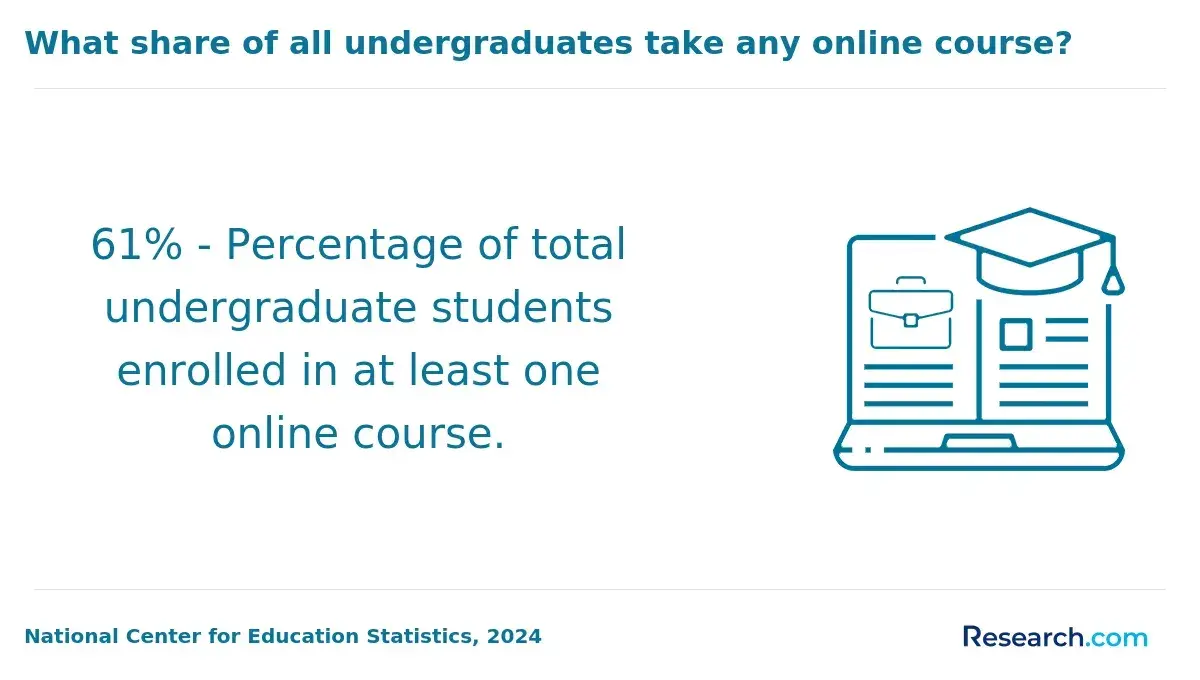
Technology professionals shifting into project management often confront a pressing challenge: securing a credential quickly enough to remain competitive without sacrificing job responsibilities. According to the National Center for Education Statistics, over 60% of adult learners now prefer online programs that allow flexible scheduling and pacing, revealing a clear demand for education that fits complex, unpredictable work lives.
Yet, not all online project management programs address differences in technical backgrounds or offer accelerated pathways suited for experienced tech workers. Selecting a program involves weighing curriculum relevance, employer recognition, and time-to-completion against current workload constraints. This article analyzes top online project management programs that effectively support professionals making this career transition, helping readers choose options aligned with their timelines and professional goals.
Key Things You Should Know
- Data from the U.S. Bureau of Labor Statistics shows tech professionals pivoting to project management face a 15% salary adjustment variance depending on certification speed, creating crucial tradeoffs between time-to-credential and income trajectory.
- Employers prioritize PMP certification completion within 18 months over degree pedigree, signaling a workforce preference for validated, up-to-date skill mastery that affects hiring and promotion likelihood in 2026.
- Programs with accelerated, competency-based pathways reduce opportunity cost but often sacrifice deep methodological breadth, challenging candidates to balance cost-effective access against comprehensive expertise growth.
What is an online project management degree and how does it support a move from technology roles into PM?
Technical professionals who pursue an online project management degree for technology professionals gain critical skills often missing from purely technical roles, such as budgeting, risk management, and stakeholder communication. This focused education addresses the widening gap identified by the Project Management Institute's projection of 2.3 million new project-centric jobs annually through 2030, particularly in tech-intensive sectors.
Transitioning from a developer or engineer to a leadership role requires understanding frameworks like Agile or Lean, which online programs apply through case studies and simulations. For instance, an IT specialist overseeing a cross-functional rollout learns to coordinate diverse teams rather than just deliver code, positioning themselves for roles beyond individual contributor status.
Students must weigh the rigor of programs and their alignment with industry standards such as PMP or CAPM certification since employers value credentials integrated with practical knowledge. Managing time while working full-time remains a challenge for many, with successful graduates often realizing higher delivery success rates and advanced roles within 12 to 18 months.
Employers increasingly prefer candidates who combine technical expertise with project leadership capabilities, making formal credentials a structured route to bridge that gap. For those assessing specialized online degrees, exploring options like an MBA operations management online may provide complementary pathways.
How do online project management programs compare with on-campus options for working technology professionals?
Online project management programs versus traditional on-campus courses present distinct tradeoffs for technology professionals balancing work and education. Flexible learning options in project management for working professionals in technology fields accommodate nonstandard schedules and immediate skill application, critical for roles involving digital collaboration. However, these programs require deliberate efforts to build professional networks virtually.
In industries like healthcare IT or aerospace, on-campus programs maintain an edge due to direct mentorship and structured environments that support highly specialized knowledge transfer. Conversely, fields such as software development, fintech, and digital marketing align better with online models designed to match remote or hybrid workflows. Employers increasingly emphasize certification outcomes and measurable competencies over delivery method, a shift that benefits online learners who need to demonstrate tangible project success.
A notable workforce implication is highlighted by the PMI Earning Power Salary Survey, showing PMP-certified professionals earn 16% more annually worldwide, underscoring certification's impact beyond program format. Those considering a pivot should assess program features like live instructor access, cohort engagement, and recognized accreditation to reduce typical online learning gaps without disrupting ongoing employment.
Technology professionals assessing educational pathways should also consider sector-specific expectations and program credibility in their decision-making. For examples of affordable pathways combining flexibility with practical learning environments, see construction management programs that illustrate these principles.
Which online project management degrees are best for professionals transitioning from IT or software roles?
Project management degrees tailored for professionals transitioning from IT must balance technical fluency with leadership versatility. Programs emphasizing agile methodologies, certifications like PMI-ACP or Scrum Master, and proficiency with tools such as Jira or Microsoft Project align best with employer expectations in technology sectors.
For software professionals seeking the best online project management programs for software professionals, the ability to integrate software development lifecycle knowledge with project oversight often determines immediate job readiness. The U.S. Bureau of Labor Statistics projects 7% growth for project management specialists through 2032, reflecting robust demand.
However, the practical value hinges on programs blending core project management frameworks with IT governance, risk management, and communication skills-especially for roles like managing cross-functional cloud migration teams. A working professional moving from software development to project oversight benefits from curricula including change management and stakeholder communication, rather than purely theoretical coursework.
Flexibility and practical application are critical considerations. Fully online degrees offering asynchronous modules with case studies focused on technology contexts allow candidates to apply learning promptly. Caution is warranted against programs lacking hands-on tools training, which limits effectiveness in tech-driven environments. Candidates should also examine alumni outcomes, particularly their success in transitioning into project management roles.
A common tradeoff exists between programs favoring deep technical specialization versus those cultivating broader managerial skills. Hybrid skill sets commanding both technical and business language provide the strongest hiring advantage in tech-centric industries.
For professionals evaluating educational pathways, analyzing nontraditional options is prudent; for example, alternative accredited degrees like the best 2-year construction management degree online can offer structural management insights transferable to project management roles.
What types of project management credentials can you earn online (certificate, bachelor's, master's, MBA)?
Choosing between online project management credentials and degrees hinges on balancing immediacy, depth, and career trajectory. Certificates offer the most direct path, often completed within 3 to 9 months, focusing sharply on Agile, Scrum, and PMP exam prep. This suits technologists needing targeted skills quickly to meet role entry requirements or certification mandates.
Bachelor's degrees in project management or related fields require roughly four years, delivering a comprehensive foundation in business, leadership, and technical skills. These degrees cater to early-career technologists without formal qualifications or those pivoting careers, unlocking positions such as project coordinators or assistants. For those seeking specific program options, research into the bachelor's in project management is advised.
Master's degrees enhance strategic thinking, risk management, and leadership capabilities over 1 to 2 years, targeting professionals eyeing senior or specialized roles. Admission often demands prior experience or a related bachelor's degree, limiting accessibility for beginners. Similarly, MBAs with project management concentrations integrate executive business skills, emphasizing strategic and financial acumen for crossover into senior management.
These typically extend over two years and involve significant investment. From a workforce standpoint, a Simplilearn analysis shows project management roles averaging over $100,000 in annual U.S. salaries with more than 78,000 job openings. This validates online credentials as cost-effective routes but highlights the importance of aligning credential type with realistic career goals, time availability, and role complexity.
Online project management credentials and certificates for technology professionals differ systematically in practical focus and market impact when compared to earned project management degrees and certifications online in North America.
How do you verify accreditation and program quality for online project management schools in the U.S.?
Employers prioritize project management credentials that demonstrate direct alignment with industry practices rather than mere program length. Relevant certifications often take under 12 months to complete and correspond to roles with salaries between $90,000 and $120,000, indicating the market's focus on specialized skills-particularly for agile, digital transformation, and cross-functional leadership-over extended academic courses.
Verification of accreditation remains a baseline filter: programs must be recognized by regional or national agencies acknowledged by the U.S. Department of Education or CHEA to ensure transferability and employer acceptance. Beyond this, endorsements from industry authorities like the Project Management Institute (PMI) reveal a curriculum's adherence to current methodologies, a critical factor for tech-sector employers.
Prospective students should demand transparency through graduate outcome data-such as job placement rates in project management roles and salary growth-and confirm whether practical experiences like internships or real-world projects are embedded. These elements are key for professionals shifting from technical roles into management.
Finally, triangulating this data with third-party reviews or rankings helps identify consistent strengths or weaknesses. Prioritizing accredited programs delivering industry-aligned content and verifiable outcomes will better position candidates for roles actively recruiting for nuanced project leadership proficiencies.
What core courses and technical-to-PM bridge skills do online project management programs typically include?
For professionals transitioning from technical roles, project management programs focusing on predictive risk analysis with AI and integrated hybrid methodologies offer measurable advantages-particularly in software development and infrastructure projects. These curricula deliberately combine Agile iteration cycles with Waterfall's structured phases, addressing real-world complexities like coordinating cross-functional teams on cloud migrations.
Stakeholder communication training targets engineers moving into leadership by fostering skills to translate technical data into business intelligence, a frequent gap noted by employers. Sustainability metrics are embedded to meet growing demands in public sector and manufacturing projects. Critical bridge skills also include proficiency in AI-enhanced project management software and data literacy to navigate automated analytics dashboards essential for monitoring progress.
The inclusion of cybersecurity risk assessment within project timelines highlights adaptability to evolving technology-driven environments. Hiring managers increasingly expect these competencies as baseline qualifications, indicating a shift in workforce standards. Practical evidence from the Project Management Institute's 2024 analysis documents that mastery of these integrated skills can cut project delays by up to 30%, emphasizing a direct operational impact.
- Advanced scheduling combining Agile and Waterfall for complex projects
- Stakeholder communication tuned for technical leaders
- Risk mitigation incorporating AI tools and cybersecurity
- Data literacy for interpreting automated progress tracking
- Training on environmental sustainability metrics
What are the typical admission requirements for online project management programs aimed at tech professionals?
Online project management programs targeting technology professionals typically require a bachelor's degree in tech, business, or related fields paired with relevant work experience. Applicants with 2 to 5 years in IT, software development, or systems engineering have an advantage, as this experience demonstrates capability to oversee complex, cross-functional projects rather than just theoretical knowledge.
Professional certifications such as CAPM or PMP eligibility often influence admissions and later employment outcomes. Indeed's 2024 data shows PMP credential holders earn about 16% more globally on median, signaling the tangible career impact of certification. Those lacking credentials usually need additional coursework before qualifying.
Admission also hinges on evidence of practical leadership, requiring letters of recommendation or portfolios that detail management over project phases, resource allocation, or team coordination in a technical context. Personal statements explaining career intent help programs assess genuine commitment to project leadership rather than a shallow pivot.
Non-native English speakers must prove proficiency, and readiness to navigate digital tools for fully online learning is essential. Failing these often results in prerequisites or deferred entry, which can delay progress and momentum crucial for technology professionals advancing their careers.
Key points for candidates:
- Degree and 2-5 years of relevant technical work experience required for most programs
- Certifications like PMP boost admission chances and salary outcomes
- Supporting documents must evidence real project leadership, not just task execution
- Technical literacy and English proficiency often gatekeep program access
How long do online project management programs take and what do they typically cost?
The choice between shorter certificate courses and longer associate degree programs in project management comes down to a balance of time, cost, and career trajectory. Certificates typically require 3 to 6 months and cost between $1,000 and $3,000, offering a rapid credential useful for technology professionals needing quick validation of skills without leaving current employment.
In contrast, associate degrees span 9 to 12 months or more and can cost upwards of $12,000, reflecting deeper curriculum and practical application favored by employers managing complex projects in large enterprises. Employer sponsorship often plays a decisive role in this equation. Many employers support project management credentials to improve delivery efficiency and reduce risks, significantly lowering out-of-pocket student expenses.
Prospective students should assess their individual career timelines alongside program rigor and financing options to optimize return on investment. Key considerations include:
- Whether the program's length fits within professional or personal constraints.
- The impact of program depth on employability and skill breadth.
- Availability of employer funding or reimbursement.
Students seeking rapid entry into project management roles may prioritize certificates, while those targeting leadership roles in sizable organizations may invest in longer, costlier programs to build comprehensive competencies. Each pathway entails tradeoffs requiring strategic alignment with career goals, workforce demands, and financial realities.
What project management careers, job titles, and industries can technology professionals pursue after these programs?
Online project management certifications can bridge experience gaps for technology professionals pivoting into leadership roles, but they do not replace the nuanced expertise gained through incremental, real-world project experience. For example, a software engineer shifting to a technical project manager role within fintech combines coding knowledge with project scheduling and stakeholder communication skills obtained through certification.
Employers typically value recognized online certificates as equivalent to 1-2 years of practical project management experience, particularly in regulated fields like healthcare and finance where compliance and risk management are critical. However, this equivalence mostly lowers entry barriers rather than guaranteeing immediate leadership roles.
Successful candidates often start in supportive roles such as project coordinators to develop leadership acumen and team management capabilities that certifications alone cannot provide. Emphasis on experiential learning components, internships, or live project work within these programs significantly enhances employability.
Adapting generic methodologies like Agile or Waterfall to domain-specific technical environments remains a primary challenge. For instance, transitioning to manufacturing technology management requires fluency in quality standards alongside traditional scheduling and budget controls, demanding contextual learning beyond standard frameworks.
- Certification equals 1-2 years of experience but is not a substitute for on-the-job exposure
- Hybrid technical and leadership skills are preferred by employers in fintech, healthcare, and finance
- Programs with internships or experiential modules improve practical readiness
- Domain-specific adaptation of methodologies is essential for true effectiveness
How do online project management programs prepare you for PMP, CAPM, and other PM certifications?
Online project management programs deliver necessary technical and leadership competencies but cannot fully replicate the on-the-job complexity that employers prioritize. Candidates from technical fields, such as software engineering, who transition into project management roles benefit when curricula explicitly connect methodologies like Agile and Waterfall to industry-specific challenges-compliance tracking in healthcare projects, for instance.
This applied focus addresses a common gap: the difficulty of translating functional expertise into effective stakeholder engagement and risk mitigation. Programs that integrate PMI's required 35 contact hours offer an essential credential gatekeeping exam eligibility without disrupting ongoing employment.
However, prospective students must weigh self-directed learning challenges; success often depends on robust instructor support and active peer networks to bridge distancing caused by remote coursework. Realistic preparation involves scenario-based assessments mirroring PMP and CAPM exam demands, cultivating decision-making agility rather than rote knowledge.
Projected workforce trends show roughly 6% growth in project management across sectors by 2031, emphasizing the strategic utility of certification for professionals aiming at program and portfolio leadership. But these credentials matter most when aligned with employer expectations, including concrete demonstration of risk register management, cost control, and process adherence.
- Focus training on the intersection between project frameworks and sector-specific workflows.
- Prioritize programs offering timely exam readiness milestones embedded in curriculum design.
- Anticipate the need for self-discipline and leverage instructor and peer engagement to compensate.
Other Things You Should Know About Project Management
Online project management programs vary significantly in how they address leadership skills crucial for managing cross-functional teams outside technology. Look for programs that incorporate case studies and simulations involving diverse stakeholder dynamics rather than solely focusing on scheduling and budgeting tools. Programs emphasizing soft skills like negotiation, conflict resolution, and organizational change provide the practical leadership experience essential for driving results beyond technical project execution.
Programs that skew too heavily toward theoretical models risk leaving students underprepared for real-world project challenges, especially when transitioning from technical roles. Prioritize programs that integrate agile and traditional methodologies with hands-on tool training such as MS Project, JIRA, or Asana. The ability to apply frameworks flexibly alongside tool proficiency is a better indicator of employability and immediate workplace impact than theory-heavy curricula.
Accelerated certifications offer speed and focused credentials but rarely provide the broader perspective or in-depth business knowledge found in extended degree programs. For professionals aiming for leadership or strategic PM roles, investing time in degree programs builds deeper analytical and organizational skills valued by employers. However, if immediate role enhancement or experience validation is the goal, short certifications are practical but should be supplemented with ongoing learning and real project exposure.
References
- Timeline for PMP Certification: Steps and Time Required https://projectmanagementacademy.net/resources/blog/how-long-does-it-take-to-get-pmp-certification/
- CEO George Mentz Colorado Springs http://projectmanagementcertification.org/approved.html
- Project Management Degree Vs Certification: Which is Best for You? https://pmoglobalinstitute.org/project-management-degree-vs-certification/
- 11 Essential Project Manager Skills You Should Have | IPM https://projectmanagement.ie/blog/project-management-skills/
- How to Start a Career in Project Management: Answers to FAQ - Epicflow https://www.epicflow.com/blog/how-to-start-a-career-in-project-management-answers-to-faq/
- Certified Project Manager Academy Institute MPM Accredited Institute Project Management Certifications ACAPM ® Certified Project Manager https://www.americanacademyofprojectmanagement.com/
- How to Become a Project Manager | CourseCompare.ca https://www.coursecompare.ca/how-to-become-a-project-manager/
- How to advance in your project management career? https://projectmanagementsa.co.za/blog/how-to-advance-in-your-project-management-career
- AAPM American Academy of Project Management https://certifiedprojectmanager.org/
- AAPM AMERICAN ACADEMY OF PROJECT MANAGEMENT ⢠http://internationalacademyofprojectmanagement.com/