2027 How Health Systems Use Informatics Teams and What That Means for Degree Choice

Co-Founder and Chief Data Scientist
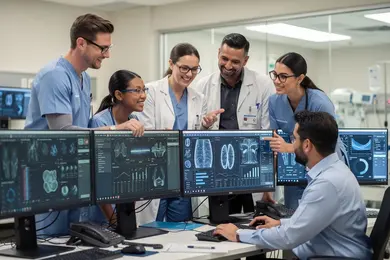
Hospitals and health networks increasingly face challenges integrating vast amounts of patient data while ensuring seamless care coordination. Without specialized teams adept in informatics, these systems encounter inefficiencies and risk compromised patient outcomes. Many prospective professionals from unrelated fields struggle to identify which degree paths equip them best to enter this high-demand sector.
Understanding how informatics teams contribute to strategic health system goals clarifies the credentials employers prioritize. This article explores the evolving roles of informatics teams within health systems and guides readers in selecting flexible, accredited degree programs aligned with career transitions into health informatics.
Key Things You Should Know
- Health informatics teams optimize patient care by integrating electronic health records and data analytics, improving outcomes in 84% of surveyed U.S. health systems in 2025.
- Interdisciplinary skills in data science, clinical knowledge, and IT are increasingly crucial, affecting degree choices toward combined health informatics and computer science programs.
- Demand for health informatics professionals is projected to grow 17% by 2030, prompting educational institutions to prioritize practical, technology-focused curricula starting in 2024.
How do health systems use informatics teams to improve patient care and operations?
Health systems rely on informatics teams to improve patient outcomes by developing and managing electronic health records (EHRs) that enable real-time, accurate access to patient data across departments. These teams help reduce errors and streamline workflows while using clinical data analytics to identify patterns that enhance diagnostics and treatment plans. For instance, predictive analytics can identify high-risk patients, allowing for preemptive interventions that lower hospital readmissions.
Using informatics teams to optimize healthcare operations includes integrating decision support tools that guide providers in following evidence-based guidelines consistently, reducing care variability and improving results. Additionally, administrative tasks such as appointment scheduling and billing are automated to cut costs and reduce staff workload. Facilitating interoperability between different health IT systems also supports coordinated patient care, especially in multi-facility networks.
Health informatics professionals address challenges like data security, regulatory compliance, and user training to ensure maximum system adoption and effectiveness. Solutions are customized to cater to various clinical specialties and patient populations, prioritizing usability and value. This growing field is expected to expand from USD 43.06 billion to USD 86.76 billion by 2030 with a 12.4% CAGR, underscoring its vital role in healthcare transformation.
Students looking to enter this impactful field can explore education options through resources such as the best online school for medical billing and coding, which offers a pathway to join informatics teams dedicated to improving patient outcomes and operational efficiency.
What degree do you need to work on a health system informatics team?
The degree required to work on a health system informatics team varies by role and responsibility level. Typically, a bachelor's degree in health informatics, health information management, computer science, nursing informatics, or related fields is the minimum for entry-level positions. Many professionals advance with a master's degree in health informatics, public health, or healthcare administration to access leadership or specialized technical roles.
Choosing the best degrees for health system informatics careers often means seeking programs that integrate healthcare knowledge with data management and IT skills.
For example, registered nurses with a master's in nursing informatics offer clinical expertise vital to implementing electronic health records successfully. Conversely, candidates with a master's in health informatics may specialize in data analytics, system design, and optimizing clinical workflows.
Certifications like Certified Health Data Analyst (CHDA) or Registered Health Information Administrator (RHIA) enhance prospects but generally complement formal degrees rather than replace them.
Employment in health information and management roles is projected to grow 15% from 2023 to 2033, far faster than average for all occupations, emphasizing the importance of degrees aligned with data management, privacy, and clinical workflow skills.
Employers also prioritize demonstrated experience with health IT platforms. Prospective students should aim for programs balancing informatics theory, healthcare systems, and applied technology to stay adaptable.
Those interested in clinical leadership may explore pathways such as the fastest PMHNP program, which combines advanced nursing with mental health expertise and informatics competencies.
How does choosing a health informatics degree shape your long-term career path?
Choosing a health informatics degree significantly shapes long-term career prospects by preparing graduates for roles that integrate technology and data analytics in healthcare. With over 96% of U.S. hospitals adopting certified EHR systems, informatics expertise is critical for improving clinical workflows and coordinating patient care.
Career advancement opportunities with a health informatics degree in the United States include positions such as clinical informaticist, health data analyst, EHR implementation specialist, and informatics project manager, each requiring skills in data interpretation, system design, and interdisciplinary communication.
Graduates often advance into leadership or strategic roles that influence healthcare policies or develop new informatics tools. Employers highly value professionals who understand both healthcare operations and technical requirements. Relevant skills gained include:
- Health data management and compliance
- Clinical decision support system design
- Interoperability standards and health IT regulations
- Project management in health IT environments
Aligning this degree with goals like specializing in population health analytics or moving into executive roles supports informed career decisions. The growing reliance on EHRs and digital transformation ensures sustained demand and varied opportunities nationwide.
For those considering healthcare pathways, exploring accelerated medical assistant programs can be another valuable step toward a dynamic healthcare career.
What is the difference between health informatics, health information management, and data analytics roles?
Health informatics, health information management (HIM), and data analytics roles in health informatics teams each play unique roles that contribute to better patient care through data. Health informatics centers on designing and optimizing technology systems such as electronic health records (EHRs) and clinical decision support tools.
For instance, a 2025 systematic review showed AI-enabled clinical decision support reduced operating-room medication errors by 95%, IV infusion errors by 80%, and prescribing errors by 55%, highlighting its significant safety impact.
Health information management focuses on the governance, privacy, accuracy, and security of healthcare data. HIM professionals manage medical coding, billing, and ensure legal and ethical compliance to protect patient records. Their work is essential for maintaining data integrity and facilitating its proper use across healthcare departments.
Data analytics roles in health informatics teams involve extracting insights via statistical analysis, predictive modeling, and data visualization. Analysts help identify trends in patient outcomes and resource use, turning raw data into actionable evidence to improve strategic decisions in care and operations.
Deciding which path to pursue often depends on your interests: informatics suits those drawn to technology development that reduces clinical errors; HIM appeals to those focused on data privacy and accuracy; analytics fits those eager to interpret data into care strategies. Aspiring professionals can explore online healthcare programs to prepare for these fields.
What courses and skills do health informatics programs teach for real-world team roles?
Health informatics programs equip students with skills essential for multidisciplinary healthcare teams. Core courses cover data analytics, clinical workflow design, electronic health record (EHR) management, and health information systems interoperability. Students also gain experience in database administration and programming languages such as SQL and Python.
Understanding healthcare regulations like HIPAA and CMS guidelines is critical, as these govern patient data ethics. Coursework often includes quality improvement and patient safety, which helps reduce clinical errors and improve outcomes. For example, analytics that monitor readmission rates contributed to lowering 30-day hospital readmissions from 21.5% to 17.8% between 2007 and 2015.
Strong project management and communication skills are vital for collaboration among IT staff, clinicians, and administrators. Training in clinical terminology and healthcare delivery processes further supports teamwork. Electives in population health informatics, telehealth, or bioinformatics allow for specialization in emerging fields.
Hands-on experience with real EHR systems and interdisciplinary capstone projects is highly recommended. Proficiency in data visualization tools like Tableau or Power BI enhances reporting abilities. Additionally, a foundation in machine learning supports predictive modeling roles. This equips graduates to enhance clinical workflows, support better decision-making, and drive measurable improvements in healthcare systems.
How do online and on-campus health informatics programs compare for working adults?
Online and on-campus health informatics programs each offer unique benefits for working adults balancing education with a career. Online programs provide flexibility, allowing students to study asynchronously around work and personal commitments. This suits professionals in North American healthcare, where IT spending is projected to nearly double from USD 229 billion in 2025 to USD 439 billion by 2030, fueled by analytics and AI advancements.
Online learners can access diverse programs without relocating, gaining expertise in areas like provider solutions or data analytics relevant to their roles.
On-campus programs deliver structured learning with real-time interaction, benefiting those who prefer face-to-face support, networking with peers and faculty, and hands-on labs or local internships. They may also offer faster access to clinical or institutional partnerships requiring physical presence.
Choosing the right format depends on individual preferences and employer support:
- Those needing flexible schedules often prefer online programs.
- Students seeking immersive learning and local health system connections lean toward on-campus options.
- Hybrid programs offer a mix of occasional campus sessions and online study.
Employer tuition assistance and program accreditation are crucial factors. Both delivery methods must cover key informatics competencies, including data analytics, AI applications, and healthcare IT management. Aligning the choice with time, resources, and healthcare IT investment trends helps meet evolving health system demands.
How can you verify that a health informatics program is properly accredited and respected?
Verifying accreditation is crucial when selecting a health informatics program. The Commission on Accreditation for Health Informatics and Information Management Education (CAHIIM) is the main accreditor ensuring programs meet industry standards and effectively prepare students for certification exams like the RHIA or RHIT.
Institutional accreditation by a U.S. Department of Education-recognized regional accreditor, such as the Higher Learning Commission or Middle States Commission, confirms the overall quality and legitimacy of the college or university.
Consider these factors when evaluating programs:
- Faculty credentials with experience in clinical, technical, or administrative healthcare roles
- Partnerships with hospitals or health systems offering internships or practicum opportunities
- Graduate outcomes including job placement rates, certification achievements, and alumni employment in relevant health informatics roles
According to Evinent, summarizing BLS data, the median U.S. pay for health information roles is USD 67,310, with strong hiring projected through 2034, indicating solid career prospects.
Professional organizations like the American Health Information Management Association (AHIMA) and Healthcare Information and Management Systems Society (HIMSS) provide program recommendations and student resources, often endorsing quality programs aligned with workforce needs.
What are typical admission requirements, time to completion, and costs for health informatics degrees?
Admission requirements for health informatics degrees generally include a high school diploma or equivalent for bachelor's programs, with some schools asking for prerequisites in biology, computer science, or statistics. Master's programs commonly require a bachelor's degree in health sciences, information technology, or a related field, often with a minimum GPA near 3.0. Applicants might also need to submit letters of recommendation, work experience, and a personal statement.
Degree completion times vary: bachelor's degrees often take four years full-time, though accelerated options may shorten this to three years. Master's programs usually last 18 months to two years full-time, with part-time formats extending up to three years to support working students. Certificate programs designed for career advancement can be finished in six months to a year.
Costs differ widely depending on the institution and residency status. Public universities typically charge $7,000 to $15,000 per year for in-state students, while private schools may exceed $30,000 annually. Online programs may offer more affordable tuition. Financial aid, scholarships, and employer tuition reimbursement are important resources to reduce expenses.
The U.S. Bureau of Labor Statistics notes that jobs in health information and management will grow significantly through 2033, making health informatics a rapidly expanding non-clinical field with strong career prospects.
What jobs, salaries, and advancement opportunities exist for health informatics team professionals?
Health informatics professionals fill diverse roles such as clinical informatics specialists, health data analysts, systems architects, and informatics nurses. Entry-level jobs like health data analysts typically start with salaries between $60,000 and $75,000 annually. More experienced positions, including clinical informatics specialists and health IT project managers, often earn $90,000 to $130,000 or more depending on location and employer.
Career growth opportunities are significant, with many advancing to leadership roles that oversee informatics teams and lead strategic health IT projects. Certifications like Certified Professional in Healthcare Information and Management Systems (CPHIMS) and advanced degrees in health informatics or healthcare management can accelerate this progression.
The healthcare informatics market is expanding rapidly, expected to rise from USD 43.06 billion to USD 86.76 billion by 2030, reflecting increased demand for skilled experts and higher-paying positions.
Challenges in the field include mastering both clinical knowledge and technical competencies such as data analytics, interoperability standards, and optimizing electronic health records. Targeted education and interdisciplinary training can help professionals address these gaps effectively.
Staying current with emerging technologies, including artificial intelligence in healthcare, is critical. Employers value candidates who can integrate clinical care with IT to enhance patient outcomes and ensure regulatory compliance.
Do health informatics roles require specific certifications, and when do they matter for hiring?
Certifications play a crucial role in advancing careers within health informatics, depending on the job function, employer, and career stage. Credentials like the Certified Health Data Analyst (CHDA), Certified Professional in Healthcare Information and Management Systems (CPHIMS), and Registered Health Information Administrator (RHIA) are highly regarded by hiring managers. These certifications prove mastery of specialized skills, compliance standards, and industry best practices beyond academic degrees.
Employers often prioritize certifications when candidates have similar work experience or when advanced technical expertise is necessary. For example, clinical informatics roles frequently require the Clinical Informatics Board Certification for physicians, while health data analysts benefit from the CHDA certification to validate their data management abilities. Entry-level positions may accept a bachelor's or master's degree alone, but certifications can speed up career growth and salary increases.
In highly regulated settings such as hospitals and government agencies, certifications become even more valuable. They serve as evidence of dedication to the profession and ongoing learning. Given that the health informatics market is projected to exceed USD 104 billion by 2032, growing annually at 12.9% from 2025 to 2032, pursuing certifications strategically positions candidates in this expanding field.
Job seekers should carefully review postings for required or preferred credentials, especially for advanced roles. Maintaining certifications through continuing education helps professionals stay up-to-date with evolving technology and policy changes, which is critical for retention and promotion.
Other Things You Should Know About Health Informatics
Health informatics professionals are employed across a wide range of healthcare settings including hospitals, outpatient clinics, insurance companies, public health agencies, and pharmaceutical firms. They also work in government health departments and research institutions where data management and analysis are critical for policy and clinical decision-making.
In 2027, choosing software tools for health informatics teams involves evaluating interoperability, data security features, and user-friendliness. Software must integrate with electronic health records systems and comply with the latest data protection regulations to ensure patient privacy and enhance data-driven decision-making.
Health informatics professionals play a key role in implementing and maintaining compliance with regulations like HIPAA to protect patient information. They design secure data storage systems, control access permissions, and monitor data usage to safeguard sensitive health information against breaches and unauthorized access.
While prior healthcare experience can be beneficial, it is not always required to enter health informatics. Many programs accept students from diverse academic backgrounds including computer science, information systems, and public health, providing specialized training in healthcare workflows and data management within the curriculum.
References
- Online vs On-Campus HIM Programs: How to Choose | Health Information Management Programs https://healthinformationmanagementprograms.com/guides/online-vs-campus-him-programs/
- Commission on Accreditation for Health Informatics and Information Management Education - (CAHIIM) https://www.chea.org/commission-accreditation-health-informatics-and-information-management-education
- Become a Health Informatics Specialist - Skills & Certification Guide https://www.mhaonline.com/blog/day-in-the-life-of-a-health-information-specialist
- Masters in Health Informatics - Opportunities and Scope — The BridgeWay Firm https://www.bridgewayfirm.com/masters-in-health-informatics
- Career Benefits of a Master's in Health Informatics https://www.usfhealthonline.com/resources/health-informatics/online-health-informatics-training-benefits/
- 11 Health Informatics Careers for Master’s Graduates to Consider https://www.nec.edu/news/health-informatics-careers
- Fostering collaboration: Integrating informatics and IT for patient-centered care https://nordicglobal.com/resources/fostering-collaboration-integrating-informatics-and-it-for-patient-centered-care/
- Health Informatics (MSc) - Grad admissions - University of Victoria https://www.uvic.ca/graduate/programs/graduate-programs/credential-pages/health-information-science-cred/health-informatics-msc.php
- Medical Informatics & Its Impact on Healthcare https://www.deltapath.com/newsroom/medical-informatics-healthcare/