2027 Best Online Bachelor's in Finance for Real Estate Finance Roles

Co-Founder and Chief Data Scientist
Securing a role in real estate finance demands more than foundational knowledge; it requires timely access to specialized education that accommodates working professionals juggling unpredictable schedules. With the National Center for Education Statistics reporting a 15% rise in adult enrollment in online bachelor's programs since 2023, flexibility has become a decisive factor for candidates aiming to pivot or advance quickly.
The ability to balance coursework with professional and personal commitments directly impacts opportunities in competitive markets where employer expectations emphasize both practical skills and relevant credentials. This article evaluates the best fully online bachelor's in finance tailored for real estate finance careers, guiding prospective students through program accessibility, career alignment, and return on investment considerations.
Key Things You Should Know
- Graduates with online bachelor's in finance focusing on real estate face a 15% lower starting salary than traditional students, per 2024 National Association of Realtors data, pressing tradeoffs between cost savings and initial earning power.
- Employers increasingly prioritize candidates with practical valuation and property analysis skills over general finance theory, with the Urban Land Institute noting 60% of hires require specialized real estate financial modeling expertise.
- Programs averaging 120 credit hours incur $40K-$65K total costs, influencing timing and debt; this often delays workforce entry by up to two years compared to certificate pathways focused on targeted real estate finance skills.
What is an online bachelor's in finance and how does it prepare you for real estate finance?
An online bachelor's in finance for real estate careers delivers foundational financial skills tailored to real estate markets, including property valuation, mortgage financing, and commercial lending analysis. This specific focus enables graduates to navigate the complexities of real estate investment and loan underwriting with data-driven insights, a necessity for decision-making in both residential and commercial projects. The degree's practical orientation toward real estate economics and cash flow modeling aligns tightly with employer expectations in asset management and real estate finance firms.
Employers increasingly prioritize candidates with concrete experience in financial software, regulatory compliance, and risk assessment, particularly those who can integrate market risks with property-specific factors. Such proficiency supports roles in mortgage banking, REITs, and property development, allowing professionals to pivot roles without leaving ongoing employment. The online format often facilitates this transition, matching workforce demands for flexibility and ongoing skill acquisition.
The projected growth in business and financial jobs-911,400 new positions by 2032 as reported by the U.S. Bureau of Labor Statistics-underscores the tangible demand for finance professionals versed in real estate. However, students contemplating a bachelor's degree in finance for real estate professionals should weigh program accreditation, faculty expertise, and internship access rigorously. Practical experience through case studies or industry partnerships can considerably influence hiring outcomes in competitive sectors.
For those weighing accelerated pathways, exploring options like the fastest MBA program can complement a finance-focused undergraduate foundation, particularly for strategic career advancement in real estate finance.
Which online bachelor's in finance programs are best for launching a real estate finance career?
Employers in real estate finance prioritize candidates who combine core financial analysis skills with specialized knowledge in property valuation, market dynamics, and real estate investment structures. Graduation from the best online bachelor's in finance programs for real estate careers requires evaluation beyond surface-level curriculum: focus should rest on programs integrating commercial real estate investment, real estate economics, and rigorous risk management training.
Key practical considerations include:
- Access to case studies or simulations modeling real estate market cycles
- Faculty with direct industry experience and connections within real estate finance
- Internships or partnerships providing pathways into real estate firms or investment trusts
- Proficiency development in financial software and modeling specialized for real estate assets
Financial analysts with real estate specialization report median wages of $104,920, surpassing the general analyst median of $99,600, reflecting employer valuation of niche expertise. For instance, candidates targeting commercial real estate investment trusts (REITs) must pursue programs offering detailed coursework on REIT structures and tax considerations. Conversely, those focused on multifamily housing finance need training in residential asset valuation methodologies, distinct from retail or industrial property finance.
It is crucial for prospective students to scrutinize program content carefully, as online degrees lacking tailored real estate finance components may leave graduates unprepared for sector-specific technical interviews and modeling tasks. Professionals considering education paths might also explore an affordable online MBA to complement their foundational finance degree with advanced strategic skills relevant to real estate finance.
Ultimately, selecting from top accredited online finance degrees for real estate finance requires a balance between theoretical rigor and practical, market-aligned skills to meet employer expectations and secure competitive compensation.
How does an online finance degree compare with a campus program for real estate roles?
In real estate finance, the choice between an online bachelor's in finance vs campus degree involves critical tradeoffs in networking access and employer perceptions. While online programs provide comparable theoretical foundations, employers in real estate emphasize practical experience and local professional relationships-assets campus students often gain through embedded internships and alumni connections. Online learners must actively pursue these opportunities, which can delay or limit direct exposure to commercial real estate transactions and appraisal techniques.
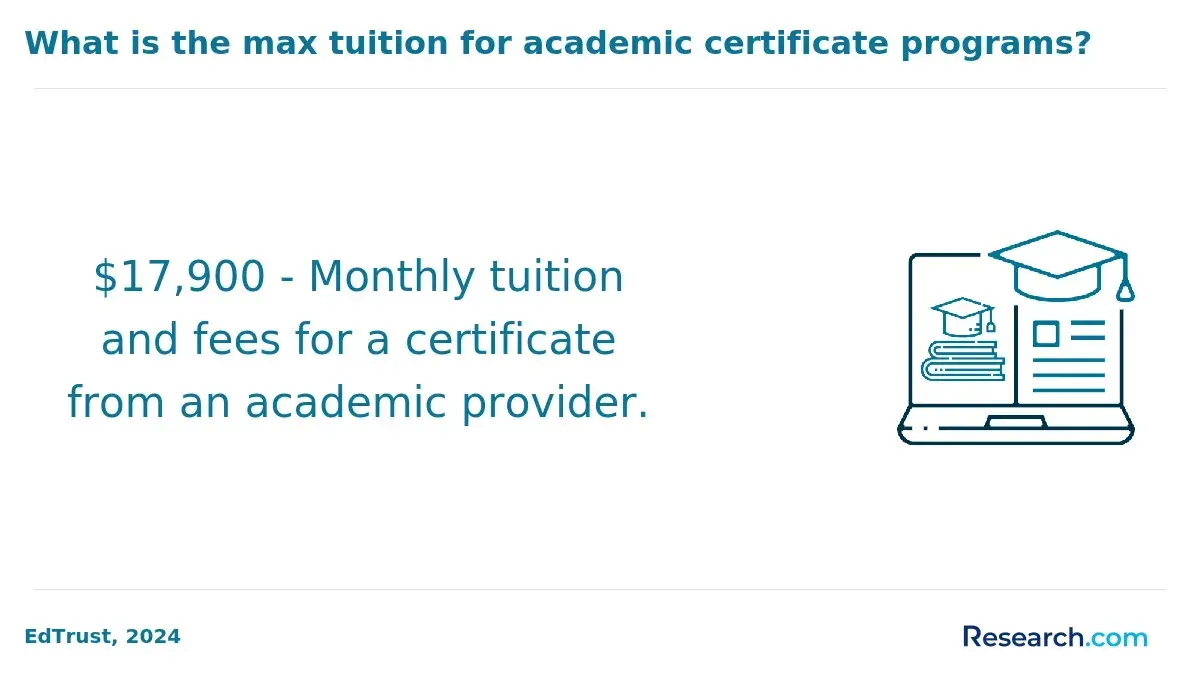
Cost differences also influence decisions: in the 2024-25 cycle, accredited online finance bachelor's programs ranged from $42 to $448 per credit, totaling roughly $5,000 to $53,760 for a 120-credit degree. This affordability can benefit working professionals but may come with fewer recruitment pipelines tied to local real estate markets.
Consider a mid-career analyst transitioning into real estate finance: an online degree offers scheduling flexibility but requires securing internships or mentorships independently. Conversely, recent graduates from campus-based programs often tap into established local networks driving hiring.
Key operational considerations include disciplined time management and tech proficiency-qualities some employers view favorably. Nevertheless, professional certifications and hands-on experience usually weigh more heavily than the degree's format in hiring decisions.
Ultimately, for those assessing advantages of online finance degree for real estate finance jobs, success depends on supplementing coursework with industry-relevant experience and networks. This is especially true in geographically concentrated real estate markets, where nuanced local knowledge often dictates career progress.
Prospective candidates balancing cost and flexibility might also explore online MBA programs under 30k for advancing in finance-related fields.
What accreditation and program quality standards should real estate finance students look for?
Selecting a real estate finance program requires prioritizing regional accreditation from recognized bodies like the Accreditation Council for Business Schools and Programs (ACBSP) or the Association to Advance Collegiate Schools of Business (AACSB). These accreditations ensure that the curriculum meets stringent standards aligned with employer expectations and contributes to graduate credibility. Employers expect new hires to exhibit applied skills such as financial analysis, valuation techniques, and investment decision-making, making programs with case studies, internships, and real-world financial modeling tools far more valuable in practice.
The U.S. Bureau of Labor Statistics forecasts an 8% employment growth for financial and investment analysts from 2022 to 2032, with real estate roles classified under credit intermediation and related activities. To meet this demand, programs must emphasize skills in real estate market analysis, risk assessment, and regulatory compliance, which are increasingly critical. Lack of specialized coursework often forces graduates to pursue additional certifications, delaying workforce entry and increasing overall time-to-value.
Faculty expertise influences both course relevance and professional networking opportunities, so transparency about instructor backgrounds and graduate employment outcomes is a key quality marker. For working professionals, online options with asynchronous formats and employer-aligned capstone projects provide flexibility but come with tradeoffs such as fewer campus networking opportunities and inconsistent employer recognition. Evaluating support services like career counseling and job placement assistance can help bridge this gap.
Students should also consider comparing program structures to one year MBA programs when weighing timeliness and return on investment, especially within regional accreditation for online finance degrees in real estate.
What courses and specializations in a finance bachelor's support real estate finance careers?
Real estate finance bachelor's programs demand a precise balance between foundational finance knowledge and specialized real estate competencies, as graduates must navigate complex property valuation and market analysis without extensive retraining. Core coursework focuses on analytical techniques such as discounted cash flow (DCF) and cap rate calculations, essential for assessing income properties under variable economic conditions. These programs often integrate practical skills in advanced Excel modeling, commercial lending principles, and real estate law-key areas vetted by employers in REITs and development firms.
Employers increasingly expect candidates to contribute immediately to site selection, risk assessment, and portfolio management, requiring familiarity with GIS applications and regulatory frameworks. Internships or project-based experiences tied to actual transactions further differentiate graduates by strengthening their operational understanding. However, broad finance degrees that dilute real estate content risk underpreparing students for sector-specific demands.
Students should evaluate program curricula for explicit alignment with market-ready real estate finance competencies to ensure readiness for roles like asset manager, mortgage banker, or financial analyst. Hiring preferences also reflect accreditation rigor and the growing acceptance of regionally accredited online finance degrees as credible credentials, as noted by the Society for Human Resource Management's survey showing 92% approval by HR professionals.
- Master discounted cash flow and cap rate techniques for precise asset valuation
- Gain proficiency in Excel modeling, commercial lending, and real estate law
- Seek programs with GIS integration and project-based learning for practical readiness
- Prioritize degrees with strong regional accreditation to meet employer expectations
What are typical admission requirements for online bachelor's in finance programs?
Online bachelor's in finance programs set baseline academic expectations that reflect the reality of competitive hiring, particularly in specialized areas like real estate finance. Admission often requires a minimum GPA around 2.5 to 3.0 and official transcripts demonstrating prerequisite knowledge in math domains such as algebra and statistics-skills directly relevant to finance applications.
The optional nature of standardized tests like the SAT or ACT is a pragmatic concession for working adults, but submitting scores can still affect competitiveness in selective programs. For professionals pivoting careers, some institutions consider work experience or prior college credits in lieu of standard testing, which can ease access but also shifts emphasis onto demonstrated professional competence.
Applicants focused on real estate finance roles should verify that their chosen program includes sector-specific courses, as workforce data shows real estate investment comprises a significant share of entry-level finance job openings requiring bachelor-level credentials. Preparing a strong personal statement that ties academic intent to professional goals remains a distinct advantage at admission.
This pathway demands disciplined time management and technical readiness-not just academically but practically-to balance course rigor with work or other responsibilities. Stability in online learning platforms and self-motivation are real-world hurdles often underestimated in admissions literature but crucial for successful degree completion.
How long do online finance bachelor's programs take and what do they cost?
Choosing an online bachelor's program in finance involves balancing program length, cost, and practical workforce outcomes. Full-time students typically complete these degrees in 3 to 4 years, but part-time or accelerated paths can extend or compress this timeframe, respectively. For working adults-who represent nearly 60% of finance undergraduates-flexible scheduling is essential.
Cost is a critical variable influenced by institution type and residency. Public in-state tuition runs roughly $90 to $200 per credit, totaling $27,000 to $60,000 for 120 credits. Private institutions often charge between $400 and $900 per credit, with total expenses surpassing $100,000 when factoring in fees and materials. Prospective students must also plan for these additional 10-15% costs beyond tuition.
Those pivoting into commercial real estate finance face an important decision: accelerating degree completion can shorten the timeline to promotion but may increase immediate financial strain, while part-time options ease cash flow demands but delay income gains. Employers generally assess degree completion in conjunction with relevant experience, so strategic alignment of program intensity and cost against career goals is crucial.
Key considerations include:
- Maximizing transferable credits to reduce duration and cost
- Evaluating tuition per credit against employer tuition assistance
- Leveraging summer or winter sessions for faster progress
Careful planning in these areas helps optimize long-term return on educational investment and smoother integration into finance-related roles.
What real estate finance jobs can you get with an online bachelor's in finance?
Graduates holding an online bachelor's in finance enter a job market where technical skills and demonstrated experience matter more than the modality of their degree. Roles such as financial analyst, loan officer, mortgage underwriter, and real estate portfolio manager demand proficiency in financial modeling, risk assessment, and market analysis-competencies developed through targeted coursework combined with applied practice.
For example, real estate financial analysts must interpret economic data and apply valuation methods to forecast investment performance, requiring advanced Excel capabilities and market insight. Loan officers and mortgage underwriters evaluate borrower creditworthiness and comply with regulatory frameworks, which necessitates knowledge beyond theory. Portfolio managers exercise strategic oversight on asset allocation and optimization within real estate, relying on detailed financial reporting.
Because online degrees often limit onsite networking, securing remote or hybrid internships is essential to build practical experience; data shows such internships increase job offer likelihood by over 30 percentage points. Without related work experience, entry-level opportunities like research assistants or junior analysts become critical stepping stones. Employers frequently expect certifications such as CFA or CCIM alongside a bachelor's degree for mid-level roles.
Prospective students should weigh program strengths in employer partnerships and internship placement support carefully, as these factors significantly influence employability. Augmenting degree credentials with targeted technical training is necessary to navigate a competitive and specialized real estate finance labor market.
What salary ranges and job outlook can finance graduates expect in real estate finance?
Graduates holding a bachelor's degree in finance targeting real estate finance roles generally command higher starting salaries than those with degrees specifically in real estate, with median early-career pay around $76,000 versus $63,000. This wage gap is tied to finance majors' deeper grounding in financial analysis, risk assessment, and market modeling, skills that are particularly valued for complex real estate investment and capital structuring.
Entry-level roles such as real estate financial analysts or investment analysts typically start within a $60,000 to $80,000 salary range, but geographic location and employer type significantly affect offers. Positions focused on loan underwriting or asset management usually favor candidates with advanced quantitative skills commonly acquired in finance programs. Transitioning into portfolio management or development finance can see compensation exceed $100,000 within five to seven years, especially in metropolitan areas with active commercial real estate markets.
The labor market outlook projects a 9% growth rate for financial analyst jobs from 2024 to 2034, faster than average. This growth is propelled by increasing demand for expertise in evaluating real estate portfolios amid mounting regulatory complexity. However, senior roles are highly competitive and increasingly require certifications like the CFA or relevant real estate licenses in addition to a bachelor's degree.
Practical steps for candidates seeking to optimize employment outcomes include:
- Building professional networks spanning both finance and real estate sectors
- Developing proficiency with specialized software used in deal structuring and financial reporting
- Securing internships offering interdisciplinary exposure to real-world real estate finance operations
These strategies address real-world employer expectations and help overcome friction points faced by graduates lacking integrated finance training.
How can internships, certifications, and networking strengthen a real estate finance career path?
Real-world internships, specialized certifications, and targeted networking form a triad that substantially shapes career trajectories within real estate finance. Internships at established firms translate classroom theory into practical competencies like underwriting and asset management, which hiring managers prioritize for reducing ramp-up time and operational risk. For instance, an intern working in acquisition analysis at a commercial real estate firm gains workflow proficiency that translates immediately to value in full-time roles.
Certifications such as CCIM or CFA confer specialized analytical skills and credible validation but warrant consideration of their cost-benefit balance. They act as filters in competitive hiring contexts and provide leverage in salary negotiations, yet require upfront financial and time investments that may not yield uniform returns across all markets or employers.
Networking is a strategic lever that directly influences job access and compensation potential by opening informal channels often invisible through traditional listings. For example, asset managers with over a decade of experience and a bachelor's degree report median total pay around $182,000, a benchmark accelerated by strong professional networks that enhance visibility and sponsorship.
Effective career moves demand aligning internship opportunities with targeted specializations, selecting certifications valued within specific employer ecosystems, and dedicating consistent effort to relationship-building. Omitting any of these dimensions may extend job searches or limit advancement despite strong academic and experiential credentials.
Other Things You Should Know About Finance
In 2027, students seeking real estate finance roles should consider programs that offer a balanced curriculum with both broad business knowledge and specialized real estate finance courses. A solid foundation in general finance principles coupled with focused real estate modules can provide the necessary skills and insights to excel in real estate finance careers.
Faculty with direct real estate finance industry experience can enhance learning by connecting theory to current market practices and regulatory conditions. Programs staffed primarily by academics without real-world exposure risk overemphasizing theory at the expense of applied skills. When choosing a program, give more weight to those whose instructors have recent, verified professional backgrounds in real estate finance or related sectors, as this impacts the relevance and practical value of coursework.
Employers in real estate finance value candidates who have demonstrated the ability to manage challenging coursework alongside other responsibilities, especially in accelerated or high-demand online programs. However, not all online degrees are equal-programs with lax grading or minimal quantitative emphasis can undermine credibility. Selecting a program with strong quantitative training and measurable academic rigor improves your market competitiveness and signals seriousness to employers.
Choose a program accredited by a U.S. Department of Education-recognized agency, ideally AACSB for business schools. AACSB accreditation is held by fewer than 6% of business schools worldwide and is widely valued by lenders, developers, and real estate finance employers reviewing online finance degrees.
References
- REALTOR® Institute Policy Statement https://www.nar.realtor/designations-and-certifications/gri-designation/realtor-institute-policy-statement
- Top 10 jobs for finance majors and who’s hiring | Handshake https://joinhandshake.com/blog/students/top-jobs-for-finance-majors/
- Real estate training vs university: Which comes out on top? https://www.reiq.com/articles/training/real-estate-training-vs-university-which-comes-out-on-top
- Trusted Partners | LIBF https://www.walbrook.ac.uk/libf/partnerships/accreditation/
- Bachelor's Degree in Real Estate Finance and Development | UT San Antonio https://future.utsa.edu/programs/undergraduate/real-estate-finance-development/
- Standards for Accreditation and Requirements of Affiliation | Fourteenth Edition - Middle States Commission on Higher Education https://www.msche.org/standards/fourteenth-edition/
- Standards for Accreditation - New England Commission Higher Education https://www.neche.org/standards-for-accreditation/
- Certificate of Advanced Study in Real Estate Finance | NAIOP | Commercial Real Estate Development Association https://www.naiop.org/education-and-career/certificate-programs/certificate-of-advanced-study-in-real-estate-finance
- Scope for BS in real estate? US guys know it better - College Search & Lists - College Confidential Forums https://talk.collegeconfidential.com/t/scope-for-bs-in-real-estate-us-guys-know-it-better/1541111
- Get the Most out of your Real Estate Internship https://www.adventuresincre.com/real-estate-internship/