2027 Business Analyst vs Business Manager vs Sales Manager Careers: Pay, Growth, and Promotion Potential

Co-Founder and Chief Data Scientist
Mid-career professionals and recent graduates in business administration often confront a critical dilemma: which managerial track aligns best with their financial goals and long-term advancement? The U. S. Bureau of Labor Statistics projects a 10% growth in management occupations over the next decade, intensifying competition for roles that balance pay, job stability, and promotion velocity. Meanwhile, adult learners increasingly opt for flexible online programs, responding to workforce demands while juggling work-life constraints-an approach that can shape not only immediate employability but also growth trajectory.
This article compares business analyst, business manager, and sales manager careers, focusing on pay, growth, and promotion potential to guide informed career decisions.
Key Things You Should Know
- The 15% wage premium for sales managers over business analysts, per the 2024 BLS report, often comes with heightened volatility tied to quarterly sales cycles, forcing tradeoffs between income stability and earning ceiling.
- Employers prioritize advanced strategic planning skills over technical analytics for business managers, creating a bottleneck where grads with solely analyst credentials face stalled mid-career growth; 2024 McKinsey data confirms 34% of managerial roles demand cross-functional leadership experience.
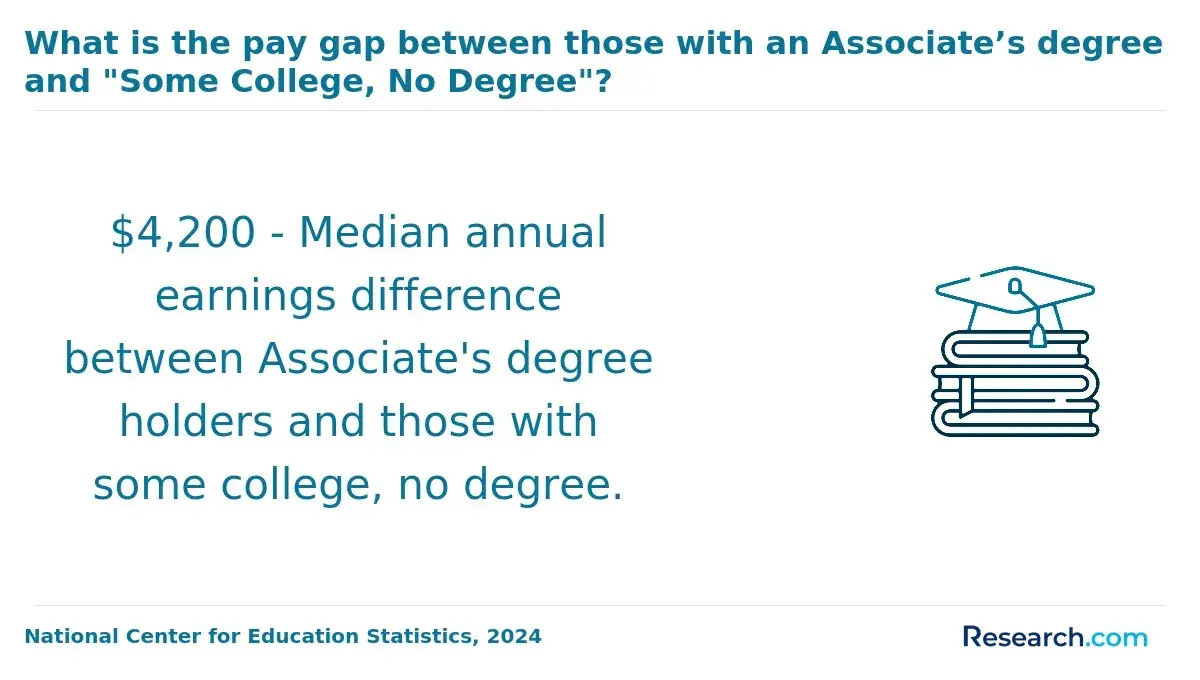
- The median educational investment for sales managers-often requiring only associate degrees plus certifications-is 40% less than analyst roles demanding bachelor's degrees, leading to faster entry but restricted upward mobility, as indicated by Georgetown University workforce projections.
What are the key differences between business analyst, business manager, and sales manager roles?
The functional distinctions among business analyst, business manager, and sales manager roles reveal critical workforce implications beyond their surface similarities. Business analysts primarily apply quantitative techniques to diagnose operational inefficiencies and pinpoint cost-saving strategies. For instance, a business analyst in a manufacturing firm might redesign supply chain workflows using data analytics, whereas business managers coordinate broader activities like production, procurement, and personnel management to align with strategic goals. This delineation matters because business analysts emphasize data-driven problem solving, while business managers require cross-functional leadership and budget oversight. Sales managers diverge yet further, focusing intensely on revenue growth by directing sales teams, setting targets, and fostering client relationships.
The salary disparities between these roles also reflect differing organizational impact. According to the U.S. Bureau of Labor Statistics data as of May 2024, marketing and sales managers report median annual wages around $161,000, significantly higher than management analysts' median wage near $101,000. This gap underscores the premium placed on direct revenue responsibility inherent in sales and marketing leadership.
For those comparing business analyst vs business manager roles, or assessing sales manager and business manager role differences, the decision to pursue further education should weigh these operational variations and compensation outcomes carefully. A practical educational pathway may include highly targeted programs-such as a cheapest online MBA healthcare-to balance specialization with market demand.
How do salaries compare for business analysts, business managers, and sales managers in the U.S.?
Salary disparities among business analysts, business managers, and sales managers in the U.S. reveal distinct professional trajectories shaped by skills and role demands. Business managers average $72,824 annually, reflecting positions centered on operational oversight and team coordination with moderate strategic input. In contrast, business analysts report earnings around $109,058, a premium tied to mastering data-driven decision-making, process optimization, and leadership across functions-highlighting the value of analytical expertise in practical business administration roles.
The most notable pay increase appears with sales managers, who command an average wage of $160,930. This figure more than doubles that of business managers and aligns with revenue responsibility and performance incentives common in sales leadership. For instance, sales managers in sectors like technology or pharmaceuticals often rely on commissions and bonuses that substantially augment base salaries, a dynamic absent in typical business manager compensation.
Professionals weighing a strategic career pivot should consider that business analysts require proficiency with advanced tools and possibly certifications, while business managers gain from broad managerial experience but face slower salary growth. Sales managers endure high-pressure environments and target-driven demands but benefit from direct compensation tied to business outcomes.
Choosing paths factors in whether one prioritizes immediate earnings or operational leadership stability. Candidates pursuing this shift often explore options like a bachelor degree in project management to build relevant competencies aligned with real-world employer expectations within business administration.
Business analyst salary comparison in the U.S. and average earnings for business managers and sales managers in the United States provide essential context for forecasting career ROI and aligning education investments with occupational realities.
What is the job outlook and promotion potential for each of these three career paths?
Promotion trajectories for business analysts, business managers, and sales managers differ widely due to industry-specific demands and the complexity of organizational hierarchies. Business analysts often face a steady job outlook driven by digital transformation imperatives, but advancing requires cultivating niche skills like data analytics and process improvement. Their career growth typically leads to senior analyst or project manager roles, with executive leadership opportunities hinging on gaining wider operational experience.
Business managers have clearer advancement pathways, moving from department oversight to operations director roles. Their growth depends heavily on operational success and leadership demonstrated across functions. However, without versatility in strategic management, their progress can stagnate in dynamic sectors. For example, a retail business manager may rise to regional management by consistently boosting store efficiency and performance.
The job outlook and promotion potential for business analyst sales manager and business manager careers in the US are impacted by market demands, with sales managers benefiting from particularly strong prospects. Employment projections from the U.S. Bureau of Labor Statistics estimate a 6% growth for marketing and promotions managers, a group that overlaps sales managers, highlighting around 36,400 annual openings. High-performing sales managers often move quickly into senior sales director or chief sales officer positions by delivering consistent revenue and leading effective teams.
Career growth and advancement opportunities for business analyst business manager and sales manager roles require targeted actions:
- Business analysts must prioritize ongoing skill development and collaborative projects across departments.
- Business managers need quantifiable operational results and adaptability in leadership to secure executive roles.
- Sales managers should leverage measurable revenue achievements and professional networks to expedite promotions.
Those seeking to pivot or advance strategically in business administration might also consider educational pathways like a project management degree, which can complement operational and analytical skills with structured leadership training and practical frameworks aligned with employer expectations.
What degrees or majors best prepare you for analyst, business manager, and sales manager careers?
Entry into analyst, business manager, and sales manager roles entails distinctive educational tradeoffs shaped by divergent employer expectations and labor market dynamics. Candidates pursuing analyst positions must prioritize quantitative disciplines like business analytics, data science, finance, or economics to develop the technical fluency essential for interpreting complex data sets. This focus ties directly to compensation outcomes: data indicates entry-level business administration degrees for analyst and manager roles typically start near $55,501 annually, with senior analysts surpassing $130,000, reflecting a 2.3× pay increase driven by advanced skills.
Business managers, in contrast, draw more from broader programs emphasizing organizational leadership, management, and strategic operations. These pathways nurture decision-making prowess and team oversight abilities, often accelerated by MBA credentials or specialized master's degrees that sharpen leadership capabilities. The challenge here is balancing breadth with depth, as managers must translate theoretical knowledge into actionable performance across diverse business units.
Sales managers depend heavily on interpersonal acumen alongside business fundamentals. Majors like marketing, communications, and sales management align closely with employer priorities that favor demonstrated sales success paired with academic background. This synergy underscores the importance of real-world experience alongside degree selection.
Students should weigh program rigor against practical exposure-internships and domain-specific projects remain pivotal. For those expanding their credentials, including options like an accredited online health information management degree CAHIIM may complement core business knowledge, enhancing adaptability in evolving markets.
How do online business administration programs compare with campus programs for these career goals?
Choosing between online and campus business administration programs requires evaluating how each format aligns with career goals and workforce demands. Employers targeting mid-to-senior roles in analysis or management favor candidates with demonstrated leadership and hands-on experience, which campus programs typically foster more effectively through in-person projects, internships, and direct faculty engagement.
Glassdoor data analyzed by DataCamp shows that U.S. business analysts can nearly double their salaries-from entry-level averages around $55,500 to over $132,000 as seniors. This progression often depends less on credentials alone and more on practical skills and industry connections, which campus experiences tend to facilitate through recruitment events and embedded networking.
Online programs cater well to professionals balancing full-time jobs or remote locations, offering flexibility and accelerated paths. However, such formats require students to proactively secure mentorship and experiential learning opportunities otherwise gained informally on campus. For example, a sales manager aiming for retail leadership benefits from live case studies and group presentations found mostly in campus settings, while a tech-focused business analyst might supplement online analytics courses with recognized certifications or real-time projects to remain competitive.
Decision-making hinges on balancing convenience against the depth of professional networking and experiential learning. Long-term salary growth and promotions often correlate tightly with the ability to demonstrate applicable skills and leadership rather than relying on credentials alone.

What coursework and skills are most important for success in each of these roles?
Success in business administration depends on integrating quantitative skills with domain-specific expertise and practical tools that reflect workplace realities. For business analysts, advanced coursework in statistics, SQL, and data visualization must be supplemented by domain knowledge in finance or operations to drive actionable insights. Business managers encounter tradeoffs between leadership development and operational know-how-neglecting budgeting or resource allocation risks underperformance in complex, mid-sized firms. Sales managers face sector-specific nuances: technical product knowledge is critical in technology firms, whereas client relationship building dominates in advertising.
Michigan Tech's 2026 salary data illustrate these distinctions: sales managers earn an average $160,930, notably higher than actuaries at $134,990 and accountants at $93,520, reflecting strong market rewards for client acquisition and retention capabilities in specialized sectors. Job outcomes depend heavily on aligning education with practical experience, such as internships that develop relevant casework skills rather than generic theory.
Training priorities vary by sector:
- Analysts advancing into finance benefit from advanced econometrics.
- Manufacturing managers improve operational impact through lean methodology.
- Sales managers perform best with marketing, consumer behavior, and CRM fluency.
Employers increasingly value candidates who deliver immediate operational value, making skill selection and real-world application critical in navigating business administration pathways.
What entry-level jobs lead into business analyst, business manager, and sales manager positions?
Entry-level roles in business administration pathways reveal critical distinctions that impact career momentum and skill development. Business analyst aspirants often start as data analysts, junior business analysts, or financial analysts, roles that demand proficiency in tools such as Excel, SQL, or Tableau and benefit significantly from experience in industries like finance or healthcare where domain expertise matters.
For those targeting business manager positions, early roles such as administrative assistant, operations coordinator, or assistant store manager build foundational leadership and operational skills. Candidates who gain budgeting and project management experience at these stages are better positioned to manage departments or business units down the line.
Sales manager tracks typically begin with sales representatives or account executives, emphasizing client management and negotiation under quantifiable performance targets. The practical implication is that front-line sales exposure directly correlates with effectiveness in later leadership roles.
Salary variations reflect the importance of location and sector expertise. According to ZipRecruiter's July 2025 data, business analyst manager salaries in the U.S. range from about $43,500 in lower-cost regions to $174,500 in competitive markets, with a broad interquartile range between $82,500 and $161,500. Recognizing this distribution is essential for candidates weighing geographical relocation or remote work options against compensation potential.
Strategic entry into roles offering measurable results and specialized knowledge typically expedites advancement. For example, a junior analyst focused on predictive modeling in financial services will outpace peers limited to generalist tasks. Similarly, operational roles involving resource allocation better prepare candidates for business manager responsibilities than entry points missing such exposure.
Are there certifications that strengthen your prospects in analyst, business management, or sales management?
Certifications in business administration fundamentally reshape earning potential and role eligibility but require a strategic evaluation of tradeoffs such as time investment and maintenance costs. For business analysts, certifications like the Certified Business Analysis Professional (CBAP) or PMI Professional in Business Analysis (PMI-PBA) are associated with salary premiums that can exceed $58,000 annually over peers without such credentials, situating certified professionals in the top 10% of earners whose salaries often reach beyond $138,000. This premium reflects practical employer preferences for verified expertise when managing complex data and decision-making tasks.
Business managers seeking certifications such as the Project Management Professional (PMP) or Certified Manager (CM) typically unlock advancement in structured environments, especially where regulated industries demand formal credentials alongside leadership skills. The practical outcome often involves faster promotions and higher responsibilities, but candidates must weigh certification costs against tangible career progression.
Sales managers enhance their negotiating leverage and leadership trajectory through certifications like Certified Sales Leadership Professional (CSLP) or industry-specific salesforce qualifications. These credentials help secure roles focused on territory management and revenue growth, critical in tech sectors competing for regional and national leadership positions.
Employers frequently balance certification credentials against demonstrated experience; thus, combining certifications with measurable project results or sales metrics maximizes career leverage. This nuanced alignment with industry expectations is essential to avoid the pitfall of certification without applied value.
How can you evaluate whether a business program is properly accredited and reputable?
Accreditation is the most tangible filter to separate business administration programs that meet industry standards from those that do not. Employers, especially in fields like finance, often discount candidates from unaccredited programs, which restricts hiring and promotion opportunities. Verification via official sources such as the Database of Accredited Postsecondary Institutions and Programs confirms programs continuously meet benchmarks in curriculum rigor, faculty credentials, and institutional support.
Beyond credentials, evaluating graduate outcomes is essential. For instance, with over 233,000 job openings in business analyst and sales manager roles alongside an 11% projected growth, programs demonstrating measurable job placement suggest alignment with market demand and provide students a practical advantage despite automation trends. Lack of such data should raise caution about potential gaps between education and employment.
Curriculum content must also reflect current industry tools and methodologies. Data analytics and digital competencies are increasingly central to business analysis; programs failing to update syllabi risk graduating students less competitive in a technology-driven market. Compare course offerings over time to spot stagnant versus evolving curricula.
Lastly, faculty industry engagement and partnerships influence real-world readiness. Programs embedded in professional networks facilitate internships and experiential learning critical for transitioning into roles requiring applied skills. Absent such connections, students may struggle with practical skill development crucial for meaningful advancement within business administration.
How do advancement timelines and typical career ladders differ among these three professions?
Advancement timelines across business analyst, business manager, and sales manager roles reflect distinct employer expectations and skill emphases that shape career trajectories in measurable ways. Business analysts often require four to seven years to progress from junior roles to senior or specialized positions, relying heavily on technical expertise in data analytics, process optimization, and cross-functional communication. Industries like finance and technology prioritize certifications and deep functional knowledge to validate advancement readiness.
Business managers typically take five to eight years to ascend from supervisory to director-level positions, focusing on operational breadth, team leadership, and strategic coordination within varied sectors including manufacturing and services. Their trajectory demands developing scalable organizational processes and managing diverse teams without a direct line to revenue outcomes.
Conversely, sales managers experience the fastest financial upside due to direct revenue responsibility but face rigorous performance benchmarks. Michigan Tech data reports average annual earnings of $160,930 and top-tier sales leaders exceeding $239,200, signaling high reward for consistently meeting or surpassing sales targets. This role favors candidates who can rapidly grow teams and sustain revenue growth in competitive marketplaces like technology or pharmaceuticals.
Decision-making between these tracks hinges on individual strengths and tolerance for risk-data-intensive analysis versus cross-functional leadership versus results-driven sales management. Choosing a pathway also involves weighing speed of promotion against role stability and skill transferability.
Other Things You Should Know About Business Administration
For most business administration careers, a master's degree is not strictly required but materially improves promotion potential in competitive environments. Employers expect advanced degrees especially for leadership roles in larger organizations or highly strategic functions. Without a master's, professionals must compensate with several years of specialized experience, proven leadership, or niche certifications to remain competitive for upper-management positions.
Workload differences are significant and depend heavily on organizational size and sector. Business analysts face project-driven peaks requiring detailed data analysis under strict deadlines. Business managers handle continuous operational demands and staff coordination, often with less deadline volatility but higher ongoing responsibility. Sales managers work under quota pressure, combining client-facing activity with internal performance management, which leads to uneven but intense periods of workload around sales cycles.
Program reputation influences initial interview opportunities in competitive markets but has less impact after employment entry. Employers prioritize demonstrable skills, practical experience, and network connections acquired during and after the program over brand alone. For career switchers or returning professionals, selecting programs with strong employer engagement and internship options outweighs prestige when aiming for tangible job placement and advancement.
References
- Institutional vs Program Accreditation: What You Should Look For | Articles | Unimy https://www.unimy.com/article/institutional-vs-program-accreditation-what-you-should-look-for
- Career Ladders for the Frontline Workforce https://kahunaworkforce.com/career-ladders-for-frontline-workforce/
- Graduate careers advice: you and your business and management studies degree https://gradireland.com/careers-advice/business-consulting-and-management/graduate-careers-advice-you-and-your-business-and-management-studies-degree
- Business Analyst vs Product Manager — Career Comparison https://jobcannon.io/careers/compare/business-analyst-vs-product-manager
- Business Analyst Certification: How to Get Certified & Best Options https://www.knowledgetrain.co.uk/business-analysis/business-analyst-certification
- 7 Top Certifications for Best Sales Careers https://www.pipedrive.com/en/blog/sales-certification
- Career development opportunities: better than a promotion https://www.neobrain.io/en/blog/redefining-career-growth-opportunities
- Online BBA vs. On-Campus BBA: What You Should Know Before You Choose | CourseCompare.ca https://www.coursecompare.ca/online-bba-vs-on-campus-bba/
- How to become a sales manager: education, degree options, and career path - CIS University https://www.cis-spain.com/en/blog/how-to-become-a-sales-manager-education-degree-options-and-career-path/
- What Are 21st Century Skills? https://www.icevonline.com/blog/what-are-21st-century-skills