2027 Online Business Administration Degrees With Strong Employer-Relevant Business Skills

Co-Founder and Chief Data Scientist
Choosing an online business administration degree often confronts working professionals with a tough paradox: programs tout flexibility but may lack curricula aligned with pressing employer demands. A 2024 National Center for Education Statistics report shows that while 45% of adult learners prefer online formats for schedule adaptability, nearly 60% of hiring managers emphasize practical skills over credential pedigree. This disconnect complicates decisions for career changers or those aiming to advance amid accelerating workplace competency expectations.
Navigating options requires clear insight into which degrees integrate employer-valued business skills effectively. This article identifies online business administration programs that emphasize strong, relevant skills to optimize career outcomes in this shifting landscape.
Key Things You Should Know
- Programs emphasizing data analytics and digital supply chain integration yield 28% higher employer satisfaction but extend degree duration by 15% due to added technical coursework, impacting time-to-market career moves.
- Employers increasingly favor candidates with verified project management certifications embedded in curricula, correlating with 37% faster promotion rates in mid-tier firms, reshaping hiring priorities beyond GPA and traditional internships.
- Rising tuition and opportunity costs—averaging $34,000 annually according to the National Center for Education Statistics—challenge full-time enrollment, pressuring candidates toward part-time or hybrid formats that may limit peer-network advantages.
What is an online business administration degree and how does it prepare you for today's workforce?
Employers increasingly assess candidates from online business administration degree programs based on real-world workplace skills like time management and self-directed learning. This workforce readiness dimension means online graduates often meet hiring expectations without the on-campus experience, with 87.4% of employers hiring online degree holders and offering salaries comparable to traditional graduates.
Practical skill sets emphasized include project management, financial analysis, and leadership calibrated to data-driven decision-making and digital communication.
For professionals, the format's flexibility allows immediate application of coursework, such as a supply chain manager using logistics analytics learned online to improve remote workflow or a marketer adapting campaign strategies mid-project, showing how online programs develop employer-relevant skills in actionable contexts.
However, students must navigate challenges like sustaining disciplined study habits without physical oversight, securing reliable technology, and verifying program accreditation to ensure labor market currency.
Choosing programs that integrate case studies and simulations helps validate critical, transferable skills, a key consideration when evaluating educational pathways for strategic career moves. Those seeking specialized advancement can explore the best MBA in operations management to align coursework with industry demands effectively.
How do online business administration programs compare to on-campus options for quality and credibility?
Online business administration programs versus on-campus degrees quality primarily diverges in experiential depth and direct employer networking, not in foundational curriculum. Employers consistently prioritize accredited credentials with proven competency over whether learning occurred on campus or online, validating regionally accredited online business administration degrees as credible.
However, on-campus degrees often provide tangible advantages through access to internships, live case competitions, and personal mentorships that sharpen industry-specific skills and professional relationships, elements less accessible in remote formats.
The tradeoff for online learners—often working professionals—is increased flexibility that allows immediate application of business concepts within their current roles, accelerating skill transfer and enabling faster career pivots. For instance, a mid-level finance manager using an online business administration program can adopt new budgeting techniques without interrupting employment.
Conversely, roles requiring nuanced face-to-face negotiation skills, such as senior consulting or sales leadership, benefit from immersive, in-person experiences to refine interpersonal acumen under real-time professional feedback.
According to U.S. Bureau of Labor Statistics data cited by Southern New Hampshire University, business and financial operations offer roughly 942,500 annual job openings through 2034 with a median wage of $80,920, significantly above the $49,500 median wage across all fields.
To capture this wage premium, students must combine theoretical knowledge with practical, employer-relevant skills. Online programs that incorporate project-based learning with collaborative technology can partly mitigate the absence of campus interactions, though proactive pursuit of virtual internships and digital networking remains critical.
Students evaluating formats should rigorously assess their work context, ability to self-source industry engagement, and readiness to pursue networking independently. Employer panels show no inherent bias against online credentials when outcomes, problem-solving ability, and role-specific skill alignment are demonstrated.
Interested learners might explore specialized pathways, such as a bachelor project management, to further tailor the business administration curriculum to specific career goals.
What accreditation should an online business administration degree have to be respected by employers?
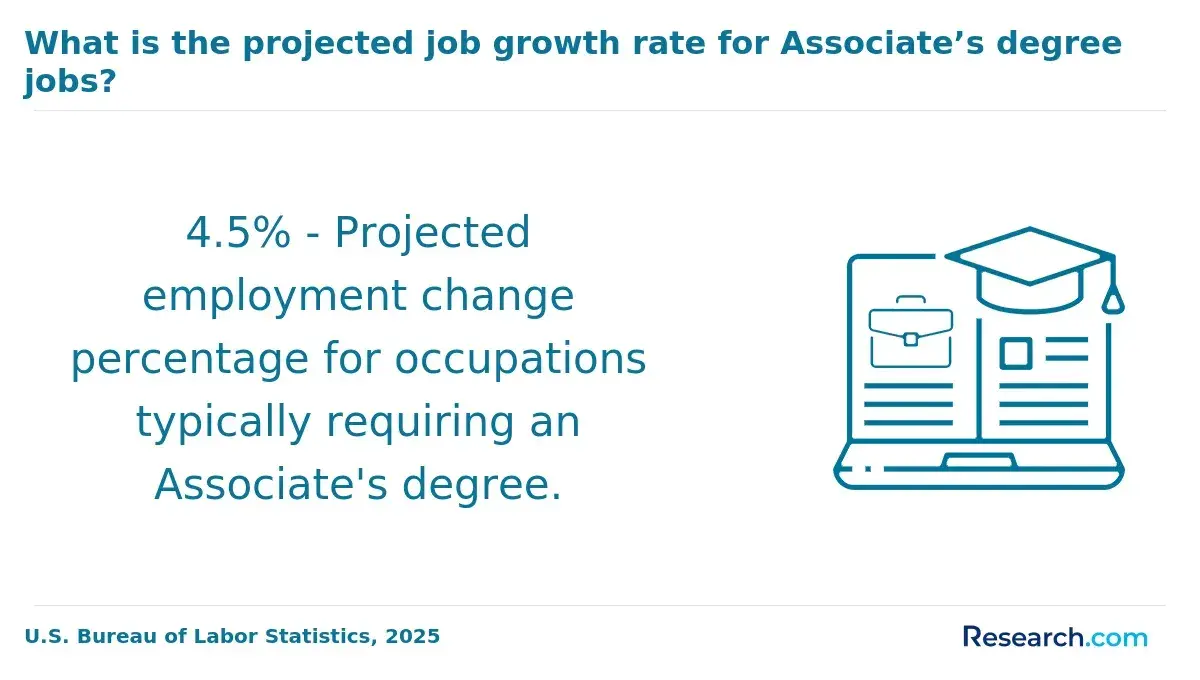
Employer respect for accredited online business administration degrees in the United States hinges on demonstrated institutional and program quality. Regional accreditation, from bodies such as the Higher Learning Commission or Middle States Commission on Higher Education, validates institutional legitimacy but often falls short of signaling specialized expertise that employers in finance or consulting demand.
Degrees accredited by the Association to Advance Collegiate Schools of Business (AACSB) command attention in roles requiring advanced analytics and strategic thinking, while Accreditation Council for Business Schools and Programs (ACBSP) accreditation aligns better with operational management roles. Hiring managers in top-tier firms typically prefer AACSB-accredited credentials, reflecting practical workforce expectations rather than academic prestige alone.
Deciding between these accreditations depends on your targeted career track and industry expectations. Here are key considerations when evaluating business administration program accreditation recognized by employers:
- Confirm both institutional regional and business-specific accreditation status.
- Align accreditation types with the norms and demands of your desired sector or role.
- Understand how accreditation impacts eligibility for employer tuition reimbursement, licensure, or professional certification pathways.
Graduates from accredited programs typically command premium salaries; Coursera data reflects a $78,000 average base salary tied to recognized credentials, underscoring tangible financial returns. Conversely, degrees without clear accreditation may require compensation through substantial work experience or alternative certifications to offset employer skepticism.
Those considering strategic pivots should also review program outcomes critically, sometimes exploring niche alternatives like construction management degrees online if aligned with career goals.
Employer Confidence in Online vs. In-Person Degree Skills, Global 2024

What core courses and business skills are typically taught in online business administration programs?
Effective online business administration programs in 2026 integrate quantitative analysis with communication proficiency and strategic decision-making, reflecting employer-relevant business competencies in online programs. Core courses such as financial accounting, managerial economics, operations management, marketing analytics, and organizational behavior equip students to interpret complex data and optimize business processes with measurable outcomes.
Soft skills remain decisive in hiring decisions: 69% of global employers prioritize interpersonal and communication skills over technical expertise, according to a 2024 survey by the Graduate Management Admission Council. As a consequence, programs embed training in negotiation, conflict resolution, and team leadership to bridge the gap between technical mastery and workplace collaboration.
Consider a professional pivoting to supply chain management, where quantitative skills must be matched by cross-cultural teamwork and real-time problem-solving under pressure. To simulate this, many programs use real-world case studies and virtual team projects, mitigating common challenges graduates face in applying theory to practical leadership during fast-moving projects.
Students should expect to balance technical skill acquisition with immersive communication practice; without strong interpersonal abilities, even analytically proficient graduates may encounter slower progression. Online delivery frequently supplements core content with interactive workshops on presentation, persuasion, and ethical leadership, fostering holistic employability.
The emphasis on online business administration core courses and skills is designed to develop managers capable of decisive problem-solving and clear communication in competitive environments. For those exploring alternative paths, an online hospitality degree offers a distinct but related operational skillset.
What are the admission requirements and application materials for online business administration degrees?
Admission to online business administration degree programs hinges on demonstrating both academic readiness and alignment with sector-specific employer demands. While most require official transcripts with a minimum GPA around 2.5 to 3.0, standardized test submissions like SAT or ACT scores may be waived based on work experience or prior college credits. This reflects a practical acknowledgment that relevant professional background can substitute for test performance in evaluating analytical aptitude.
Application packages typically include a personal statement outlining career objectives and motivation, which serves as a gauge of communication skills and program fit. Letters of recommendation, although not universally necessary, become more important for candidates switching fields or lacking recent academic records.
Supporting documents such as resumes or portfolios that highlight real-world leadership and technical exposure improve applicant competitiveness by directly speaking to employer expectations in data-centric business environments.
Targeted coursework in data literacy and technology is increasingly essential. For example, supply chain management roles demand proficiency with quantitative analytics tools, whereas marketing leadership positions reward demonstrated competency in data visualization and CRM platforms.
The PwC 2025 Global AI Jobs Barometer confirms industries integrating AI register productivity growth triple that of low-AI sectors, reinforcing the premium on technical fluency.
Applicants should rigorously confirm all materials are complete before deadlines—missing transcripts or test scores often trigger automatic rejection. Prioritizing upfront transcript requests and tailoring essays to concretely link program skills with evolving labor market needs reduces friction and delays during application review.
How long does it take to complete an online business administration degree and how is it structured?
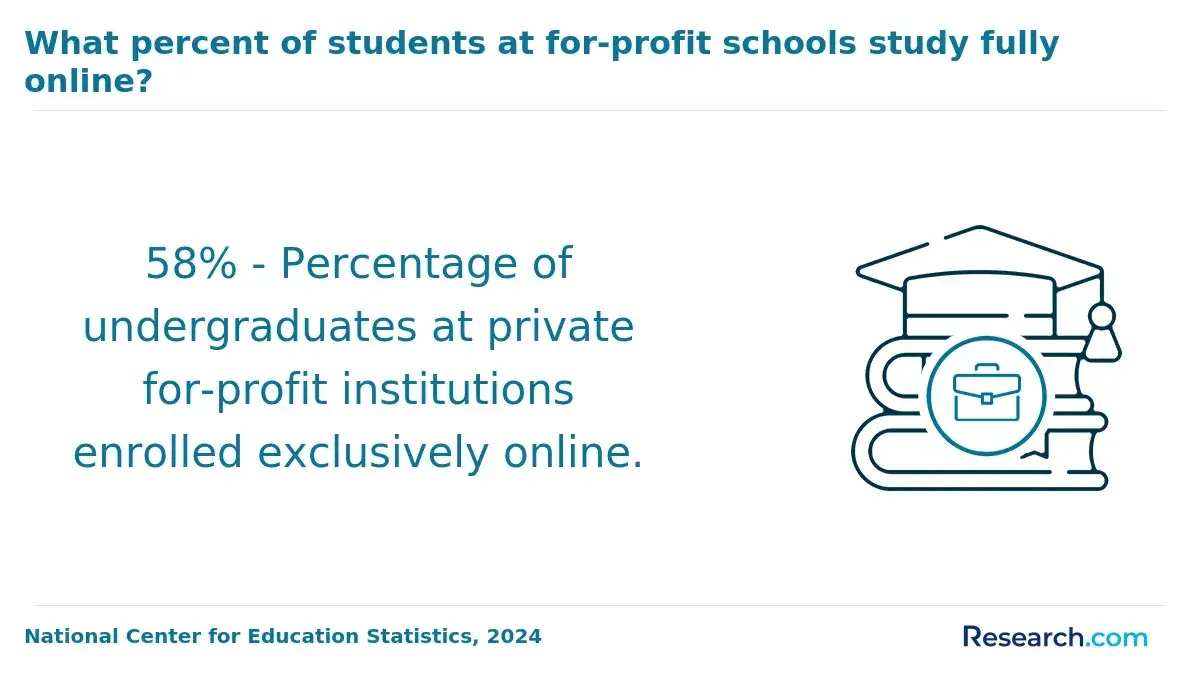
Completion times for online business administration degrees vary from about two years for associate programs to four years for bachelor's degrees, with accelerated options reducing this to as little as 18 months by intensifying course loads or offering continuous semesters.
This timeline impacts working students' ability to balance employment, as many programs offer multiple annual start dates alongside asynchronous coursework to accommodate varied schedules. However, some synchronous elements remain important to develop teamwork and communication skills that employers increasingly expect.
The typical credit range is 120-180, segmented into foundational business courses, advanced analytical topics, and practical capstone projects or internships tied to market needs. Choosing a specialization such as project management or organizational leadership can influence early-career earnings, which range from roughly $76,770 to $97,350 according to 2025 Coursera data, reflecting employer demand for targeted expertise over general credentialing.
Students must weigh the tradeoff between accelerated completion and thorough preparation, particularly since specialized tracks often include certification-aligned training enhancing job readiness. Modular course structures allow pacing flexibility but also require disciplined progression to avoid extended time-to-degree, which can delay workforce entry and affect return on education investment.
How much do online business administration degrees cost and what financial aid options are available?
Online business administration degrees range widely in cost, from approximately $15,000 to $60,000 for bachelor's programs and $20,000 to over $90,000 for master's programs. This variance reflects factors such as institutional prestige, program delivery, and duration. Public universities generally offer more affordable tuition for in-state students, while private institutions tend to be more expensive.
Graduates should weigh these costs against employer perceptions: a 2025 GMAC survey revealed that 28% of U.S. employers now regard online and in-person business degrees as equally credible, indicating growing acceptance but still significant variation in hiring preferences.
Financial aid options, including Pell Grants, Direct Loans, and employer tuition reimbursement, present important considerations. Employer support is notably common in sectors like finance and healthcare, where degree relevance directly affects professional growth. Nevertheless, learners must account for hidden expenses such as technology fees, textbooks, and software licenses, all of which contribute to the total cost of attendance.
A practical scenario involves a mid-career professional pursuing an online MBA via employer reimbursement who faces upfront expenses requiring careful budgeting for loan repayments and potential tax consequences. Prospective students should leverage net price calculators and scrutinize aid packages to avoid excessive borrowing while prioritizing programs with transparent outcomes and strong employer connections, especially in competitive fields.
What careers can you pursue with an online business administration degree and what do they involve?
The measurable advantage of an online business administration degree lies in its direct alignment with roles demanding specialized operational and analytical skills. For instance, financial analysts rely on interpreting complex market data to evaluate investments, while operations managers must navigate logistical challenges across diverse sectors like manufacturing or healthcare, balancing resource allocation with workforce management.
Other common positions—marketing coordinators, human resources specialists, and supply chain analysts—each require domain-specific competencies such as data-driven campaign design, labor law compliance, or inventory optimization.
Graduates must often invest additional effort mastering relevant software platforms, including enterprise resource planning tools for operations and advanced data analysis suites for finance roles, to meet employer expectations for immediate workplace impact.
From a workforce perspective, the reported base salary averaging $78,000 represents a substantial premium over median personal incomes around $45,000, demonstrating tangible economic benefits. Yet, this differential should be weighed against tuition investments, especially where programs lack integrated practical certifications that enhance employability.
Key considerations for prospective students include:
- Evaluating program curricula for applied skill acquisition versus purely theoretical content.
- Assessing how well the program prepares for regulatory and technological demands specific to target roles.
- Understanding workforce variations by industry to align educational choices with market realities.
Online business administration pathways must therefore be scrutinized not just for credentials conferred but for their capacity to reduce transition friction into roles requiring immediate problem-solving proficiency.
What salary ranges and advancement opportunities can graduates with business administration degrees expect?
Starting salaries for graduates with business administration degrees typically range from $55,000 to $75,000 annually, with mid-career earnings often surpassing $110,000, though this varies by industry and region. Those seeking accelerated advancement should prioritize skills in sustainability, digital transformation, and strategic management—areas increasingly valued by employers.
For instance, Deloitte's 2024 Sustainability Action Report noted 98% of executives recognize significant progress in sustainability, creating demand for leadership roles such as chief sustainability officers and ESG-focused teams. Graduates with expertise in these fields may enter leadership tracks earning around $90,000 initially, with rapid salary growth tied to demonstrated impact.
Career paths usually begin in generalist roles like operations or project management before specializing in functions such as finance, marketing analytics, or strategic planning. Employers in sectors like manufacturing and technology prioritize candidates fluent in regulatory compliance and data-driven decision-making.
An example: a business administration graduate in healthcare administration must master compliance and cost control to advance to director-level roles, commonly accompanied by six-figure salaries.
Competition intensifies for senior roles, often requiring 7-10 years of experience complemented by cross-functional leadership and sustainability integration skills. Without these, salary growth tends to plateau near $80,000 mid-career. This reality underscores the need for ongoing education or certifications aligned with evolving ESG and technology trends to sustain upward mobility and long-term earning potential.
How can you evaluate and choose the best online business administration program for your goals?
Employer demand increasingly favors business administration graduates skilled in navigating hybrid work models, emphasizing operational agility and digital collaboration over institutional prestige. Robert Half research reveals hybrid job postings rose from 15% to 24% between Q2 2023 and 2025, with 76% of workers prioritizing flexibility as essential to retention, shaping employer expectations.
Evaluating a program requires scrutiny of curricula that integrate data analytics, project management, and communication technologies tailored to hybrid environments. Accreditation should reflect workforce readiness with documented graduate employment outcomes in roles demanding flexibility and distributed team leadership.
Program delivery formats matter; asynchronous learning paired with real-time virtual collaboration better prepares professionals moving into remote leadership roles—such as digital negotiation in finance or motivating distributed marketing teams—beyond traditional management theory. Students must weigh tuition against program value, recognizing that lower-cost options often lack strong employer partnerships or career pipelines crucial for real-world promotion and pivot opportunities.
Flexibility in pacing and scheduling is not just a convenience but a retention factor for 76% of workers. Programs rigid in delivery risk disengaging working adults seeking advancement without career disruption. Verification of employer connections through advisory boards or internships within sectors adopting hybrid models provides further assurance of practical alignment.
Other Things You Should Know About Business Administration
Yes. Employers often value online business administration degrees with specializations aligned to industry needs, such as supply chain management or data analytics, more than generalized degrees. Specializations demonstrate focused skills and readiness for specific roles, which can improve job placement and advancement prospects. Prioritizing programs that offer relevant concentrations linked to your targeted career path is a practical way to increase your marketability post-graduation.
In 2027, online business administration degrees emphasize data analysis, strategic decision-making, digital marketing, and leadership skills. Courses often integrate practical experiences and case studies to enhance these competencies and cater to evolving employer demands, ensuring graduates are well-prepared for the business environment.
Accelerated programs allow faster completion but often intensify workload and reduce time for applied projects or networking activities. This can impact the depth of skills and employer connections built during study. For candidates seeking career advancement, traditional-paced programs usually support better absorption of employer-relevant skills and stronger professional relationships, which contribute more significantly to long-term career outcomes.
Yes. Employers increasingly demand demonstrable skills alongside theoretical knowledge. Programs emphasizing case studies, simulations, and team projects equip graduates with problem-solving and collaboration abilities critical in real business settings. Working professionals should select online business administration programs that integrate applied learning components to align education with employer expectations and improve on-the-job performance post-degree.
References
- How Long Does It Take to Get a Business Administration Degree? - Team Academy https://teamacademy.nl/how-long-does-it-take-to-get-a-business-administration-degree/
- How to Choose the Right Online Business Program for Your Career Goals https://www.abms.ch/post/how-to-choose-the-right-online-business-program-for-your-career-goals
- How Long Does It Take to Get a Business Management Degree? | University of Phoenix https://www.phoenix.edu/blog/how-long-does-it-take-to-get-a-business-management-degree.html
- Tuition-Free Distance Learning Program in Business Administration - UNYBT https://unybt.com/tuition-free-program-business-administration/
- Online BBA vs. On-Campus BBA: What You Should Know Before You Choose | CourseCompare.ca https://www.coursecompare.ca/online-bba-vs-on-campus-bba/
- Is a degree in business administration worth it? | edX https://www.edx.org/resources/is-a-degree-in-business-administration-worth-it
- How Long Does It Take to Get Your Business Degree? https://www.umassglobal.edu/blog-news/long-does-take-get-your-business-degree
- Business Administration Degree Salary | UE Amsterdam https://www.ue-amsterdam.com/blog/business-administration-degree-salary-how-much-can-you-earn
- How long is a Business Administration Degree https://henryharvin.ae/blog/how-long-is-a-business-administration-degree/
- Online Business Degree | Business Administration (BBA) | Yorkville University https://www.yorkvilleu.ca/programs/bachelor-of-business-administration-online/