2027 Information Technology Management ROI by Institution Type: Public vs Private vs Nonprofit Online Programs

Co-Founder and Chief Data Scientist
Choosing between online public, private, and nonprofit programs for information technology management involves more than tuition sticker price. Consider a prospective student weighing two seemingly comparable options: one with affordable tuition but a 45% graduation rate and average student debt nearing $35,000; another with higher costs but stronger institutional support and 70% job placement within six months of graduation.
Recent 2024 data from the National Center for Education Statistics reveals that higher graduation rates correlate strongly with improved long-term debt management and career advancement, making institutional choice critical.
This article analyzes how these differences affect ROI across institution types, guiding informed decisions on program value and future earnings potential.
Key Things to Know About Information Technology Management ROI by Institution Type
- Public online IT management programs typically offer lower tuition and reduce student debt risk, but this cost advantage may be offset by comparatively longer graduation timelines that delay ROI realization.
- Private institutions often boast stronger industry ties and higher employer recognition, enhancing career advancement prospects, although their premium pricing necessitates careful evaluation of post-graduation outcomes versus financial burden.
- Nonprofit programs prioritize flexible scheduling for working adults, improving access and completion rates; however, variability in accreditation standards requires scrutiny to ensure long-term value and employer acceptance.
- Key Things to Know About Information Technology Management ROI by Institution Type Key Things to Know About Information Technology Management ROI by Institution Type
- What Does ROI Mean for a Information Technology Management Program and How Is It Measured? Understanding Information Technology Management Program ROI
- How Do Public, Private, and Nonprofit Online Information Technology Management Programs Differ in Overall Value? Value by Institution Type
- How Do Tuition Costs Affect the ROI of a Information Technology Management Program Across Institution Types? Tuition Costs and ROI
- How Do Graduation Rates Influence Information Technology Management Program ROI? Graduation Rates Impact ROI
- What Role Do Career Outcomes Play in the ROI of a Information Technology Management Degree? Career Outcomes and ROI
- How Does Student Debt Impact the Long-Term ROI of a Information Technology Management Program? Debt vs. Long-Term ROI
- How Do Flexibility and Adult Learner Support Affect Information Technology Management Program Value? Flexibility and Program Value
- How Do Accreditation and Institutional Reputation Influence Information Technology Management ROI? Accreditation and Reputation
- How Does Time-to-Degree Affect the ROI of Public, Private, and Nonprofit Information Technology Management Programs? Time-to-Degree
- How Can You Choose the Best Information Technology Management Program Based on Your ROI Goals? Choosing Programs by ROI
What Does ROI Mean for a Information Technology Management Program and How Is It Measured?
Evaluating ROI for an information technology management program requires more than comparing sticker prices or projected salaries; it demands an assessment of the entire educational experience relative to career goals and financial realities. For instance, a working professional choosing between a lower-cost public online program with about a 50% graduation rate and a pricier private nonprofit option averaging 65% completion must consider how extended time-to-degree impacts lost income and added expenses.
Because institutions differ significantly in support services, employer connections, and curriculum alignment with evolving industry standards, these qualitative dimensions weigh heavily on long-term ROI beyond upfront costs. Incorporating total educational expenses, including opportunity costs, helps clarify that a less expensive path may ultimately delay workforce reentry or limit skill relevance, detracting from the investment's overall value.
The process of measuring return on investment for it management degrees also hinges on student debt levels and post-graduation employment outcomes tied to institutional reputation and program rigor. Graduates from private nonprofit online programs often carry higher debt loads but may access stronger career placement and salary growth in technology management roles, while public institutions offer affordability with potential tradeoffs in support and networking that influence earnings trajectory.
Prospective learners with clear employment objectives or who require flexible pacing should weigh how time-to-degree changes both direct and indirect costs, particularly the opportunity cost of foregoing work earnings. Adult learners may also explore options like affordable MSW programs online as a comparative lens on pricing and value in related professional fields, underscoring that ROI calculations are inherently individualized and context-dependent.
How Do Public, Private, and Nonprofit Online Information Technology Management Programs Differ in Overall Value?
Public, private, and nonprofit online information technology management programs differ notably in how they balance cost, educational quality, and career impact, shaping their overall value depending on student priorities. Public institutions typically offer lower tuition and result in about 22% less student debt on average, creating clear financial advantages for those prioritizing affordability and minimal long-term burden.
However, private and nonprofit programs often provide more focused curricula, stronger faculty engagement, and career services that can enhance skill specialization and employer connections, factors that may justify higher costs for students aiming to leverage networking and certification-driven opportunities. These tradeoffs matter particularly for career changers who must weigh upfront expenses against potential salary growth and job readiness in a competitive IT workforce.
Institutional reputation and student support also diverge across these options. Nonprofit programs frequently offer tailored advising and flexible scheduling that accommodate working professionals, increasing the likelihood of degree completion and persistence.
While public programs maintain broader recognition among employers, private and nonprofit degrees can carry added value when aligned with industry certifications sought by recruiters, influencing long-term salary trajectories. Choosing between these paths depends on one's financial situation, timeline, and professional goals rather than a clear hierarchy of institutional types.
One student recalled carefully comparing three online IT management programs after losing a mid-level IT job. The public university's lower tuition and strong loan options appealed financially, but limited personalized advising raised concerns about staying on track while working full-time.
The nonprofit option's flexible class schedules and mentorship stood out, though higher fees tested the value proposition. After evaluating graduation rates, debt projections, and employer recognition, the student found relief in a nonprofit program that balanced manageable costs with robust career services, fitting both budget constraints and the need for specialized skills to pivot careers successfully.
How Do Tuition Costs Affect the ROI of a Information Technology Management Program Across Institution Types?
Higher tuition in private and nonprofit online information technology management programs does not necessarily equate to greater return on investment, especially when factors like financial aid availability and debt burdens are considered. Public programs typically offer lower sticker prices, often between $7,000 and $15,000 annually, but students may benefit more when they graduate on time, minimizing additional costs.
According to a 2024 report from the National Center for Education Statistics, graduates of private online programs carry roughly 25% more student loan debt than their public counterparts, reflecting less access to state-based aid and higher initial costs. However, some higher-priced programs offset these costs by leveraging strong employer connections and career services, which can improve job placement and starting salaries, potentially justifying their premium for certain learners.
Graduation rates and program flexibility are critical variables that influence the practical ROI for career-focused students balancing work and study. Public institutions often report higher completion rates, reducing the total financial and opportunity costs by keeping time-to-degree shorter.
On the other hand, candidates enrolling in pricier private programs may face extended timeframes or higher dropout risks, which can erode financial benefits despite the perceived prestige or advanced curriculum. The choice ultimately requires a careful tradeoff between affordable tuition, realistic graduation likelihood, and expected career impact, recognizing that a lower-cost degree with steady completion can outperform a costlier option with uncertain employment advantages over the long term.
How Do Graduation Rates Influence Information Technology Management Program ROI?
Graduation rates provide a meaningful lens into the return on investment for online information technology management programs but should be considered alongside program delivery and student circumstances. Public institutions often demonstrate higher completion rates, around 55-60% for bachelor's degrees over six years per the National Center for Education Statistics in 2024, often reflecting robust academic supports and lower in-state tuition costs.
For example, a working adult enrolling part-time at a nonprofit university might face extended time-to-degree and higher debt despite valuable skill acquisition, complicating straightforward ROI comparisons focused solely on graduation rates.
Information technology management program completion rates and financial outcomes are influenced by factors such as student support services, flexibility in course scheduling, and persistence challenges typical for nontraditional learners. While higher graduation rates generally indicate stronger institutional effectiveness and can reduce total education costs, they do not capture differences in employment outcomes or network benefits crucial to career growth.
Cost-conscious students comparing programs must balance graduation statistics with these practical tradeoffs, as well as with affordability and debt impact, to assess real-world program value.
Given these complexities, a narrow focus on completion metrics risks oversimplifying program effectiveness. Evaluating how graduation rates intersect with factors like support availability and time-to-degree, rather than treating them as standalone indicators, offers more nuanced guidance for decisions about cost and educational quality.
This approach aligns with data-driven insights seen in related fields, such as analyses of online engineering degrees, where institutions' structures strongly shape post-completion returns.
What Role Do Career Outcomes Play in the ROI of a Information Technology Management Degree?
Employment outcomes significantly shape the return on investment for online information technology management programs, particularly when comparing public, private, and nonprofit institutions. Data from the National Center for Education Statistics (2024) shows that graduates of public online IT management programs have employment rates near 83% within six months, slightly outperforming private and nonprofit peers.
This advantage often reflects stronger ties to regional job markets and more affordable tuition, reducing debt burdens that affect long-term financial viability. Conversely, private programs may command higher costs but can offer specialized networks and industry partnerships that improve access to niche roles or upper-level positions, underscoring a key tradeoff between immediate employment likelihood and future upward mobility.
Career mobility and skill relevance further differentiate these program types. Nonprofit programs frequently emphasize emerging technologies and leadership skills valued by employers seeking adaptability rather than just credentials, which may influence promotion prospects over time.
Prospective students must weigh these factors against tuition fees and time-to-degree since a higher sticker price does not always translate to better career outcomes or quicker returns. Geographic variability and student backgrounds also affect placement success, highlighting the necessity of aligning program choice with individual career goals and local workforce demands rather than assuming institutional prestige alone guarantees ROI.
A graduate from a nonprofit online information technology management program recalled hesitating before enrolling, uncertain if the investment would translate into tangible career progress beyond immediate salary increases. After completing the degree, the individual found their employer recognized the credential in performance reviews, leading to greater responsibilities in project management and a clearer path toward leadership roles.
While initial raises were modest, the expanded skill set and network built through the program gradually opened opportunities that justified the time and cost, illustrating how measured career outcomes shape the practical ROI beyond simple earnings comparisons.
How Does Student Debt Impact the Long-Term ROI of a Information Technology Management Program?
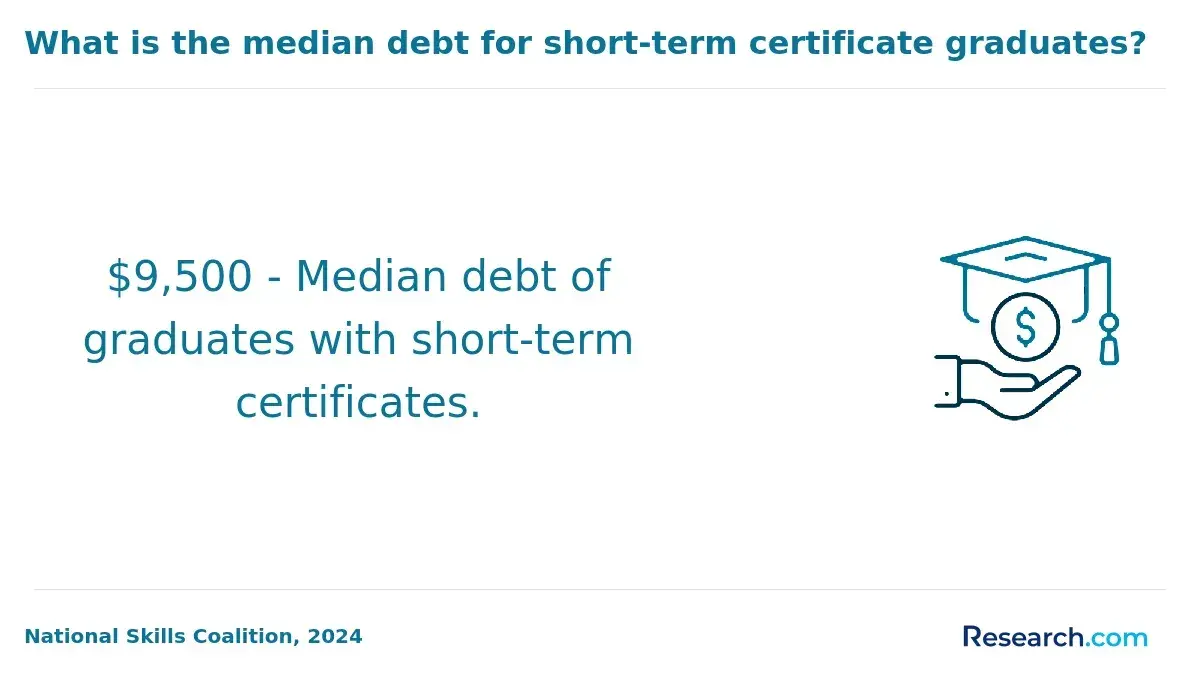
Student debt levels and repayment obligations critically influence the long-term ROI of an information technology management program, with marked differences across public, private, and nonprofit online institutions. Graduates from private online programs often carry approximately 25% more debt than those from public universities, which can extend repayment timelines and reduce financial flexibility well beyond graduation.
For example, a professional who borrows heavily through a private program may face delayed wealth accumulation and fewer options for reinvestment in career development or homeownership compared to a peer from a public university with lower debt. This disparity stresses the importance of evaluating borrowing strategies not just against tuition costs but also against realistic repayment scenarios and salary trajectories in IT management roles.
The impact of student loan repayment on information technology management program ROI is further shaped by graduation rates and employment outcomes. Public online programs typically offer lower tuition and benefit from stronger career support services, which correlate with higher on-time graduation and salary gains relative to debt. Nonprofit institutions may provide moderate costs balanced by financial aid, but students must scrutinize aid packages and total costs due to potential hidden expenses.
Since deferring or extending loan repayments is more common among private program graduates, their long-term financial outcomes often lag, highlighting the tradeoff between educational quality or specialization and financial burden. Prospective students should weigh these factors carefully, particularly when comparing flexible program options such as accelerated pathways, like those detailed in the fastest MBA program context, to align debt commitments with career advancement prospects.
How Do Flexibility and Adult Learner Support Affect Information Technology Management Program Value?
Program flexibility and targeted adult learner support are decisive factors shaping the actual return on investment in online information technology management degrees. For example, working professionals juggling job demands and family responsibilities benefit substantially from asynchronous coursework paired with part-time enrollment options, which national data shows improves completion likelihood by roughly 30%.
However, this flexibility often entails tradeoffs such as diminished real-time faculty interaction and peer networking, which are critical for applying skills and accessing informal career opportunities, limitations that must be weighed against convenience and scheduling autonomy.
Institutions' support structures, including tailored academic advising, career services aligned with evolving industry needs, and accommodations for military or transfer students, demonstrably accelerate time-to-degree and improve employment outcomes post-graduation. Public programs typically offer more affordable tuition and state-backed resources but can vary widely in these support services, potentially influencing persistence and debt levels.
Private offerings often enhance personalized guidance but at higher cost, which may erode net ROI depending on a graduate's ability to leverage these advantages in competitive job markets. Recognizing these nuanced differences is essential for adult learners balancing financial constraints and career goals, as robust advising and flexible credit policies can mitigate opportunity costs and directly affect long-term educational and professional value.
How Do Accreditation and Institutional Reputation Influence Information Technology Management ROI?
Accreditation status directly impacts the practical value and long-term return on investment of an information technology management program, particularly through employer recognition, graduate school eligibility, and credit transferability. For example, a working professional pursuing career advancement may find that graduation from a regionally accredited institution significantly improves credential acceptance by employers compared to a program lacking recognized accreditation.
According to a 2024 report from the Council for Higher Education Accreditation (CHEA), over 85% of employers prioritize candidates from regionally or nationally accredited programs, underlining how accreditation signals quality and reliability in hiring decisions.
Institutional reputation, while influential in shaping employer perceptions and alumni networks, does not guarantee better ROI independently. High tuition costs at prestigious private institutions may not consistently translate into commensurate salary benefits for information technology management graduates compared to well-accredited public or nonprofit programs that offer robust outcomes with lower debt burdens.
Factors such as curriculum relevance, experiential learning options, and career support services often weigh more heavily on employability and student satisfaction than reputation alone, especially for transfer students and career changers balancing cost against potential salary gains.
Ultimately, accreditation provides a foundational assurance tied to licensure and professional certification eligibility, whereas reputation supplements this by influencing networking and employer trust without assuring skill development quality or debt management. Adult learners and prospective students should critically evaluate accredited programs' transparent outcome data and total cost when comparing public, private, and nonprofit online institutions, as these elements have a stronger bearing on the ROI and long-term career viability than institutional prestige in isolation.
How Does Time-to-Degree Affect the ROI of Public, Private, and Nonprofit Information Technology Management Programs?
Time-to-degree directly affects the return on investment in online information technology management programs by shaping both direct costs and lost income opportunities. Public institutions often extend time-to-degree beyond four years, primarily due to flexible part-time enrollment and higher stop-out rates, which can increase debt accumulation and delay career advancement.
In contrast, private and nonprofit programs frequently offer accelerated pathways of two to three years, appealing to students prioritizing faster workforce reentry despite typically higher tuition and program intensity. Transfer credits and program flexibility are critical factors that can shorten completion timelines, yet their availability varies, influencing whether students balance work and study effectively or risk extending time-to-degree, which can erode financial benefits.
The average program length and return on investment in IT management online degrees are tightly linked to graduation rates and student persistence. Public programs may accept a wider range of academic preparedness, often resulting in lower completion rates and a diluted ROI despite more affordable tuition. Alternatively, private and nonprofit programs may require more upfront commitment but tend to invest heavily in retention efforts, enhancing persistence and career outcomes.
Real-world tradeoffs include part-time enrollment that supports working adults but prolongs degree completion, potentially delaying salary gains. For those weighing affordability and program rigor, understanding these dynamics can clarify how time-to-degree impacts long-term salary growth and debt burden.
Evaluating these elements is essential for students balancing work, family, and educational commitments. Those focused on cost efficiency might look beyond just tuition prices to factors like time-to-degree and completion likelihood, as these drive ultimate economic value. For practical comparison, examining options alongside resources such as the cheapest online history master's degree listings can highlight how transfer credits and program pacing affect both affordability and outcomes in diverse institutional contexts.
How Can You Choose the Best Information Technology Management Program Based on Your ROI Goals?
The highest ROI from information technology management programs depends less on institution type and more on a student's specific priorities and circumstances. Public institutions often provide lower tuition rates, easing debt burdens, which is critical for cost-conscious adult learners balancing family or work commitments.
However, private and nonprofit programs typically demonstrate higher graduation rates and stronger alumni networks, factors that can accelerate early career placement and boost earning potential. This dynamic illustrates a tradeoff: lower immediate costs versus potentially enhanced long-term returns through networking and reputation.
Financial aid availability, program flexibility, and learner support also affect ROI calculations differently across sectors. Private and nonprofit schools may offer substantial scholarships and asynchronous coursework that helps working professionals manage time-to-degree expectations.
Accreditation and institutional reputation influence employer perceptions, making these elements vital for graduates aiming to enter competitive IT management roles. Evaluating return on investment requires weighing these elements in light of your career goals and life situation, especially as choosing the right program affects debt outcomes and post-graduation job prospects within a rapidly evolving sector.
For those exploring degree options, particularly busy adults seeking relevant credentials, examining bachelor degree programs for working adults can reveal pathways that balance affordability with quality outcomes. Understanding how these factors align with your personal and professional goals is fundamental to maximizing ROI from an information technology management program amid diverse online offerings.
References
- Online degrees roi | DegreeMath https://degreemath.com/guides/online-degrees-roi
- The ROI Of IT + Software – Cloud Ratings https://cloudratings.com/roi-of-it-software/
- Bridging Education and Opportunity: Exploring the ROI of Higher Education and Workforce Development — HCM Strategists https://hcmstrategists.com/resources/ucmfwg7ha7zzeug6nb3dlawh3poziz
- What Is Information Technology Management and Why It Matters - ICMS https://www.icms.edu.au/degree-discovery/what-is-information-technology-management/
- Information Technology Management | York College of Pennsylvania https://www.ycp.edu/academics/programs/information-technology-management
- What it is and how to calculate ROI or Return on Investment - Esade https://www.esade.edu/beyond/en/what-is-roi-and-how-to-calculate-return-on-investment/
- The Long-Term Effects of Student Loans | ACE Blog https://ace.edu/blog/the-long-term-effects-of-student-loans/
Other Things You Should Know About Information Technology Management ROI by Institution Type
Private online programs typically charge more tuition but may offer specialized courses, smaller class sizes, and stronger alumni networks that can enhance employability in niche IT management roles. However, these benefits do not always translate into significantly higher salaries post-graduation, especially if the employer values certifications or experience over institutional prestige. For cost-conscious students, it's often prudent to weigh whether the incremental advantages justify the added expense or if a well-regarded public or nonprofit program with solid curriculum alignment can deliver comparable career advancement.
Public programs may lean toward standardized curricula with larger cohorts, which can mean less personalized instructor interaction but predictable pacing and resource availability. Nonprofit institutions often balance flexibility with academic rigor, tailoring schedules to adult learners without reducing content complexity. Private programs sometimes emphasize accelerated formats that can intensify workload and limit downtime. Students must consider their own time management capabilities and learning preferences when selecting between these models, as workload differences influence completion feasibility and skill mastery.
For those aiming to enter or advance in the workforce promptly, public programs often offer curriculum closely tied to regional labor markets and partnerships with local employers, enhancing internship and job placement opportunities. Nonprofits may provide similar advantages but sometimes focus more on broader or nonprofit-sector IT management roles. Private institutions might align better with specific industries or national networks but can risk slower returns due to their cost structure. Prospective students should prioritize programs with demonstrable employer connections and practical project components directly relevant to target job markets.
Some programs focus narrowly on IT management leadership, while others include broader technology or business strategy elements. Public institutions often provide solid generalist education useful for diverse roles but may lack highly specialized tracks that private schools sometimes develop targeting emerging tech management fields. Nonprofits frequently balance specialization with mission-driven content, which might suit students targeting nonprofit IT environments but limit corporate applicability. Carefully evaluating specialization alignment with career goals is key, since a mismatch can reduce employability and salary growth despite degree completion.