2027 Data Science Degree Completion Time Report: How Long Students Actually Take to Graduate

Co-Founder and Chief Data Scientist
Graduation timelines for data science degrees often reflect complex interactions beyond curriculum length. Many students balance coursework with part-time or full-time employment, which can extend their time to degree. Transfer credits and prior learning assessments also influence progression, as do variations in course availability and prerequisite chains. According to the National Center for Education Statistics (2024), only 43% of STEM-related bachelor's degree students finish within four years, underscoring the impact of external responsibilities and institutional structures. This article examines how actual graduation timelines emerge from these realities, exploring patterns that inform realistic expectations for data science students across diverse situations.
Key Things To Know About Data Science Degree Completion Time
- Tracking the exact timeline for your degree lets you build a strategic runway toward high-demand technical roles like data scientist, machine learning engineer, or data analyst. Knowing when you will complete your coursework ensures you can time the job market perfectly, coordinating your applications with active tech and corporate hiring cycles.
- Anticipating your graduation timeframe allows you to confidently map your entry into a highly lucrative analytical sector where data scientists command a median annual salary of $112,590. Pinpointing this exact window helps you calculate your overall educational costs and accurately measure when you will begin yielding a rapid return on your investment.
- Discovering your specific completion window helps you evaluate if an online format is right for you, as these distance-learning programs frequently offer accelerated schedules or self-paced pathways. This flexibility lets you balance existing professional work or technical internships while moving through your credit requirements at a faster pace.
- What Is the Average Graduation Time for Data Science Students? Average Graduation Timeline
- How Does Full-Time Versus Part-Time Enrollment Affect Graduation Timelines? Full-Time vs. Part-Time Graduation Timeline
- Do Online Data Science Students Graduate Faster Than Campus-Based Students? Do Online Data Science Students Graduate Faster Than Campus-Based Students?
- How Many Months or Years Can Transfer Credits Save? How Many Months or Years Can Transfer Credits Save?
- Do Accelerated Data Science Programs Significantly Reduce Completion Time? Accelerated Program Timeline
- Which Data Science Program Requirements Most Often Extend Graduation Timelines? Factors Extending Graduation Timeline
- Does Taking Longer to Graduate Increase the Cost of a Data Science Degree? Impact on Program Cost
- Does Graduating Faster Improve Career Prospects? Impact on Career Prospects
- Which Scheduling Mistakes Commonly Delay Graduation? Mistakes to Avoid
What Is the Average Graduation Time for Data Science Students?
Completion timelines for a data science degree typically range from four to five years for undergraduate students, reflecting standard full-time enrollment patterns. Master's programs generally require between 1.5 and 3 years depending on program intensity and delivery mode, with accelerated one-year options available but rarely suited for working students. Part-time and online study paths, increasingly common among career changers and working adults, often extend graduation periods beyond these averages. Considering the average graduation time for data science degree programs involves acknowledging these flexible pacing options and their impact on time-to-degree.
The variation in typical time to complete a data science program largely hinges on several intertwined factors: course load per term, availability of required classes, and integration of internships or cooperative education experiences. Students transferring credits or entering with prior technical backgrounds frequently shorten their studies, whereas those shifting from unrelated fields face extended timelines due to prerequisite courses. Online formats and hybrid delivery introduce both convenience and pacing challenges, with institutional policies on curriculum design-such as modular or competency-based formats-playing critical roles in accelerating or delaying progress. The effect of balancing work, financial obligations, and academic workload remains a central dynamic shaping diverse completion trajectories.
Recognizing these graduation time variations is crucial for informed academic planning and financial decision-making, as prolonging study can delay workforce entry and earnings despite potential gains in expertise. Employers generally prioritize proven skills and project experience over speed, influencing how prospective students weigh program length against career readiness. Those exploring options might also consider related fields with different completion patterns, such as MSW online programs, which reflect comparable variations in accelerated and part-time paths. Ultimately, understanding the interplay of individual circumstances and academic structures helps align expectations with realistic graduation timelines in data science education.
How Does Full-Time Versus Part-Time Enrollment Affect Graduation Timelines?
Full-time enrollment in data science programs typically leads to graduation within the expected two- to four-year window for undergraduate and graduate degrees, reflecting a more concentrated course load and consistent academic engagement. Conversely, part-time students often extend their studies by one to two years or more due to taking fewer credits each semester. According to recent 2024 higher education workforce analyses, this disparity stems not only from course quantity but also from pacing constraints within degree structures and varying institutional supports, which together produce distinctly different progression trajectories. The faster completion associated with full-time status facilitates quicker academic momentum and more frequent, uninterrupted interaction with faculty and resources, factors that support steady degree advancement.
Several intertwined factors shape these divergent timelines beyond mere enrollment intensity. Credit load per term strongly influences progression, with many part-time learners balancing complex work and family obligations that limit their capacity to advance rapidly through program sequencing, especially in data science curricula that often require capstone projects and applied components demanding sustained focus. Program delivery formats-such as hybrid or fully online options-may provide flexibility but can complicate maintaining rigorous, continuous enrollment, further affecting time to degree. Institutional policies regarding course availability, prerequisite chains, and cohort progression cohorts also impact part-time students disproportionately, amplifying attrition and stop-out risks tied to the challenge of juggling external commitments with academic demands.
Enrollment decisions have long-term implications for financial planning, academic rigor, and workforce entry timing. Spreading tuition over multiple semesters may ease short-term financial pressure, yet lengthened enrollment postpones salary gains tied to degree completion in a field where rapid skill currency is crucial. Moreover, slower progression can dilute the applied learning impact, whereas full-time acceleration tends to support earlier integration of new competencies into the job market—a reality students must balance whether investing in a premium program or hunting for the cheapest data science degree. Higher attrition rates among part-time students underscore the tradeoff between flexibility and sustained academic performance, making careful evaluation of personal and professional contexts essential when selecting enrollment status.
Do Online Data Science Students Graduate Faster Than Campus-Based Students?
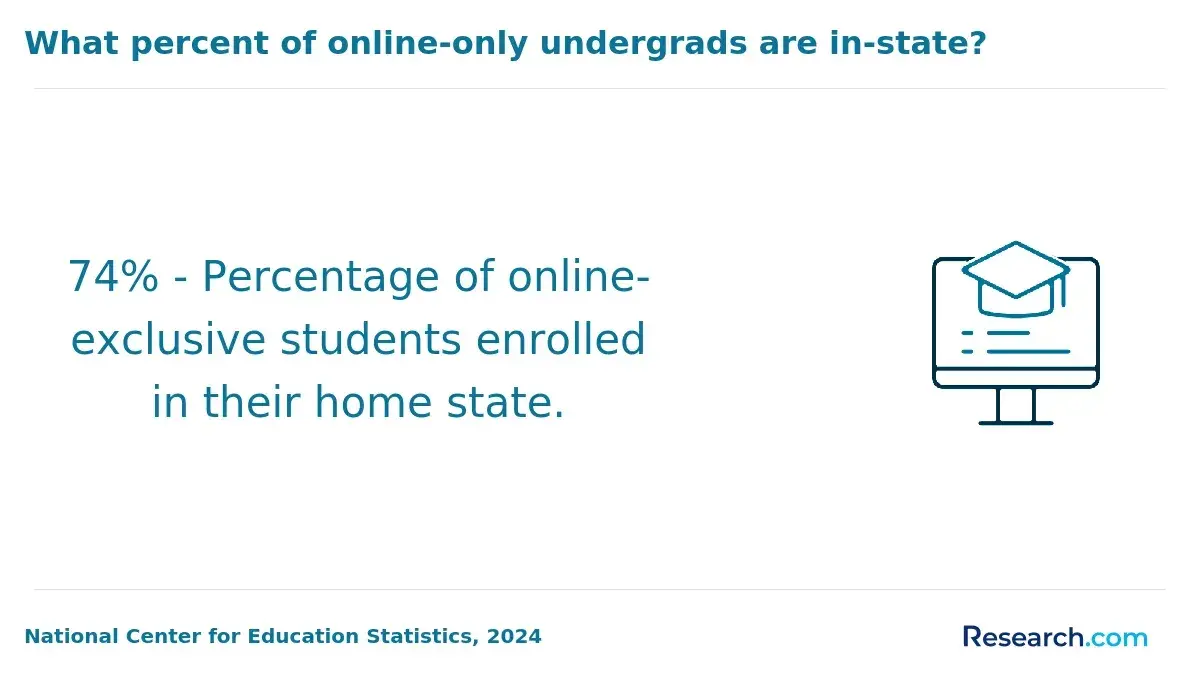
There is a widespread assumption that online data science students complete their degrees faster than those attending campus-based programs, largely due to the perceived flexibility of online learning. However, recent findings from the National Center for Education Statistics reveal that average graduation timelines for bachelor's degrees in data science hover around 4.5 years regardless of whether students study online or on-campus. Completion speeds vary more significantly based on individual circumstances and enrollment status than on delivery mode, challenging the notion that online formats inherently accelerate degree attainment.
Several structural and personal factors shape how quickly students progress through data science programs. Online courses often provide multiple start dates and the option to accelerate through self-paced modules, but many online learners also juggle jobs, family, and other commitments, leading to a higher prevalence of part-time enrollment that slows graduation. Campus-based programs, while generally more structured with fixed semester schedules and on-site face-to-face requirements, may encourage steadier full-time enrollment but can lack the same temporal flexibility. Additionally, retention rates tend to be marginally higher on-campus, further influencing overall time-to-degree. Internship or co-op requirements incorporated into some curricula also impact pacing by adding practical work demands that may lengthen program duration.
Choosing between modalities also carries implications for time management demands and eventual labor market entry. Online study's flexibility suits nontraditional or working adults who prioritize balancing education with life obligations, even if this may extend their timeline for degree completion. Conversely, campus settings can offer a more immersive academic environment conducive to maintaining continuous full-time study, potentially enabling faster program completion for those who fit that model. Employers often weigh both the rigor and the real-world experience gained, so understanding how program format integrates with individual pacing and external responsibilities remains critical for effective planning.
A recent graduate reflected on their admissions journey where rolling application deadlines created uncertainty. Initially hesitant to submit fully prepared documents due to the continuous intake cycle, they delayed applying while juggling work schedules and completing prerequisite courses. Eventually deciding to apply after a last-minute push, they faced anxious waiting but appreciated that the flexible admissions timeline matched their unpredictable availability. This experience underscored how flexibility in program entry points and pacing can be both a strategic advantage and a source of stress, influencing not only graduation speed but also initial engagement with the degree pathway.
How Many Months or Years Can Transfer Credits Save?
Transfer credits can meaningfully shorten the time required to complete a data science degree, often shaving off anywhere from several months to over a year depending on how many credits are accepted and their relevance to the program's curriculum. Recent analysis from the National Student Clearinghouse Research Center (2024) reveals that students leveraging transfer credit impact on degree completion time typically reduce their total study period by about six months to more than a year compared to those starting all coursework from scratch. However, these savings reflect a range of practical considerations beyond raw credit totals, including the fit of previous coursework within the target program and institutional acceptance policies.
The actual months saved through transfer credits hinge on several critical factors. Accreditation compatibility plays a foundational role: credits from regionally accredited institutions tend to transfer more easily than those from nontraditional or less recognized providers. Course equivalency matters significantly, as general education or foundational math courses often transfer without issue, but specialized subjects like machine learning or advanced statistics frequently require validation or even substitution with bridge courses. Residency rules further complicate time savings since many programs mandate that students complete a minimum number of credits-often between 30 and 50-directly at their institution, limiting the maximum credit transfer and therefore constraining potential acceleration. Institutional policies on maximum allowable transferred credits and sequencing of core curriculum also temper the extent of time reduction achievable in practice.
Understanding how transfer credits affect degree duration is essential for realistic academic planning and financial decision-making within data science pathways. These credits influence not only how quickly students reach graduation but also how remaining coursework is scheduled, potentially affecting the depth of skill acquisition and alignment with employer expectations. Transfer students and working adults especially benefit from early consultation with academic advisors to navigate credit applicability and program requirements effectively. For those contemplating flexible options, exploring alternatives such as an lMFT online program may also provide insights into credit transfer dynamics and time-to-degree variations across disciplines.
Do Accelerated Data Science Programs Significantly Reduce Completion Time?
Accelerated data science programs aim to shorten the typical timeframe for completing a master's degree by condensing the curriculum and increasing course load per term. These formats often compress what would traditionally be two years of full-time study into roughly twelve to fifteen months through denser credit schedules and faster pacing. The intent is to enable students to enter the workforce sooner or pivot careers more rapidly by reducing the overall calendar duration of their studies.
However, the actual time saved depends on several structural factors. Programs limiting credit hours per term or maintaining prerequisite sequences may offer limited acceleration despite nominally shorter schedules. Essential components like internships, capstone projects, or applied research often remain unchanged in duration, constraining further compression. Additionally, the increased intensity and reduced flexibility inherent in accelerated pacing can impact student progress, with some facing delays if workload demands prove unsustainable.
These designs also introduce trade-offs in workload and learning depth. The condensed timeline requires sustained high effort, often restricting outside commitments and reducing opportunities for experiential learning. While this may suit students prioritizing speed and foundational knowledge, it can diminish time available for deeper technical skill development and applied experiences crucial for certain employer expectations. Hence, program structure critically shapes both timeline reduction and educational outcomes in accelerated formats.
An accelerated data science graduate recalled how the timing of her application affected her pathway: during a rolling admissions cycle, she hesitated after receiving a conditional offer, wanting to complete a few extra prerequisite courses first. This delay pushed her enrollment back several months, reducing some of the anticipated time advantage. The experience highlighted how administrative timing and preparation can influence whether the accelerated format delivers on its promise, underscoring the importance of aligning readiness with program pacing to fully realize potential time savings.
Which Data Science Program Requirements Most Often Extend Graduation Timelines?
Graduation timelines for data science degrees are frequently prolonged not simply due to the credit load but because of embedded curricular components that dictate student progression. These requirements are designed to ensure depth of knowledge and practical readiness, yet they often impose rigid sequencing and pacing constraints. Consequently, students encounter structural bottlenecks that extend completion periods beyond nominal program durations.
- Advanced Mathematics and Statistics Prerequisites: Core courses in calculus, linear algebra, and probability form the foundational skillsets critical for data science. However, these subjects present high failure and repeat rates, partly because they serve as gatekeepers to subsequent coursework, forcing many students to spend additional semesters mastering these modules. A 2024 Lightcast workforce study highlights that nearly 40% of data science students experience delays from retaking these fundamental classes.
- Capstone and Thesis Projects: Completion of integrative research or applied projects demands substantial time investment for data collection, analysis, and iterative refinement under faculty supervision. For part-time or working students, balancing these intensive requirements with external commitments can add multiple semesters beyond scheduled coursework, amplifying graduation delays.
- Programming and Technical Proficiency Requirements: Gaining competence in multiple programming languages and data tools is essential but often unfolds through sequential lab-based classes and internships. These hands-on experiences, while critical for employability, reduce flexibility in course planning and can stretch timelines due to fixed scheduling or limited availability.
- Credit Transfer and Course Equivalency Challenges for Transfer Students: Inconsistencies in recognizing prior coursework often require students to retake prerequisite classes or meet additional criteria, which disrupt continuity and extend time to degree. Institutional policies on transfer credits vary widely, complicating planning and progression.
- Structured Course Sequencing and Progression Policies: Many programs enforce strict prerequisites and limit concurrent enrollment in advanced classes to maintain academic rigor. This layered approach ensures knowledge building but restricts acceleration, especially when combined with mandatory competency exams or faculty reviews for research proposals.
These factors collectively shape the time investment beyond static credit counts, reflecting a tension between rigorous professional preparation and practical constraints faced by diverse student populations. Understanding these dynamics helps prospective data science students and planners set realistic expectations and design mitigation strategies tailored to individual circumstances.
Does Taking Longer to Graduate Increase the Cost of a Data Science Degree?
Taking longer to graduate from a data science degree program generally increases total tuition and related expenses, especially when institutions charge by term or credit hour rather than a flat rate. Extended enrollment can lead to repeated fees such as registration, technology, or lab access that accumulate over additional semesters. Students who surpass standard completion timelines may lose eligibility for certain financial aid packages or scholarships that are limited to a fixed number of years or credits. This dynamic makes the financial impact of extended degree completion more than just additional tuition; it reflects a broader cost structure involving living expenses, mandatory fees, and opportunity costs of delayed labor market entry. Understanding the financial impact of extended data science degree completion is essential as many employers expect graduates who demonstrate consistent academic progress, which correlates with timely completion.
However, in some programs, longer timelines do not always translate into significantly higher costs. Tuition models with flat-rate pricing per semester or year, as seen in some online programs, can buffer cost increases despite extended pacing, especially for part-time students managing course loads over a longer period. Employer tuition assistance or flexible program policies that accommodate working adults and transfer students can also mitigate additional expenses. Still, individual enrollment decisions-such as dropping courses or switching majors-affect how tuition accumulates and how quickly eligibility for financial aid resets. Prospective students weighing the cost implications should compare these structural factors carefully and consider programs that balance affordability with flexibility, as illustrated by options in related fields like graphic design degree online. This nuanced view helps clarify when extended time to graduate increases average total costs and when it may be neutral or strategically manageable.
Does Graduating Faster Improve Career Prospects?
Graduating faster from a data science degree can offer the advantage of entering the job market sooner, potentially shortening the time spent in financial and academic limbo. However, employers rarely evaluate candidates based solely on the speed of degree completion. The impact of faster degree completion on career growth in data science depends more on how early graduation aligns with other critical factors, including timely acquisition of skills and readiness to contribute effectively in professional roles.
Whether early graduation translates into stronger hiring competitiveness often hinges on a candidate's portfolio strength, internship experience, and demonstrated mastery of core competencies. Data from industry reports consistently show that employers prioritize practical experience, such as internships and applied projects, alongside soft skills and networking development. Candidates who rush and sacrifice these elements may underperform compared to peers who graduate on a traditional timeline but possess deeper, relevant experience and connections. This highlights the advantages of early graduation for data science professionals only when it complements a robust, experience-based resume tailored to labor market demands.
Trade-offs between acceleration and experiential depth remain a practical consideration for students planning their degree paths. Overly aggressive timelines can increase stress and limit opportunities for meaningful engagement with the field, potentially compromising longer-term employability and career progression. Ultimately, maintaining a balanced pace that fosters both timely completion and skill acquisition provides a more sustainable foundation for career development within data science fields. For perspective beyond data science, exploring insights on the highest paying animal jobs reveals similar workforce signaling patterns across disciplines.
Which Scheduling Mistakes Commonly Delay Graduation?
Graduation delays in data science programs often stem less from academic difficulty and more from avoidable scheduling and planning errors during enrollment and course selection. These pitfalls affect students across different program formats and levels, consistently disrupting steady academic progress. Recognizing how course sequencing, credit loads, and institutional policies interplay is crucial for maintaining an efficient degree timeline.
- Misaligned Prerequisite Sequencing: Data science curricula frequently require strict prerequisite chains, and failing to enroll in foundational courses early creates bottlenecks. This error forces students to postpone advanced classes, extending their time to degree completion.
- Imbalanced Credit Loads: Students often underestimate the impact of taking too few or too many credits per term. Light credit loads slow overall progress, while overloaded semesters can cause burnout or withdrawal, both of which increase completion time.
- Transfer Credit Misapplication: Transfer students may face delays as prior credits do not always align smoothly with data science degree requirements, resulting in repeated coursework or unexpected classes. The absence of clear articulation agreements compounds this challenge.
- Insufficient Academic Advising: Without regular consultation, students are less likely to navigate complex program requirements efficiently. Advisors play a vital role in anticipating scheduling conflicts and aligning coursework with graduation goals.
According to the National Center for Education Statistics (2024), nearly 38% of STEM students extend their graduation timeline due to such misaligned planning. These delays impact not only educational costs but also employment entry, emphasizing the importance of strategic enrollment decisions within data science degree pathways.
Other Things You Should Know About Data Science
In 2027, data science students typically complete their degree in about 2 to 3 years. Completion time can vary based on program structure, the student's initial preparation, and whether they are studying part-time or full-time.
Choosing flexibility can help working adults or those balancing commitments, but it may lead to extended completion if not carefully managed. Structured timelines promote consistent progress but can falter under external pressures or unexpected challenges. For most students aiming to optimize both completion time and learning depth, a hybrid approach-using flexible course options alongside a clear graduation target-is advisable to maintain momentum without sacrificing depth or well-being.
Research or thesis requirements often extend completion times by several months due to data collection, analysis, and iteration. While they deepen understanding and can enhance job market competitiveness for research-focused roles, they also demand strong self-management and time commitment. Students targeting industry positions valuing applied skills may reconsider theses in favor of capstone projects or internships that showcase practical problem-solving.
Accelerated or heavy course loads might speed up graduation but risk superficial understanding, which can hinder long-term skill retention critical to evolving data science roles. A measured pace that allows thorough comprehension and regular application of techniques tends to foster adaptability and deeper expertise. Prioritizing steady progress over speed typically yields better prepared graduates, particularly as employers look for candidates who can grow with emerging technologies.