2026 What Can You Do with a Healthcare Management Doctorate? Careers, Salaries, Academic Roles, and Industry Paths
Audited and Verified:
Our Editorial and Data Verification Process
Research.com uses government datasets, official education statistics and primary institutional information to support its career and degree guides. Our review process checks factual accuracy, occupational definitions, source dates and the requirements associated with the credentials discussed.
How This Article Was Fact-Checked
Our editorial team verifies salary estimates, employment projections, education requirements and program information against original data providers and official organizations. Salary figures are checked against the relevant occupational definitions and reporting periods. Information about licensure, accreditation and required in-person training is reviewed separately.
Fact-checked and verified on:

Co-Founder and Chief Data Scientist
A healthcare management doctorate can be a career accelerator, but only if it matches the role you actually want. The U. S. Bureau of Labor Statistics reports that medical and health services managers had a median annual wage of $117,960 in 2024, showing the scale of leadership opportunity in this field. This guide is for working healthcare professionals, administrators, clinicians, consultants, and educators comparing doctoral paths. You will learn what jobs this credential can support, where salaries are strongest, how employers view online doctorates, and how to decide whether the investment fits your goals.
Key Things to Know About Online Healthcare Management Doctorate Career Outcomes
- A healthcare management doctorate is most useful for senior leadership, applied research, consulting, policy, and teaching roles; it is usually not necessary for entry-level healthcare administration jobs.
- BLS 2024 data places the median wage for medical and health services managers at $117,960, while the field is projected to grow 23% from 2024 to 2034, signaling strong demand for advanced leadership capacity.
- Costs vary widely: NCES tables published in 2024 show average annual graduate tuition and required fees of roughly $12,600 at public institutions and about $30,000 at private nonprofit institutions, before living expenses, books, travel, and fees.
What skills do you gain from Healthcare Management doctorate degrees?
A doctorate in healthcare management is designed to move you beyond operational competence into systems-level leadership. Unlike a master's degree, which often focuses on managing departments and applying established frameworks, doctoral study asks you to evaluate evidence, design solutions, lead organizational change, and defend decisions in complex healthcare environments.
The most valuable skills are not limited to academic research. They are the skills employers look for when hiring leaders who must improve patient outcomes, manage costs, interpret regulations, guide digital transformation, and align clinical and business priorities.
The table below summarizes common doctoral-level skill areas and how they translate into workplace value. Use it to compare the degree against your target role rather than treating all healthcare management doctorates as identical.
| Skill area | What you learn to do | Where it matters most |
| Strategic healthcare leadership | Set long-term priorities, align departments, and lead enterprise-wide initiatives | Hospitals, health systems, payer organizations, integrated delivery networks |
| Applied research and evidence evaluation | Assess studies, use data responsibly, and translate findings into operational decisions | Quality improvement, population health, consulting, academia |
| Healthcare finance and resource allocation | Analyze reimbursement, cost drivers, productivity, and capital planning | Executive administration, service-line leadership, consulting |
| Policy and regulatory interpretation | Connect organizational strategy to compliance, payment rules, and public policy shifts | Government, nonprofit health agencies, compliance leadership |
| Change management | Lead people through technology adoption, mergers, workflow redesign, and performance improvement | Large provider organizations, healthcare technology firms, consulting firms |
| Data-informed decision-making | Use analytics, dashboards, and outcome measures to guide decisions without overclaiming what data can prove | Population health, operations, payer strategy, digital health |
These skills are increasingly important because healthcare organizations are under pressure to improve access, reduce administrative waste, use AI responsibly, and manage value-based care contracts. A doctorate can help you become the person who frames the problem, evaluates evidence, and leads implementation, not just the person assigned to run a project.
One common mistake is assuming the degree itself creates leadership ability. In practice, employers usually want a combination of doctoral training, healthcare experience, measurable results, and communication skills. If your current resume lacks management experience, a doctorate should be paired with stretch assignments, committee leadership, operations projects, or consulting work that proves you can apply what you learn.
What specializations can you pursue within Healthcare Management doctorate degrees?
Healthcare management doctorates can be broad or specialized. A broad concentration may help if you want maximum flexibility across hospitals, payers, consulting, and academia. A niche specialization can be more powerful if your target is clear, such as health policy, informatics, quality improvement, or population health.
If you are still comparing doctoral options, reviewing a doctorate in healthcare administration can help you see how programs structure concentrations, dissertations, residencies, and applied capstone projects.
The table below shows how common specialization areas connect to career paths. The best choice is the one that strengthens your existing experience and moves you closer to a specific professional outcome.
| Specialization | Best fit for | Possible career directions |
| Healthcare administration and executive leadership | Professionals aiming for director, vice president, chief operating officer, or chief executive roles | Hospital administration, ambulatory leadership, service-line management |
| Health policy and public health systems | Professionals interested in regulation, access, equity, and system reform | Policy analyst, public health administrator, government program leader |
| Healthcare quality and patient safety | Clinicians and administrators focused on measurable care improvement | Chief quality officer, patient safety director, performance improvement consultant |
| Health informatics and analytics | Professionals working with data, EHR systems, AI tools, and digital transformation | Clinical informatics leader, analytics director, digital health strategist |
| Population health and value-based care | Professionals focused on outcomes across groups rather than single encounters | Population health executive, care management leader, payer-provider strategy role |
| Healthcare finance | Professionals who want to lead reimbursement, budgeting, or revenue strategy | Finance executive, managed care strategist, healthcare consultant |
| Academic leadership and teaching | Professionals interested in faculty, curriculum, or program director roles | Professor, dissertation chair, department chair, academic administrator |
A specialization based only on personal interest can limit your return on investment. Before choosing one, compare job postings for your target roles and note which skills, systems, and credentials appear repeatedly.
Use this simple decision process before selecting a concentration:
- Identify three roles you would realistically pursue within three to five years of graduation.
- Review current job postings for those roles and list the repeated requirements.
- Compare those requirements with each program's courses, dissertation model, faculty expertise, and practicum options.
- Choose the specialization that closes the largest gap between your current resume and your target role.
Are online Healthcare Management doctorate programs respected by employers?
Online healthcare management doctorates can be respected when the institution is properly accredited, the curriculum is rigorous, and the program produces credible applied or scholarly work. Employers are usually less concerned with whether coursework was online than whether the university is legitimate, the degree aligns with the role, and the candidate can show results.
Online doctoral education has become more normal in healthcare because many candidates are already full-time professionals. The National Center for Science and Engineering Statistics reported in its Survey of Earned Doctorates released in 2024 that U.S. institutions awarded more than 57,000 research doctorates in 2023. While that figure covers research doctorates broadly rather than healthcare management alone, it shows that doctoral education remains a recognized pathway for advanced expertise.
Respect depends heavily on context. A hospital hiring for an executive role may value an applied doctorate such as a DHA, DBA in healthcare management, or DrPH if the candidate has strong leadership experience. A tenure-track university department may prefer or require a PhD with peer-reviewed research and teaching experience.
The table below compares online and hybrid formats from a career-fit perspective. This can help you decide which format supports your work schedule and professional goals.
| Format | Best for | Potential concern |
| Fully online | Working professionals who need maximum flexibility and cannot relocate | May offer fewer in-person networking opportunities unless residencies or live seminars are included |
| Online with short residencies | Professionals who want flexibility plus faculty access, cohort bonding, and dissertation support | Requires travel costs and time away from work |
| Hybrid | Professionals near campus who benefit from face-to-face mentoring and local healthcare partnerships | Less flexible for those with unpredictable executive or clinical schedules |
| Campus-based | Students pursuing intensive research, assistantships, or traditional academic careers | May be difficult for mid-career professionals who cannot pause employment |
Accreditation is the first red flag to check. Look for institutional accreditation recognized by the U.S. Department of Education, and for healthcare management programs, review whether the curriculum aligns with recognized industry standards. Programmatic accreditation is more common at the master's level than the doctoral level, so do not assume its absence is automatically disqualifying, but do ask how the program validates quality.
Applicants who are not ready for doctoral work may be better served by an online masters healthcare management pathway first, especially if they still need foundational training in healthcare finance, operations, law, and organizational leadership.
Healthcare management doctorate holders are valued in industries where leadership decisions affect cost, quality, compliance, access, and organizational performance. The credential is most useful when paired with experience in a specific setting, such as hospitals, insurance, consulting, public health, or healthcare technology.
BLS projects employment for medical and health services managers to grow 23% from 2024 to 2034, much faster than the average for all occupations. For doctorate candidates, that does not mean every employer requires a doctorate; it means the broader leadership market is expanding as healthcare organizations grow more complex.
The table below highlights industries where doctoral-level healthcare management expertise can be relevant. It also shows what employers may value beyond the degree itself.
| Industry or sector | Why the doctorate can help | What employers may still require |
| Hospitals and health systems | Supports systemwide leadership, quality initiatives, operations redesign, and executive strategy | Progressive management experience, financial accountability, physician relations skills |
| Ambulatory care and physician groups | Useful for growth strategy, patient access, clinical integration, and value-based care models | Operational experience, payer contracting knowledge, performance metrics |
| Insurance and managed care | Helps with population health, utilization management, provider partnerships, and policy analysis | Analytics fluency, regulatory knowledge, experience with claims or risk models |
| Healthcare consulting | Strengthens credibility for advising clients on strategy, operations, quality, or transformation | Client management, business development, presentation skills, measurable case results |
| Healthcare technology and digital health | Useful for leaders who connect clinical workflows, adoption strategy, and data governance | Technology implementation experience, informatics knowledge, product or change management skills |
| Government and public health agencies | Supports policy design, program evaluation, health equity work, and systems planning | Grant management, stakeholder engagement, public-sector experience |
| Higher education | Can qualify candidates for teaching, research, curriculum, and academic leadership roles | Publications, teaching experience, dissertation supervision, institutional fit |
The best industry for you depends on your prior experience. A nurse executive with a doctorate may have strong prospects in quality, operations, or clinical leadership. A finance manager may gain more from healthcare finance or payer strategy. A policy professional may see better fit in government, nonprofit, or advocacy organizations than in hospital operations.
A healthcare management doctorate can support advancement into executive and senior leadership roles, but it rarely replaces the need for experience. Employers hiring for executive roles usually evaluate your record of leading teams, managing budgets, improving outcomes, and navigating healthcare regulations.
BLS 2024 wage data is useful for setting expectations because it reflects role categories rather than degree-specific outcomes. The median wage for medical and health services managers was $117,960, while pay can be higher in large systems, complex service lines, and executive-level positions. Use these figures as market context, not as a salary promise.
The table below summarizes leadership roles that may align with doctoral preparation. Exact titles vary by organization size, ownership structure, and service type.
| Role | How the doctorate may help | Typical career foundation |
| Chief executive officer | Supports enterprise strategy, governance, evidence-based decision-making, and external credibility | Senior operations leadership, board interaction, financial performance responsibility |
| Chief operating officer | Strengthens ability to redesign systems, lead cross-functional teams, and improve throughput | Operations leadership, service-line management, process improvement experience |
| Chief quality officer | Supports patient safety research, quality analytics, and evidence-based improvement initiatives | Clinical quality, risk management, regulatory readiness, patient safety experience |
| Vice president of population health | Helps connect analytics, care models, reimbursement, and community outcomes | Care management, payer-provider collaboration, value-based care experience |
| Director of healthcare strategy | Builds capacity for market analysis, strategic planning, and organizational transformation | Planning, consulting, finance, or operations background |
| Healthcare compliance or policy executive | Supports interpretation of regulations and creation of systems that reduce organizational risk | Compliance, legal operations, government relations, audit experience |
The highest-paying leadership outcomes usually come from combining the doctorate with executive experience, not from the credential alone. If you are already a director or senior manager, the degree may help you compete for vice president or C-suite roles. If you are early in your career, a master's degree plus operational experience may offer a more efficient route before doctoral study.
To position the doctorate for leadership advancement, focus on evidence of applied impact:
- Choose dissertation or capstone topics tied to measurable problems in your organization or target industry.
- Build a portfolio of executive-ready work, such as strategic plans, quality dashboards, policy briefs, or operational improvement cases.
- Seek committee, board, or cross-functional leadership assignments while enrolled.
- Translate academic projects into business language, emphasizing cost, access, quality, risk, and patient outcomes.
Yes, healthcare management doctorate holders can pursue academic careers, but the type of doctorate matters. A PhD is usually strongest for tenure-track research roles. Applied doctorates such as the DHA, DBA, DrPH, or EdD may be well suited for teaching-focused faculty roles, practitioner-scholar positions, program administration, dissertation mentoring, and healthcare leadership education.
BLS 2024 data for postsecondary health specialties teachers shows a median annual wage of about $105,650. This category includes many health-related teaching fields, not only healthcare management, so it should be used as a broad benchmark rather than a precise salary estimate for every faculty role.
Academic opportunities commonly include full-time faculty, adjunct instructor, dissertation chair, program director, department chair, assessment coordinator, and continuing education leader. In some cases, experienced executives teach part time while continuing in industry, which can be a practical way to test whether academia fits before making a full transition.
The table below compares academic roles by fit and expectations. This is especially important because academic hiring criteria can differ sharply from industry hiring criteria.
| Academic path | Best fit | Common expectations |
| Tenure-track professor | Research-focused candidates with a PhD or strong publication record | Peer-reviewed research, grant potential, teaching, service |
| Teaching professor or lecturer | Practitioner-scholars who want to teach healthcare administration and leadership | Teaching ability, curriculum design, professional experience |
| Adjunct faculty | Working professionals who want part-time teaching | Subject expertise, availability, practical examples from the field |
| Program director | Experienced educators or administrators interested in curriculum and accreditation | Faculty supervision, assessment, student outcomes, program quality |
| Dissertation or capstone mentor | Doctorate holders with strong research methods and applied project experience | Research guidance, feedback skills, doctoral supervision |
The main mistake aspiring faculty make is assuming that any doctorate qualifies them for any academic role. Universities may distinguish sharply between research doctorates and professional doctorates. If your goal is tenure-track employment, ask programs about graduate research assistantships, publication support, research methods depth, and faculty placement. If your goal is teaching adult learners or healthcare executives, an applied doctorate with strong instructional and leadership relevance may be a better fit.
Healthcare management doctorate holders can work in consulting, especially when they bring expertise in operations, quality improvement, strategy, compliance, informatics, population health, or financial performance. Consulting rewards credibility, but it also rewards speed, communication, client trust, and measurable results.
BLS 2024 data places the median annual wage for management analysts at $101,190. Healthcare consultants with deep specialization, executive networks, or independent practices may earn more or less depending on client base, scope, travel, and business development capacity.
Consulting can be a strong fit if you enjoy diagnosing messy problems, presenting recommendations, and helping organizations implement change. It may be a weaker fit if you prefer stable internal authority, predictable schedules, or long-term ownership of one organization's outcomes.
Healthcare management doctorate holders commonly consult in several areas:
- Operational improvement, including patient flow, staffing models, scheduling, and service-line efficiency.
- Quality and patient safety, including performance measurement, accreditation readiness, and adverse-event reduction.
- Strategic planning, including market positioning, mergers, growth planning, and new program development.
- Population health and value-based care, including risk stratification, care coordination, and payer-provider collaboration.
- Healthcare technology adoption, including workflow redesign, data governance, AI readiness, and EHR optimization.
Consulting versus full-time leadership depends on your preferred risk profile. A full-time executive role may offer institutional authority, benefits, and long-term influence. Consulting may offer broader exposure, autonomy, and higher upside, but income can fluctuate and depends heavily on reputation and client acquisition.
Before positioning yourself as a consultant, build proof that your doctorate produces practical value. Case studies, white papers, conference presentations, and documented improvement projects can be more persuasive than listing courses on a resume.
Healthcare management doctorate holders can be strong candidates for nonprofit and public sector roles that require program leadership, policy analysis, population health planning, grant management, evaluation, and cross-sector collaboration. These roles may not always pay as much as corporate executive positions, but they can offer mission alignment and broad community impact.
Public and nonprofit healthcare organizations often value doctoral-level skills because leaders must interpret evidence, justify funding decisions, evaluate programs, and work with stakeholders who may have competing priorities. The degree can be especially relevant in public health agencies, community health organizations, foundations, associations, health policy institutes, and federally funded programs.
The table below shows examples of nonprofit and public sector roles and the kind of doctoral preparation that can be useful in each.
| Role | Where it may be found | Doctoral-level value |
| Public health program director | State and local health departments, community health initiatives | Program evaluation, population health strategy, stakeholder coordination |
| Health policy analyst or advisor | Government agencies, policy institutes, advocacy organizations | Evidence synthesis, policy interpretation, regulatory analysis |
| Nonprofit healthcare executive | Community clinics, health foundations, associations, service nonprofits | Strategic leadership, grant oversight, equity-focused program design |
| Grant or evaluation director | Foundations, research centers, public health programs | Outcome measurement, data interpretation, reporting credibility |
| Health equity leader | Hospitals, nonprofits, public agencies, academic medical centers | Systems thinking, community partnership, access and outcome analysis |
Nonprofit and public sector work makes sense if your goals include access, equity, policy influence, or community outcomes. It may be less appealing if your primary goal is maximum compensation or rapid movement into corporate executive ranks.
One red flag is choosing a public-sector path without understanding funding cycles. Grants, legislative priorities, and agency budgets can shape job stability and program scope. Ask potential employers how roles are funded, how success is measured, and whether doctoral-level research or evaluation skills are used in practice.
A healthcare management doctorate can improve long-term earning potential when it helps you move into higher-responsibility roles, differentiate yourself in competitive executive searches, build consulting authority, or qualify for academic leadership. It does not automatically raise income by itself.
BLS 2024 education pay data shows that workers with doctoral degrees had higher median weekly earnings than workers with master's degrees across the labor market. This is not specific to healthcare management, but it provides useful context: advanced credentials can correlate with higher earnings, while actual salary still depends on field, role, location, employer, and experience.
The table below uses national wage data as a benchmark for common role categories connected to healthcare management careers. These are not doctorate-only salaries, but they help you understand the markets where the degree may have the strongest payoff.
| Career category | Relevant 2024 wage benchmark | How to interpret it |
| Medical and health services manager | $117,960 median annual wage | Core benchmark for healthcare administration leadership roles |
| Management analyst | $101,190 median annual wage | Useful benchmark for consulting and advisory roles |
| Health specialties teacher, postsecondary | About $105,650 median annual wage | Broad benchmark for health-related academic teaching roles |
| Chief executive | Compensation varies widely by organization size and sector | Executive pay is highly dependent on system scale, market, and performance responsibility |
Cost is the other side of ROI. NCES tables published in 2024 show average annual graduate tuition and required fees of roughly $12,600 at public institutions and about $30,000 at private nonprofit institutions. A healthcare management doctorate can cost substantially more or less depending on credit load, institutional type, fees, residency travel, transfer credits, employer tuition support, and whether you reduce work hours.
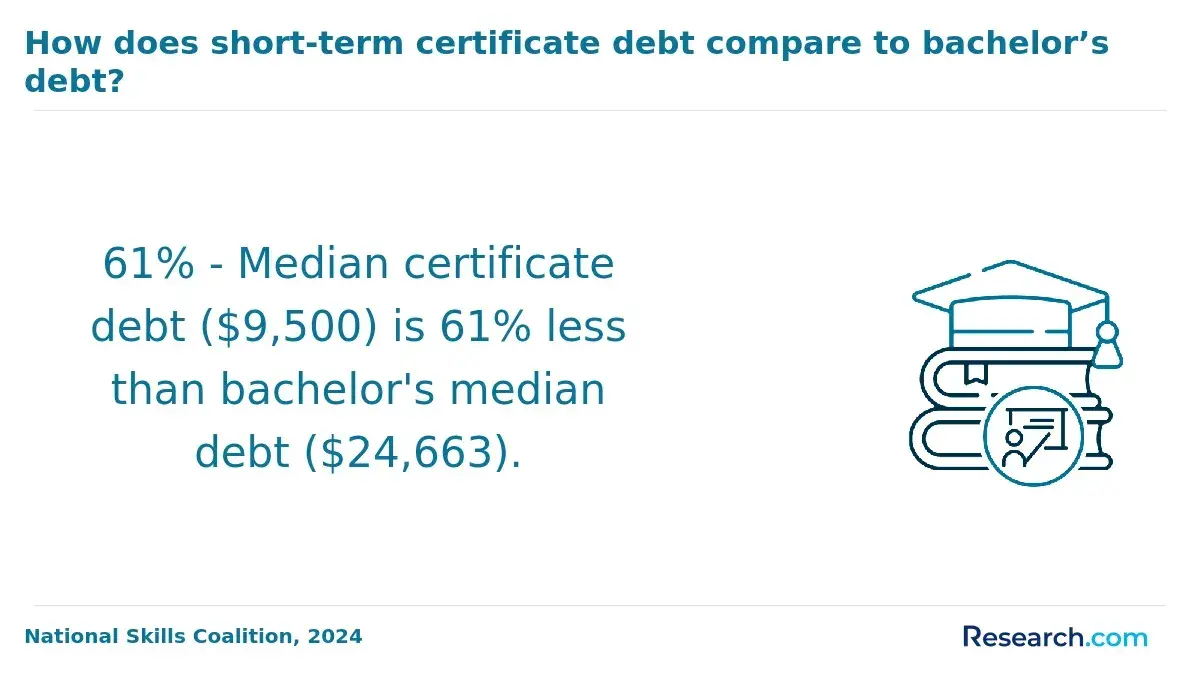
If affordability is your main concern, compare doctoral options with earlier-stage alternatives such as a affordable online MBA healthcare management program. For some professionals, an MBA may produce the desired promotion faster and at lower cost; for others, a doctorate is more appropriate for executive credibility, applied research, consulting specialization, or academic roles.
Because no federal dataset publishes a healthcare-management-specific promotion rate for doctorate holders, you should estimate ROI using your own career scenario rather than relying on broad averages. Consider current salary, target salary range, tuition, employer support, lost work time, and the likelihood that the degree is actually valued in your target role.
Use these questions to test whether the financial case is strong:
- Will the doctorate qualify you for roles you cannot reasonably access with your current degree and experience?
- Does your employer or target industry reward doctoral-level expertise in promotions, salary bands, or executive searches?
- Can your dissertation or capstone solve a real organizational problem that strengthens your promotion case?
- Will you graduate with manageable debt relative to realistic salary movement?
- Are there lower-cost alternatives that would produce the same outcome, such as a certificate, MBA, MHA, or targeted leadership program?
How can you assess if a doctorate degree in Healthcare Management is aligned with your career goals?
The best way to assess fit is to start with the job outcome, not the degree title. A healthcare management doctorate is most aligned when your next career step requires advanced leadership credibility, applied research ability, teaching qualifications, consulting authority, or specialized expertise beyond the master's level.
If you are still building foundational administrative experience, a lower-cost pathway such as a cheapest online healthcare administration degree may be more appropriate before doctoral study. The right sequence matters because doctoral programs are demanding and usually produce the best return for students who can connect coursework to real professional problems.
Before enrolling, compare programs on more than rankings or tuition. The following steps can help you make a practical decision:
- Define your target outcome: executive leadership, academia, consulting, policy, nonprofit leadership, or specialized industry work.
- Choose the doctorate type that matches that outcome, such as PhD for research-heavy academic roles or DHA, DBA, DrPH, or EdD for applied leadership and practitioner-scholar paths.
- Verify institutional accreditation and ask how the program supports doctoral writing, research methods, and dissertation completion.
- Review faculty expertise to see whether advisors can support your intended research or capstone topic.
- Ask for program-level completion data, average time to degree, dissertation support structures, and residency requirements.
- Calculate total cost, including tuition, fees, books, technology, travel, and potential lost income.
- Speak with alumni in your target career path and ask whether the degree changed their responsibilities, credibility, or compensation.
The table below summarizes when a healthcare management doctorate is likely to be a strong fit and when another option may make more sense.
| Your situation | Doctorate may be a strong fit if | Consider another path if |
| You want executive leadership | You already manage teams, budgets, or strategy and need advanced credibility | You have not yet held meaningful healthcare management responsibility |
| You want academia | You know whether your goal is research, teaching, or academic administration | You assume all doctorates are treated the same by universities |
| You want consulting | You have a clear niche and can show measurable results | You dislike business development, travel, ambiguity, or client-facing work |
| You want nonprofit or public sector work | You are motivated by policy, equity, evaluation, and community impact | Your primary goal is maximum compensation in the shortest time |
| You are cost-sensitive | You have employer funding, scholarships, public tuition, or a clear salary pathway | You would need high debt without evidence that the credential is valued in your target role |
Common mistakes include enrolling without a defined career outcome, choosing a school before verifying accreditation, selecting a specialization without reviewing labor market demand, underestimating dissertation workload, and assuming an online format will be easier. Online programs can be flexible, but doctoral work still requires sustained reading, writing, research, and independent project management.
A practical rule is this: pursue the doctorate when it helps you cross a specific professional threshold. If the degree only sounds impressive but does not clearly connect to a role, salary band, academic requirement, consulting niche, or leadership opportunity, pause and compare alternatives first.
Other Things You Should Know About Healthcare Management
It depends on your goal. A PhD is usually strongest for research-intensive academic careers. A DHA or DBA often fits executive leadership and applied management roles. A DrPH may be better for public health leadership, policy, and population health work.
Most healthcare management roles do not require a clinical license. However, some settings or roles may prefer candidates with nursing, medical, public health, or long-term care administrator credentials. Licensure rules vary by state and job function.
Many professional doctorates take about three to five years, while research-heavy PhD programs may take longer. Timeline depends on enrollment pace, dissertation progress, transfer credits, residency requirements, and how consistently you can work while enrolled.
Yes, it can help clinicians transition into administration, quality, policy, education, or consulting. The strongest transitions happen when clinical expertise is paired with management experience, business knowledge, and a doctoral project tied to organizational outcomes.
- How to Doctorate in Healthcare Management | Eduminds Learning https://www.edumindslearning.com/blog/How-to-Doctorate-in-Healthcare-Management-Complete-Guide
- Health Management Careers https://www.ache.org/Career-Resources/Start-Your-Career/Health-Management-Careers
- Healthcare Management Salary and Career Information | MSU Online https://www.michiganstateuniversityonline.com/resources/healthcare-management/reasons-to-choose-a-career-in-healthcare-management/
- What Are the Differences in Salary Level for Different Degrees in Healthcare Management? | MHA Salary https://www.healthcare-management-degree.net/faq/what-are-the-differences-in-salary-level-for-different-degrees-in-healthcare-management/
- Future Students https://www.aupha.org/resourcecenter/futurestudents
- Healthcare Administrator Salary https://www.publichealthdegrees.org/careers/healthcare-administrator/salary/
- DBA vs. PhD: Earn Your Doctorate in Healthcare Administration | California Intercontinental University https://caluniversity.edu/blog/dba-vs-phd-in-healthcare-administration/
- Doctorate DBA in Healthcare Management https://www.ssbm.ch/doctorate-dba-in-healthcare-management/
- Salary for MHA Degree Graduates https://mhadegree.org/salary-outlook/