2026 What Can You Do with a Health Services Administration Doctorate? Careers, Salaries, Academic Roles, and Industry Paths

Co-Founder and Chief Data Scientist
A Health Services Administration doctorate is usually pursued for one reason: moving from managing healthcare work to shaping healthcare systems. The timing matters because the U. S. Bureau of Labor Statistics projects medical and health services manager employment to grow 23% from 2024 to 2034, much faster than average. This guide is for professionals comparing executive, academic, consulting, nonprofit, and policy paths. You will learn what the degree can realistically support, where salaries are strongest, and how to decide whether doctoral study is the right next step.
Key Things to Know About Online Health Services Administration Doctorate Career Outcomes
- A Health Services Administration doctorate is most useful for senior leadership, applied research, teaching, consulting, policy, and system-improvement roles rather than entry-level healthcare administration jobs.
- BLS May 2024 data show a $117,960 median annual wage for medical and health services managers, but doctoral ROI depends heavily on role, employer type, geography, prior experience, and whether the degree is used for advancement.
- Online doctorates can be respected when they come from institutionally accredited universities, include rigorous doctoral research or applied projects, and align with the learner's target sector, but the credential alone does not guarantee promotion or executive pay.
What skills do you gain from Health Services Administration doctorate degrees?
A doctorate in Health Services Administration develops advanced leadership, research, and systems-thinking skills for professionals who want to influence healthcare delivery at the organizational, regional, or policy level. Unlike a general management degree, it focuses on the financial, ethical, operational, regulatory, and population-health pressures that shape U.S. healthcare organizations.
The skills below matter because most doctoral-level opportunities require evidence-based decision-making, not just supervisory experience. If you are still building the management foundation, an online masters healthcare management program may be a more appropriate step before committing to doctoral study.
| Skill area | What it helps you do | Where it is useful |
| Healthcare strategy | Evaluate service lines, growth plans, partnerships, and market positioning | Hospitals, health systems, payer organizations, consulting firms |
| Applied research methods | Use quantitative, qualitative, or mixed-methods evidence to solve operational problems | Academic research, quality improvement, policy analysis, executive decision support |
| Healthcare finance | Assess budgets, reimbursement models, value-based care incentives, and cost-control strategies | Provider organizations, insurance, public agencies, consulting |
| Quality and patient safety leadership | Design improvement initiatives tied to outcomes, compliance, and patient experience | Hospitals, ambulatory networks, accreditation teams, clinical operations |
| Health policy analysis | Interpret regulatory changes and evaluate how policy affects access, equity, and organizational risk | Government agencies, nonprofits, advocacy groups, health systems |
| Organizational change management | Lead teams through technology adoption, restructuring, mergers, and process redesign | Executive leadership, consulting, digital health, population health programs |
AI and analytics are also changing what senior healthcare administrators are expected to understand. Doctoral students increasingly benefit from learning how to evaluate predictive models, data governance, bias risks, and AI-supported workflow redesign, especially because executives are accountable for both innovation and patient safety.
What specializations can you pursue within Health Services Administration doctorate degrees?
Specialization choice can shape the kinds of employers that see your doctorate as especially relevant. A broad Health Services Administration track offers flexibility, while a niche concentration can help if you already know which sector or problem area you want to lead.
The table below compares common doctoral specializations with the career directions they tend to support. Use it to test whether a concentration expands your options or narrows them too early.
| Specialization | Best fit for | Possible career outcomes |
| Healthcare leadership and strategy | Professionals targeting executive or system-level roles | Chief operating officer, vice president of operations, service-line executive |
| Health policy | Professionals interested in regulation, advocacy, public programs, or reform | Policy director, health program administrator, government analyst, advocacy executive |
| Quality improvement and patient safety | Leaders focused on outcomes, accreditation, risk, and care standardization | Chief quality officer, patient safety director, performance improvement consultant |
| Health informatics and analytics | Administrators who want to work with data, AI, EHR systems, and digital transformation | Analytics director, informatics executive, digital health strategist |
| Population health | Professionals focused on community outcomes, chronic disease management, and equity | Population health director, public health administrator, value-based care leader |
| Healthcare finance | Professionals aiming for budget, revenue, payer, or value-based payment leadership | Finance executive, reimbursement strategist, payer-provider partnership leader |
A niche specialization makes the most sense when it matches your current experience and a specific hiring market. For example, health informatics may be powerful for someone already managing EHR, analytics, or AI-enabled workflow projects, but it may be less useful for a professional whose goal is broad hospital operations leadership.
Are online Health Services Administration doctorate programs respected by employers?
Online Health Services Administration doctorates can be respected by employers when the program is academically credible and the graduate can translate the degree into measurable organizational value. Employers usually care less about whether coursework was online and more about accreditation, faculty expertise, research rigor, leadership experience, and whether the doctoral project addresses real healthcare problems.
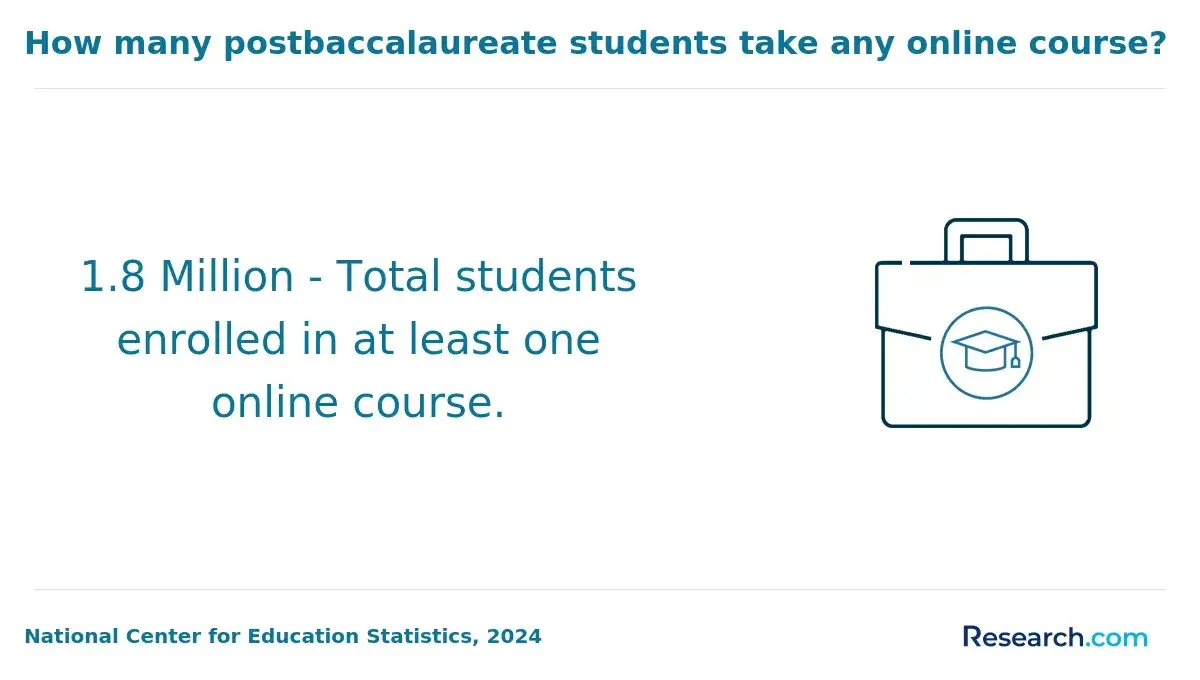
NCES data released in 2024 continue to show distance education as a mainstream part of graduate education in the U.S., which helps explain why online doctoral formats no longer carry the same stigma they once did. Still, "online" is not a quality marker by itself; a strong online program should have institution-level accreditation, transparent outcomes, experienced healthcare faculty, research support, and clear expectations for dissertation or applied doctoral project completion.
Before choosing an online doctorate, compare it against your career level. If your main goal is an affordable management credential rather than doctoral research or executive credibility, a cheapest online healthcare administration degree search may point to lower-cost options that fit better than a doctorate.
Watch for these red flags when evaluating online doctoral programs:
- Unclear or missing institutional accreditation information
- No transparent dissertation, capstone, or doctoral project requirements
- Faculty profiles that do not show healthcare administration, policy, finance, quality, or research expertise
- Promises of executive promotion or salary increases that no school can guarantee
- Limited student support for statistics, research design, writing, and doctoral milestones
What industries value professionals with Health Services Administration doctorate degrees?
Health Services Administration doctorate holders are valued most in sectors where healthcare decisions are complex, regulated, data-heavy, and tied to cost, access, quality, or policy outcomes. The degree is particularly useful when paired with prior healthcare leadership experience.
The table below summarizes where the credential can have the strongest fit. It does not mean every employer requires a doctorate; rather, it shows where doctoral-level expertise can help differentiate candidates for senior or specialized roles.
| Industry or sector | Why the doctorate is valued | Examples of relevant roles |
| Hospitals and health systems | Large organizations need leaders who can manage operations, compliance, quality, workforce constraints, and financial pressure | Vice president of operations, chief quality officer, service-line executive |
| Insurance and payer organizations | Payers need leaders who understand utilization, value-based contracts, population health, and provider relationships | Director of population health, medical economics leader, network strategy executive |
| Government health agencies | Public programs require policy analysis, program evaluation, budgeting, and equity-focused implementation | Health program administrator, policy director, public health systems leader |
| Consulting firms | Clients pay for evidence-based strategy, process improvement, financial modeling, and transformation support | Healthcare consultant, principal, transformation advisor |
| Higher education | Universities need faculty who can teach healthcare administration and produce applied or scholarly research | Professor, program director, doctoral mentor |
| Digital health and health technology | Health tech companies need leaders who understand adoption barriers, care delivery, privacy, workflow, and outcomes | Implementation executive, product strategy leader, health systems advisor |
The strongest demand signal comes from management and transformation roles. BLS projects 23% growth for medical and health services managers from 2024 to 2034, which suggests continued need for leaders who can manage increasingly complex healthcare organizations.
What executive or leadership roles can Health Services Administration doctorate degrees qualify you for?
A Health Services Administration doctorate can support executive advancement, especially for professionals who already have management experience and want to compete for system-level responsibility. It is most valuable when the role requires strategic judgment, cross-functional leadership, policy knowledge, and the ability to use research evidence in operational decisions.
The salary benchmarks below use BLS May 2024 occupational data where national figures exist. They are role-based rather than degree-specific because federal salary data generally do not isolate Health Services Administration doctorate holders.
| Role | How the doctorate may help | Relevant BLS May 2024 salary context |
| Chief executive or health system executive | Can strengthen credibility for enterprise strategy, governance, and system redesign | Chief executives had a median annual wage of $206,680 |
| Medical and health services manager | Can support advancement into senior operations, quality, compliance, or service-line leadership | Medical and health services managers had a median annual wage of $117,960 |
| General and operations manager | Can apply to large-scale operational leadership across multi-site healthcare organizations | General and operations managers had a median annual wage of $104,070 |
| Management analyst or consultant | Can strengthen evidence-based consulting, process improvement, and transformation work | Management analysts had a median annual wage of $101,190 |
| Operations research analyst | Can align with analytics-driven healthcare optimization if supported by strong quantitative training | Operations research analysts had a median annual wage of $91,290 |
The doctorate is not usually the first qualification employers look for in executive hiring. Senior roles often depend more on a track record of budget ownership, team leadership, quality outcomes, revenue improvement, regulatory performance, and board-level communication. The degree can become a differentiator after that foundation is already in place.
Are there academic careers available for Health Services Administration doctorate holders?
Yes, Health Services Administration doctorate holders can pursue academic careers, but the right path depends on the type of doctorate and the institution. A PhD is usually the stronger fit for tenure-track research roles, while a DHA, DrPH, or other applied doctorate may be well suited for teaching-focused, practice-oriented, adjunct, clinical faculty, or program leadership roles.
BLS May 2024 data place the median annual wage for postsecondary teachers overall at $83,980, while health-related faculty roles can vary widely by institution, rank, contract type, clinical background, and research expectations. This means academic work can be rewarding and influential, but it may not always pay more than senior industry leadership.
Academic paths commonly include the following roles, each with different expectations:
- Tenure-track faculty roles, which usually emphasize peer-reviewed research, grant activity, teaching, and service
- Teaching faculty or professor of practice roles, which emphasize professional experience and classroom instruction
- Adjunct roles, which may fit executives who want to teach part time while remaining in industry
- Program director roles, which involve curriculum oversight, accreditation support, faculty coordination, and student success
- Doctoral committee or dissertation mentor roles, which require strong research design and scholarly supervision skills
If your goal is academia, ask programs where graduates teach, how often students publish, whether faculty mentor doctoral research actively, and whether the dissertation format fits research universities or applied professional schools.
Are there consulting opportunities for Health Services Administration doctorate holders?
Consulting can be one of the most flexible ways to use a Health Services Administration doctorate. The degree can signal depth in research, policy, quality, operations, or strategy, but clients still pay for results: cost reduction, better workflows, improved outcomes, compliance readiness, or clearer decisions.
The best consulting fit depends on whether you want independent advisory work, employment with a consulting firm, or internal consulting within a health system. These consulting areas are especially aligned with doctoral-level training:
- Healthcare strategy consulting for service-line growth, market assessment, partnerships, and organizational redesign
- Quality improvement consulting focused on patient safety, readmissions, care variation, and accreditation readiness
- Population health consulting for value-based care, chronic disease management, community health, and payer-provider initiatives
- Health policy consulting for agencies, nonprofits, associations, and organizations responding to regulatory change
- Digital transformation consulting for EHR optimization, AI governance, workflow redesign, and health technology adoption
Consulting makes sense if you enjoy problem diagnosis, stakeholder interviews, data interpretation, presentations, and project-based work. It may not be ideal if you prefer owning a long-term team, budget, and implementation cycle inside one organization.
What nonprofit or public sector roles are open to Health Services Administration doctorate holders?
Health Services Administration doctorate holders can also work in nonprofit and public sector roles where the goal is not only revenue performance but also access, equity, population outcomes, and program effectiveness. These roles may pay less than corporate or hospital executive roles, but they can offer greater mission alignment and policy influence.
The public and nonprofit paths below are particularly relevant for professionals who want to shape systems beyond a single hospital or clinic:
- Public health program administrator roles that oversee community health, maternal health, behavioral health, aging, or chronic disease initiatives
- Health policy director roles in advocacy organizations, associations, foundations, or public agencies
- Grant-funded program leadership roles that require evaluation plans, reporting, budget control, and stakeholder coordination
- Community health executive roles in federally qualified health centers, regional collaboratives, and nonprofit health networks
- Healthcare equity and access leadership roles focused on underserved populations, rural health, or social determinants of health
BLS May 2024 data show social and community service managers had a median annual wage of $78,240, which is lower than the median for medical and health services managers. That gap is important: public service roles can be powerful career choices, but the ROI calculation should include mission, stability, benefits, loan repayment possibilities, and leadership influence, not salary alone.
How do Health Services Administration doctorate degrees impact long-term earning potential?
A Health Services Administration doctorate can improve long-term earning potential when it helps you move into higher-responsibility roles, specialize in a high-demand area, teach at the graduate level, or build a consulting practice. However, national salary databases do not report a reliable average income specifically for Health Services Administration doctorate holders, so the best way to estimate ROI is to compare target roles, not degree labels.
Cost is the first major variable. Education Data Initiative's 2024 analysis estimates the average cost of a doctorate at $133,340 across fields, but Health Services Administration programs can differ substantially by school, credits, residency requirements, transfer policy, employer tuition support, and dissertation timeline. For some students, accelerated healthcare programs or a shorter graduate credential may create a better cost-to-benefit ratio.
The table below shows how earning potential typically differs by path. These are not guaranteed outcomes; they are role-based contexts for thinking about doctoral ROI.
| Career path | Potential upside | Main financial risk |
| Hospital or health system executive | Strongest salary upside when the doctorate supports movement into senior operations, strategy, quality, or C-suite roles | Executive selection depends heavily on experience, performance, organizational politics, and market size |
| Academic faculty | Stable teaching or research career, especially for those who publish and build a scholarly profile | Tenure-track roles can be competitive, and salaries may trail senior industry positions |
| Consulting | High flexibility and potential premium for specialized expertise in quality, policy, analytics, or transformation | Income may fluctuate if you work independently or lack a strong client pipeline |
| Public sector or nonprofit leadership | Mission-driven work, policy influence, benefits, and leadership scope | Salary ceilings may be lower than corporate, payer, or hospital executive roles |
| Health technology or analytics leadership | Growing relevance as AI, data governance, and digital transformation reshape healthcare operations | The doctorate must be paired with practical data, implementation, or product experience |
There is also no current national dataset that reports career advancement rates specifically for Health Services Administration doctorate holders. To assess likely advancement, ask programs for recent graduate job titles, employer types, dissertation project examples, time-to-completion data, and alumni outcomes by sector.
How can you assess if a doctorate degree in Health Services Administration is aligned with your career goals?
The right question is not simply whether a Health Services Administration doctorate is "worth it." The better question is whether it is the most efficient credential for the role, salary range, influence, and work style you want.
Use the following steps to decide whether doctoral study fits your goals:
- Define the target role first, such as executive leadership, faculty work, consulting, health policy, quality improvement, or analytics leadership.
- Review job postings for that role and separate required qualifications from preferred credentials.
- Compare a doctorate with alternatives such as certificates, fellowships, executive education, or a masters in healthcare administration.
- Estimate total cost, including tuition, fees, books, travel or residency requirements, lost time, and delayed earnings.
- Ask whether your current experience is strong enough for the doctorate to accelerate advancement rather than merely add another credential.
- Choose a specialization only after confirming it matches employer demand in your target geography or remote job market.
- Evaluate program structure carefully, including online versus hybrid format, dissertation support, faculty access, cohort model, and completion expectations.
Online formats work best for working professionals who need flexibility and can manage independent study. Hybrid formats may be better if you want in-person networking, intensive residencies, stronger faculty contact, or a more structured doctoral community. Public universities, private nonprofit universities, and private for-profit universities can all vary in quality and value, so institution type alone should not determine ROI.
Common mistakes include enrolling without a target career path, choosing a specialization based only on personal interest, assuming all doctorates carry the same employer value, ignoring accreditation, underestimating the workload, and failing to ask for completion and alumni outcome data. Avoid those mistakes by treating the doctorate as a career strategy, not just an academic milestone.
Other Things You Should Know About Health Services Administration
Most healthcare administration roles do not require a clinical license. However, nursing home administrators and some long-term care roles may require state licensure, and requirements vary by state.
Many programs require either a dissertation or an applied doctoral project. Research-focused degrees usually emphasize original scholarship, while professional doctorates often focus on solving a real organizational or systems problem.
Yes, many online and hybrid programs are designed for working professionals. The challenge is time management, especially during research, statistics, proposal writing, and dissertation or project completion.
They can be. Certifications in quality, project management, healthcare finance, compliance, informatics, or lean process improvement may help prove practical skills that complement doctoral-level knowledge.
References
- Health Administration Careers | HealthAdministrationDegrees.com https://www.healthadministrationdegrees.com/health-administration-careers/
- What Are the Differences in Salary Level for Different Degrees in Healthcare Management? | MHA Salary https://www.healthcare-management-degree.net/faq/what-are-the-differences-in-salary-level-for-different-degrees-in-healthcare-management/
- Healthcare Administrator Salary https://www.publichealthdegrees.org/careers/healthcare-administrator/salary/
- 5 Careers for a Doctorate in Healthcare Administration Graduate - Healthcare Administration Degree Programs https://www.healthcare-administration-degree.net/lists/5-careers-for-a-doctorate-in-healthcare-administration-graduate/
- Future Students https://www.aupha.org/resourcecenter/futurestudents
- Five Emerging Careers in Healthcare Administration https://www.mhaonline.com/blog/five-new-healthcare-administration-careers
- Health Management Careers https://www.ache.org/Career-Resources/Start-Your-Career/Health-Management-Careers
- Leadership at Scale: Exploring Doctoral Paths in Health Administration https://www.scuhs.edu/drwhl-article/leadership-at-scale-exploring-doctoral-paths-in-health-administration/
- Health Administrator https://explorehealthcareers.org/careers/public-health/health-administrator/