2027 Weekend-Only Nursing Pay Packages: Base Rate, Differentials, and Benefits to Compare
Audited and Verified:
Our Editorial and Data Verification Process
Research.com uses government datasets, official education statistics and primary institutional information to support its career and degree guides. Our review process checks factual accuracy, occupational definitions, source dates and the requirements associated with the credentials discussed.
How This Article Was Fact-Checked
Our editorial team verifies salary estimates, employment projections, education requirements and program information against original data providers and official organizations. Salary figures are checked against the relevant occupational definitions and reporting periods. Information about licensure, accreditation and required in-person training is reviewed separately.
Fact-checked and verified on:

Co-Founder and Chief Data Scientist
A weekend-only nursing offer can look generous until you separate hours worked from hours paid and check which benefits you would actually receive. For licensed nurses comparing a Baylor plan, a regular weekend position, or PRN work, the posted hourly rate is only part of the decision. This guide shows how to calculate comparable earnings, examine differentials and benefits, and weigh scheduling and clinical support. It also explains what new nurses should verify before pursuing weekend work - so you can judge the whole offer, not its headline rate.
Key Things You Should Know
- Compare annual pay for the hours you expect to work, not hourly rates alone. At a hypothetical $40 base rate plus a $12 weekend differential, two 12-hour shifts each week total $64,896 over 52 fully worked weeks, before overtime or other premiums.
- A Baylor-style offer may pay for more hours than you work, but the credited hours, benefit eligibility, and treatment of missed weekends must be stated in writing; "24 for 36" is not a universal rule.
- Check the entire package: health coverage, retirement contributions, PTO, holiday rules, shift guarantees, orientation, and staffing can outweigh a higher differential.
What are weekend-only nursing pay packages?
A weekend-only nursing position is a job whose regular commitment falls chiefly on designated weekend shifts. A package may combine a base hourly rate, a weekend differential, night or holiday premiums, and benefits. Employers define the qualifying weekend window differently: Friday evening may count at one facility but not another.
"Weekend-only" describes a schedule, not one standardized compensation plan. Some nurses work two scheduled shifts and are paid only for time worked; others have a Baylor-style arrangement that credits additional paid hours if they meet its attendance conditions. Ask whether the advertised figure is a base rate, an all-in rate, or an estimate that assumes every premium applies.
For an RN who already holds the required license, a new degree is generally not a prerequisite to receiving a weekend differential. If a particular employer has a BSN advancement policy, a guide to RN-to-BSN programs with no clinicals can help distinguish postlicensure degree completion from the employer's separate requirements for weekend pay.
How do base pay and weekend differentials affect nursing compensation?
Base pay is the rate before premiums. A weekend differential adds an amount for qualifying hours; a night differential may add another amount if the employer permits premiums to stack. Get the qualifying hours and stacking rules in writing, especially for shifts crossing midnight.
For example, at a hypothetical $40 base rate and $12 weekend differential, 24 qualifying hours produce $1,248 per week: (24 × $40) + (24 × $12). Over 52 fully worked weeks, that is $64,896 before taxes and other pay. If a Baylor contract instead pays 36 hours at the $40 base rate while applying the $12 differential only to 24 hours actually worked, the example becomes $1,728 weekly, or $89,856 over 52 qualifying weeks. Neither figure accounts for missed shifts, unpaid time, holiday premiums, or contract-specific rules.
The comparison changes if an offer folds the differential into an "effective rate," pays credited hours differently, or conditions extra pay on perfect attendance. Weekend work alone does not automatically trigger federal overtime; applicable wage-and-hour rules and the employer's workweek matter. Ask payroll how overtime and credited hours are calculated rather than assuming a Baylor example applies to your offer.
A weekend premium also should not be mistaken for a credential-based raise. If graduate study is a separate goal, use a comparison of lower-cost NP programs to evaluate that investment separately from the compensation available in your current RN role.
Which weekend nursing benefits should you compare before accepting an offer?
Benefits often depend on employment classification and paid or worked hours. Compare the written eligibility rules, not just the recruiter's description of the role. These terms can change the value of two otherwise similar offers:
- Health coverage: eligibility threshold, employee premiums, deductibles, dependent coverage, and the date coverage starts.
- Retirement: employer match or contribution, vesting schedule, and whether credited Baylor hours count toward eligibility.
- Paid time off: accrual rate, whether PTO preserves weekend-program eligibility, and how vacation requests affect premium pay.
- Holidays and leave: required holiday rotation, premium stacking, sick leave, and what happens when a holiday falls on a committed weekend.
- Schedule protection: minimum-hour guarantees, cancellation pay, call requirements, mandatory extra shifts, and rules for trading weekends.
- Professional support: paid orientation, continuing education, certification reimbursement, and tuition assistance with repayment conditions.
Tuition assistance has value only if you want a qualifying program and can meet its service conditions. For example, an RN considering graduate study could use a BSN-to-MSN program affordability guide to estimate education costs, then compare those costs with the employer's actual reimbursement policy - not treat reimbursement as guaranteed cash compensation.
A Baylor plan generally refers to a recurring weekend commitment with special pay terms, but employers write their own conditions. PRN and per diem positions generally schedule nurses as needed and may offer a higher rate in exchange for less predictable work or fewer benefits. These labels alone do not establish how many shifts you will receive.
The table contrasts common structures; the signed offer and benefits documents control the actual terms.
| Offer type | Typical scheduling trade-off | Pay and benefits question |
| Regular weekend-only position | Recurring weekend shifts | Are premiums paid on every scheduled hour, and does the role qualify for full benefits? |
| Baylor-style plan | Recurring shifts with attendance conditions | How many hours are paid versus worked, and what happens after a missed shift? |
| PRN or per diem | Variable shifts based on staffing needs | Is there a minimum shift commitment, cancellation protection, or any benefit eligibility? |
Choose a recurring arrangement if dependable income and coverage matter most; consider PRN if you can tolerate variable hours and value control over when you accept shifts. If the schedule is intended to leave weekdays open for further education, verify the program calendar too: online DNP timelines for working nurses may still include fixed meetings or practice requirements that compete with recovery time after weekend shifts.
Weekend scheduling does not change nursing scope or licensing requirements. An RN weekend position requires an active RN license authorizing practice in the job's jurisdiction, plus any employer-required experience, credentials, and competency checks. LPN/LVN positions have different licensure and scope requirements; an LPN/LVN credential does not qualify someone for an RN posting.
Specialty weekend roles may require relevant experience or certification, but even an experienced nurse needs setting-specific orientation. A new graduate should ask whether the employer offers a residency or supervised onboarding on the actual weekend unit. Limited educator, preceptor, pharmacy, or leadership coverage during those shifts can make a premium-paying position a poor first fit.
Academic advancement is a separate decision. An ADN-to-MSN degree progression route may suit some already-licensed RNs pursuing a later role, but it does not replace an active license or the competencies required for a weekend assignment.
Neither online nor campus delivery specifically qualifies a graduate for weekend shifts. Prelicensure programs must provide the approved coursework and supervised clinical learning needed for their licensure pathway; online lectures do not remove in-person skills, simulation, or clinical obligations. Campus programs also may schedule clinical rotations outside standard weekday hours.
For someone planning to work weekends while studying, the important comparison is the actual calendar: required live classes, lab days, clinical shifts, travel, and recovery time. Clinical placements may be assigned rather than chosen. Working a weekend job does not automatically count toward a school's supervised clinical hours.
The same scheduling caution applies to later specialty education. For example, planning family NP study around clinical placement policies can clarify what placement assistance means, but an online FNP program is advanced practice preparation for eligible RNs - not initial RN training or a requirement for weekend RN work.
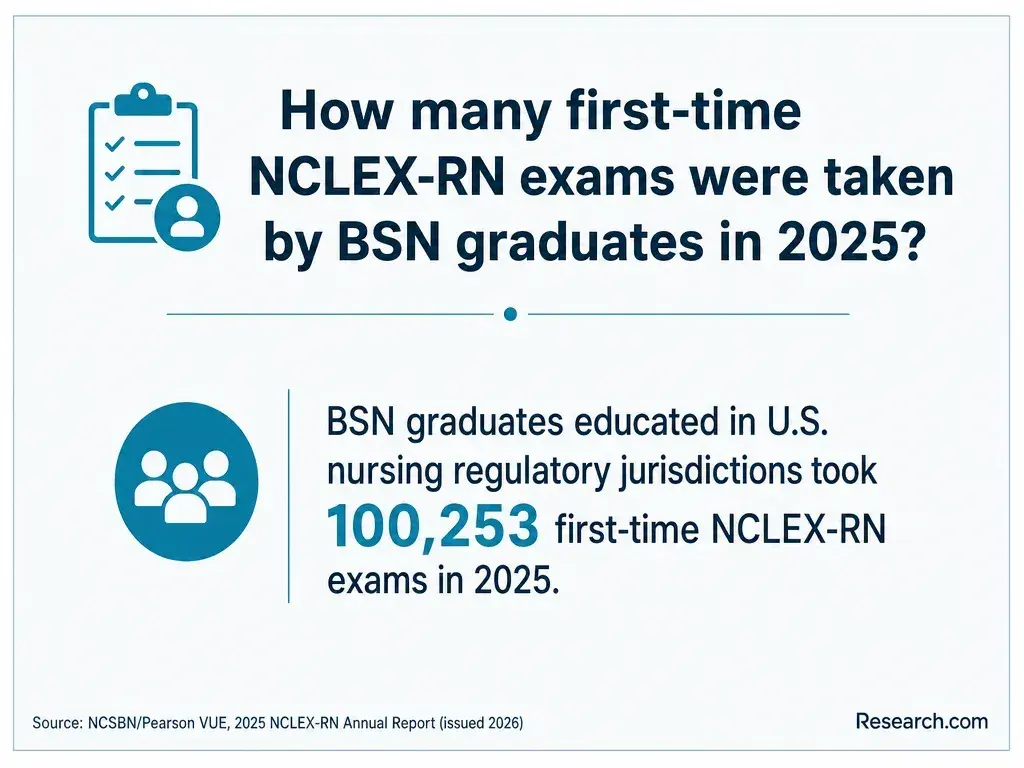
Initial RN licensure generally follows completion of a state-board-accepted prelicensure nursing program - such as an ADN/ASN, nursing diploma, traditional BSN, or accelerated BSN - followed by meeting the state board's other requirements and passing the NCLEX-RN. Program completion alone is not an RN license. Requirements and recognition depend on the licensing state and the specific program.
By contrast, RN-to-BSN and most RN-to-MSN pathways assume the student already holds an RN license. A prospective nurse comparing weekend career options should first identify a qualifying initial-licensure pathway, rather than choosing a postlicensure degree because its schedule looks convenient. A guide to planning a faster MSN-PMHNP pathway concerns a later advanced practice goal; it is not a substitute for prelicensure RN education.
There is no reliable single national wage for "weekend-only nurse." The U.S. Bureau of Labor Statistics reports wages for registered nurses as an occupation, not a separate weekend-only category. Those figures offer broad labor-market context but cannot price an individual offer, a particular specialty, or a Baylor contract.
Inpatient hospitals, long-term care facilities, rehabilitation units, and other employers may use different base rates, premium windows, staffing models, and benefit rules. Experienced nurses may qualify for higher base steps or specialty roles, while new graduates may have fewer weekend-only options. Location, union contracts where applicable, and the number of shifts actually available also affect earnings.
For a useful comparison, calculate each offer's expected annual gross pay using its written rate rules and a realistic number of worked weeks. Then compare employer-paid benefits and expected out-of-pocket costs. Do not compare weekend RN earnings with NP earnings as if they were the same job: shorter family NP training pathways involve distinct education and practice requirements, and an advertised program length does not establish a nurse's future pay.
Registered nurses work across hospitals, long-term care, ambulatory services, home health, and other settings. The Bureau of Labor Statistics projects RN employment growth, but its occupation-wide outlook does not indicate how many weekend-only openings exist in a particular city or specialty. Review local postings for the license, experience, certifications, and shift commitments employers actually request.
A weekend position can provide stable specialty experience when orientation, patient assignments, escalation support, and opportunities to maintain skills are adequate. It can also limit access to weekday education, committee work, or mentors. Ask how weekend staff participate in training and advancement rather than assuming a premium schedule is either a career advantage or a dead end.
Some RNs later pursue leadership or systems roles, but those goals do not make a graduate degree necessary for weekend bedside practice. A comparison of post-MSN DNP pathways in systems leadership addresses a different career decision and should be judged against that intended role, not against a weekend differential.
How can you evaluate an accredited nursing program and employer pay package?
If you are not yet an RN, first confirm that the specific prelicensure program meets the state board requirements relevant to your intended license. Check institutional accreditation, any nursing-program accreditation, state board approval or recognition, and the program's clinical placement arrangements separately; they serve different purposes. Ask for the schedule of labs and supervised clinical experiences before planning weekend employment around classes.
If you already qualify for the job, request an offer letter, benefits summary, weekend-program policy, and a sample pay calculation. Resolve these questions before accepting:
- What are the base rate, qualifying weekend hours, differential, and rules for stacking night, holiday, and overtime pay?
- How many hours must I work, how many will I be paid, and what happens after PTO, illness, a canceled shift, or an extra shift?
- Which benefits will I actually receive, when do they begin, and which hours count toward eligibility?
- What orientation, staffing support, patient assignment expectations, and escalation resources are available on weekends?
If an employer offers tuition support for later specialty study, evaluate that program separately from the job offer. For example, a comparison of faster PMHNP certificate pathways should lead an eligible graduate-prepared nurse to verify the specific program, supervised clinical requirements, certification eligibility, and employer reimbursement terms - not assume a short program improves the current weekend package.
Other Things You Should Know About Nursing
Only if the employer's written policy includes those hours. Ask whether premiums are assigned by shift start time or by each hour worked after the weekend window begins.
Potentially, if you can meet both employers' commitments, maintain authorization to practice, and comply with scheduling and conflict-of-interest policies. Account for fatigue and travel before accepting overlapping commitments.
Not necessarily. An extra shift may follow different premium rules from your committed weekend shifts. Have payroll show how that specific shift would be paid.
Pay depends on the contract and applicable law. Check whether the position guarantees hours, offers cancellation pay, or requires you to make up a shift to retain Baylor-style pay.
- The Health Care Industry and Calculating Overtime Pay | dol.gov https://www.dol.gov/agencies/whd/fact-sheets/54-healthcare-overtime
- Shift Pay Differentials - New York State Comptroller https://www.osc.ny.gov/state-agencies/payroll/payroll-manual/shift-pay-differentials
- Summary of EPA's Employment Benefits https://www.epa.gov/careers/summary-epas-employment-benefits
- advanced practice providers contract terms and negotiations | nih.gov https://pmc.ncbi.nlm.nih.gov/articles/PMC12850718/
- Shift Differential - Policies & Procedures @ University of Rochester https://www.rochester.edu/policies/policy/shift-differential/
- WSNA - Montlake contract - UW Human Resources https://hr.uw.edu/labor/staff-unions/wsna-montlake/contract
- Weekend Shift Differential: Rates, Rules, and How to Negotiate | NightOwling https://nightowling.com/blog/weekend-shift-differential/
- PRN shift differentials: How to earn more on the same hours | Nursa https://nursa.com/blog/maximize-nursing-prn-earnings-shift-differentials
- Nurse Pay by Shift Type: Days vs. Nights vs. Weekends | stage.staffdna.com https://staffdna.com/nurse-pay-by-shift-type-head-to-head-days-vs-nights-vs-weekends-vs-tra/
- What Is Shift Differential Pay? Employer Guide | Paychex https://www.paychex.com/glossary/what-is-shift-differential