2027 Web Development Degree Completion Programs for Working Adults

Co-Founder and Chief Data Scientist
Many working adults face challenges completing a web development degree-balancing job demands, family responsibilities, and financial constraints limits their options. High-quality completion programs offer flexible schedules, robust credit transfer policies, and accreditation recognized by employers and licensure bodies-features often missing in generic undergraduate alternatives. According to the U. S. Bureau of Labor Statistics, the median annual wage for web developers was $79,300 in 2022, highlighting strong career and ROI potential for graduates.
This article examines program structures, transfer credits, cost factors, and career outcomes to help prospective students choose completion programs aligned with their goals, finances, and life obligations.
Key Things to Know About Web Development Degree Completion Programs for Working Adults
- Maximize credit for prior learning by submitting military or professional training transcripts-up to 70% credit acceptance shortens program length and lowers tuition costs in many programs.
- Seek programs with employer partnerships and recognized accreditations-these increase job placement rates, which currently average 85% within six months for Web Development graduates.
- Access financial aid options tailored for working adults-including employer tuition assistance and federal aid eligibility-ensuring affordability without disrupting work schedules or career progress.
What Are Web Development Degree Completion Programs, and Who Are They Designed For?
Web development degree completion programs provide tailored pathways for adults seeking to finish a bachelor's degree by building on prior college credits or relevant experience. These programs differ from traditional four-year or graduate degrees-offering accelerated pacing, credit-for-prior-learning policies, and flexible scheduling formats designed specifically for working adults balancing education, career, and family commitments. Such programs particularly serve adults with some college but no degree, military veterans with ACE-credited training, mid-career professionals pursuing credential-gated promotions, and career changers entering the technology sector.
- Accelerated Pacing: Coursework centers on core major requirements, enabling degree completion within one to two years depending on transferred credits.
- Credit Transfer and Prior Learning: Recognizes previous college credits and military or industry certifications, reducing unnecessary repetition and valuing adult learners' accumulated knowledge.
- Flexible Scheduling: Classes are often offered online, evenings, or weekends-important for those seeking online web development degree completion options while working or managing family duties.
- Quality and Accreditation: According to research by the National Student Clearinghouse, AASCU, and the Lumina Foundation, reputable programs meet accreditation standards, ensuring employer recognition and eligibility for licensure where applicable.
Prospective students should evaluate how to maximize credit for prior learning, confirm program accreditation, explore financial aid options for adult learners, and consider how program structures align with career goals and life responsibilities. Choosing among different program options based on these objective criteria helps adults complete their web development degree efficiently and effectively. Additional insights on popular university majors can be found at university majors, useful for those weighing their educational pathways.
How Do Web Development Degree Completion Programs Differ From Traditional On-Campus Degree Programs?
Online web development degree completion programs for working adults offer distinct advantages over traditional campus-based degrees, focusing on flexibility and adult learner needs. The design of these programs accommodates employment and family responsibilities through several structural features.
- Scheduling Formats: Completion programs commonly provide evening, weekend, online, or hybrid classes to fit busy schedules, unlike traditional programs that usually require daytime, in-person attendance tied to a semester calendar.
- Pacing Options: Many completion programs offer accelerated cohort models or self-paced enrollment-allowing students to progress based on personal circumstances-while traditional programs tend to follow a fixed, full-time pace.
- Residency Requirements: Completion tracks often minimize or eliminate on-campus residency, enabling most coursework to be completed remotely. Traditional degrees usually necessitate consistent campus presence and full-time enrollment.
- Asynchronous Coursework: A significant portion of classes in completion programs is delivered asynchronously, facilitating learning on students' own time, whereas traditional programs emphasize synchronous lectures and scheduled classes.
- Start Dates and Advising: Rolling or multiple yearly start dates plus streamlined advising help adult learners transfer credits efficiently, compared with the fixed terms and standard advising found in traditional programs.
Data from the National Center for Education Statistics and IPEDS highlights robust enrollment growth in degree completion programs-underscoring their appeal to working adults-while traditional full-time undergraduate enrollment remains stable or declines. Although the awarded degree, usually a Bachelor of Science or Bachelor of Arts in web development, is the same, the learning pathways differ substantially to reduce disruption to work and home life.
Credit transfer flexibility is emphasized, often recognizing military training and prior learning assessments, which lowers time and cost to degree. Accreditation standards align with traditional programs, but prospective students should verify career outcomes, financial aid availability, and employer recognition align with their goals. For those exploring flexible options, numerous online engineering degree programs illustrate comparable adult-friendly approaches and funding mechanisms.
What Prior Credits and Experiences Count Toward a Web Development Degree Completion Program?
Web development degree completion programs often recognize various types of prior learning and professional experiences to shorten time-to-degree and reduce costs. Transfer credits from regionally accredited schools are commonly accepted, though their applicability depends on course relevance, grades, and the originating institution's standards. Credits from nationally accredited or unaccredited schools tend to transfer less smoothly. Military training credits evaluated through the American Council on Education (ACE) registry offer significant value for veterans, with many programs awarding credit for technical and leadership skills earned during service. Professional certifications in coding languages or tools may also count-though these are reviewed individually and require documentation matching academic objectives.
Policies vary widely between schools and accreditation types-students should always request official transcripts and seek a pre-enrollment credit evaluation to clarify transferable credits before enrolling. Research from the Council for Adult and Experiential Learning (CAEL) highlights that recognizing prior learning can cut degree completion time by up to a year, translating into substantial savings. Caution is advised against schools that disregard ACE military credits or impose unjustified caps on transfer credits. The American Association of Collegiate Registrars and Admissions Officers (AACRAO) guidelines remain the best standard for fair transfer credit decisions.
Reflecting on his own journey, a professional who completed a web development degree credits his success to thoroughly documenting his IT certifications and military training early in the admissions process. "It was challenging to gather all the necessary paperwork and align my real-world experience with academic requirements," he shared, "but once the credits were evaluated, I was able to skip several introductory courses and focus on advanced topics. That saved me both time and tuition, making the program manageable alongside my full-time job." His experience underscores the importance of proactive credit assessment and clear communication with advisors in navigating degree completion pathways.
Admission standards for web development degree completion programs often hinge on a minimum cumulative GPA from previous college work-typically between 2.0 and 2.5 on a 4.0 scale-to signal academic readiness. However, many institutions take a flexible stance, offering conditional acceptance when students commit to supplemental support like tutoring or developmental courses to improve their skills.
- Minimum GPA: Most programs require at least a 2.0 to 2.5 cumulative GPA, but some grant unconditional admission only when this floor is met.
- Conditional Admission: Applicants with lower GPAs may still qualify if they engage in academic success plans designed to strengthen their foundation before full enrollment.
- Open Admission With Experience: Certain schools waive strict GPA requirements for adults who document relevant professional experience or military training, recognizing that practical expertise can offset past academic challenges.
- Holistic Review: Programs-especially those accredited by the Higher Learning Commission-often evaluate candidates using multiple criteria, including years of experience, letters of recommendation, and personal statements, to form a full picture of readiness.
- Academic Forgiveness: Adults returning after a gap may benefit from policies allowing GPA resets following periods without enrollment, enabling a fresh academic start.
- Pre-admission Evaluation: Prospective students should seek formal academic reviews from their chosen schools to clarify eligibility before investing effort in applications.
For adults comparing options, factors like GPA eligibility criteria for web development completion courses are just one part of the decision. Understanding how prior learning, professional background, and admission policies align with personal goals and financial realities is critical. Those exploring pathways may also find value in reviewing an online psychology degree resource as an example of flexible, adult-oriented programs designed for career advancement.
Degree completion programs for web development are tailored to fit the demanding schedules of adults working full time-usually 40+ hours a week-by offering varied delivery methods like evening cohorts, weekend intensives, fully asynchronous online courses, and hybrid formats that blend live virtual sessions with self-paced study. These flexible structures ease the challenge of balancing work, family, and education.
To prevent overload, many programs suggest a modest credit load each term, often between 6 and 9 credits. This pace supports steady progress while accommodating professional responsibilities without sacrificing academic continuity.
A common framework is the cohort learning model, where students move through courses as a fixed group. This system promotes accountability and peer collaboration, fostering a supportive learning community. Additionally, predetermined start and end dates enhance scheduling predictability-key for adults managing complex personal and work commitments months ahead.
Research from the National Student Clearinghouse Research Center indicates that students in cohort-based completion programs tend to show higher persistence and graduation rates compared to those in self-paced, traditional formats. This underscores the benefit of structured program designs for balancing full-time work and study.
One professional who built his career after completing a web development degree reflected on his experience balancing full-time work and studies. He described the early months as "overwhelming," with tight deadlines and constant juggling. Yet, being part of a cohort created a "shared motivation" that kept him engaged during stressful periods. The predictability of the program's calendar allowed him to coordinate family time and work projects confidently. Having a dedicated advisor "made a real difference," helping him navigate unexpected work demands without falling behind. His journey illustrated the practical ways program structure can empower those committed to advancing their careers amid busy lives.
Degree completion programs in web development commonly offer three main delivery methods catering to working adults' varied needs. Synchronous delivery involves live video classes that foster direct interaction and instant feedback but demand strict scheduling that may challenge those with unpredictable work hours or living across time zones.
Asynchronous delivery provides recorded lectures and materials accessible anytime, allowing learners to progress flexibly, though this may reduce opportunities for real-time engagement and prompt support. Hybrid models combine online coursework with periodic in-person intensives, ideal for students within commuting distance or seeking face-to-face networking alongside flexible study.
Recent data from the National Center for Education Statistics (NCES) and the Online Learning Consortium (OLC) show that as of 2023, about 65% of adult learners in completion programs choose fully online delivery, while roughly 25% opt for hybrid options. The COVID-19 pandemic significantly accelerated improvements in virtual platforms and faculty readiness, enhancing accessibility and quality across fields including web development.
When assessing programs, prospective students should consider several quality factors: faculty expertise specifically in web development, student-to-faculty ratios for online classes, availability of virtual academic advising and tutoring, and whether the online program holds the same accreditation as on-campus equivalents. These elements ensure academic rigor and employer recognition remain consistent. The ideal learning format depends on an individual's preferences, location, and work demands-making an informed evaluation crucial for success in web development completion programs.
Completion timelines for a web development degree completion program can differ widely based on prior credits and enrollment pace. Typically, students entering with around 60 prior credits need about two years of full-time study to complete remaining requirements. Those with 90 or more credits-including transfer or military experience credits-often finish within one year if enrolled in accelerated programs.
Credit for prior learning (PLA) significantly influences time-to-degree. Students with thoroughly assessed experiential learning can reduce required courses, but the effect varies by institution policies. Certain program elements-such as internships, capstones, or field experiences-often have fixed durations that cannot be shortened.
Financially, faster completion reduces total tuition costs, lowers opportunity costs from lost earnings, and allows earlier entry into higher post-degree salary brackets-making accelerated progress a sound financial strategy rather than only a personal preference.
Prospective students should request written data on average time-to-degree for their specific credit standing from programs under consideration. Marketing often highlights ideal minimum completion times achievable only by students with maximum prior credit and full-time enrollment. Obtaining realistic time estimates based on individual credit profiles is essential for making informed decisions about your education and career trajectory.
Regional accreditation for web development programs-awarded by agencies such as the Higher Learning Commission (HLC), Middle States Commission on Higher Education, or SACSCOC-is the gold standard recognized by employers, graduate schools, and the federal student aid system. This accreditation ensures institutional quality, facilitates credit transfer, and supports eligibility for financial aid.
National accreditation, typically granted by entities like the Distance Education Accrediting Commission (DEAC), is generally considered less prestigious. Programs with only national accreditation often face significant limitations in credit transferability, employer recognition, and reputational weight, increasing financial and career risks for students.
Relevant technology program accreditation for degree completion includes organizations such as ABET, which covers engineering and technology fields. Business programs may seek ACBSP or AACSB accreditation, while social work programs look to CSWE. These specialized accreditations enhance professional licensure eligibility, improve hiring outcomes, and support graduate school admissions-signaling academic rigor beyond institutional accreditation alone.
Many web development degree completion programs designed for working adults maximize prior learning credits, including military training evaluated by ACE. However, institutions holding only national or unrecognized accreditations often restrict credit acceptance and face employer skepticism.
Prospective students should use the U.S. Department of Education's Database of Accredited Postsecondary Institutions and Programs (DAPIP) to independently verify accreditation status rather than relying on marketing claims. This step protects against investing in non-recognized credentials.
Confirming regional institutional accreditation and technology program accreditation for degree completion aligns your credential with professional goals, financial aid options, and career advancement opportunities. For additional insights on accelerated pathways, exploring MFT programs may offer useful comparisons in program structure and duration.
Tuition for web development degree completion programs varies by institution type-public regional universities generally charge $300 to $600 per credit hour for in-state students, with out-of-state rates often doubling. Private nonprofit schools typically range from $600 to $1,200 per credit, while for-profit institutions may exceed $1,000. Mandatory fees-for technology access, labs, and student services-add several hundred dollars each semester.
Some programs require short residencies or intensives that involve travel and lodging expenses, increasing the overall cost of attendance. These factors heavily influence the cost of web development degree completion programs for working adults.
Financial Aid Options: Working adult learners have access to specific aid resources. Pell Grants, historically aimed at full-time students, are now increasingly available to eligible part-time adults, helping lower tuition costs. Employer tuition reimbursement programs can significantly offset expenses when the program aligns with career goals. Military-affiliated learners benefit from GI Bill and MyCAA programs, assisting veterans, active-duty personnel, and military spouses. Additionally, many institutions offer scholarships targeting non-traditional adult students. Completing the FAFSA as an independent filer is critical for accessing federal aid and institutional grants, enabling better affordability for working adults in web development completion programs.
Tax Benefits: Adults paying out-of-pocket may qualify for tax benefits like the Lifetime Learning Credit-allowing up to $2,000 in education expense credits per tax return-and IRS Section 127's employer-provided education assistance exclusion, which permits up to $5,250 annually tax-free. Due to variation in personal tax circumstances, consulting a tax professional is recommended to optimize these benefits.
Total Cost Comparison: Evaluating the true cost requires examining credit transfer potential, employer reimbursement eligibility, and net tuition after financial aid. This comprehensive approach often reveals that programs with higher sticker prices may ultimately be more affordable for working adults, especially when factoring in transferable credits and available aid. For example, cautious comparison can guide students toward options that maximize savings and minimize out-of-pocket expenses.
For those interested in related fields, exploring a human services online program can offer additional career options aligned with adult education pathways.
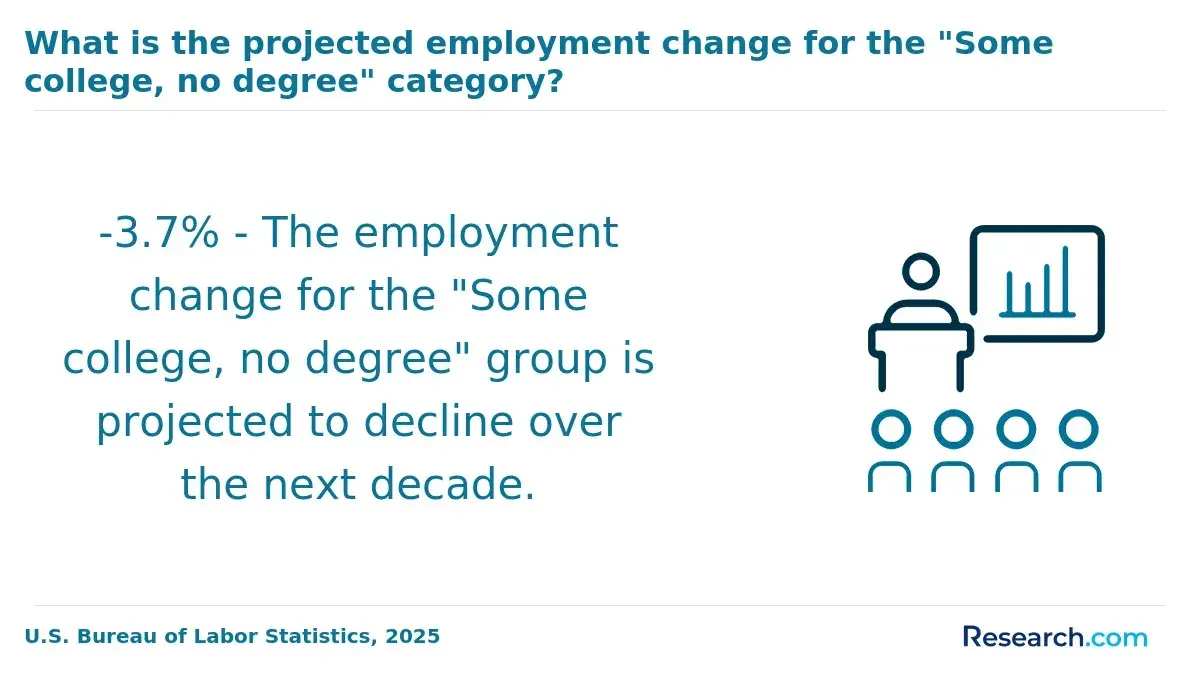
Completing a bachelor's degree in web development brings tangible career benefits-particularly for working adults who already hold some professional experience. According to data from the College Scorecard and the Georgetown University Center on Education and the Workforce, these graduates typically earn a median salary significantly higher than individuals with some college but no degree, often by 15% to 30%. This reflects the value employers place on formal education combined with real-world skills.
- Career Advancement: Bachelor's degree holders become eligible for promotions into senior roles such as senior developer, project manager, or team lead-positions that frequently require a formal credential beyond experience alone.
- Access to Specialized Roles: Certain jobs like front-end architect, UX/UI lead, or software engineer often list a bachelor's degree as a minimum requirement, making degree completion crucial for accessing these positions.
- Experience Leverage: Unlike new graduates entering the field, working adults combine their degree with prior work experience, enabling them to pursue higher-level roles immediately rather than starting at the entry level.
- Program Selection: Prospective students should prioritize accredited programs recognized by employers and licensing bodies. Verifying accreditation ensures the degree meets specific credential criteria tied to career goals such as management promotions or graduate study admission.
- Credit Transfer and Financial Aid: Maximizing transfer credits from prior learning-including military or professional training-is key to shortening program length and reducing costs. Additionally, identifying financial aid options tailored to working adults helps manage affordability.
Careful evaluation of program structure, scheduling flexibility, and institutional reputation enables career changers and mid-career professionals to select web development degree completion paths best aligned with their personal circumstances and long-term ambitions.
Employers prioritize the accreditation and recognized status of the institution awarding a degree over how the degree was completed. Surveys from organizations like the Society for Human Resource Management and the National Association of Colleges and Employers reveal that hiring managers focus on institutional legitimacy rather than whether a candidate used prior learning assessments or transfer credits in completion programs.
Degrees from accredited institutions awarding Web Development completion credentials usually appear identical to those earned through traditional coursework, with no notation of the completion path on the diploma itself. This means applicants should list their degree straightforwardly on resumes, mentioning the program's flexible, adult-oriented structure only when relevant-such as during interviews to highlight adaptability and commitment.
- Accreditation: Degrees from regionally or nationally accredited schools carry strong employer credibility, irrespective of the credit mix.
- Transcript Uniformity: Completion programs ensure diplomas do not distinguish between accelerated or standard paths, maintaining equal official standing.
- Employer Types: Certain federal positions and licensed professions-regulated by entities like the Office of Personnel Management or state licensing boards-may review degree completion methods more carefully.
- Verification: Individuals seeking employment in regulated fields should confirm credential acceptance with HR or licensing bodies before enrolling in completion programs.
- Hiring Context: In most private-sector Web Development roles, actual skills, relevant experience, and strong references outweigh the mode of degree completion.
- Credential Value: Completion degrees serve as valid, practical alternatives to traditional bachelor's programs-designed to meet working adults' unique needs and not lesser substitutes.
What Graduates Say About Web Development Degree Completion Programs for Working Adults
- Yves: "Completing my web development degree while juggling a full-time job was a challenge-but the flexible scheduling formats made all the difference. The program's emphasis on accreditation standards assured me that my credential would be respected by employers, which ultimately expanded my career options. Also, the cost considerations were transparent and manageable, proving that quality education doesn't have to break the bank."
- Cannon: "Looking back, the credit transfer policies were a key factor in my decision to enroll in this web development completion program. It allowed me to leverage previous coursework and fast-track my graduation-a huge advantage for working adults like me. The structural features of the curriculum, particularly the project-based learning, sharply enhanced my real-world skills and helped me build a robust professional portfolio."
- Nolan: "From a career standpoint, this web development degree truly stands out due to its direct alignment with industry demands. The program isn't just about theory-it integrates practical applications that employers seek, which has opened doors for me in tech roles I once thought were out of reach. Plus, the realistic scheduling formats respect the busy lives of adults, making it feasible to earn a degree without sacrificing my other responsibilities."
Other Things You Should Know About Web Development Degrees
Many Web development degree completion programs provide tailored support services for working adults, including academic advising, tutoring, and career counseling. These programs often offer flexible scheduling and technical assistance to accommodate nontraditional students balancing work and study. Additionally, some institutions provide access to online resources and networking events specific to Web development professionals.
Credits earned in a Web development degree completion program can often be transferred to relevant graduate programs, particularly those focused on computer science, information technology, or software engineering. However, transferability depends on the accreditation of the undergraduate program and the policies of the graduate institution. Students should verify articulation agreements and consult academic advisors for clear guidance.
No, internships are usually not required for degree-completion programs, but many schools recommend them or allow them as elective credit. Some programs let adults use prior job experience instead of an internship if they submit a portfolio, supervisor verification, or a prior-learning assessment.
- Web Development Career Opportunities After the Course https://navigoacademy.com/career-opportunities-after-completing-a-web-development-course/
- How to Become a Web Developer https://www.snhu.edu/about-us/newsroom/stem/how-to-become-a-web-developer
- Web and Mobile Application Development https://www.ccp.edu/degree-programs/web-and-mobile-application-development
- Explore the Best Web Development Degree Programs | Cyberdegrees.org https://www.cyberdegrees.org/listings/web-development/best-programs/
- Criteria for Accrediting Computing Programs, 2025 - 2026 - ABET https://www.abet.org/accreditation/accreditation-criteria/criteria-for-accrediting-computing-programs-2025-2026/
- Guide to Computer Science Degree and Program Accreditation https://www.computerscience.org/resources/college-accreditation/
- How Many Hours Do Web Developers Work? — Web Development https://blog.nobledesktop.com/how-many-hours-do-web-developers-work
- Top Web Development Bachelor's Degrees Online https://www.itcareerfinder.com/program-rankings/best-online-bachelors-web-design-development.html
- What Are Common Career Paths for Web Developers? https://www.csinow.edu/blog/what-are-common-career-paths-for-web-developers/
- Policy directive for training programs with online or hybrid delivery formats http://www.ontario.ca/page/policy-directive-training-programs-online-or-hybrid-delivery-formats