2027 Synthetic Data Evaluation Capstones: What to Look for in a Data Science Master's

Co-Founder and Chief Data Scientist
A synthetic data capstone can be impressive - or it can be a dataset that merely looks realistic. If you are choosing a data science master's program, the difference matters: a strong project tests whether generated data serves a defined purpose without exposing sensitive records or hiding important errors.
This guide explains what credible evaluation looks like and how to tell whether a program gives students the coursework, data access, supervision, and time to do it well.
Key Things You Should Know
- Look for capstones that compare synthetic and real data on a defined task, assess disclosure risk, and report failures - not just visual similarity.
- Ask whether students can obtain authorized data or a defensible simulation, establish baselines, and publish a reproducible account of their methods without releasing sensitive records.
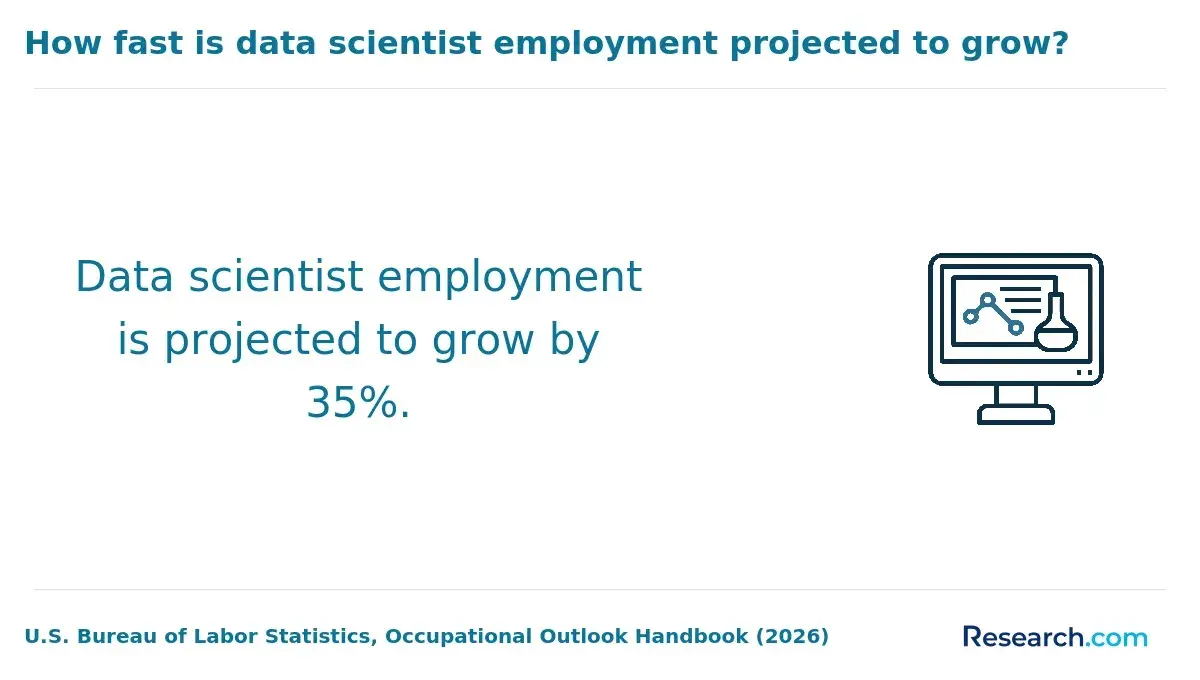
- The U.S. Bureau of Labor Statistics projects 35% employment growth for data scientists from 2025 to 2035; that outlook makes demonstrable evaluation skills useful, but it does not predict an individual graduate's job prospects.
What is a synthetic data evaluation capstone in a data science master's program?
It is a graduate project that investigates whether artificially generated records are suitable for a specific use, such as testing an analytics pipeline or developing a predictive model. The central question is not simply, "Can I generate data?" It is, "What can someone safely and reliably do with these data, compared with an appropriate alternative?"
A credible capstone defines its intended user and acceptable risks, documents how the synthetic data were produced, and evaluates them against relevant real-data characteristics or a justified reference model. For example, a student might train a model on synthetic records and test it on separate, authorized real records. If real records are unavailable, a carefully designed simulation can still support a worthwhile methods project, but it cannot establish performance or privacy for an actual organization's dataset.
Not every master's program permits this topic or guarantees access to a sponsor's data. Confirm the capstone's topic-approval rules, data-use requirements, and available faculty expertise before treating a program's general project requirement as an opportunity to do synthetic data evaluation.
What skills should a synthetic data capstone demonstrate?
The strongest portfolio evidence is a defensible evaluation, not a polished sample of generated rows. A graduate should be able to explain why a chosen generator and its tests fit the intended use, what the results cannot establish, and how the work could be repeated.
These capabilities are especially important when reviewing a proposed capstone:
- Statistical fidelity: Compare relevant distributions, relationships, rare events, and subgroup behavior rather than relying on a single overall similarity score.
- Task utility: Measure whether an intended analysis or model works on an independent test set, and compare it with a meaningful baseline.
- Privacy assessment: Examine memorization, unusually close matches, and plausible disclosure attacks. Distinguish an empirical test from a formal privacy guarantee.
- Reproducibility and communication: Record data provenance, splits, generator settings, code, assumptions, limitations, and a recommendation a stakeholder can act on.
A good student also recognizes trade-offs. Improving fidelity for unusual records, for instance, may make those records more revealing. Neither high predictive accuracy nor a low match rate alone proves that a dataset is safe to release.
How do you evaluate a data science master's capstone project?
Judge the project against its stated use, not against a universal "good synthetic data" score. A technically elaborate generator is less convincing than a simpler one supported by an appropriate experimental design and an honest account of its limits.
When reviewing a sample capstone or discussing expectations with a program director, work through these questions:
- Is the use case precise? The project should name its users, target task, data characteristics, and what would make the output unacceptable.
- Is the comparison fair? Look for real-data or simulation baselines, a justified alternative method, and held-out data that were not used to fit or select the generator.
- Are utility and risk both tested? Results should include task performance, relevant subgroup or rare-event failures, and privacy analysis appropriate to the data and access model.
- Can someone audit the conclusion? Methods and permitted artifacts should be reproducible, while any restricted source records remain protected.
One red flag is evaluating a synthetic-data-trained model only on synthetic test rows drawn from the same generator: that can reward a generator's own patterns while missing failure on real-world cases. Another is claiming data are "anonymous" solely because names were removed. Where formal differential privacy is claimed, ask what mechanism and privacy parameters support the claim; visual resemblance tests cannot verify it.
What coursework prepares students for synthetic data evaluation?
Look beyond a course description that mentions generative AI. A substantive preparation path combines probability and statistical inference, machine learning, experimental design, data engineering, and privacy or security. These subjects enable students to distinguish sampling noise from model failure, prevent leakage across training and evaluation sets, and assess whether a result transfers to the intended task.
Course titles alone do not establish depth. A passing lecture on synthetic data is different from an assignment that compares generators, measures downstream performance on held-out data, and critiques disclosure risk. Ask for recent syllabi or project examples and whether a qualified adviser can supervise statistical evaluation and privacy claims. A dedicated elective can help, but strong core methods courses plus suitable supervision may be more valuable than an elective with little hands-on evaluation.
Which accreditation should a data science master's program have?
For a U.S. program, start by verifying that the institution holds recognized institutional accreditation and that the degree is awarded by that institution. Check its current status in an official U.S. Department of Education or Council for Higher Education Accreditation directory. Specialized accreditation is not a universal requirement for a data science master's; its absence alone does not establish that a program is weak.
Accreditation does not certify the quality of a particular synthetic data capstone. After checking institutional standing, examine the more topic-specific evidence: curriculum, faculty supervision, project rules, and access to suitable data and computing resources. Online applicants should also confirm that the institution can enroll students in their state; accreditation and state authorization answer different questions.
What are the admission requirements for a data science master's degree?
Requirements vary by institution. Programs may ask for an accredited bachelor's degree, transcripts, quantitative preparation, programming experience, recommendations, or a statement of purpose; some offer ways to address prerequisite gaps. For a prospective synthetic data researcher, evidence of statistics, Python or another relevant language, and prior work evaluating models can also help establish readiness, even when it is not a formal admissions requirement.
Read the current admissions page for each program rather than assuming a related degree uses identical rules. For example, a comparison of ML master's admissions without an essay may help applicants who prefer that process, but it does not establish the essay policy of a data science program. Ask whether any missing mathematics or programming course must be completed for admission or can be taken after enrollment.
How long does a data science master's program take and cost?
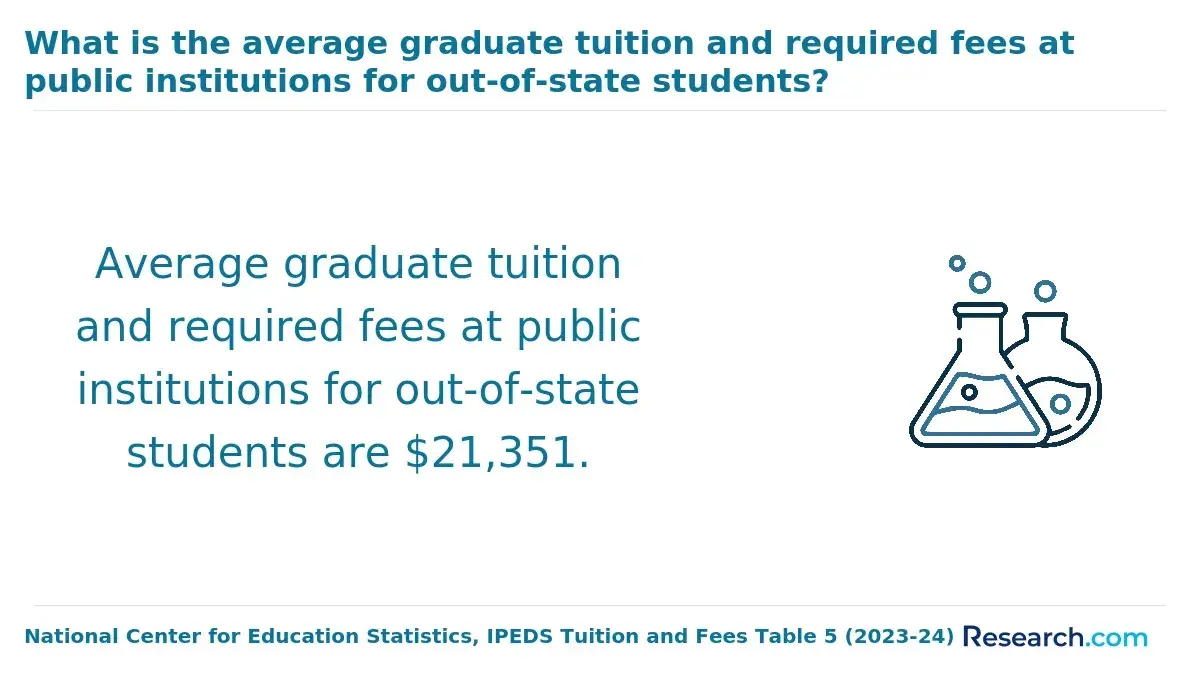
There is no reliable universal duration or price: credit requirements, enrollment pace, residency, fees, and capstone structure differ. Compare programs using the same total-cost definition - required tuition and fees for the full degree - then add expenses that apply to you, such as computing, software, travel, or reduced work hours. A lower advertised per-credit rate may not produce a lower total bill.
Capstone fit can affect both time and cost. Ask when topic approval occurs, how long data-use approval can take, whether the project spans multiple terms, and what happens if sponsor access falls through. Budget for a viable backup topic rather than assuming that a sponsor's restricted dataset will arrive on schedule. Employer assistance and scholarships can change the comparison; a data science graduate study funding options guide can help you identify possibilities to verify with each school.
Are online or campus-based data science master's programs better?
Neither format is inherently better for synthetic data evaluation. An online program may suit a working student who can study remotely and use approved datasets or secure computing environments. Campus study may be preferable when the proposed project depends on in-person lab access, close collaboration with a research group, or a local sponsor. In either format, restricted-data rules - not the location of classes - determine what students may use and publish.
Check how frequently advisers meet with capstone students, whether group work or presentations require attendance at set times, and whether secure computing is available remotely. If speed matters, review accelerated data science master's pathways, but verify that a shorter schedule leaves enough room for data approval, evaluation, and revision. Choose the format whose supervision and access arrangements support your intended project, not merely the one with the more convenient label.
What careers and salaries can a data science master's support?
A well-documented capstone can provide evidence for data scientist, machine learning, analytics, or privacy-conscious data engineering roles. Its value is clearest when the target employer needs people who can assess whether generated data are useful and safe enough for a defined workflow. The U.S. Bureau of Labor Statistics reports a $120,230 median annual wage for data scientists in May 2025. That occupational median is not a starting salary or an estimate of what completing this degree or capstone would add to someone's pay.
Translate the project into the language of the role you want: model validation for an ML team, subgroup analysis for an analytics team, or disclosure-risk assessment for a data governance team. For regulated settings, domain constraints matter as much as technical novelty. Students considering clinical applications can explore healthcare-focused career paths through an AI master's, while checking separately whether a prospective program supports authorized healthcare data projects.
How do you choose a reputable data science master's program?
Shortlist programs whose published capstone rules allow your proposed question, then ask for evidence that students can complete it responsibly. Recent anonymized project descriptions, relevant faculty work, access to secure tools, and clear data-governance procedures are more informative for this decision than a generic promise of "hands-on AI." If a program cannot explain how students evaluate projects using restricted data without exposing those data, treat that as a reason for further scrutiny.
Before enrolling, ask an adviser to confirm who approves topics, what happens when real-data access is denied, whether independent evaluation is required, and which code or results may appear in a public portfolio. Compare those answers alongside total degree cost; an online data science master's affordability guide can help you build a price shortlist, but a lower price does not substitute for suitable supervision. Choose the program that can support a credible project within your budget and schedule, not one that merely lists synthetic data among possible topics.
Other Things You Should Know About Data Science
Not necessarily. The answer depends on the generator, dataset size, and evaluation plan. A smaller, well-tested project may be stronger than a computationally expensive one with weak comparisons; ask what computing resources the program provides before committing to a topic.
Often, but public availability does not automatically permit every use or redistribution. Check the dataset's license, terms, and sensitivity, as well as your program's research and publication rules.
Only if your data-use agreements and program rules allow it. Synthetic records can still reveal information about source data; publishing methods, aggregate results, or permitted code may be a safer way to show your work.
No. Requirements vary, but a capstone commonly emphasizes an applied problem and deliverable, while a thesis usually centers on a research question and formal scholarly argument. Confirm which option a program offers and who will evaluate it.
References
- Membership Inference Attacks Against Synthetic Health Data | nih.gov https://pmc.ncbi.nlm.nih.gov/articles/PMC8766950/
- 4. Quality Evaluation of Synthetic Data | GTO Practices Portal https://public.practice.gto.tech.gov.sg/data/content/publications/synthetic-data/chapters/quality-evaluation/
- Data Science Capstone Experience - Purdue Online https://www.purdue.edu/online/data-science/data-science-capstone-experience/
- Master's in Data Science: Capstone Project | NYU CDS https://cds.nyu.edu/masters-in-data-science-capstone/
- Analyzing the Privacy and Utility Tradeoff for Synthetic Datasets with Imbalanced Demographic... | Urban Data Catalog https://datacatalog.urban.org/analyzing-the-privacy-and-utility-tradeoff-for-synthetic-datasets-with-imbalanced-demographic-c8968cc5d0a1
- How to evaluate the quality of the synthetic data | Amazon Web Services, Inc. https://aws.amazon.com/blogs/machine-learning/how-to-evaluate-the-quality-of-the-synthetic-data-measuring-from-the-perspective-of-fidelity-utility-and-privacy/