2027 State-by-State Acceptance of Online Public Health Master's Programs for Licensure

Co-Founder and Chief Data Scientist
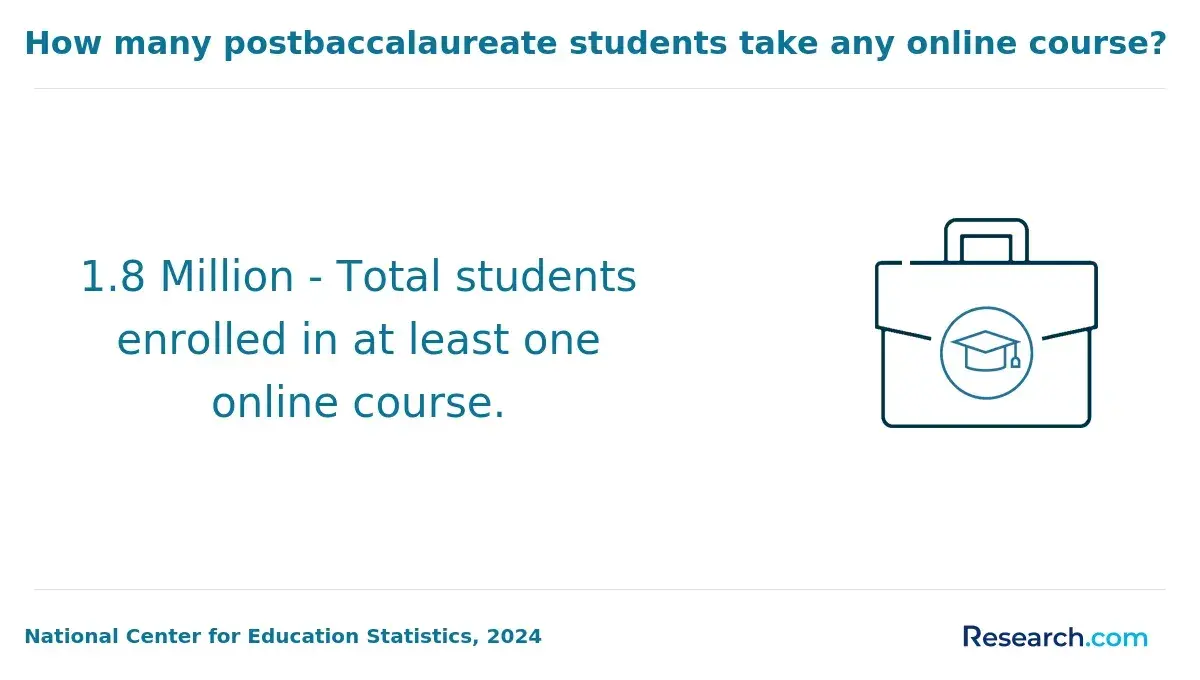
Facing uncertainty about whether an online public health master's degree meets licensure eligibility in a specific state can stall career plans and complicate enrollment decisions. Variations in residency mandates, accepted clinical hours, curriculum criteria, and accreditation recognition mean the same online credential may qualify in one jurisdiction but fall short in another. With online graduate enrollment rising steadily-reflecting a 7.3% increase in distance education participation in 2023 according to the National Center for Education Statistics-navigating these divergent state standards is increasingly critical. Understanding this patchwork equips prospective students and professionals to align educational choices with long-term licensure and employment goals.
Key Things to Know About State-by-State Acceptance of Online Public Health Master's Programs for Licensure
- Residency requirements vary widely, limiting licensure portability; for mobile and military-affiliated students, this means potential delays or duplicative costs when relocating, affecting the timing and financial investment of degree completion.
- States' clinical hour mandates can exceed national accreditation minimums, creating a tradeoff where programs streamlined for adult learners face barriers in workforce entry, challenging employers seeking uniformly qualified candidates.
- Accreditation designations dictate curriculum acceptance, influencing employer trust and candidate competitiveness; inconsistent recognition across states forces students to navigate complex compliance, impacting enrollment strategies and career mobility.
How Do State Licensing Boards Define Acceptance of Online Public Health Master's Programs for Licensure Purposes?
Acceptance by state licensing boards of online public health master's programs for licensure is far from uniform and hinges on nuanced interpretations of educational quality, curriculum content, and regulatory compliance. A license applicant who completes a reputable online program in one state may face unexpected hurdles when applying in another, where the board either lacks formal program recognition or imposes specific curriculum and practicum hour requirements. This variability means a graduate's licensure eligibility cannot be presumed based only on program accreditation or the convenience of remote study. For instance, a professional relocating across state lines could be delayed in workforce entry due to a state board's case-by-case review rejecting clinical hour equivalency, despite the program's regional accreditation. Such scenarios underscore why understanding how state licensing boards define acceptance is critical for those navigating the licensure process with an online degree.
- Formal Approval: Some state boards issue explicit, program-specific endorsements that confirm an online public health master's degree fulfills all local licensure criteria, reflecting a thorough review of curriculum rigor, faculty credentials, and required experiential components.
- Case-by-Case Evaluation: Other boards forgo official lists, instead assessing each applicant's educational background individually, scrutinizing course content, syllabi, and accredited status to decide if the degree meets state-specific standards.
- General Accreditation Acceptance: Several states rely predominantly on the presence of recognized regional or specialized accreditation without reviewing individual programs, assuming that accredited institutions inherently deliver the quality and content demanded for licensure.
- Regulatory Variability: Decision-making is governed by a mix of statutory requirements, administrative policy, and regulatory language that outline acceptance criteria and procedural steps, resulting in divergent standards even among geographically proximate jurisdictions.
- Risk and Ambiguity: The inconsistent application of acceptance definitions creates significant uncertainty-students who believe any accredited online public health degree guarantees licensure eligibility nationwide may find themselves constrained by differing residency rules, clinical hour mandates, or curriculum expectations imposed by specific boards.
This article explores these dimensions in order to provide a clear and structured overview for students, career changers, and professionals who seek licensure across varying state regimes. It aims to illuminate the operational realities that define whether an online public health master's degree qualifies as acceptable under state-specific licensing requirements, thereby facilitating more informed decisions in program selection and licensure strategy.
Which States Have Formally Approved Online Public Health Master's Programs as Licensure-Qualifying?
Licensure eligibility for online public health master's graduates is uneven across states, presenting real consequences for graduates planning their careers or geographic mobility. Choosing an online program without understanding specific state requirements can delay or block licensure, affecting employability and career timelines.
- Clear Statutory Acceptance: States such as California, Florida, and New York explicitly recognize online public health master's degrees from regionally accredited institutions as qualifying for licensure. These states have modernized regulations, aligning online education with traditional programs, therefore allowing graduates comparable access to licensure and workforce integration.
- Deferral to Accreditation Status: States including Texas, Georgia, and Illinois do not explicitly refer to online learning but accept degrees based on regional accreditation. Licensing boards here prioritize accreditation quality over delivery mode, signaling flexibility that supports professionals who may need to relocate or pursue online options due to personal circumstances.
- Additional Review or Documentation Required: Ohio, Pennsylvania, and Michigan require supplementary assessments-such as detailed curriculum verification, clinical practicum hours confirmation, or proof of in-state residency-that introduce potential delays and added administrative burdens. Applicants must prepare to provide extensive documentation, making early compliance checks essential.
- Restrictions or Ambiguity Remaining: States like Montana, Alaska, and Idaho exhibit ongoing ambiguity or explicit restrictions on online master's credentials, often due to legislative lag or concerns about curriculum rigor and in-person training components. Outcomes in these states depend heavily on local board discretion, creating uncertainty for licensure hopefuls and requiring caution in program selection and licensure planning.
Licensing board policies will continue to evolve alongside workforce demands and educational innovation. This overview should serve as a foundational reference rather than a definitive statement. Prospective students and license seekers are advised to verify current policies with respective state boards, using the contact information provided later in this article, to align program choices with licensure outcomes effectively.
What Role Does Regional Accreditation Play in State Acceptance of an Online Public Health Master's Degree?
Regional accreditation acts as a foundational checkpoint but not a definitive guarantee for state acceptance of online public health master's degrees in licensure evaluations. Awarded by entities like the Middle States Commission on Higher Education or the Southern Association of Colleges and Schools Commission on Colleges, this form of accreditation assures that an institution meets broad educational quality standards. However, state licensing boards often require more specific assurances, distinguishing between degrees from institutions holding only regional accreditation and those from programs with pertinent programmatic accreditation.
This distinction directly impacts graduates' eligibility for licensure. For instance, a practitioner moving across states may find that regional accreditation alone suffices in some jurisdictions, while others demand programmatic credentials from bodies such as the Council on Education for Public Health (CEPH) to verify curriculum rigor and professional competencies essential for public health practice. In such cases, selecting a program accredited on both levels can mitigate future licensure challenges and support workforce mobility.
Prospective students should independently verify that any online program maintains active regional accreditation and inquire specifically whether regional accreditation alone meets the state requirements or if additional programmatic accreditation is necessary. This is especially critical given the variability in state policies and the complexity of residency, clinical hours, and curriculum mandates embedded in the state requirements for accreditation of online public health master's programs.
- Recognition: Regional accreditation establishes institutional legitimacy widely accepted as a threshold by state licensing boards.
- Programmatic Standards: Field-specific accreditations ensure adherence to essential curriculum frameworks and practical components tied to licensure readiness.
- Licensure Variability: Some states accept regional accreditation alone; others mandate programmatic accreditation, affecting licensure portability and employment prospects.
- Due Diligence: Students must confirm accreditation status and clarify whether regional accreditation is sufficient for their target state's licensing board.
- Mobility Considerations: Dual accreditation reduces barriers for graduates uncertain about where they will seek licensure, supporting smoother interstate transition.
For those examining options to pursue an accredited degree with flexible entry requirements, it is advisable to consult comprehensive resources like the online universities with no application fee to balance access with quality and compliance assurance when planning licensure trajectories.
How Does Programmatic Accreditation Affect Whether States Accept an Online Public Health Degree for Licensure?
Licensure acceptance for online public health master's degrees hinges more on programmatic accreditation than on regional accreditation alone, creating significant variability across states. While many states require degrees from Council on Education for Public Health (CEPH)-accredited programs to confirm standardized competencies, others recognize only state-specific approved programs. This difference impacts graduates' licensure portability and workforce mobility, as degrees lacking proper programmatic accreditation may face heightened scrutiny, additional testing, or outright denial by some licensing boards.
- Programmatic Accreditation: CEPH accreditation acts as a crucial credential, ensuring a curriculum meets nationally recognized standards. Graduates from CEPH-certified programs typically encounter smoother licensure processes and greater statewide acceptance.
- State-Approved Programs: Some states apply their own approval criteria independently of CEPH. While these programs may hold local legitimacy, their graduates risk limited recognition elsewhere, complicating job transitions or relocations.
- Non-Accredited Programs: Degrees from programs without either national or state endorsement often face the greatest barriers, requiring additional proof of coursework equivalency, more extensive exams, or possible rejection of licensure petitions.
- Licensure Risks: Even strong online public health programs can trigger licensure delays or denials based purely on accreditation gaps, pushing graduates to anticipate extra documentation or supplemental training demands.
- Informed Research: Prospective students must concurrently investigate a program's current programmatic accreditation and the licensure board rules of their intended state to avoid unexpected obstacles in credential recognition.
- Documented Confirmation: Securing written statements from program officials about accreditation status offers critical leverage in licensure applications and potential appeals, especially where state policies are unclear or evolving.
One graduate from a CEPH-accredited online public health master's program shared that during a rolling admissions cycle, uncertainty about their program's acceptance in a neighboring state caused hesitation in submitting licensure paperwork. The candidate delayed application until receiving documented proof directly from the program confirming their active accreditation status. This confirmation clarified compliance with the new state's eligibility rules, alleviating delays but underscoring how timing and accreditation verification can critically influence licensure trajectories and employment start dates in a highly regulated profession.
Which States Require In-Person or Residential Components for an Online Public Health Master's Program to Qualify for Licensure?
Licensing boards in several states maintain mandatory in-person or residential components for online public health master's degrees to qualify for licensure. This requirement reflects a fundamental skepticism that essential skills-such as client engagement, communication, and competency assessment-cannot be reliably evaluated through purely asynchronous or virtual formats. For candidates who assume licensure will automatically follow an online degree, failure to meet these contact-hour mandates risks delays or outright ineligibility, especially for those unable to attend residencies due to geographic or professional constraints.
- Residency Requirements: Some states demand brief on-campus sessions, often weekends or intensive workshops, designed to provide direct skill demonstrations and peer interaction that remote coursework alone cannot support.
- Simulation or Lab Visits: Controlled environments where hands-on clinical or professional skills are observed remain a requirement in certain jurisdictions, typically coordinated through partner institutions or regional centers.
- Orientation and Cohort Engagement: Mandatory in-person orientation events focus on ethical standards and cohort cohesion, viewed by boards as critical to ensuring shared professional groundwork.
- Rationale Behind Requirements: Licensing authorities emphasize these elements as safeguards to verify competencies through supervised, real-time observation rather than remote self-reporting or recorded assignments.
- Variations and Waivers: Candidates with mobility constraints-including military personnel or those anticipating interstate moves-should confirm directly with programs about in-person mandates and potential exemptions or flexibility.
- Board Verification: Prospective licensure applicants must independently verify with their target state boards how in-person components affect degree acceptance, as interpretations and enforcement of these rules differ significantly across states.
How Do State Licensing Boards Evaluate Supervised Clinical or Practicum Hours Completed Under an Online Public Health Program?
State licensing boards rigorously evaluate supervised clinical or practicum hours from online public health programs to ensure they meet licensure requirements, creating significant variability in hour acceptance across the United States. For example, a working professional relocating to a different state may find that hours recognized in their original state are not accepted due to differences in supervisor credentials or site approvals. This inconsistency impacts workforce mobility and licensure portability, making it critical for students and career changers to understand state-specific standards before enrolling.
Boards weigh several factors that can lead to full acceptance, conditional approval, or outright rejection of practicum hours:
- Supervisor Qualifications: Licensure boards mandate that practicum supervisors possess valid credentials aligned with the licensing state's standards; supervisors without appropriate licensure risk invalidating the hours.
- Site Approval: Practicum sites usually require pre-approval from the online program and sometimes the state board itself; locally arranged or unapproved sites often disqualify earned hours, especially when no formal agreements exist.
- Hour Documentation: Detailed logs signed by supervisors, reflecting dates, tasks, and total hours, are crucial; incomplete or vague documentation frequently results in delays or denial.
- Accreditation Compliance: Hours completed under programs accredited by recognized agencies are more readily accepted, though some states maintain additional requirements, including specific curriculum components or residency, complicating acceptance.
- Local Placement Challenges: When students arrange their own practicum placements, the lack of institutional oversight elevates risks regarding compliance with board standards, often necessitating remediation or supplemental hours.
- Proactive Verification: Students should obtain explicit written policies from programs detailing the approval and documentation process for clinical hours and align these with their target state's supervised hour mandates to avoid future licensure obstacles.
- Residency & Interstate Factors: Residency rules and participation in interstate licensure compacts influence acceptance, especially relevant for geographically mobile professionals and military-affiliated students navigating regional differences in practicum hour requirements for online public health licensure approval.
Given these complexities, prospective students must engage in thorough due diligence. Understanding how state licensing boards assess clinical hours prevents costly surprises and ensures efficient licensure progression. For those considering flexible or geographically dispersed educational paths, including those shifting careers or states, this due diligence extends to evaluating how an online institution supports practicum placements and documentation.
While this discussion centers on public health, similar scrutiny applies across healthcare disciplines, from clinical placements in nursing to allied health fields. For example, exploring radiology tech programs often reveals comparable state-specific clinical hour challenges, reinforcing the importance of clear, upfront guidance from academic providers and licensing authorities.
What Interstate Compact or Reciprocity Agreements Affect Public Health Licensure Portability for Online Degree Holders?
Interstate compacts and reciprocity agreements do not currently provide straightforward pathways for online public health master's degree holders seeking licensure portability across state lines, creating a complex and fragmented landscape. Unlike professions such as nursing, public health lacks a dedicated interstate compact, which significantly complicates multi-state practice for graduates who anticipate relocation or cross-state employment. This gap makes it essential to understand how state-specific regulations, accreditation criteria, and related health professional agreements influence licensure acceptance.
- Compact Availability: There is no national public health licensure compact equivalent to the Nurse Licensure Compact or Professional Counselor Licensure Compact; some roles with clinical overlap may fall under allied professional compacts, but these are inconsistent across states.
- State Variability: Licensing boards differ widely in requirements such as residency conditions, supervised practice hours, and acceptable curriculum, meaning an online degree valid in one state may demand additional qualifications elsewhere.
- Accreditation Importance: Accreditation by bodies like CEPH is often a baseline for eligibility, but it rarely ensures automatic multi-state recognition without specific board approval or additional compliance.
- Compact Benefits and Limits: Membership in states with related professional compacts can accelerate licensure procedures and reduce redundant paperwork, but since no standard public health compact exists, many applicants face individual verification processes or bilateral arrangements.
- Due Diligence Required: Prospective students must research their target state's licensure board policies closely and inquire about prior graduates' success in obtaining multi-state licenses under existing compacts to avoid unforeseen barriers.
A graduate who enrolled in an online public health master's program navigated the rolling admissions cycle with caution, uncertain if their intended relocation state would accept their degree for licensure. Early in the application process, they contacted multiple program advisors and state boards to verify accreditation and compact status but encountered inconsistent information. This ambiguity delayed their decision to enroll, as they weighed the risk of earning a degree that might suffice in one jurisdiction but require costly additional steps in another. Their experience underscores how timing and strategic inquiry during admissions can critically affect future licensure portability and career mobility for online public health students.
How Do States Handle Licensure Applications From Graduates of Out-of-State Online Public Health Programs?
Licensing boards consistently apply more rigorous scrutiny to out-of-state online public health master's graduates, with significant consequences for workforce mobility and timing of licensure. Graduates from such programs often face delays that can extend several months, stemming from additional documentation requirements and procedural complexities that do not impact in-state or traditional brick-and-mortar graduates as heavily. For example, a military-affiliated professional relocating frequently may find that credential evaluations or mandatory in-person interviews create unexpected administrative roadblocks, affecting timely entry into the workforce. This reflects a key tradeoff: online graduates benefit from flexible learning but must navigate heterogeneous state standards that can impede licensure portability.
States evaluate these applicants through expanded processes that require official transcripts, proof of program accreditation, and detailed course descriptions. If the applicant's program is not listed as pre-approved, boards conduct equivalency assessments analyzing curriculum rigor, credit hours, and faculty qualifications-sometimes necessitating supplemental coursework or independent evaluations. Applicants may challenge unfavorable rulings through appeals or submit further evidence to secure equivalency determinations, a process involving formal hearings in some states. These added layers mean that successful interstate licensure for online programs often hinges on early and direct communication with the target state board before enrollment.
- Documentation: Official transcripts, program accreditation proof, and course details are baseline requirements; some states request practicum verification to ensure clinical compliance.
- Board Review Timeline: Processing can vary widely, often extending for weeks or months due to additional scrutiny on out-of-state online degrees.
- Criteria for Non-Approved Programs: Equivalency standards evaluate curriculum content and faculty credentials; some states require independent course evaluations or extra exams.
- Appeals and Equivalency: Applicants may appeal denials or submit further evidence, sometimes involving formal hearings or added educational requirements.
- Additional Steps for Online Graduates: Transcript credential evaluations by third parties, verification of in-person practicums, and occasional interviews with licensing officials are common demands.
- Differences From In-State or Brick-and-Mortar Graduates: In-state graduates face fewer hurdles due to alignment with local standards and established board recognition, resulting in faster licensure.
- Pre-Enrollment Advice: Prospective students should contact target state boards early to understand historical acceptance of online public health program graduates and specific local requirements.
Data from recent enrollment cycles show a growing share of students select online public health programs in the second quarter, coinciding with many state boards' busiest review periods. This mismatch can exacerbate wait times and underscores how timing decisions linked to program choice influence workforce entry. Employers increasingly expect verified compliance with state-specific clinical and curricular standards, which means the "one degree fits all" assumption no longer holds. For students and professionals seeking interstate licensure, strategic program selection paired with proactive licensing board engagement is critical to navigating these entrenched but evolving regulatory landscapes. To explore options in related accredited fields, consider reviewing NASP accredited programs, which demonstrate similar regulatory variability in interstate credentialing.
Which States Impose the Most Restrictive Acceptance Criteria for Online Public Health Master's Programs?
States with the strictest online public health master's program licensure rules impose significant practical barriers that profoundly affect graduates' licensure eligibility and career mobility. These restrictions often stem from stringent in-person practicum mandates, narrow accreditation acceptance criteria, and state-specific curricular alignment requirements. Such complexities force graduates and working professionals to weigh tradeoffs between flexible online education and real-world licensure feasibility in targeted states. For example, a graduate from a reputable CEPH-accredited online program may find their degree ineligible for licensure in Texas due to residency stipulations on practicum hours, complicating career relocation or advancement.
- California: California's licensure board demands in-person practicum components, often absent from fully online programs, and requires enrollment in regionally accredited programs recognized by the Western Association of Schools and Colleges (WASC). Graduates face case-by-case evaluations that delay licensing, reflecting the state's emphasis on rigorous oversight despite ongoing but uncertain policy discussions.
- New York: New York restricts licensure to graduates of state-approved programs, excluding many online offerings lacking substantial in-state instructional or practicum presence. The lengthy verification process and insistence on curriculum closely aligned to state public health competencies make licensure difficult for online degree holders.
- Texas: Texas recognizes only programs accredited by CEPH with strict residency and in-state supervision requirements for practicum hours, excluding remote-only practicums. This narrows options for online learners and prioritizes documented clinical experiences within the state.
- Florida: Florida's board mandates inclusion on approved program lists and enforces residency and curriculum validation rules that disqualify several respected online degrees. Pending legislative review may alter these standards but no immediate relief is assured.
Graduates aiming to work in these states must treat program acceptance verification as essential before enrollment. Ambiguity in licensing board communications warrants consultation with licensure attorneys or credentialing experts to avoid costly setbacks that hinder career progression. Navigating the patchwork of accreditation, supervision requirements, and state-specific rules shapes the practical value of online public health degrees in licensure outcomes.
Those evaluating educational pathways should also consider related costs with care, including the cost of online speech pathology degree programs as an analogous benchmark for understanding financial investment in online health credentials, particularly given the variability in program acceptance.
How Do State-Specific Curriculum Requirements Affect Whether an Online Public Health Master's Program Qualifies for Licensure?
State-specific curriculum requirements fundamentally determine whether an online public health master's program qualifies for licensure, reflecting the reality that not all accredited degrees meet each state's regulatory expectations. Licensing boards assess if the program covers mandated coursework such as foundational theories, clinical methodologies, ethics, multicultural competence, and diagnostic skills. For example, a graduate who completed an online master's focused more on epidemiology without requisite clinical practicum hours might find their degree insufficient for licensure in states with strict supervised experience mandates. This discrepancy can limit employment options, especially where state boards reject degrees that lack explicit coverage of community health assessment or ethics training.
Many states maintain detailed curriculum checklists that applicants must satisfy. Students aiming for licensure are advised to obtain these lists directly from state board websites and cross-verify them against the course catalogs of prospective programs. Because many employers now seek graduates with both theoretical knowledge and practical skillsets, failing to meet state curricula requirements can adversely affect a candidate's market competitiveness and salary potential, which varies broadly across regions but generally demands conformance to all licensure criteria.
Program advisors play a critical role in this pre-enrollment phase by providing transparent guidance on curriculum alignment with state standards. Such informed counseling can highlight gaps like missing field hours or inadequate multicultural training. For geographically mobile students in particular, early verification helps mitigate risks related to transferring licensure or relocating across states with divergent criteria.
- Curriculum Rigor: Boards expect complete coverage of core competencies; missing elements like epidemiology or health ethics often trigger rejection.
- Clinical Requirements: Specified supervised practical hours must be clearly documented; unclear pathways reduce approval chances.
- Ethics and Cultural Competence: Robust, state-mandated instruction in these areas is essential but sometimes insufficiently emphasized online.
- Pre-enrollment Review: Cross-referencing state checklists with program catalogs is crucial to avoid costly licensing denials.
- Advisor Support: Advisors should clarify curriculum gaps affecting licensure eligibility before students commit.
What Graduates Say About Obtaining Licensure From Online Public Health Master's Programs
- Azai: "Balancing a full-time job and family obligations meant I had to pick an online master's in public health that offered true flexibility. I chose this program because it allowed me to work at my own pace, but I quickly realized that having a licensure alone wasn't enough; employers were more interested in hands-on experience, so I pursued an internship that significantly boosted my resume. Today, I'm in a remote epidemiologist role, yet I still find that building a portfolio of project work is critical for advancing beyond entry-level positions."
- Russell: "After switching careers from corporate marketing, budget constraints pushed me toward an affordable online public health master's program with licensure eligibility. The decision was strategic: I needed credentials to compete in a saturated job market, but the real challenge came after graduation, when I found that certifications and real-world experience often outweighed the degree itself. While I secured a job at a nonprofit, advancement was slower than I hoped, and I'm currently supplementing my education with specialized certifications to strengthen my practical skills."
- Christian: "I chose an online master's in public health licensure program to fast-track my entry into the workforce while staying local and working part-time. The workload was intense, particularly balancing capstone projects with work, but completing an internship through the program opened doors I hadn't anticipated. Employers in my area clearly value practical internships over the licensure itself, so this real-world experience was the deciding factor that landed me a position as a community health analyst with salary growth potential tied more to skills than the degree."
Other Things You Should Know About Public Health Degrees
Graduates usually need to provide official transcripts, accreditation verification, and detailed program syllabi that outline coursework and practicum requirements. Some states demand additional proof, such as evidence of in-state residency during study or supervised clinical hours, to confirm compliance with local licensure standards. This documentation burden disproportionately affects students enrolled in out-of-state or less transparent online programs, making it essential to anticipate and prepare for varied state-specific requests.
While many states have grown more flexible with online program recognition due to increased reliance on distance learning, acceptance remains uneven and cautious. Some boards have tightened scrutiny, emphasizing synchronous learning components and practical training over purely asynchronous formats. Prospective students should weigh the risk that sudden regulatory reversals or state board policy changes might limit licensure eligibility despite current acceptance, especially in states without clear guidelines on online public health degrees.
Graduates from non-accepted programs face significant career mobility restrictions, including delays or outright denial of licensure application approval. This can lead to underemployment, the need to pursue additional coursework, or even re-enrollment in accredited state-approved programs, increasing time and financial costs. For individuals aiming for licensure in states with restrictive acceptance policies, prioritizing program-state alignment upfront is critical to avoid derailing career timelines.
References
- Porting Professional Privileges Across State Lines https://www.robinsonbradshaw.com/newsroom/publications/Porting-Professional-Privileges-Across-State-Lines
- State Telehealth Policies for Cross-State Licensing - CCHP https://www.cchpca.org/topic/cross-state-licensing-professional-requirements/
- Master of Public Health Program at the Medical College of Wisconsin https://www.mcw.edu/education/graduate-school/graduate-school-programs/public-health/mph-program
- Accreditation for Online Colleges and Healthcare Education https://www.edumed.org/resources/accreditation-for-online-colleges/
- Licensed Clinical Social Worker - Florida Board of Clinical Social Work, Marriage & Family Therapy and Mental Health Counseling https://floridasmentalhealthprofessions.gov/licensed-clinical-social-worker/
- Best Online MPH Degree Programs for 2025 https://www.princetonreview.com/grad-school-rankings
- Programmatic Accrediting Organizations https://www.chea.org/programmatic-accrediting-organizations
- Counseling and the Interstate Compact: Navigating Ethical Practice Across State Lines - The Professional Counselor https://tpcjournal.nbcc.org/counseling-and-the-interstate-compact-navigating-ethical-practice-across-state-lines/
- Admissions Requirements https://www.downstate.edu/education-training/school-of-public-health/programs/master-of-public-health/admissions.html
- Accreditation Examples https://cyanna.com/resource-center/types-of-accreditation.html