2027 Cost per Credit for Online Public Health Master's Programs: Tuition Comparison Guide

Co-Founder and Chief Data Scientist
Choosing an online public health master's program often hinges on more than just the sticker price per credit. Variations in residency requirements, hidden fees, and tuition differences between public, private nonprofit, and for-profit institutions can drastically affect total costs.
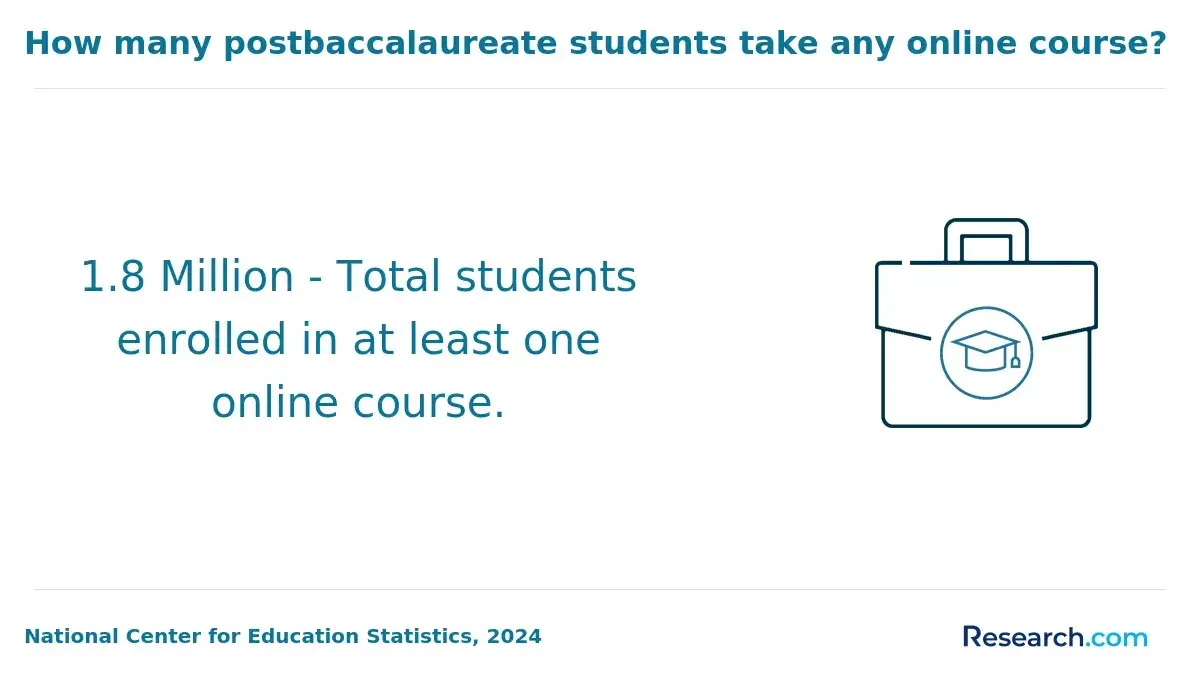
As enrollment in fully online graduate programs grew nearly 15% in recent years according to the National Center for Education Statistics, candidates face a complex landscape where affordability must be balanced against accreditation, licensure acceptance, and financial aid options. This guide dissects those layers to help prospective students realistically estimate their investment and avoid surprises that undermine long-term career returns.
Key Things to Know About the Cost per Credit for Online Public Health Master's Programs
- Per-credit costs vary sharply between public and private institutions; lower tuition often pairs with limited electives, requiring balance between affordability and curriculum breadth affecting workforce readiness.
- Mandatory fees and hidden costs can add 15-25% to sticker prices, complicating budget planning and potentially delaying program completion for self-funded students.
- Accreditation status critically influences employer recognition; non-CEPH accredited online degrees risk reduced licensure opportunities, impacting career mobility despite growing online education enrollment reported by NCES 2024.
What Is the Average Cost per Credit Hour for Online Public Health Master's Programs, and How Does It Compare Across Institution Types?
The average cost per credit hour is a more reliable financial benchmark than total program tuition when evaluating online public health master's programs because it reflects the actual incremental investment needed as students progress through their degree. Total tuition can be misleading, particularly for those comparing programs with widely varying credit requirements or differing institutional fee structures.
For example, a working professional balancing job and study commitments may prioritize a program with a lower per-credit charge that offers accelerated pacing, rather than simply selecting the cheapest overall tuition package that demands more credits or extends completion time. This approach enables nuanced decisions tailored to individual career timelines and financial constraints, essential in the context of growing demand across healthcare systems and public health agencies for qualified graduates.
Analysis of recent data from the Integrated Postsecondary Education Data System (IPEDS) reveals that average cost per credit hour varies notably among institution types offering online public health master's degrees. Public universities frequently provide the most cost-effective per-credit rates, typically between $400 and $600, especially benefiting in-state students due to residency pricing policies. Private nonprofit schools generally command higher per-credit fees, ranging roughly from $700 to $900, which often align with more resource-intensive program designs and potentially stronger faculty qualifications. Private for-profit institutions occupy a middle to higher cost per-credit position, occasionally surpassing $800, but may offer flexibility through evening classes or accelerated formats that justify these premiums for some learners.
Beyond sticker prices, actual student costs per credit deviate because of factors like residency status-where out-of-state enrollees at public universities can face rates double their in-state counterparts-and mandatory program-specific fees related to technology platforms, practicum supervision, or licensure preparation. Institutional pricing models also influence net cost, as some schools bundle fees into tuition or provide waivers for certain student populations. Prospective students must therefore anticipate these variables to build realistic budgets that avoid surprise expenses, which critically shape how employers and licensing bodies evaluate credentials obtained through online pathways.
This guide systematically compares tuition costs by examining key variables in the following order: institutional type and residency policies first; then program-level fees; delivery formats such as synchronous versus asynchronous courses; financial aid availability; and finally differences in accreditation and licensure impact. This structure allows readers to understand not only the headline average cost per credit hour for online public health master's programs but also the hidden financial layers that influence the all-in price. Considering per-credit costs alongside total program expenses equips students with a comprehensive, actionable framework to optimize enrollment decisions based on real educational value and career return on investment.
Those interested in exploring options parallel to public health might also consult resources on affordable online healthcare degrees for comparative insights.
How Many Credit Hours Are Typically Required to Complete an Online Public Health Master's Program, and How Does That Affect Total Tuition?
Credit hour requirements fundamentally shape the total tuition expense for an online public health master's program, influencing both financial outlay and time to degree completion. Candidates must weigh more than just per-credit prices, as programs with larger credit burdens can surpass seemingly costlier per-credit options in total cost, altering return on investment and workforce entry timing.
Typical credit-hour requirements vary widely across programs and tracks, generally spanning from 30 to over 60 credits. This breadth reflects factors like accreditation standards from bodies such as CEPH, degree paths (thesis versus non-thesis), and mandatory practicum or internship components that introduce both curricular depth and additional fees.
- Credit Hour Range: Non-thesis tracks commonly require 42 to 48 credits, while thesis or specialized tracks may exceed 50 credits, with some comprehensive curricula demanding upwards of 60 credits to meet multidisciplinary and experiential learning expectations.
- Practicum and Fieldwork Fees: Many programs mandate practicum or internship credits that often carry distinct fees-either flat sums or elevated per-credit charges-outside the standard tuition, which inflate total cost and should be scrutinized to avoid underestimating expenses.
- Cost Implications: A program charging $500 per credit over 60 credits totals $30,000, whereas a $700 per-credit program requiring 42 credits equates to $29,400. Without considering total credit load and additional fees, prospective students risk misjudging affordability and financial planning.
- Comparison Strategy: To assess affordability, students should multiply the per-credit tuition by total required credits and then add any mandatory practicum or administrative fees. This calculation produces a comprehensive total cost, essential for informed enrollment decisions that align with personal financial realities and career ambitions.
Which Online Public Health Master's Programs Offer the Lowest Cost per Credit Hour Among Accredited Institutions?
Cost per credit hour is a pivotal factor for self-funded students in selecting online public health master's programs, yet nominal rates can obscure true expenses once fees and enrollment rules are included. For example, a working professional comparing affordability must weigh not only tuition but also program structure and eligibility constraints that affect total investment and timeline.
- University of North Texas: Approximately $365 per credit hour across a 42-credit curriculum with cohort-based full-time enrollment; estimated tuition near $15,330 excluding technology and student service fees; online rates apply nationwide with no residency restrictions.
- Fort Hays State University: Roughly $315 per credit hour for 42 credits; tuition about $13,230 before mandatory online fees which may increase costs by roughly 5%; permits part- or full-time enrollment and charges uniform rates regardless of residency.
- University of West Florida: Around $380 per credit hour for 42 credits; tuition approximately $15,960 excluding technology fees and course materials; flexible online delivery with rolling admission and no rate differentiation by residency.
- East Tennessee State University: Near $350 per credit hour over 45 credits; total tuition roughly $15,750 plus additional institutional fees beyond per-credit costs; course seat limitations could affect pacing.
- University of New Mexico: About $330 per credit hour for 42 credits; estimated tuition $13,860 not including registration and activity fees; requires minimum 5 credits per semester for affordability; no residency restrictions.
These figures reflect some of the lowest cost per credit hour public health master's programs available from regionally and programmatically accredited institutions. However, variances in fees, cohort requirements, and enrollment conditions underscore the necessity for comprehensive cost verification. Working professionals and recent graduates alike must factor in these real-world tradeoffs to avoid unexpected financial burdens or extended completion times. For students balancing geographic constraints or assessing whether lower tuition aligns with professional recognition and licensure criteria, understanding these complexities is crucial. Additionally, financial aid, scholarships, and tuition reimbursement options remain essential considerations and can materially influence net costs.
Prospective students evaluating their online public health master's program choices should also consider broader workforce implications. Employers increasingly examine program accreditation, delivery mode, and graduate competencies alongside cost metrics. Thus, while lowest cost per credit hour public health master's programs provide valuable affordability benchmarks, decisions should integrate quality, accessibility, and career alignment-not solely sticker-price comparisons. For applicants exploring related health discipline pathways, reviewing nursing PhD programs may offer complementary perspective on cost structures and credential outcomes.
How Do In-State vs. Out-of-State Tuition Rates Apply to Online Public Health Master's Programs, and Which Schools Offer Flat Tuition Regardless of Residency?
Online master's programs in public health have traditionally mirrored the in-state versus out-of-state tuition distinctions established by public universities for on-campus offerings. Out-of-state students often faced substantially higher per-credit fees, reflecting limited local tax contributions supporting their education. However, this model is increasingly obsolete as many universities recognize that flat tuition rates for online learners enhance accessibility and simplify financial planning across state lines. This shift reduces cost barriers for non-resident students, creating a more equitable tuition landscape and potentially expanding who can afford these programs without geographic constraints.
Still, the practice is not universal. Some institutions maintain differential pricing, significantly raising costs for out-of-state students, which may misalign investment expectations relative to outcomes. Residency classifications remain complex, often anchored in stringent state rules that can exclude students from savings even if they have legitimate ties to the area. Regional consortiums like the Western Interstate Commission for Higher Education (WICHE) and the Southern Regional Education Board (SREB) mitigate these disparities to some extent through tuition reciprocity, though eligibility criteria are variable and require case-specific verification.
Prospective students are advised to consult bursar or financial aid officials to verify up-to-date tuition policies, as rates and residency definitions may shift annually and marketing materials do not always reflect these changes reliably. Transparency in costs beyond nominal per-credit fees is essential for creating full cost projections tailored to each student's circumstances.
- University of Florida: Implements a single per-credit tuition rate for its online master's in public health, uniformly applied to all students.
- Arizona State University: Offers a uniform tuition rate for its online MPH program, eliminating residency-based fee differences.
- University of North Carolina at Chapel Hill: Maintains consistent per-credit pricing for online public health graduate students across all states.
- University of Utah: Applies flat tuition for all online MPH enrollees, removing in-state vs. out-of-state discrepancies.
- University of Arkansas: Provides simplified flat-rate tuition for its online public health graduate program.
The financial implications for out-of-state students remain significant where differential tuition prevails, often increasing total debt and complicating ROI calculations. These elevated costs can dissuade applicants who must weigh whether the potential employment gains justify the upfront expenditure, especially for those funding their education independently. Regional agreements may offer partial relief but are inconsistent, making direct institutional inquiry a critical step before committing.
One graduate shared that during their online master's application process, uncertainty about residency status and waiting on multiple financial aid clarifications prolonged decision-making. Their program's rolling admissions required timely submission, but hesitancy about how residency affected tuition delayed enrollment until the bursar's office confirmed a flat rate applied. This reassurance ultimately enabled a clear financial commitment, but the experience highlighted how opaque and variable residency policies can create unnecessary stress and risk misinformed choices for prospective students navigating increasingly complex online public health programs.
What Mandatory Fees Are Added to Per-Credit Tuition for Online Public Health Master's Programs, and How Much Do They Increase the Real Cost?
Online public health master's programs often present per-credit tuition rates that understate the true expense due to mandatory fees layered on top. These fees, which can cumulatively add 10% or more to the program cost, significantly impact the overall financial commitment and should be a central factor in cost comparisons. For example, a program charging $600 per credit with 40 credits might appear to cost $24,000, but mandatory fees ranging from $2,500 to $3,000 push the actual spend closer to $27,000-effectively increasing the cost per credit by $60 to $75.
Common mandatory fees include:
- Technology Fees: Covering access to learning platforms and IT support, these fees typically run $50 to $150 per semester and accumulate across multiple terms.
- Program Fees: Specific charges related to public health resources, guest lectures, or databases that may be billed per credit or per term.
- Student Services Fees: Flat fees supporting advising, career services, and wellness resources, often surpassing $300 annually.
- Graduation Fees: One-time charges for diploma processing and commencement participation, usually between $100 and $300.
- Clinical or Practicum Surcharges: Additional fees for field placements, background checks, or insurance, which can add $500+ in final semesters.
Institutions commonly disclose these fees in fine print or separate documents, making it risky to base decisions solely on per-credit tuition. Without a full fee schedule, prospective students may underestimate their total cost and face unexpected financial strain late in the program. Calculating an all-in cost per credit-factoring in prorated mandatory fees-provides a more accurate, practical metric for evaluating tuition investments and ensures clearer alignment with workforce expectations and personal budgets.
How Do Online Public Health Master's Program Costs Compare Between Public and Private Universities?
Cost differences between public and private online public health master's programs reflect more than simple sticker price disparities; they shape long-term workforce outcomes and financial sustainability for students. Public universities typically offer lower per-credit rates, driven largely by state subsidization aimed at expanding access for in-state residents. This can make a public institution's total online program cost significantly less, especially for local students. For example, a mid-career professional remaining in their home state might save thousands by enrolling in a public university's online program compared to a private institution.
Economies of scale at public institutions reduce fixed costs per student due to large enrollments and established digital platforms. Legislative tuition caps in some states further restrain price growth, although these caps often do not apply to out-of-state online learners, who may face fees narrowing the cost gap with private options.
Private nonprofit universities typically charge higher per-credit rates but offer distinct value propositions such as smaller cohort sizes, increased faculty-to-student ratios, enhanced student support, and more personalized career services. These characteristics can translate to stronger employer brand recognition and networking advantages, which may justify higher tuition for students prioritizing career services and post-graduate outcomes. Private for-profit providers tend to have the highest rates but may appeal with accelerated pacing or scheduling flexibility, factors that can offset cost for students driven by time-to-degree.
Beyond cost, program accreditation and licensure eligibility are critical, as employers and licensing boards weigh these heavily in credential recognition. Program quality-reflected in faculty expertise, curriculum rigor, and research opportunities-should also factor into enrollment decisions alongside tuition comparisons. Residency policies and hidden fees significantly influence the effective cost, so students evaluating online public health master's degrees must integrate all these factors to estimate the true investment required.
The practical evaluation of programs includes understanding financial aid, scholarships, and employer tuition reimbursement options, all of which impact net cost. Prospective students balancing these elements are better equipped to predict the return on their online degree investment. Those considering related fields might also explore accredited online biology degrees for additional context on cost structures and workforce demand.
Are There Online Public Health Master's Programs With Tuition Locked In at Enrollment, and How Does Tuition Lock Affect Long-Term Cost Planning?
Locking tuition rates at enrollment offers a tangible safeguard against unexpected cost increases in online public health master's programs, providing students a critical planning advantage. For those who finance their education independently or juggle variable income streams, tuition lock policies prevent the program's total expense from escalating with annual hikes that many institutions routinely apply. However, these policies are not uniform-some guarantee rates only for the entering cohort, ensuring that all students starting simultaneously pay the same tuition regardless of program duration.
Others restrict the lock to a single academic year or a fixed number of semesters. Maintaining continuous enrollment is often vital; any interruption may invalidate the tuition lock and revert students to current, potentially higher, rates. This distinction is particularly consequential for part-time enrollees, who typically span several years and face greater exposure to rate changes without a guarantee.
- Confirmation: Directly verify with each program whether a tuition lock exists and secure documented proof.
- Conditions: Understand enrollment continuity or other stipulations required to uphold the locked rate.
- Scope: Ascertain if the lock is cohort-based, annual, or semester-limited.
- Risk: Be aware tuition locks can be forfeited due to leaves of absence or changes in enrollment status.
Tuition locks should factor into comprehensive cost analyses alongside mandatory fees and aid opportunities to form a realistic projection of a program's total investment, helping avoid surprises that compromise long-term financial stability during graduate study.
One graduate recalled a period of hesitation during the rolling admissions cycle when she delayed committing while finalizing financial arrangements. Because her chosen online public health program offered a tuition lock for her cohort, she was able to pause application steps without fearing tuition increases. Yet she remained vigilant about meeting continuous enrollment rules once admitted, knowing any breaks could reset her rate. This assurance shaped her decision timeline and budgeting strategy, highlighting how tuition locks can influence not only costs but student behavior amid uncertain admissions processes.
What Financial Aid, Scholarships, and Employer Tuition Benefits Are Available to Reduce the Net Cost of an Online Public Health Master's Degree?
Financial aid, scholarships, and employer tuition benefits can drastically lower the net cost of an online public health master's degree, making a significant difference in long-term debt burden. For example, a working professional entering a public health role in a hospital system may rely heavily on employer tuition reimbursement, which often provides the most substantial reduction in out-of-pocket costs. While the sticker price per credit hour sets expectations, many students pay far less due to these mechanisms. Graduate students generally depend on federal unsubsidized loans, which, unlike subsidized loans, accrue interest while studying but still offer a predictable way to finance education without immediate cash flow strain.
- Graduate Assistantships: These roles reduce tuition through work responsibilities but are often limited or unavailable for online-only students due to prioritization of on-campus cohorts, representing a key tradeoff for distance learners seeking funding opportunities.
- Institutional Scholarships: Merit- or need-based scholarships exist at the graduate level but are not as abundant as for undergraduates, and eligibility restrictions may disproportionately impact online students, making early and direct inquiry essential.
- Professional Association Awards: Several public health organizations offer targeted scholarships and grants, usually requiring applicants to demonstrate commitment to specific public health specializations or career paths, a factor that can influence program and funding fit.
- Employer Tuition Reimbursement: This benefit is often the most impactful, especially in public health sectors facing workforce growth. Applicants must assess the IRS tax exclusion cap of $5,250 annually and negotiate coverage limits within employment contracts to maximize financial aid.
Students should proactively engage financial aid offices to secure personalized net cost estimates addressing these factors rather than relying on sticker prices alone. Comparing net costs across programs incorporating these financial aid options enables a more accurate return-on-investment assessment, crucial for those balancing budget constraints with career goals. For place-bound or first-generation students drawn to online degrees, confirming that the credential is recognized by employers and licensing boards is equally important to ensure professional viability. Given increasing demand across healthcare systems, a strategic approach combining financial aid and program value can optimize outcomes in an evolving public health job market.
Enrolling in online public health master's programs often requires understanding nuanced employer expectations and financing options. For instance, professionals considering pathways related to acute care might explore specialized credentials such as acute care NP certification as part of a broader strategic career plan. Ultimately, financial aid options for online public health master's programs, particularly employer tuition assistance for online public health degrees, remain critical levers in reducing net tuition costs while supporting career transitions.
How Does the Cost per Credit for Online Public Health Master's Programs Differ by Delivery Format-Synchronous, Asynchronous, or Hybrid?
Cost per credit differences among online public health master's programs are influenced heavily by delivery format, yet these disparities often reflect institutional infrastructure more than straightforward pricing strategies. Fully asynchronous programs typically achieve lower per-credit tuition through scalability-reusing course materials with minimal live faculty involvement reduces overhead. However, this efficiency does not automatically guarantee markedly cheaper tuition across programs, as factors like accreditation standards and market positioning shape prices.
Synchronous programs requiring live participation tend to carry higher costs due to investments in real-time video technology, dedicated faculty availability, and technical support. These added expenses may increase per-credit rates, though some programs justify this with enhanced engagement or institutional prestige. Yet, working professionals may face scheduling constraints with synchronous formats, potentially prolonging time-to-degree and inflating total educational expenses beyond tuition alone.
Hybrid programs mixing asynchronous learning with live or on-campus components often fall between fully asynchronous and synchronous tuition levels. Importantly, additional hidden costs-such as travel, lodging, or childcare-can substantially raise the overall financial burden, making per-credit comparisons alone inadequate for cost-conscious students.
- Scheduling Constraints: Synchronous formats impose fixed class times that can complicate balancing work, family, and study, affecting both completion speed and cumulative cost.
- Flexibility Versus Engagement: Asynchronous courses offer flexible pacing which may accelerate program completion, while synchronous formats promote richer interaction valued by many employers.
- Hidden Expenses: Hybrid options require careful accounting for non-tuition costs that can offset seemingly competitive per-credit rates.
- Return on Investment: Aligning delivery format with personal circumstances and learning preferences is critical; the model enabling consistent progress often yields the best financial and professional outcomes.
In evaluating tuition differences, prospective students should incorporate this nuanced understanding of how delivery format affects cost, flexibility, and employability. For those navigating career changes or entry into public health fields, balancing these factors alongside accreditation and financial aid strategies ensures a realistic all-in cost estimate-not just a cost per credit. For example, working adults might compare rigid synchronous schedules against asynchronous programs to avoid delays that would raise total expenses.
More broadly, individuals weighing education investments may also consider related fields or program options. For a comparative perspective on flexible healthcare degrees, audiences might review the easiest nurse practitioner program paths, which similarly balance tuition cost, delivery format, and workforce readiness.
What Is the Minimum GPA Requirement for Public Health Master's Program Admission, and How Does Selectivity Relate to Per-Credit Cost?
Minimum GPA requirements function primarily as an initial screening tool rather than firm admission guarantees in online public health master's programs. Most institutions set this threshold around a 3.0 undergraduate GPA, though less selective programs may accept students with GPAs as low as 2.75, and highly competitive programs often require 3.5 or higher. This range reflects different admissions standards correlating loosely with the institutions' selectivity and program reputation. However, a candidate applying near the minimum GPA at a highly selective school typically faces stiff competition, as admitted cohorts generally boast GPAs well above the stated minimum.
The assumption that higher selectivity-and thus higher GPA thresholds-correlates directly with increased per-credit tuition is not consistently upheld in practice. While some prestigious public health programs justify premium pricing through brand recognition or graduate outcomes, many moderately selective online programs offer comparable per-credit costs, presenting a pragmatic cost-benefit balance for applicants whose academic profile aligns more closely with these schools.
For example, a working professional with a 3.0 GPA might risk rejection from top-tier programs requiring 3.5 but gain admission at a moderately selective program with a similar tuition rate, yielding similar workforce entry opportunities. Employers frequently prioritize comprehensive skill sets and practical experience alongside academic credentials, meaning the financial efficiency of obtaining a master's degree without overstretching resources can impact long-term return on investment.
Applicants should integrate GPA thresholds with cost and admission likelihood into a strategic decision matrix, targeting programs where their academic record is competitive to avoid financing expensive reapplications or partial completions. This approach aids in realistically forecasting total educational expenditures, especially when combined with considerations about accreditation, licensure applicability, and hidden fees.
- Minimum GPA: Most online public health master's programs require a minimum 3.0 undergraduate GPA, though some accept 2.75, while top-tier programs may expect 3.5 or higher.
- Selectivity Impact: Higher selectivity generally signals tougher competition and cohorts with GPAs exceeding minimum thresholds but does not guarantee higher per-credit tuition.
- Per-Credit Cost: Comparable tuition rates are common across moderately selective programs, challenging assumptions that premium pricing always matches selectivity.
Admissions Strategy: Applicants near minimum GPA levels should identify programs with realistic admission chances at a competitive cost to maximize financial and career outcomes.
What Graduates Say About the Cost per Credit for Online Public Health Master's Programs
- Azai: "Balancing a full-time job and family obligations meant I had very limited time for a master's in public health, so I specifically chose an online program with asynchronous classes. The flexibility allowed me to complete coursework without sacrificing work hours, but I quickly learned that the real challenge was finding employers who valued my degree without prior in-person internships. While I landed a role coordinating community outreach, I found that building a practical portfolio and gaining certifications were crucial next steps to advance."
- Russell: "Switching careers into public health after a decade in marketing came with financial risks, so I carefully selected an affordable online master's program with strong industry connections and internship opportunities. This decision paid off when I secured a remote data analyst internship that boosted my resume and provided hands-on experience. However, I'm aware that in epidemiology roles requiring licensure, my advancement may be limited without additional credentials, so I've begun pursuing specialized certificates."
- Christian: "I underestimated the workload of my online master's in public health while juggling freelance work, which forced me to prioritize courses directly aligned with roles I wanted in health policy. Even though I graduated with good grades, I encountered stiff competition for government positions, where many candidates had extensive internships. That experience pushed me to focus on building a network and gaining volunteer experience, which eventually landed me a policy analyst role, though I'm pacing my career growth carefully given the ongoing credential requirements."
Other Things You Should Know About Public Health Degrees
Online programs tend to offer per-credit rates that are similar to or slightly lower than their on-campus counterparts, but this cost gap varies significantly by institution. However, students should weigh whether the reduced costs correspond with differences in networking opportunities, hands-on experiences, and faculty access, which on-campus cohorts might receive more readily. If direct employer connections and experiential learning are critical to a student's career path in public health, paying a marginally higher on-campus tuition could yield better returns despite the online program's cost savings.
Beyond tuition, students must budget for mandatory technology fees, specialized software subscriptions, and sometimes proctoring or assessment charges that can raise the effective cost per credit by 10-20%. Additionally, online students often miss out on subsidized campus resources like library access or career services, necessitating paid alternatives. These hidden costs can accumulate, diminishing the apparent savings of lower per-credit tuition and complicating financial planning if not accounted for upfront.
Rather than focusing solely on per-credit costs, students should integrate tuition rates with program length, mandatory fees, and potential financial aid to estimate the total investment. Prioritizing programs with strong employer ties, accreditation aligned with career goals, and clear pathways to licensure often outweighs marginal cost differences. Practical decision-making demands weighing cost against expected outcomes-selecting the program that offers a manageable workload and quality connections boosts chances of securing timely employment in the public health sector.
References
- Financial Aid Guide https://www.publichealth.org/resources/financial-aid/
- Benefits of Studying Public Health | Bright Career Ahead https://tau.edu.zm/blog/the-advantages-in-master-of-public-health/
- 25 Most Affordable Online MPH Programs - MPH Online https://www.mphonline.org/most-affordable-online-mph-programs/
- Master of Public Health Online https://www.unthealth.edu/college-of-public-health/master-of-public-health-online.html
- Online vs Hybrid vs Campus Learning in Healthcare: Which Is Right for You? https://www.edumed.org/articles/online-vs-hybrid-vs-campus/
- How Long Does It Take to Get a Master's Degree? https://www.snhu.edu/about-us/newsroom/education/how-long-does-it-take-to-get-a-masters-degree
- 2025's Most Affordable Online MPH Degrees https://www.onlinemastersdegrees.org/most-affordable/public-health-mph/
- Public Health - Future graduate students https://grad.usask.ca/programs/public-health.php
- Public Health Scholarships and Online Resources for Students https://www.degreesforgood.org/financial-aid/scholarships/public-health/