2027 Self-Paced Online Human Resources Bachelor's Degree Programs

Co-Founder and Chief Data Scientist
Balancing a full-time job with the desire to switch careers into human resources can feel overwhelming. Many adults juggling work and family responsibilities hesitate to enroll in traditional programs due to rigid schedules. Self-paced online human resources bachelor's degree programs offer a flexible solution, allowing learners to progress according to their availability. Recent data shows that 62% of students in these programs value schedule flexibility as their top priority. This article explores the benefits and practicalities of self-paced online human resources bachelor's degree programs, guiding prospective students through the key factors to consider when choosing the right path for a successful career pivot.
Key Benefits of Self-Paced Online Human Resources Bachelor's Degree Programs
- Self-paced online human resources programs offer flexibility, allowing working professionals to balance career and study commitments without fixed class schedules.
- Accelerated learning pathways help students quickly develop essential skills, often through competency-based models that recognize prior experience and knowledge.
- These programs provide cost-effective routes to accredited credentials, with many schools offering transfer credits and financial aid to reduce total expenses.
What Are Self-Paced Online Human Resources Bachelor's Degree Programs, and How Do They Differ From Traditional Online Formats?
Self-paced online human resources bachelor's degree programs allow learners to complete coursework independently of fixed class schedules. Unlike cohort-based or scheduled asynchronous formats, self-paced models offer open enrollment and flexible timelines, enabling students to start anytime and progress according to their own availability. This design supports competency-based education, where mastery of skills-rather than seat time-drives credit accumulation, benefiting students who need adaptable pacing.
These programs differ significantly from traditional online human resources degrees in how they balance time management, faculty interaction, and student accountability. Scheduled courses typically require adherence to fixed calendars with synchronous or regular asynchronous activities fostering shared progress. Conversely, self-paced programs rely heavily on student initiative, demanding strong organization and motivation since faculty support is often intermittent and interactions are asynchronous.
Key features of self-paced human resources bachelor's programs include:
- Open Enrollment: Students can begin their studies at any time during the year without waiting for a specific semester start, allowing immediate access to coursework.
- Flexible Timelines: Without rigid deadlines, learners complete competency modules at their preferred pace, which can accelerate degree completion for some.
- Milestone-Based Progression: Academic progress is demonstrated through achieving defined competencies or module completions rather than weekly assignments, offering autonomy in scheduling.
- Time Management: Students must exercise self-discipline and effective organization to maintain steady progress, unlike traditional courses with structured pacing.
- Faculty Interaction: Instructor support is typically asynchronous and less frequent, involving periodic check-ins instead of scheduled live sessions.
- Student Accountability: Motivation depends on individual engagement, with fewer external deadlines or cohort pressures reinforcing participation.
Self-paced online human resources bachelor's degree programs offer flexibility critical for working professionals, career changers, and those with family obligations. Their growing popularity stems from accommodating diverse learner needs-including transfer credit acceptance and prior learning assessments-and integrating competency-based education without fixed calendars. Individuals seeking alternatives might also explore related fields, such as a master's in speech pathology online, which share some similar flexible learning formats.
Which Accredited Institutions Offer Self-Paced Online Human Resources Bachelor's Degree Programs?
Several regionally accredited universities in the United States offer self-paced online bachelor's degree programs in human resources designed to accommodate working professionals, non-traditional students, and first-time enrollees seeking flexibility. These top accredited universities with flexible human resources bachelor's degree completion programs utilize competency-based education models that emphasize mastery of skills over traditional semester pacing. They also often provide generous transfer credit policies, prior learning assessments, and varying tuition structures to fit different financial needs.
- Capella University: Through its FlexPath program, Capella offers a fully self-paced, competency-based bachelor's in human resources. Tuition is subscription-based at about $2,500 per 12-week term, which allows students to take unlimited courses within that period. Capella is accredited by the Higher Learning Commission (HLC), and students typically complete the degree in 2 to 3 years.
- Western Governors University: WGU's online business bachelor's degree features a specialization in human resources management with tuition charged as a flat rate around $3,500 per six-month term. The university holds accreditation from the Northwest Commission on Colleges and Universities (NWCCU). Average completion ranges from 2 to 3 years with flexible pacing.
- Southern New Hampshire University: SNHU provides a business administration bachelor's with an emphasis on human resources. Tuition is per credit hour-about $320-and the institution is accredited by the New England Commission of Higher Education (NECHE). Students usually finish within 3 to 4 years depending on their pace.
- Liberty University: Liberty's online Bachelor of Science in Business Administration with an HR concentration offers flexibility with tuition of approximately $465 per credit hour. It holds accreditation from the Southern Association of Colleges and Schools Commission on Colleges (SACSCOC). Completion times average 3 to 4 years, with rolling enrollment.
- Thomas Edison State University: TESU emphasizes credit for prior learning in its competency-based online bachelor's in human resources management. Tuition costs roughly $398 per credit hour. The Middle States Commission on Higher Education (MSCHE) accredits TESU, and students typically finish between 2 and 4 years.
For those looking to explore affordable options in online business degree programs that include human resources specializations, additional resources can be found at business degree.
2026 Update: HR Certification and Skills Portfolio Readiness
For 2026, this section was added to help students look beyond flexibility and evaluate whether a self-paced HR bachelor’s program supports real career preparation, especially for those moving into human resources from another field.
- Whether coursework aligns with common HR certification knowledge areas, such as employee relations, compensation, compliance, and talent management.
- If assignments create portfolio-ready work, such as policy drafts, workforce planning projects, or HR analytics reports.
- Whether the program includes current employment law, workplace technology, and remote workforce management topics.
- If students can access career coaching, resume reviews, mock interviews, or HR-specific job search support.
- Whether there are capstone projects, simulations, internships, or applied case studies tied to HR practice.
- If faculty or mentors have practical HR experience in addition to academic credentials.
Checking these factors helps students choose a program that is not only convenient, but also useful for building confidence, job-ready skills, and a stronger HR career transition plan.
Completion times for self-paced online human resources bachelor's degree programs can range from as little as 18 months to the more common three to four years. Students with prior credits or transfer coursework often finish more quickly by avoiding repeated material. The National Center for Education Statistics reports that the average duration for bachelor's degrees is about 4.5 years, but self-paced formats offer flexibility for accelerated learners.
- Prior Credits and Transfer Coursework: Acceptance of credits from community colleges or previous institutions reduces total study time by allowing students to bypass courses they've already completed.
- Weekly Study Hours: Individuals dedicating 20 or more hours weekly to their program usually progress faster, whereas those juggling work or family responsibilities might move at a slower pace.
- Prior Learning Assessments: Competency-based models let students gain credit through exams or portfolio reviews, letting them skip foundational courses and hasten program completion.
- Realistic Scheduling: Establishing a manageable study plan aligned with other commitments helps maintain motivation and steady progress, preventing burnout or extended delays.
- Support Services: Access to academic advising, tutoring, and technical help ensures learners can overcome obstacles promptly and stay on track toward graduation.
A professional who enrolled in a self-paced online human resources bachelor's program shared that balancing coursework with a full-time job was challenging but rewarding. He noted, "Setting small weekly goals helped me stay focused, even when unexpected work demands arose." He also emphasized the importance of readily available academic support, saying, "Having advisors to turn to when I hit a snag made a big difference in keeping my momentum." Though he initially questioned how long it would take to finish, his structured approach and the program's flexibility allowed him to steadily advance despite disruptions, ultimately completing his degree ahead of his original timeline.
Admission criteria for self-paced online Human Resources bachelor's programs typically require a high school diploma or GED, confirming basic academic readiness. These programs usually set minimum GPA expectations between 2.0 and 3.0, but many adopt flexible policies to accommodate diverse student backgrounds, especially non-traditional and returning learners.
- High School Diploma or GED: This foundational credential is essential for enrollment, verifying that students possess the core skills needed for college-level study in reading, writing, and mathematics.
- Minimum GPA Expectations: While some selective undergraduate admission criteria for online Human Resources bachelor's programs demand higher GPAs, open-access formats often waive these for increased accessibility.
- Prerequisite Coursework: Certain programs require prior studies in subjects such as business or communication, but many self-paced formats include introductory courses to address knowledge gaps within the curriculum.
- Open-Enrollment and Rolling Admission: These features offer flexible entry points and simplified application procedures, making it easier for students balancing work or personal responsibilities to enroll.
- Selective vs. Open-Access Programs: Selective options usually have stricter requirements but provide more academic support, whereas open-access programs emphasize accessibility and offer support tailored to varied learning needs.
- Strengthening Your Application: Applicants who fall short of minimum prerequisites can improve their chances by submitting compelling personal statements, highlighting relevant experience, or completing foundational courses to demonstrate preparedness.
For working professionals interested in flexible pathways, these admission frameworks often align well with prior learning assessments and transfer credit policies. Students can explore accredited institutions that support financial aid eligibility and provide competency-based education models. For example, those comparing program affordability might also consider the cheapest online construction management degree options to gauge cost structures in similar fields.
- Per-Credit Tuition: Institutions commonly charge tuition per credit hour, usually between $300 and $600. Completing a typical 120-credit bachelor's degree depends on transfer credits and study pace, which significantly influences overall expenses.
- Subscription Models: Some programs offer flat monthly or term fees allowing unlimited coursework during that period. This approach suits students aiming to finish faster, as paying a fixed rate can reduce total costs with accelerated progress.
- Bundled Fees: Certain schools provide an all-in upfront price covering tuition, course materials, and exams. While this simplifies financial planning, students may face higher initial payments compared to pay-as-you-go systems.
- Hidden Costs: Enrollment often entails extra charges-technology fees, proctoring, textbooks, and required software subscriptions-that may add several hundred dollars or more beyond tuition.
- Cheapest Upfront Rate vs. Total Cost: Lower per-credit rates may seem affordable initially but can extend time to graduation, increasing total spending. Conversely, flat-rate plans encourage quicker completion, potentially lowering aggregate expenses despite higher initial fees.
Reflecting on her experience, a professional who completed a self-paced online Human Resources bachelor's degree shared how balancing work and coursework was daunting but rewarding. She recalled, "Budgeting was tricky because while tuition seemed manageable, unexpected fees for software and exam proctoring caught me off guard." She appreciated subscription models that let her accelerate classes when her schedule allowed, remarking that "having flexible pacing options helped me finish sooner than I expected, which saved money overall." Despite challenges, she felt the investment was worthwhile, emphasizing the importance of understanding all costs upfront to avoid surprises during the program.
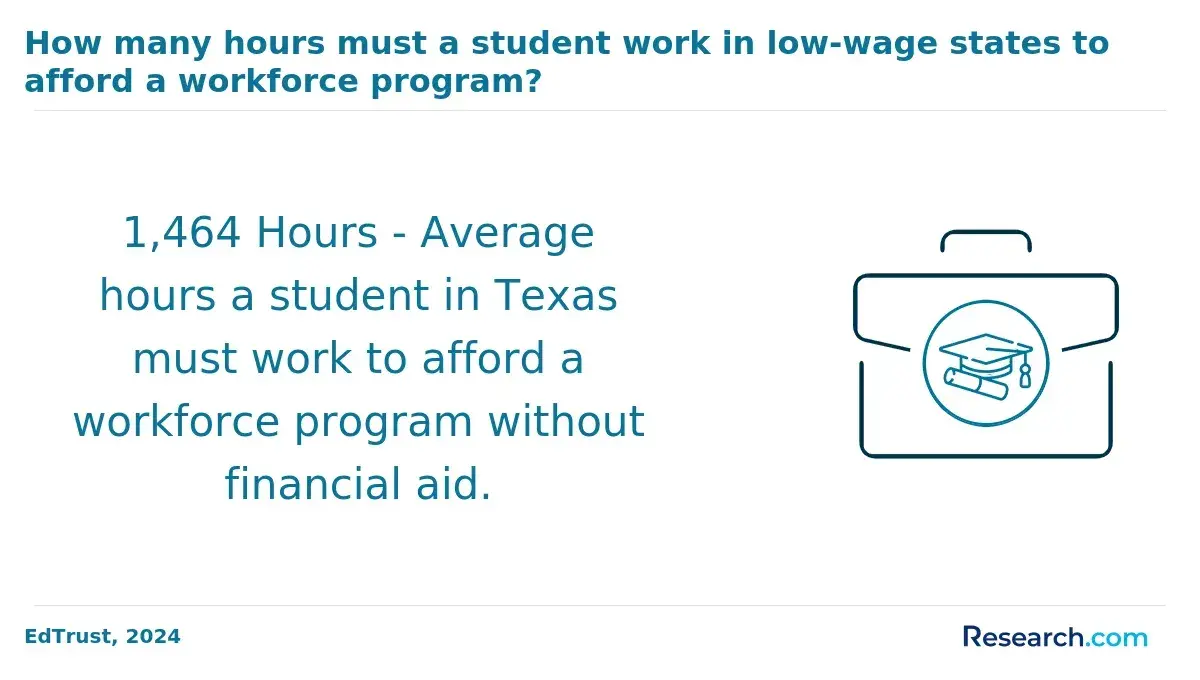
Financial assistance for self-paced online Human Resources bachelor's degrees comes from federal, state, and institutional sources. Many competency-based education (CBE) programs qualify for federal aid, but eligibility often depends on how these programs convert competency assessments into credit hours, which can influence the timing and amount of aid received. According to the National Center for Education Statistics, approximately 34% of undergraduates enrolled solely in distance education courses during the 2020-2021 academic year benefited from financial aid.
State grants and scholarships provide additional funding opportunities, though availability varies by residency and school accreditation status. Many institutions now offer scholarships tailored to adult learners and those enrolled in flexible, self-paced programs like online Human Resources degrees.
Industry-specific scholarships from organizations such as the Society for Human Resource Management (SHRM) and the Human Resources Certification Institute (HRCI) are also valuable resources, delivering both financial support and career development benefits.
Since self-paced formats differ significantly from traditional semester schedules, prospective students should consult their school's financial aid office to fully understand how aid eligibility and disbursement align with these unique program structures.
- Federal Aid Eligibility: CBE programs must meet FAFSA credit-hour criteria; verifying program qualifications ensures access to federal grants and loans.
- State and Institutional Funding: Grants and scholarships depend on residency and institution policy but often target online learners and adult students.
- Discipline-Specific Scholarships: Professional groups like SHRM and HRCI offer scholarships that provide financial and career advantages.
- Disbursement Timing: Aid schedules may vary in self-paced studies, making early communication with financial aid offices essential.
- Growing Online Enrollment: Over one-third of undergraduates now study exclusively online, increasing the importance of tailored financial aid options.
Competency-based education (CBE) in self-paced online Human Resources bachelor's programs enables students to demonstrate mastery of specific skills and knowledge through assessments rather than accumulating traditional seat time. This flexible model allows learners to advance by proving their understanding of key Human Resources concepts, progressing quickly in areas of strength and focusing more on challenging topics. For financial aid, many CBE programs convert mastered competencies into credit-hour equivalents, complying with federal guidelines while maintaining a personalized pace. In contrast, direct assessment programs award credit solely based on demonstrated competencies without relying on credit-hour metrics.
Prominent examples of CBE programs include the University of Wisconsin Flexible Option, which uses regular formative and summative assessments to track student progress. Western Governors University features project-based evaluations supported by 24/7 faculty mentorship, while Southern New Hampshire University integrates prior learning assessments with competency tests, earning recognition from employers seeking job-ready graduates. These programs highlight the importance of strong faculty support through mentors or coaches who guide learners throughout their studies.
Success in CBE requires self-discipline and comfort with independent learning, making it essential for prospective students to honestly assess their ability to manage flexible study schedules. Nationwide enrollment in competency-based programs grew by 15% between 2021 and 2023, reflecting increased demand for adaptable, skills-focused education in Human Resources.
- Mastery Over Time: Students progress by demonstrating skills through assessments instead of completing set classroom hours, allowing individualized pacing tailored to their strengths and weaknesses.
- Credit Hour Equivalency: Many CBE programs translate competencies into credit hours for financial aid, while direct assessment models grant credit solely on mastery without traditional credit-hour requirements.
- Support Systems: Faculty mentors and coaches provide ongoing guidance to help students navigate assessments and maintain progress within their self-paced programs.
- Recognized Programs: Universities such as University of Wisconsin, Western Governors University, and Southern New Hampshire University offer accredited CBE Human Resources degrees valued by employers.
- Self-Discipline Required: Learners must effectively manage their time and motivation, making CBE especially suitable for those who thrive in independent study environments.
Accreditation significantly impacts the value and recognition of self-paced online human resources bachelor's degree programs. Regional accreditation holds more prestige and is widely accepted by employers and graduate schools, particularly in human resources. The six regional accrediting bodies recognized by the U.S. Department of Education include the Middle States Commission on Higher Education, New England Commission of Higher Education, Higher Learning Commission, Northwest Commission on Colleges and Universities, Southern Association of Colleges and Schools Commission on Colleges, and Western Association of Schools and Colleges Senior College and University Commission. These agencies oversee institutions-including regionally accredited online human resources degree programs for transfer credits-that generally offer stronger credit transferability and better career outcomes.
National accreditation tends to focus on vocational, technical, or for-profit schools and carries less weight in the human resources field. Some self-paced human resources programs may also hold programmatic accreditation from organizations like the Society for Human Resource Management (SHRM), increasing their relevance, though this specialty accreditation supplements rather than replaces institutional approval.
Enrolling in nationally accredited or non-accredited programs poses risks such as difficulty transferring credits and employer skepticism regarding the legitimacy of the degree, which can hinder career advancement opportunities and certification eligibility. Before applying, prospective students should verify accreditation status through the U.S. Department of Education's accreditation database and the Council for Higher Education Accreditation (CHEA) directory.
Competency-based education models, transfer credit policies, prior learning assessments, and financial aid eligibility all vary by program, making accreditation verification critical for a flexible and recognized degree. For those seeking affordable and reputable options, reviewing programs alongside offerings like the cheapest aba-approved paralegal programs can provide useful comparative insights.
- Accreditation Type: Regional accreditation is more respected and offers better acceptance for credits and employment in human resources compared to national accreditation.
- Regional Accrediting Bodies: The six key regional agencies include Middle States, New England, Higher Learning, Northwest, Southern Association, and Western Association commissions.
- Programmatic Accreditation: Some programs also hold specialized accreditation from organizations like SHRM to enhance their relevance to human resources careers.
- Risks of National Accreditation: Nationally accredited or non-accredited programs may limit credit transfer and raise doubts about your degree's legitimacy.
- Verification Resources: Always consult the U.S. Department of Education and CHEA databases to confirm a program's accreditation before enrolling.
Transfer credit policies for self-paced human resources online degrees vary considerably based on accreditation standards, institutional priorities, and articulation agreements. Most programs assess transfer credits by examining course relevance, the accreditation of the previous institution, and minimum grade requirements-usually a grade of C or higher. Many limit transferable elective credits but offer greater flexibility for core human resources coursework, ensuring the degree maintains academic integrity while maximizing credit acceptance.
Some of the most generous programs accept up to 90 transfer credits, allowing students to apply the equivalent of two years of prior college coursework toward their degree. These institutions often rely on articulation databases like the Articulation System Stimulating Interinstitutional Student Transfer (ASSIST) or maintain formal partnerships with community colleges specializing in workforce training. Additionally, programs commonly recognize military training and professional certifications through recommendations by the American Council on Education (ACE), awarding academic credit for these experiences.
Before enrolling, prospective students should request a formal transfer credit evaluation to clarify how many credits will apply to their degree requirements. This step helps avoid unexpected course loads and tuition expenses while supporting tailored financial planning. For those seeking affordable options, reviewing cheap online colleges with flexible transfer credit policies can enhance career advancement opportunities.
- Credit Limits: Many programs cap transferable credits at around 90 semester hours, enabling students to save time and reduce costs.
- Military and ACE Credits: Transfer policies frequently accept military training and professional certifications in accordance with ACE guidelines, converting these into academic credits.
- Community College Partnerships: Agreements with community colleges allow seamless credit transfer, benefiting students with associate degrees seeking to continue their education online.
- Evaluation Process: Schools conduct detailed transcript reviews focused on alignment with human resources curricula to determine eligible credits.
- Pre-Enrollment Advice: Requesting a transfer credit evaluation before starting helps students understand their actual degree progress and financial commitments.
Self-paced online human resources bachelor's degree programs frequently utilize Prior Learning Assessment (PLA) to credit students for professional experience, military training, industry certifications, and independent study. PLA methods include portfolio evaluations, challenge exams, and standardized tests such as CLEP and DSST, enabling learners to accelerate their degrees by validating skills outside conventional coursework.
Among affordable options, Western Governors University permits up to 75% of credits through PLA with a thorough portfolio submission process that links prior work to course objectives. University of Massachusetts Global accepts CLEP and DSST credits with minimal restrictions and emphasizes the American Council on Education's (ACE) credit recommendation framework, which is especially beneficial for veterans and working professionals by facilitating military and occupational training credit transfers.
To ensure maximum credit, students should carefully compile portfolios, official transcripts, and certification records that clearly align prior experience with academic requirements. Evidence shows that institutions offering PLA report a 20% higher graduation rate for adult learners, underscoring PLA's role in improving degree completion outcomes.
- Recognition of Diverse Learning: PLA credits are granted based on proven professional experience, military service, or certifications, validated through exams and portfolios.
- Generous Credit Allowances: Some programs allow up to 75% of degree credits via PLA, considerably reducing time and expenses.
- Standardized Testing Alternatives: CLEP and DSST exams offer accessible, affordable ways to demonstrate knowledge across many programs.
- ACE Credit System Benefits: ACE recommendations help translate military and industry training into college credit, easing transitions for service members and employees.
- Strategic Portfolio Preparation: Detailed documentation of prior achievements maximizes credit approval chances and accelerates degree progress.
Talent Acquisition and Recruitment
Concentrating on sourcing and hiring strategies, this track equips students for roles such as recruitment specialists or talent acquisition managers. Median annual salaries hover near $63,000. While internships are sometimes recommended, certification is typically not mandatory.
Compensation and Benefits Management
Focusing on employee pay structures, benefits programs, and labor law compliance, this specialization prepares graduates for compensation manager positions with median earnings around $121,000. Obtaining certifications like Certified Compensation Professional (CCP) can enhance career prospects.
Employee Relations and Labor Law
Students learn about workplace policies, conflict resolution, and legal adherence, leading to careers such as labor relations specialists earning approximately $66,000. Some programs require internships or support preparation for certifications like SHRM-CP.
Organizational Development and Training
Covering leadership development and change management, this area targets training managers, whose salaries average about $120,000. Practical experience through internships is often encouraged.
Diversity and Inclusion Management
This specialization emphasizes fostering inclusive workplace cultures. Though certification is usually unnecessary, professional development can be advantageous. Salary ranges vary due to emerging demand in this field.
Choosing the right concentration affects program length-intensive coursework or required internships might extend completion time, while focused tracks may enable quicker progress. Aligning specialization with career goals and labor market trends helps maximize educational investment.
What Graduates Say About Self-Paced Online Human Resources Bachelor's Degree Programs
- Danny: "I chose the self-paced online human resources bachelor's degree program because it allowed me to balance work and study without sacrificing either. The affordability was a major factor-being able to complete the degree without accumulating overwhelming debt was a huge relief. This program not only deepened my knowledge but also opened new doors in my career, helping me secure a management role within six months of graduation."
- Jamir: "Reflecting on my experience, the flexibility of the self-paced online human resources program was what stood out the most-it gave me the freedom to learn at my own rhythm while handling family commitments. The cost was reasonable compared to traditional colleges, which made it accessible without financial strain. Professionally, earning this degree boosted my confidence and credibility, ultimately allowing me to transition into HR consulting with greater ease."
- Ethan: "As someone eager to establish a solid foundation in human resources, the self-paced online bachelor's program appealed for its convenience and real-world application. The cost-effectiveness meant I could invest in quality education without breaking the bank. After completing the program, I noticed a significant improvement in my skills and was promoted to a senior HR specialist role, proving the impact of this degree on career progression."
Other Things You Should Know About Human Resources Degrees
Many accredited programs accept up to 90 transfer credits toward a 120-credit bachelor’s degree. Schools usually require official transcripts, a minimum 2.0 GPA, and course-by-course evaluation for prior college work. Upper-division human resources major courses are often not transferable and must be completed at the enrolling institution.
Self-paced online programs offer flexible scheduling that allows working adults and non-traditional students to balance study with jobs and family responsibilities. Many programs provide extended access to course content and do not require log-in at fixed times, accommodating diverse lifestyles and time zones. Support services such as academic advising, tutoring, and career counseling are often available remotely to assist students throughout their studies.
Graduates with a bachelor's degree in human resources can pursue roles such as HR specialists, recruiters, benefits coordinators, or training managers. Median salaries for HR professionals vary by role and location but generally range from $50,000 to $75,000 annually, with higher earnings possible as experience and certifications increase. Completing a self-paced online degree provides the knowledge and credentials to enter or advance in the HR field comparably to traditional degree holders.
The return on investment (ROI) for self-paced online human resources degrees is often favorable due to generally lower tuition costs and reduced expenses related to commuting or relocation. These programs also enable students to continue working while studying, minimizing income loss. However, prospective students should consider program accreditation and employer recognition to ensure that their degree will be valued similarly to on-campus qualifications.
- 7 Key Benefits of Self-Paced Learning for Employees - HSI https://hsi.com/blog/7-key-benefits-of-self-paced-learning-for-employees
- How to Find Affordable Online Degrees With Financial Aid https://collegedegree.school/how-to-find-affordable-online-degrees-with-financial-aid/
- The Complete Guide to Competency-Based Education https://www.d2l.com/blog/the-complete-guide-to-competency-based-education/
- ADP in Human Resource Management Ignite Your Career with an Innovative Global Online Graduate Programs https://career.cuchicago.edu/accelerated-human-resource-management/
- Online Human Resource Certificates https://www.snhu.edu/online-degrees/certificates/human-resource-management
- What Is Competency-Based Education? - 10 Facts About This Online Learning Model https://www.umassglobal.edu/blog-news/competency-based-education-10-facts-online-learning-model
- Can I Get a Bachelor’s Degree in Human Resource Management Online? | CSU Global https://csuglobal.edu/blog/can-i-get-bachelors-degree-human-resource-management-online
- How long is a typical human resource management course? https://www.umu.com/ask/q11122301573854406076
- How To Choose Between Online Vs. Traditional Education Programs | PLNU https://www.pointloma.edu/resources/accelerated-undergraduate/how-choose-between-online-vs-traditional-education-programs
- Discover The Most Affordable Online Human Resources Degrees https://www.affordablecollegesonline.org/degrees/human-resources-programs/