2027 Return on Investment of an Online Interdisciplinary Studies Bachelor's Degree: Salary vs Cost

Co-Founder and Chief Data Scientist
Imagine a working professional with a bachelor's degree outside of interdisciplinary studies considering an online degree to improve career flexibility and earnings. The challenge lies in weighing the financial outlay against potential salary growth in a competitive job market. Recent data shows that graduates with an interdisciplinary studies degree earn a median annual salary approximately 10% higher than those with unrelated degrees, highlighting a measurable return on investment.
This article explores cost versus salary outcomes for online interdisciplinary studies bachelor's degrees-offering an in-depth analysis designed to guide readers in making informed decisions about their educational and financial futures.
Key Things to Know About the Return on Investment of an Online Interdisciplinary Studies Bachelor's Degree
- Average tuition for online interdisciplinary studies bachelor's degrees ranges from $15,000 to $40,000, significantly lower than many traditional on-campus programs.
- Graduates report median salaries between $50,000 and $65,000 annually, reflecting competitive outcomes compared to other liberal arts degrees.
- The degree offers enhanced career advancement opportunities and job security through its flexible, cross-disciplinary skill set valued by employers.
What is the true cost of earning an online interdisciplinary studies bachelor's degree from enrollment to graduation?
Evaluating the total tuition and fees for an interdisciplinary studies degree requires considering both direct and indirect expenses that affect overall affordability. Published tuition rates vary significantly, but many students pay substantially less after accounting for scholarships, grants, and financial aid.
According to data from IPEDS and the National Center for Education Statistics, the average cost of online interdisciplinary studies bachelor's degree tuition ranges from $10,000 to $40,000 before aid, with net prices typically falling between $7,000 and $25,000.
- Tuition and Fees: This is the primary expense and differs widely between public and private institutions. Additional technology fees to support online learning platforms can add several hundred to a few thousand dollars over the course of the degree.
- Textbooks and Course Materials: Costs for digital or physical textbooks, along with other required materials, generally range from $1,000 to $2,000 depending on the selected courses.
- Proctoring and Exam Fees: Many programs require proctoring services to uphold exam integrity, charging between $20 and $50 per exam; cumulative costs may total $200 to $500.
- Technology Requirements: Reliable internet and computing devices are essential. While many students already have these, new purchases or upgrades, such as a laptop, could cost $500 to $1,500.
The average cost of online interdisciplinary studies bachelor's degree programs should be carefully weighed against expected benefits. When aggregating these costs, most students can expect to spend between $8,000 and $30,000 from enrollment through graduation.
For those considering their options, understanding these expenses aids in realistic budgeting. Moreover, exploring options like online college courses can help identify flexible and cost-effective pathways that align well with individual financial and professional goals.
How does the starting salary for interdisciplinary studies bachelor's degree graduates compare to the total cost of the degree?
Graduates holding a bachelor's degree in interdisciplinary studies often find employment in management, education, social services, or business fields. According to the Bureau of Labor Statistics (BLS) Occupational Outlook Handbook, the starting salary for online interdisciplinary studies bachelor's degree graduates in these areas typically ranges from $40,000 to $50,000 annually.
For instance, entry-level positions such as management analysts or education coordinators may earn about $45,000 per year. Comparing this salary range against the total cost of interdisciplinary studies bachelor's degree programs reveals a wide variation, with average online tuition expenses between $20,000-when financial aid is available-and as much as $60,000 without aid.
Considering the total cost versus salary of interdisciplinary studies bachelor's degree programs, graduates in a best-case scenario-with low tuition and significant financial aid-could recoup their educational investment within 5 to 7 months of full-time work.
On the other hand, those attending higher-priced programs without aid may need closer to 15 months of gross salary to cover tuition alone. It is important to note that starting salary marks just the beginning of potential earnings.
With projected annual salary growth of about 3%, many graduates see their earnings steadily increase due to promotions and experience, improving the long-term return on their investment within 3 to 5 years.
Furthermore, completing this degree can enhance career advancement opportunities, increase job security, and foster professional development that boosts lifetime earning potential. For working adults or career changers, researching options such as colleges with accelerated psychology programs might also offer pathways relevant to interdisciplinary studies graduates.
- Median Starting Salaries: Entry-level roles related to interdisciplinary studies degrees typically pay $40,000 to $50,000 annually, reflecting BLS data on common employment paths.
- Tuition Costs: Online interdisciplinary studies bachelor's degree programs cost from $20,000 with aid to $60,000 without aid, which influences the payback timeline.
- Payback Period: Graduates often recoup degree costs within 5 to 15 months of starting salary, depending on tuition rates and financial assistance.
- Salary Growth: Around 3% average annual wage increases help improve long-term financial returns beyond initial costs.
- Non-Financial Benefits: Beyond salary, the degree supports advancement, job stability, and skill development to enhance lifelong career prospects.
What is the average return on investment (ROI for an online interdisciplinary studies bachelor's degree over a 10-year career?
Return on investment (ROI) in higher education evaluates the monetary gain from earning a degree by subtracting the total cost-including tuition and fees-from the additional income earned over 10 years compared to someone with only a high school diploma or associate degree in a related field.
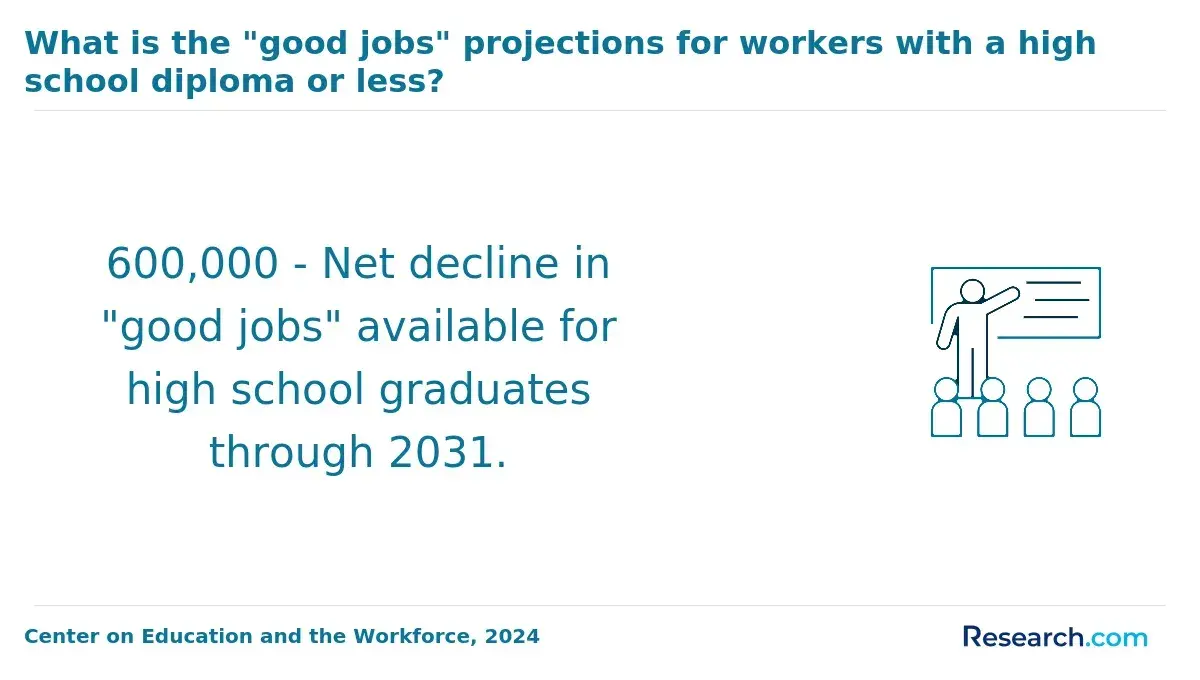
Data from the Georgetown University Center on Education and the Workforce shows that bachelor's degree holders typically earn about $1 million more over their careers than high school graduates, though this varies by major.
For careers related to interdisciplinary studies, median annual wages start near $45,000 with average yearly increases of around 3%. This growth results in roughly $520,000 in total wages over 10 years.
In contrast, a high school graduate earning approximately $30,000 annually with similar raises accumulates about $380,000, making the degree holder's 10-year earnings about $140,000 higher.
Assuming total program costs of $40,000 for an online interdisciplinary studies bachelor's degree, the net gain or ROI after 10 years would be near $100,000. PayScale's College ROI Report confirms this is in line with the national average ROI range of $80,000 to $120,000 for all bachelor's degrees over a decade.
- Clear ROI Definition: ROI compares the 10-year extra earnings minus degree expenses against those with only a high school or associate degree in the same field, focusing on true financial benefits.
- Earnings Example: Median starting wages plus consistent raises demonstrate a clear cumulative income advantage over the decade.
- Degree Costs Influence: With typical online tuition near $40,000, ROI remains positive but depends on final expenses paid.
- National Benchmarks: Interdisciplinary studies degrees deliver ROI comparable to the average for all bachelor's degrees, reassuring cost-conscious students.
A professional who enrolled in an online interdisciplinary studies bachelor's program shared that carefully calculating expected earnings against tuition costs was vital in making her decision. She described balancing work and study hours as challenging but rewarding, emphasizing how knowing the financial outlook helped her stay motivated during tough periods.
Reflecting on her journey, she noted, "Having a clear estimate of my income growth versus what I invested gave me the confidence to push through. It wasn't just about the degree-it was about making a smart financial and career move." This thoughtful approach to ROI guided her through uncertainties and reinforced the value of transparent, practical information in choosing an educational path.
How do online interdisciplinary studies program tuition rates compare across public, private, and for-profit institutions?
Public institutions typically offer the most affordable tuition rates, especially for in-state students enrolled in online interdisciplinary studies programs. Many apply flat-rate tuition regardless of credit hours, with costs usually ranging from $5,000 to $10,000 annually. This pricing approach provides predictable expenses, but out-of-state students may encounter significantly higher charges, narrowing the gap with private institutions.
Tuition at private nonprofit institutions generally falls between $15,000 and $30,000 per year. Although pricier, private nonprofits often deliver more robust academic support, higher graduation rates, and stronger employer recognition. These advantages can substantially improve long-term financial returns and career stability compared to lower-cost alternatives.
With advertised tuition often under $10,000 yearly, for-profit colleges attract budget-conscious students. However, IPEDS data reveal that these programs tend to have lower completion rates and face employer skepticism regarding their credentials, which can hinder post-graduation employment and reduce ROI. The cheaper upfront costs may mask these challenges, resulting in less favorable financial outcomes.
When evaluating tuition rates for online interdisciplinary studies programs, it's crucial to balance sticker price with qualitative factors such as graduation outcomes and job market acceptance. Public universities often provide the best mix of affordability and return, while private nonprofit schools may justify their higher costs with stronger career prospects.
Prospective students should carefully consider these elements alongside financial investment. For a detailed overview within a related field, see construction management degree cost.
What long-term salary growth can interdisciplinary studies bachelor's degree holders expect over a 20- to 30-year career?
Salary progression for interdisciplinary studies bachelor's degree holders typically follows a pattern shaped by experience and role advancement across a multi-decade career. Early on, during the first five years, earnings rise moderately-often by 15% to 25%-as graduates gain essential skills in entry-level positions.
This phase focuses on building foundational expertise and adapting to professional environments.
- Mid-Career Growth: Between five and ten years, salary increases accelerate noticeably, with typical raises of 30% to 40% over starting wages. This boost generally corresponds with acquiring leadership responsibilities or specialized functions, such as project management or subject matter expertise.
- Senior-Level Advancement: From 10 to 15 years, further income growth often results from promotions into managerial or strategic roles. Earnings during this stage can exceed initial salaries by 50% or more, reflecting enhanced responsibilities and professional recognition.
- Late Career Stability: After 15 to 20 years, salary growth tends to plateau, influenced by organizational factors, industry trends, and ongoing professional development. While increases slow, sustained earnings remain above early-career baselines.
Research from the American Community Survey estimates that individuals with an interdisciplinary studies bachelor's degree earn between $500,000 and $1 million more over their lifetime compared to peers without a degree. This cumulative advantage captures both higher entry salaries and compounded pay growth through career milestones.
A professional who built her career after earning an online interdisciplinary studies bachelor's degree shared that the journey required balancing work, family, and study demands, which tested her endurance and time management skills. She noted that the degree's flexible format allowed her to apply new knowledge directly at work, leading to performance improvements that opened doors for promotions.
Reflecting on her experience, she said, "The steady salary progression wasn't just about numbers-it was about growing confidence and opportunities that came from mastering diverse skills." This perspective highlights the real-world impact of investing in an interdisciplinary studies degree over the long term.
How does the ROI of an online interdisciplinary studies bachelor's degree compare to an associate degree or a professional certificate?
Cost considerations often make certificates and associate degrees attractive options initially. Data from the National Center for Education Statistics shows average associate degree costs commonly fall between $6,000 and $12,000, while many professional certificates are available for less than $5,000.
Meanwhile, online interdisciplinary studies bachelor's degrees at public in-state schools typically range from $20,000 to $40,000.
- Salary Outcomes: Bureau of Labor Statistics figures indicate median wages increase alongside higher qualifications. Those with certificates often earn between $35,000 and $45,000 annually, associate degree holders make about $40,000 to $55,000, and bachelor's degree graduates generally see salaries from $55,000 up to $75,000.
- Short-Term ROI: For individuals seeking quick workforce entry with minimal debt, certificate or associate degree programs usually provide faster financial returns. Research from the Lumina Foundation underscores that shorter credentials can lead to meaningful wage gains within just a year or two.
- Long-Term Benefits: Earning a bachelor's degree tends to unlock greater career mobility, higher earning potential, and enhanced job stability over time. Graduates may access leadership roles and ongoing professional development opportunities less accessible to those holding lower-level credentials.
- Decision Framework:
- If immediate affordability and time constraints dominate: certificates or associate degrees offer a practical path to enter the job market without incurring substantial debt.
- If aiming for sustained career growth and higher lifetime earnings: pursuing an online interdisciplinary studies bachelor's degree is more advantageous.
- If valuing flexibility and further education: bachelor's programs often provide chances to specialize or pursue graduate-level studies, further boosting long-term ROI.
Balancing upfront costs against salary projections and career objectives helps identify the credential best suited to individual needs. While certificates and associate degrees provide useful entry points, the bachelor's degree in interdisciplinary studies typically delivers stronger financial and professional rewards as a long-term investment.
Which online interdisciplinary studies specializations or concentrations yield the highest earning potential after graduation?
Choosing an online interdisciplinary studies specialization with the highest salary potential requires careful analysis of median wage data from the Bureau of Labor Statistics (BLS) and recognition of the potential need for additional certifications or licensure.
Graduates focusing on technology, business, or health-related interdisciplinary concentrations typically earn substantially more than generalist interdisciplinary studies graduates, who often start with median salaries below $50,000.
- Information Technology: Combining computer science, data analytics, and project management frequently leads to careers in IT management or software development. Median annual salaries range from $90,000 to over $120,000. However, pursuing certifications like CompTIA or PMP may be necessary to unlock higher earning potential and career advancement.
- Business and Management: Concentrations in business administration, organizational leadership, or entrepreneurship align with job roles such as business analysts or operations managers, offering median salaries of $70,000 to $100,000. Certifications like Six Sigma or Certified Business Analyst can enhance salary and job security but are often optional.
- Health Sciences: Specializations in public health, healthcare administration, or health informatics can yield median salaries between $60,000 and $90,000. Additional training or credentials such as Certified Health Education Specialist (CHES) may increase costs but improve long-term income prospects.
- Environmental Studies and Sustainability: Median salaries typically range from $50,000 to $70,000. Careers often require continuing education or certifications like LEED accreditation, with opportunities growing in climate and resource management sectors.
Students balancing finances and time should target specializations that align with their skills and local job markets to optimize early earnings and return on investment. Evaluating both the financial and non-financial returns-such as job security and professional growth-is critical when selecting an online interdisciplinary studies bachelor's degree path.
How do employer tuition reimbursement and financial aid reduce the net cost of an online interdisciplinary studies bachelor's degree?
Employer tuition reimbursement programs can dramatically reduce out-of-pocket costs for online interdisciplinary studies bachelor's degrees by covering a significant portion of educational expenses. Under IRS Section 127, employers may offer up to $5,250 annually in tax-free tuition assistance, allowing many students to benefit without this aid counting as taxable income.
Data from the Society for Human Resource Management (SHRM) shows that over 60% of U.S. employers provide some form of tuition reimbursement, often covering course fees, textbooks, and related expenses.
Alongside employer tuition reimbursement for online interdisciplinary studies degrees, federal and institutional financial aid offers vital support. Grants and scholarships, whether need- or merit-based, reduce the effective tuition cost since they do not require repayment.
Subsidized federal loans also ease upfront costs by deferring interest accrual until after graduation. These combined resources can shrink net tuition to a fraction of the sticker price, especially for students qualified for multiple aid programs.
For instance, consider a student in a program with total tuition of $30,000. Employer reimbursement at the IRS limit of $5,250 annually for four years totals $21,000. Adding a $5,000 federal Pell Grant and a $2,000 institutional scholarship reduces out-of-pocket expenses to about $2,000. Subsidized loans can then cover this balance with manageable repayment terms, making degree completion feasible.
For working professionals seeking career advancement, leveraging employer tuition aid alongside federal support is often essential. Exploring all financial aid options and employer benefits ensures the highest return on investment. For related graduate options, some may also consider a 1 year online masters in human resources to further boost career prospects.
- Employer Benefits: Many companies provide tuition reimbursement up to the IRS Section 127 limit of $5,250 per year, reducing taxable income and lowering students' direct educational expenses.
- Financial Aid: Grants, scholarships, and subsidized loans from federal and institutional sources substantially reduce tuition costs, making degrees more affordable.
- Prevalence of Assistance: Over 60% of U.S. employers offer tuition aid, supporting working students who pursue educational advancement while employed.
- Example Scenario: Combining employer reimbursement with grants and scholarships can reduce a $30,000 tuition cost to a net amount near $2,000, easing financial burdens.
- Strategic Planning: Students should assess employer tuition reimbursement for online interdisciplinary studies degrees and apply for all available aid to maximize savings and improve their return on investment.
What hidden costs should students factor into the total investment of an online interdisciplinary studies bachelor's degree?
When budgeting for an online interdisciplinary studies degree, students often underestimate additional expenses that can increase the total cost by 10-15% beyond stated tuition. It is essential to consider these hidden fees, as they impact both affordability and the break-even timeline for the degree's return on investment (ROI). Institutional disclosures and College Board research highlight several recurring costs that affect many programs.
Annual technology fees ranging from $100 to $500 cover access to digital learning platforms, software updates, and IT support-fees frequently overlooked in initial budgeting. Proctoring services, costing $30 to $60 per exam, accumulate quickly for programs requiring multiple online assessments. Graduation and administrative fees add a one-time cost of $100 to $300 that students should anticipate.
Specialized courses might also require software licenses or subscriptions, which can range from $50 to several hundred dollars annually depending on the field of study. Finally, professional organization memberships, important for networking and career development, often require $100 to $200 in annual fees but are rarely included in initial cost considerations.
These additional costs may notably extend the timeline for recouping the investment, especially for students balancing work and study or relying on financial aid. For those comparing programs or assessing financial viability, requesting a comprehensive cost-of-attendance breakdown-not just tuition-is vital. This allows for more accurate planning and a clearer understanding of true expenses.
Prospective students focused on an evidence-based outcome might also explore comparable options, such as programs recognized for affordability like the best online physics degree, to weigh different paths for career advancement and ROI.
- Technology Fees: Annual charges from $100 to $500 support online learning platforms and IT services, increasing total costs beyond tuition.
- Proctoring Services: Costs between $30 and $60 per test can add up when multiple proctored exams are required.
- Graduation Fees: One-time administrative expenses typically range from $100 to $300 and are often unbudgeted.
- Software Licenses: Specialized subscription costs may vary from $50 to several hundred dollars yearly for course-specific tools.
- Professional Memberships: Networking fees of $100 to $200 annually support career growth but are frequently overlooked.
How does the accreditation status of an online interdisciplinary studies program affect graduate salary and employability?
Regional accreditation evaluates an entire institution based on geographic criteria and is widely regarded as a mark of higher education quality. Programmatic accreditation focuses on specific fields of study, ensuring academic rigor in targeted disciplines. Together, these accreditations influence how employers and graduate programs view candidates' qualifications.
Surveys by the National Association of Colleges and Employers (NACE) reveal that hiring managers significantly favor degrees from regionally accredited institutions. Such degrees are linked to stronger academic preparation and skill sets, resulting in better starting salaries and improved negotiation leverage.
In contrast, degrees from nationally accredited or non-accredited schools may raise doubts about a graduate's capabilities, limiting job prospects and career growth.
Graduates from institutions lacking proper accreditation often face barriers accessing licensure exams, graduate programs, and certain government or healthcare jobs. These restrictions can narrow career paths and reduce earning potential over time.
Prospective students should confirm accreditation status before committing. The U.S. Department of Education's accreditation database and the Council for Higher Education Accreditation (CHEA) provide trustworthy tools to verify program legitimacy.
- Employer Preference for Regional Accreditation: Employers and graduate schools prioritizing regionally accredited degrees associate them with higher academic standards and relevant skills.
- Improved Salary Potential: Graduates from regionally accredited programs tend to secure higher starting salaries and stronger influence in compensation discussions.
- Licensure and Graduate Program Eligibility: Accreditation often governs access to professional licensing exams and advanced degrees critical for career advancement.
- Risks of Non-Accredited Degrees: Degrees without recognized accreditation may not meet employer or licensing requirements, restricting employment and promotion opportunities.
- Accreditation Verification Resources: The U.S. Department of Education and CHEA databases offer essential means for students to confirm the accreditation status of online interdisciplinary studies programs.
What entry-level job titles and salary ranges are available to graduates of online interdisciplinary studies bachelor's programs?
Graduates holding an online interdisciplinary studies bachelor's degree often begin their careers in diverse entry-level roles, each with unique salary expectations and industry trends. These positions provide a broad platform that influences how quickly graduates recoup their education expenses.
- Project Coordinator: Starting median salaries typically range from $45,000 to $55,000, with technology, healthcare, and government sectors leading compensation.
- Human Resources Assistant: Entry-level pay varies between $40,000 and $50,000, especially competitive in finance and corporate settings.
- Marketing Specialist: Salaries generally span $42,000 to $52,000, notably within tech and retail fields.
- Social Services Assistant: Annual earnings often fall between $35,000 and $45,000, common in healthcare and nonprofit organizations.
- Administrative Coordinator: Compensation ranges from $38,000 to $48,000, with government and educational employers offering solid starting wages.
- Research Assistant: Typically earns $33,000 to $43,000, with higher pay in education and healthcare research institutions.
- Sales Representative: Pays vary widely from $30,000 to $50,000 due to commissions, especially lucrative in technology and finance sectors.
- Community Outreach Specialist: Salaries usually run between $37,000 and $47,000, primarily within nonprofit and government agencies.
Internships, certifications like project management or data analysis, and academic focuses such as business or health studies boost earning potential, often positioning graduates for faster financial returns. These factors create a varied entry-level salary range that reflects both economic and professional advancement opportunities available through an interdisciplinary studies degree.
What Graduates Say About the Return on Investment of Their Online Interdisciplinary Studies Bachelor's Degree
- Dante: "Choosing the online interdisciplinary studies bachelor's degree was a strategic decision based on balancing cost with potential career gains. I found the program's flexible structure invaluable for managing work and study simultaneously, which ultimately led to a promotion within my company. Beyond the obvious financial benefits, the degree enhanced my critical thinking and adaptability-two qualities that employers highly value nowadays."
- Collin: "Reflecting on my journey, the online interdisciplinary studies degree gave me far more than just a financial return. It opened doors for professional growth that I hadn't anticipated, including stronger job security in a competitive market. The holistic approach of the program allowed me to tailor my studies to fit my career ambitions, making the investment in tuition truly worthwhile on multiple levels."
- Dylan: "From a professional standpoint, pursuing an online interdisciplinary studies bachelor's degree was a game changer. The program's diverse curriculum equipped me with a broad skill set that translated directly into new job opportunities and upward mobility. While the cost was a consideration, the long-term ROI-in terms of career advancement and personal development-far exceeded my initial expectations."
Other Things You Should Know About Interdisciplinary Studies Degrees
Most graduates of online interdisciplinary studies bachelor's degree programs can expect to recoup their investment within 5 to 10 years, depending on total tuition costs and post-graduation salary increases. Factors such as part-time enrollment and employer tuition assistance can shorten this timeline. However, individuals entering fields with higher starting salaries typically recover costs faster than those in lower-paying industries.
Salary outcomes vary significantly based on geographic location and industry sector. Graduates working in urban areas or regions with a high cost of living often earn more than those in rural settings. Similarly, sectors like business, government, and education tend to pay differently-business and government jobs generally offer higher wages than non-profit or social services roles, which many interdisciplinary studies graduates enter.
Employer surveys and labor market data indicate that an interdisciplinary studies bachelor's degree is valued for its versatility and the broad skill set it provides. Employers often appreciate graduates' critical thinking, communication, and problem-solving abilities, which are crucial in team-based and evolving work environments. However, the degree's generalist nature means graduates should supplement it with relevant experience or certifications to enhance employability.
References
- The ROI of Online Education: Is It Worth the Investment? - Paris American International University https://parisamerican.org/the-roi-of-online-education-is-it-worth-the-investment/
- Estimated Costs for Degrees and Certificates https://www.aims.edu/node/10829
- Bachelor’s Degrees Offering the Highest and Lowest Return on Investment Revealed https://www.investopedia.com/bachelors-degrees-offering-the-highest-and-lowest-return-on-investment-revealed-11929932
- Interdisciplinary Studies Online Degree – ECU Online https://online.ecok.edu/online-degrees/ba-bachelors-interdisciplinary-studies/
- Tuition Reimbursement: How Do Employers Benefit from It? | KBI Benefits https://www.kbibenefits.com/tuition-reimbursement-benefits
- Does College Pay Off? A Comprehensive Return On Investment Analysis - FREOPP https://freopp.org/whitepapers/does-college-pay-off-a-comprehensive-return-on-investment-analysis/
- Cost of Online College vs. Traditional | Champlain College Online https://online.champlain.edu/blog/cost-of-online-education-vs-traditional-education
- Consider an Online Bachelor's Degree in Interdisciplinary Studies https://www.yahoo.com/news/consider-online-bachelors-degree-interdisciplinary-studies-140831495.html
- Online Interdisciplinary Studies Degree | Bachelors | EOU Online https://online.eou.edu/programs/bachelors-interdisciplinary-studies/
- The Hidden Costs of Paying for Higher Education https://www.futurityinvest.com.au/insights/futurity-blog/2025/02/11/the-hidden-costs-of-paying-for-higher-education