2027 Questions to Ask Before Accepting a Endoscopy Nurse Position
Audited and Verified:
Our Editorial and Data Verification Process
Research.com uses government datasets, official education statistics and primary institutional information to support its career and degree guides. Our review process checks factual accuracy, occupational definitions, source dates and the requirements associated with the credentials discussed.
How This Article Was Fact-Checked
Our editorial team verifies salary estimates, employment projections, education requirements and program information against original data providers and official organizations. Salary figures are checked against the relevant occupational definitions and reporting periods. Information about licensure, accreditation and required in-person training is reviewed separately.
Fact-checked and verified on:

Co-Founder and Chief Data Scientist
An endoscopy nurse offer can look appealing until you learn who manages sedation, how many rooms one nurse covers, or how often "occasional call" interrupts weekends. Whether you are a new RN or moving from another specialty, the best decision depends on the work you will actually do and the support available while you learn it. This guide explains the questions to ask about patient safety, orientation, credentials, scheduling, and pay - and how to judge the answers before you accept.
Key Things You Should Know
- Ask who monitors sedated patients, what happens during a complication, and whether staffing changes when cases run late. A job title alone does not establish a safe assignment.
- An active RN license is the usual entry credential for an endoscopy RN role; an ADN or BSN provides general nursing preparation, but neither replaces procedure-specific orientation and demonstrated competence.
- Compare the written offer against the actual schedule: call frequency, late cases, paid orientation, benefits, and differential pay can matter more than the posted hourly rate.
What does an endoscopy nurse do in the United States?
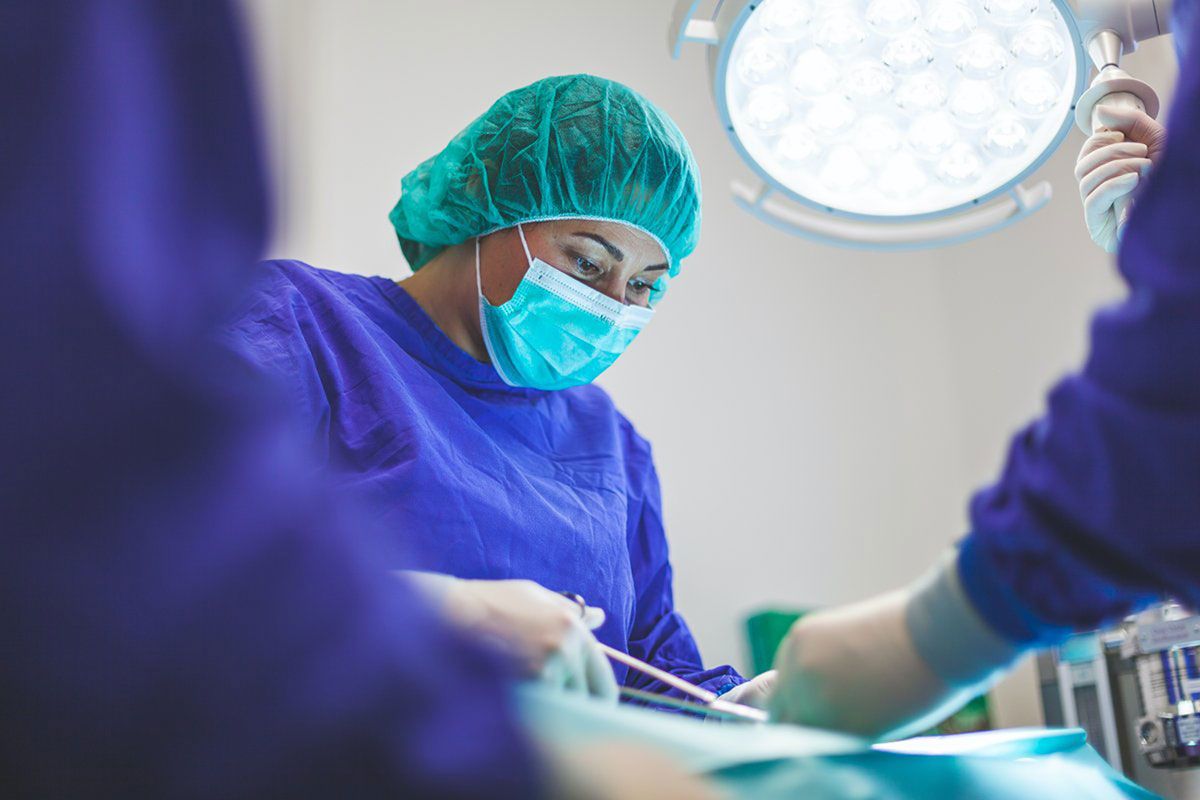
Endoscopy nurses care for patients before, during, and after procedures such as colonoscopy and upper gastrointestinal endoscopy. Depending on the facility and assignment, an RN may assess patients, reconcile medications, provide education, administer medications under orders and policy, monitor sedation, document care, assist the team during procedures, and assess recovery and discharge readiness. A nurse's responsibilities depend on state scope-of-practice rules, employer policy, training, and the sedation model - not simply the unit's name.
Ask: "Will I work in preprocedure care, the procedure room, recovery, or rotate among all three? Who is dedicated to monitoring the patient during sedation, and what are my responsibilities if the patient becomes unstable?" Request a typical staffing plan for both routine cases and emergencies. Clarify which tasks belong to RNs, physicians or other authorized sedation providers, and endoscopy technicians.
If you are comparing nursing roles, do not assume that short-format LPN coursework and clinical requirements prepare someone for an RN-posted endoscopy position. Check the license and duties in the specific job description.
What education and nursing degree do you need to become an endoscopy nurse?
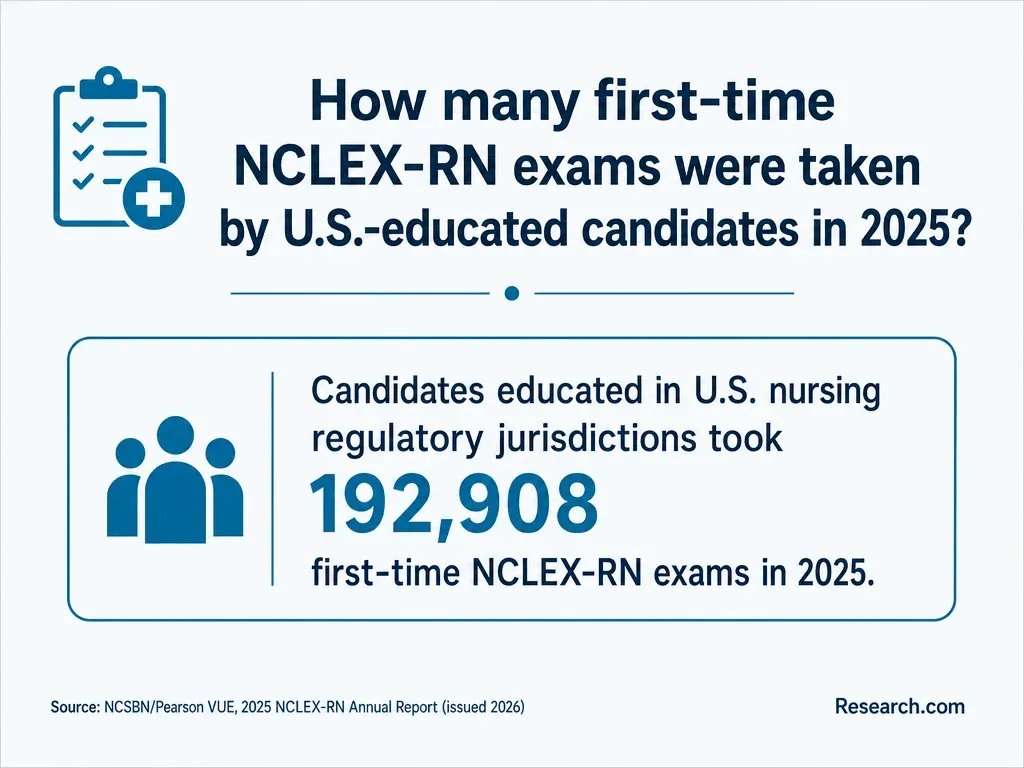
Most endoscopy nurse positions are RN jobs. An applicant typically needs to complete an RN-qualifying nursing program, pass the NCLEX-RN, and obtain an active license accepted for practice in the position's state. Employers may accept an associate degree in nursing (ADN) or prefer or require a bachelor of science in nursing (BSN). Read the posting rather than assuming the same degree rule applies everywhere.
For an already-licensed RN, another degree is usually not the first step toward an endoscopy job. Relevant experience, a credible specialty orientation, and demonstrated competence may matter more. If you are entering nursing from another field, compare RN-qualifying routes before applying; accelerated entry-level nursing master's study is one option to investigate, but it is not an endoscopy-specific requirement.
Ask: "Is my degree and current experience sufficient for this position? Which skills must I have on day one, and which will you teach?" A new graduate should also ask whether the facility routinely hires new RNs into endoscopy or expects prior acute-care, procedural, or recovery experience.
What licenses and certifications are required for endoscopy nursing?
Confirm that your RN license or lawful practice privilege covers the job's location and that the employer will verify it before you begin work. A specialty certification does not replace RN licensure. Employers may also require current life-support credentials, with the specific level and deadline varying by role and facility.
The Certified Gastroenterology Registered Nurse (CGRN) credential is a specialty certification administered by the American Board of Certification for Gastroenterology Nurses. It may be valued for advancement, but it should not be assumed to be an entry requirement. Check the certifying organization's current eligibility rules before making a career plan around it.
Ask: "Which credentials must I hold before my start date, which may I earn during orientation, and who pays for initial training and renewals?" Also ask how the employer validates sedation, recovery, emergency-response, and any equipment-related competencies. A certificate of course attendance is not the same as being cleared for an independent assignment.
Both RN-qualifying ADN and BSN programs build general nursing foundations, including assessment, medication safety, clinical judgment, and supervised patient care. A BSN typically adds broader study in areas such as leadership, research appraisal, and population health. Neither degree guarantees a dedicated endoscopy rotation or proves readiness to independently monitor a sedated patient.
For an ADN-prepared RN evaluating an offer, ask whether the employer has a BSN-completion policy, a deadline, tuition assistance, or scheduling support. An RN-to-BSN program is postlicensure education, not a substitute for specialty onboarding; understanding clinical expectations in BSN completion can help you evaluate study alongside the job.
Ask: "Will degree-completion expectations affect hiring, promotion, or continued employment? Can my schedule accommodate required classes?" Get any condition that materially affects the offer in writing.
There is no single required "endoscopy nursing program" that every U.S. RN completes. Initial nursing education covers general patient care; endoscopy-specific preparation commonly occurs through employer orientation, supervised cases, continuing education, and competency assessment. Training may address GI anatomy, procedure workflow, sedation monitoring within the RN's assigned role, recovery, specimen handling, infection prevention, and recognizing when to escalate a change in condition.
Ask: "How many weeks of orientation are planned, who precepts me, and what evidence clears me for each assignment?" Then ask what happens if you need more supervised practice. A useful orientation plan identifies distinct competencies for preprocedure, procedure-room, and recovery work rather than treating attendance at a class as proof of proficiency.
Clarify who performs and checks scope reprocessing, how staff are trained for their actual equipment responsibilities, and what the escalation process is if a safety concern arises. These details can reveal more about daily support than a general promise of "comprehensive training."
Online coursework can teach nursing theory or support an RN's continuing education, but it cannot by itself replace the supervised clinical experiences required in an RN-qualifying program or the hands-on competencies needed for an endoscopy assignment. Prelicensure programs advertised as online still require approved in-person learning; postlicensure courses generally assume you already hold an RN license.
If an employer offers online endoscopy modules, ask: "Which skills will I practice with a preceptor, how will performance be assessed, and when can I work without direct supervision?" Also ask whether training time is paid and whether mandatory modules must be completed outside scheduled shifts. A flexible course format does not necessarily mean a flexible work schedule.
For a job applicant, the more immediate issue is eligibility for the position, not admission to a specialty degree. Employers may screen for an active RN license, a particular degree, life-support credentials, and experience with procedural care, sedation, recovery, or medically complex patients. Requirements differ by employer and may be negotiable when a structured transition program exists.
Ask: "Which qualifications are mandatory at hire, which are preferred, and what training is available if my background is in another unit?" If you are not yet an RN, first verify that any nursing program you consider qualifies graduates to seek initial RN licensure in the jurisdiction where you intend to practice. Admission to a school, graduation, exam eligibility, and licensure are separate steps.
For an already-licensed RN, the relevant timeline is usually the employer's orientation and the time needed to demonstrate each required competency - not another degree. For someone entering nursing, an ADN commonly takes about two academic years of nursing study and a traditional BSN about four years in total, although prerequisites, program design, and individual circumstances change the elapsed time. Neither route eliminates the need for licensure and specialty onboarding.
Before accepting, compare the offer's total compensation and transition costs: base pay, differentials, call and callback pay, overtime rules, benefits, parking or commuting costs, and any unpaid credential expenses. Ask how much orientation is paid, whether training occurs on your expected shift, and whether a repayment agreement applies if you leave early.
Ask for a sample schedule showing start times, late-running cases, weekends, holidays, and call assignments. A shorter scheduled shift may not mean fewer hours at work if cases regularly extend past closing time.
Endoscopy RNs work in hospital-based units and ambulatory procedure centers. The setting affects case mix, available backup, hours, and the likelihood of call. With experience and the appropriate preparation, a nurse might move into precepting, charge responsibilities, education, quality and infection-prevention work, or unit management. Advancement is not automatic, and a different role may require additional qualifications.
Ask: "What is the usual case mix, what happens when a patient needs a higher level of care, and who is available to help?" In an ambulatory center, clarify transfer arrangements and emergency support. In a hospital, clarify whether the team covers urgent inpatient cases or call.
Finally, ask to meet a nurse who works the shift you would join. Their account of breaks, staffing changes, documentation demands, and why nurses leave can help you test whether the position fits your experience and preferred working conditions.
What salary and job outlook can endoscopy nurses expect?
The U.S. Bureau of Labor Statistics reports wages and projections for registered nurses, not a separate national endoscopy-nurse occupation. Its May 2024 median annual wage for RNs was $93,600, but that occupation-wide figure is not an endoscopy pay rate or a prediction of your offer. Location, employer type, experience, shift arrangements, and call pay can substantially change compensation.
National RN employment projections describe the broader profession, not demand at a particular endoscopy unit. For this decision, compare written offers for similar local roles and ask the hiring manager why the position is open, how long vacancies typically remain unfilled, and whether staffing is stable enough to support orientation. Treat a high posted rate cautiously if the accompanying call burden, benefits, or training support are unclear.
Other Things You Should Know About Nursing
It depends on the employer's staffing policy. Ask whether canceled cases lead to reassignment, paid downtime, use of paid time off, or a reduced shift - especially if the position is advertised as full-time.
Do not assume so. Ask when call begins, whether you will have a preceptor or backup while on call, and how quickly you must arrive after being contacted.
Yes, if the employer allows it. An observation visit can help you see workflow and team communication, but it does not replace written answers about staffing, pay, and orientation.
Ask the recruiter to resolve the difference before you sign. Confirm material terms - including schedule, call, pay, and any employment conditions - in the written offer or applicable employment documents.
- TEN_25-19_Attachment_1.pdf | dol.gov https://www.dol.gov/node/161266
- Nursing Practice FAQ - Texas Board of Nursing - Texas.gov https://www.bon.texas.gov/faq_nursing_practice.asp.html
- Procedural Sedation - StatPearls - NCBI Bookshelf - NIH https://www.ncbi.nlm.nih.gov/books/NBK551685/
- Surveillance Monitoring to Improve Patient Safety in Acute Hospital Care Units | PSNet https://psnet.ahrq.gov/perspective/surveillance-monitoring-improve-patient-safety-acute-hospital-care-units
- Compensation Terms & Definitions | larimer.gov https://www.larimer.gov/hr/employee-relations/compensation-classification/terms-definitions
- Federal Employee Compensation Package | U.S. Office of Personnel Management https://www.opm.gov/policy-data-oversight/pay-leave/pay-administration/fact-sheets/federal-employee-compensation-package/
- Nursing workload, nurse staffing methodologies and tools - PMC https://pmc.ncbi.nlm.nih.gov/articles/PMC7086229/
- Statement of Deficiencies | cms.gov https://qcor.cms.gov/ASCReportObjectPDF
- What Does an OR Nurse Do? | Columbia Surgery https://columbiasurgery.org/news/what-does-or-nurse-do