2027 Patient Advocacy in Nursing: The Role, Its Boundaries, and Workplace Examples
Audited and Verified:
Our Editorial and Data Verification Process
Research.com uses government datasets, official education statistics and primary institutional information to support its career and degree guides. Our review process checks factual accuracy, occupational definitions, source dates and the requirements associated with the credentials discussed.
How This Article Was Fact-Checked
Our editorial team verifies salary estimates, employment projections, education requirements and program information against original data providers and official organizations. Salary figures are checked against the relevant occupational definitions and reporting periods. Information about licensure, accreditation and required in-person training is reviewed separately.
Fact-checked and verified on:

Co-Founder and Chief Data Scientist
Patient advocacy is part of everyday nursing, but speaking up for a patient does not give a nurse authority to make the patient's decisions or disregard professional boundaries. For nursing students and nurses considering advocacy-focused work, the distinction matters in conversations about consent, safety, discharge, and access to care. This guide explains what effective advocacy looks like in practice, how to handle its limits, and when a different role or additional education is worth pursuing.
Key Things You Should Know
- Patient advocacy means helping patients understand options, express preferences, and receive safe, respectful care - not choosing for them.
- A nurse's advocacy must stay within the nurse's license, competence, employer policies, and the patient's right to accept or refuse care.
- There is no separate U.S. nursing license or Bureau of Labor Statistics occupation for "patient advocate nurse"; compare jobs by their actual duties and credential requirements.
What Does Patient Advocacy Mean in Nursing?
Patient advocacy in nursing is the use of nursing knowledge, communication, and professional judgment to protect a patient's interests and support the patient's voice in care. It can mean clarifying a concern, identifying a safety risk, arranging an interpreter, or making sure the care team knows what the patient wants. Advocacy may involve speaking with a patient rather than speaking for one.
It differs from simply agreeing with every request. A nurse can respect a patient's preference while explaining a clinical concern and bringing the appropriate clinician into the discussion. It also differs from general customer service: the nurse has professional duties to assess, document, communicate, and escalate concerns within scope.
Advocacy begins in prelicensure preparation and develops through supervised practice. For licensed RNs considering degree completion, exploring RN-to-BSN nontraditional clinical formats may help identify coursework in population health or care coordination; a format without traditional clinical rotations does not, by itself, validate advocacy competence.
What Are a Nurse's Responsibilities as a Patient Advocate?
An advocate notices what may prevent a patient from receiving informed, appropriate care, then acts through the right channel. The response depends on the patient's condition, the nurse's role, and the setting. Common responsibilities include these connected tasks:
- Listen and assess: Ask what the patient understands, wants, and fears; identify barriers such as pain, language, hearing loss, or limited access to follow-up care.
- Communicate and coordinate: Relay concerns to the responsible clinician, arrange qualified interpretation or other available support, and involve appropriate team members.
- Protect safety: Question an apparent discrepancy, use the organization's escalation process when a concern is unresolved, and document observations and actions accurately.
- Support participation: Explain nursing information within scope and check whether the patient has an opportunity to ask questions and express a choice.
Bedside advocacy addresses an individual's immediate needs; organizational advocacy may address recurring barriers, such as discharge instructions patients cannot use. Experienced nurses interested in the latter may consider quality-improvement work or systems-focused DNP study options. A DNP is not required to raise or help improve a workplace process.
What Are the Boundaries of Patient Advocacy in Nursing?
The central boundary is that advocacy supports the patient's decision-making; it does not replace it. Nurses should not pressure a patient toward the option they personally prefer, promise a treatment outcome, give advice outside their scope, or disclose private information without an appropriate basis. An adult patient's decisions must be handled according to applicable law and policy, including rules concerning decision-making capacity and authorized representatives.
Advocacy also does not authorize a nurse to independently change an order or perform a task beyond their license and demonstrated competence. When a plan appears unsafe or inconsistent with a patient's wishes, the nurse should communicate the concern, follow applicable escalation procedures, and continue appropriate care. Ethical disagreement with a colleague is not a reason to abandon a patient or misstate what happened in the record.
Additional education does not erase these boundaries. An RN comparing online NP program affordability comparisons should first decide whether an advanced practice role is actually the goal; an NP program entails role-specific preparation and authorization, not a general upgrade to advocacy authority.
Informed consent is a process, not merely a signed form. The clinician responsible for a proposed treatment generally provides the explanation needed for the patient to decide, while nurses work within their role and facility policy to support communication and recognize concerns. A nurse who hears a patient say, "I do not know what this procedure is for," should not treat a signature as proof of understanding.
The nurse can pause an applicable workflow, identify what the patient does not understand, arrange a qualified interpreter when needed, and contact the responsible clinician for further discussion. The nurse should document relevant statements and actions without claiming that the patient understood an explanation the nurse did not provide. If a patient declines care, the nurse should communicate the decision and follow the applicable clinical and legal process rather than coercing agreement.
These habits require practice even in compressed educational routes. Someone reviewing one-year family nursing advanced practice options should verify how the program assesses patient communication and supervised clinical judgment, not infer readiness from its advertised length.
Effective advocacy often looks like a specific observation followed by communication and follow-through. These hypothetical examples illustrate the distinction between supporting a patient and independently directing care:
- Hospital discharge: A patient says they cannot obtain a prescribed medicine. The nurse alerts the care team, involves available pharmacy or social-work resources, and checks that the discharge plan reflects the barrier.
- Procedure preparation: A patient says they expected a different procedure. The nurse stops the applicable preparation steps and contacts the responsible clinician to resolve the discrepancy before proceeding.
- Home health: A nurse learns that written instructions are unusable because of a patient's vision impairment. The nurse seeks an accessible teaching method and communicates any continuing safety concern to the care team.
- Behavioral health: A patient reports feeling unheard during a care-plan discussion. The nurse listens without promising a particular treatment and helps the patient bring the concern to the appropriate clinician.
The first example depends heavily on care coordination, a skill RNs can develop through practice and targeted training. An experienced ADN-prepared RN considering formal advancement can compare ADN-to-MSN bridge length and requirements, but should check whether local care-coordination jobs require a graduate degree before committing to one.
Programs commonly teach advocacy through ethics, patient assessment, communication, health equity, and clinical judgment. Simulation may ask students to respond to a patient who declines care or a team member who overlooks a safety concern. In supervised clinical learning, instructors can assess whether students listen, communicate accurately, document appropriately, and recognize when to seek help. Completing a scenario is not the same as demonstrating independent competence on a clinical unit.
Students can make this learning more concrete by asking for feedback on how they framed a concern: Did they state the patient's preference accurately? Separate observations from assumptions? Contact the right person promptly? Early-career nurses should then look for orientation that teaches unit-specific escalation and consent workflows.
Specialty preparation adds context rather than replacing these fundamentals. For example, students comparing accelerated psychiatric nursing master's programs should ask how supervised placements develop communication and autonomy-related judgment for the intended advanced practice role.
The right pathway depends first on whether the reader needs an initial nursing license, already practices as an RN, or wants a different job. No degree awards a separate "nursing advocate" license. This comparison shows what each route can contribute without treating education as a substitute for supervised performance.
| Pathway | Best fit for the advocacy goal | Important limit |
| Prelicensure ADN/ASN or BSN | Someone seeking RN preparation and supervised foundations in patient-centered care | Graduation does not itself grant an RN license |
| RN-to-BSN | A licensed RN seeking broader study in care coordination, evidence, or population health | Not necessary for every advocacy-focused RN job |
| MSN or DNP in a relevant track | An RN targeting a role with verified graduate-level requirements, such as certain leadership, education, or advanced practice positions | Non-APRN tracks do not confer NP eligibility; track and state requirements matter |
For a student entering nursing, compare program approval, clinical learning, and eligibility for the intended state's licensing process before comparing advocacy-related course descriptions. A nursing program admission accessibility guide may help build a shortlist, but easier admission is not evidence of appropriate clinical preparation or licensing eligibility.
State nurse practice laws and board rules govern a nurse's authorized practice. Professional ethics, employer policies, and setting-specific procedures also shape how nurses protect confidentiality, communicate concerns, document care, and escalate safety issues. Requirements vary by jurisdiction and role, so an RN, LPN/LVN, and APRN should not assume identical authority.
Prelicensure program completion, eligibility to take the NCLEX, passing the exam, and receiving a state license are distinct steps. Specialty certification and employer competency checks are distinct again. Nurses considering graduate study should verify the exact program track and its intended credential; BSN-to-MSN tuition comparisons cannot establish whether a program prepares someone for advanced practice licensure.
In an immediate conflict, the practical question is not simply whether a nurse is "allowed to advocate." It is what the nurse observed, what the patient wants, which actions fall within scope, and whom policy directs the nurse to contact next.
Advocacy occurs in nearly every nursing setting, but some jobs devote more time to coordination, education, or resolving barriers. Compare postings by caseload, patient contact, escalation authority, orientation, and required experience - not by an "advocate" label alone.
| Role or setting | Typical advocacy emphasis | What to check before applying |
| Bedside or ambulatory RN | Real-time safety, understanding, and communication | Acuity, staffing support, and new-hire orientation |
| RN case manager or care coordinator | Transitions, access barriers, and communication across services | Required RN experience, caseload, and certification preferences |
| Community or school nurse | Access, education, and coordination with families and services | State or employer credential rules and available resources |
| Nursing quality or leadership role | Recurring system-level barriers affecting groups of patients | Experience, data responsibilities, and actual decision-making authority |
A new RN will usually build stronger evidence for these roles through supported practice and documented communication skills than through an immediate additional degree. Experienced nurses pursuing systems-level work can examine a guide to shorter DNP programs, while checking whether the target employer actually requires doctoral preparation.
How Do Salary and Job Outlook Vary for Advocacy-Focused Nurses?
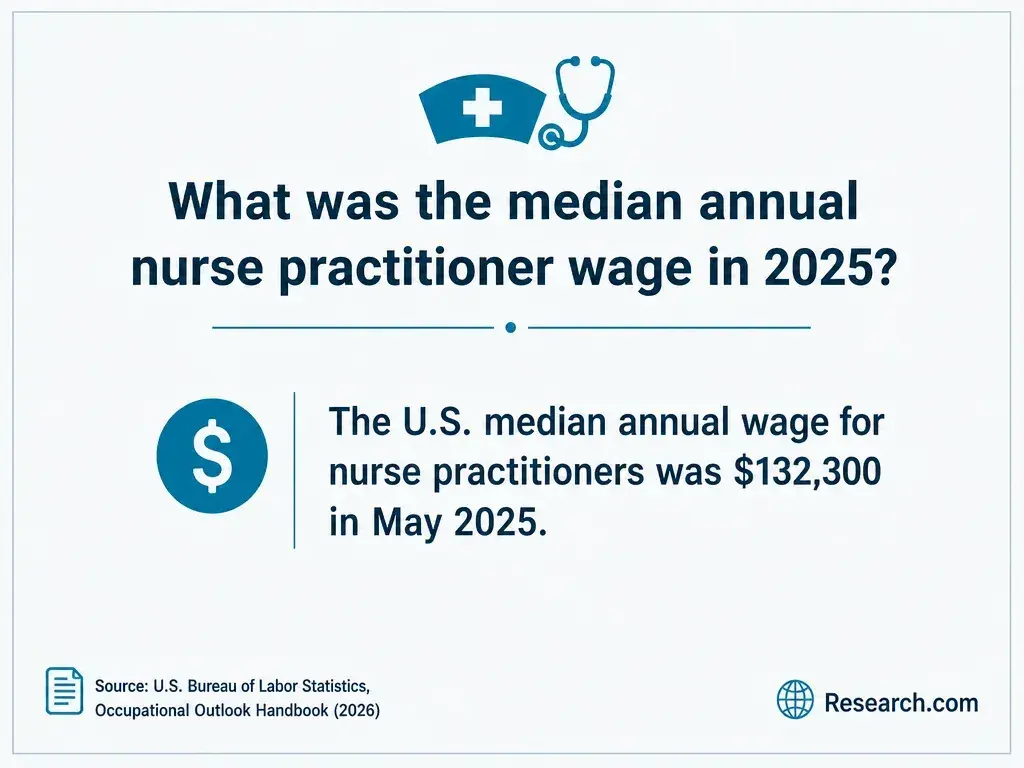
There is no single salary or job-growth figure for "advocacy-focused nurses." The U.S. Bureau of Labor Statistics reports occupations such as registered nurses and nurse practitioners, not advocacy as a nursing specialty. An occupation-wide median therefore cannot predict an offer for a hospital case manager, school nurse, or newly licensed RN; location, employer, experience, schedule, and duties all matter.
For a useful comparison, start with the occupation matching the job posting, then compare local pay ranges for similar roles and the cost of any required education. Treat an MSN or DNP as an investment only if it meets a verified job or practice goal; include tuition, time away from work, and placement-related expenses. For an RN considering an NP role, planning family NP study around clinical placement policies can expose a substantial time and cost variable that advertised tuition may miss.
Other Things You Should Know About Nursing
Yes. A patient may ask a family member or trusted person to help communicate, subject to the patient's wishes and applicable privacy rules. That person does not automatically become the patient's legal decision-maker.
Ask the facility about patient relations, an ombudsman, or another available advocacy resource. The right contact depends on the setting; a nurse or unit staff member can help identify it.
Only as permitted by applicable privacy law and organizational policy. A good purpose does not remove confidentiality obligations; nurses should use approved communication and reporting channels.
Contact the facility's patient-relations office or the relevant care team and describe the concern clearly. For an urgent health problem, seek timely clinical advice rather than waiting for a complaint review.
- Informed Consent - StatPearls - NCBI Bookshelf - NIH https://www.ncbi.nlm.nih.gov/books/NBK430827/
- Disability Barriers to Inclusion | cdc.gov https://www.cdc.gov/disability-inclusion/barriers/index.html
- Enhancing Patient Safety Culture in Hospitals - PMC - NIH https://pmc.ncbi.nlm.nih.gov/articles/PMC10811440/
- Nursing and Patient Safety | PSNet https://psnet.ahrq.gov/primer/nursing-and-patient-safety
- Nursing and advocacy in health: An integrative review | PubMed https://pubmed.ncbi.nlm.nih.gov/35172646/
- Patient safety | who.int https://www.who.int/news-room/fact-sheets/detail/patient-safety
- How Nurse Administrators Understand Informed Consent | Radford University Online https://online.radford.edu/degrees/nursing/msn-nursing-administration/understand-informed-consent/
- Advocacy in Nursing: Resources for Nurse Practitioners | Norwich University https://online.norwich.edu/online/about/resource-library/advocacy-nursing-resources-nurse-practitioners
- 2025 Code of Ethics Provisions | American Nurses Association https://codeofethics.ana.org/provisions
- The Professional Nursing Association's Role in Patient Safety | nursingworld.org https://ojin.nursingworld.org/link/fdccb53c615046e69b40da68448b26f7.aspx