2027 Online Workplace Safety Doctorate Program Costs: Tuition, Fees, Financial Aid, and Employer Reimbursement

Co-Founder and Chief Data Scientist
An online Workplace Safety doctorate can strengthen leadership, research, consulting, or teaching credentials, but the cost deserves careful planning. NCES graduate tuition data released in 2024 shows average graduate tuition and required fees were $12,596 at public institutions and $29,931 at private nonprofit institutions for 2022-23, before living costs, books, travel, or loan interest. This guide is for safety professionals comparing doctoral options, employer support, and borrowing. You will learn how tuition, fees, aid, reimbursement, and career outcomes affect whether the degree is a smart investment.
Key Things to Know About Online Workplace Safety Doctorate Program Costs
- A realistic tuition planning range for many online Workplace Safety, occupational safety, safety sciences, or environmental health and safety doctorates is roughly $30,000 to $75,000 before loan interest, depending on credits, tuition model, residency rules, and dissertation enrollment.
- Hidden costs often come from technology fees, dissertation continuation credits, research software, conference travel, required residencies, and professional memberships, so students should request a full cost-of-attendance estimate rather than comparing base tuition only.
- Federal graduate Direct Unsubsidized Loans are capped at $20,500 per academic year, while Grad PLUS Loans may cover up to the school-certified cost of attendance; employer reimbursement can reduce borrowing but often comes with annual caps, grade rules, and stay agreements.
What is the average tuition cost of an online Workplace Safety doctorate program?
The average cost of an online Workplace Safety doctorate is best understood as a planning range rather than a single national price, because programs may be housed under occupational safety, safety sciences, occupational health and safety, environmental health and safety, public health, technology management, or organizational leadership. Most applicants are comparing post-master's doctoral programs, which commonly require about 45 to 60 credits, although dissertation extension credits can increase the final bill.
For budgeting, a practical tuition-only estimate is about $30,000 to $75,000 for many online or low-residency Workplace Safety-related doctorates. Programs at the lower end usually have lower per-credit rates, fewer required credits, or public-university online pricing. Programs at the higher end may charge private doctoral tuition, include more research credits, or require extended dissertation registration.
The table below shows how tuition models affect the number that matters most: total tuition paid through completion, not just the advertised per-credit rate.
| Cost factor | Lower-cost scenario | Higher-cost scenario | Why it matters |
| Credit requirement | About 45 post-master's credits | 60 or more doctoral credits | More credits multiply every tuition and fee charge. |
| Per-credit tuition | Public or discounted online rate | Private or specialized doctoral rate | A small per-credit difference becomes significant over a full doctorate. |
| Dissertation phase | Completed within planned registration terms | Extra continuation or research credits | Delayed dissertation completion can add thousands in tuition and fees. |
| Residency format | Fully online or virtual residency | Required campus intensives | Travel and lodging can change the true total cost. |
Use the school's published tuition as the starting point, then calculate your own completion cost. Multiply the required credits by the exact tuition rate, add mandatory fees, add expected residency and dissertation costs, and then estimate interest if you plan to borrow. This gives you a more accurate comparison than relying on "affordable" or "online" labels.
Are online Workplace Safety doctorate programs subject to distance learning or technology fees?
Yes. Online Workplace Safety doctorate programs may charge technology, online learning, library, graduation, dissertation, proctoring, or student service fees. Some schools roll these costs into a flat online tuition rate, while others add them per credit, per course, or per term. This distinction matters because two programs with similar tuition can have different final costs once fees are included.
Before enrolling, ask the bursar or graduate admissions office for a line-item cost estimate. The fee categories below are the ones most likely to affect an online doctoral student.
| Fee type | How it may be charged | What to verify |
| Technology or distance learning fee | Per credit, per course, or per term | Whether it is included in online tuition or billed separately. |
| Dissertation or doctoral research fee | During proposal, dissertation, or continuation terms | Whether students pay full tuition or a reduced continuation rate. |
| Residency or intensive fee | Attached to required campus or virtual sessions | Whether travel, lodging, meals, and local transportation are separate. |
| Graduation and records fees | Near completion | Whether there are thesis submission, binding, transcript, or graduation charges. |
A common mistake is comparing only tuition per credit and ignoring mandatory online fees. To avoid this, request the program's cost of attendance for a student in your exact enrollment pattern: full-time, part-time, dissertation-only, or employer-funded.
What out-of-pocket expenses should online Workplace Safety doctorate students anticipate?
Out-of-pocket expenses are costs you may pay even when tuition is covered by loans, scholarships, or employer reimbursement. In Workplace Safety doctoral programs, these costs often relate to research, professional practice, and compliance-focused learning rather than ordinary classroom materials.
The following table summarizes common non-tuition expenses so you can build a more realistic budget before committing to a program.
| Expense category | Examples | Budget impact |
| Learning materials | Books, safety standards manuals, journal access, case study materials | Varies by course and research area. |
| Research tools | Statistical software, survey tools, transcription, data storage | More likely during dissertation research. |
| Professional participation | Conference registration, safety association memberships, certification maintenance | Useful for networking but not always included in tuition. |
| Residency travel | Airfare, hotel, meals, local transportation | Can be substantial if in-person intensives are required. |
| Technology | Computer upgrades, webcam, headset, internet, secure testing tools | Usually paid directly by the student. |
If you are still comparing master's-level and doctoral-level safety pathways, reviewing the best online environmental health and safety programs can help you see whether a less expensive graduate credential may meet your immediate career goals before you commit to a doctorate.
The biggest red flag is a program that provides tuition clearly but gives vague answers about residencies, dissertation fees, or continuation enrollment. Ask for the total cost through the dissertation stage, not just the cost through coursework.
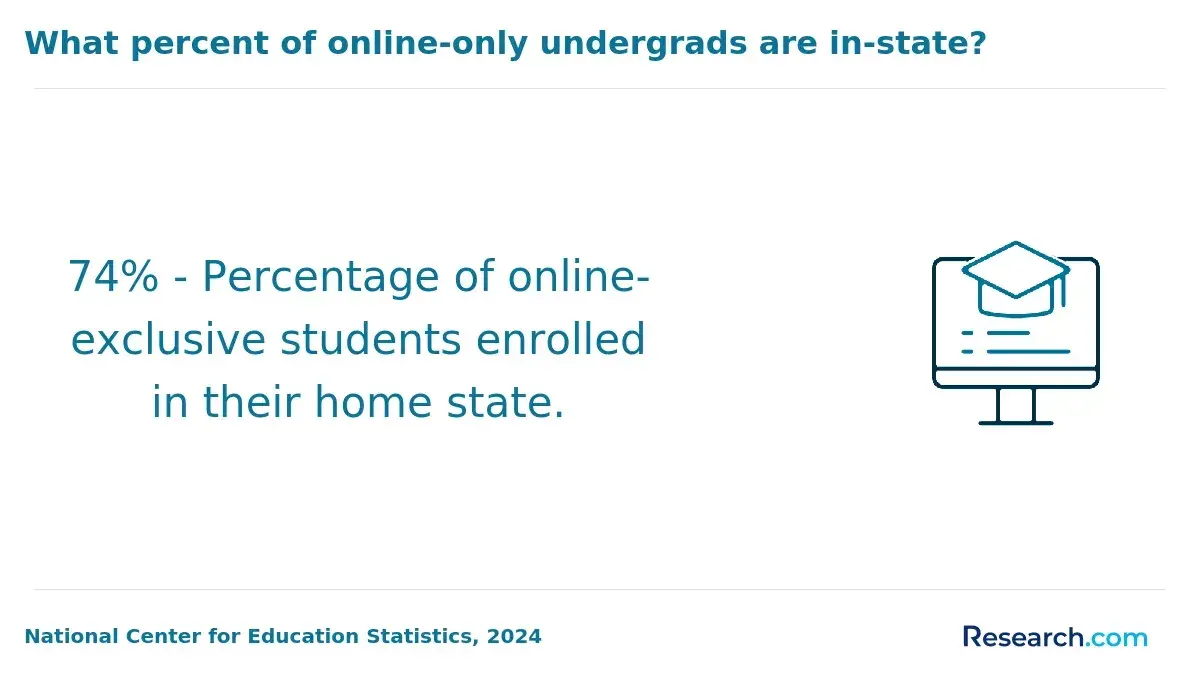
Does in-state versus out-of-state residency status impact online Workplace Safety doctorate tuition?
Residency status can affect online Workplace Safety doctorate tuition, but the impact depends on the school's pricing model. Public universities may charge different in-state and out-of-state graduate tuition, while some online programs use one flat rate for all distance learners. Private nonprofit and private for-profit institutions typically do not use state residency in the same way, though they may offer military, employer, alumni, or partnership discounts.
The table below compares common tuition models and when each one may be financially attractive.
| Tuition model | Best fit | Potential drawback |
| Public in-state graduate tuition | Residents who qualify for the lowest public rate | May not apply to online students in every program. |
| Public out-of-state tuition | Students choosing a specialized program unavailable in their state | Can be significantly more expensive if no online discount exists. |
| Flat-rate online tuition | Out-of-state students who want predictable pricing | May be higher than a resident's local public option. |
| Private institutional tuition | Students prioritizing format, faculty fit, or employer alignment | Sticker price may be higher unless aid or reimbursement applies. |
Flat-rate online pricing is especially important for working professionals who live outside the institution's state. It can make a public university competitive with in-state options elsewhere, but only if fees, residencies, and dissertation charges are also reasonable.
Do not assume that "online" automatically means "same price for everyone." Ask whether residency affects tuition, whether the online rate is locked for your cohort, and whether tuition can increase during the dissertation phase.
How do total costs for an online Workplace Safety doctorate compare to traditional on-campus programs?
Online Workplace Safety doctorates can be less expensive than on-campus programs when they allow students to keep working, avoid relocation, and reduce commuting or housing costs. However, online does not always mean cheaper. A high-credit online doctorate with technology fees and required residencies can cost more than a local public on-campus option.
The comparison below shows where online and on-campus costs usually differ. Use it to identify which format is cheaper for your actual situation, not just which format has the lower advertised tuition.
| Cost category | Online doctorate | On-campus doctorate |
| Tuition | May use flat online, in-state, or private rates | May use in-state or out-of-state campus rates |
| Employment impact | Often easier to continue full-time work | May require reduced work hours or relocation |
| Travel and housing | Lower unless residencies are required | Higher if commuting or moving is necessary |
| Assistantship access | May be limited for fully online students | Often more available for campus-based doctoral students |
| Networking | Depends on cohort design, conferences, and faculty access | Often easier through labs, seminars, and campus roles |
Students comparing other justice, safety, or public-service pathways may also want to evaluate an online criminal justice degree, especially if their goal is broader risk management, compliance, or public safety administration rather than occupational safety research.
Online is usually the better financial fit if you can stay employed and your employer will help pay. On-campus may be the better financial fit if the program offers a funded assistantship, tuition waiver, or stipend that online students cannot access.
Can graduate assistantships and fellowships reduce online Workplace Safety doctorate costs?
Graduate assistantships and fellowships can reduce doctoral costs, but fully online Workplace Safety students may have fewer opportunities than campus-based PhD students. Many assistantships require teaching labs, supporting faculty research on campus, supervising undergraduates, or working set hours for a department. Still, some online or hybrid doctoral students may qualify for remote research work, dissertation fellowships, employer-sponsored research funding, or competitive institutional scholarships.
When evaluating funding, distinguish between tuition support and living support. A tuition waiver reduces what you owe the university, while a stipend helps with income but may not cover tuition unless paired with remission.
Ask each program these questions before assuming assistantship funding is available:
- Are online doctoral students eligible for teaching, research, or graduate assistant positions?
- Does the assistantship include tuition remission, a stipend, health insurance, or only hourly pay?
- Can assistantship duties be completed remotely, or must the student be physically near campus?
- Are assistantships available to part-time students who continue working full time?
- Are dissertation fellowships available after coursework is complete?
A common funding mistake is applying only to the program and not separately applying for assistantships, fellowships, or departmental awards. Doctoral funding often has earlier deadlines than admission, so ask about funding timelines before you submit your application.
What financial aid options are available for students enrolled in an online Workplace Safety doctorate?
Online Workplace Safety doctorate students at accredited, Title IV-eligible U.S. institutions may qualify for federal graduate loans and school-administered aid. Grants and scholarships are usually more limited at the doctoral level than at the undergraduate level, so the strongest affordability strategy often combines several sources: institutional awards, employer reimbursement, professional association scholarships, and careful borrowing.
Federal loan limits are important because they determine how much you can borrow without using Grad PLUS. For 2025-26 federal loans, graduate Direct Unsubsidized Loans carry a fixed 7.94% interest rate and are capped at $20,500 per academic year; Grad PLUS Loans carry a fixed 8.94% rate and may cover up to the school-certified cost of attendance after other aid.
The table below compares common funding sources and their practical limitations.
| Funding source | What it can cover | Main limitation |
| Federal Direct Unsubsidized Loan | Tuition, fees, and approved education costs | Annual borrowing cap and interest accrual. |
| Federal Grad PLUS Loan | Remaining cost of attendance after other aid | Higher interest rate and credit check requirement. |
| Institutional scholarships | Partial tuition reduction | Competitive and may not renew automatically. |
| Professional association awards | Research, conference, or tuition support | Often small and application-based. |
| Employer tuition assistance | Tuition, fees, or approved courses | Usually subject to annual caps and work-related approval. |
For a broader example of how tuition, fees, and financing can be evaluated across public-service fields, the same cost-comparison discipline used to analyze criminal justice degree price can help doctoral safety students avoid underestimating total cost.
Before borrowing, complete the FAFSA, confirm the school's accreditation and Title IV eligibility, ask whether aid applies during dissertation continuation, and compare repayment scenarios. A doctorate may be worthwhile, but high-interest borrowing can weaken ROI if the program does not clearly connect to advancement, teaching, consulting, or executive-level safety leadership.
Does employer tuition reimbursement cover an online Workplace Safety doctorate?
Employer tuition reimbursement may cover an online Workplace Safety doctorate when the degree is job-related and aligns with the organization's safety, compliance, risk management, environmental health, training, or leadership needs. Coverage varies widely. Some employers reimburse only individual courses, while others fund a full degree through annual caps, preferred school partnerships, or executive development budgets.
Under IRS educational assistance rules, employers can generally provide up to $5,250 per employee per year in tax-free qualified educational assistance when plan requirements are met. That amount may not cover a doctoral program by itself, but it can meaningfully reduce borrowing if used every year of enrollment.
Employer reimbursement policies commonly include the following conditions, so read the written policy before enrolling:
- The course or degree must relate to the employee's current role or a documented advancement path.
- The employee may need to earn a minimum grade before reimbursement is issued.
- Payment may occur after the term ends, meaning the student must cover tuition upfront.
- The employer may require continued employment for a set period after payment.
- Only tuition may be covered, while books, fees, travel, and dissertation costs may be excluded.
The best candidates for employer-funded doctorates are professionals whose research can solve a real organizational problem, such as reducing incident rates, improving safety culture, strengthening compliance systems, or designing training programs. If the doctorate is mainly for a career change outside the company, employer support may be harder to secure.
How can working professionals negotiate employer sponsorship for an online Workplace Safety doctorate?
Negotiating sponsorship works best when you frame the doctorate as a business investment, not a personal education benefit. Employers are more likely to contribute when they see a connection to measurable safety outcomes, regulatory compliance, leadership succession, or cost avoidance.
Use the following sequence to prepare a stronger sponsorship request:
- Identify the employer's safety priorities, such as OSHA compliance, incident reduction, workers' compensation costs, training gaps, or enterprise risk management.
- Choose a program whose curriculum and dissertation structure can directly support those priorities.
- Prepare a cost proposal that separates tuition, fees, books, residencies, and expected annual reimbursement needs.
- Offer a return plan, such as sharing research findings, building internal training, mentoring safety staff, or leading a process improvement project.
- Ask for a specific funding arrangement, such as annual reimbursement, direct billing, paid residency time, conference support, or dissertation research access.
- Clarify repayment obligations, tax treatment, grade requirements, and whether support continues if tuition increases.
A strong proposal might say that the doctorate will help the organization evaluate safety interventions, improve compliance documentation, and develop internal leaders. A weak proposal simply says the degree will help you advance. Make the employer's benefit concrete.
Be careful with stay agreements. If the employer requires repayment when you leave, compare the sponsored amount against the career flexibility you may give up. Employer sponsorship is valuable, but the conditions should be clear and manageable.
What ROI can graduates expect from an online Workplace Safety doctorate?
ROI for an online Workplace Safety doctorate depends on your starting salary, total debt, employer support, and target role. The degree is usually most defensible for professionals pursuing senior safety leadership, doctoral-level consulting, policy and compliance leadership, university teaching, research, or specialized roles where a terminal credential strengthens credibility. It is less compelling if the same goal can be reached with a master's degree, professional certification, or targeted experience.
BLS data reported a May 2024 median annual wage of $81,140 for occupational health and safety specialists and technicians, while longer-term projections published by BLS show faster-than-average demand for these roles. That does not mean a doctorate automatically raises pay; it means safety expertise has a recognized labor market, and the doctorate should be evaluated against specific roles where advanced research and leadership skills are rewarded.
The table below shows how ROI can vary by career goal. Use it to test whether the doctorate is aligned with your intended outcome.
| Career goal | How a doctorate may help | ROI caution |
| Corporate safety executive | Supports strategic leadership, research-based decision-making, and credibility with senior management. | Experience and results may matter more than the credential alone. |
| Safety consultant | Can strengthen authority for expert analysis, training design, or litigation support. | ROI depends heavily on client base and business development. |
| University faculty or researcher | May be required or strongly preferred for full-time academic roles. | Academic hiring is competitive and may favor research fit. |
| Government or policy leadership | Can support advanced compliance, program evaluation, and public-sector safety work. | Pay scales may limit short-term salary gains. |
If your main goal is entry into public safety, law enforcement administration, or general criminal justice work rather than doctoral-level safety leadership, lower-cost options such as the best online associate degree programs in criminal justice may offer a more appropriate starting point.
A practical ROI test is simple: estimate total program cost, subtract grants and employer funding, add likely loan interest, and compare the result with realistic advancement opportunities over five to ten years. The degree makes the most financial sense when it unlocks roles, authority, or consulting income that would be difficult to access otherwise.
Other Things You Should Know About Workplace Safety
Sometimes. Some programs accept limited doctoral transfer credits or allow approved post-master's coursework to reduce electives, but many do not transfer dissertation or research-sequence credits. Ask for a written transfer evaluation before estimating savings.
Yes. Federal financial aid generally requires enrollment at an institution that is accredited and Title IV-eligible. Programmatic accreditation may also matter for employer approval, academic credibility, or professional recognition, depending on your field and goals.
Part-time students may pay the same tuition per credit, but they can pay more overall if the longer timeline adds annual fees, tuition increases, or extra dissertation continuation terms. Part-time study is still financially useful if it helps you keep your salary and benefits.
Not automatically. The cheapest option is only the best value if it is accredited, fits your research interests, supports your career goal, and has transparent completion costs. A slightly higher-priced program may be worth it if it offers stronger faculty fit, faster completion, or better employer alignment.
References
- NASP Financial Aid, Scholarships, and Grants | NASP https://www.naspweb.com/resources/financial-aid/
- Managing Remote Work: 7 Tips for Creating Effective Employer Policies https://www.fisherphillips.com/en/insights/insights/managing-remote-work-7-tips-creating-effective-employer-policies
- How Much Does a PhD Cost https://aituedu.org/how-much-does-a-phd-cost/
- How Long Does It Take to Get a PhD? Complete Timeline Guide https://streamlinedai.app/blog/how-long-does-it-take-to-get-a-phd
- Online Occupational Health and Safety Degrees: Compare Schools https://www.degreesforgood.org/online-degrees/occupational-health-and-safety/
- Financial Aid For Online Colleges https://www.affordablecollegesonline.org/financial-aid/financial-aid-for-online-colleges/
- Comparing the Costs: Online vs. In-Person Safety Training https://www.d2l.com/blog/comparing-the-costs-online-vs-in-person-safety-training/
- Average Cost of a Doctorate Degree [2026]: Ph.D., Psy.D. & More https://educationdata.org/average-cost-of-a-doctorate-degree
- Scholarships and Funding https://rmcoeh.com/students/scholarships-and-funding
- 2025 Most Affordable Online Doctorates in Education https://www.onlineu.com/most-affordable-colleges/education-doctoral-degrees