2027 Online User Experience Bachelor's Degree Programs With 8-Week Classes

Co-Founder and Chief Data Scientist
Prospective students and working adults face challenges balancing time and quality when pursuing online user experience bachelor's degrees in 8-week classes. Accelerated formats promise efficiency but may raise concerns about the depth of learning and employer acceptance. Recent research shows that 62% of hiring managers value candidates from accredited online programs with condensed terms, recognizing their ability to manage intensive workloads effectively.
This article explores how these programs accommodate diverse learners, evaluates key quality indicators, and assesses how accelerated online user experience degrees align with labor market demands-equipping readers to make informed decisions about these fast-track educational options.
Key Things to Know About Online User Experience Bachelor's Degree Programs With 8-Week Classes
- Accreditation by recognized bodies like ABET or regional agencies ensures degree validity-programs with such credentials typically yield 15% higher employer hiring rates in UX roles nationwide.
- School reputation impacts graduate outcomes-top-ranked online institutions offering 8-week UX degrees report 40% greater job placement within six months, though regional labor demands vary significantly.
- Licensure is uncommon for UX-but acquiring supplemental credentials, such as Certified Usability Analyst, boosts employability by up to 25%, particularly in competitive markets with diverse geographic requirements.
What Are Online User Experience Bachelor's Degree Programs With 8-Week Classes, and How Do They Work?
Online user experience bachelor's degree programs with 8-week accelerated classes offer a streamlined alternative to traditional 15- to 16-week semesters. This format compresses course content into shorter, more intensive terms, enabling students to complete classes faster while meeting the same credit requirements. According to enrollment data from the National Center for Education Statistics (NCES) and the Online Learning Consortium, accelerated online programs have experienced notable growth as more institutions respond to student demand for flexible scheduling and faster degree completion options. These online 8-week user experience bachelor's degrees work by dividing the academic year into multiple short sessions, often allowing students to focus on two to three courses simultaneously to maintain a steady pace toward graduation.
- Accelerated Format: Eight-week classes require students to engage deeply with material over a compressed period. This format reduces downtime between courses, enabling earlier program completion, but it demands strong time management, discipline, and consistent effort.
- Structural Design: Programs typically assign between 6 to 9 credits per 8-week session, balancing workload comparable to traditional semesters but organized differently to support continuous progress.
- Enrollment Trends: Growth in accelerated online programs is backed by data from NCES, reflecting rising preferences among working adults, military personnel, and career changers toward faster, flexible education options.
- Program Rigor: The compressed timeframe intensifies the learning experience. Students face a steady stream of assignments, projects, and discussions that require efficient time allocation throughout each term.
- Value Factors: The real-world value of an accelerated online user experience degree depends on institutional accreditation, program reputation, alignment with industry standards, and relevant geographic labor markets. Any licensure or certification requirements also shape the degree's practical worth.
- Credential Strategies: Many programs encourage supplemental credentials-like usability certifications or portfolio development-to enhance graduates' competitiveness, complementing the degree by demonstrating in-demand skills.
For those considering even shorter degree paths, 1 year PhD programs online can provide insight into accelerated academic options in related fields. Such alternatives may interest students weighing credit-efficient routes and intensive study formats to achieve fast yet credible credentials.
How Have 8-Week Online User Experience Programs Evolved and Gained Employer Acceptance Over the Past Decade?
Over the past decade, 8-week online user experience bachelor's degree programs in the US have transitioned from a landscape once dominated by for-profit providers to one increasingly embraced by regionally accredited universities. This evolution has boosted program credibility by combining rigorous coursework with flexible scheduling, meeting the needs of diverse students such as recent high school graduates, working adults, military personnel, transfer students, and career changers seeking efficient credentials. A similar shift is evident in other fields; for instance, prospective students interested in an affordable and flexible option may explore the library science degree, reflecting a broader trend in accelerated online education.
Longitudinal data from Gallup and the Society for Human Resource Management (SHRM) demonstrate significantly improved employer acceptance of accelerated online degrees. Employers are recognizing credentials from reputable institutions with greater confidence-especially in sectors like tech, healthcare, and marketing where user experience professionals contribute substantially. The COVID-19 pandemic further normalized remote and asynchronous learning and work environments, solidifying a more favorable reception to online graduates than was typical a decade ago.
Students considering these programs should evaluate key aspects such as institutional accreditation, program reputation, geographic employment conditions, and supplemental credentials like digital badges or certificates, which add verifiable evidence of skills. These variables heavily influence the real-world value of accelerated online user experience degrees.
- Institutional Legitimacy: Regionally accredited universities now offer 8-week user experience degrees, increasing trust and academic rigor compared to early for-profit programs.
- Shifting Employer Perceptions: Gallup and SHRM research shows growing acceptance of online and accelerated degrees among hiring managers across industries.
- COVID-19 Impact: The pandemic hastened acceptance of remote learning and work models, boosting employer confidence in online graduates' preparedness.
- Supplemental Credentials: Digital badges and micro-certifications are frequently bundled with degrees, enhancing employability by showcasing verifiable skills.
- Market Considerations: Accreditation, reputation, and regional labor markets remain critical for assessing program value and graduate employability.
Which Industries and Employers Are Most Likely to Respect an Online User Experience Bachelor's Degree Earned Through 8-Week Courses?
Technology: Employers in the technology sector frequently recognize online user experience degrees earned through accelerated 8-week courses. Major players such as software firms, digital marketing agencies, and startups prioritize practical skills and portfolio strength as much as formal credentials. Fast-paced technology environments favor candidates who demonstrate rapid learning and adaptability-qualities that accelerated programs aim to cultivate.
Healthcare Administration: With the rise of telehealth and electronic patient management systems, healthcare organizations value user experience experts familiar with clinical processes and digital design. Accelerated online degrees find acceptance especially when complemented by internships or certifications related to health informatics, compliance, or medical software usability.
Business: Across retail, finance, and consulting industries, companies seek user experience professionals to improve their digital customer interactions. Candidates holding online degrees from accredited institutions gain respect, particularly in metropolitan areas where diverse educational pathways are more common.
Public Administration: Government agencies and nonprofit organizations increasingly require intuitive online services, and job listings frequently accept user experience graduates regardless of degree delivery. Success hiring accelerated degree holders often increases when candidates also possess project management or agile methodology certifications.
A professional who completed an online user experience bachelor's degree with 8-week courses shared insights from his journey. He described managing intense course loads alongside work commitments as challenging but rewarding, emphasizing the importance of discipline and time management. While initially concerned about employer perceptions, he found that demonstrating strong skills and practical project experience outweighed questions about acceleration. His experience underlined how preparation and real-world application are vital to gaining employer confidence in an accelerated online credential.
Regional accreditation remains the foremost standard employers and HR systems use when assessing the value of an online user experience degree, regardless of accelerated 8-week class formats. Accrediting agencies such:
Higher Learning Commission (HLC): ensure thorough evaluation of academic quality and institutional rigor.
Southern Association of Colleges and Schools Commission on Colleges (SACSCOC): confirms adherence to rigorous educational criteria widely accepted in academia and industry.
New England Commission of Higher Education (NECHE): safeguards consistent quality measures that uphold employer trust. This type of accreditation greatly influences the impact of regional accreditation on online User Experience degree recognition.
Conversely, national accreditation generally applies to career-focused or technical schools and often holds less sway in academic or professional advancement. Programmatic accreditation assesses specific departments but does not replace essential regional institutional accreditation, which affects employer perception of accredited accelerated User Experience programs in the US.
Applicants should be cautious of diploma mills and unaccredited degrees that promise rapid credentials, as these frequently fail employer verifications and can jeopardize employment opportunities. Recent data from the National Association of Colleges and Employers shows over 70% of employers verify accreditation during candidate screening.
Prospective students are encouraged to consult the U.S. Department of Education's Database of Accredited Postsecondary Institutions and Programs for confirmation. Those exploring fast, reputable options may also consider related fields such as a criminal justice degree online for career flexibility and verified program quality.
Hiring managers often place significant value on the reputation of the institution awarding an 8-week online user experience degree, independent of the program's accreditation. Research indicates that graduates from recognized online divisions-such as Penn State World Campus or Arizona State Online-encounter fewer hurdles during job searches because employers trust these established brands and their academic rigor. This phenomenon, known as the "halo effect," means the prestige of a well-regarded university can improve perceptions of the graduate's qualifications, alleviating concerns over the accelerated timeline and fully online format.
In competitive job markets for user experience roles, this positive bias helps graduates stand out and access opportunities like internships and entry-level positions that might otherwise be more challenging to secure. Still, prospective students should carefully weigh the benefits of a prestigious institution against tuition costs and their personal financial situation to ensure the degree's value aligns with their long-term career goals.
- Institutional Trust: Established online programs provide employers with confidence in the curriculum's quality, reducing skepticism about the compressed format.
- Prestige Advantage: The "halo effect" associated with reputable universities enhances employer perceptions, boosting a graduate's marketability.
- Improved Opportunities: Graduates from notable online campuses often find stronger access to user experience jobs and internships.
- Financial Considerations: Balancing program prestige against cost helps prevent undue financial strain and promotes informed decisions.
A professional who completed her online user experience bachelor's degree with 8-week classes described the impact of institutional reputation on her career trajectory as significant but nuanced. She recalled moments of doubt when applying for positions due to the program's accelerated nature, yet noticed that mentioning the university's recognized online platform often sparked immediate interest from recruiters. "It was reassuring to see employers familiar with the university brand-it helped me move past questions about the fast pace of my studies," she reflected. Ultimately, this recognition opened doors and made networking in the field smoother, proving that beyond the curriculum, the university's name on her diploma played a key role in establishing her career.
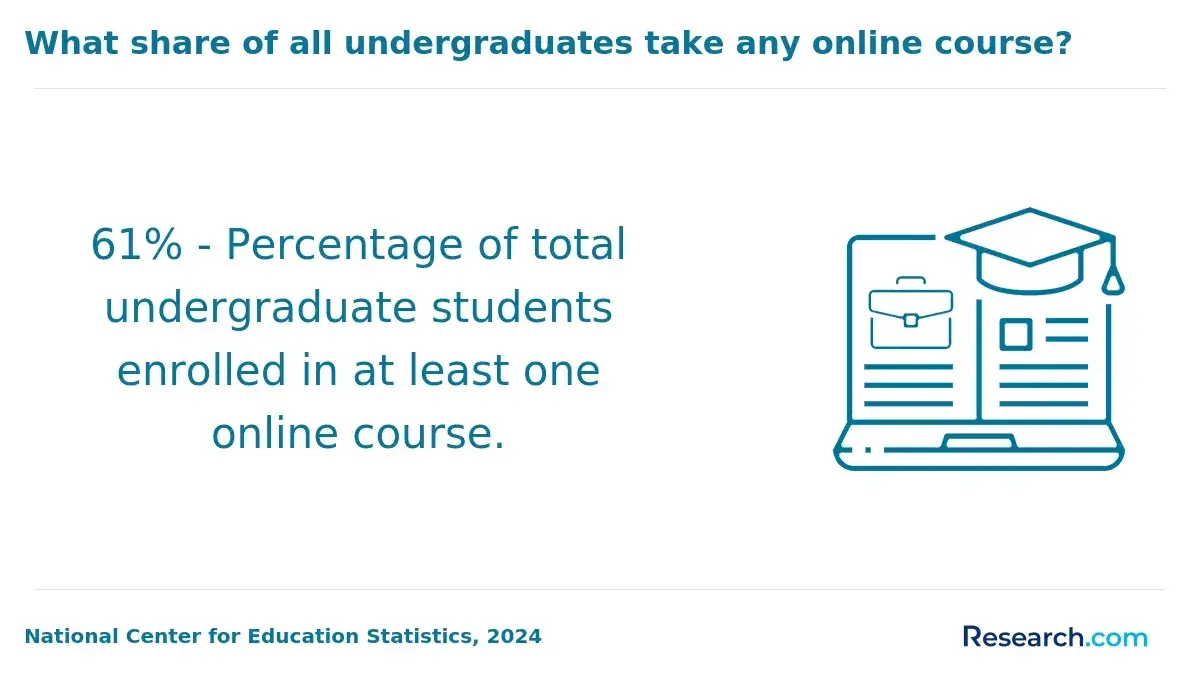
Eight-week online user experience courses demand a high level of commitment, as they cover the full scope of material typically spread over a 16-week semester but within half the time. According to the Online Learning Consortium, students in these accelerated formats face significantly heavier weekly workloads, including extensive reading assignments ranging from 50 to 100 pages, multimedia content, and multiple assessments. Tasks often extend beyond readings to practical applications such as wireframing and usability testing, alongside frequent discussion posts that encourage critical analysis and peer engagement.
Research from peer-reviewed sources shows that accelerated courses generally achieve completion rates and academic outcomes that are comparable to, or slightly better than, traditional term layouts-provided that students are able to manage the intensified pace and maintain discipline. Grades typically do not differ significantly, demonstrating that the condensed format preserves academic rigor rather than sacrificing quality. This makes time management a vital skill for students navigating family, work, and study simultaneously.
In 2023, enrollment in accelerated online bachelor's degrees related to user experience surged by 22%, reflecting a growing preference for flexible yet demanding educational paths. Prospective students should conduct a honest self-assessment of their schedules and learning habits to ensure success in such programs.
- Heavy Weekly Load: Students encounter large reading volumes supplemented by multimedia lessons and practical projects that require focused effort throughout short weeks.
- Full Curriculum Intensity: The compressed timeline delivers all essential content and learning objectives without lowering academic standards, demanding swift comprehension and steady engagement.
- Critical Time Management: Success hinges on students' ability to balance coursework with personal responsibilities and work commitments under the accelerated schedule.
- Comparable Outcomes: Studies indicate similar or improved completion rates and grade distributions when compared to traditional courses, given sufficient student dedication.
- Rising Enrollment Trends: A notable increase in accelerated user experience degree enrollment highlights growing demand for career-focused education delivered efficiently.
Online User Experience bachelor's degree courses offered in 8-week accelerated formats are delivered via learning management systems (LMS) like Canvas, Blackboard, or D2L. These platforms serve as centralized hubs where students access lectures, assignments, and participate in discussions, ensuring a cohesive learning experience comparable to traditional semester courses.
- Course Delivery Formats: These programs typically employ asynchronous, synchronous, or hybrid-synchronous methods. Asynchronous courses allow flexibility to complete coursework on students' schedules within weekly deadlines. Synchronous courses require attendance at live sessions, fostering real-time interaction similar to on-campus learning. Hybrid-synchronous formats blend recorded lectures with scheduled discussions or collaborative activities for balanced engagement.
- Pacing and Module Structure: Despite maintaining the same credit hours, learning outcomes, and textbook coverage as 15- to 16-week semesters, 8-week courses operate at a significantly faster pace with more frequent deadlines and assignments. Modules are compressed to cover equivalent content in half the time, demanding diligent time management from students.
- Faculty Engagement and Peer Collaboration: Faculty remain actively involved through regular announcements, timely grading, and vibrant participation in discussion boards to provide prompt feedback. Increased requirements for discussion contributions and project-based peer collaborations-often centered on User Experience design principles-align with the accelerated schedule to preserve meaningful interaction.
- Typical Weekly Experience: Students usually spend each week reviewing recorded lectures or readings, completing design or research assignments, engaging in discussion boards, and attending occasional synchronous meetings or peer reviews. This model suits learners who can manage rapid content intake and practical application simultaneously.
Financial aid options for students enrolled in 8-week online User Experience bachelor's programs closely mirror those in traditional semester formats, yet accelerated schedules influence disbursement timing and enrollment classifications. Key federal aid mechanisms include:
- Federal Pell Grants: Awarded based on financial need, these grants require no repayment. Eligibility hinges on FAFSA completion. Due to the shorter terms, aid is usually distributed more frequently but in smaller amounts across multiple 8-week sessions rather than as a single lump sum each semester.
- Direct Loans: Subsidized and unsubsidized federal loans depend on enrollment status, which in 8-week programs varies with the number of courses per term. One 8-week course often qualifies as part-time status, while two courses generally meet full-time criteria, impacting the maximum loan allowable.
- Institutional Scholarships: Many colleges provide scholarships focused on online and accelerated programs, particularly for working adults, military personnel, and career changers. These awards may consider academic merit, financial need, or professional background, with deadlines aligned to accelerated term schedules.
Enrollment status calculations in accelerated User Experience degrees are based on credit hours per session. Full-time status typically requires 12 or more credits per semester, but 8-week programs may cause fluctuating statuses, which directly affect federal financial aid eligibility. Students should carefully plan course loads to maintain consistent support.
Scholarships aimed at students in professional user experience associations also support those pursuing careers in this expanding field. Checking resources such as the College Scorecard and FAFSA.gov can help locate grants and scholarships tailored for accelerated schedules and working learners.
Tuition for 8-week online User Experience degrees usually follows a per-credit-hour pricing model. Although single courses may seem affordable, it is important to calculate total program costs-including fees and materials-to understand full financial commitment and value. Comparing these factors across institutions aids in making informed enrollment decisions.
Prospective students interested in combining an accelerated online degree with broader career options might explore related fields; for instance, this can be seen in areas like forensic psychology, where understanding what can i do with a masters in forensic psychology provides insight into credential versatility.
Specific career pathways within user experience (UX) design generally do not require state licensure. Research into licensing boards in California, New York, Texas, Florida, and Illinois reveals no mandatory professional licenses exclusively for UX roles. However, certain specialized positions related to human factors and ergonomics may involve additional certification or practical training that fully online 8-week programs covering licensure restrictions may not fulfill. These nuances can affect program compatibility, particularly when certification bodies outline in-person benchmarks.
Certification Requirements: Credentials from professional organizations such as the Human Factors and Ergonomics Society (HFES) and the Interaction Design Foundation provide valuable certificates for UX professionals. These certificates are not state-mandated licenses and typically offer online completion options, fitting well with accelerated online programs.
In-Person Components: Some related roles, like usability testing or user research, sometimes require supervised practicum hours or lab work involving direct human interaction. Fully online 8-week classes might limit extended hands-on project opportunities unless paired with hybrid or blended learning models.
Hybrid Program Options: Many institutions offering accelerated UX bachelor's degrees combine online instruction with periodic on-campus sessions. These hybrid models enable students to meet experiential learning or credentialing criteria through:
- Onsite Labs: Intensive workshops or collaborative user testing seminars lasting short periods.
- Supervised Practica: Placements with local employers or university-affiliated research centers to gain real-world experience.
- Networking Events: Face-to-face meetings fostering professional connections and applied learning.
These hybrid formats yield flexibility for students enrolled in 8-week accelerated user experience degree programs while addressing any in-person benchmarks. Prospective students should confirm relevant practicum or clinical hour demands with chosen programs and licensing entities in their geographic region to ensure alignment. Those seeking a faster path to credentialing may also consider supplemental certificates that complement an accelerated online degree.
For career changers and transfer students eager to optimize credit efficiency, options like the cheapest data science degree paths may offer additional strategic value within a tech-driven job market.
Employers confirm the authenticity of online User Experience bachelor's degrees-whether earned via accelerated 8-week courses or traditional schedules-through a systematic verification process. This often begins with the National Student Clearinghouse, a trusted third party that validates degrees and enrollment data directly from schools. If information is unavailable there, employers typically reach out to the registrar's office at the institution to obtain official degree confirmation.
Additionally, third-party background screening firms cross-check educational histories with recognized accreditation agencies to flag inconsistencies. Accredited online programs, including those with compressed 8-week terms, meet the same standards and undergo identical scrutiny as their conventional counterparts because accreditation evaluates program quality regardless of study format.
Hiring managers are trained to identify warning signs such as diplomas from unaccredited colleges, diploma mills, or institutions lacking verifiable records. Legitimate 8-week User Experience programs avoid these pitfalls by holding proper accreditation, issuing standard transcripts, and participating in robust verification services, ensuring their credentials are as trusted as traditional degrees.
Prospective graduates should proactively request official transcripts and degree verification letters from their schools. Keeping these documents accessible throughout job applications streamlines the verification process and displays professionalism to employers.
- Accreditation Assurance: Degrees are validated by accreditation bodies confirming the education meets established quality standards regardless of delivery method.
- Trusted Verification Sources: The National Student Clearinghouse and college registrar offices provide dependable confirmation of academic records.
- Employer Red Flags: Non-accredited institutions and diploma mills raise suspicion, but accredited 8-week programs maintain clear legitimacy.
- Third-Party Screening: Background check services verify educational claims against official databases to ensure accuracy.
- Document Readiness: Possessing official transcripts and verification letters aids in swift employer approval and smoother hiring processes.
Many accelerated 8-week online user experience bachelor's degree programs allow students to transfer credits from community colleges, previous bachelor's studies, or other universities-typically accepting between 30 and 60 credits. These transfer limits often come with distinctions, where general education or elective credits are more easily transferred than core user experience classes, which generally require completion at the granting institution due to accreditation or program standards.
- Transfer Credit Limits: Most schools cap transferable credits, balancing flexibility with ensuring students complete critical user experience coursework on campus or through their online platform.
- Major vs. General Education Restrictions: Students should confirm which credits fulfill major requirements, as institutions frequently restrict transfer credits applied to core user experience courses while being more lenient with general education classes.
- Prior Learning Assessment (PLA) Options: PLA offers pathways to earn credit for skills and knowledge acquired outside traditional schooling, including CLEP exams, portfolio assessments highlighting professional experience, military training, and ACE-endorsed credits, all shortening time-to-degree.
- Cost and Time Savings: Leveraging transfer credits and PLA reduces tuition expenses and accelerates degree completion, particularly benefiting working adults and military-affiliated students juggling multiple commitments.
- Institutional Variation: Transfer and PLA policies differ widely; reviewing each program's transfer guidelines and PLA opportunities is critical to making informed decisions about credit applicability.
- Resources for Students: The American Council on Education (ACE) Credit Recommendation Service is a key reference for validating non-traditional credits, and prospective students should seek formal transfer credit evaluations ahead of enrollment to understand remaining program length clearly.
What Graduates Say About Their Online User Experience Bachelor's Degree Programs With 8-Week Classes
- Tobias: "Enrolling in the online user experience bachelor's degree program with 8-week classes was a game-changer for me. The accelerated pace kept me engaged while allowing for deep dives into each topic, and I appreciated how the institution's accreditation added credibility that employers truly respected. After graduation, I quickly landed a position where I can apply both the practical skills and theoretical insights I gained-definitely a rewarding path."
- Rex: "Looking back, the curriculum's modular structure really stood out to me-it balanced foundational knowledge with real-world application perfectly. The fact that the program is institutionally accredited made all the difference in how future employers viewed my degree, opening doors I never imagined. My career trajectory has shifted considerably since completing the program, and I now feel confident navigating complex user experience challenges professionally."
- Arthur: "My experience with the online user experience bachelor's degree program was thoughtful and enriching. The fast-paced 8-week class format demanded discipline but allowed me to progress efficiently, which suited my busy schedule. Importantly, the institution's solid accreditation reassured employers of my qualifications, and I'm now thriving in a professional role that continuously builds on the curriculum's practical focus."
Other Things You Should Know About User Experience Degrees
Students can enhance their credentials by gaining practical experience through internships, freelance projects, or portfolio development that showcases real-world design skills. Earning industry-recognized certifications in usability testing, interaction design, or related software tools also adds significant value. Building a robust portfolio that demonstrates problem-solving abilities and familiarity with current UX trends is essential for standing out to employers.
A quality 8-week online user experience program should offer access to up-to-date design software, collaboration platforms, and user testing tools. Robust technical support, academic advising, and career services tailored to UX fields are critical for student success. Resources like virtual labs, mentorship opportunities, and networking events help replicate the hands-on learning experience needed in user experience education.
Yes. Many 2027 online UX bachelor’s programs accept up to 90 transfer credits toward a 120-credit degree, but the school usually requires at least 30 credits in residence. Official transcripts are reviewed during admission, and some design or studio courses may not transfer.
- Credit for Prior Learning https://relaygse.happyfox.com/kb/article/227-credit-for-prior-learning/
- The Becoming of Student Workload: A Posthuman and Actor-Network Theory Approach https://www.eu-jer.com/the-becoming-of-student-workload-a-posthuman-and-actor-network-theory-approach
- How UX/UI Has Changed over the Last Decade | SmartDev https://smartdev.com/how-ux-ui-has-changed-over-the-last-decade/
- User Experience Bachelor's Degree https://www.fullsail.edu/degrees/user-experience-bachelor
- Do Employers Verify Degrees? How (and How Often) They Do It https://validgrad.com/blog/do-employers-verify-degrees/
- Transfer Credit Assessment & Prior Learning Assessment https://www.auarts.ca/future-students/how-to-apply/how-to-apply-if-youre-a-transfer-student/transfer-credit-assessment-prior-learning-assessment
- What Global Employers Really Think About Online Degrees https://edutech.global/global-employer-view-on-online-degrees/
- Alternative Degree Pathways - Fisher College https://www.fisher.edu/academics/alternative-degree-pathways
- Course Workload: What Influences Student Perceptions? https://www.facultyfocus.com/articles/course-design-ideas/course-workload-what-influences-student-perceptions/
- Athabasca University https://www.athabascau.ca/how-au-works/credit-transfer-credit-for-experience.html