2027 Online Surgical Technology Associate Degree Programs That Do Not Require SAT or ACT Scores

Co-Founder and Chief Data Scientist
Students interested in operating room careers often face a confusing mix of online coursework, campus labs, clinical rotations, and admissions rules. Many Surgical Technology associate programs now evaluate applicants without SAT or ACT scores; Common App reported that only 48% of applicants submitted test scores in the 2023-2024 cycle. This guide explains how test-optional and test-free admission works, what schools may ask for instead, and how recent graduates, current high schoolers, and adult learners can apply with confidence.
Key Things to Know About Surgical Technology Associate Degrees Without Testing Requirements
- Test-optional Surgical Technology associate programs generally let applicants apply without SAT or ACT scores, but program admission may still require prerequisites, a minimum GPA, health documentation, background checks, and clinical eligibility.
- Fully online Surgical Technology associate degrees are uncommon because CAAHEP-aligned training requires hands-on labs and supervised clinical experience; the realistic format is usually hybrid, blended, or online-supported.
- The U.S. Bureau of Labor Statistics reported a May 2024 median annual wage of $62,830 for surgical technologists, making program quality, accreditation, clinical placement, and certification preparation more important than whether a school asks for test scores.
Are test-optional or test-free programs common for online Surgical Technology associate degrees?
Test-optional and no-SAT/ACT admission is fairly common at the college-entry level, especially among community colleges, career colleges, and adult-focused schools. However, Surgical Technology itself is often a selective health program inside the college, so "no SAT/ACT required" does not always mean automatic entry into the clinical program.
A test-optional policy means you may submit SAT or ACT scores if you think they strengthen your application, but they are not required. A test-free policy means the school does not use SAT or ACT scores in admission decisions at all. Open admission usually means the college admits most applicants with a high school diploma or GED, but health programs may still have separate screening.
The important trend is that standardized testing has become less central to many undergraduate admissions processes. For Surgical Technology applicants, that shift can help if you have strong grades, relevant coursework, healthcare experience, or maturity as an adult learner. It does not remove the need to prove readiness for anatomy, aseptic technique, pharmacology basics, communication, and clinical professionalism.
Students should also understand what "online" means in this field. Surgical technologists prepare operating rooms, maintain sterile fields, handle instruments, and support surgical teams. Those skills cannot be learned only through recorded lectures. Most legitimate online options deliver general education or theory courses online while requiring campus labs, simulation, and local or assigned clinical rotations.
Here is a quick comparison of common admission models and how they affect applicants without scores.
| Admission model | How SAT/ACT scores are treated | What it usually means for Surgical Technology applicants |
| Test-optional | Scores may be submitted but are not required | Useful if your transcript is stronger than your test history; you may still need prerequisites or a program application |
| Test-free | Scores are not considered | Admission focuses on grades, placement, prerequisite completion, and program-specific screening |
| Open admission college | SAT/ACT scores are usually not needed for college entry | You may be admitted to the college first, then compete for a limited Surgical Technology cohort |
| Selective health program | SAT/ACT may be waived or irrelevant | Program decisions may rely on GPA, science grades, interview, entrance exam, or clinical readiness |
If you are unsure whether Surgical Technology's lab and clinical requirements fit your schedule, compare it with less hands-on healthcare education options such as medical billing and coding, which may be available in more fully online formats.
What are the best online Surgical Technology associate programs without testing requirements?
The best option is usually not the school with the most "online" marketing. It is the accredited, clinically realistic program that does not require SAT/ACT scores and can place you in the labs and surgical clinical experiences you need to qualify for certification or employment in your state.
Because Surgical Technology is a hands-on allied health field, applicants should treat any "100% online Surgical Technology associate degree" claim with caution. Strong programs typically combine online general education or didactic coursework with required in-person skills labs and clinical rotations in hospitals or surgery centers.
The table below highlights examples of U.S. programs or program types worth investigating if you want no-SAT/ACT admission. Policies change, so confirm requirements directly with admissions and the Surgical Technology department before applying.
| Program or school type to investigate | Typical format | Why it may work for no-test applicants | What to verify before applying |
| Rasmussen University Surgical Technologist Associate's degree | Blended or campus-connected coursework, depending on location | Adult-focused admissions commonly do not center SAT/ACT scores | Campus availability, accreditation status for the specific location, clinical placement, and any entrance assessment |
| Herzing University Surgical Technology associate programs | Hybrid or campus-based with online-supported coursework where available | Career-focused admissions may use transcripts and program readiness rather than SAT/ACT scores | Whether the Surgical Technology option is offered in your state and whether labs or clinicals fit your schedule |
| Berkeley College Surgical Technology AAS | Campus-based clinical program with some online-supported college services or courses | May evaluate applicants through institutional admissions requirements rather than national test scores | Program accreditation, New York/New Jersey location requirements, and clinical site expectations |
| Public community college AAS programs with hybrid general education | Online general education plus campus labs and clinical rotations | Many community colleges do not require SAT/ACT scores for admission | Separate Surgical Technology application, prerequisite GPA, residency preference, waitlists, and placement testing |
| Hospital-affiliated or technical college associate programs | Often campus and clinical intensive, with limited online coursework | May prioritize prerequisite completion, healthcare readiness, and interview performance | Degree type, transferability, certification outcomes, financial aid eligibility, and clinical schedules |
Instead of relying on rankings alone, create a shortlist based on whether the program meets your practical constraints. A program can be reputable and still be a poor fit if clinical rotations are far away, lab sessions conflict with work, or the school does not prepare graduates for the certification pathway expected by local employers.
Use this screening sequence before you submit applications:
- Confirm the program awards an associate degree, not only a certificate or non-credit training credential.
- Check whether the Surgical Technology program is accredited or otherwise recognized for the certification pathway you plan to pursue.
- Ask whether SAT or ACT scores are required for college admission, program admission, placement, scholarships, or selective ranking.
- Verify how much coursework is online and which labs, simulations, and clinical rotations must be completed in person.
- Compare total cost, clinical placement support, graduation requirements, and certification exam preparation.
If speed is a major factor but Surgical Technology clinical scheduling feels too rigid, you can also compare broader accelerated healthcare programs that may lead to non-clinical healthcare roles.
How do colleges handle no-test-score admission for Surgical Technology associate programs?
Colleges usually replace SAT/ACT scores with transcript review, prerequisite checks, placement testing, GPA evaluation, and evidence that you can safely participate in clinical education. The exact process depends on whether you are applying to the college, the Surgical Technology program, or both.
A common mistake is assuming that being admitted to the college means you are already accepted into Surgical Technology. In many associate degree pathways, students first enter the college, complete prerequisite or general education courses, and then apply to the competitive Surgical Technology cohort.
The table below summarizes common requirements used when SAT/ACT scores are not required. It can help you identify what to prepare before you contact admissions.
| Requirement | Why schools use it | What it tells you as an applicant |
| High school transcript or GED | Confirms basic eligibility for college admission | Your grades may matter more if you do not submit test scores |
| College placement assessment | Measures readiness for math, reading, or writing courses | You may need developmental or support courses before program coursework |
| Prerequisite courses | Shows preparation for anatomy, physiology, medical terminology, and clinical content | Strong prerequisite grades can offset the absence of SAT/ACT scores |
| Minimum GPA or course grade | Helps rank applicants for limited clinical seats | Meeting the minimum may not be enough for competitive programs |
| Immunizations and health forms | Required for clinical site participation | Admission can be delayed if documentation is incomplete |
| Background check and drug screening | Clinical partners often require them | Past issues should be discussed with the program early, not after acceptance |
| CPR certification | Supports patient safety in clinical settings | You may need American Heart Association Basic Life Support or an equivalent accepted by the school |
For applicants without scores, the strongest strategy is to make the rest of the file easy to approve. That means clean transcripts, completed prerequisites, accurate documentation, and quick responses to program requests.
Before you apply, ask admissions these questions:
- Are SAT or ACT scores required for general admission, Surgical Technology admission, placement, or scholarships?
- Is the Surgical Technology program open entry, selective entry, or waitlist-based?
- Which prerequisite courses must be completed before the program application deadline?
- How are applicants ranked if there are more qualified students than clinical seats?
- Can online coursework satisfy prerequisites, and must labs be completed in person?
Yes, placement tests are often used instead of SAT or ACT scores, but they are not the same thing as admissions tests. They usually determine which math, reading, writing, or science-support courses you should take before or during the program.
Colleges may use tools such as ACCUPLACER, ALEKS, institutional placement exams, prior college credits, high school GPA, or GED subscores to place students. Some health programs may also require a separate entrance exam, such as TEAS or HESI A2, even when SAT/ACT scores are not required.
This distinction matters because a no-SAT/ACT program can still have academic screening. If your placement results show you are not ready for college-level reading or math, you may be admitted to the school but delayed from entering the Surgical Technology cohort.
The table below shows how placement-related assessments differ from SAT/ACT scores in practical terms.
| Assessment type | Purpose | How it may affect your path |
| SAT or ACT | Traditional college admissions and scholarship review | May be optional, waived, or not used at all |
| College placement test | Course placement in math, reading, or writing | May add support courses before anatomy, physiology, or degree-level English |
| Health program entrance exam | Selective ranking for limited clinical seats | May be required even if the college is test-optional for SAT/ACT |
| Prior college credit | Evidence of completed coursework | Can sometimes replace placement testing or prerequisites |
If you have weak standardized test history, placement exams can work in your favor because they focus more directly on current readiness. Prepare for them seriously rather than treating them as a formality.
Use these steps before taking a placement test:
- Ask which subjects are tested and whether retakes are allowed.
- Review reading comprehension, basic algebra, fractions, decimals, and writing fundamentals.
- Request official study links or sample questions from the college.
- Schedule the test early enough to retake it before the program deadline if needed.
- Meet with an advisor afterward to understand how the score affects your Surgical Technology timeline.
Work experience can strengthen your application, but it usually does not replace required academic prerequisites, GPA standards, or clinical eligibility checks. It is most helpful when the program uses holistic review or interviews.
Relevant experience may include working as a nursing assistant, sterile processing technician, medical assistant, patient care technician, hospital volunteer, military medic, or operating room support staff. These roles can show that you understand healthcare environments, can follow protocols, and are comfortable around patients and clinical teams.
However, Surgical Technology programs still need evidence that you can handle college-level science and technical coursework. Experience in healthcare does not automatically prove readiness for anatomy, microbiology, pharmacology concepts, or sterile technique theory.
Work experience is most useful when you connect it directly to program readiness. Applicants can highlight the following kinds of experience in an essay, resume, or interview:
- Exposure to surgical or procedural environments, including sterile processing, endoscopy, labor and delivery, or perioperative support.
- Patient safety habits, such as following infection-control procedures, documenting accurately, and communicating changes promptly.
- Team-based healthcare experience that shows professionalism under pressure.
- Certifications such as Basic Life Support, CNA, medical assisting, or sterile processing credentials.
- Consistent employment history that shows reliability, punctuality, and ability to complete a structured program.
Do not overstate experience or assume it will waive academic steps. A better approach is to ask whether your background can improve ranking points, satisfy observation hours, support an interview score, or help you qualify for credit for prior learning.
Students who later build significant healthcare management experience may consider advanced pathways such as a doctorate in healthcare administration, but that is a long-term leadership route, not a substitute for entry-level Surgical Technology clinical training.
Many programs set a minimum GPA, but the number varies by school and may differ for college admission, prerequisite courses, and selective Surgical Technology admission. A test-optional policy does not remove GPA expectations.
For open-admission colleges, the general college GPA threshold may be minimal or not applicable for first-time students. The Surgical Technology program, however, may require a minimum cumulative GPA, a separate prerequisite GPA, or minimum grades in anatomy, physiology, microbiology, English, and math.
The key issue is competition for clinical seats. Even if a program publishes a minimum GPA, accepted students may have stronger records when seats are limited. That is why applicants without SAT/ACT scores should treat grades as the main academic signal.
This table shows how different GPA measures are commonly used.
| GPA measure | What it reflects | Why it matters without SAT/ACT scores |
| High school GPA | Overall academic pattern before college | May support general admission and placement decisions |
| College GPA | Performance in completed college coursework | Often carries more weight for adult learners or transfer students |
| Prerequisite GPA | Grades in required science and general education courses | May be the most important academic measure for selective health programs |
| Minimum course grades | Performance in specific required classes | A single low grade may require retaking a course before applying |
If your GPA is below the likely competitive range, applying immediately may not be the best move. You may be better served by retaking a prerequisite, completing a college success course, or earning strong grades in medical terminology and anatomy before entering the applicant pool.
Consider delaying your program application if any of these apply:
- You have not completed the required science prerequisites.
- Your most recent grades do not reflect your current ability.
- You need developmental coursework before college-level English, math, or biology.
- You are missing documentation that could block clinical placement.
- You cannot yet meet the lab or clinical schedule requirements.
Some do, especially selective health programs with limited clinical seats. Others admit students based on documents, prerequisites, placement, and ranking points without a formal interview.
Interviews are common when programs want to assess professionalism, communication, motivation, and understanding of the surgical technologist role. They can be especially important for applicants without SAT/ACT scores because the program may rely more heavily on direct evidence of readiness.
A strong interview does not replace missing prerequisites, but it can help distinguish you from applicants with similar grades. Programs may ask why you chose Surgical Technology, how you handle stress, whether you understand the physical demands of the job, and how you plan to manage clinical schedules.
The table below summarizes what an interview may evaluate.
| Interview focus | What the program is trying to learn | Why it matters in Surgical Technology |
| Professionalism | Whether you can communicate respectfully and follow expectations | Surgical teams depend on trust, precision, and consistency |
| Role understanding | Whether you know what surgical technologists actually do | Applicants who understand the role are less likely to withdraw after clinical exposure |
| Stress management | How you respond to fast-paced or high-pressure situations | Operating rooms require focus and calm behavior |
| Schedule readiness | Whether you can attend labs, clinicals, and early shifts | Clinical rotations may not fit a standard online-student schedule |
| Ethics and safety | How seriously you take patient confidentiality and sterile technique | Patient safety is central to the profession |
Prepare for the interview by focusing on realistic examples rather than memorized answers. Schools are usually looking for maturity and readiness, not a perfect speech.
Good preparation includes:
- Reviewing the program's curriculum, clinical requirements, and certification preparation.
- Shadowing or speaking with a surgical technologist if the program allows or recommends it.
- Preparing examples of teamwork, attention to detail, reliability, and handling feedback.
- Being honest about your schedule and transportation limitations.
- Asking thoughtful questions about clinical sites, lab expectations, and student support.
Look for accreditation, clinical placement quality, certification preparation, transparent admissions rules, realistic online delivery, and total cost. A no-SAT/ACT policy is helpful, but it should not be the main reason you choose a program.
The most important red flag is a program that appears convenient but does not clearly explain labs, clinical rotations, accreditation, or certification outcomes. Surgical Technology is a regulated, employer-sensitive field; your training must match what hospitals and surgery centers expect.
Use the table below to compare programs beyond whether they require test scores.
| Selection factor | Why it matters | What to confirm |
| Accreditation or recognized approval | Can affect certification eligibility and employer confidence | Whether the specific campus or program is accredited, not just the institution |
| Clinical placement support | Students need supervised operating room experience | Whether the school assigns sites or requires you to find your own |
| Online versus in-person balance | Determines whether the program fits your life | Which courses are online and which require campus attendance |
| Certification preparation | Many employers prefer or require certification | Which exam the program prepares students for and how eligibility works |
| Program capacity | Clinical seats may be limited | Whether admission is first-come, waitlist-based, or competitively ranked |
| Total cost | Tuition alone may not reflect the full investment | Fees, instruments, uniforms, background checks, immunizations, travel, and exam costs |
| Student support | Online and hybrid students need clear advising | Tutoring, lab remediation, clinical coordination, and academic advising |
Common mistakes can cost time and money. Avoid choosing a program based only on brand recognition, tuition, or the phrase "no test scores required." Also avoid assuming that online coursework means flexible clinical hours; surgical rotations often follow hospital schedules.
Ask these questions before enrolling:
- Is the Surgical Technology program accredited, and does that accreditation apply to my campus or delivery format?
- What percentage of the program can be completed online?
- Where are labs held, and how often must I attend in person?
- Who arranges clinical placements?
- What certification exam are students prepared to take?
- What happens if I do not pass a course, lab competency, background check, or clinical requirement?
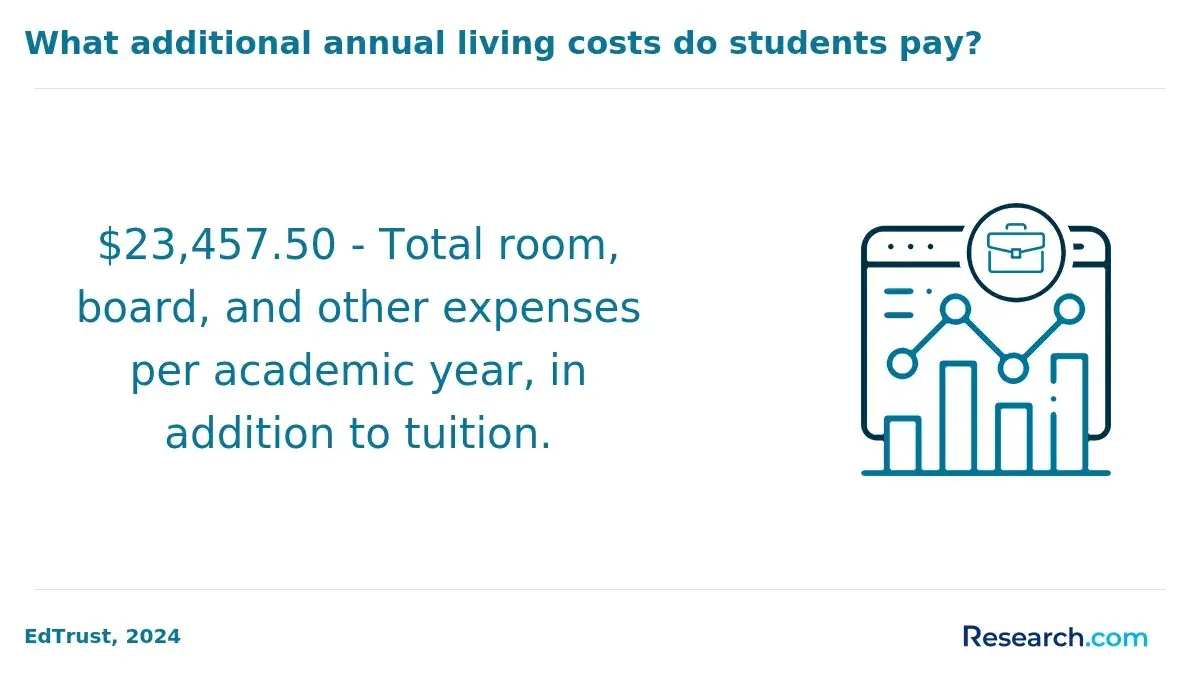
- How much should I budget beyond tuition?
If your long-term goal is to move from the operating room into healthcare leadership, you may later compare options such as an affordable online MBA healthcare management program after gaining experience.
Deadlines vary widely, but Surgical Technology applicants should track both college admission deadlines and separate program cohort deadlines. Clinical programs may admit once or twice per year, even if the college accepts general applications year-round.
Many community colleges and career colleges have rolling general admission. Surgical Technology departments, however, often use fixed application windows because labs, faculty supervision, and clinical sites have limited capacity. Missing a program deadline may delay you by a semester or a full year.
The table below summarizes common deadline patterns so you can plan backward.
| Deadline type | When it commonly appears | Why it matters |
| General college application | Rolling or several months before term start | You need college admission before advising, placement, or prerequisite registration |
| Financial aid priority deadline | Before or early in the enrollment cycle | Late filing may reduce access to some institutional or state aid |
| Placement testing deadline | Before course registration or program application | Late placement can block prerequisite enrollment |
| Prerequisite completion deadline | Before the selective program review | Incomplete prerequisites may make your application ineligible |
| Surgical Technology cohort deadline | Often once or twice per year | This is the deadline most likely to delay entry if missed |
| Health and clinical documentation deadline | After conditional acceptance and before clinical start | Missing documents can prevent clinical participation |
Do not wait until the final week to ask whether SAT/ACT scores are required. If the program uses placement tests, prerequisite verification, or health documentation, you need time to fix issues before review.
A practical timeline looks like this:
- Six to nine months before entry, identify programs and confirm whether SAT/ACT scores are required anywhere in the process.
- Four to six months before entry, submit college applications, transcripts, FAFSA materials if applicable, and placement test requests.
- Three to four months before entry, complete or register for prerequisites and gather health, CPR, and background-check information.
- One to three months before entry, submit the Surgical Technology program application and prepare for any interview or entrance exam.
- After acceptance, complete orientation, uniforms, immunizations, clinical onboarding, and course registration quickly.
Applicants who need a faster route should compare timelines carefully because healthcare programs with clinical requirements may not accelerate as easily as non-clinical degrees.
How can you prepare to apply for Surgical Technology associate programs if you don't have SAT/ACT scores?
Build a strong no-test application by proving academic readiness, clinical readiness, and schedule readiness. Your goal is to make the absence of SAT/ACT scores feel irrelevant because the rest of your file answers the program's concerns.
The U.S. Bureau of Labor Statistics projects employment for surgical assistants and technologists to grow faster than the average for all occupations over the 2023-2033 period. That does not guarantee admission or employment, but it helps explain why selective programs may protect quality through prerequisites, labs, and clinical screening rather than relying on SAT/ACT scores.
Start with an honest self-assessment. The table below can help you identify whether you are ready to apply now or should strengthen your profile first.
| Readiness area | Strong sign | Possible gap |
| Academic record | Recent strong grades in science, English, and math | Low or outdated grades with no recent college-level coursework |
| Prerequisites | Required courses completed or in progress | Missing anatomy, physiology, medical terminology, or required general education |
| Placement | College-level placement or completed support courses | Unresolved developmental coursework requirements |
| Clinical eligibility | Immunizations, CPR, background check, and transportation are manageable | Documentation, legal, health, or transportation issues not yet addressed |
| Schedule fit | Can attend labs and daytime clinical rotations | Work or caregiving schedule conflicts with required in-person hours |
| Career understanding | Has shadowed, researched, or spoken with surgical technologists | Limited understanding of operating room demands |
If you find gaps, strengthen the application before submitting to selective programs. This is often better than applying early and being denied or waitlisted.
Use this preparation plan:
- Request unofficial transcripts and compare them with each program's prerequisite list.
- Retake or complete key courses if your science grades are weak or outdated.
- Prepare for placement exams early, especially if math or reading has been a challenge.
- Build healthcare exposure through volunteering, shadowing, sterile processing, patient care, or informational interviews.
- Collect documentation for immunizations, CPR, background checks, and drug screening requirements.
- Write a short explanation of why you are ready for Surgical Technology without relying on test scores.
- Apply to more than one qualified program if clinical seats are limited.
Also decide whether you should retake the SAT or ACT at all. For most associate-level Surgical Technology applicants, retaking the test is not the best use of time unless a specific school, scholarship, or placement policy would clearly benefit from a higher score. In many cases, improving prerequisite grades or placement results will matter more.
The best no-test applicants are not passive applicants. They confirm policies, prepare documents early, and show they understand the clinical reality of the field.
Other Things You Should Know About Surgical Technology
Possibly. If the school and program are eligible for federal student aid, you can submit the FAFSA regardless of whether SAT or ACT scores are required. Always confirm that the specific program is aid-eligible before enrolling.
Employers generally focus on your credential, clinical training, certification eligibility, professionalism, and ability to perform in the operating room. They typically do not ask whether you submitted SAT or ACT scores for associate degree admission.
Many associate programs take about two academic years, but timelines vary by prerequisites, cohort start dates, clinical scheduling, and whether you attend full time. Missing one prerequisite can extend the timeline.
Yes. Prior college credits in English, math, anatomy, physiology, psychology, or medical terminology may reduce your course load and show academic readiness. Transfer approval depends on the school, course age, grades, and lab requirements.
- Associate Surgical Technology https://www.monroeu.edu/academics/undergraduate-programs/school-allied-health-professions/associate-surgical-technology
- TEAS Score Requirements for Surgical Technology Programs (2026) https://studybuddy.live/blog/surgical-technology-teas-requirements
- How to Apply - Surgical Technology https://cabarruscollege.edu/academic-programs/allied-health-programs/surgical-technology/how-to-apply
- Surgical Technology https://www.fletcher.edu/programs/nursing-allied-health/surgical-technology
- Surgical Technology https://phsc.edu/academics/programs/health/surgical-technology
- Cost to Become a Surgical Tech (Programs & Certification) https://www.stepful.com/post/cost-to-become-a-surgical-tech
- Surgical Technology Program (Associate Degree) | NEIT https://www.neit.edu/academics/associate-degrees/surgical-technology-as
- Surgical Technology Program Online | Hybrid Surgical Tech Training in California https://www.ach.edu/programs/surgical-technology-program-online/
- Surgical Technology https://www.ntc.edu/academics-training/programs/all/associate-degree/surgical-technology
- Surgical Technology Associate Degree, Surgical Tech | EVIT College and Career | Mesa, AZ https://www.evit.edu/programs/surgical-technology-associate-degree