
2027 Online Pastoral Counseling Doctorate Programs with No Dissertation Requirement

Co-Founder and Chief Data Scientist
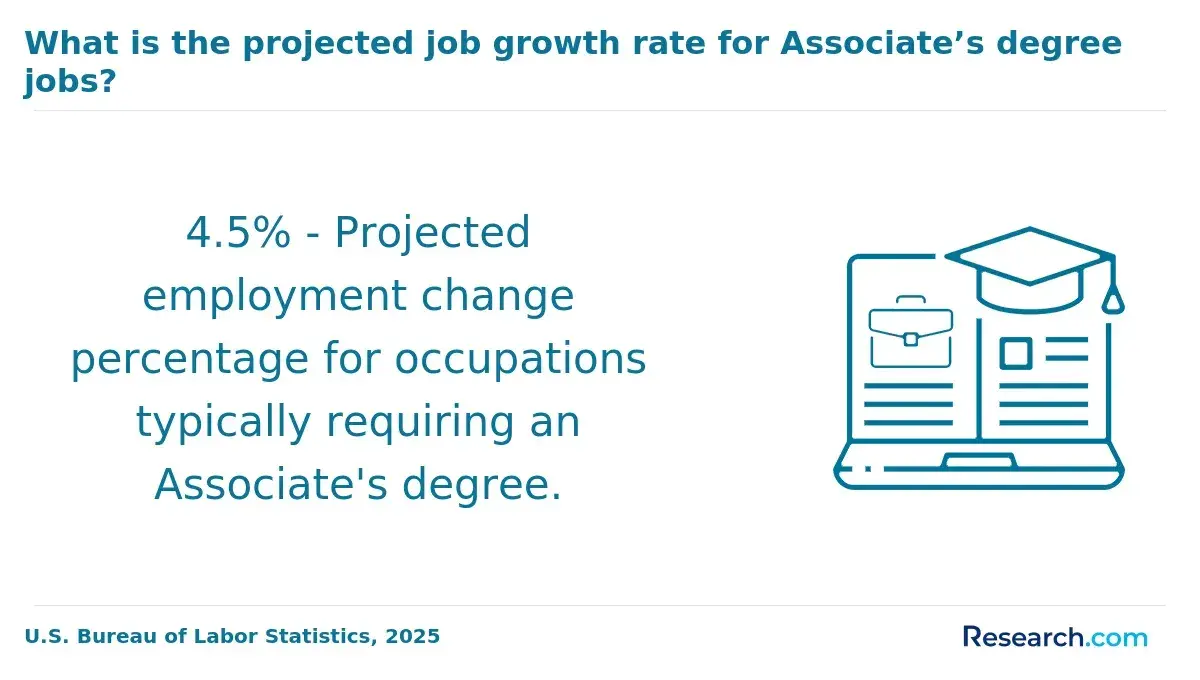
Choosing an online pastoral counseling doctorate without a dissertation is really a choice between research depth, ministry application, cost, and career direction. The timing matters: the U. S. Bureau of Labor Statistics projects 19% growth for substance abuse, behavioral disorder, and mental health counselors from 2023 to 2033, signaling strong demand for counseling-related skills.
This guide is for ministers, chaplains, faith-based counselors, and working professionals who want doctoral-level preparation without a traditional dissertation. You will learn how these programs work, what replaces the dissertation, and how to choose a legitimate path.
Key Things You Should Know
- Yes, some online pastoral counseling doctorates avoid a traditional dissertation, but most replace it with a doctoral ministry project, applied capstone, portfolio, or practice-based research project.
- The strongest options are usually professional doctorates such as the Doctor of Ministry, not PhD programs; PhD and research doctorates commonly require a dissertation.
- Cost and financing still matter: federal graduate Direct Unsubsidized Loans carry an 8.08% interest rate for 2024-25, while Grad PLUS Loans carry a 9.08% rate, so total program cost should be compared before enrolling.
Which Online Pastoral Counseling Doctorate Programs Do Not Require a Dissertation?
The most realistic answer is that fully online "pastoral counseling doctorate" programs with no traditional dissertation are usually offered as Doctor of Ministry programs with pastoral care, pastoral counseling, chaplaincy, spiritual formation, or caregiving concentrations. These programs generally emphasize applied ministry research rather than a PhD-style dissertation.
The table below summarizes the kinds of online or mostly online doctoral options students commonly evaluate when looking for a pastoral counseling doctorate without a traditional dissertation. Always confirm the current catalog, because schools may use terms such as "project," "thesis-project," "capstone," or "applied research project" differently.
| Program type or example pathway | Typical online format | What usually replaces the dissertation | Best fit |
| Doctor of Ministry in Pastoral Counseling | Online or mostly online, sometimes with intensives | Doctoral ministry project, applied project, or capstone | Pastors, ministry leaders, and faith-based counselors who want applied training |
| Doctor of Ministry in Pastoral Care and Counseling | Online coursework with possible short residencies | Practice-based ministry research project | Chaplains, congregational care leaders, and pastoral care directors |
| Doctor of Ministry with chaplaincy or spiritual care focus | Online or hybrid | Capstone, portfolio, or supervised ministry project | Hospital, military, corrections, hospice, and community chaplaincy professionals |
| Professional doctorate in counseling ministry or practical theology | Online, hybrid, or cohort-based | Applied doctoral project tied to a real ministry setting | Students seeking leadership roles in Christian counseling ministries or nonprofits |
| PhD in pastoral counseling, counseling, or practical theology | Online options are less common and often research-heavy | Usually a dissertation | Students pursuing academic research, tenure-track teaching, or scholarly publishing |
When comparing programs, do not stop at the phrase "no dissertation." A legitimate dissertation-free program should clearly explain the final doctoral requirement, the faculty review process, the expected length or scope of the project, and whether any in-person components are required.
What Replaces the Dissertation in an Online Pastoral Counseling Doctorate?
In a dissertation-free pastoral counseling doctorate, the final requirement usually shifts from producing original scholarly research to solving a real problem in a ministry, counseling, chaplaincy, or faith-based care setting. The work can still be rigorous, but the purpose is applied impact rather than theory-building.
The table below compares common dissertation alternatives so you can understand how much research, writing, and field application each option may involve.
| Completion requirement | What it involves | Research level | What students usually produce |
| Doctoral ministry project | Identifying a ministry or pastoral care problem, designing an intervention, implementing it, and evaluating results | Moderate to high | Project report, presentation, and sometimes a publishable paper |
| Applied capstone | Creating a practical solution for a defined pastoral counseling or spiritual care need | Moderate | Program model, training curriculum, evaluation plan, or ministry resource |
| Clinical-ministry project | Applying pastoral counseling, chaplaincy, or spiritual care methods in a supervised setting | Moderate | Case-based project, reflection papers, supervisor evaluation, and final defense |
| Portfolio | Compiling doctoral-level work that demonstrates competencies across theology, care, leadership, and applied practice | Low to moderate | Portfolio, competency narrative, and final review |
| Thesis-project | Combining a shorter scholarly paper with an applied ministry project | Moderate to high | Written project document and oral defense |
Students should ask detailed questions before assuming a capstone is simple. A strong applied project may require literature review, needs assessment, ethical approval, data collection, program evaluation, and a formal defense.
- Ask whether the final project requires original data collection, participant interviews, surveys, or ministry-site approval.
- Request a sample project title list so you can see the expected scope and practical focus.
- Confirm whether the project can be completed in your current church, counseling ministry, chaplaincy site, or nonprofit setting.
- Ask whether there are continuation fees if the project takes longer than the standard timeline.
Are Online Pastoral Counseling Doctorate Programs Without Dissertations Legitimate and Accredited?
Yes, a pastoral counseling doctorate without a dissertation can be legitimate if it comes from an appropriately accredited institution and has a clearly defined doctoral-level completion requirement. "No dissertation" should mean "alternative doctoral project," not "no serious doctoral work."
Start with institutional accreditation recognized by the U.S. Department of Education or the Council for Higher Education Accreditation. For theological schools, also check whether the seminary or divinity school holds accreditation from a recognized theological accreditor such as the Commission on Accrediting of the Association of Theological Schools when applicable.
Pastoral counseling also requires careful credential planning. A doctorate in pastoral counseling, ministry, or spiritual care usually does not replace the licensure path for becoming a state-licensed professional counselor. If your goal is licensed counseling practice, compare doctoral options with licensure-focused online master's programs for counseling, because state counseling licenses are typically built on specific graduate coursework, supervised hours, and exams.
Use this checklist before applying to any no-dissertation doctoral program:
- Verify institutional accreditation through an official accreditation database, not only the school's marketing page.
- Check whether the degree type matches your goal: DMin for ministry leadership, PhD for research, or counseling-specific graduate study for licensure.
- Read the catalog section on the final doctoral requirement and confirm whether it is a capstone, project, portfolio, thesis-project, or dissertation under another name.
- Ask whether the program requires residencies, intensives, supervised ministry placements, or on-campus defenses.
- Contact your employer, denomination, chaplaincy board, or state licensing board if the degree must meet a specific professional requirement.
Are No-Dissertation Online Pastoral Counseling Doctorate Programs Easier to Complete?
They can be more practical for working adults, but they are not automatically easier. The main difference is the type of work: a dissertation asks you to contribute original scholarship, while a pastoral counseling capstone or doctoral ministry project asks you to apply advanced knowledge to a real care, counseling, or ministry problem.
For many students, the applied format feels more manageable because the project connects directly to their daily work. For others, it can be demanding because it requires coordination with a congregation, chaplaincy site, counseling ministry, supervisor, or participant group.
Common mistakes often come from underestimating the final project. Watch for these issues before you enroll:
- Assuming "no dissertation" means "no major writing," when many capstones still require a lengthy written report and formal defense.
- Choosing the fastest program without checking whether your ministry site can support the required project.
- Overlooking ethics review, participant consent, or organizational approval requirements for applied research.
- Ignoring residency requirements that may add travel time, lodging costs, and missed workdays.
- Assuming a professional doctorate will be viewed the same as a PhD for academic research or tenure-track faculty roles.
The best way to judge difficulty is to compare the final deliverables. If a program requires a literature review, data collection, intervention design, evaluation, and oral defense, it may be dissertation-free but still academically substantial.
How Long Does It Take to Complete an Online Pastoral Counseling Doctorate Without a Dissertation?
Most online pastoral counseling doctorates without a traditional dissertation take about three to five years, depending on transfer credits, enrollment pace, ministry-site readiness, residency requirements, and the final project timeline. Some students finish faster in cohort-based DMin programs, while others take longer if their capstone requires extensive field implementation.
The table below shows typical timelines by doctoral structure. These are planning ranges, not guarantees, because completion depends heavily on course sequencing and the final project process.
| Doctoral pathway | Typical timeline | Why the timeline varies | Best for |
| Online DMin with capstone or ministry project | 3 to 5 years | Project design, ministry-site approval, cohort schedule, and residencies | Working pastors, chaplains, and ministry leaders |
| Online or hybrid DMin with intensive residencies | 3 to 6 years | Travel schedule, limited residency dates, and project defense timing | Students who want online study but can attend short in-person sessions |
| Professional doctorate with applied project | 3 to 5 years | Fieldwork requirements, applied research expectations, and faculty review | Students seeking practice-focused leadership training |
| PhD with dissertation | 4 to 7 years or more | Comprehensive exams, dissertation proposal, research approval, and defense | Students pursuing scholarship, research, or academic careers |
Students who want the shortest realistic path should ask whether coursework and project development overlap. Programs that make students finish all coursework before starting the final project may take longer than programs that build the project gradually across the curriculum.
How Much Do Online Pastoral Counseling Doctorate Programs Without Dissertations Cost?
Costs vary widely because schools use different tuition models, credit totals, fees, and residency requirements. A no-dissertation format can reduce time-related costs if it helps you finish sooner, but it does not automatically make the degree inexpensive.
For a realistic budget, compare the full cost of attendance rather than the advertised per-credit rate. The following cost items are especially important for online doctoral students:
- Federal Direct Unsubsidized Loan interest rate for graduate and professional students for 2024-25: 8.08%
- Federal Grad PLUS Loan interest rate for 2024-25: 9.08%
- Possible program charges: tuition, doctoral fees, technology fees, project continuation fees, books, graduation fees, and application fees.
- Possible residency costs: airfare, lodging, meals, local transportation, missed work time, and childcare.
- Possible project costs: assessment tools, printing, participant materials, software, transcription, travel to a ministry site, or evaluation support.
The loan-rate comparison matters because doctoral borrowing can become expensive if the project extends beyond the planned timeline. Before committing, ask the school for a term-by-term tuition estimate and compare it with other counseling doctorate options, including a cheapest online PhD in counseling search if you are weighing professional ministry training against a research-focused counseling doctorate.
A practical return-on-investment review should include more than salary. Consider whether the degree supports promotion, denominational advancement, chaplaincy leadership, nonprofit leadership, teaching opportunities, private practice credibility where legally allowed, or deeper service in your current ministry role.
Who Benefits Most From an Online Pastoral Counseling Doctorate Without a Dissertation?
A dissertation-free online pastoral counseling doctorate is usually best for experienced practitioners who want advanced theological, pastoral care, and counseling-informed leadership training without pursuing a traditional research career. It is especially useful when the student already has a ministry context where an applied doctoral project can create measurable value.
This pathway may be a strong fit for several types of professionals:
- Pastors who provide congregational care, grief support, premarital counseling, crisis response, or spiritual direction.
- Chaplains working in hospitals, hospice, corrections, military, higher education, or community settings.
- Faith-based counseling ministry leaders who need doctoral-level training in program design, supervision, ethics, and pastoral care systems.
- Nonprofit and church leaders who want to build trauma-informed, family-support, recovery, or caregiver-support programs.
- Experienced Christian counselors who already understand their state's legal scope of practice and want ministry-focused doctoral preparation.
Students should avoid this path if their primary goal is first-time counseling licensure and they do not already have the required master's-level training. In that case, accelerated mental health counseling programs online may be a more direct route than a pastoral counseling doctorate.
A no-dissertation doctorate may also be the wrong fit for students who want a tenure-track research career, plan to publish heavily in academic journals, or need a PhD for a specific faculty role. For those goals, a dissertation-based doctorate may carry more relevant scholarly preparation.
How Does a No-Dissertation Online Pastoral Counseling Doctorate Affect Career Opportunities?
A no-dissertation pastoral counseling doctorate can strengthen career opportunities when employers value applied leadership, advanced ministry competence, theological depth, and counseling-informed care. It is less likely to function as a universal credential for clinical licensure, academic research roles, or positions that explicitly require a PhD.
The strongest career value usually appears in roles where doctoral-level applied practice matters:
- Senior pastor, associate pastor, or congregational care pastor with expanded counseling and care responsibilities.
- Chaplaincy leader or spiritual care coordinator in healthcare, hospice, corrections, military, or higher education settings.
- Director of a church-based counseling, recovery, marriage, grief, or family support ministry.
- Faith-based nonprofit executive focused on trauma care, family services, addiction recovery, or community support.
- Adjunct instructor or ministry training faculty member, depending on institutional hiring standards.
Labor market data supports the broader relevance of counseling-informed skills. The BLS projects 19% employment growth for substance abuse, behavioral disorder, and mental health counselors from 2023 to 2033, which is much faster than the average for all occupations.
That does not mean a pastoral counseling doctorate qualifies someone for licensed counseling jobs by itself, but it does show that organizations continue to need professionals who understand care, crisis response, ethics, and helping relationships.
Technology is also changing the field. Telehealth, online pastoral care, digital church communities, and AI-assisted administration are increasing demand for leaders who can combine human care with ethical judgment. A strong doctoral project can help students demonstrate that they can evaluate programs, protect confidentiality, use technology responsibly, and build care systems that work in real communities.
How Do No-Dissertation Online Pastoral Counseling Doctorates Compare With Traditional Doctorates?
The best choice depends on what you want the doctorate to do for you. A dissertation-free doctorate is usually more practice-oriented, while a traditional dissertation doctorate is usually more research-oriented.
The table below compares the major decision points students should review before choosing between a capstone-based pastoral counseling doctorate and a dissertation-based doctorate.
| Factor | No-dissertation pastoral counseling doctorate | Traditional dissertation-based doctorate |
| Primary purpose | Apply advanced knowledge to ministry, pastoral care, chaplaincy, or faith-based counseling contexts | Produce original scholarly research and contribute to an academic field |
| Common degree type | Doctor of Ministry or other professional doctorate | PhD, ThD, or research-focused doctorate |
| Final requirement | Capstone, doctoral ministry project, portfolio, or applied project | Dissertation with proposal, research, writing, and defense |
| Best career fit | Ministry leadership, chaplaincy leadership, nonprofit leadership, applied teaching, program development | Research, tenure-track academic roles, scholarly publishing, advanced theory development |
| Research intensity | Applied and practice-based | High and theory-focused |
| Flexibility for working adults | Often designed around active ministry or professional practice | May require more independent research time and longer dissertation development |
| Potential limitation | May not meet expectations for research-heavy academic jobs | May feel less directly connected to day-to-day ministry or pastoral counseling practice |
Choose the no-dissertation route if your goal is to improve pastoral care systems, lead a counseling ministry, train caregivers, or solve practical problems in a faith-based setting. Choose the dissertation route if your goal is scholarly research, academic publishing, or a faculty role where a research doctorate is expected.
How Should Students Choose an Online Pastoral Counseling Doctorate Without a Dissertation?
The smartest way to choose a program is to evaluate the whole doctoral structure, not just the absence of a dissertation. A strong program should align with your career goal, faith tradition, accreditation needs, schedule, budget, and preferred type of doctoral work.
Use this step-by-step process to compare programs in a practical way:
- Define your goal first: ministry leadership, chaplaincy advancement, faith-based counseling ministry, teaching, nonprofit leadership, or academic research.
- Confirm the degree type and make sure a DMin, professional doctorate, or PhD matches that goal.
- Verify accreditation through official sources and ask whether the seminary, university, or theological school has the recognition your employer or denomination expects.
- Request the catalog description of the final doctoral requirement and ask whether it includes a proposal, data collection, defense, field implementation, or continuation fees.
- Compare online format details, including synchronous classes, asynchronous coursework, intensives, residencies, field placements, and project-site requirements.
- Ask how early students begin designing the capstone or ministry project and whether faculty mentoring is built into each term.
- Review total cost, not just tuition, including fees, travel, project expenses, and interest if you plan to borrow.
- Check whether the degree supports your professional credential goals, especially if you work in counseling, chaplaincy, supervision, or healthcare settings.
- Speak with current students or alumni and ask how long the final project actually took them to complete.
- Compare alternatives if your career goal is outside pastoral care; for example, students focused on behavioral intervention may want to examine a fastest BCBA program instead of a ministry doctorate.
Red flags include unclear accreditation claims, vague final project descriptions, pressure to enroll quickly, promises of unusually fast completion, no faculty expertise in pastoral counseling or spiritual care, and marketing language that suggests a doctorate requires little research or writing. A legitimate no-dissertation doctorate should be transparent about rigor, expectations, and outcomes.
Other Things You Should Know About Pastoral Counseling
Generally, graduates of accredited doctoral programs may use the title in academic, ministry, or professional contexts, but they should avoid implying that they are medical doctors or licensed clinicians unless they hold those credentials.
No. Pastoral counseling often addresses emotional, relational, ethical, and spiritual concerns through a faith-informed helping relationship. Spiritual direction usually focuses more narrowly on discernment, prayer, spiritual growth, and one's relationship with God.
Not always. Some roles require ordination or denominational endorsement, especially chaplaincy and church leadership roles. Other faith-based counseling or care positions may accept ministry experience, graduate education, certification, or supervised training instead.
Yes, many churches, ministries, and chaplaincy programs use online care, video meetings, and tele-support. Providers still need clear confidentiality practices, emergency protocols, informed consent, and awareness of state rules if services overlap with licensed counseling.
References
- Advance Your Ministry: Doctorate in Christian Counseling! https://andersonvilleseminary.com/gradulate/doctor-of-ministry-christian-counseling/
- Pastoral Counselor https://onlinecounselingprograms.com/become-a-counselor/counseling-careers/pastoral-counselor/
- Doctor of Pastoral Counseling Degree New York: Accredited Programs - Counseling Degrees New York https://counselingnewyork.org/pastoral-counseling-degree/doctorate/
- Online Ph.D. in Pastoral Community Counseling | AE.org https://academicearth.org/ph-d-in-pastoral-community-counseling/
- Capstone Options in Master's in Communication Programs (Thesis vs Project) https://www.mastersincommunications.com/features/guide-to-graduate-communication-capstone-options
- What's the Difference between a PhD, a DMin, and a ThD? https://www.pastortheologians.com/articles/2024/4/10/whats-the-difference
- PhD in Clinical Pastoral Counseling Program Details https://www.seminary.ws/phd-in-clinical-pastoral-counseling/
- PhD in Christian Counseling https://realitycounselingcenter.com/phd-in-christian-counseling/
- Doctorates in Discipleship, Spiritual Formation, Pastoral Counseling, and Related Disciplines https://www.calebkaltenbach.com/post/doctorates-in-discipleship-counseling-spiritual-formation-and-related-disciplines


