2027 Online Organizational Communication Master's Programs With University Scholarships: Awards, Eligibility & Tuition After Aid

Co-Founder and Chief Data Scientist
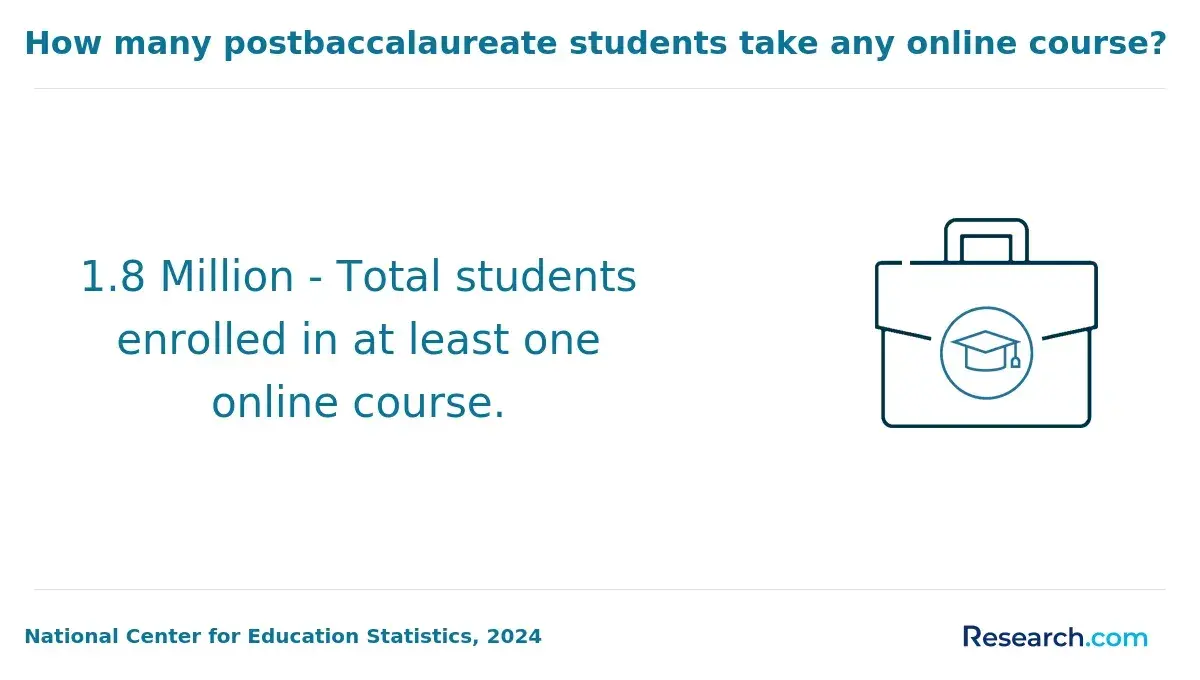
Funding can change which online Organizational Communication master's program is financially realistic, but university awards often have separate deadlines, enrollment rules, and renewal terms. The National Center for Education Statistics reported about 3.2 million graduate students enrolled in U.S. postsecondary institutions in fall 2023, underscoring competition for limited institutional funding.
This guide is for prospective and current students comparing online options. It explains tuition, university scholarships, federal aid, eligibility, net-cost calculations, and the steps that can improve a funding plan before enrollment.
Key Things to Know About Organizational Communication Master's Programs with Scholarships
- Online students may qualify for institutional merit awards, foundation scholarships, federal Direct Unsubsidized Loans, and employer support, but each university can set different distance-learning and enrollment requirements.
- For the 2024-25 academic year, average published graduate tuition and fees were $12,596 at public institutions and $29,931 at private nonprofit institutions; Organizational Communication programs can fall above or below those broad benchmarks.
- A scholarship offer should be compared by renewable amount, required enrollment level, GPA conditions, excluded fees, and the estimated tuition remaining after all aid - not by award name alone.
What online Organizational Communication master's programs offer university scholarships?
Some universities with online communication, strategic communication, or communication-and-leadership master's programs administer graduate scholarships through university-wide financial aid, graduate studies, alumni, or foundation offices. A program need not have a scholarship labeled "Organizational Communication" for an enrolled student to be eligible. However, an institutional scholarship page is not proof that online graduate students qualify; confirm that point in writing before using an award in a cost comparison.
The following examples illustrate the kinds of programs and scholarship channels prospective students should investigate. Availability, award amounts, and distance-learning eligibility can change by admission cycle.
| University and online program area | Potential university funding channel to check | Important question for online applicants |
| University of Denver - online strategic communication | Graduate and university-college scholarship opportunities | Does the award apply to fully online students and to the intended start term? |
| Gonzaga University - online communication and leadership studies | Graduate admissions, donor-funded, and university scholarship programs | Is the scholarship automatically considered with admission, or is a separate application required? |
| Queens University of Charlotte - online communication | Graduate merit and institutional aid review | Is an award available for part-time enrollment, which is common for working professionals? |
| Northeastern University - online corporate and organizational communication | Graduate admissions and employer-partnership funding | Can institutional aid be combined with an employer tuition benefit? |
Use this list as a starting point rather than a ranking. A lower advertised tuition can be preferable to a higher-priced program with a one-time scholarship, especially when the award is not renewable. Ask each school for the total program tuition, mandatory fees, expected scholarship duration, and a written estimate of tuition after institutional aid.
What is the average tuition for Organizational Communication master's programs before aid?
There is no single national tuition average specifically for online Organizational Communication master's programs because schools package these degrees under names such as communication management, strategic communication, corporate communication, or leadership communication. A useful baseline is the College Board's 2024-25 average published graduate tuition and fees: $12,596 at public institutions and $29,931 at private nonprofit institutions. These figures are broad graduate-school benchmarks, not a prediction of a specific program bill.
Before comparing scholarships, calculate the program's pre-aid price using the school's required credit total and current per-credit tuition, then add mandatory online, technology, graduation, and course-material fees. Looking at online interdisciplinary studies tuition costs can also help students see why total required credits and mandatory fees matter as much as the listed per-credit rate.
This comparison separates a headline tuition figure from the cost you may actually pay.
| Cost item | What to verify | Why it affects the aid decision |
| Required program credits | Whether electives, capstone credits, or prerequisites add to the stated total | A per-credit scholarship may not cover extra or repeated courses. |
| Tuition rate | Whether the rate is locked for continuing students or may change annually | A multi-term program can cost more if tuition rises after the first term. |
| Mandatory fees | Technology, distance-learning, student-service, and graduation charges | Many scholarships apply to tuition only, leaving fees unpaid. |
| Transfer-credit policy | Maximum credits accepted and whether they reduce required coursework | Approved transfer credit can lower total tuition, though it may affect enrollment-based aid. |
Students who can pay a modest amount monthly may prioritize a lower total-cost public program. Students considering a more expensive private nonprofit program should seek a renewable institutional award and compare the remaining balance over the entire degree, not just the first semester.
What types of financial aid and scholarships are available for Organizational Communication master's programs?
Graduate funding usually combines more than one source. Scholarships and grants do not generally require repayment, while loans do. University aid can be merit-based, need-based, identity- or affiliation-based, donor-restricted, or tied to a professional partnership. Federal aid begins with the Free Application for Federal Student Aid, commonly called the FAFSA.
The main funding categories below have different trade-offs, so applicants should identify which sources are realistic before accepting admission.
| Funding source | Typical basis | Best use case | Key limitation |
| University merit scholarship | Academic record, leadership, professional experience, or admission strength | Applicants with a strong GPA, portfolio, or workplace achievements | May be competitive, nonrenewable, or limited to certain terms. |
| Need-based institutional grant | Financial need determined by school methodology or FAFSA information | Students whose documented resources do not meet educational costs | Graduate need grants are less universal than undergraduate grants. |
| Foundation or donor scholarship | Criteria set by a donor, such as field, service, location, or affiliation | Applicants who closely match a defined criterion | Often requires essays and a separate deadline. |
| Federal Direct Unsubsidized Loan | FAFSA eligibility and annual borrowing limits | Students needing predictable federal borrowing after grants and scholarships | Interest accrues and borrowed funds must be repaid. |
| Employer tuition assistance | Employer policy and continued employment | Working professionals whose degree supports their job path | May require advance approval, grade minimums, or a service commitment. |
For a broader view of how online graduate affordability can differ by discipline, compare funding structures used by MSW online programs. The important distinction is that funding rules are issued by each institution and employer, not by degree title alone.
Avoid treating loans as scholarships in a financial aid comparison. If an award letter combines grants, scholarships, work-study, and loans, ask the financial aid office to identify the nonrepayable amount separately.
How much do Organizational Communication master's scholarships typically cover?
University scholarship coverage varies widely. Some awards offset a portion of one term's tuition, while others are renewable annual awards or tuition discounts connected to an employer partnership. Full-tuition awards exist at some institutions but are uncommon and highly competitive for course-based online master's programs. Do not assume that "full scholarship" includes fees, books, or living expenses unless the award terms say so.
Federal borrowing provides a useful ceiling for planning: eligible graduate and professional students may borrow up to $20,500 annually in Direct Unsubsidized Loans, subject to federal limits and remaining cost of attendance. That is borrowing capacity rather than free aid, so it should not be used to judge scholarship generosity.
This framework helps compare award letters that use different formats.
| Award structure | What it may reduce | What to compare before accepting |
| Fixed amount | A stated portion of tuition for one term or academic year | Whether the amount renews and whether it is split across terms |
| Percentage tuition discount | A stated share of eligible tuition charges | Excluded fees, eligible courses, and whether the tuition rate can change |
| Per-credit scholarship | Part of tuition for each enrolled credit | Credit minimums, maximum covered credits, and treatment of transfer or repeated courses |
| Employer partnership reduction | Tuition discount for employees of participating organizations | Whether reimbursement and the institutional discount can both be used |
Professional students weighing a communication degree against management education may find that the financing logic resembles fastest MBA online options: a short completion timeline can reduce the number of billed terms, but it can also make it harder to meet part-time work and scholarship-renewal requirements. Choose an accelerated pace only if the award applies throughout that pace and the academic workload is manageable.
Who is eligible for Organizational Communication master's scholarships?
Eligibility depends on the scholarship, not simply on admission to an Organizational Communication master's program. Most institutional awards require admission to an eligible degree program, while others also require a minimum GPA, a certain enrollment intensity, FAFSA submission, demonstrated need, residency, professional affiliation, or evidence of leadership and service.
Applicants should separate eligibility rules into the following categories before spending time on essays.
- Merit awards: Usually assess prior academic performance, professional accomplishments, leadership, recommendations, or a statement of purpose; some are considered automatically during admission review.
- Need-based awards: May require FAFSA information and additional institutional financial documentation; eligibility can change if financial circumstances change.
- Donor-restricted awards: May be limited by career sector, geographic background, first-generation status, service record, membership, or a specific communication interest.
- Enrollment-based awards: May require continuous enrollment, a minimum number of credits, or degree-seeking status; students taking one course at a time should verify this carefully.
- Employer-related awards: Usually require employment at an eligible organization and may require supervisor approval before classes begin.
International students, nondegree students, certificate students, and students receiving employer reimbursement may face different rules. Ask whether the scholarship is available to your student category, whether it can be used with other aid, and whether a leave of absence ends eligibility.
What is the application process for Organizational Communication master's scholarships?
The application process often runs on two timelines: admission and financial aid. Missing a scholarship deadline can matter even when admission remains open. Begin by creating a calendar that includes the program application deadline, FAFSA availability, institutional priority deadline, foundation scholarship deadline, and any employer reimbursement deadline.
A practical application sequence is below. Completing these steps early gives financial aid staff time to clarify eligibility before you commit to enrollment.
- Apply for admission early enough to receive a student identification number and access the scholarship portal.
- Submit the FAFSA if you are eligible and may use federal or need-based aid, even if you expect to receive a merit scholarship.
- Search the university's graduate, foundation, alumni, department, and online-learning scholarship pages for separate applications.
- Prepare a tailored résumé, concise statement of purpose, unofficial or official transcripts as requested, and recommendation materials before deadlines.
- Document leadership, change-management, internal communication, training, conflict-resolution, or employee-engagement work that demonstrates organizational communication relevance.
- Review the award letter and request written clarification about renewal, online eligibility, fees, disbursement timing, and stacking rules.
A common mistake is submitting the admissions essay unchanged for every scholarship. A stronger scholarship statement connects your experience to the award's stated purpose and explains how the degree supports a defined professional goal. Keep copies of every submission and confirmation email in case the school needs to verify completion.
Do online Organizational Communication students qualify for the same aid as on-campus students?
Online students can qualify for many of the same federal financial aid programs and some of the same university scholarships as on-campus students when they are enrolled in an eligible degree program. Still, "online" is not a universal eligibility category. A university may reserve particular donor awards, assistantships, housing-related funds, or activity-based scholarships for campus participants.
The most important distinction is between federal eligibility and institution-specific aid. Federal student aid generally depends on school and program eligibility, enrollment, satisfactory academic progress, and student eligibility requirements. University scholarships may add conditions such as campus attendance, cohort, location, start term, or full-time enrollment.
Students comparing professionally oriented online degrees should expect similar variation across fields. For example, applicants researching affordable online MFT programs california should also verify campus-based award exclusions rather than assuming every institutional scholarship transfers to distance learners.
Before applying, email the financial aid office with the exact program name and planned enrollment level. Ask: "Is a fully online, degree-seeking master's student starting in my term eligible for this award, and is the award renewable?" Save the response. This is more reliable than relying on a general scholarship description.
Can Organizational Communication master's students combine multiple scholarships and grants?
Often, yes. Students may be able to combine a university merit scholarship with an outside scholarship, employer tuition assistance, and federal loans. The result depends on the school's scholarship-stacking policy and the federally determined cost-of-attendance limit. If total aid exceeds allowable educational costs, the financial aid office may need to reduce or revise one component of the package.
Combining awards works best when each source has a distinct purpose and the school confirms how it will be applied.
| Combination | Potential advantage | Potential issue to check |
| University scholarship plus outside scholarship | Can reduce the tuition balance without increasing debt | The university may adjust institutional aid after receiving outside funds. |
| University scholarship plus employer reimbursement | Can lower out-of-pocket cost for working professionals | Employer policy may reimburse only expenses paid by the employee or exclude discounted tuition. |
| Grant or scholarship plus federal loan | Loans can cover the remaining eligible balance | Borrow only what remains necessary after nonrepayable aid. |
| Multiple institutional scholarships | May increase total gift aid | Some awards are explicitly non-stackable or replace one another. |
Report outside scholarships promptly. Hiding an award does not protect your package and can create a later bill. Also check whether an outside scholarship pays the university directly or reimburses you after grades are posted, because timing affects cash flow.
What are the requirements to maintain scholarship status in Organizational Communication master's programs?
Renewable scholarships commonly require satisfactory academic progress, continued enrollment in an eligible program, and compliance with university conduct standards. The exact GPA, credit load, review schedule, and appeal process are set by the institution and award agreement. Graduate students should read these conditions before the first term rather than waiting for a renewal notice.
Renewal conditions tend to focus on the following areas.
- Academic performance: Maintain the cumulative GPA or grade standard stated in the scholarship agreement, which can differ from the program's minimum graduation GPA.
- Enrollment status: Meet any minimum-credit or continuous-enrollment requirement; reducing a course load can change eligibility.
- Degree progress: Complete courses successfully and avoid excessive withdrawals, repeats, or incomplete grades that may affect satisfactory academic progress.
- Program eligibility: Remain in the approved degree program and obtain approval before changing concentration, campus, modality, or start sequence.
- Administrative requirements: File required forms, FAFSA renewals, progress reports, or thank-you communications by the school's deadlines.
The largest avoidable risk is assuming a scholarship renews automatically. Request the written renewal policy and ask whether the school reviews eligibility each term or each academic year. If a work, health, or family event threatens your progress, contact the financial aid office and program advisor before withdrawing; an appeal or leave process may be available, but it is never automatic.
What tips can help Organizational Communication master's students secure more scholarship funding?
Applicants can improve their funding strategy by treating scholarships as part of program selection, not as an afterthought after admission. The goal is not merely to collect awards; it is to reduce the full degree cost while preserving an enrollment pace that supports academic success and employment responsibilities.
Use these steps to build a stronger, lower-risk funding plan.
- Apply to several academically and financially suitable programs, then compare written net-cost estimates using the same assumptions about credits, fees, and enrollment pace.
- Prioritize renewable awards over one-time awards when total program cost is the deciding factor.
- Match each application to its criteria by highlighting relevant workplace outcomes, such as improving internal communication, managing change, facilitating teams, or leading employee engagement.
- Ask your employer about tuition reimbursement, education partnerships, grade requirements, repayment obligations, and whether approval must be obtained before registration.
- Submit the FAFSA early when eligible, because it can be required for need-based institutional review even when you do not intend to borrow.
- Request reconsideration only when you have meaningful new information, such as a changed financial circumstance or a competing written aid offer from a comparable program.
- Keep a deadline tracker with required documents, reference requests, award decisions, renewal dates, and terms you must accept.
Applicants exploring other doctoral-level online pathways may notice similar financial-aid trade-offs in PsyD programs online: institution-specific scholarships can help, but total borrowing, required enrollment, and program length remain central to affordability. For Organizational Communication students, the best choice is usually the accredited, career-relevant program with the lowest realistic total net price - not necessarily the largest advertised scholarship.
Red flags include vague award language, pressure to commit before receiving written terms, scholarships that exclude most required credits, and aid estimates that omit mandatory fees. Ask the financial aid office to explain any unclear term before paying a deposit.
Other Things You Should Know About Organizational Communication
When possible, wait until you receive a written financial aid package or the school confirms when awards will be released. If a deposit deadline arrives first, ask whether an extension is available and whether the deposit is refundable or credited toward tuition.
Scholarship amounts used for qualified tuition and required fees may be treated differently from amounts used for living expenses, travel, or other nonqualified costs. Tax treatment depends on individual circumstances, so review current IRS guidance or consult a qualified tax professional.
Some can, but part-time enrollment is a frequent restriction. Confirm the minimum number of credits required for initial eligibility and renewal, especially if you plan to take one course per term while working full time.
Contact the financial aid office promptly and ask about a professional judgment review, emergency grants, payment plans, or scholarship reconsideration. Provide requested documentation and continue meeting existing payment deadlines unless the school approves another arrangement.
References
- A Guide to Merit Scholarships + List of 25 Great Merit-based Scholarships https://www.collegeessayguy.com/blog/merit-scholarships
- 2025 Most Affordable Online Master's Programs https://www.onlineu.com/most-affordable-colleges/masters-degrees
- Scholarships for Online Grad School | OEDb.org https://www.oedb.org/graduate-scholarship/
- The Best Online Master's in Communications Programs https://www.onlinecolleges.net/rankings/best-online-masters-communications/
- 25 Public Health Scholarships and Tips to Apply https://www.publichealthdegrees.org/resources/scholarships/
- Admissions Requirements for Master's in Communication Programs (Campus, Online) https://www.mastersincommunications.com/faqs/admissions-requirements
- Fully Funded Master's Programs in Communications and Journalism | ProFellow https://www.profellow.com/fellowships/fully-funded-masters-programs-in-communications-and-journalism/
- Policy master's: Cost and funding (Part 4) - Emerging Technology Policy Careers https://emergingtechpolicy.org/pathways/graduate-school/policy-masters/4-cost-and-funding/
- Grad School Scholarships for Women | Go Grad https://www.gograd.org/financial-aid/scholarships/women/
- 120 Scholarships for Graduate Students with February 2026 Deadlines https://bold.org/scholarships/by-year/graduate-students-scholarships/