2027 Online Operations Management Doctorate Accreditation Guide: Institutional, Programmatic, and Licensure Considerations

Co-Founder and Chief Data Scientist
Choosing an online operations management doctorate is not just about format, tuition, or dissertation topics. You also need to know whether the institution is accredited, whether the business or management program has specialized accreditation, and whether the degree supports any licensure or certification goal you may have.
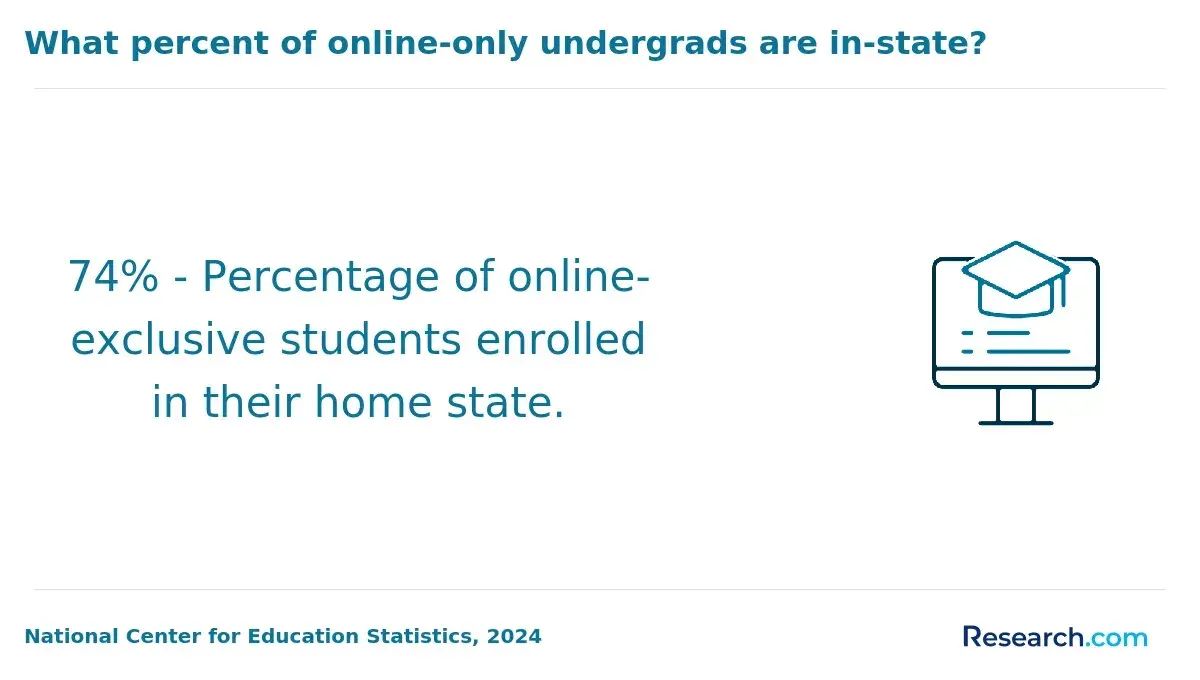
NCES data released in 2024 showed about 10.1 million U.S. postsecondary students took at least one distance education course in fall 2022, making verification more important than ever. This guide helps prospective doctoral students avoid programs that may not meet accreditation, employer, financial aid, or state requirements.
Key Things You Should Know
- Institutional accreditation is the baseline: verify the school in the U.S. Department of Education's accredited institution database or CHEA-recognized listings before considering tuition, transfer credit, or doctoral prestige.
- Programmatic accreditation is usually not legally required for an operations management doctorate, but AACSB, ACBSP, IACBE, or ABET-related recognition can matter for faculty hiring, employer screening, and some adjacent professional pathways.
- Professional licensure is state-specific; operations management itself is typically not licensed, but related goals such as engineering, education leadership, accounting, or regulated consulting may require state-approved coursework, exams, supervised experience, or specific accreditation.
Is an Online Operations Management Doctorate Accredited Differently From an On-Campus Program?
An online operations management doctorate is not accredited differently simply because it is delivered online. Legitimate accreditation attaches to the institution, and sometimes to the program or business unit, not to whether a student attends through synchronous video, asynchronous courses, residencies, or a campus classroom.
What does change is the compliance environment. Online doctoral students may live outside the institution's home state, complete research with employers in another state, or pursue professional credentials where local rules apply. That means an accredited online DBA, PhD, Doctor of Management, or Doctor of Engineering program can be academically legitimate while still failing to meet a specific state's licensure prerequisites for a regulated profession.
The table below separates the accreditation issue from the online delivery issue so you can evaluate a program without confusing related terms.
| Question | Online doctorate | On-campus doctorate | Why it matters |
| Who accredits the institution? | The same institutional accreditor that reviews the college or university as a whole | The same institutional accreditor | Federal aid eligibility, transfer acceptance, and employer recognition often start here |
| Can the program hold business accreditation? | Yes, if the accreditor's scope includes the online program or business unit | Yes, under the same programmatic standards | Specialized accreditation can signal business-school quality but is not always mandatory |
| Does online format change licensure rules? | It can, because the student's state may impose disclosure, fieldwork, or eligibility rules | Usually less complex if the student studies and seeks licensure in the school's state | State location can affect whether the program satisfies regulated career requirements |
| Does state authorization apply? | Yes, if the institution enrolls students across state lines | Usually only if the school serves out-of-state students through distance education | State authorization is about permission to offer education, not proof of licensure eligibility |
The practical takeaway is simple: online delivery does not weaken accreditation by itself. The risk comes from assuming that accreditation, state authorization, and professional licensure approval all mean the same thing. They do not.
What Is the Difference Between Institutional and Programmatic Accreditation for an Online Operations Management Doctorate?
Institutional accreditation evaluates the college or university as an organization. Programmatic accreditation evaluates a specific school, department, discipline, or professional program. For an online operations management doctorate, institutional accreditation is the non-negotiable starting point; programmatic accreditation is a quality signal or requirement only in certain contexts.
Operations management doctorates may sit in business schools, management departments, engineering schools, technology colleges, or interdisciplinary doctoral units. That placement affects which specialized accreditor, if any, is relevant.
Students comparing a doctoral route with a master's-level business option may also want to understand how accredited business schools structure programs such as an MBA operations management online, since the same business accreditation language often appears at the doctoral level.
The comparison below shows how the two accreditation layers work in practice.
| Accreditation type | What it reviews | Common examples relevant to operations management | What it may affect | What it does not automatically prove |
| Institutional accreditation | The entire college or university, including governance, finances, academic quality, faculty qualifications, student support, and integrity | Accreditors recognized by the U.S. Department of Education or CHEA, such as HLC, MSCHE, NECHE, NWCCU, SACSCOC, and WSCUC | Federal financial aid eligibility, transfer credit review, employer confidence, and graduate-school recognition | That every individual program has specialized accreditation or meets licensure rules in every state |
| Programmatic accreditation | A specific discipline, school, or professional program | AACSB, ACBSP, IACBE for business programs; ABET for certain engineering, technology, or applied science programs | Employer preference, academic hiring competitiveness, professional credibility, and eligibility in some regulated fields | That the university is institutionally accredited or that the program meets all state licensure prerequisites |
| State authorization | Whether a school may offer distance education to students in a state | State higher education agencies and participation in agreements such as SARA | Whether the institution can enroll you legally as an online student in your state | That the program qualifies you for a license, certification, or professional title |
| Professional licensure approval | Whether a program meets education requirements for a regulated occupation | State licensing boards for engineering, accounting, education, healthcare, or other regulated fields | Exam eligibility, supervised practice eligibility, or license application review | That the degree will be accepted in another state without additional requirements |
A common mistake is relying on outdated "regional versus national accreditation" language. Federal policy no longer uses that old distinction in the same way for recognition purposes. Instead, verify whether the accreditor is recognized and whether the institution's status is active, not just whether a school uses a familiar-sounding label.
How Can You Verify That an Online Operations Management Doctorate and Its Accreditor Are Legitimate?
Verification should happen before you apply, before you pay a deposit, and again before you enroll. A polished website, faculty photos, and phrases such as "globally recognized" or "fully approved" are not substitutes for recognized accreditation records.
Use the following sequence to check both the institution and any claimed programmatic accreditation. This order matters because a program-level claim is less useful if the institution itself is not properly accredited.
- Search the institution's exact legal name in the U.S. Department of Education's Database of Accredited Postsecondary Institutions and Programs and confirm that the school's accreditation is active.
- Check the accreditor's own website to verify that the institution appears on the accreditor's member or accredited institution list.
- Review CHEA-recognized accreditor information if the institution or program claims recognition through a quality assurance body.
- Look for the specific operations management doctorate, DBA, PhD, or business school in the programmatic accreditor's public directory if the school claims AACSB, ACBSP, IACBE, ABET, or another specialized accreditation.
- Confirm the accreditation scope, because some accreditors list the business school, some list specific programs, and some exclude doctoral programs or certain delivery modes.
- Ask admissions for written documentation that states whether the program is fully accredited, in candidacy, newly launched under an accredited unit, or outside the programmatic accreditor's scope.
- Save screenshots, catalog pages, disclosure pages, and email confirmations, especially if licensure, employer reimbursement, or transfer credit is part of your decision.
Accreditation red flags are usually visible if you know what to look for. Be cautious if a school lists an accreditor that is not recognized by the U.S. Department of Education or CHEA, uses vague phrases instead of naming the accreditor, claims "life experience" can replace most doctoral work, avoids publishing faculty credentials, or refuses to provide written licensure disclosures.
Current federal rules also make disclosures more important. Beginning in 2024, institutions participating in Title IV federal student aid face stricter expectations for programs designed to lead to professional licensure or certification, particularly when distance education students are located in other states.
For readers, that means a school should be able to tell you clearly whether the program meets, does not meet, or has not been determined to meet educational requirements in your state when the program is licensure-oriented.
An online operations management doctorate does not always need programmatic accreditation, but the answer depends on your goal.
If you want a senior operations, supply chain, analytics, consulting, or corporate leadership role, institutional accreditation may be the most important baseline. If you want a tenure-track academic role, teach in a business school, work in a regulated engineering environment, or use the doctorate as part of a professional licensure pathway, specialized accreditation may carry more weight.
Business-related operations management doctorates are often associated with AACSB, ACBSP, or IACBE accreditation. These accreditors differ in scope and emphasis, but all are used by business schools to demonstrate that programs meet external quality standards. Engineering-heavy operations doctorates may instead connect to ABET-accredited engineering or technology programs, although ABET's role is more common at the bachelor's and master's levels than in business doctorates.
The table below can help you decide whether programmatic accreditation is essential, preferred, or less central for your intended outcome.
| Goal | How much programmatic accreditation matters | Why | What to verify |
| Corporate operations executive or supply chain leader | Helpful but not always required | Employers often focus on institutional accreditation, experience, leadership record, and measurable business results | Institutional accreditation, faculty expertise, dissertation support, and employer recognition |
| Business school faculty role | Often important | Some institutions prefer or require degrees from AACSB-accredited schools, especially for tenure-track or graduate teaching roles | Whether the doctoral program or business school is within the specialized accreditor's scope |
| Engineering or industrial systems licensure pathway | Potentially important | State engineering boards may focus on ABET-accredited education, exams, and experience, depending on the applicant's pathway | Whether the degree satisfies the state board's education rules for your discipline |
| Research or analytics leadership | Context-dependent | Doctoral rigor, quantitative methods, publications, and faculty research fit may matter more than business accreditation alone | Research expectations, dissertation model, faculty publications, and institutional accreditation |
| Career change from construction, logistics, or project management | Helpful if aligned with your target industry | Specialized accreditation can improve credibility, but industry experience and certifications may also matter | Program outcomes, industry partnerships, and whether prior graduate work transfers |
If you are still at the bachelor's or master's planning stage and are comparing industry-focused pathways, a lower-cost foundation such as the cheapest online construction management degree may be relevant before committing to a doctoral program. The key is to match accreditation level with the credential you actually need.
Operations management is not typically a licensed profession in the way nursing, psychology, architecture, or professional engineering can be. Most operations management doctorate graduates pursue leadership, consulting, research, faculty, analytics, supply chain, logistics, manufacturing, or process-improvement roles that do not require a state license.
However, licensure and certification can become relevant when your operations management doctorate overlaps with a regulated field. The accreditation that matters is the one required by the licensing board or certification body, not necessarily the one promoted most heavily by the school.
The examples below show how accreditation may connect to professional goals near operations management.
| Professional goal | Possible credential or license | Accreditation or approval that may matter | Important limitation |
| Industrial or systems engineering practice | Professional Engineer license | ABET-accredited engineering education may matter in some state pathways | A business DBA in operations management usually does not replace engineering board requirements |
| University teaching in business | No state license in most cases | AACSB or other business accreditation may influence hiring preferences | Employer standards vary by institution, rank, discipline, and research expectations |
| Public school or district operations leadership | Education administrator license in some roles | State-approved educator preparation may matter | A management doctorate alone may not satisfy educator licensure rules |
| Accounting, audit, or operations control leadership | CPA license if practicing public accounting | State board accounting education requirements matter more than operations management accreditation | CPA rules are state-specific and usually require accounting credits, exams, and experience |
| Project, supply chain, or process-improvement leadership | PMP, CSCP, CPIM, Lean Six Sigma, or similar certifications | Institutional accreditation may support degree credibility, but certifications often set separate eligibility rules | Professional certifications are not the same as state licensure |
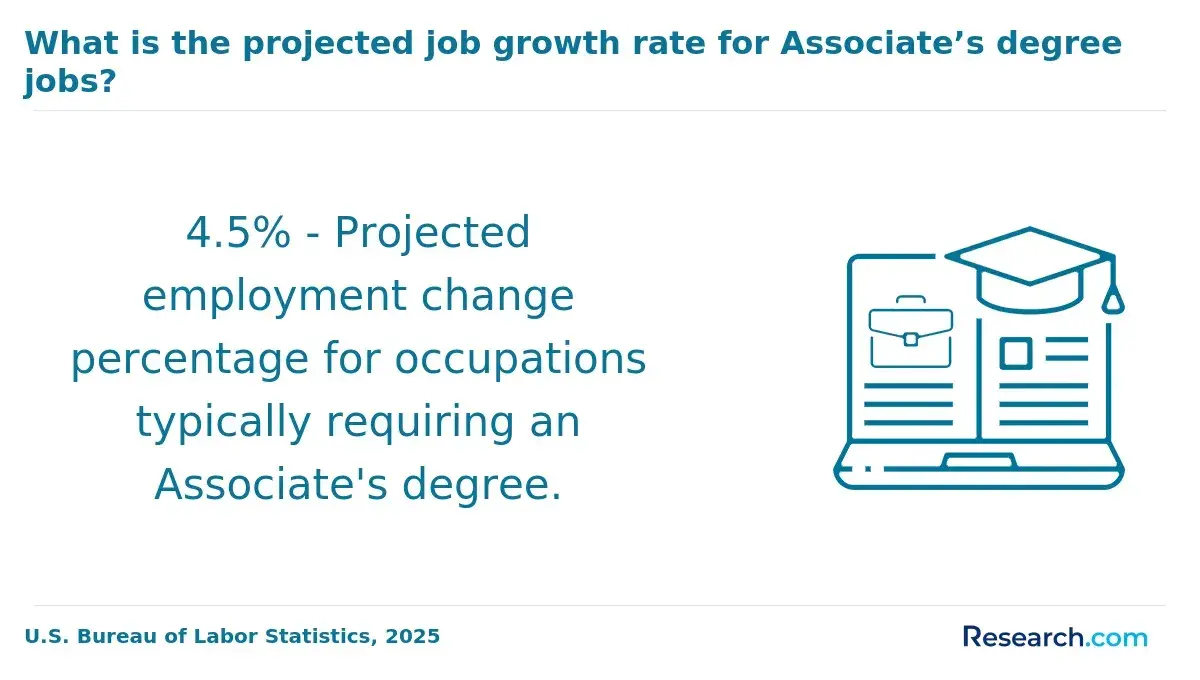
BLS projections released for the 2024-2034 period classify operations research analysts as a much-faster-than-average growth occupation. That does not mean a doctorate is required for every analytics role, but it does show why employers may value advanced quantitative, optimization, and decision-science skills when evaluating operations leaders.
An online operations management doctorate will meet licensure requirements in your state only if your state licensing board says it does. A school's institutional accreditation is important, but it is not a substitute for a state board's education, exam, supervised experience, residency, or program-approval rules.
Before enrolling, treat licensure eligibility as a state-by-state verification project. This is especially important if you live outside the school's home state, plan to move, or want to use the doctorate for a regulated pathway such as engineering, education administration, or accounting.
Use this process before you rely on a program's licensure claims.
- Identify the exact license, certification, or professional title you want and the state where you plan to apply.
- Find the state licensing board's current education requirements and note whether it requires a specific degree level, program approval, institutional accreditation, programmatic accreditation, coursework, exams, or supervised experience.
- Ask the university for its professional licensure disclosure for your state and your exact program, not just for the business school generally.
- Send the program name, catalog description, accreditation status, and curriculum plan to the licensing board if the rules are unclear.
- Get written confirmation when possible, and keep it with your enrollment records.
- Recheck requirements before major milestones such as candidacy, dissertation proposal, fieldwork, graduation, or a move to another state.
The main mistake to avoid is assuming that "online students nationwide are welcome" means "graduates qualify for licensure nationwide." The first statement is usually about state authorization to enroll students. The second is about professional licensing eligibility, which can be narrower and more demanding.
Most operations management doctorates emphasize coursework, research methods, comprehensive exams, dissertation or capstone research, and sometimes residencies. They usually do not include clinical hours in the healthcare sense. Still, practica, internships, applied research projects, executive residencies, or employer-based fieldwork can affect licensure or certification when the degree overlaps with a regulated area.
The key question is not whether the requirement is online or in person. The key question is whether the licensing board recognizes the activity, supervisor, site, documentation, and state where it occurs.
Before counting any applied doctoral requirement toward a license or credential, confirm the following details.
- Whether the licensing board accepts doctoral-level applied projects, internships, or supervised work from an online program.
- Whether the supervisor must hold a specific license, professional credential, faculty status, or years of experience.
- Whether the field site must be located in the state where you plan to seek licensure.
- Whether remote supervision, employer-based projects, or virtual consulting engagements are acceptable.
- Whether hours must be completed after admission, after candidacy, after coursework, or after graduation.
- Whether the school will sign board forms, verify hours, and maintain documentation for future applications.
Students moving from project-heavy fields should also compare how applied experience is documented at earlier degree levels. For example, an accelerated project management degree may emphasize industry credentials and fast completion, while doctoral field requirements are usually more research-focused and may not satisfy licensure supervision rules.
A practical warning: do not assume a doctoral residency is the same as supervised professional experience. A residency may be an academic requirement for networking, research design, dissertation development, or faculty mentoring, while licensure boards may require supervised practice under specific conditions.
Accreditation can affect whether you can use federal financial aid, whether other institutions accept your credits, whether employers reimburse tuition, and whether another graduate program recognizes your doctorate. For doctoral students, these consequences can be expensive because programs often take several years and may involve dissertation continuation fees, residencies, research software, travel, or reduced work hours.
Federal student aid is one of the clearest examples. Graduate and professional students may borrow up to $20,500 per academic year in Direct Unsubsidized Loans if they meet eligibility requirements and attend an eligible institution. That figure does not tell you whether a doctorate is affordable, but it shows why institutional eligibility and accreditation status should be checked before you build a financing plan.
The table below highlights how accreditation can influence common post-enrollment outcomes.
| Decision area | How accreditation can affect it | What to ask before enrolling |
| Federal financial aid | Only eligible institutions can participate in federal student aid programs | Is the institution currently eligible for Title IV federal student aid? |
| Employer tuition assistance | Many employers reimburse only institutionally accredited programs | Does my employer require a specific accreditor, school type, grade, or program approval? |
| Transfer credits | Receiving institutions decide whether to accept credits, often using accreditation as a screening factor | Will doctoral credits transfer if I stop, relocate, or change programs? |
| Academic hiring | Universities may prefer doctorates from institutionally accredited and programmatically accredited business schools | Do target employers require AACSB, ACBSP, IACBE, or another specialized accreditation? |
| Further study | Postdoctoral, certificate, or second doctoral programs may scrutinize accreditation and dissertation rigor | Will this doctorate be recognized by the institutions where I may apply later? |
Cost-conscious students should also compare whether a doctorate is necessary now or whether a faster graduate credential could support an intermediate career goal. For example, someone building a management pathway in infrastructure or operations may first consider an accelerated construction management degree before pursuing a doctorate that requires a longer research commitment.
The safest approach is to verify accreditation in the official databases, ask the registrar how doctoral transfer credit is evaluated, ask financial aid whether the specific program is eligible, and ask your employer or target hiring institution what accreditation it recognizes.
What Happens if an Online Operations Management Doctorate Loses Accreditation or Is Only in Candidacy?
If an online operations management doctorate loses accreditation or is only in candidacy, the consequences can vary from minor inconvenience to serious academic, financial, and professional risk. The timing matters: your status at admission, during enrollment, and at graduation can all affect how employers, licensing boards, and other universities evaluate your degree.
Candidacy is not the same as full accreditation. It usually means an institution or program is moving through a review process and has met some preliminary standards, but approval is not guaranteed. Loss of accreditation is different: it means the institution or program no longer holds the accreditation it previously had, often after failing to meet standards or choosing not to continue the relationship.
The table below explains the practical meaning of common accreditation statuses.
| Status | What it usually means | Student implication | Risk level |
| Fully accredited | The institution or program currently meets the accreditor's standards | Generally the strongest position for financial aid, recognition, and transfer review | Lower, though licensure still must be verified separately |
| Accredited with warning or probation | The accreditor has identified serious concerns that must be corrected | Students should monitor teach-out protections, disclosures, and future status changes | Moderate to high |
| Candidacy or pre-accreditation | The school or program is seeking accreditation but does not yet hold full status | Do not assume the degree will be treated like one from a fully accredited program | Moderate to high depending on your goal |
| Accreditation withdrawn or expired | The institution or program no longer holds the accreditation | Financial aid, transfer, employer recognition, and licensure eligibility may be affected | High |
| Teach-out plan | A plan to help current students finish or transfer after closure or accreditation loss | Students should get written details about timelines, costs, records, and degree conferral | Variable |
If your program's status changes, act quickly and document everything. Contact the accreditor, the institution's accreditation liaison, financial aid office, registrar, dissertation chair, and any licensing board or employer that may evaluate the degree.
These steps can reduce risk if accreditation becomes uncertain.
- Download your catalog, degree plan, syllabi, tuition ledger, transcript, and accreditation disclosures immediately.
- Ask whether a teach-out agreement exists and whether it applies to online doctoral students in your state.
- Confirm whether federal aid eligibility is affected for the current and future terms.
- Ask potential transfer institutions how they will evaluate credits earned before, during, or after the accreditation change.
- If licensure is involved, ask the state board whether the timing of your enrollment or graduation affects eligibility.
- Avoid enrolling in a candidacy-only program unless you have written confirmation that the status will not harm your specific career, licensure, or academic goal.
The safest enrollment decision is usually a program with active institutional accreditation, transparent specialized accreditation claims, clear state authorization, and written licensure disclosures for your location and intended profession.
Other Things You Should Know About Operations Management
Yes, it can be legitimate if the institution is properly accredited by a recognized institutional accreditor. Programmatic accreditation may still matter for academic hiring, employer preference, or specialized professional goals, so the right answer depends on how you plan to use the doctorate.
AACSB accreditation is not universally required for operations management doctorates, but it can be important if you want to teach in a business school or work for an employer that values AACSB-accredited degrees. Always check whether the doctoral program or business school is actually within the AACSB accreditation scope.
Look for missing recognized accreditation, vague accreditor names, unusually short doctoral timelines, dissertation waivers without a clear academic basis, pressure-based admissions, and no public faculty or catalog information. Then verify the institution in official accreditation databases before speaking with admissions.
Yes, if you plan to use the doctorate for any regulated credential. Send the board the program name, institution, accreditation status, curriculum, and fieldwork details, and ask whether the degree meets the educational requirements for your intended license in that state.
- The Higher Education Accreditation Guide for Small and Mid-Sized Schools https://corecampus.com/higher-education-accreditation-guide/
- Understanding the Differences: Institutional Accreditation, Programmatic Accreditation, and ISO Certification https://www.qahe.org/article/understanding-the-differences-institutional-accreditation-programmatic-accreditation-and-iso-certification/
- Accreditation WCI & ISO | Quality Standards | Selinus University https://businessschool.uniselinus.education/accreditation
- Institutional vs. Programmatic Accreditation: Key Differences | Higher Ed Review https://higheredureview.com/institutional-vs-programmatic/
- #1 Online Doctorate (DBA) and Master’s Programs | IMET https://imetworldwide.com/
- Quality Management https://www.donau-uni.ac.at/en/university/about/quality-management.html
- Federal Policy Status Index for Higher Ed | EAB https://eab.com/resources/tool/policy-status-index/