
2027 Online Occupational Safety & Health Doctorate Programs with No Dissertation Requirement

Co-Founder and Chief Data Scientist
Choosing a doctorate in occupational safety & health is really a choice between research depth, career utility, time, and cost. The field remains valuable: the U. S. Bureau of Labor Statistics reported a May 2024 median wage of $81,140 for occupational health and safety specialists.
This guide is for safety managers, EHS leaders, consultants, military safety professionals, and public health practitioners comparing online doctoral routes without a traditional dissertation. You will learn what "no dissertation" actually means, how to verify legitimacy, and whether an applied doctoral pathway fits your goals.
Key Things You Should Know
- True online occupational safety & health doctorates with no traditional dissertation are uncommon; many legitimate alternatives use a doctoral capstone, applied project, portfolio, or practice-based research requirement instead.
- No-dissertation does not mean no research: students should expect advanced writing, data analysis, workplace problem-solving, and committee review in most applied doctoral formats.
- Cost and financing matter because federal graduate Direct Unsubsidized Loans for 2025-26 carry a 7.94% fixed interest rate, so total program price and time-to-completion can materially affect ROI.
Which Online Occupational Safety & Health Doctorate Programs Do Not Require a Dissertation?
The short answer is that dedicated U.S. online doctorates specifically titled occupational safety & health and clearly advertised as "no dissertation" are rare. Most reputable doctoral options in this field either require a dissertation or replace it with an applied doctoral project that still functions as a substantial research-based final requirement.
Because program catalogs change, students should focus less on marketing language and more on the exact completion requirement listed in the current academic catalog. The table below shows the main types of online doctoral pathways that safety professionals typically encounter and how they usually handle the final doctoral requirement.
| Doctoral pathway | How it may relate to occupational safety & health | Typical final requirement | Best fit |
| Doctor of Occupational Safety and Health or closely titled professional doctorate | Directly focused on safety leadership, risk control, compliance, and applied OSH practice | May use a dissertation, doctoral project, or applied research project depending on the school | Experienced safety professionals seeking senior practice roles |
| DrPH with environmental or occupational health emphasis | Connects workplace health, exposure prevention, population health, and public health leadership | Often uses a practice-based project, integrative learning experience, or dissertation-like doctoral project | Public health, industrial hygiene, and occupational health leaders |
| DBA, DM, or organizational leadership doctorate with safety-focused project | Allows safety leaders to study safety culture, compliance systems, training, and risk management | Often uses an applied capstone or doctoral research project | Safety executives, consultants, and operations leaders |
| PhD in safety, technology, public health, or engineering-related fields | Can support academic, research, or advanced technical careers in OSH-related areas | Usually requires a traditional dissertation | Future researchers, tenure-track faculty, and policy analysts |
For a student searching specifically for "online occupational safety & health doctorate no dissertation," the practical takeaway is to verify whether the program is truly dissertation-free or simply uses another name for a major doctoral research requirement. A legitimate applied doctorate may be a strong option, but it should be evaluated by curriculum, accreditation, faculty expertise, and final project expectations rather than by the absence of the word "dissertation."
What Replaces the Dissertation in an Online Occupational Safety & Health Doctorate?
In a dissertation-free doctorate, the traditional dissertation is usually replaced by a structured applied research experience. Instead of producing original theory-focused scholarship, students typically investigate a real occupational safety problem and produce a defensible, evidence-based solution for an organization, industry, or professional setting.
The most common alternatives differ in purpose and intensity, so students should read the catalog language carefully before assuming one format is easier than another.
| Alternative requirement | What students usually produce | How it differs from a dissertation | OSH example |
| Doctoral capstone | A practice-focused project, implementation plan, evaluation, and formal written report | Usually emphasizes application and measurable workplace improvement | Designing and evaluating a safety training intervention for warehouse workers |
| Applied doctoral project | A research-informed solution to a defined professional problem | May be narrower and more practice-oriented than a dissertation but still requires evidence and analysis | Reducing incident rates through a revised contractor safety management process |
| Portfolio or professional practice project | A collection of major doctoral work tied to competencies and professional outcomes | May assess mastery across leadership, research, ethics, and practice rather than one long study | Documenting risk assessment, compliance, and safety leadership projects across multiple settings |
| Integrative learning experience | A culminating public health or professional practice deliverable | Often tied to field practice, stakeholder needs, and applied evidence | Developing an occupational heat-stress prevention plan for a regional workforce |
Students should expect faculty review, formal methodology, literature support, revision cycles, and professional presentation even when no dissertation is required. A common mistake is assuming "capstone" means a short paper; in many doctoral programs, the capstone is the central proof that the student can apply advanced research to a complex safety problem.
Are Online Occupational Safety & Health Doctorate Programs Without Dissertations Legitimate and Accredited?
Yes, a no-dissertation doctorate can be legitimate if the institution is properly accredited and the program has transparent academic requirements. Accreditation matters because employers, licensing bodies, certification organizations, and other universities may treat degrees differently depending on whether the institution is recognized by an accreditor accepted by the U.S. Department of Education or the Council for Higher Education Accreditation.
Before enrolling, students should verify legitimacy using a step-by-step process rather than relying on admissions claims alone.
- Confirm the institution's accreditation status in an official accreditor or federal database, not only on the school's website.
- Read the current academic catalog and identify the exact final doctoral requirement, including whether it is called a dissertation, capstone, doctoral project, or applied research project.
- Check whether the degree title, concentration, and transcript language match your career goal in safety, occupational health, public health, industrial hygiene, or leadership.
- Ask whether any required residencies, intensives, practicums, or defenses are online, hybrid, or in person.
- Verify whether the degree supports your professional goals with employers, certification bodies, state agencies, or academic institutions before you commit.
Programmatic accreditation is more complicated in occupational safety & health because not every doctoral-level safety program has a specialized accreditor. This dynamic also frequently appears when evaluating an interdisciplinary doctorate in leadership online, where regional institutional accreditation often serves as the primary benchmark over field-specific bodies.
That does not automatically make a program weak, but it does mean students should look closely at faculty qualifications, curriculum rigor, safety-related coursework, research expectations, and employer recognition.
Are No-Dissertation Online Occupational Safety & Health Doctorate Programs Easier to Complete?
They may be easier to structure around a full-time job, but they are not automatically easier academically. The main advantage is usually predictability: capstones and applied projects often follow clearer milestones than open-ended dissertations, which can reduce the risk of stalling during the final stage.
The table below compares the practical difficulty of common doctoral completion models from a working professional's perspective.
| Completion model | Main challenge | Why students may prefer it | Common misconception |
| Traditional dissertation | Developing original research and sustaining a long independent study | Best preparation for research, scholarship, and some faculty roles | It is only necessary for people who want to teach; some research and policy roles also value it |
| Applied doctoral project | Defining a real workplace problem and proving that the solution is evidence-based | Connects directly to organizational safety outcomes | It is just a workplace report rather than doctoral-level analysis |
| Capstone | Integrating research, leadership, ethics, and implementation into one defensible project | Often has clearer stages and deliverables | It requires little writing or methodology |
| Portfolio | Demonstrating mastery across multiple competencies | Can showcase professional growth and applied expertise | It is easier because it is not one large study |
The best candidates for no-dissertation formats are usually disciplined professionals who want to solve applied safety problems, not students looking for a shortcut. Much like evaluating an online administration degree where operational rigor and institutional oversight vary widely, prospective doctoral candidates must carefully vet curriculum structure.
Red flags include programs that promise unusually fast completion, provide vague descriptions of the final project, or downplay doctoral-level research and writing requirements.
How Long Does It Take to Complete an Online Occupational Safety & Health Doctorate Without a Dissertation?
Many applied online doctorates are designed for completion in about three to five years, depending on transfer credits, enrollment intensity, project scope, and whether the student can collect workplace data efficiently. A dissertation-free format can be faster than a traditional dissertation route, but only if the program uses clear project milestones and the student stays continuously enrolled.
Completion time varies most at the final doctoral stage, where project approval, organizational access, data collection, and faculty review can add time. The table below summarizes typical timeline patterns rather than guaranteed completion times.
| Pathway | Typical structure | Timeline pressure point | What can extend completion |
| No-dissertation professional doctorate | Coursework plus capstone, applied project, or portfolio | Project approval and implementation | Changing project topics, limited employer access, or slow revisions |
| DrPH-style applied doctorate | Advanced public health coursework, practice experience, and integrative project | Field placement or practice-based deliverable | Coordinating with public health or employer partners |
| Traditional PhD | Research coursework, exams, proposal, dissertation, and defense | Dissertation design and data collection | Research delays, committee changes, or publication expectations |
Students who need a predictable timeline should ask schools how many project milestones are required, whether the final project begins early in the program, and how long recent students took to complete the capstone or applied doctoral project.
How Much Do Online Occupational Safety & Health Doctorate Programs Without Dissertations Cost?
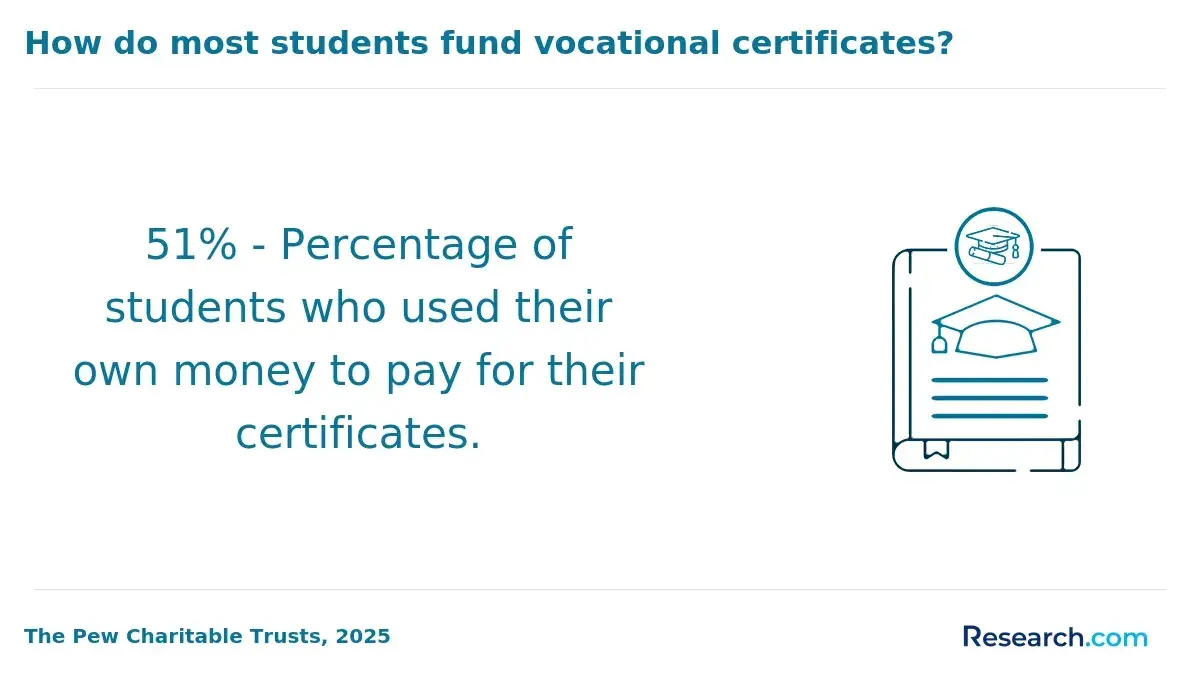
Total cost depends on tuition per credit, the number of credits required, transfer credit policy, technology fees, residency travel, project expenses, and how long the student remains enrolled. The federal financing environment also matters: graduate Direct PLUS Loans for 2025-26 have a 8.94% fixed interest rate, which makes borrowing cost a meaningful part of the decision.
When comparing programs, students should calculate the full cost of attendance instead of focusing only on tuition per credit. The major price components usually include the following:
- Tuition charged per credit or per term for all required doctoral coursework
- Mandatory technology, graduation, library, student services, or online learning fees
- Residency, seminar, defense, or intensive-session travel costs if any portion is not fully online
- Capstone or applied project expenses such as software, survey tools, professional editing, transcription, or workplace data access
- Loan interest, origination fees, and the cost of extending enrollment beyond the planned timeline
A dissertation-free program is not automatically cheaper. While marketing for 1-year PhD programs online no dissertation often highlights rapid time-to-completion, accelerated pathways do not guarantee financial savings.
A structured capstone can reduce overall costs if it prevents dissertation-extension fees, but it can cost more if tuition is high, transfer credits are limited, or the applied project requires repeated enrollment terms. Ask each school for a written program cost estimate based on your transfer credits and expected enrollment pace.
Employer Confidence in Online vs. In-Person Degree Skills, Global 2024

Who Benefits Most From an Online Occupational Safety & Health Doctorate Without a Dissertation?
A no-dissertation online doctorate is usually best for experienced professionals who want advanced leadership credibility and applied problem-solving skills rather than a research career built around publishing original scholarship. It fits people who already work in safety, compliance, risk management, industrial hygiene, environmental health, emergency management, or operations leadership.
The following groups often benefit most because their career goals align with applied doctoral work:
- Safety directors and EHS managers who want to lead enterprise-wide safety strategy, culture change, and risk reduction initiatives
- Consultants who need stronger evidence-based methods for evaluating client safety systems and interventions
- Military, government, or public-sector safety professionals moving into senior civilian leadership roles
- Public health practitioners focused on workplace exposure, injury prevention, emergency preparedness, or occupational disease prevention
- Industry trainers and safety educators who want doctoral-level expertise but do not need a traditional research dissertation
Students evaluating doctoral programs online no dissertation should be cautious if their primary goal is tenure-track university employment, federally funded research, or a research-heavy academic career. In those cases, a PhD or traditional dissertation-based doctorate offers better preparation and clearer alignment with academic search committee expectations.
How Does a No-Dissertation Online Occupational Safety & Health Doctorate Affect Career Opportunities?
A dissertation-free doctorate can support advancement when the employer values applied leadership, safety program evaluation, compliance strategy, and organizational problem-solving. It is less likely to be required for most safety roles, but it may strengthen a candidate's profile for senior management, consulting, training leadership, public-sector administration, and specialized risk roles.
Day-to-day work in advanced occupational safety and health roles can include incident investigation, hazard analysis, regulatory compliance, safety management systems, worker training, emergency preparedness, ergonomics, exposure control, and executive reporting.
The BLS May 2024 median wage of $81,140 for occupational health and safety specialists gives a useful baseline, but doctoral-level roles may vary widely by industry, employer size, geography, certifications, and management responsibility.
Technology is also changing the field. Safety teams increasingly use digital inspection tools, wearables, predictive analytics, learning management systems, and AI-assisted reporting. A strong applied doctorate should help students evaluate these tools ethically and practically, not merely adopt technology because it is new.
How Do No-Dissertation Online Occupational Safety & Health Doctorates Compare With Traditional Doctorates?
The right choice depends on whether you want to become a stronger applied safety leader or a stronger independent researcher. Neither format is universally better; the value comes from matching the doctoral structure to your career goal.
The comparison below can help students decide whether a capstone-style pathway or a dissertation-based pathway is the better fit.
| Factor | No-dissertation applied doctorate | Traditional dissertation doctorate |
| Primary purpose | Apply research to workplace, organizational, or public health problems | Produce original scholarly research that contributes to the field |
| Best career fit | Senior practice, consulting, administration, safety leadership, training, and applied policy roles | Academic research, tenure-track teaching, advanced policy research, and research-intensive roles |
| Final project | Capstone, applied doctoral project, portfolio, or integrative practice project | Dissertation proposal, original study, written dissertation, and defense |
| Flexibility for working professionals | Often more structured and tied to professional practice | Can be flexible online, but research independence can make timelines less predictable |
| Employer interpretation | Strong when the employer values applied leadership and measurable safety outcomes | Strong when the employer values research expertise, scholarship, and methodological depth |
A common mistake is choosing the no-dissertation route solely to avoid writing. A better decision rule is this: choose an applied doctorate if you want to solve complex safety problems in organizations, and choose a dissertation-based doctorate if you want to conduct original research as a central part of your career.
How Should Students Choose an Online Occupational Safety & Health Doctorate Without a Dissertation?
Students should evaluate the whole academic structure, not just the final requirement. A strong no-dissertation doctorate should be transparent about curriculum, accreditation, faculty expertise, applied research expectations, project review, and career alignment.
Use the following steps to compare programs in a way that protects your time, money, and professional credibility:
- Start with your career goal and decide whether you need applied leadership preparation, public health expertise, technical safety specialization, academic research training, or a combination.
- Verify institutional accreditation through an official source and confirm whether the accreditor is recognized in the U.S.
- Request the current catalog page showing the final doctoral requirement and ask whether the program has any dissertation, dissertation-in-practice, capstone, or project defense.
- Compare faculty backgrounds in occupational safety, industrial hygiene, environmental health, public health, engineering, risk management, or organizational leadership.
- Ask for a written estimate of total program cost, including fees, required credits, transfer credit decisions, and any residency or project expenses.
- Confirm whether the degree supports certifications, employer promotion policies, teaching goals, or public-sector requirements relevant to your career.
- Review sample capstone or applied project topics to see whether the work matches the type of safety problems you want to solve.
Before signing an enrollment agreement, ask admissions or program leadership direct questions that force clarity. Important questions include:
- Is there any requirement called a dissertation, dissertation-in-practice, doctoral study, doctoral project, or capstone defense?
- When do students begin planning the final project, and what approvals are required before implementation?
- How many students complete the program within the advertised timeline, and what most often delays completion?
- Are there required synchronous sessions, campus visits, internships, field placements, or employer-based data collection requirements?
- How do graduates typically use the degree in safety leadership, consulting, public health, education, or government roles?
Red flags include unclear accreditation language, pressure to enroll quickly, promises of unusually easy completion, no public catalog, vague faculty credentials, and a final project described so lightly that it does not sound doctoral. A legitimate dissertation-free doctorate should still be rigorous, documented, and defensible.
Other Things You Should Know About Occupational Safety & Health
Not always. Some programs value certifications such as CSP, CIH, CHMM, or ASP, but admissions requirements vary. Professional experience, a relevant master's degree, academic writing ability, and leadership background may matter more than certification alone.
It can, especially for practitioner-focused, adjunct, community college, or professional training roles. Research universities may prefer or require a PhD, publications, and dissertation-based research experience.
Common feeder degrees include occupational safety and health, industrial hygiene, public health, environmental health, engineering management, emergency management, organizational leadership, and business administration.
Yes. If your goal is promotion, reimbursement, consulting credibility, or government advancement, ask HR, supervisors, clients, or credentialing bodies how they evaluate the specific degree title, institution, and accreditation before enrolling.
References
- Online PhD in Environmental and Occupational Health @EUCLID https://m.euclid.int/programs/online-phd-environmental-occupational-health/
- Earning Your Doctorate Without a Dissertation: Alternative Pathways to a PhD https://yocket.com/blog/doctorate-without-dissertation
- How to Become an Occupational Health and Safety Specialist https://masterspublichealth.com/how-to-become-an-occupational-health-safety-specialist/
- What Is a Non-Dissertation Doctorate, and Is It Right for You? https://www.snu.edu/blog/what-is-a-non-dissertation-doctorate-and-is-it-right-for-you
- Ph.D. in Occupational Health and Safety (online) https://www.constructioneducation.com/ph-d-in-occupational-health-and-safety-online
- Occupational Health and Safety https://enstitu.gedik.edu.tr/en/phd/occupational-health-and-safety
- Doctor of Philosophy in Occupational Safety and Health at European University of Cyprus - Admission Requirements 2026 https://www.britannicaoverseas.com/study-in-cyprus/universities/european-university-of-cyprus/courses/doctor-of-philosophy-in-occupational-safety-and-health
- Which OT Degree? (MSOT, OTD, PPOTD, & More!) • OT Potential https://otpotential.com/blog/occupational-therapy-degree
- Top 10 Universities Offering PhD in Occupational Health ... https://qhsedirectory.com/blog/QHSE%20Directory%20-Top%2010%20Universities%20Offering%20PhD%20in%20Occupational%20Health%20and%20Safety%20(OHS)%20Globally


