2027 Online Neuroscience Degree Programs That Accept 60, 75, or 90 Transfer Credits

Co-Founder and Chief Data Scientist
If you already have college credits, the biggest question is not whether an online neuroscience program accepts transfer credit; it is how many credits will count toward graduation. National Student Clearinghouse reporting showed transfer enrollment rising in 2024, reflecting more students trying to finish efficiently.
This guide is for transfer and degree-completion students comparing programs that may accept 60, 75, or 90 credits. You will learn how transfer limits affect remaining neuroscience requirements, completion time, tuition, and the questions to ask before enrolling.
Key Things You Should Know
- Most bachelor's degrees require about 120 semester credits, so transferring 60 credits can leave roughly half the degree, 75 credits can leave about 45 credits, and 90 credits can leave about 30 credits before graduation.
- A school may accept credits as electives without applying them to the neuroscience major, lab science sequence, upper-division requirements, or general education categories you still need.
- The most transfer-friendly online neuroscience or neuroscience-focused bachelor's pathways usually combine a high transfer cap, a clear residency minimum of about 30 credits, and an official degree audit before enrollment.
How Many Transfer Credits Can You Apply Toward an Online Neuroscience Degree?
For a typical 120-credit bachelor's degree, accepting 60, 75, or 90 transfer credits means the university is willing to evaluate that amount of prior coursework toward the degree. It does not automatically mean every credit will shorten your program. Neuroscience degrees usually include general education, math, biology, chemistry, psychology, statistics, research methods, upper-division neuroscience courses, and electives.
The table below shows the practical difference between common transfer-credit scenarios. Use it as a planning estimate, not as a substitute for an official transfer evaluation.
| Transfer credits brought in | Approximate credits left in a 120-credit degree | What this usually means | Main risk to check |
| 60 credits | 60 credits left | Often fits students with an associate degree or two years of prior college | Lower-division credits may not satisfy all science prerequisites |
| 75 credits | 45 credits left | Can reduce the degree to about three full-time semesters if courses are available | Some credits may become electives instead of major requirements |
| 90 credits | 30 credits left | Usually the maximum practical transfer point because many schools require 30 institutional credits | Upper-division neuroscience and residency rules may still require a full year |
The key phrase to look for is credits applied toward degree requirements. A credit that transfers as a free elective may help you reach 120 total credits, but it may not replace cognitive neuroscience, neurobiology, statistics, laboratory science, or capstone requirements.
Which Online Neuroscience Degree Programs Accept 60, 75, or 90 Transfer Credits?
Online neuroscience bachelor's options are still less common than online psychology, biology, or health science degrees. As a result, students often compare two kinds of programs: fully online neuroscience majors and online psychology or life science degrees with neuroscience-focused coursework. The best option is the one that applies the most of your existing credits to the exact requirements you still need.
The comparison below summarizes common transfer-friendly options and how they tend to handle 60-, 75-, and 90-credit transfer scenarios. Policies can change, so confirm the current catalog, transfer cap, residency minimum, and major requirements before applying.
| Program type | Examples of transfer-friendly fit | Typical transfer-credit ceiling | Best for | What to verify |
| Online BS in Neuroscience | Programs such as Arizona State University Online's neuroscience bachelor's pathway | Often suitable for about 60 credits; higher amounts depend on source, equivalency, and residency rules | Students who want the word "neuroscience" in the major and plan for graduate study | Science lab equivalents, upper-division major credits, and minimum institutional credits |
| Online BS in Neuroscience with a degree-completion structure | Programs marketed as online neuroscience bachelor's degrees at transfer-oriented universities | May allow up to 90 credits when school policy permits | Students with many prior credits who still need major coursework | Whether 90 credits apply to the major or only to total degree credit |
| Online BA in Psychology with a neuroscience concentration | Programs such as Southern New Hampshire University's psychology pathway with neuroscience-focused coursework | Often up to 90 credits under broad bachelor's transfer policies | Students interested in behavior, cognition, research, counseling preparation, or human services | Whether the transcript will show a neuroscience major, concentration, or elective focus |
| Online psychology, biology, or health science major with neuroscience electives | Degree-completion programs that allow broad transfer credit and relevant electives | Often 60 to 90 credits depending on the institution | Students prioritizing completion speed over a dedicated neuroscience major title | Graduate-school prerequisites and whether lab sciences are accepted online |
A 90-credit transfer cap is attractive, but it is not always better than a 60-credit cap. A school that accepts 60 highly relevant science and psychology credits may leave you with fewer meaningful requirements than a school that accepts 90 credits but still requires a long sequence of major courses.
How Can You Tell Whether Transfer Credits Will Actually Apply Toward Your Neuroscience Degree?
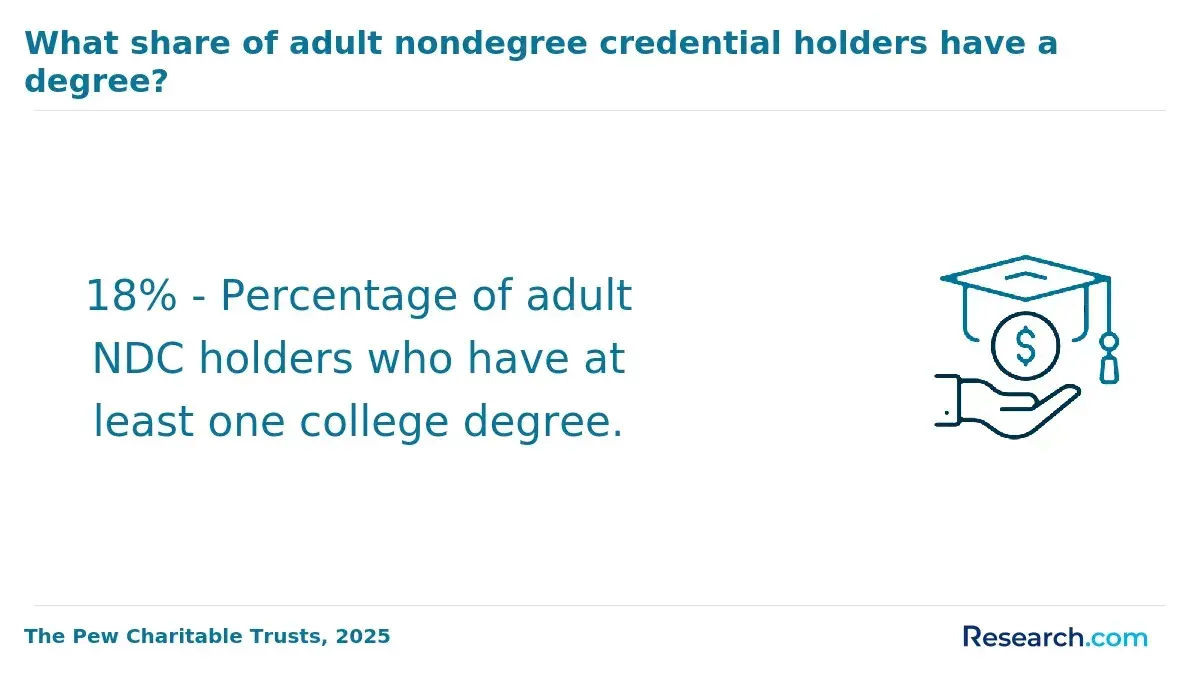
The most important distinction is accepted credit versus applied credit. Accepted credit appears on your transfer record. Applied credit satisfies a specific requirement in your neuroscience degree plan. A student may transfer 75 credits but still need 50 credits if many transferred courses do not match the curriculum.
Before choosing a program, ask the school to show where each course fits. Students comparing flexible formats may also want to understand how a self paced bachelor's degree differs from a standard term-based online neuroscience program, because pacing flexibility does not replace prerequisite or residency requirements.
Use this sequence to check whether transfer credits will actually move you closer to graduation:
- Request an official or preliminary transfer credit evaluation using transcripts from every college attended.
- Ask for a degree audit that maps each accepted course to general education, major, concentration, elective, upper-division, and residency categories.
- Identify unmet prerequisites in biology, chemistry, statistics, psychology, research methods, and neuroscience.
- Confirm whether community college credits can satisfy only lower-division requirements or also count toward major preparation.
- Ask how many credits must still be completed at the university and how often required online courses are offered.
A strong transfer-friendly school will explain not only how many credits it accepts but also how many credits remain, which courses you must take, and how long those courses are likely to take in sequence.
What Types of Previous College Credits Can Transfer Into an Online Neuroscience Degree?
Online neuroscience programs may evaluate several types of prior college credit, but each type is treated differently. The strongest credits usually come from accredited colleges and match the course level, content, and credit hours of the receiving school's requirements.
The table below outlines common credit sources and how they may apply to a neuroscience degree:
| Credit source | How it may apply | Common limitation |
| Regionally accredited college courses | General education, electives, prerequisites, and sometimes major courses | Minimum grade requirements often apply, commonly a C or higher |
| Associate degree credits | May satisfy much of the lower-division general education block | Science prerequisites may still be reviewed course by course |
| Community college biology, chemistry, psychology, or statistics | Can be valuable preparation for neuroscience coursework | May transfer as lower-division only |
| Previous bachelor's-level coursework | May satisfy upper-division electives or related major requirements | Course age and content match matter more in fast-changing science areas |
| Exam, military, or prior-learning credit | May apply to electives or selected general education categories | Often limited for laboratory science and advanced neuroscience requirements |
Health-related students often discover that allied health or clinical credits do not automatically replace neuroscience major courses. For example, someone comparing a pathway like CMA to LPN may have applied healthcare experience, but a neuroscience bachelor's program may still require college-level biology, chemistry, statistics, and research coursework.
How Do Residency and Upper-Division Requirements Affect Neuroscience Transfer Students?
Residency requirements determine how many credits you must complete at the institution awarding the degree. In many bachelor's programs, the practical ceiling for transfer credit is 90 credits because the school requires at least 30 credits in residence. Upper-division rules add another layer: even if you transfer many credits, you may still need advanced neuroscience courses from the degree-granting university.
The next table shows why a generous transfer maximum can still leave required coursework:
| Requirement type | Why it matters for transfer students | Example impact |
| Institutional residency | Ensures part of the degree is completed at the awarding university | A 90-credit transfer student may still need 30 credits at the new school |
| Upper-division credit minimum | Requires advanced junior- and senior-level coursework | Lower-division transfer credits may not satisfy 300- or 400-level neuroscience requirements |
| Major residency | Requires some neuroscience major courses to be taken at the institution | Transferred neuroscience electives may count only as electives |
| Capstone or research course | Confirms completion of the school's learning outcomes | Usually cannot be transferred from another institution |
Residency rules are common across online healthcare and science programs, not just neuroscience. Students who have seen flexible healthcare completion options, such as RN to BSN online with no clinicals, should still expect neuroscience programs to protect advanced major and capstone requirements.
How Does the Transfer Credit Evaluation Process Work for an Online Neuroscience Degree?
The transfer evaluation process is the formal review that determines how your previous credits fit the new degree. It may happen before admission, after admission, or in stages. For a neuroscience program, this review is especially important because course sequencing can affect how soon you can take advanced classes.
A practical evaluation process usually follows these steps:
- Collect official transcripts from every institution where you earned credit, including dual-enrollment and previously attempted college courses.
- Submit course descriptions or syllabi for science, lab, statistics, psychology, and neuroscience courses that may not have automatic equivalencies.
- Ask whether the evaluation is unofficial, preliminary, or final, because only the final degree audit should guide enrollment decisions.
- Review how each credit applies to the degree map, not just the total number accepted.
- Confirm the remaining prerequisites and the earliest term each required online course is offered.
- Get the remaining credit total, estimated tuition, and expected graduation term in writing when possible.
One common mistake is enrolling after hearing "we accept up to 90 transfer credits" without seeing a course-by-course plan. A better approach is to compare degree audits from two or three schools before committing, especially if you have credits from multiple colleges or older science coursework.
How Long Does It Take to Finish an Online Neuroscience Degree With 60, 75, or 90 Transfer Credits?
Completion time depends on three things: remaining credits, course availability, and whether prerequisites must be taken in sequence. A student with 90 applicable credits may still need two or more terms if required neuroscience courses are offered only once per year or must be completed in a specific order.
The table below gives a realistic planning range for students who can transfer most of their credits into a 120-credit online bachelor's degree:
| Applicable transfer credits | Estimated remaining credits | Full-time completion estimate | Part-time completion estimate | Best-fit student |
| 60 credits | About 60 credits | About 2 years | About 3 to 4 years | Associate degree holder who still needs upper-division neuroscience coursework |
| 75 credits | About 45 credits | About 15 to 18 months | About 2 to 3 years | Student with mixed lower- and upper-division credits |
| 90 credits | About 30 credits | About 1 year | About 18 to 24 months | Degree-completion student whose remaining courses align cleanly with residency rules |
The fastest route is not always the one with the highest transfer cap. If a 75-credit pathway lets you start upper-division courses immediately, it may be faster than a 90-credit pathway that requires you to repeat prerequisites or wait for limited course rotations.
How Much Can Transfer Credits Reduce the Cost of an Online Neuroscience Degree?
Transfer credits can reduce cost because you pay the new school for fewer credits. The College Board's 2024 pricing data reported average published tuition and fees of $11,610 for in-state public four-year institutions and $43,350 for private nonprofit four-year institutions. Those figures are not online neuroscience prices, but they show why reducing remaining credits can materially change the total bill.
The table below illustrates how cost changes when fewer credits remain. The examples use simple per-credit tuition assumptions so you can compare schools with different pricing models.
| Credits remaining | At $350 per credit | At $500 per credit | At $750 per credit |
| 60 credits | $21,000 | $30,000 | $45,000 |
| 45 credits | $15,750 | $22,500 | $33,750 |
| 30 credits | $10,500 | $15,000 | $22,500 |
These figures exclude fees, textbooks, technology costs, lab kits, prior-learning assessment fees, and financial aid. Still, they show the basic trade-off: a school that applies 90 credits instead of 60 credits could reduce billed coursework by 30 credits, which is substantial at almost any tuition rate.
When comparing tuition, look beyond the neuroscience program itself and evaluate the university's broader health-science pricing patterns. For example, students researching hospital administration course fees often find that online health-related programs vary widely in per-credit pricing, fees, and transfer-credit generosity.
Can Prior Learning, Military Training, Exams, or Certifications Count Toward an Online Neuroscience Degree?
Prior learning, military training, exams, and certifications may count, but usually not as a substitute for advanced neuroscience coursework. They are most likely to apply to general education, electives, or introductory requirements. Science majors are often stricter because lab, research, and upper-division content must align closely with the curriculum.
Ask each school how it evaluates the following credit sources before assuming they will shorten your degree:
- Military training reviewed through the American Council on Education or the Joint Services Transcript
- Advanced Placement, International Baccalaureate, CLEP, or DSST exams
- Portfolio-based prior learning assessment for documented college-level learning
- Professional certifications in healthcare, research support, data analysis, or behavioral health
- Employer training that has been evaluated for college credit
Alternative credit can be useful, but it should fit your academic goal. A student exploring the cheapest online nutrition degree may find that applied health credits transfer differently than they would in a neuroscience curriculum with heavier biology, chemistry, and research-methods expectations.
Do Older College Credits Expire When Transferring Into an Online Neuroscience Degree?
College credits do not usually "expire" in a universal way, but schools can limit how older credits apply. General education courses such as English composition, history, or humanities often remain usable for many years. Science, statistics, technology, and research-methods courses may receive closer review because content and methods change.
Older credits are most likely to create problems in these situations:
- The course is a prerequisite for advanced biology, chemistry, statistics, or neuroscience coursework.
- The syllabus no longer matches the current course outcomes at the receiving university.
- The original institution was not appropriately accredited at the time the course was completed.
- The grade is below the receiving school's minimum transfer standard.
- The program, graduate school, or employer expects recent lab or research preparation.
If your credits are more than several years old, ask whether the school requires updated coursework, a placement assessment, or faculty review. This is especially important if you plan to apply later to graduate programs in neuroscience, psychology, medicine, occupational therapy, physician assistant studies, or related health fields.
Other Things You Should Know About Neuroscience
It can be, if the university is institutionally accredited and the curriculum matches your goals. For graduate school, check prerequisites carefully because some programs require in-person labs, specific biology or chemistry sequences, research experience, or faculty recommendations.
Usually yes. Most universities require official transcripts from every college attended and evaluate each course separately. Credits from multiple schools can be helpful, but they may also create duplicate courses, excess electives, or gaps in required science sequences.
Choose the neuroscience major if you want a science-heavy curriculum and may pursue research or graduate study. A psychology degree with a neuroscience concentration may be better if you want more flexibility, behavioral science coursework, and broader transfer-credit use.
A bachelor's degree can support entry-level roles in research assistance, clinical research coordination, health education, behavioral health support, pharmaceutical or biotech support, and data-related health roles. Many higher-level neuroscience careers require graduate or professional education.
References
- Online Neuroscience Degree Programs https://www.medicaltechnologyschools.com/biomedical-science/online-neuroscience-degrees