2027 Online Military Science & Studies Degree Programs With No Letters of Recommendation Required

Co-Founder and Chief Data Scientist
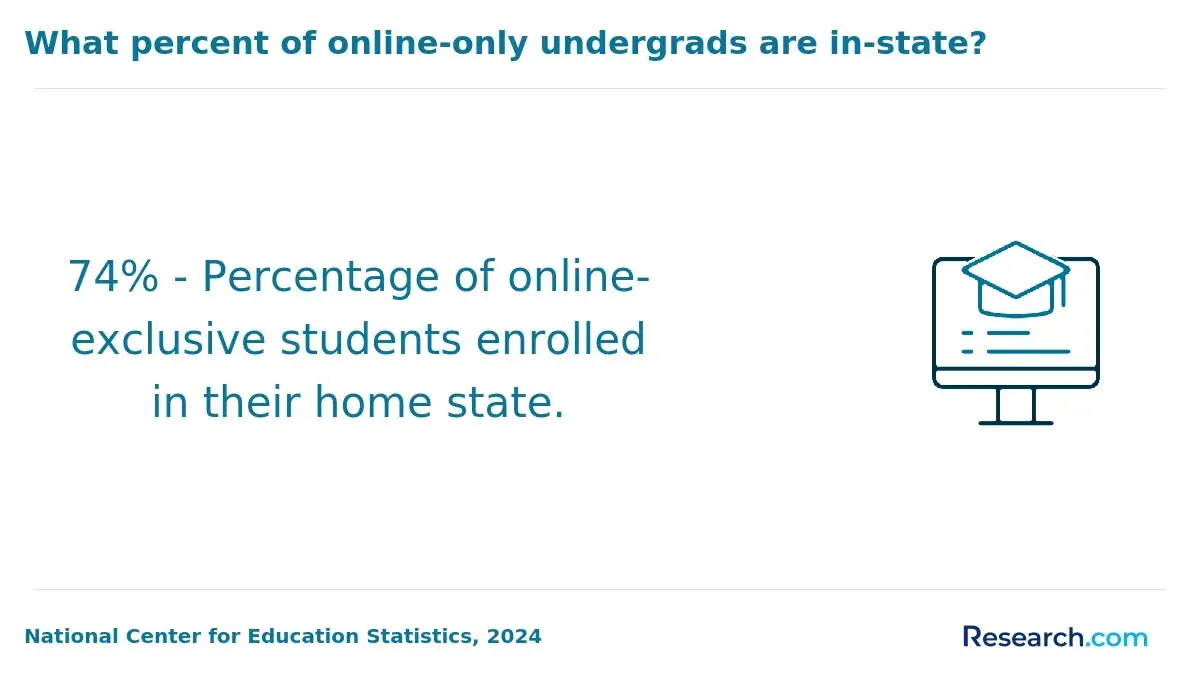
Applicants who lack recent professors, supervisors, or military leaders to recommend them may prefer online Military Science & Studies programs with simpler admissions. The National Center for Education Statistics reported that millions of U.S. postsecondary students continued taking courses exclusively online in its most recent distance-education reporting, underscoring why flexible admissions matter.
This guide helps prospective students identify programs that truly do not require recommendation letters, understand what replaces them, verify legitimacy, compare costs, and decide whether the degree supports their civilian, military, or public-service goals.
Key Things You Should Know
- "No letters of recommendation required" means every applicant can submit an application without references; it is different from letters being optional, waived for military applicants, or required only for graduate admission.
- Online Military Science & Studies programs commonly assess official transcripts, prior college credit, GPA, a personal statement, military training records, and work history instead of recommendations; streamlined admission does not mean automatic admission.
- Compare institutional accreditation, total tuition, transfer-credit policies, curriculum, and career relevance before applying. For context, average published in-state tuition and fees at U.S. public four-year institutions was $11,610 for 2024-25, although online program pricing can differ substantially.
Which Online Military Science & Studies Degree Programs Require No Letters of Recommendation?
Military Science & Studies is a broad label rather than one standardized major. Online options may appear as military studies, strategic studies, homeland security, intelligence studies, national security, leadership, or interdisciplinary studies with a military emphasis. Programs are often designed for active-duty personnel, veterans, military spouses, first responders, federal employees, and civilians interested in defense-related policy or leadership.
A school's general undergraduate application may not request letters, while a related master's program at the same institution may require them. Applicants should therefore confirm the requirement on the admissions page for the exact degree, concentration, term, and student status.
The comparison below shows where no-recommendation policies are most commonly found and what to verify before treating a program as an option.
| Program level or format | Likelihood of no-letter admission | What to confirm |
| Online associate or bachelor's completion program | Often available | Whether official transcripts and minimum transfer credits are required |
| Online bachelor's degree for first-time students | Common, but varies by institution | High school transcript, placement testing, and any GPA threshold |
| Online master's in military, strategic, or security studies | Less consistent | Whether professional experience replaces references or whether letters remain mandatory |
| Graduate certificate | May be streamlined | Bachelor's degree requirement, prerequisite coursework, and later degree-transfer rules |
Use an admissions checklist rather than a program-directory label. A program qualifies for this article's purpose only when its current published requirements state that recommendation letters are not required for your applicant category. If the page says "may be requested," "optional," or "required for conditional admission," ask for written clarification before applying.
Military science courses can cover military history, joint operations, ethics, national security policy, leadership, logistics, intelligence, civil-military relations, and strategy. They are not generally a substitute for commissioning requirements, ROTC participation, security-clearance eligibility, or specialized occupational training.
What Are the Admission Requirements for Online Military Science & Studies Degree Programs With No Recommendation Letters?
Admission requirements depend primarily on degree level and institutional policy. Most online undergraduate programs with no recommendation requirement still require an application, official academic records, identity or residency information where applicable, and evidence of high school completion or prior college study. Graduate programs generally require a completed bachelor's degree and official undergraduate transcripts.
The following materials commonly replace recommendation letters and give admissions teams evidence of preparation.
| Applicant material | What it helps demonstrate | Common use |
| Official transcripts | Prior coursework, GPA, degree completion, and academic trend | Undergraduate and graduate admission |
| Personal statement or goal essay | Career purpose, writing ability, and fit with the curriculum | More common for graduate study |
| Resume or service record | Leadership, operations, training, and relevant professional experience | Adult, military-affiliated, and graduate applicants |
| Military transcripts | Documented training that may support admission or transfer review | Service members and veterans |
| Standardized test scores | Academic readiness where a school still uses them | Program-specific and increasingly variable |
Do not assume that a test-free policy applies to every applicant or that a GRE-free master's program has no other screening. Some schools use a holistic review, request an essay from applicants below a stated GPA, or require prerequisite coursework in history, political science, research methods, or writing.
Applicants comparing policies across fields can see how requirements vary: even programs such as an BCBA degree online may use a different combination of academic prerequisites and application materials. For Military Science & Studies, ask whether military experience is considered for admission, credit, both, or neither.
Before submitting an application, use these steps to avoid preventable delays.
- Open the requirements page for the exact online degree and entry term.
- Check requirements separately for first-year, transfer, military-affiliated, international, and graduate applicants.
- Download or save the current checklist and note transcript deadlines.
- Ask admissions by email whether recommendation letters are required, optional, or ever requested after review.
- Confirm whether a personal statement, resume, or military transcript must be submitted even when letters are not required.
Are Online Military Science & Studies Programs With No Letters of Recommendation Easier to Get Into?
Not necessarily. Removing recommendation letters reduces one administrative barrier, particularly for working adults, veterans separated from academic contacts, and applicants changing careers. It does not reveal a program's acceptance rate or prove that its academic standards are lower.
Schools may replace subjective references with more standardized evidence, such as transcripts, cumulative GPA, prior degree completion, prerequisite grades, writing samples, or verified professional experience. That approach can make the process more accessible while maintaining clear readiness standards.
A simpler application can be a good fit for students with documented experience and a clear educational goal. It may be a weaker fit for applicants who need recommendations to explain unusual circumstances, show leadership not visible on a transcript, or strengthen a borderline academic record. In those situations, a program that accepts optional letters may offer an advantage, provided the letters are genuinely considered.
Avoid two common mistakes: treating "no letters" as guaranteed admission and selecting a school solely because its form is short. Instead, compare the required GPA, curriculum depth, faculty expertise, accreditation, transfer evaluation, student support, and whether the credential aligns with the role you want after graduation.
For civilian career planning, this degree may support roles in policy support, emergency management, defense contracting, logistics, intelligence analysis support, veteran services, or organizational leadership. Job duties and hiring standards vary widely, and many defense-related positions require experience, a background investigation, citizenship status, or a security clearance that a degree alone cannot provide.
What Do Online Military Science & Studies Programs Evaluate Instead of Letters of Recommendation?
Without recommendation letters, admissions staff typically rely more heavily on evidence that can be verified directly. The goal is not simply to make admission easier; it is to determine whether the applicant can complete online coursework, contribute responsibly to discussions, and meet the program's academic expectations.
For a Military Science & Studies applicant, the strongest alternatives usually show both academic readiness and purpose. A clear statement can connect prior service, leadership, public-sector work, or interest in strategy to specific courses and career goals. A resume can document responsibility, but it should not include sensitive operational information.
Admissions reviewers may weigh the following factors together rather than rely on a single one.
- Academic performance, including GPA, recent coursework, and grades in writing- or research-intensive classes
- Completion of a prior degree or transferable college credits
- Professional, military, public-safety, or government-related experience
- Writing quality and the specificity of a statement of purpose
- Readiness for online study, including time management and technology access
- Required prerequisites, placement results, or portfolio materials when applicable
Applicants should be accurate and concise. Describe leadership, training, teamwork, analysis, logistics, or policy exposure in plain language; do not exaggerate rank, clearance status, deployments, or job duties. If an academic record has a weak period, a brief factual explanation and evidence of more recent success may be more useful than a vague narrative.
How Can You Tell if an Online Military Science & Studies Degree With No Recommendation Requirement Is Accredited and Legitimate?
Legitimacy begins with the institution, not with a marketing claim about being online or military-friendly. For most academic and employer-recognition purposes, the school should hold institutional accreditation recognized by the U.S. Department of Education and the Council for Higher Education Accreditation. Military Science & Studies itself usually does not have one universal programmatic accreditor comparable to regulated clinical fields.
Verify the school's accreditation status in the federal Database of Accredited Postsecondary Institutions and Programs, then compare that record with the accreditor named on the institution's own website. Check that the school's legal name, campus or online division, and accreditation status match. Accreditation can change, so confirm it close to enrollment rather than relying on an old brochure.
These warning signs deserve further investigation before you pay an application fee or sign an enrollment agreement.
- The school will not identify its recognized institutional accreditor
- Tuition, refund terms, or total credit requirements are difficult to locate
- The program promises a commission, security clearance, promotion, or job placement
- Admissions personnel discourage you from reviewing transfer, withdrawal, or complaint policies
- The curriculum is vague about faculty qualifications, course outcomes, or assessment methods
- The institution pressures you to enroll before providing written answers about recommendation-letter requirements
Also check whether the curriculum matches your goal. A strategy- and history-focused degree may be valuable for broad military and policy literacy, while intelligence, cybersecurity, emergency management, or logistics roles can require more technical coursework or separate credentials. Employers typically evaluate the accredited degree, relevant experience, demonstrated skills, and position requirements - not whether the application included references.
How Much Do Online Military Science & Studies Degree Programs With No Letters of Recommendation Cost?
Cost varies more by institution, residency rules, transfer credits, and military discounts than by the recommendation-letter policy. Published tuition may be charged per credit, per term, or at a flat rate. A no-letter application should never be treated as evidence that a program is low-cost.
For a broad U.S. benchmark, the College Board reported average published tuition and fees of $11,610 for in-state students at public four-year colleges in 2024-25. That figure is not an online Military Science & Studies price quote, but it helps students recognize why they should calculate program-specific total cost rather than compare only one course rate.
Ask each school for a written estimate based on your expected transfer credits and enrollment pace. The estimate should separate tuition from fees and show whether active-duty, Guard, Reserve, veteran, or spouse rates apply.
| Cost item | Why it matters | What to ask |
| Tuition per credit or term | Determines the base instructional cost | Is the rate fixed for continuing students? |
| Required fees | Technology, graduation, course, and service fees can increase the total | Which fees apply to fully online students? |
| Transfer-credit evaluation | Accepted credit can reduce remaining courses and cost | How many academic, military, and exam credits can apply? |
| Books and course materials | Some courses use paid simulations, texts, or subscriptions | Are digital materials included in tuition? |
| Military education benefits | May lower out-of-pocket expense for eligible students | Does the school participate and have a dedicated certifying official? |
Graduate students should compare total credits, not just tuition per credit, because a lower rate can still cost more if the degree requires substantially more coursework. Students exploring cost-conscious graduate alternatives can also review most affordable masters degrees online while keeping subject fit and accreditation central to the decision.
Can You Get Financial Aid for an Online Military Science & Studies Degree With Streamlined Admissions?
Yes. Streamlined admissions do not normally affect eligibility for federal student aid. Eligible students at participating institutions may submit the Free Application for Federal Student Aid (FAFSA) for grants, work-study, and federal loans, subject to program length, enrollment status, satisfactory academic progress, and other federal rules.
Service members, veterans, and eligible dependents may also have education benefits through the Department of Veterans Affairs or Department of Defense tuition-assistance pathways. Benefit eligibility, payment limits, approved programs, and school participation can change, so confirm details with the school's veterans-certification office and the relevant benefits agency before enrollment.
Financial aid should be evaluated as part of total borrowing, not as a discount label. Request a net-price estimate, identify whether aid is renewable, and determine how withdrawing from a course could affect aid or military benefits. Federal loans must be repaid with interest, while grants and employer assistance may have different eligibility or repayment conditions.
Students should avoid enrolling before they know the academic calendar, census date, refund policy, and expected out-of-pocket balance. This is especially important for accelerated online terms, where dropping after a short period can have financial consequences.
How Long Does an Online Military Science & Studies Degree With No Letters of Recommendation Take to Complete?
Completion time depends on degree level, transferred credits, course sequencing, and whether a student studies part time or full time. A bachelor's degree commonly requires about 120 semester credits, while many master's degrees require roughly 30 to 36 credits; individual programs may differ. Military training, prior college work, and credit-by-exam awards can shorten the remaining coursework only when the school accepts them toward degree requirements.
Online delivery can provide scheduling flexibility, but it does not automatically make a program accelerated. Some courses are asynchronous, allowing students to complete weekly work around duty schedules, while others require live sessions, group projects, proctored exams, or fixed deadlines.
This table helps applicants match format to a realistic study plan.
| Pathway | Typical starting point | Timing considerations |
| Associate degree | Little or no prior college credit | Often follows a two-year curriculum when attended full time |
| Bachelor's completion degree | Transferable credits, military credit, or an associate degree | Length depends on how many credits apply to the major and general education |
| Four-year bachelor's degree | First-time college student | May take longer with part-time enrollment or limited course availability |
| Master's degree | Completed bachelor's degree | Often suitable for working professionals, but capstones may have fixed sequences |
Ask for a term-by-term degree map before enrolling. If speed is essential, compare course availability, maximum transfer credit, start dates, and capstone scheduling - not merely the word "accelerated." Readers considering broader fast-track options can explore 2 year bachelor degree programs, then verify whether a specific curriculum supports military studies or a related career goal.
Can You Transfer Credits Into an Online Military Science & Studies Degree Program With No Recommendation Letters?
Many online programs accept transfer credit, but acceptance is not automatic and no-recommendation admissions do not change the transfer-review process. Schools typically evaluate official transcripts for course equivalency, grades, level, recency, and fit with degree requirements. A course may transfer as elective credit without satisfying a required Military Science & Studies course.
Service members and veterans should ask whether the school evaluates Joint Services Transcript or Community College of the Air Force credit, where applicable. Training may be reviewed using established credit recommendations, but the receiving institution decides whether and how it applies. Keep in mind that credits awarded for military learning can be valuable without replacing upper-division major courses.
Follow these steps before assuming a degree can be completed quickly.
- Request an unofficial preliminary review before committing if the school offers one.
- Send official transcripts from every prior institution and relevant military transcript promptly.
- Ask for a written evaluation showing credits accepted, credits applied to the major, and credits remaining.
- Compare residency requirements, which set the minimum credits that must be completed through the new institution.
- Keep syllabi or course descriptions available if you need to appeal an equivalency decision.
Transfer policies vary considerably across fields. For example, a student changing directions could compare an office administration degree online with a military-focused program, but should obtain separate evaluations rather than assume credits will apply identically.
How Should You Compare Online Military Science & Studies Degree Programs That Do Not Require Letters of Recommendation?
Compare programs by evidence of educational value, not by the absence of recommendation letters alone. The right option should fit your intended role, previous education, available benefits, schedule, and need for technical versus broad interdisciplinary preparation.
Use the following comparison points when narrowing your list. They help distinguish a convenient application process from a program that is genuinely aligned with your goals.
- Confirm the exact recommendation-letter policy in writing for your degree level and applicant type
- Verify recognized institutional accreditation and review the institution's complaint, refund, and student-support information
- Compare the curriculum for strategy, history, leadership, security studies, logistics, intelligence, or emergency-management content that fits your target role
- Calculate total cost after transfer credit, fees, military pricing, and realistic financial aid rather than comparing advertised tuition alone
- Review faculty backgrounds, online course design, library access, tutoring, career services, and support for deployed or shift-working students
- Ask whether courses have live attendance, group-work, proctoring, residency, internship, or capstone requirements
- Identify whether your intended job requires separate credentials, clearance eligibility, technical training, or licensure
A useful admissions conversation includes direct questions: "Are letters required for my application category?" "What documents could be requested after review?" "How many credits will apply to the major?" and "What is my estimated cost through graduation?" Save the answers with the date and representative's name because policies can change between terms.
Students comparing specialized online programs in other fields can see why program-level standards matter by reviewing ASHA approved online speech pathology programs. Military Science & Studies usually has different professional requirements, but the same principle applies: convenience matters only after accreditation, curriculum, and career alignment are verified.
An online Military Science & Studies degree with no required references is most suitable for self-directed applicants who can document readiness through records and experience. It is less suitable when a student needs a tightly regulated professional credential, expects the degree alone to qualify them for a defense position, or has not yet confirmed how the curriculum connects to a specific career path.
Other Things You Should Know About Military Science & Studies
Often, yes, if the exact online program lists no recommendation letters for military-affiliated applicants. Active-duty students may still need official transcripts, proof of prior education, a Joint Services Transcript, and documentation for tuition assistance or education benefits.
Only submit them if the school explicitly permits optional materials. Unrequested documents may not be reviewed and can delay an otherwise complete application. Ask admissions whether an optional letter would be added to your file before requesting one.
Contact the admissions office in writing and ask whether letters are required, optional, or requested only in selected cases for your degree and term. Keep the response, but recheck the official application checklist before submitting because requirements can change.
No. Enlistment, commissioning, occupational assignment, and security-clearance decisions are governed by separate military or employer processes. The degree may build relevant knowledge, but it does not replace eligibility standards, background reviews, medical requirements, training, or experience.
References
- No Letters of Recommendation? Find Flexible Colleges Today https://www.educationconnection.com/resources/colleges-with-no-letters-of-recommendation-required/
- Army Civilian Career Paths https://civilian.goarmy.com/careers
- Online Degrees for Military https://www.umgc.edu/military-and-veterans/online-degrees
- Financial Aid for Military & Veterans - OnlineMBA.com https://www.onlinemba.com/resources/financial-aid-and-military-veterans/
- Military Officer's Association of America https://charities.moaa.org/scholarship-fund/loan-programs/
- Skills-Based Fellowships Prioritize Military Experience Over Education https://www.hiringourheroes.org/stories/skills-based-fellowships-for-veterans-without-degrees/
- ROTC Scholarships https://www.goarmy.com/careers-and-jobs/find-your-path/army-officers/rotc/scholarships
- 2025 Best Military-Friendly Online Colleges https://www.onlineu.com/online-schools/military-friendly
- Federal occupations by college major https://help.usajobs.gov/working-in-government/unique-hiring-paths/students/federal-occupations-by-college-major
- Military-friendly Online Master's Programs for Service Members https://www.onlinemastersdegrees.org/features/military-friendly-programs/