
2027 Online Liberal Studies Associate Degree Programs That Do Not Require SAT or ACT Scores

Co-Founder and Chief Data Scientist
A low, missing, or unreported SAT or ACT score can change how you apply to college, but it does not have to limit your online associate degree options. Liberal Studies programs are often built for transfer-minded students, undecided majors, and adults returning to school.
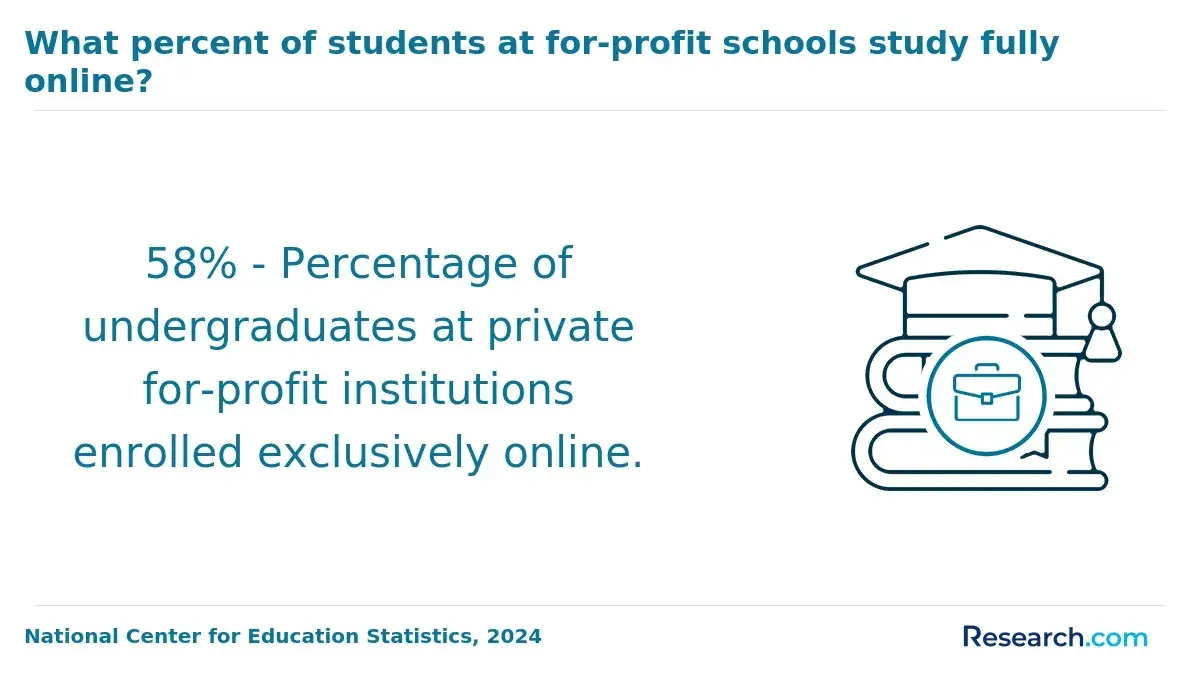
The National Center for Education Statistics reported in 2024 that 54% of undergraduates took at least one distance education course in fall 2022, showing how normal online study has become. This guide explains no-test admissions, what colleges review instead, and how to apply with confidence.
Key Things to Know About Liberal Studies Associate Degrees Without Testing Requirements
- Test-optional means you may choose whether to submit SAT or ACT scores; test-free means the college will not use them in admission decisions at all.
- Many online Liberal Studies associate programs, especially at community colleges and adult-serving institutions, emphasize transcripts, placement measures, transfer goals, and readiness for college-level writing instead of national test scores.
- FairTest reported in 2024 that more than 2,000 U.S. bachelor-granting colleges and universities did not require ACT or SAT scores for fall admissions, reinforcing a broader admissions shift that also supports no-test pathways at the associate level.
Are test-optional or test-free programs common for online Liberal Studies associate degrees?
Test-optional and test-free policies are common for online Liberal Studies associate degrees, but they appear in different forms. At many two-year public colleges, the policy is closer to open admission: applicants with a high school diploma, GED, or state-approved equivalent can usually be admitted without SAT or ACT scores. At some four-year universities that offer associate degrees online, the policy may be formally test-optional, meaning scores can be submitted but are not required.
This trend matters because Liberal Studies is usually a broad, transfer-friendly degree rather than a selective pre-professional major. Colleges are often more interested in whether you can start in college-level English, math, and general education courses than whether you achieved a specific standardized test score.
The table below clarifies the admission language you are likely to see when comparing programs. Understanding these terms helps you avoid applying under the wrong assumption.
| Admission policy | What it usually means | What students should verify |
| Test-optional | SAT or ACT scores are not required, but you may submit them if they strengthen your application or help with placement. | Whether not submitting scores affects scholarships, honors admission, or course placement. |
| Test-free | SAT or ACT scores are not reviewed for admission, even if you have them. | Whether placement still requires another assessment or transcript review. |
| Open admission | Applicants who meet basic eligibility requirements are generally admitted without standardized test scores. | Whether specific programs, dual enrollment tracks, or selective pathways have added requirements. |
| Holistic admission | The college reviews multiple factors, such as grades, coursework, goals, experience, and readiness. | Which factors carry the most weight when no test score is submitted. |
For most students seeking an online Liberal Studies associate degree, not having SAT or ACT scores is not a major obstacle. The bigger issue is whether the program offers the right online format, transfer pathway, advising, and academic support for your goals.
What are the best online Liberal Studies associate programs without testing requirements?
The best no-test online Liberal Studies associate program is not always the most famous school. For many students, the stronger choice is the program that combines regional accreditation, clear online course availability, low total cost, strong transfer advising, and transparent placement rules.
The programs below are examples of U.S. institutions that offer online or largely online associate-level liberal arts, liberal studies, general studies, or interdisciplinary pathways and generally do not require SAT or ACT scores for standard admission. Always confirm current requirements with the admissions office because policies can change by residency status, age, campus, or applicant type.
| School | Relevant online associate pathway | No-test admission profile | Best fit |
| Southern New Hampshire University | Associate of Arts in Liberal Arts | Online undergraduate admission does not generally require SAT or ACT scores. | Students who want a fully online, adult-friendly university format with transfer options into bachelor's programs. |
| SUNY Empire State University | Associate in Arts or Associate in Science in Liberal Arts | Designed for flexible adult and transfer-minded learners; standardized tests are not typically central to admission. | Students who want flexible online study and individualized degree planning. |
| Rio Salado College | Associate in Arts | Community college admission generally does not require SAT or ACT scores; placement may be handled separately. | Students who want low-cost online coursework and a transfer-oriented curriculum. |
| Ivy Tech Community College | Associate of General Studies or Liberal Arts-related transfer pathways | Open-access community college model; SAT or ACT scores are not usually required for admission. | Indiana students and online learners seeking affordable general education and transfer preparation. |
| Sinclair Community College | Associate of Arts with liberal arts transfer coursework | Standard admission generally focuses on eligibility and placement rather than SAT or ACT scores. | Students who want a public two-year college option with online course availability. |
| Austin Community College District | Associate of Arts in General Studies or liberal arts transfer pathway | Open-admission community college model; placement and advising determine course starting points. | Texas students and transfer-focused learners who want a broad associate degree foundation. |
Students considering Liberal Studies as a stepping stone into counseling, psychology, social services, or education should compare transfer outcomes early. A broad associate degree can be a practical first step, but students aiming for a helping-profession bachelor's program may also want to compare options such as the cheapest online counseling degree to understand the full pathway.
When choosing among these programs, decide what you need the degree to do. If your goal is transfer, prioritize articulation agreements and general education compatibility. If your goal is workforce advancement, prioritize writing, communication, digital literacy, and elective options that match your field.
How do colleges handle no-test-score admission for Liberal Studies associate programs?
Colleges that do not require SAT or ACT scores still need evidence that you are eligible and prepared to enroll. For online Liberal Studies associate programs, admission review is usually practical rather than highly selective: the school confirms your identity, prior education, residency for tuition purposes, and placement level.
The table below shows common materials schools may request when applicants do not submit standardized test scores. These items help colleges decide admission eligibility, course placement, and advising needs.
| Requirement | Why it matters without SAT/ACT scores | Common applicant concern |
| High school transcript or GED record | Shows graduation status and prior coursework. | Older applicants may need to request archived records. |
| College transcripts | Allows transfer credit review and may waive placement requirements. | Unpaid balances at prior schools can delay transcript release. |
| Application form | Collects program choice, contact information, residency, and educational history. | Selecting the wrong major or campus can slow down processing. |
| Placement information | Helps determine whether you start in college-level English or math. | Students may confuse admission with course placement. |
| Residency or identity documents | May determine tuition classification and financial aid eligibility. | Incomplete documentation can affect cost estimates. |
| Financial aid documents | Supports FAFSA-based aid, grants, and loans if eligible. | Admission and financial aid timelines are separate. |
The most common mistake is assuming "no SAT/ACT required" means "nothing else required." A college may admit you without test scores but still require transcripts, placement steps, immunization forms for certain states, technology setup, orientation, or academic advising before registration.
A second mistake is applying to a Liberal Studies program without checking whether the degree transfers cleanly. Liberal Studies can be highly flexible, but flexibility only helps if your credits apply to your next credential or career goal.
Yes, placement tests can often be used instead of SAT or ACT scores, but they serve a different purpose. SAT and ACT scores are traditionally associated with admission and scholarship review, while placement tests determine which English, math, or reading course you should take first.
Online Liberal Studies associate programs commonly use one or more placement methods. The goal is not to keep you out of college; it is to place you in courses where you have a realistic chance of succeeding.
- High school GPA or recent coursework may place you directly into college-level English or math.
- Prior college credits may waive placement requirements if you already passed equivalent courses.
- ACCUPLACER or another college placement exam may be required if your transcript does not show enough recent academic preparation.
- Directed self-placement may ask you to review course expectations and choose the level that best fits your readiness.
- Advising review may combine transcript history, work experience, and academic goals before recommending first-semester courses.
Placement matters because it can affect time and cost. If you are placed into a prerequisite or corequisite support course, you may need extra coursework before completing the degree requirements. That is not necessarily a bad outcome; it can protect your GPA and help you build the writing and quantitative skills needed for transfer.
Before applying, ask whether you can complete placement remotely, whether placement results expire, and whether strong high school grades or prior coursework can exempt you from testing.
Work experience usually cannot replace the basic educational requirement for admission to a Liberal Studies associate program. Most colleges still require a high school diploma, GED, homeschool completion record, or another approved equivalent. However, work experience can strengthen your application, guide placement conversations, and help you choose electives that fit your goals.
Work experience is especially useful for adult learners who have been out of school for several years. It may show persistence, communication skills, leadership, customer service ability, technical familiarity, or motivation for returning to college.
Here is how work experience may help, depending on the school's policies:
- It can support a personal statement if the program asks why you want to study Liberal Studies online.
- It can help advisors recommend electives in communication, business, human services, education, or social science.
- It may qualify you for prior learning assessment at some colleges, although credit is not automatic and usually requires documentation.
- It can help explain gaps in schooling, especially if your transcript is older or uneven.
Work experience is less likely to matter at open-admission community colleges where basic eligibility is enough to enter. It may matter more at adult-serving universities or transfer-oriented programs that ask for goals, essays, or advising interviews.
If your long-term interest is social work or human services, a Liberal Studies associate degree can help you complete general education requirements before a bachelor's program. Students planning beyond the associate level may also compare best online MSW programs to understand how early course choices can affect later graduate prerequisites.
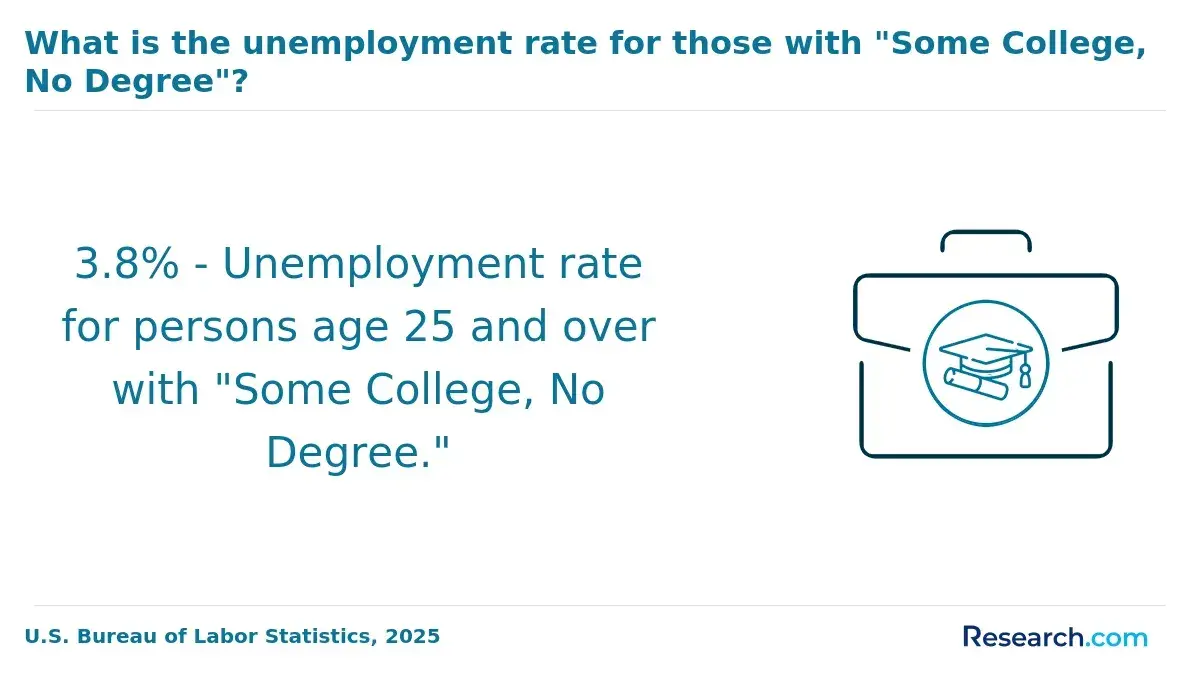
Some test-optional Liberal Studies associate programs have no minimum GPA for general admission, especially at open-admission community colleges. Others may set a minimum GPA for applicants coming directly from high school, for transfer students, for scholarships, or for admission to a particular college within the institution.
Because policies vary, GPA should be viewed in two ways: admission eligibility and college readiness. You may be admitted with a low GPA, but a weak transcript can still affect placement, financial aid satisfactory academic progress after enrollment, and your ability to transfer later.
The table below helps you interpret GPA expectations when SAT or ACT scores are not part of your application.
| GPA situation | Likely admission impact | What it signals |
| Strong recent grades | Can support admission and may reduce placement testing. | You may be ready for college-level writing and general education courses. |
| Mixed grades with upward trend | Often acceptable, especially for open-admission programs. | Recent improvement may matter more than early high school performance. |
| Low GPA but diploma or GED completed | May still qualify for open admission. | You may need advising, placement review, or a lighter first-term schedule. |
| Older transcript | May be reviewed mainly for completion status. | Placement may depend on current assessment or prior college work. |
| Prior college GPA below good standing | Can affect transfer admission and financial aid review. | You may need to resolve academic standing before enrolling smoothly. |
College Board's 2024 Trends in College Pricing and Student Aid reported average published tuition and fees of $3,990 at public two-year in-district colleges for 2024-25. That figure does not include books, technology, fees beyond tuition, or living costs, but it explains why many students with uneven academic records start at community colleges: the financial risk can be lower while they rebuild academic momentum.
If your GPA is weak, do not assume you must take the SAT or ACT to compensate. A better strategy may be to apply to an open-admission or test-free program, complete a manageable first semester, earn strong grades, and then use that college transcript for transfer.
Admissions interviews are uncommon for standard online Liberal Studies associate programs. Most open-admission and test-optional associate programs rely on transcripts, placement information, residency documents, and advising rather than formal interviews.
However, you may still have a required or strongly recommended conversation with an admissions counselor, academic advisor, or enrollment coach. This is not always an interview in the selective sense. It is often a planning conversation to confirm your program, schedule, placement status, financial aid timeline, and technology readiness.
If a school asks for an interview or advising call, use it to answer practical questions that affect your success:
- Ask whether the Liberal Studies associate degree is designed primarily for transfer, workforce preparation, or both.
- Ask how the school places students into first-year English and math without SAT or ACT scores.
- Ask whether online courses are asynchronous, live, hybrid, or offered in short accelerated terms.
- Ask which credits are most likely to transfer into your intended bachelor's major.
- Ask what happens if you need developmental or corequisite support courses.
A red flag is an admissions conversation that focuses only on quick enrollment without discussing transfer fit, course placement, total cost, or academic support. A good advisor should help you understand both the opportunity and the obligations of starting online.
When comparing test-optional online Liberal Studies associate degree prgorams, focus on fit rather than the absence of SAT or ACT requirements alone. The best program for you should make it clear how you will enter, what courses you will take, how credits transfer, and what support is available if you have been away from school or struggled academically.
The table below summarizes the most important decision factors. Use it to narrow your list before speaking with admissions offices.
| Factor | Why it matters | Possible red flag |
| Accreditation | Regional or institutionally recognized accreditation supports credit transfer and financial aid eligibility. | The school is unclear about accreditation or transfer acceptance. |
| Transfer pathways | Liberal Studies is often used as a bridge to a bachelor's degree. | The program cannot show articulation agreements or transfer maps. |
| Online format | Asynchronous courses may suit working students; live courses may suit students who need structure. | Required campus visits are not disclosed upfront. |
| Placement policy | No SAT/ACT admission does not eliminate English or math placement. | The school cannot explain how placement works without test scores. |
| Total cost | Tuition, fees, books, technology, and transfer loss all affect value. | The school advertises low tuition but hides recurring fees. |
| Academic support | Online tutoring, advising, writing support, and orientation can improve persistence. | Support services are only available during limited campus hours. |
| Elective flexibility | Electives can align the degree with business, education, social science, communication, or human services goals. | Electives are too random to support transfer or career planning. |
After you narrow your list, take these steps before applying:
- Confirm that SAT and ACT scores are not required for your applicant type, including first-year, transfer, adult learner, homeschool, or international status.
- Ask for a degree map showing which courses you would take in the first two terms.
- Check whether the program leads to an Associate of Arts, Associate of Science, Associate of Applied Science, or general associate credential, because transferability can differ.
- Compare total estimated cost, not just tuition per credit.
- Request transfer information for the bachelor's major you are most likely to pursue.
- Review withdrawal, refund, and satisfactory academic progress policies before enrolling.
Liberal Studies is often a smart starting point if you want flexibility, need general education credits, or are still deciding on a major. It is less ideal if you already know you need a highly sequenced program such as nursing, engineering technology, or a licensure-driven pathway with strict prerequisites. Students thinking far ahead to advanced social work practice may eventually compare DSW programs, but the immediate priority is choosing associate-level courses that transfer well.
Application deadlines for test-optional Liberal Studies associate programs are often more flexible than deadlines for selective bachelor's programs. Many online associate programs use rolling admission, multiple start dates, or semester-based deadlines. That flexibility can help students who do not have SAT or ACT scores, but it can also create a false sense that there is no urgency.
The table below outlines common deadline patterns. Use it to plan backward from your intended start date.
| Deadline type | How it usually works | Why it matters |
| Rolling admission | Applications are reviewed as they arrive until the term is full or registration closes. | Applying early gives you more time for placement, advising, and financial aid. |
| Semester start | Programs begin in fall, spring, and sometimes summer. | You may need transcripts and placement completed before registration opens. |
| Accelerated online terms | Courses may start every 5, 7, 8, or 10 weeks. | Short terms move quickly, so readiness and time management matter. |
| Priority financial aid date | The college recommends completing FAFSA and aid documents by a certain date. | Missing it can delay aid, even if admission is approved. |
| Transfer credit review deadline | Prior college transcripts must be received by a set date for evaluation before registration. | Late review may cause you to repeat courses unnecessarily. |
A good application timeline for students without SAT or ACT scores usually looks like this:
- Six to eight weeks before your preferred start date, shortlist programs and confirm no-test admission rules.
- Four to six weeks before the start date, request high school, GED, and prior college transcripts.
- Three to five weeks before the start date, complete the application and FAFSA if you plan to seek aid.
- Two to four weeks before the start date, complete placement, orientation, and advising.
- One to two weeks before the start date, register for a manageable course load and verify books, technology, and payment arrangements.
If you are applying late, consider starting part time rather than rushing into a full course load. Online Liberal Studies programs can be flexible, but accelerated courses can become difficult if you are still resolving transcripts, financial aid, or placement.
How can you prepare to apply for Liberal Studies associate programs if you don't have SAT/ACT scores?
You can prepare a strong application without SAT or ACT scores by making the rest of your file clear, complete, and aligned with your goals. The point is not to "replace" test scores with one perfect item; it is to show that you meet admission requirements and are ready to begin college-level work with the right support.
Use the following steps to prepare before you submit applications:
- Gather official transcripts early, including high school, GED, dual enrollment, military, and prior college records.
- Write down your goal for the degree, such as transfer, career advancement, personal development, or preparation for a specific major.
- Review your recent English and math history so you can anticipate placement requirements.
- Identify any transcript problems, such as missing records, unpaid balances, incomplete courses, or academic probation.
- Prepare a simple explanation for education gaps if the application includes an essay or advising conversation.
- Compare programs based on transfer fit, support services, cost, online format, and placement policy.
- Ask admissions whether submitting SAT or ACT scores is optional, ignored, or required for scholarships.
- Choose a first-term schedule that matches your work, family, and study time rather than overloading immediately.
Students often make three avoidable mistakes. First, they apply without checking whether the policy applies to online associate applicants specifically. Second, they choose a program based only on tuition and later discover that credits do not transfer well. Third, they treat Liberal Studies as a "random" degree instead of using electives strategically.
If your long-term goal involves counseling, social services, or advanced practice, map the full route early. For example, someone who begins with Liberal Studies may later need a bachelor's degree and graduate training; comparing options such as the cheapest online PhD in counseling can help you understand how far prerequisites and accreditation expectations may extend beyond the associate degree.
The strongest next step is to contact two or three admissions offices with the same questions: Is the program test-optional or test-free for my applicant type? How will I be placed into English and math? Which credits transfer into my likely bachelor's major? What is the total estimated cost? The answers will quickly show which program is the best fit.
Other Things You Should Know About Liberal Studies
No. Your transcript and diploma typically show the institution, degree, courses, credits, and grades, not whether you submitted standardized test scores during admission.
Usually, no. If the program is open-admission, test-free, or clearly test-optional, your time may be better spent completing transcripts, preparing for placement, and choosing transferable courses.
Often, yes, but requirements vary. Homeschool applicants may need a completion affidavit, transcript, state-recognized documentation, GED, or other proof of secondary education.
They can be, especially when earned from an accredited institution with transferable general education courses. Transfer acceptance depends on the receiving college, your grades, course equivalencies, and degree requirements.
- Liberal Studies, AA Online https://www.nec.edu/programs/associate-of-arts-in-liberal-studies-online
- Bachelor of Arts in Comprehensive Liberal Studies | Batten University Online https://online.batten.edu/undergraduate/bachelor-of-arts-comprehensive-liberal-studies
- The International Student’s Guide to American Liberal Arts Colleges https://www.liberalartscolleges.com/the-international-students-guide-to-american-liberal-arts-colleges/
- Top 50 Scholarships for Non-Traditional Students to Apply for in July 2026 https://bold.org/scholarships/by-type/non-traditional-scholarships/
- Liberal Arts Admissions | Top Colleges & Essay Guidance | BrighterPrep https://www.brighterprep.com/liberal-arts-college-application-help
- SAT and ACT Policies and Score Ranges for Popular Colleges and Universities https://www.compassprep.com/college-profiles/
- International FAQ - Wheaton College Massachusetts https://wheatoncollege.edu/admission/international-students/international-faq/
- Step-by-Step Financial Aid Guide for International Students https://www.collegeessayguy.com/blog/financial-aid-international-students
- Liberal Studies Associate Degree - Black Hawk College https://www.bhc.edu/academics/programs/liberal-studies/
- Most Popular Online Liberal Studies Degrees 2025 https://www.onlineu.com/degrees/liberal-studies


