2027 Online Legal Studies Master's Programs With University Scholarships: Awards, Eligibility & Tuition After Aid

Co-Founder and Chief Data Scientist
Paying for an online Legal Studies master's requires more than comparing advertised tuition: university scholarships may reduce charges, but awards, eligibility, and renewal rules vary sharply by program. College Board reported average 2024-25 graduate tuition and fees of $12,879 at public institutions for in-state students and $29,920 at private nonprofit institutions. This guide helps prospective students and working legal professionals identify university aid, estimate tuition after aid, compare offers, and avoid funding mistakes before enrolling.
Key Things to Know About Legal Studies Master's Programs with Scholarships
- Online Legal Studies master's students may be considered for institutional merit aid, need-based grants, federal Direct Unsubsidized Loans, employer support, and outside scholarships, but program-level eligibility must be confirmed in writing.
- For context, average 2024-25 graduate tuition and fees were $12,879 at public institutions for in-state students and $29,920 at private nonprofit institutions; a scholarship's value should be measured against the full program price, fees, and number of required credits.
- The strongest funding strategy is usually to submit admissions and financial-aid materials early, apply for multiple compatible awards, and compare renewable net-cost offers rather than selecting a school based on a single scholarship headline.
What online Legal Studies master's programs offer university scholarships?
Some universities with online Master of Legal Studies, Master of Studies in Law, or closely related legal studies programs make institutional scholarships available to graduate students. Availability can change by admission cycle, online modality, residency, school or college, and enrollment level. A program may offer scholarships to admitted students without reserving a separate award specifically for Legal Studies students.
The comparison below identifies schools where prospective online legal studies students should ask directly about institutional scholarship consideration. It is not a promise of funding; confirm the current award name, amount, deadline, and online-student eligibility with the admissions and financial-aid offices before applying.
| University and online legal program area | University-aid question to ask | Best fit for applicants seeking aid |
| Arizona State University, online legal studies and law-related graduate options | Are online graduate students automatically reviewed for university merit awards, and are law-school awards included? | Applicants who want a large public-university system and can compare school-wide aid with program costs. |
| American University Washington College of Law, online Master of Legal Studies | Which scholarships apply to online MLS students, and is a separate application required? | Professionals seeking a law-school-based program who can document leadership or academic achievement. |
| Drexel University Thomas R. Kline School of Law, online Master of Legal Studies | Does institutional aid apply to fully online enrollment, and is the award renewable? | Students who value a detailed written cost estimate before committing. |
| USC Gould School of Law, online Master of Studies in Law | Are merit awards available to online MSL admits, and can they be used with employer reimbursement? | Working professionals able to compare scholarship terms against a higher total-cost option. |
Do not rule out a program simply because its website does not display a scholarship amount. Many graduate awards are communicated after admission, while others require a separate form or have earlier priority deadlines. Students comparing accelerated options can also review 1 year masters programs when program length is a major part of the total-cost decision.
What is the average tuition for Legal Studies master's programs before aid?
There is no single national average limited to online Legal Studies master's programs, because institutions publish tuition by credit, term, or program and may charge different rates for online study. The most useful broad benchmark is College Board's 2024-25 average graduate tuition and fees: $12,879 for in-state students at public institutions and $29,920 at private nonprofit institutions. Legal studies programs can fall above or below those figures depending on credit requirements and law-school pricing.
Use published tuition as a starting point, not a final bill. The following framework shows what to request so that two offers can be compared on the same basis.
| Cost item | How it affects the pre-aid estimate | What to verify |
| Tuition per credit or flat program tuition | Usually the largest direct charge | Total credits required and whether the stated rate is locked for continuing students |
| Mandatory university and technology fees | Can increase the billed cost beyond tuition | Whether online learners pay student services, distance-learning, or graduation fees |
| Books, databases, and course materials | May be billed separately or paid out of pocket | Whether digital course materials, legal research tools, or software are included |
| Travel or residency expenses | May apply to hybrid orientations, intensives, or optional events | Whether any campus attendance is required and whether it is covered by aid |
A lower tuition rate is valuable only if the credential, schedule, and support fit your goals. Working adults should compare the total program charge and payment timing, not just the per-credit rate; resources on the most affordable online colleges for working adults can also help frame affordability questions about flexible study.
What types of financial aid and scholarships are available for Legal Studies master's programs?
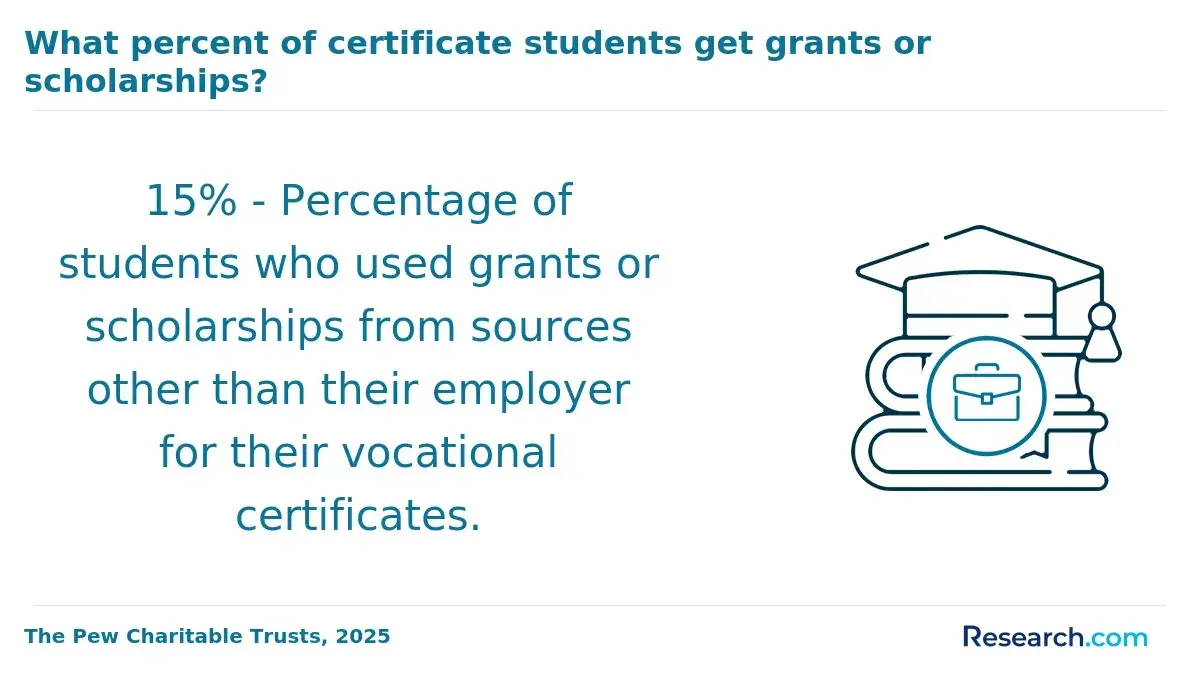
Financial aid is broader than a scholarship. Scholarships and grants generally do not require repayment if students meet the terms; loans must be repaid; employer assistance is governed by workplace policy. Graduate students should expect institutional aid to be competitive rather than automatic, especially in professional online programs.
These are the main funding categories and the situations in which each is most useful.
| Funding type | Typical basis | When it makes sense | Key limitation |
| University merit scholarship | Academic record, professional experience, leadership, or admissions strength | Applicants with strong transcripts, relevant legal-sector experience, or a distinctive professional profile | Funds may be limited and awards may not be renewable |
| Need-based institutional grant | Financial need under the institution's process | Students whose resources and income information show demonstrated need | Graduate schools vary widely in whether they offer need-based institutional aid |
| Program, alumni, or donor scholarship | Specified field, identity, service, employer, or career interest criteria | Applicants who closely match the donor's purpose | May require a separate application and essay |
| Federal Direct Unsubsidized Loan | FAFSA eligibility and annual borrowing limits | Students who need predictable financing after grants and scholarships | Interest accrues and repayment obligations apply |
| Employer tuition assistance | Employment status, grade, service commitment, and business relevance | Professionals whose role involves compliance, contracts, HR, policy, risk, or operations | Reimbursement may be paid after course completion and may require continued employment |
| External scholarship | Foundation, professional association, community, or employer criteria | Students willing to apply broadly beyond the university | Outside awards can affect an aid package if total aid exceeds cost of attendance |
Federal Student Aid distinguishes between grants, work-study, and loans, while universities set their own institutional scholarship rules. If your legal studies concentration supports finance, compliance, or risk work, an online degree in finance may also be a useful alternative to compare when assessing employer reimbursement and career alignment.
How much do Legal Studies master's scholarships typically cover?
Most university scholarships for professional master's programs are partial awards rather than full tuition awards. The actual amount may be a fixed sum, a per-credit reduction, or a stated share of tuition, and a school can change its scholarship inventory from one entering class to another. Treat any award as a discount on eligible charges, not as proof that the whole degree is affordable.
Use the award letter to calculate a realistic net tuition figure. This comparison shows why the same-looking scholarship can have very different value across programs.
| Illustrative offer structure | How to calculate its value | Decision implication |
| Fixed scholarship amount | Subtract the award from total eligible tuition, then add uncovered fees and materials | Best for comparing programs with known all-in tuition |
| Per-credit scholarship | Multiply the reduction by eligible enrolled credits and confirm whether it applies to every term | Can lose value if part-time enrollment or a leave changes eligibility |
| Percentage tuition scholarship | Apply the percentage only to charges the school defines as tuition | May not cover university fees, books, or travel |
| Full-tuition scholarship | Confirm whether "tuition" excludes fees and whether the award lasts through graduation | Potentially valuable, but often highly selective and subject to renewal rules |
Ask for a written estimate showing tuition, mandatory fees, scholarship amount, loan assumptions, and the remaining balance for each academic year. A smaller renewable award can be more useful than a larger one-time award if the program lasts multiple years. Conversely, a one-time award may still be sensible for a short program if you can cover later terms without high-cost borrowing.
Who is eligible for Legal Studies master's scholarships?
Eligibility depends on the award rather than the degree title. Common criteria include admission to an eligible program, minimum enrollment, academic achievement, demonstrated financial need, professional background, residency, citizenship or eligible noncitizen status for certain aid, and compliance with university conduct and satisfactory academic progress rules.
Before spending time on an application, check each of these eligibility areas against the scholarship's current terms.
- Confirm that the award explicitly includes graduate, online, and Legal Studies, MLS, or MSL students rather than only JD or campus-based students.
- Check whether you must be admitted before applying and whether the award requires full-time, half-time, or a minimum number of credits each term.
- Match merit criteria with evidence such as your transcript, résumé, professional certifications, service record, leadership, or supervisor recommendation.
- File the FAFSA when requested, even if you expect a merit award, because some schools use it to determine need-based eligibility or loan access.
- Review restrictions involving employer reimbursement, military benefits, other institutional awards, and prior graduate study.
Applicants who are changing careers, studying part time, or using tuition benefits should be especially careful: those factors do not necessarily disqualify someone, but they can change the awards available. Students considering a human-services-adjacent path can compare funding priorities with a child psychology masters program rather than assuming all professional master's scholarships operate alike.
What is the application process for Legal Studies master's scholarships?
The scholarship process commonly runs alongside admissions, but not always on the same schedule. Some schools automatically review admitted applicants; others require a scholarship portal, FAFSA, essay, recommendation, or proof of employment. Missing a priority deadline can remove an otherwise qualified applicant from consideration.
Follow this sequence to create a complete, comparable funding application.
- Build a school-by-school tracker with admissions deadlines, scholarship deadlines, FAFSA requirements, required enrollment level, renewal conditions, and contact information.
- Apply for admission early enough to meet any priority scholarship deadline, because awards often require an admission decision before review.
- Submit the FAFSA if the institution requests it or if you may use federal loans, then complete any separate institutional aid forms.
- Prepare a targeted résumé, concise personal statement, transcript, and recommendations that show how legal studies supports your current work or intended role.
- After receiving an offer, request a written cost-of-attendance and aid breakdown, including whether the scholarship is one-time or renewable.
- Ask for reconsideration only with new, relevant information, such as a competing written offer, changed financial circumstances, or a documented employer-benefit limit.
Do not submit identical essays without checking the award purpose. A merit award may emphasize achievement, while a donor scholarship may prioritize public service, compliance work, community impact, or a defined professional population. Keep copies of every submitted document and confirmation email.
Do online Legal Studies students qualify for the same aid as on-campus students?
Sometimes, but not automatically. Eligibility for federal student aid generally depends on the institution's participation in federal aid programs, the student's eligibility, and enrollment in an eligible program; it does not turn solely on whether instruction is online. University scholarships, however, can be restricted by college, program, location, cohort, or enrollment format.
Ask the school to answer these questions in writing before you count an award in your budget.
- Is the online Legal Studies master's designated as eligible for the specific scholarship?
- Does the award require campus attendance, a particular residency classification, or full-time enrollment?
- Will the scholarship apply if courses are taken asynchronously, part time, or across summer terms?
- Are online students charged different fees, and are those fees included in the scholarship calculation?
- Can online students use federal loans, veterans' education benefits, employer reimbursement, and external scholarships under the same rules?
Online delivery can reduce commuting or relocation costs, but it does not ensure lower tuition or greater aid. Professionals who need rapid completion should compare pace, credit load, and aid renewal conditions; the same trade-offs arise when reviewing a quickest online MBA.
Can Legal Studies master's students combine multiple scholarships and grants?
In many cases, yes. Students may combine university scholarships, external scholarships, grants, employer assistance, veterans' benefits, savings, and federal loans, subject to each program's terms and the school's cost-of-attendance rules. "Stacking" can lower borrowing, but it can also trigger an aid adjustment when total resources exceed allowable educational costs.
The following comparison helps determine when combining awards is beneficial and when caution is needed.
| Combination | Potential benefit | Check before accepting |
| University merit award plus external scholarship | Can reduce tuition and loan need | Whether the university reduces its own award after outside funds are reported |
| University scholarship plus employer reimbursement | Can preserve personal cash flow and reduce debt | Whether the employer reimburses only remaining charges or imposes a service commitment |
| Grant plus federal loan | Grant lowers the amount that must be borrowed | Annual and aggregate loan limits, interest, and repayment consequences |
| Multiple institutional awards | May substantially lower tuition if stackable | Whether awards are mutually exclusive or capped at a maximum tuition reduction |
Report outside funding promptly and keep the award notices. A common mistake is assuming an external scholarship will be paid directly to the student; many sponsors send funds to the university, which may revise the account and other aid. Prioritize grants and scholarships first, then use employer assistance if its terms are manageable, and borrow only the remaining amount you need.
What are the requirements to maintain scholarship status in Legal Studies master's programs?
Scholarship maintenance is often called renewal, continuation, or retention. Requirements vary, but they commonly include satisfactory academic progress, a minimum cumulative grade-point average, continuous enrollment, a specified credit load, completion within a time limit, and compliance with university policies. An award may be reviewed each term, annually, or only when a student seeks renewal.
Protect an award by treating these conditions as part of the program's cost, not as fine print.
- Save the original award letter and identify the required GPA, minimum credits, maximum number of funded terms, and any separate renewal application date.
- Confirm how withdrawals, incomplete grades, course repeats, leaves of absence, and a reduced course load affect eligibility before changing your schedule.
- Meet with academic advising early if work, caregiving, or health needs could affect progress; an approved adjustment may be possible, but it is not automatic.
- Monitor your student account each term to verify that the award posted correctly and that no unexpected fee or aid revision changed your balance.
- Complete any FAFSA renewal or institutional financial-aid verification requested for the next academic year.
Do not assume a strong first term guarantees renewal. If the terms are unclear, request the policy document and ask whether the scholarship can be reinstated after a temporary enrollment interruption.
What tips can help Legal Studies master's students secure more scholarship funding?
Students improve their options by applying early, matching applications to specific criteria, and comparing net costs across several schools. The goal is not simply to win the largest advertised award; it is to choose the program with the most manageable remaining cost, credible academic fit, and terms you can realistically maintain while working.
Use these practices to make your scholarship search more competitive and financially useful.
- Apply to several eligible programs and funding sources instead of relying on one university scholarship decision.
- Ask each financial-aid office for the full cost of attendance, not only tuition, and identify charges the scholarship does not cover.
- Tailor your statement to connect legal studies with a concrete professional goal such as compliance, contracts, employment policy, healthcare administration, risk management, or regulatory work.
- Request recommendations from people who can describe your analytical judgment, ethics, leadership, and workplace impact rather than only confirming your job title.
- Ask your employer about reimbursement, direct billing, professional-development funds, and repayment obligations before accepting an institutional offer.
- Compare scholarship renewal rules, required credit loads, and expected completion time before treating two awards as financially equivalent.
- Appeal respectfully when you have material new information, but do not make enrollment decisions based on an appeal that has not been approved in writing.
Red flags include vague award letters, pressure to commit before aid terms are explained, scholarships labeled as renewable without stated criteria, and schools that cannot clarify whether online students qualify. The best choice is usually the program that provides transparent written terms and leaves a sustainable balance after all reliable aid - not the program with the most attention-grabbing scholarship label.
Other Things You Should Know About Legal Studies
Usually, institutional scholarship review requires an admission application and often an admission decision. Some schools let applicants submit a scholarship form earlier, but funds generally are not finalized until eligibility for the program is confirmed.
Scholarship tax treatment depends on how funds are used and the student's circumstances. Amounts used for qualified education expenses may be treated differently from funds used for living costs. Consult a qualified tax professional or IRS guidance for advice specific to your situation.
No. An MLS, MSL, or Legal Studies master's is generally designed for professionals who work with legal concepts but are not seeking a JD. It does not by itself qualify a graduate to sit for a bar exam or practice law; licensing rules are set by jurisdictions and must be verified separately.
Request a revised cost breakdown, ask whether additional program or external awards are available, check employer education benefits, consider a part-time schedule if it improves cash flow, and evaluate lower-cost eligible programs. Borrow only after estimating the total amount needed to complete the degree.
References
- A Guide to Graduate School Scholarships https://www.collegeessayguy.com/blog/graduate-school-scholarships
- Best Online Master's Degrees in Legal Studies for 2025 https://www.onlinemastersdegrees.org/best-programs/legal-studies/
- Law School Scholarships - A Guide for Prospective 1Ls | OnlineJDDegree.com https://www.onlinejddegree.com/choosing/law-school-scholarships/
- Law School Scholarships Guide https://onlinemasteroflegalstudies.com/resources/law-school-scholarships/
- Financial Aid Options https://www.lsac.org/choosing-law-school/paying-law-school/financial-aid-options
- Scholarships for Online Grad School | OEDb.org https://www.oedb.org/graduate-scholarship/
- Law School Scholarship Databank https://www.accesslex.org/databank
- Top MSL Programs (for Non-Lawyers) | LLM GUIDE https://llm-guide.com/lists/top-10-master-of-studies-in-law-msl-programs-for-non-lawyers
- Scholarships and Grants https://www.vermontlaw.edu/admissions/tuition-and-financial-aid/scholarships-grants
- Social Work Scholarships https://socialworklicensemap.com/social-work-resources/social-work-scholarships/