
2027 Online Information Security & Assurance Degree Programs With No Personal Statement or Admissions Essay Required

Co-Founder and Chief Data Scientist
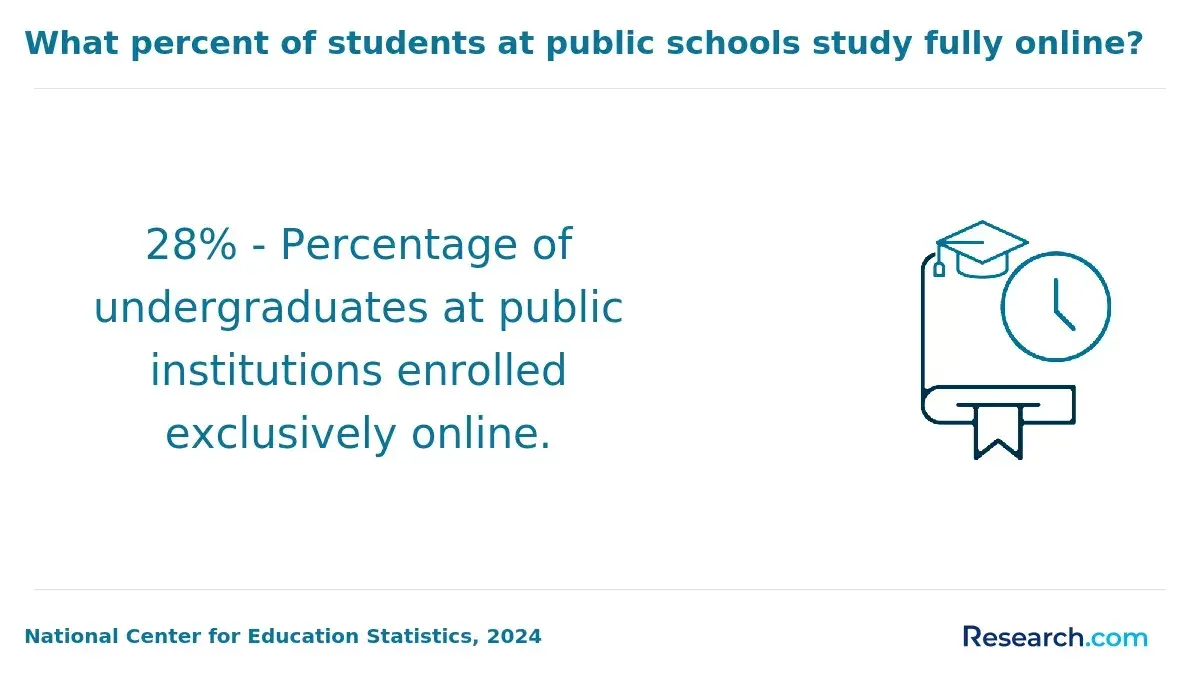
Applying to an online information security and assurance program can be faster when a school does not require a personal statement, but transcripts, GPA, prerequisites, and identity documents may still determine admission. National Center for Education Statistics data published in 2024 reported that about 7 million U.S. postsecondary students took courses exclusively online in fall 2022.
This guide helps first-time, transfer, and adult learners distinguish true no-essay policies from optional or waived essays, assess program quality, and apply without choosing convenience over career value.
Key Things You Should Know
- A true no-essay policy removes the personal statement from the standard application, but it does not mean automatic, open, or guaranteed admission; schools may still review GPA, official transcripts, transfer credit, math or technology preparation, and residency documents.
- Essay-optional means an applicant may submit writing to add context, while essay-waived usually means a requirement was removed for a defined applicant group, term, or condition; honors programs, scholarships, and appeals can still require written responses.
- Information security analysts had a $124,910 median annual wage in the U.S. in May 2024, according to the Bureau of Labor Statistics; compare curriculum, accreditation, hands-on labs, total price, and career support rather than selecting a program solely for its shorter application.
What Does No Personal Statement or Admissions Essay Required Mean for Online Information Security & Assurance Degree Programs?
For online information security and assurance degree programs, "no personal statement or admissions essay required" generally means the institution does not ask applicants to submit a narrative about their background, goals, or readiness as part of its standard admission file. A personal statement and an admissions essay are often used interchangeably, although a school may label a short-answer response differently.
The policy applies to admission, not necessarily to every campus process. Applicants may still encounter written prompts for competitive scholarships, an honors college, a cybersecurity cohort, a transfer-credit appeal, academic probation review, or a request for additional information. Read the requirements for both the degree program and the applicant category rather than relying on a general "apply now" page.
Information security and assurance is a broad academic area focused on protecting systems, networks, data, and organizational operations. Online programs may be offered as associate, bachelor's, master's, or completion degrees under titles such as cybersecurity, information assurance, information systems security, or cyber defense. Coursework commonly covers networking, operating systems, risk management, security governance, incident response, cloud security, ethical hacking concepts, and digital forensics.
A no-essay pathway can reduce an application barrier for students who have limited time, dislike narrative writing, or have a straightforward academic record. It does not remove the need to show that the applicant can succeed in technical coursework. Schools may place more weight on objective records because they have less narrative context to evaluate.
What Admissions Requirements Do Online Information Security & Assurance Degree Programs Use Instead of an Essay?
Schools that do not use an essay usually assess readiness through records that are easier to standardize and verify. Exact requirements vary by degree level and applicant type, so a bachelor's completion applicant should not assume the same rules apply to a first-time college student or master's applicant.
The following comparison shows common alternatives to an admissions essay and what each item helps a school assess.
| Requirement | What the school evaluates | Important applicant consideration |
| Official or unofficial transcripts | Completed courses, grades, degree status, and academic trends | Official copies are often required before enrollment or financial-aid disbursement. |
| Minimum GPA | Baseline academic preparation | A published minimum may establish eligibility but may not guarantee a seat in a limited program. |
| Prerequisite coursework | Readiness for technical classes | Algebra, statistics, programming, networking, or introductory IT courses may be expected. |
| Test scores, if requested | Additional academic evidence | Test-optional refers to SAT, ACT, GRE, or similar exams; it is separate from an essay policy. |
| Resume or work history | Relevant professional experience | More common for graduate and adult-focused programs than entry-level undergraduate programs. |
| Recommendation letters | External assessment of preparation or character | They may be unnecessary for general admission but required for some graduate tracks or awards. |
Before applying, verify whether the listed GPA is cumulative, transferable-credit GPA, or GPA from a prior degree. Ask whether prerequisite deficiencies lead to denial, conditional admission, or required foundation courses. Conditional admission can be useful for applicants changing fields, but it may add time and tuition before advanced security coursework begins.
Do not confuse a test-optional policy with a no-essay policy. A program can waive standardized tests and still require an essay, or require neither while maintaining specific academic thresholds.
Who Is a Good Fit for Online Information Security & Assurance Degree Programs With No Admissions Essay?
A no-essay online information security and assurance program can fit applicants whose transcripts and prior coursework already make a clear case for admission. It may be especially practical for working adults, military-connected learners, career changers with documented IT experience, and transfer students who want a streamlined review.
The pathway is strongest when the program's curriculum aligns with a concrete goal: starting in IT support, moving toward security operations, advancing from networking into cyber defense, or building qualifications for governance, risk, and compliance work. The Bureau of Labor Statistics projects U.S. employment of information security analysts to grow 33% from 2023 to 2033, much faster than the average for all occupations. That outlook signals sustained demand, but it does not mean every degree or graduate will qualify for analyst roles without relevant technical skills and experience.
Applicants should consider a program with an essay requirement when they need to explain a low GPA, a long enrollment gap, unusual coursework, a career pivot with limited technical preparation, or circumstances not visible on a transcript. An optional essay can be worthwhile in those cases if the school confirms that it will be reviewed.
Students comparing different career-oriented fields may also find that application simplicity is only one part of the decision. A degree in human services serves different work settings and competencies, so compare occupational interests and required skills before prioritizing speed of admission.
A no-essay option may be a poor fit if the program lacks the hands-on practice, faculty access, scheduling flexibility, or transfer-credit policies needed for the student's goals. It is also not a substitute for foundational preparation. Security work relies on careful documentation, communication, problem-solving, networking knowledge, and ethical judgment; applicants should be ready to develop all of those skills.
What Is the Difference Between No-Essay, Essay-Optional, and Essay-Waived Information Security & Assurance Degree Admissions?
The wording of an admissions page matters. "No essay," "optional essay," and "waived essay" can describe meaningfully different obligations, and the difference may affect how much context an applicant can provide.
This table separates the policies so applicants can identify whether writing is prohibited, optional, temporarily removed, or still required in another part of the process.
| Policy | Meaning for standard admission | Best use case | Watch for |
| No essay required | No admissions essay is part of the normal application. | Applicants with records that meet published requirements. | Separate essays for scholarships, honors, or special cohorts. |
| Essay-optional | An essay is not required, but the school may accept and review one. | Applicants needing to explain context or demonstrate motivation. | Whether the optional response is actually considered in decisions. |
| Essay-waived | An essay requirement has been removed for a stated population, term, or condition. | Applicants clearly covered by the waiver. | Expiration dates, campus-specific rules, and exclusions. |
| Essay required | A written response is mandatory before the file is complete. | Applicants seeking programs that use holistic review. | Prompt length, deadlines, and separate department requirements. |
"Waived" deserves particular attention because it is often conditional. A university may waive a graduate essay for applicants with a qualifying GPA, prior degree, employer partnership, or specified start date. Confirm the waiver in writing if the application portal still displays an essay field.
Do not submit an unsolicited essay to a true no-essay program unless admissions instructs you to do so. Extra material may not be read and can delay a file if it creates a mismatch with the application checklist.
Are Online Information Security & Assurance Degree Programs With No Admissions Essay Easier to Get Into?
No. Removing an essay changes the application format, not necessarily the admission standard. An online program may use minimum requirements, capacity limits, prerequisite checks, or a holistic review of transcripts and professional experience. Some institutions have broad-access admission models, while others remain selective despite not requesting personal narratives.
Applicants should separate three questions: whether they can submit an application quickly, whether they meet eligibility standards, and whether the program offers the learning environment needed for their intended role. A school may admit eligible applicants to the university but require separate review for a cybersecurity concentration, upper-division major, or graduate specialization.
Common assumptions can lead to poor choices. The comparison below identifies practical corrections before an applicant pays an application fee or commits to enrollment.
| Common mistake | Why it creates risk | Better approach |
| Assuming no essay means guaranteed admission | Transcript, GPA, and prerequisite standards may still apply. | Request the complete checklist for the exact degree and applicant type. |
| Choosing the fastest application | A streamlined process says little about curriculum quality or outcomes. | Compare labs, security courses, faculty support, and transfer rules. |
| Ignoring technical prerequisites | Missing preparation can delay progression or require extra classes. | Map prior credits against the published degree plan before applying. |
| Equating online delivery with lower standards | Online programs can be rigorous and may require proctored assessments or lab work. | Review course formats, weekly workload, and access to technical platforms. |
Ask admissions whether acceptance is to the institution, the online degree, or both. That one question can clarify whether a later gateway requirement could affect a student's path into security coursework.
How Can You Verify Accreditation and Quality in No-Essay Online Information Security & Assurance Degree Programs?
Accreditation and instructional quality should carry more weight than the absence of an essay. For institutional accreditation, verify the school's status through the U.S. Department of Education or the Council for Higher Education Accreditation directories, then confirm that the accreditation applies to the institution awarding the degree. Institutional accreditation can affect transfer-credit review and federal aid eligibility, although eligibility also depends on the student and program.
Information security and assurance does not have one universal programmatic accreditor for every degree. Some computing-oriented programs may hold specialized accreditation, while many legitimate programs rely on institutional accreditation and demonstrate quality through curriculum, faculty expertise, industry alignment, and transparent student-support practices.
Use the following checks to distinguish a well-supported online security degree from a program marketed primarily around easy entry.
- Confirm the legal institution name, accreditor, accreditation status, and any published actions or limitations.
- Read the degree plan for networking, systems administration, scripting or programming, risk management, incident response, and applied security work.
- Ask how students access virtual labs, software, simulations, technical support, instructors, and career services from a distance.
- Determine whether courses align with recognized security frameworks or prepare students for relevant certifications without implying certification is included.
- Review the catalog for graduation requirements, credit-transfer limits, refund rules, complaint procedures, and academic support.
Red flags include unclear accreditation claims, pressure to enroll before receiving a written cost estimate, vague course descriptions, promises of guaranteed jobs, and refusal to explain how online labs work. A school should be able to state what credential it awards, who teaches the courses, and how students complete practical assignments.
How Does the Application Process Work for Online Information Security & Assurance Degree Programs With No Personal Statement?
The application process is usually straightforward, but students should treat the no-essay claim as one item on a complete checklist. Application portals may initially show generic questions that do not apply after an applicant selects the correct program, term, degree level, or transfer status.
These steps reduce the risk of an incomplete file or an unexpected written requirement.
- Select the exact online information security, cybersecurity, or information assurance degree and intended start term.
- Review the university catalog and degree-specific admissions page for GPA, prerequisites, test-score, residency, and documentation rules.
- Create the application, choose the correct applicant category, and save a copy of the checklist displayed in the portal.
- Request transcripts early from every required secondary school, college, or prior degree institution.
- Submit the application and required documents, then monitor the portal for transcript receipt, transfer evaluation, and any request for clarification.
- Ask admissions in writing whether an essay, statement, recommendation, or interview is required for admission, scholarships, or the selected concentration.
Application speed should not override planning for program length. Students who want a shorter completion timeline can compare the factors behind the fastest degree to get, including transfer credit, course scheduling, and prior learning policies. For information security, however, a shorter path should still include enough technical practice to support entry-level job readiness.
Keep copies of submitted materials and written confirmations. Requirements can differ by semester, and an archived response from admissions is useful if a portal checklist conflicts with a published policy.
Can Transfer and Adult Students Apply to Online Information Security & Assurance Degree Programs Without an Essay?
Yes. Transfer and adult students can often apply without an essay when the degree's standard policy applies to their applicant category. In practice, they may have more documentation obligations than first-time students because the institution must evaluate prior credits, determine degree applicability, and verify whether technical prerequisites were completed.
Transfer applicants should submit transcripts from all previously attended colleges when required, including institutions where they withdrew or earned few credits. Omitting a transcript can delay evaluation or lead to an admission decision being reconsidered. A school may accept a student while awarding fewer applicable credits than expected, so distinguish admission from the transfer-credit decision.
Adult learners returning after a break should ask whether professional training, military education, industry certifications, credit-by-exam, or a prior learning assessment can count toward the degree. Policies differ widely, and credit awards are not automatic. Security certifications may strengthen a learner's background even if they do not replace required academic courses.
Working students should also verify course pacing, live-session requirements, group projects, proctoring, and laboratory access. Programs designed for adult learners vary in flexibility, and a list of the most affordable online colleges for working adults can provide a useful starting point for comparing cost and scheduling models beyond the essay requirement.
If a transfer student's GPA falls below the published threshold, ask whether the school offers conditional admission, individual review, or a foundation term. Do not assume that an essay-free policy prevents the institution from requesting an explanation or additional academic documentation in an exception review.
Do No-Essay Online Information Security & Assurance Degree Programs Affect Tuition, Financial Aid, or Scholarships?
No-essay admission itself does not make tuition lower, increase federal financial aid, or eliminate scholarship requirements. Tuition is typically determined by the institution, credit load, residency rules where applicable, program level, and mandatory fees. Students should compare the total estimated cost to complete the degree after accepted transfer credits, not only the advertised per-credit rate.
For federal aid, eligible students generally need to complete the Free Application for Federal Student Aid, enroll in an eligible program, and meet ongoing academic-progress requirements. The FAFSA is not an admissions essay, but it requests financial and tax information. State aid and institutional grants may use separate deadlines or forms.
Scholarships are the most common exception to an otherwise no-essay admissions pathway. A general university scholarship may require a short response about career goals, leadership, service, or financial circumstances. Competitive cybersecurity scholarships may also ask for a resume, recommendations, or evidence of technical interest.
When comparing affordability, examine the categories that can change the actual bill.
- Tuition charged per credit or per term, including whether online students pay a different rate.
- Required technology, laboratory, proctoring, graduation, learning-platform, and course-material fees.
- Transfer credits accepted toward the major, not merely accepted as elective credit.
- Institutional grants, employer tuition benefits, military benefits, and scholarship renewal conditions.
- Estimated borrowing after grants rather than the maximum amount a student is allowed to borrow.
Students exploring lower-cost online study across fields can compare a cheapest online psychology degree, but they should not assume a price pattern in psychology applies to technical security programs. Lab infrastructure, specialized courses, and credit requirements can produce different costs.
How Should You Compare Online Information Security & Assurance Degree Programs With No Admissions Essay?
Compare online information security and assurance programs using an admissions-to-outcomes framework: first confirm that you are eligible without an essay, then decide whether the program can build the skills and credential value you need. The best option is not necessarily the one with the fewest application steps; it is the one that fits your preparation, budget, schedule, and career target.
The following categories help applicants make a side-by-side comparison before submitting applications.
| Comparison factor | What to verify | Why it matters |
| Essay policy | Whether no-essay status applies to your degree level, term, and applicant type | Prevents an incomplete application or surprise requirements. |
| Academic entry standards | GPA, prerequisites, test rules, and conditional-admission options | Shows realistic eligibility and possible extra coursework. |
| Curriculum | Technical foundations, assurance and risk content, labs, and elective options | Helps match the degree to security operations, governance, cloud, or related goals. |
| Delivery model | Asynchronous versus scheduled classes, lab access, proctoring, and group work | Determines whether the program fits work and family obligations. |
| Cost to completion | Net price estimate, required fees, transfer credit, and aid renewal terms | Provides a more realistic affordability comparison than sticker tuition. |
| Career support | Internship help, employer connections, resume support, and alumni outcomes when published | Supports a transition from coursework to relevant experience. |
Ask each school for a written degree audit or preliminary transfer evaluation, a complete cost estimate, the next cohort's course schedule, and confirmation of the admissions checklist. Also ask whether the program prepares students for particular certifications or roles; preparation is different from an exam voucher, a certification award, or employment placement.
Career-focused online programs in other fields can have their own quality markers. For example, students considering legal-support training should prioritize verified standards such as ABA-approved paralegal programs rather than treating a simplified application as evidence of program quality. Apply the same principle to information security: evaluate the credential and learning experience before the convenience of entry.
Other Things You Should Know About Information Security & Assurance
Not always. It may apply only to undergraduate applicants, online students, a specific start term, or applicants meeting stated conditions. Check the requirements for your degree level, campus or online division, transfer status, and concentration.
Yes. Admissions may request clarification about transcripts, academic history, residency, or disciplinary disclosures. This is different from making a personal statement part of every application, but applicants should respond by the stated deadline.
Yes. Scholarship, honors, and special-program applications commonly use separate short-answer questions or essays. Review scholarship criteria independently and do not assume an admissions waiver carries over.
Not necessarily. The degree can build relevant knowledge, but employers may also seek hands-on technical experience, internships, certifications, networking or systems skills, and evidence of problem-solving. Entry paths can include IT support, network administration, security operations, or governance-related roles.
References
- Best Cybersecurity Schools 2023 | CyberDegrees.org https://www.cyberdegrees.org/listings/top-schools/
- Online Certificate in Information Security and Assurance https://academicearth.org/certificate-in-information-security-and-assurance/
- Paying for college https://www.commonapp.org/plan/paying-for-college/
- Get a master's in infosec or info assurance online https://cybersecurityguide.org/online/masters-in-information-security/
- What Financial Aid Offers Don't Tell You About the Cost of College | U.S. GAO https://www.gao.gov/blog/what-financial-aid-offers-dont-tell-you-about-cost-college
- Colleges Without Supplemental Essays? Yes, Please. - Top Tier Admissions https://toptieradmissions.com/colleges-without-supplemental-essays-yes-please/
- Financial Aid Myths vs. Facts https://www.pointpark.edu/admissions/financialaid/understandingfinancialaid/financialaidmyths
- College Applications Without Essays: Do They Exist? https://collegewise.com/blog/college-application-without-essay
- Cyber Security vs Information Assurance: What'sthe Difference https://cyber-security.degree/resources/cybersecurity-vs-information-assurance/
- Should You Include Extra Materials With Your College Applications? https://www.saraharberson.com/blog/extra-materials-college-applications


