2027 Online Healthcare Management Degree Programs With Monthly Tuition Payment Plans

Co-Founder and Chief Data Scientist
Paying a full term's tuition at once can prevent qualified students from starting an online healthcare management degree. Monthly tuition plans divide the school-billed balance into scheduled installments, usually within one term and often after financial aid is applied. This matters as the College Board reported average published tuition and fees of $11,610 at public four-year institutions for 2024-25. This guide is for working adults and career changers comparing online programs, costs, plan terms, aid, and alternatives so they can choose a manageable path without overlooking total expense.
Key Things to Know About Healthcare Management Programs with Monthly Tuition Payments
- Many online healthcare management programs offer installment plans through their bursar or a payment-plan provider, but the plan generally divides one semester or term's remaining balance rather than financing an entire degree.
- A $39,600 bachelor's degree priced at $330 per credit would cost about $3,960 for a 12-credit term; spread across five scheduled payments, that is roughly $792 per month before plan fees and any aid adjustments.
- Monthly plans can improve cash-flow management, but students should compare enrollment fees, required down payments, late-payment consequences, and the cost of borrowing before choosing installments over upfront payment or federal aid.
Which online Healthcare Management degree programs have monthly tuition payment plans?
Online healthcare management programs are commonly offered as bachelor's degrees in healthcare administration, health services management, or health information management, as well as master's degrees in healthcare administration. A school's availability of an online degree does not automatically mean that its payment plan is available for every student, session, or academic term. Confirm the option with the student accounts office before enrolling.
The examples below show the kinds of institutions where students can find both online healthcare-management study and term-based payment arrangements. Tuition, installment counts, and eligibility can change by location, residency, and enrollment period, so use this as a comparison starting point rather than a binding quote.
| Institution and online program example | Published pricing approach | Typical payment-plan structure to verify | What to confirm |
| Southern New Hampshire University, BS in Healthcare Administration | Per-credit undergraduate tuition | Scheduled term installments through the school's billing process | Number of payments, enrollment fee, and whether a balance is due before classes begin |
| Western Governors University, BS in Healthcare Management | Flat tuition by six-month term | Term-payment arrangements may be available for eligible students | Required initial payment and whether the plan applies to the full competency-based term |
| University of Maryland Global Campus, BS in Health Services Management | Per-credit tuition that varies by residency and affiliation | Semester-based tuition payment plan | Plan availability by session and treatment of military or employer benefits |
| Purdue Global, BS in Health Care Administration | Per-credit tuition and program-specific charges | Installment option subject to account eligibility | Payment dates, administrative fee, and consequences of a returned payment |
Start by identifying the credential and pace you need. Students who need flexible course timing may also compare best online self paced colleges, but self-paced delivery and a monthly payment plan are separate features that must each be confirmed.
A practical way to locate an eligible plan is to follow these steps:
- Request the current program tuition sheet and the academic calendar for your intended start date.
- Ask the bursar whether online students in your program can enroll in the plan and how many installments are available.
- Submit financial-aid documents early, then ask whether the plan uses the estimated or finalized aid balance.
- Get the payment schedule, all fees, and withdrawal policy in writing before authorizing automatic payments.
How much do online Healthcare Management degree programs typically cost?
Cost depends more on credit requirements, tuition rate, transfer credits, and pace than on the words "healthcare management" in the degree title. A typical bachelor's program requires about 120 credits, while many master's programs require roughly 30 to 42 credits. Online delivery may reduce commuting and housing costs, but it does not eliminate tuition, course materials, technology charges, or graduation fees.
For context, the College Board's 2024-25 published average tuition and fees were $11,610 for in-state students at public four-year institutions and $43,350 at private nonprofit four-year institutions. Those figures cover all undergraduate study rather than online healthcare management specifically, so they are useful as broad benchmarks - not as a program quote.
The following calculations illustrate how published per-credit pricing translates into term and monthly cash flow. They exclude aid, transfer credits, and fees.
| Illustrative program pricing model | Estimated tuition basis | Example term tuition | Five-payment term schedule |
| Lower-cost public option | $300 per credit | $3,600 for 12 credits | $720 per payment |
| Midrange online undergraduate option | $330 per credit | $3,960 for 12 credits | $792 per payment |
| Higher-cost online undergraduate option | $500 per credit | $6,000 for 12 credits | $1,200 per payment |
Use the school's net price estimate, not tuition alone, when judging affordability. A lower monthly installment can simply reflect fewer credits in a term or a longer payment window; it does not necessarily mean the degree costs less overall.
How common are monthly tuition payment plans among Healthcare Management programs?
Monthly or installment plans are common administrative tools at colleges that bill by semester, quarter, or session, including institutions with online healthcare management degrees. They are not universal, however, and schools may limit plans to students with a minimum unpaid balance, no prior delinquency, and a qualifying payment method.
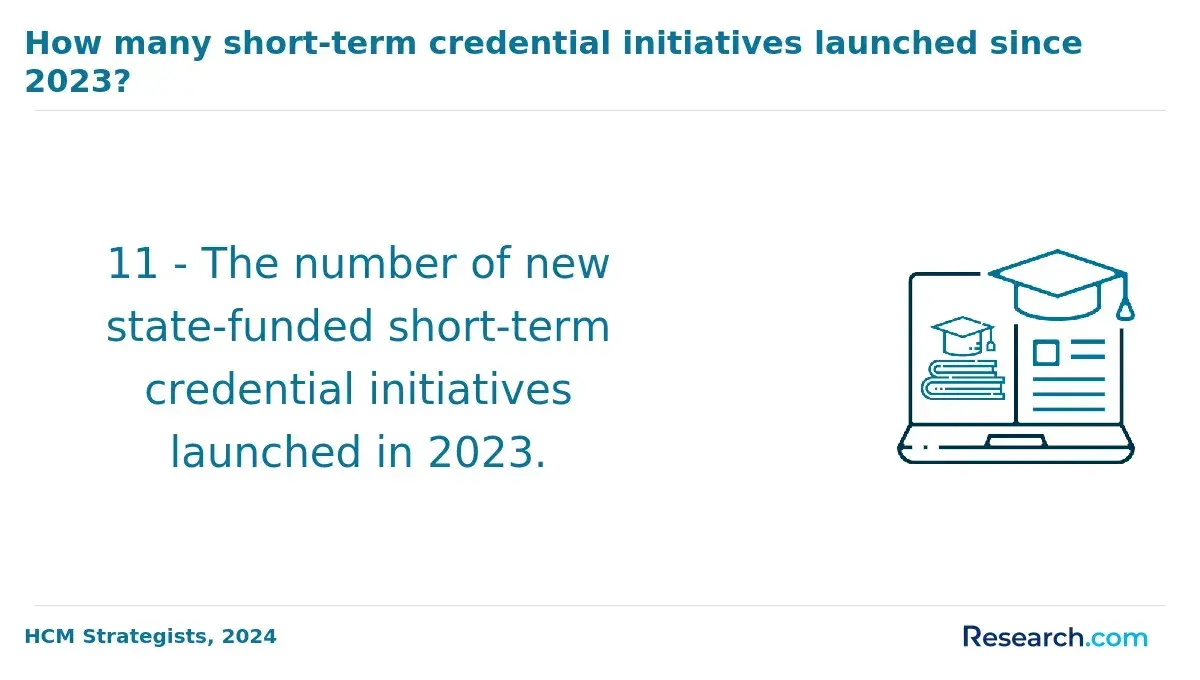
The strongest current evidence for the need for flexible online options is broader enrollment behavior. The National Center for Education Statistics reported that 54% of postsecondary students enrolled in at least one distance education course in fall 2022, the latest comprehensive federal enrollment measure available in 2024. That does not measure payment-plan participation, but it shows why schools increasingly need billing processes that work for students who study while employed and live away from campus.
Plan availability is best treated as a school-level feature, not a program-level guarantee. A healthcare management major may use the same billing system as other online undergraduate students, while accelerated sessions, doctoral programs, and employer-sponsored cohorts can follow different rules.
Before treating a plan as part of a program offer, verify these points directly with the school:
- Whether students in the online healthcare management program may enroll for your specific term.
- Whether installments are monthly, tied to fixed dates, or compressed into a short eight-week session.
- Whether enrollment closes before the term starts or remains available after add/drop.
- Whether a missed payment blocks registration, grades, transcripts, or future course access.
Can monthly tuition plans make paying for Healthcare Management degrees more attainable?
Monthly tuition plans can make a degree more attainable when a student has reliable income but cannot comfortably pay several thousand dollars at the start of a term. They are primarily a budgeting tool: the student still owes the same billed balance, but pays it on a schedule that can align better with paychecks or employer reimbursement.
A plan tends to work best for employed learners taking a predictable course load, students receiving tuition reimbursement after grades post, and learners whose remaining balance is modest after grants, scholarships, and federal aid. It can be especially useful when the alternative is a high-interest private loan or credit-card balance.
It is less suitable for a student with unstable earnings, an expected aid delay, or an installment amount that would leave little room for rent, food, transportation, and emergency expenses. In those cases, reducing the course load, delaying a session, seeking aid counseling, or using eligible federal loans may be safer than starting a plan likely to default.
Healthcare careers can have different entry points and tuition needs. Someone seeking a quicker clinical-support pathway may compare fast medical assistant programs before committing to a multi-year management degree, particularly if immediate income is the central concern.
Compare the practical trade-offs before deciding:
| Payment approach | Usually makes sense when | Main trade-off |
| Monthly tuition plan | You can pay the full term balance from current income within the school's schedule | Late fees or loss of enrollment can follow missed installments |
| Upfront payment | You have savings and the school does not charge a meaningful plan fee | Requires more cash before the term begins |
| Federal student loan | You need financing beyond the term and meet eligibility requirements | Creates debt, interest, and repayment obligations |
| Employer tuition reimbursement | Your employer offers it and you can meet service or grade requirements | Reimbursement may arrive after you must pay the school |
Does monthly payment plans have an effect on the overall cost of Healthcare Management degrees?
A monthly payment plan usually does not change tuition itself. It can increase the amount paid if the school charges a nonrefundable enrollment fee, a returned-payment charge, or late fees. Some plans are described as interest-free, which means the school is not charging interest for the installment arrangement; it does not mean the plan has no cost.
For example, a $50 plan enrollment fee on a $3,960 term adds about 1.3% to that term's billed tuition. That may be modest compared with loan interest, but it should still be included in the total degree budget, especially if the fee recurs every term.
The most important comparison is between a short-term installment plan and long-term financing. A payment plan often must be completed before the term ends, whereas a loan can spread repayment over years but may accumulate interest. Paying upfront may be cheapest when savings are available and protected from emergencies; a payment plan may be preferable when preserving a reasonable emergency cushion matters more than avoiding a modest administrative fee.
To calculate the real plan cost, add the term balance, required down payment, plan enrollment fee, expected processing fees, and any probable late charges. Then compare that figure with the cost of paying in full and with the projected borrowing cost of an eligible loan. Do not extend a payment decision based only on the smallest advertised monthly number.
Do monthly payment plans affect your financial aid eligibility for Healthcare Management programs?
Enrolling in a monthly payment plan does not by itself reduce eligibility for federal financial aid. Eligibility is determined by factors such as the Free Application for Federal Student Aid, cost of attendance, enrollment status, satisfactory academic progress, and program eligibility. The payment plan addresses when the student pays an unpaid institutional balance.
Timing matters. Schools commonly apply grants, scholarships, and accepted federal aid to a student account before calculating the amount that can be placed on a plan. If aid is still estimated, later verification issues, enrollment changes, or loan cancellations can increase the balance the student must cover.
The U.S. Department of Education reported that the maximum Federal Pell Grant for the 2024-25 award year was $7,395. A Pell Grant can substantially reduce a qualifying undergraduate student's term balance, but eligibility and disbursement are individual; it should never be assumed based on the published maximum.
Students considering graduate study should distinguish administrative payment options from aid options. Healthcare management is separate from clinical advanced-practice training, so readers exploring clinical roles can also review nurse practitioner programs online and compare each program's tuition, clinical requirements, and financing rules.
Take these steps before enrolling in installments:
- Review your award letter and identify grants, scholarships, loans, and any aid marked as estimated.
- Ask the financial-aid office when each source is expected to disburse and whether it will reduce the payment-plan balance automatically.
- Ask what happens if you drop a course, withdraw, or become less than half-time after aid has disbursed.
- Keep enough cash available to cover an aid adjustment rather than assuming the plan payment can never change.
Is there a deposit required before starting Healthcare Management monthly payment plans?
Many colleges require an upfront amount to activate a payment plan. It may be labeled a down payment, initial installment, enrollment payment, or first payment. The amount can be a fixed charge or a percentage of the term balance, and it is often due immediately when the student enrolls in the plan.
A deposit is different from an application fee, enrollment deposit, tuition deposit, or plan enrollment fee. A school can require more than one of these charges, and not all are refundable. Accelerated online terms can require a larger initial share because fewer scheduled payment dates remain before the term ends.
Ask the bursar for a written example using your actual credits and anticipated aid. It should show the bill date, aid credits, required initial payment, all later due dates, and whether the initial payment changes if financial aid is delayed.
A deposit is manageable only if it fits your budget without relying on a credit card you cannot promptly repay. If it does not, ask whether the school offers a later plan-enrollment window, a smaller course load, or a different start term. Do not assume that a low advertised monthly figure means the initial cost is low.
Are there fees not covered by monthly tuition payment plans for Healthcare Management programs?
Yes. A payment plan generally covers a defined eligible balance, not every education expense. The exact exclusions differ by school, and some charges are due before a student can register even if tuition itself is being paid in installments.
The categories below are common items to check on the billing statement and plan agreement. They are not universal charges, so confirm the amount and due date with each institution.
| Charge category | Often included in installments? | Why it matters |
| Tuition and mandatory institutional fees | Often, but not always | These usually form the main eligible balance |
| Payment-plan enrollment fee | No | Usually charged at sign-up and may be nonrefundable |
| Application, graduation, or transcript fees | Often no | May be billed separately or later in the program |
| Books, subscriptions, equipment, and technology | Varies | Students may need to pay vendors directly |
| Late, returned-payment, or collection charges | No | These can raise the cost after a missed obligation |
| Optional professional development or certification costs | Usually no | May be relevant for career-building but outside tuition |
Healthcare management students may also budget for professional association memberships, background checks for certain internships, or optional certification preparation. If your interests include wellness administration or nutrition services, comparing the broader preparation required for a nutritionist degree can help clarify which costs belong to your intended career path.
What should you look for in payment plan terms for Healthcare Management programs?
Read the full agreement before entering bank or card information. The most favorable plan is not necessarily the one with the most payments; it is the one whose due dates, upfront requirement, fees, and missed-payment policy fit your actual income and aid timeline.
Use this checklist to compare offers from more than one school:
- The exact total balance eligible for installments after confirmed financial aid is applied.
- The required down payment, plan enrollment fee, and whether either is refundable after cancellation.
- The number of installments, due dates, and whether payments are truly monthly or occur more frequently.
- The late fee, grace period, returned-payment fee, and consequences of a missed installment.
- Whether automatic payments are required and how to update or cancel the payment method.
- How an added class, dropped class, withdrawal, scholarship change, or aid revision changes the schedule.
- Whether the plan must be completed before final exams, course completion, or the next registration period.
Two red flags deserve special attention: terms that do not clearly state the total cost and terms that leave the school free to accelerate the full unpaid balance after a missed payment. Ask for clarification in writing rather than relying on a verbal explanation. Also confirm accreditation, transfer-credit rules, and the curriculum; flexible billing cannot compensate for a program that does not match your career goals.
How do you know if online Healthcare Management degrees with monthly payments are right for you?
A monthly plan is likely a good fit if you have stable income, a realistic term budget, and a remaining balance you can fully pay within the school's required timeline. It can be a poor fit if you need to finance tuition over several years, have unpredictable income, or would risk missing essential living expenses to make installments.
Make the decision using your net cost, not the advertised tuition rate. Subtract confirmed grants, scholarships, employer payments, and savings you can use safely from the term bill. Divide the remainder by the required number of payments, then add the plan fee and a cushion for a possible aid adjustment. If that payment does not fit comfortably after essential expenses, reconsider the course load or financing approach.
Online healthcare management is most aligned with students who want to develop administrative, operations, finance, quality-improvement, or policy skills for health organizations. It generally does not qualify a graduate for clinical licensure. Learners deciding between management and nutrition-focused work can compare an online bachelor's degree in nutrition to assess differences in coursework, time to completion, and career direction.
Before making a final commitment, take these practical actions:
- Compare at least two accredited programs using the same credit load and the same estimate of aid.
- Request a written monthly-payment schedule based on your intended start date and number of credits.
- Check whether employer tuition benefits pay upfront or reimburse later, then align payment dates accordingly.
- Keep a copy of the agreement and set payment reminders several days before each due date.
- Choose upfront payment, a smaller course load, or eligible aid instead if the plan would require high-interest credit-card borrowing.
The right choice is the option that lets you remain enrolled without creating avoidable financial strain. A manageable payment plan can support progress; an unaffordable plan can turn a flexible online degree into a costly interruption.
Other Things You Should Know About Healthcare Management
Possibly, but accelerated sessions often have fewer weeks before the balance is due. That can mean fewer installments and a higher required payment each time. Ask for the schedule for the exact session, not the standard semester plan.
Many school-administered tuition installment plans do not use a traditional credit check because they are short-term arrangements for a current term. Policies vary, however, and third-party financing products may have different requirements. Read the agreement carefully.
Some schools allow changes before a plan-enrollment deadline, while others do not. Adding or dropping courses can also trigger a recalculation. Contact student accounts immediately if your schedule or financial-aid amount changes.
No. Tuition payment plans generally apply only to eligible charges billed by the school. Housing, food, transportation, child care, and other personal expenses require a separate budget and may be considered in financial-aid cost-of-attendance calculations.
References
- Online Healthcare Management Degrees with Financial Aid https://www.edumed.org/online-schools/healthcare-management-degrees/financial-aid/
- 2025 Most Affordable Healthcare Administration Degrees Online https://www.onlineu.com/most-affordable-colleges/healthcare-administration-degrees
- 35 Most Affordable Online Master's Degrees in Healthcare Administration - Healthcare Administration Degree Programs https://www.healthcare-administration-degree.net/best/affordable-online-masters-degrees-in-healthcare-administration-22/
- Online Bachelor in Healthcare Management (BS) Degree | South University https://www.southuniversity.edu/online/degrees-programs/healthcare/healthcare-management-bs
- Why Tuition Payment Plans Help Students Stay Enrolled - Campus Commerce https://campuscommerce.com/blog-why-tuition-payment-plans-help-students-stay-enrolled/
- What Is a Tuition Payment Plan and How Can You Benefit from One? | NC Assist Loans https://www.ncassist.org/paying-for-college-101/blog/tuition-payment-plan/
- Online MHA Programs Ranked by Affordability (2025) https://www.mhaonline.com/blog/affordable-online-mha-programs-ranked
- Do Colleges have Payment Plans? | Ascent Funding https://www.ascentfunding.com/blog/how-to-secure-and-use-a-college-tuition-payment-plan/