2027 Online Health Services Degree Programs With No Letters of Recommendation Required

Co-Founder and Chief Data Scientist
Applicants returning to school after time in the workforce may not have recent professors or supervisors available to write recommendations. Online Health Services programs with no recommendation-letter requirement can reduce that barrier while still reviewing academic readiness and experience. This guide is for prospective associate, bachelor's, and master's students who want to identify legitimate options and compare them wisely. The U.S. Bureau of Labor Statistics projects 29% growth for medical and health services manager jobs from 2023 to 2033, making careful program selection especially important for people pursuing healthcare administration careers.
Key Things You Should Know
- "No letters of recommendation required" means the program's published application checklist does not require them for your degree level and applicant type; it does not mean automatic admission or that transcripts, GPA, an essay, prerequisites, or work history are waived.
- Online Health Services pathways may include health services administration, healthcare management, health information management, public health, and related degrees. For a management-focused outcome, the Bureau of Labor Statistics reports a $117,960 median annual wage for medical and health services managers in May 2024; individual results depend on role, location, experience, and employer.
- Compare institutional accreditation, total tuition and fees, curriculum, transfer policy, state authorization, and career alignment before applying. A streamlined application is valuable only if the credential supports the job or further education you want.
Which Online Health Services Degree Programs Require No Letters of Recommendation?
Online Health Services is a broad label rather than one standardized degree. Schools may use it for health services administration, healthcare management, health information management, health administration, or health science programs. A no-recommendation policy is most common in career-focused undergraduate and completion programs, but some graduate programs also publish application paths without recommendation letters.
Do not assume that an institution-wide "no recommendations" statement applies to every major, concentration, start term, or graduate pathway. A program truly has no recommendation requirement only when its current admissions page and application portal omit the item for your exact program. "Optional," "encouraged," and "required only below a GPA threshold" are different policies.
The comparison below shows common degree routes that may use streamlined admissions. It describes program categories rather than promising that every school in the category has the same policy.
| Online degree route | Typical focus | Common fit | Recommendation-letter pattern to verify |
| Associate degree in health information management | Medical records, coding foundations, privacy, data systems | Entry-level health information or administrative support roles | Often transcript-based, especially for open-access or transfer-focused colleges |
| Bachelor's in health services administration or healthcare management | Operations, finance, policy, quality improvement, leadership | Working adults seeking administrative advancement | May not require letters, but can require prior credits or minimum GPA |
| Bachelor's completion degree in health science | Healthcare systems, population health, professional development | Applicants with prior college coursework or clinical training | Frequently evaluates transfer credit and prior academic record instead |
| Master's in healthcare administration or related management field | Organizational leadership, strategy, analytics, healthcare finance | Applicants targeting management or leadership roles | Varies substantially; some omit letters while requiring a resume and statement |
Students interested in records, coding, and data governance should compare the curriculum and practicum expectations of a health information management associate degree online with broader health services administration programs. The titles can sound similar, but the technical skills and likely job targets differ.
When reviewing a school, save a copy or screenshot of the current admissions checklist before submitting an application. Ask admissions whether letters are required for conditional admission, scholarship consideration, a concentration, or a later clinical placement.
What Are the Admission Requirements for Online Health Services Degree Programs With No Recommendation Letters?
Programs without recommendation letters generally replace that external assessment with documents that let admissions staff evaluate preparation directly. Requirements differ by degree level, prior education, transfer status, and whether the program leads toward a regulated profession.
The following table separates commonly requested materials from requirements that are more program-specific. Use it as a planning guide, not as a substitute for the school's current application instructions.
| Application item | Why a school may request it | Where it is most common |
| Official transcripts | Confirms prior coursework, GPA, degree completion, and transfer eligibility | All degree levels |
| Completed application and identification information | Establishes applicant record, residency, and program selection | All degree levels |
| Minimum GPA | Provides a consistent academic-readiness benchmark | Transfer, bachelor's completion, and graduate programs |
| Personal statement or goals essay | Assesses writing, motivation, and fit with the curriculum | More common for graduate programs |
| Resume or professional experience summary | Documents healthcare, leadership, technical, or administrative experience | Graduate and adult-focused programs |
| Prerequisite courses | Verifies foundational preparation in areas such as statistics or anatomy | Selected associate, bachelor's, and graduate programs |
| Test scores | May supplement the academic record when required | Less universal than transcripts; policy varies by school |
Applicants should read the fine print around GPA. A stated minimum is usually an eligibility threshold, not a guarantee of admission, and a school may calculate GPA differently from the number shown on a former institution's transcript. Graduate programs may also require an accredited bachelor's degree and may expect relevant professional experience even when recommendation letters are absent.
Before paying an application fee, complete these checks:
- Open the admissions page for the exact online major, degree level, and intended start term.
- Compare the webpage checklist with the application portal's document-upload requests.
- Ask whether recommendations affect conditional admission, scholarships, assistantships, or admission after a GPA review.
- Confirm all transcript deadlines, prerequisite deadlines, and whether unofficial transcripts can be used for an initial review.
Applicants planning an advanced nursing route should not treat a Health Services degree as interchangeable with clinical nursing education. Review admissions and clinical requirements separately when comparing DNP programs, which commonly have profession-specific eligibility standards.
Are Online Health Services Programs With No Letters of Recommendation Easier to Get Into?
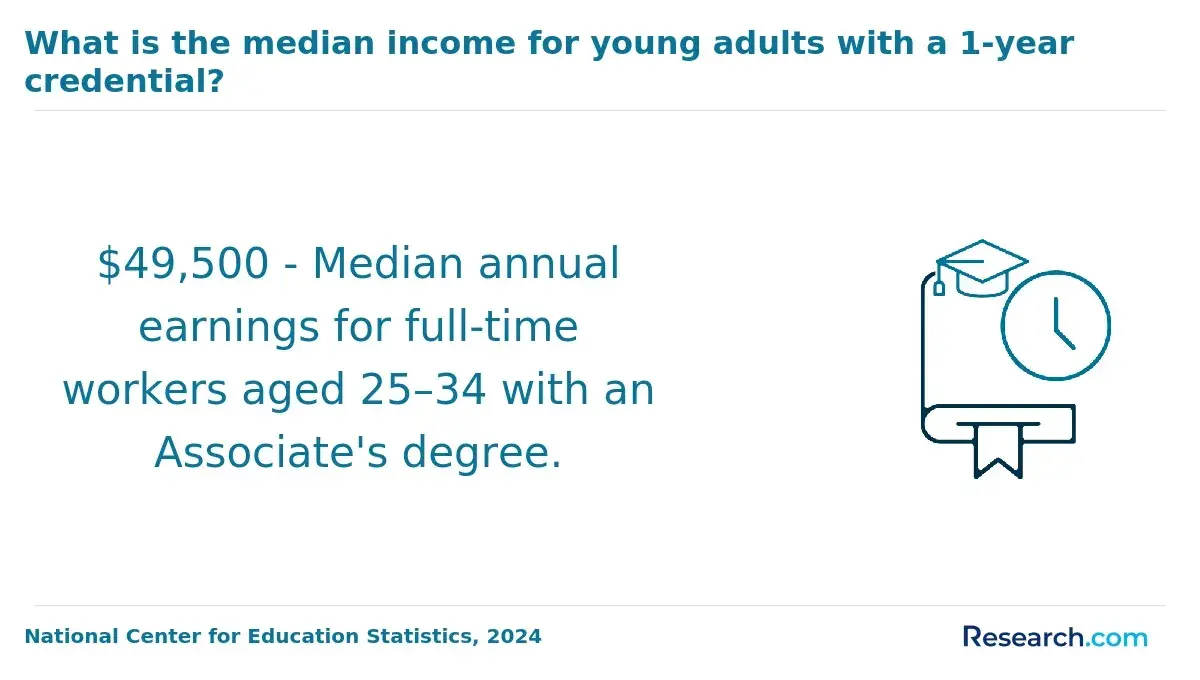
Not necessarily. Removing recommendation letters simplifies one administrative part of the application; it does not establish that a program has lower academic standards, more open seats, or a higher acceptance rate. A school may still deny or defer applicants based on GPA, incomplete prerequisites, insufficient transfer credits, writing quality, professional experience, or program capacity.
Streamlined admissions can be especially helpful for working adults, military-connected learners, career changers, and applicants whose former instructors are difficult to contact. It can also help applicants who can document their readiness through current employment, recent coursework, or a strong academic record. It may be a poor fit for someone who needs a recommender to explain a low GPA, a long academic gap, or unusual circumstances; in that case, a program that allows optional letters may offer a useful place to add context.
For career context, medical and health services managers plan, direct, or coordinate medical services and may oversee budgets, staffing, compliance, scheduling, quality initiatives, or information systems. The Bureau of Labor Statistics projects 29% employment growth for this occupation from 2023 to 2033. That projected demand supports interest in healthcare management education, but it does not mean every Health Services degree prepares a student for management immediately; employers often expect relevant experience and may prefer a bachelor's or master's degree for higher-level roles.
A more useful question than "Is it easier?" is whether the school uses evidence that fairly represents your preparation. Compare the stated GPA standard, required prerequisites, transfer review, student-support model, and curriculum rigor alongside the absence of letters.
What Do Online Health Services Programs Evaluate Instead of Letters of Recommendation?
Without letters, admissions teams typically rely more heavily on evidence that the applicant submits directly. The strongest application connects that evidence to the demands of online study and the chosen Health Services specialization.
Schools may assess the following materials in place of, or alongside, recommendation letters:
- Transcripts showing completed coursework, academic trends, and readiness for required classes.
- A focused statement explaining career goals, interest in health services, and how the degree fits the applicant's next step.
- A resume documenting healthcare administration, patient services, insurance, scheduling, records, operations, data, compliance, or leadership experience.
- Prerequisite grades, particularly where quantitative, technology, business, or health-science foundations are relevant.
- Admissions essays, interviews, or short-answer responses that show written communication and professional judgment.
- Evidence of prior learning, certifications, or military training where the institution accepts these materials for evaluation.
A good statement should be specific rather than promotional. Explain the role you want to pursue, identify the relevant skills you already bring, and describe the academic capabilities you need to build. Do not overstate clinical authority: many Health Services degrees prepare students for administrative, operational, information, or support functions rather than clinical licensure.
One common mistake is submitting a generic resume without translating duties into relevant skills. For example, a scheduler can emphasize workflow coordination and patient access, while a records specialist can emphasize privacy practices and data accuracy. Another mistake is assuming that no GRE or no letters means no writing sample; always verify the full checklist.
How Can You Tell if an Online Health Services Degree With No Recommendation Requirement Is Accredited and Legitimate?
Accreditation is the first legitimacy check because it affects credit transfer, employer confidence, eligibility for federal student aid, and graduate-school options. For most online Health Services degrees, institutional accreditation is the essential baseline. Programmatic accreditation may also matter for specialized fields, especially health information management and programs connected to professional credential eligibility.
Evaluate these quality signals together rather than relying on a school's marketing language:
- Institutional accreditation recognized by the U.S. Department of Education or the Council for Higher Education Accreditation.
- Clear disclosure of the legal institution name, physical location, contact information, faculty, curriculum, tuition, and refund policies.
- State authorization to enroll online students where you live, including any restrictions on internships or field experiences.
- Programmatic accreditation or professional alignment when the target occupation expects it, such as specialized health information credentials.
- Transparent graduation, retention, student-services, and complaint-information disclosures where applicable.
- A curriculum with named courses in healthcare systems, ethics, finance, operations, data, quality, or the specialization you intend to pursue.
Red flags include pressure to enroll immediately, vague claims that a degree automatically qualifies graduates for licensure, unclear total costs, unrecognized accreditor names, or a school that will not confirm requirements in writing. No-recommendation admissions are not a red flag by themselves; lack of transparency is.
Health Services degrees usually do not independently grant a clinical license. If your goal is nursing, therapy, social work, or another licensed clinical field, confirm the relevant state board's education rules before enrolling. A management degree can complement clinical experience, but it does not replace required professional education or supervised practice.
How Much Do Online Health Services Degree Programs With No Letters of Recommendation Cost?
Cost depends more on institution type, residency rules, credit load, transfer credits, fees, and course format than on whether recommendation letters are required. Online tuition may be charged per credit, per term, or at a flat program rate. Technology, graduation, proctoring, books, and required residency or practicum costs can materially change the total.
For broad context, College Board reported average published tuition and fees of $11,610 for in-state students at public four-year institutions and $43,350 at private nonprofit four-year institutions for 2024-25. These are nationwide campus-based benchmarks, not the price of a particular online Health Services program; use them to understand the potential spread between institution types, then request a program-specific estimate.
The table highlights cost categories to compare before deciding that an advertised per-credit rate is affordable.
| Cost factor | Why it changes the total price | What to confirm |
| Tuition rate | Rates may differ for in-state, out-of-state, online, undergraduate, and graduate students | Rate per credit and number of credits required after transfer review |
| Mandatory fees | Technology, distance-learning, student-service, and graduation fees may be separate | Whether fees apply per course, per term, or once |
| Transfer credit | Accepted credits can reduce required coursework and tuition | Maximum transfer credits and evaluation cost |
| Course materials | Textbooks, access codes, software, and certification materials vary by course | Estimated materials budget and included digital resources |
| Experiential requirements | Internships, practicums, travel, background checks, or site costs may be required | Whether experiences are local, optional, or student-funded |
Request a written estimate showing required credits, tuition, mandatory fees, and likely additional charges. Compare net price after grants and employer assistance, not only the sticker price. If flexible pacing is important, review self paced colleges carefully: term structure and tuition model can affect both completion time and total cost.
Can You Get Financial Aid for an Online Health Services Degree With Streamlined Admissions?
Yes. A streamlined admissions process does not by itself prevent a student from receiving financial aid. Eligibility for federal student aid generally depends on the student, the institution, enrollment status, satisfactory academic progress, and whether the program is eligible - not on whether recommendation letters were submitted.
Students should file the Free Application for Federal Student Aid (FAFSA) as early as practical and check institutional deadlines separately. Aid may include federal grants, federal Direct Loans, work-study at participating institutions, state aid, institutional scholarships, employer tuition assistance, and private scholarships. Graduate students have different federal aid options from undergraduates, so confirm the school's financial-aid guidance for the specific degree level.
Before accepting an offer, compare the aid types and conditions:
- Grants and scholarships generally do not require repayment when eligibility conditions are met.
- Federal and private loans create repayment obligations, so borrowers should review interest, fees, and projected borrowing.
- Employer assistance may require continued employment, a grade minimum, or repayment if the employee leaves early.
- Scholarship applications may separately request essays, resumes, or recommendation letters even when the degree application does not.
A common error is assuming an online program is automatically ineligible for aid or, conversely, assuming every online provider participates in federal aid. Ask the financial-aid office whether the exact program is eligible, what enrollment intensity is required, and whether any courses or experiential components affect aid disbursement.
How Long Does an Online Health Services Degree With No Letters of Recommendation Take to Complete?
Completion time depends on degree level, transferred credits, prerequisite needs, course availability, and whether students enroll full time or part time. The absence of recommendation letters affects application paperwork, not the curriculum length or academic workload.
An associate degree commonly requires about two academic years of full-time study when starting without transferable college credits. A bachelor's degree commonly takes about four years full time from the beginning, while a degree-completion program may take less time for students who bring substantial eligible credit. Master's programs often take roughly one to two years of full-time study, but actual pacing varies by program design and professional obligations.
This timeline comparison helps distinguish admissions speed from degree completion speed.
| Program format | What can shorten the timeline | What can extend the timeline |
| Associate degree | General-education transfer credit, year-round terms | Developmental coursework, limited course sequencing |
| Bachelor's completion degree | Large block transfer awards, articulated associate degree | Unmet prerequisites, residency-credit requirements |
| Traditional bachelor's degree | Full-time enrollment, accepted prior credit | Part-time enrollment, required internship or capstone |
| Master's degree | Accelerated terms, relevant prerequisite completion | Part-time pacing, foundation courses, capstone requirements |
Ask whether courses are asynchronous, scheduled live, or offered in cohorts. Asynchronous delivery can improve scheduling flexibility, but it still has weekly deadlines and does not mean students can finish at any pace. Students seeking a clinically focused accelerated option should compare curricula carefully; a fastest PMHNP program has clinical and licensure considerations that are different from a nonclinical Health Services degree.
Can You Transfer Credits Into an Online Health Services Degree Program With No Recommendation Letters?
Many online Health Services programs accept transfer credits, and transfer can be one of the most important affordability and completion-time factors. However, no-recommendation admissions does not mean automatic credit acceptance. The registrar or transfer-credit office usually evaluates official transcripts after application or admission.
Schools commonly consider course equivalency, grade earned, institutional accreditation, how recently the course was completed, and their own residency requirement - the minimum credits students must complete through that institution. Specialized courses in health information, healthcare law, statistics, or management may receive closer review than broad general-education courses.
Take these steps before committing to an enrollment decision:
- Send all prior college transcripts, including coursework that may satisfy general-education requirements.
- Request a written transfer-credit evaluation showing accepted credits and remaining degree requirements.
- Ask whether professional certifications, military training, standardized exams, or prior-learning assessments may count for credit.
- Compare the transfer evaluation with the published degree plan and calculate the remaining credits at the school's current rate.
- Keep course descriptions and syllabi available in case the institution requests them for a disputed or specialized course.
Do not withdraw from a current institution or accept a new financial-aid package until you understand how many credits will apply. A program that appears inexpensive per credit can cost more overall if it accepts fewer of your prior credits.
How Should You Compare Online Health Services Degree Programs That Do Not Require Letters of Recommendation?
Compare programs by career fit and educational value first, then by admissions convenience. A no-letter policy is a reasonable preference, but it should be one factor in a larger decision that includes accreditation, curriculum, support, affordability, and the outcomes you need.
Use this comparison framework to narrow options that are both accessible and aligned with your goals.
| Comparison factor | What a strong answer looks like | Why it matters |
| Recommendation policy | The exact program page states that letters are not required for your applicant category | Prevents a late application surprise |
| Accreditation and authorization | Recognized institutional accreditation and clear state-authorization information | Supports aid, transfer, and credibility checks |
| Curriculum | Courses match the intended area: administration, operations, information management, policy, or public health | Degree titles alone do not show skill alignment |
| Career preparation | Career services, internships or applied learning where relevant, and transparent outcomes information | Helps connect coursework to a realistic next role |
| Total net cost | Written estimate after transfer credit, grants, fees, and materials | Supports a more accurate return-on-investment decision |
| Online learning design | Clear schedule, faculty access, technical support, and expectations for group work or field experiences | Determines whether the format works with employment and family obligations |
Ask an admissions representative to answer these questions in writing: Are recommendation letters required in any circumstance? What documents replace them? What is the total cost after my preliminary transfer review? Is the program authorized for students in my state? Are internships, residencies, or on-campus visits required? Which roles do graduates commonly pursue, and does the degree support any credentialing goal I have?
Also consider alternatives if your target is advanced clinical practice rather than health administration. Nurses comparing doctoral pathways may want to evaluate cheapest MSN to DNP programs based on clinical placement, accreditation, specialty requirements, and licensure alignment - not just application simplicity.
The best option is one where you can meet the entry requirements, afford the remaining credits, complete the learning format successfully, and use the credential toward a clearly defined role. Avoid choosing solely on the promise of quick admission.
Other Things You Should Know About Health Services
Usually, yes. Many online programs are designed for adult learners and may rely on transcripts, a resume, and an application statement rather than academic references. Check whether the school has limits on the age of prerequisite coursework or requires updated math, technology, or health-science classes.
Only submit them if the program explicitly accepts optional materials. Unrequested documents may not be reviewed. If you need to explain an academic issue or career change, ask whether the admissions office prefers an additional statement, resume note, or optional reference.
Most prepare students for administrative, operational, information, quality, or support roles rather than independent clinical practice. Clinical occupations usually require a separate licensed professional pathway, supervised training, and state-specific eligibility.
Review the current admissions page for the exact degree and start term, then compare it with the application portal. Contact admissions if the wording is unclear and request confirmation about conditional admission, scholarships, and any applicant-specific requirements.
References
- Master of Health Administration - Online https://www.unthealth.edu/tcom/public-health/online-master-of-health-administration.html
- MPH Programs With No GRE Requirement (2026) https://www.publichealthonline.org/mph-no-gre/
- LOR Waiver Guide - Should You Waive Rights? | IvyEdgeSOP https://ivyedgesop.com/blogs/understanding-lor-waiver-should-you-waive
- Do Graduate Schools Accept Online Degrees? Admissions Experts Speak https://www.onlineeducation.com/features/is-an-online-degree-respected
- Waive the right to access recommendation letters or not? https://www.filmschool.org/threads/waive-the-right-to-access-recommendation-letters-or-not.27773/
- Scholarships and Financial Aid for Healthcare Students: How to Fund Your Education https://explorehealthcareers.org/resources/scholarship-financial-aid/
- Financing Your Degree https://aspph.org/student-journey/financing-your-degree/
- Should I Waive my Right to See Letters of Recommendation? https://fortunaadmissions.com/mba/should-you-waive-the-right-to-view-your-letter-of-recommendation/
- Online Degree vs. Traditional: Choosing the Right Path https://beal.edu/online-degree-vs-traditional/
- Enrollment in Higher Education https://odphp.health.gov/healthypeople/priority-areas/social-determinants-health/literature-summaries/enrollment-higher-education