2027 Online Data Science Master's for Market Researchers: A Career Transition Guide

Co-Founder and Chief Data Scientist
Market researchers already know how to turn customer questions into evidence. Moving into data science usually means adding stronger programming, statistical modeling, and data-engineering skills - not abandoning that domain expertise. An online master's can provide a structured route, but it may be more education than some adjacent analytics roles require.
This guide helps working researchers choose a target role, assess whether graduate study closes their skill gaps, and compare programs on the features that matter for that transition.
Key Things You Should Know
- Start with the role, not the degree title. customer analytics and marketing data science can build directly on research experience, while broader data scientist roles may demand deeper coding and modeling.
- Check for applied technical depth. prioritize Python or R, SQL, statistics, machine learning, and projects using customer or behavioral data - not a curriculum that merely lists AI topics.
- Use labor-market figures as context, not a forecast. the U.S. Bureau of Labor Statistics projects 35% growth in data scientist employment from 2025 to 2035, but a master's does not guarantee a transition.
What is an online data science master's degree for market researchers?
It is a graduate data science program completed primarily online, evaluated through the lens of a market researcher's goals. The degree itself need not specialize in market research. What matters is whether its technical coursework and projects prepare a researcher to analyze larger, less structured, or more frequently updated datasets than conventional studies may involve.
Experience defining research questions, assessing samples, interpreting consumer behavior, and presenting findings remains valuable. The new work may involve joining survey responses to transaction data, testing a prediction model, or building a reproducible analysis that another team can update.
A program focused mainly on general AI concepts may be a poor fit if it does not teach those foundations. Researchers weighing AI rather than data science can compare budget-friendly artificial intelligence degrees, while checking whether their curricula still cover the statistics and data preparation their target roles require.
How can market researchers transition into data science through an online master's?
Begin by reading job descriptions for one or two plausible roles, then compare their recurring requirements with work you can already demonstrate. Survey design and experimental thinking may transfer well; production coding, SQL, machine learning evaluation, and version-controlled workflows may be the gaps. A master's is most useful when you need sustained instruction and substantial projects across several of those areas. If the gap is limited to one tool, targeted coursework and a work project may be a less costly first step.
A practical transition has four stages:
- Choose a target: distinguish an insights role requiring better analytics from a role that develops and maintains predictive models.
- Test readiness: complete a small Python or R and SQL analysis before applying so you can identify genuine prerequisite gaps.
- Select matching coursework: favor programs whose required courses - not just electives - address those gaps and permit relevant applied projects.
- Build evidence: create a reproducible customer-analysis project that states the business question, documents data limitations, compares methods, and explains results to a nontechnical stakeholder.
A common mistake is to treat a model's predictive accuracy as proof that it answers a market research question. For example, a model that predicts purchases does not by itself establish that an advertisement caused them. Researchers seeking a particularly model-intensive path can examine lower-cost machine learning master's degrees, but should compare their prerequisites and broader analytics training before switching degree paths.
What careers can market researchers pursue after earning a data science master's?
The best target depends on how much technical work you want to do and which parts of research you want to keep. These roles illustrate where existing experience may help and what additional evidence an employer may expect; titles and duties vary by organization.
| Potential role | Value of market research experience | Technical evidence to develop |
| Customer or marketing analyst | Frames customer questions and interprets segments or campaigns | SQL, repeatable analysis, and clear measurement definitions |
| Product or growth analyst | Connects user behavior to decisions and understands testing limitations | Event data analysis, experimentation, and statistical inference |
| Marketing or customer data scientist | Brings context to targeting, retention, and customer-value problems | Model development, validation, coding, and communication of uncertainty |
| Research or insights scientist | Combines survey, behavioral, and qualitative context | Advanced statistical methods and defensible integration of data sources |
For an analyst or insights move within your current organization, relevant work samples may matter more immediately than another degree. A master's becomes more compelling when postings consistently call for methods you cannot yet demonstrate and the program gives you opportunities to practice them.
What accreditation should you look for in an online data science master's program?
Confirm that the degree-granting U.S. institution holds recognized institutional accreditation. Check its current status through the accreditor or the U.S. Department of Education's accreditation database; do not rely solely on a promotional claim. Institutional accreditation and any discipline-specific recognition are different questions, and a program should not be dismissed simply because it lacks a data-science-specific accreditor.
Also verify that the institution can enroll students living in your state and whether any required in-person activity applies to you. Accreditation does not establish that a curriculum fits customer analytics or that credits will transfer elsewhere. Ask the school directly about those matters, particularly if you might change programs.
What courses do online data science master's programs typically include?
Common subject areas include programming, databases, probability and statistics, machine learning, data visualization, and ethics. For a market researcher, the distinction is depth and application: a course title alone does not show whether students clean messy data, assess bias, compare models, or explain results responsibly.
Look for a sequence that moves from data extraction and statistical inference to applied modeling. Courses in experimentation, causal inference, text analysis, or privacy can be especially relevant to campaign measurement, open-ended responses, and customer data.
Review syllabi or project descriptions to see whether a capstone can combine research judgment with technical implementation. Researchers handling sensitive customer information may also want to compare AI ethics and policy-related master's tracks, while verifying that any alternative still provides the quantitative training they need.
What are the admission requirements for an online data science master's?
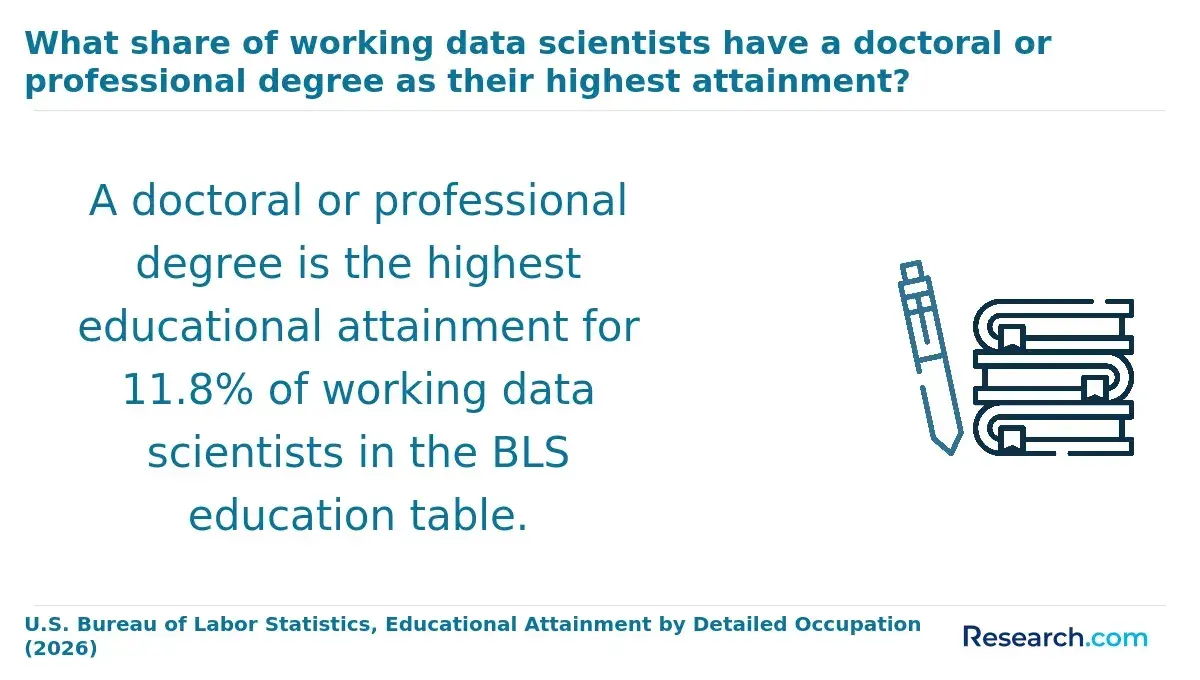
Requirements vary by program. Schools may request a bachelor's degree, transcripts, a statement of purpose, recommendations, and evidence of preparation in programming, calculus, or statistics; some specify prerequisite courses or offer a way to complete them. Professional research experience can strengthen an application, but it does not automatically satisfy a formal math or computing prerequisite.
Before paying an application fee, compare your transcript and work against each program's published requirements. Ask admissions staff whether a prior course fulfills a prerequisite, whether preparation can be completed before enrollment, and what evidence they accept from professional work. If your quantitative experience comes mostly from survey software, demonstrate what you can independently do with code rather than assuming that experience will be interpreted the same way everywhere.
How long does an online data science master's take and cost?
Both depend on required credits, course availability, enrollment pace, residency-based tuition rules, and fees. An advertised completion time may assume consecutive or full-time study that is difficult alongside client deadlines. Request a course-by-course schedule for the pace you can sustain, including when required courses and any capstone are offered.
Compare total expected cost, not just tuition per credit: include mandatory fees, software or materials, possible travel, and the financing cost of borrowing. Ask whether tuition can change during enrollment and whether an employer will reimburse courses completed at part-time pace. For options beyond employer support, review financial assistance pathways for a data science master's. Do not calculate a payback period from a data scientist salary alone; a credible estimate needs your current pay, likely target role, total cost, and the possibility that a role change takes time.
How do online and campus-based data science master's programs compare?
Neither format is inherently more rigorous. Compare the same curriculum and support criteria, then decide which setting lets you complete technical work consistently while maintaining - or deliberately leaving - your market research job.
| Consideration | Online program | Campus-based program |
| Work compatibility | May allow continued employment, subject to live sessions and deadlines | May require relocation or more time away from work |
| Collaboration | Often relies on scheduled virtual meetings and remote feedback | Offers in-person interaction, though access still depends on program design |
| Applied opportunities | May make it easier to use a current employer problem, with permission | May offer local labs or campus partnerships worth investigating |
Ask about live attendance, time zones, group-project scheduling, exam rules, and access to instructors and career services. If completion speed is decisive, compare actual required-course schedules rather than assuming online means faster; AI graduate degree options by completion time offer an adjacent comparison, but an accelerated AI curriculum may not match a data science career goal.
What salary and job outlook can data science graduates expect?
The U.S. Bureau of Labor Statistics reports a $120,230 median annual wage for data scientists in May 2025. That is an occupation-wide figure, not the expected starting pay for a market researcher who finishes a master's. Compensation depends on the job, location, employer, responsibilities, and prior experience; an adjacent analyst role may follow a different pay scale.
BLS projects substantial data scientist employment growth from 2025 to 2035, but projected openings include replacements as well as new jobs. Use the outlook to assess broad demand, not to assume you will receive an offer. When a school publishes graduate outcomes, check which graduates responded, their prior experience, what jobs they entered, and whether reported pay reflects a raise or simply a salary level.
Do market researchers need data science certifications or professional licenses?
Data scientist and customer analytics jobs generally do not have a profession-wide license requirement. Employers may value particular certifications, but a certificate is not a substitute for showing that you can write code, evaluate a method, and explain a decision. Requirements for specialized jobs or regulated work can differ, so check the positions you intend to pursue.
If you are deciding between a certification and a master's, use the size of your gap: a focused credential may help you learn a specific platform, while graduate study is more suitable when you need connected training in statistics, computing, and applied modeling. Neither credential excuses mishandling customer data; follow your employer's privacy and data-use rules in coursework and portfolio projects.
Other Things You Should Know About Data Science
Only with appropriate employer and program permission. Check confidentiality, consent, and data-transfer rules before uploading records to a course platform or external tool. A public, synthetic, or properly approved dataset may be safer.
That depends on the institution. Ask for its diploma and transcript policies rather than assuming online and campus credentials are labeled the same way.
Explain the question you framed, the data's limitations, the analysis you performed, and the decision it informed. Pair that account with code or a reproducible project when the role requires technical execution.
A data science master's may not be the best investment if you do not want coding to become a substantial part of your work. Consider insights roles that combine interviews with quantitative collaborators, and test an introductory programming project before committing to a degree.
References
- Profiling data scientists in the digital labour market | sciencedirect.com https://www.sciencedirect.com/science/article/pii/S0263237322000810
- Explore 7 exciting careers in data analytics - Penn LPS Online https://lpsonline.sas.upenn.edu/features/interested-data-analytics-explore-7-exciting-careers-field
- Career Outlook | wisc.edu https://datascience.psych.wisc.edu/careers/
- Master's in Data Science | utexas.edu https://cdso.utexas.edu/msds
- What Can I Do With a Degree in Data Science? Career Paths & Skills | Harvard SEAS https://seas.harvard.edu/news/what-can-i-do-degree-data-science-career-paths-skills
- Curriculum | Master's in Data Science - University of Notre Dame https://datascience.nd.edu/masters/curriculum/
- Prerequisite Key Topics - UVA School of Data Science https://datascience.virginia.edu/pages/prerequisite-key-topics